
Car Cover Causes Paint Fade: Can a Cover Damage Your Paint?

Quick Answer
A properly fitted, clean car cover normally does not cause paint to fade. In fact, an outdoor cover designed for UV exposure can reduce direct sunlight reaching the finish. Problems usually start when dirt, moisture, or a loose cover rubs against the paint, which is why choosing a properly designed car cover with paint-friendly construction matters.
What can make paint look faded?
- Trapped dirt: Dust and grit can create fine scratches when the cover moves.
- Poor fit: Loose fabric can repeatedly rub against high spots such as fenders and mirrors.
- Trapped moisture: Putting a cover over a wet vehicle can keep moisture against the finish.
- Wrong material: Rough or unsuitable fabric may leave marks or haze on delicate paint.
- Existing paint failure: Oxidized or peeling clear coat can continue deteriorating even while covered.
Best prevention
- Cover a clean, dry car and secure the cover so wind cannot make it flap across the paint.
If you’re searching because a car cover causes paint fade on your vehicle, don’t assume the color itself has permanently faded. A dull patch can come from micro-scratches, water spotting, contamination, or existing clear-coat deterioration.
I’ve seen covers blamed for paint problems when the real culprit was grit trapped underneath. This guide shows how I separate true fading from cover-related surface damage and how I prevent both.
In This Guide
- Can a Car Cover Actually Cause Paint to Fade?
- Why Does Paint Sometimes Look Faded After Using a Cover?
- Car Cover vs. Direct Sun: Which Is Harder on Paint?
- What Type of Car Cover Is Safest for Paint?
- How Do You Use a Car Cover Without Damaging Paint?
- What Should You Do If the Paint Already Looks Faded?
- Frequently Asked Questions
Can a Car Cover Actually Cause Paint to Fade?
A good car cover normally reduces one of the main environmental stresses on parked paint: direct sunlight. The cover itself is therefore unlikely to be the reason healthy paint loses color from UV exposure.
What a cover can do is damage the surface in ways that resemble fading. Fine scratches scatter light and reduce gloss, making dark colors especially look gray, cloudy, or washed out.
Definition: A car’s clear coat is the transparent upper paint layer that provides gloss and helps protect the colored base coat underneath. When that clear layer becomes scratched, oxidized, cloudy, or starts peeling, the vehicle can look faded even when much of the base color remains.
True fading and surface dullness are different
True color fading develops when the paint system deteriorates over time. Surface dullness can appear much faster because contamination and thousands of tiny scratches change how light reflects from the finish.
- True fading: Color becomes noticeably weaker or uneven across exposed panels.
- Micro-marring: Fine scratches create a hazy or gray appearance.
- Water spotting: Mineral deposits can leave pale rings or cloudy areas.
- Oxidation: The finish loses gloss and may look chalky.
- Clear-coat failure: The surface may become cloudy, peel, crack, or flake.
That distinction matters. Polishing might improve light surface haze, while failing clear coat usually requires professional refinishing.
Why Does Paint Sometimes Look Faded After Using a Cover?
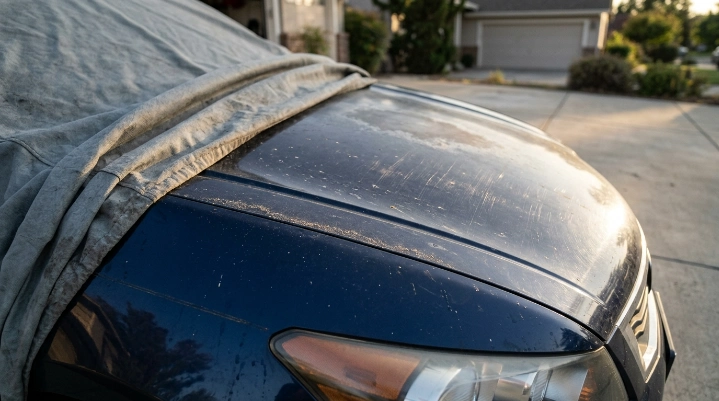
The most common cover-related problem is friction combined with contamination. Even soft fabric can create marks when sand, road dust, pollen, or other grit gets trapped between it and the paint.
1. Dirt gets trapped underneath
Imagine placing a clean microfiber towel on paint. It is gentle until abrasive grit gets caught beneath it.
The same principle applies to a cover. Pulling a dirty cover across a dusty hood can drag contamination across the clear coat.
2. Wind makes a loose cover move
A universal cover that fits like a large bag can shift in windy conditions. The repeated movement is most noticeable around corners, mirror housings, fender tops, spoilers, and body creases.
- Look for haze on raised body lines.
- Check mirror caps and fender shoulders.
- Inspect areas where straps or seams touch paint.
- Look for repeated directional scratches.
3. Moisture gets trapped against the vehicle
Covering a wet car can keep moisture around the finish longer than necessary. A poorly ventilated cover may make that problem worse in humid conditions.
Moisture does not automatically mean the paint will fade. However, water spots, contamination, and existing finish defects can become more visible afterward.
4. The paint was already failing
This one is easy to miss. A cover may get blamed because the owner notices deterioration while removing it, although the clear coat was already oxidized or weakened.
I pay close attention to the hood, roof, and trunk lid. Those horizontal surfaces often make existing sun and finish damage easier to see.
Car Cover vs. Direct Sun: Which Is Harder on Paint?
For a vehicle parked outside, a suitable UV-resistant cover generally offers better protection than leaving the finish exposed. The tradeoff is that a cover introduces contact with the paint, so cleanliness and fit become important.
| Condition | Main Paint Risk | Typical Appearance | Best Response |
|---|---|---|---|
| Uncovered in strong sun | UV, heat, contamination | Gradual gloss or color deterioration | Shade, garage, cover, paint protection |
| Clean, fitted outdoor cover | Low contact-related risk when used correctly | Paint remains protected from direct exposure | Keep cover and vehicle clean |
| Loose cover over dusty paint | Friction and abrasive grit | Swirls, haze, dull patches | Wash first and improve fit |
| Cover placed over wet car | Trapped moisture and deposits | Water spots or cloudy areas | Dry vehicle before covering |
As of 2026, Kelley Blue Book’s exterior-care guidance also treats paint protection as a combination of proper cleaning, storage, and suitable protective products rather than one magic solution.
A cover works best as one part of that routine. It does not replace washing, contamination removal, or caring for the clear coat.
What Type of Car Cover Is Safest for Paint?
The safest cover is designed for where you park, fits the vehicle closely, has a paint-friendly inner surface, and stays secure. A thick cover is not automatically a better cover.
Indoor and outdoor covers serve different jobs
Indoor covers mainly protect against dust and accidental contact. Outdoor covers need to handle sunlight, rain, dirt, and wind while remaining suitable for the finish underneath.
- Correct fit: Choose a vehicle-specific or close-fitting design when possible.
- Soft inner surface: The material touching paint should not feel coarse.
- Secure attachment: Proper hems and straps reduce wind movement.
- Outdoor UV resistance: Look for a cover intended for prolonged outdoor exposure.
- Moisture management: Choose construction appropriate for your climate and storage conditions.
A custom or vehicle-specific shape can also reduce unnecessary movement. That matters because less movement means fewer opportunities for trapped dirt to rub against the clear coat.
If you’re considering another physical barrier, Edmunds’ guide to paint protection film explains how PPF creates a sacrificial layer over painted surfaces.
How Do You Use a Car Cover Without Damaging Paint?
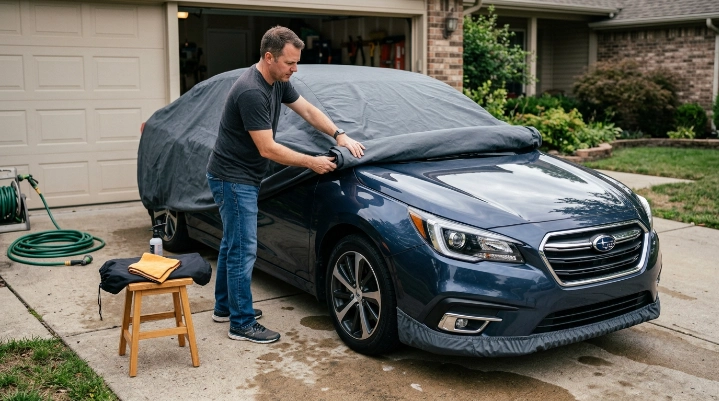
Start with clean paint, a clean cover, and a dry vehicle. Those three habits eliminate many of the problems owners blame on the cover itself.
- Check the paint for grit. Don’t cover a vehicle coated in road dust, sand, or dried mud.
- Wash when necessary. Use a car-safe washing method instead of dragging dirt away with a dry towel.
- Let the car dry. Pay attention to mirrors, trim gaps, and body seams that hold water.
- Inspect the cover. Shake out loose contamination and make sure the inner surface is clean.
- Install without dragging it around. Unroll or unfold the cover across the vehicle in a controlled way.
- Secure it properly. Use the intended hems and straps so the fabric does not flap in wind.
- Clean the cover regularly. Follow its manufacturer’s washing and drying instructions.
Consumer Reports’ car-washing guidance recommends dedicated car-wash products rather than harsh household cleaners that may remove protective wax.
Don’t cover freshly repaired paint without guidance
If a body shop recently repainted the vehicle, ask when the finish can safely be covered, washed, polished, or sealed. Paint systems and repair procedures vary, so I would follow the shop’s specific curing instructions.
For a daily driver, I also avoid removing and reinstalling the cover several times a day unless I genuinely need it. Every handling cycle creates another chance for contamination to get between the fabric and paint.
What Should You Do If the Paint Already Looks Faded?
First determine whether you’re seeing removable contamination, light scratching, oxidation, or actual clear-coat failure. Don’t immediately attack the area with aggressive compound.
| What You See | Likely Issue | First Step |
|---|---|---|
| Fine circular or straight scratches | Micro-marring | Wash and inspect under good lighting |
| White or mineral-looking spots | Water deposits | Use paint-safe spot-removal methods |
| Uniform dullness without peeling | Oxidation or surface haze | Have paint condition assessed before polishing |
| Peeling, cracking, or cloudy patches below the surface | Possible clear-coat failure | Consult an automotive paint professional |
Light swirls may respond to careful paint correction, but polishing removes a small amount of the upper surface. I don’t repeatedly compound paint just to chase every mark.
A protective wax or coating can help maintain a corrected finish, and Car and Driver’s 2026 car-wax testing describes wax as a defensive layer against rain, bird droppings, and everyday grime.
Mechanic Alert: If the clear coat is peeling, blistered, deeply cracked, or already worn through, stop DIY correction and have a qualified body or paint professional inspect the finish.
Before using the cover again, clean it and correct the cause. Reusing a dirty or badly fitting cover will simply restart the same cycle.
Frequently Asked Questions
Does covering a car in the sun damage the paint?
A suitable outdoor cover should reduce direct sunlight reaching the paint rather than increase UV fading. Problems are more likely when the cover is dirty, rough, poorly fitted, or allowed to flap repeatedly against the vehicle.
Can a car cover remove clear coat?
A normal clean cover should not remove healthy clear coat. However, abrasive contamination and repeated rubbing can scratch the surface, while an already failing clear coat may continue peeling regardless of the cover.
Why does my car look dull after removing the cover?
The dull appearance may come from dust, fine scratches, water spots, oxidation, or existing clear-coat problems. Wash the vehicle first and inspect it under direct and shaded light before assuming the color has permanently faded.
Should I put a cover on a dusty car?
No. Dust can contain abrasive particles that become trapped between the fabric and paint, especially when you install or remove the cover. Clean the vehicle first when visible grit or road contamination is present.
Can I put a car cover on a wet vehicle?
It’s better to let the vehicle dry first. Water trapped around paint, trim, mirrors, and seams can encourage spotting and keep contamination against the surface longer than necessary.
Are waterproof car covers bad for paint?
Water resistance alone does not make a cover harmful. The complete design matters, including its inner surface, fit, ventilation or moisture management, outdoor rating, and how clean both the vehicle and cover remain.
Is a custom-fit cover better than a universal cover?
A close-fitting cover usually moves less in wind and reduces excess fabric rubbing against the body. A quality universal cover can still work, but it needs to fit securely and stay away from excessive movement.
Final Takeaway: A car cover usually protects paint from sunlight instead of causing true fading. The bigger risks are trapped grit, moisture, poor fit, repeated movement, and an already deteriorating finish.
Keep both surfaces clean, cover the car only when dry, and secure the fabric correctly. Those simple habits give you the protection you wanted without turning the cover into another source of paint damage.