
How to Restore a Faded Car Cover: Safe Step-by-Step Guide

Quick Answer
You can often improve a faded car cover by cleaning away embedded dirt, oxidation-like surface residue, and contamination, then applying a manufacturer-approved fabric or vinyl protectant. However, permanent color loss caused by years of ultraviolet exposure usually cannot be fully reversed without risking the cover’s coating, breathability, or water resistance, so always check the manufacturer’s car cover care instructions first.
Quick restoration steps
- Check the material: Identify whether the cover is woven fabric, multilayer material, polyester, acrylic, or vinyl-coated material.
- Inspect the damage: Look for fading, brittle fibers, peeling coatings, tears, and areas that no longer repel water.
- Clean it gently: Remove dust and grime with cool water and a cleaner approved for the cover.
- Dry it completely: Follow the cover manufacturer’s drying instructions rather than assuming a dryer is safe.
- Protect the surface: Use only a UV or water-repellent treatment confirmed as compatible with your material.
- Replace if necessary: A brittle, delaminating, badly torn, or weakened cover usually needs replacement rather than cosmetic restoration.
One important rule
- Never paint, bleach, aggressively scrub, or randomly dye a faded car cover unless its manufacturer specifically approves that treatment.
A faded car cover can look worn long before it stops protecting your vehicle. I have found that the first job is figuring out whether you’re seeing removable grime or permanent sun damage.
This 2026 guide explains how to restore a faded car cover safely, what results you can expect, and when replacement makes more sense. I’ll also cover fabric, vinyl, UV protection, water repellency, cleaning, and the mistakes most likely to ruin an otherwise usable cover.
In This Guide
- Can a Faded Car Cover Actually Be Restored?
- What Should You Check Before Restoring a Faded Car Cover?
- How Do You Restore a Faded Car Cover Step by Step?
- Does the Restoration Method Change for Fabric and Vinyl Covers?
- What Should You Never Use on a Faded Car Cover?
- How Can You Stop a Car Cover From Fading Again?
- Frequently Asked Questions
Can a Faded Car Cover Actually Be Restored?
A faded car cover can sometimes be improved, but true UV color loss is rarely reversible. Cleaning helps most when dirt, pollen, road film, or surface residue is making the material look duller than it really is.
A faded car cover is a vehicle cover whose outer material has lost some of its original color or surface appearance. Sunlight, weather, contamination, washing, and normal aging can all contribute.
Surface dullness is different from permanent fading
I like to start with a small hidden section near the lower hem. A gentle wash in that area often tells you whether the color is buried under contamination or physically gone.
- Dirt-related dullness: The original color becomes stronger after cleaning.
- Surface residue: The cover may look chalky, dusty, or uneven before washing.
- UV fading: The material stays lighter even after it becomes completely clean.
- Material deterioration: Fibers feel weak, brittle, powdery, or unusually thin.
- Coating failure: The cover may stop shedding water or show peeling and delamination.
Outdoor fading is normal for many materials because ultraviolet radiation gradually changes exposed fibers, coatings, and colorants. Some solution-dyed fabrics resist that process better because their color runs through the fiber rather than sitting mainly at the surface.
| What you see | Likely cause | Best response |
|---|---|---|
| Gray or dusty appearance | Dirt, pollen, road film | Wash gently and reassess |
| Even color loss on sun-facing areas | UV exposure | Protect remaining material; full color recovery may be impossible |
| Water immediately soaks into clean fabric | Worn water-repellent treatment | Use an approved water-repellent treatment |
| Cracking, peeling, or brittle material | Advanced material degradation | Replacement is usually safer |
Section Takeaway: Cleaning can restore appearance when contamination causes the dullness. Permanent UV fading usually needs protection rather than an aggressive attempt to recolor the cover.
What Should You Check Before Restoring a Faded Car Cover?
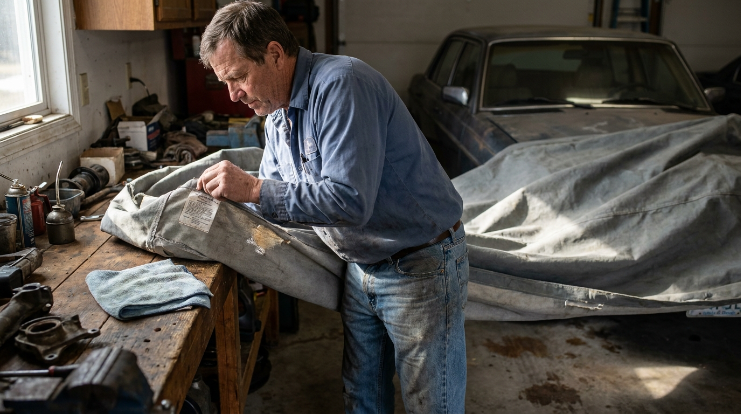
Check the care label, material, structural condition, and water resistance before applying anything. The wrong treatment can make a faded cover look better temporarily while reducing its ability to protect the car.
Identify the cover material first
Car covers are not all made from the same fabric. Common designs include woven polyester, solution-dyed acrylic, multilayer nonwoven materials, coated fabrics, and soft indoor materials.
Some covers tolerate machine washing and controlled drying. Others require air drying, so I never treat a generic cleaning method as universal.
- Find the label: Look inside the cover, storage bag, paperwork, or manufacturer website.
- Check washing rules: Confirm water temperature, detergent type, and machine requirements.
- Check drying rules: Do not assume a tumble dryer is safe.
- Check treatment compatibility: Confirm whether UV or water-repellent sprays are approved.
Inspect whether the cover is still serviceable
Color is cosmetic, but structural deterioration is different. A cover that tears when gently stretched or sheds fibers may no longer deserve restoration work.
- Look for thin areas where sunlight passes through more easily.
- Inspect roof panels and the upper edges for UV deterioration.
- Check seams for broken thread or separation.
- Inspect elastic hems and tie-down points.
- Look for peeling layers or coating flakes.
- Smell for mildew before applying another product.
If the cover is still flexible and structurally sound, restoration is reasonable. If it is brittle or separating, replacement usually protects your paint better.
How Do You Restore a Faded Car Cover Step by Step?
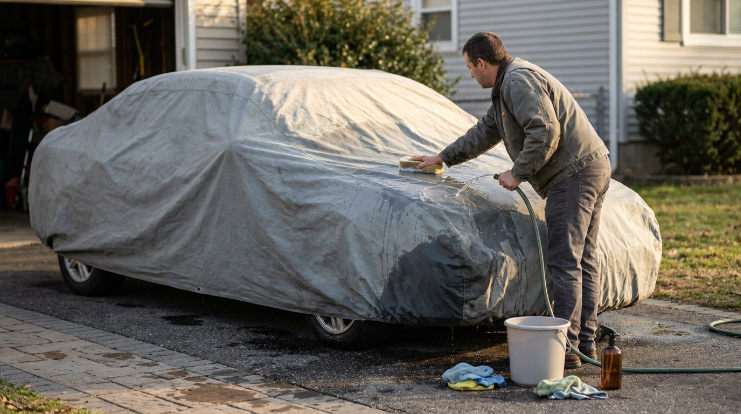
The safest restoration method is to clean first, dry completely, reassess the real fading, and then apply only compatible protection. Do not begin with dye, paint, polish, or a strong chemical cleaner.
1. Shake or brush away loose contamination
Remove leaves, sand, pollen, and loose dust before getting the cover wet. This prevents you from grinding abrasive debris into the fibers while washing.
A soft brush or gentle shake is usually enough. Avoid stiff brushes on delicate or coated material.
2. Test a hidden section
Choose a lower corner or hem that is normally out of view. Clean that small area according to the manufacturer’s directions and let it dry.
If the color noticeably improves, much of the “fading” may be embedded dirt. If it stays pale, UV exposure is the more likely explanation.
3. Wash the entire cover correctly
Follow the care label instead of relying on one washing method for every material. Cover makers often specify particular machine types, cleaners, temperatures, and drying methods.
For a general example, car cover cleaning guidance from Simple Green recommends gentle cleaning, thorough rinsing, and avoiding aggressive washing methods that can damage the material.
- Remove loose dirt. Shake the cover before washing.
- Use the approved cleaner. Avoid improvising with strong household chemicals.
- Work gently. Use a soft sponge or microfiber cloth when hand washing.
- Rinse thoroughly. Cleaner left behind can attract dirt and affect water behavior.
- Clean the inner face if needed. Grit on the paint-contact side can scratch the vehicle.
4. Dry the cover completely
Drying instructions vary significantly by fabric. Some specialty covers allow controlled machine drying, while others should air dry only.
I check seams, elastic hems, mirror pockets, and reinforced areas before calling a cover dry. These thicker areas can retain moisture longer than the center panels.
5. Recheck the color in natural light
Do not judge the cover while it is wet. Water temporarily deepens many fabrics and can make faded material look restored.
Wait until the cover is fully dry. Compare shaded areas with the roof and hood sections that received the most sunlight.
6. Restore protection rather than forcing color back
If the remaining issue is genuine fading, focus on preserving the material that remains. Use a UV protectant, fabric treatment, or durable water-repellent product only when the manufacturer confirms compatibility.
A durable water-repellent treatment, often shortened to DWR, helps water bead and roll away from certain outdoor fabrics. It does not normally replace lost dye or permanently reverse UV fading.
7. Test water behavior after treatment
Once the product has cured according to its instructions, lightly spray the cover with water. Observe whether water beads, rolls away, or immediately saturates the fabric.
Water repellency is only one part of cover performance. Breathability, strength, fit, softness, and seam condition matter too.
Section Takeaway: Restoration should start with cleaning and diagnosis, not recoloring. Preserve the cover’s protective properties first and treat appearance as secondary.
Does the Restoration Method Change for Fabric and Vinyl Covers?
Yes. Woven fabrics, multilayer covers, and vinyl-like coated surfaces react differently to cleaners and protectants, so using one universal restoration product can cause damage.
| Cover type | Safe priority | Main risk |
|---|---|---|
| Woven polyester | Gentle cleaning and approved UV/water treatment | Damaging the factory finish |
| Solution-dyed acrylic | Material-specific cleaning | Using unnecessary harsh chemicals |
| Multilayer cover | Low-stress washing and careful drying | Layer separation or heat damage |
| Vinyl or coated surface | Compatible cleaner and UV protectant | Solvent damage, cracking, or greasy residue |
Fabric car covers
With fabric, I am especially cautious about products that leave a thick coating. Car-cover materials often depend on breathability to let trapped heat and moisture escape.
Some high-quality outdoor covers use fade-resistant, solution-dyed materials specifically because long sun exposure is demanding. Covercraft, for example, lists UV resistance and fade resistance as important differences among its outdoor cover fabrics.
Vinyl and coated covers
Vinyl-like materials may respond better cosmetically to a compatible UV protectant. A suitable product can improve the surface appearance without literally replacing dye that sunlight destroyed.
Avoid tire shine, petroleum products, household furniture polish, and unknown silicone-heavy dressings. A temporarily darker finish is not worth compromising the material.
What Should You Never Use on a Faded Car Cover?
Avoid bleach, fabric softener, harsh solvents, uncontrolled heat, stiff brushes, and high-pressure cleaning unless the manufacturer specifically allows them. These methods can weaken fibers or damage water-resistant treatments.
Do not use bleach to make the color look even
Bleach does not restore faded pigment. It can further discolor material and weaken fibers or specialized finishes.
Do not apply fabric softener
Fabric softener can interfere with water resistance and fabric performance. Several car-cover care instructions specifically warn against it.
Do not pressure-wash the cover aggressively
High-pressure water can stress fabric, seams, coatings, and bonded layers. A garden hose with modest pressure is a safer starting point for most hand-washing jobs.
Do not use automotive paint or spray dye as a shortcut
Paint may clog breathable fabric, stiffen the surface, crack during folding, or transfer onto the vehicle. Dye can also react unpredictably with coatings and mixed-material covers.
I would only recolor a car cover when its manufacturer specifically provides an approved process. Otherwise, replacement is usually the safer solution for severe cosmetic fading.
Do not use heat to “restore” the finish
Heat guns, irons, steamers, and uncontrolled dryer heat can shrink or deform synthetic materials. They can also damage coatings and bonded layers.
Section Takeaway: A faded cover is still potentially useful; a chemically damaged or heat-damaged cover may not be. Gentle restoration protects function before appearance.
How Can You Stop a Car Cover From Fading Again?
You cannot eliminate outdoor UV exposure, but you can slow future deterioration. Good cleaning, correct storage, proper fit, and choosing a cover designed for your climate make the biggest difference.
Choose a cover built for strong sunlight
If your car lives outdoors, look at UV resistance rather than buying only for rain protection. Manufacturers offer materials designed specifically for intense sun exposure.
Car-cover fabrics also need to balance weather resistance with breathability. A completely impermeable cover can trap moisture underneath when conditions change.
Keep the cover clean
Dust and contamination do more than change the appearance. Dirt embedded in a cover can affect performance and may transfer back onto the vehicle.
- Shake off loose debris regularly.
- Remove bird droppings and tree contamination promptly.
- Wash when the material becomes visibly dirty.
- Keep the paint-contact side away from dirty pavement.
- Follow the specific cleaning instructions supplied with your cover.
Store it dry and away from sunlight
Direct sunlight should not keep attacking the cover while it is off the car. Store a fully dry cover in a clean bag or dry indoor area.
Avoid crushing it beneath heavy garage equipment. Broad folds or a loose roll reduce unnecessary stress on coatings and seams.
Use the correct cover for your environment
A lightweight indoor dust cover should not be expected to survive years of intense outdoor sunlight. Compare UV, rain, dust, and material ratings before choosing a replacement.
For broader comparisons of vehicle-care equipment, Car and Driver’s car accessories and detailing resources provide independently tested automotive gear information.
I also treat the cover as one part of vehicle maintenance rather than a substitute for it. Consumer Reports’ maintenance and repair resources are useful for keeping the rest of a daily driver’s upkeep organized.
Section Takeaway: Preventing the next round of fading is easier than reversing existing UV damage. Match the cover to your climate, keep it clean, and protect it from unnecessary sun exposure when stored.
Frequently Asked Questions
Can you make a faded car cover look new again?
You may be able to make it look much better if dirt, residue, or weather contamination causes the dull appearance. Permanent UV color loss usually cannot be returned to factory-new condition without recoloring, which may be unsafe for coated or breathable materials.
Can I dye a faded fabric car cover?
I would not dye it unless the cover manufacturer explicitly approves the process. Dye can produce uneven results and may interact with water-repellent coatings, bonded layers, stitching, or specialty fibers.
Will a UV protectant restore faded color?
A compatible UV protectant may deepen or improve the appearance of some surfaces, especially vinyl-like materials. However, it cannot recreate pigment that has permanently degraded from sunlight, so consider it protection rather than true color restoration.
Why did my car cover fade so quickly?
Strong ultraviolet exposure is usually the main reason outdoor covers lose color. Material quality, dye method, climate, storage, contamination, and the amount of daily sunlight also affect how quickly visible fading develops.
Can I use a pressure washer on a car cover?
It is safer to avoid high-pressure washing unless the manufacturer specifically permits it. Strong water pressure can stress coatings, fibers, seams, and multilayer construction, while a normal hose and gentle cleaning are usually sufficient.
Should I replace a faded car cover?
Fading alone does not automatically mean the cover is unusable. Replace it when the material becomes brittle, torn, thin, delaminated, badly contaminated, or unable to provide the protection expected for your parking conditions.
How do I know whether my cover has lost water resistance?
Clean and dry the cover first, then lightly spray it with water. If a material designed to repel water immediately saturates instead of shedding it, its water-repellent finish may need an approved treatment or the cover may be nearing replacement.
A faded car cover does not automatically belong in the trash. Start with careful cleaning, identify the material, and judge the cover by its strength and protective performance rather than color alone.
If the fabric remains sound, protect what you have and reduce further UV exposure. If it has become brittle, thin, cracked, or delaminated, replacing it is usually the smarter way to protect your vehicle.