
How to Stop Water Pooling on a Car Cover

Quick Answer
To stop water pooling on a car cover, remove the low spots where rain collects. Start with a properly fitted cover, tighten only the manufacturer-approved straps, and create a gentle ridge so water can run toward the sides instead of sitting on the roof, hood, or trunk. Choosing a well-fitted cover designed for outdoor use also matters, as shown in current car cover testing.
Quick Steps to Stop Pooling
- Remove existing water: Lift the low part of the cover gently so accumulated rain can run off.
- Center the cover: Make sure the roof, mirrors, hood, and trunk sections sit where the manufacturer intended.
- Secure the fit: Use the supplied hems, straps, or tie-down system without stretching the fabric excessively.
- Create a ridge: Use a purpose-made, padded cover support if large flat sections continue collecting water.
- Check the cover: Replace badly stretched, oversized, torn, or poorly fitting material.
- Keep everything dry: Let both the car and cover dry before reinstalling after heavy rain.
Water pooling on a car cover usually means the fabric has formed a low spot where rain cannot drain. It is common around flat roofs, long hoods, trunks, and oversized covers.
I treat pooling as a fit-and-drainage problem first. This guide explains how to correct it without puncturing the cover, damaging paint, or trapping more moisture underneath.
In This Guide
Why Does Water Pool on a Car Cover?
Water pools when part of the cover sits lower than the surrounding fabric. Rain flows into that depression faster than it can drain away.
Definition: Car-cover water pooling is the accumulation of rainwater in a sagging or low section of cover material instead of water shedding naturally toward the vehicle’s sides.
An oversized cover can create deep pockets
A cover that is too large leaves excess fabric across the roof, hood, or trunk. Once a little rain collects there, its weight pulls the material lower.
That deeper pocket catches even more rain. The problem can become noticeably worse during prolonged storms.
- Roof center: Excess fabric can sag between the windshield and rear glass.
- Hood: A loose front section can form a basin between raised body contours.
- Trunk: Long rear sections may sag where the deck is broad and flat.
- Pickup beds: Covers spanning an open or irregular area can develop large unsupported sections.
The cover may have stretched
A cover can fit correctly when new and still develop pooling later. Repeated wind, rain, UV exposure, and handling can gradually change how the fabric sits.
Check the elastic hems, straps, seams, and large fabric panels. A section that has permanently stretched may never regain its original drainage shape.
Vehicle shape matters
Some vehicles naturally give water fewer paths to escape. Broad roofs, horizontal trunk lids, roof accessories, spoilers, and unusual body shapes can change the way a cover drapes.
The goal is not to pull the fabric drum-tight. You want a smooth slope that encourages runoff while avoiding excessive pressure on paint and trim.
Section Takeaway: Water pooling is usually caused by a low spot created by excess fabric, poor positioning, lost tension, or an unsupported flat section. Fix the shape of the cover before blaming the rain.
How Do You Stop Water Pooling on a Car Cover?
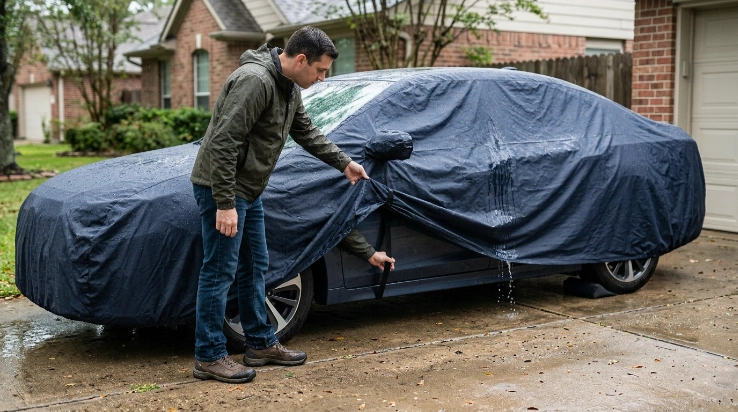
The best fix is to restore a smooth drainage path across the cover. Start with the simplest adjustments before adding any support underneath.
1. Remove pooled water carefully
Do not leave a deep pool sitting on the cover longer than necessary. The weight can pull the material farther into the low area.
Lift the sagging section gently from below when practical. Let the water run toward an edge instead of dragging heavy wet fabric across the paint.
2. Re-center the cover
Check whether the front, rear, mirror pockets, seams, and hems line up correctly. A cover installed several inches off-center can create extra material on one side.
Reposition it according to the manufacturer’s installation instructions. Do this when the cover is no longer carrying a heavy pool of water.
3. Use the approved securing system
Fasten the cover using its supplied straps, elastic hems, or approved tie-down points. Proper securing reduces movement and helps the fabric maintain its intended shape.
- Seat the front and rear elastic hems correctly.
- Connect approved underbody straps if supplied.
- Keep buckles and hard hardware away from painted surfaces.
- Do not stretch the cover beyond its intended fit.
Kelley Blue Book’s vehicle storage guidance also recommends a properly sized cover and warns that a loose cover can move against paint.
4. Add a padded support when necessary
If the cover still forms a basin, a purpose-made car-cover support can raise that low point. The support creates a tent-like slope so water moves toward the edges.
I prefer a broad, padded support rather than improvising with a hard object. Concentrated pressure from buckets, boards, sharp poles, or similar items can create new problems.
5. Replace a cover that cannot hold its shape
Sometimes adjustment is not enough. A badly stretched or substantially oversized cover can keep sagging every time it rains.
Replacing it with the correct vehicle size is often more dependable than continually adding tension or makeshift supports.
Section Takeaway: Remove the water, re-center the cover, secure it correctly, and add a safe support only if a low spot remains. Never solve pooling by punching drainage holes into the fabric.
Should You Put Supports Under a Car Cover?
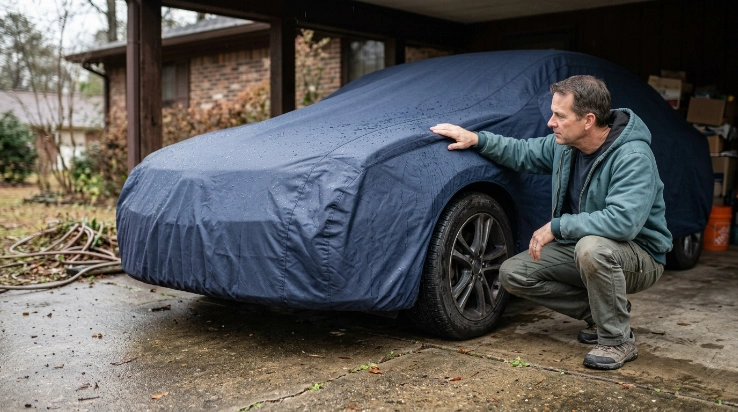
A support can help when a wide, flat section repeatedly collects rain. It should create a gentle high point without putting damaging pressure on the vehicle.
Use purpose-made or well-padded supports
A car-cover support system is designed to hold fabric above a low area. Some systems create a ridge, while others lift a central section into a shallow peak.
- Best use: Persistent low spots on roofs, hoods, trunks, or covered open areas.
- Good design: Broad, padded contact points with no sharp edges.
- Correct height: Just enough lift to create drainage toward the sides.
- Secure setup: Nothing should shift, fall, or rub the finish in wind.
Avoid hard improvised objects
Placing a sharp pole, bucket edge, piece of lumber, or metal object beneath the cover can concentrate pressure. Movement can also transfer that pressure directly toward paint, glass, trim, or body panels.
A support does not need to make the cover steep. A modest ridge is usually enough to eliminate the basin where rain collects.
Can Pooled Water Damage a Car Cover or Vehicle?
A small temporary puddle is not automatically a disaster. Repeated or heavy pooling, however, can increase fabric stress and keep moisture around the vehicle longer.
| What You Notice | Likely Problem | Best Response |
|---|---|---|
| Shallow puddle after rain | Minor low spot | Re-center and improve runoff |
| Deep recurring pool | Loose or unsupported fabric | Correct fit or add padded support |
| Water underneath | Leakage, condensation, or trapped moisture | Remove cover and dry both surfaces |
| Permanent fabric sag | Stretching or incorrect sizing | Consider replacing the cover |
| Cover flaps in wind | Loose fit or poor securing | Use approved straps and check sizing |
Pooling puts extra load on the fabric
Water is heavy enough to increase tension as the pool grows. Seams, elastic sections, straps, and already-stretched panels can carry more load than they experience when dry.
Moisture underneath is a different warning
Finding water below the cover does not necessarily mean the puddle soaked straight through. Condensation can form when moist air contacts a cooler vehicle surface.
The National Weather Service explains that condensation begins when air reaches its dew point. That is one reason breathability matters when a vehicle stays covered outdoors.
Movement can affect the finish
A loose wet cover can become heavier and move differently in wind. Dirt trapped between moving fabric and paint can increase the chance of rubbing or visible marks.
Keep the vehicle and inner surface of the cover clean. Correct the fit if you see repeated flapping or shifting.
What Type of Car Cover Sheds Water Best?
Look for the right combination of fit, water resistance, breathability, secure fastening, and a shape that does not leave large unsupported pockets. No single marketing label guarantees good drainage.
As of 2026, I would not choose a cover solely because the package says “waterproof.” Moisture management underneath the fabric matters too.
- Vehicle-specific fit: Reduces excess material that can become a water basin.
- Outdoor-rated fabric: Designed to handle rain, sun, and changing weather.
- Water-shedding surface: Encourages rain to bead or run away rather than soak into the material quickly.
- Breathability: Helps moisture vapor and heat escape from underneath.
- Secure hems and straps: Help maintain position during wind and rain.
Covercraft explains why it favors water-resistant, breathable car-cover materials rather than simply sealing moisture beneath an airtight layer.
An indoor dust cover is a different product. If the vehicle sits outside, use a cover specifically intended for outdoor conditions.
How Do You Prevent Pooling During Heavy Rain or Storage?
Preventing pooling is easier than correcting a deep sag during a storm. Inspect the installation whenever extended rain is expected.
Before rain
- Start with a clean, completely dry vehicle.
- Make sure the cover itself is dry and correctly oriented.
- Smooth out obvious folds and low pockets.
- Confirm hems and approved straps are secure.
- Install a suitable support if the same area always sags.
After heavy rain
Check for standing water before leaving the vehicle covered for another long period. Remove significant pools gently and inspect whether the cover has shifted.
If moisture is present underneath, uncover the vehicle and allow both surfaces to dry. Do not immediately seal a wet vehicle beneath a wet cover again.
For long-term storage
Covered indoor storage is generally easier on both the vehicle and cover than continuous outdoor exposure. Edmunds also recommends a garage when possible in its long-term vehicle storage guidance.
If outdoor storage is your only option, inspect the setup periodically. A strap can loosen, fabric can shift, and changing weather can create a new pooling point.
When you remove a wet cover, dry it fully before folding or storing it. Leaving damp material packed together can keep moisture trapped within the fabric and seams.
Section Takeaway: The most dependable long-term setup combines correct sizing, secure installation, water-shedding fabric, breathability, and periodic inspections after severe weather.
Frequently Asked Questions
Is it normal for water to sit on a car cover?
A small amount of temporary water can collect during heavy rain, but a deep pool that appears repeatedly usually means the cover has a low spot. Check its position, fit, straps, and fabric tension rather than ignoring recurring sagging.
Can I poke holes in my car cover so water drains?
I would not cut or puncture the cover. Holes can weaken the fabric, allow water and dirt to reach the vehicle, and may void the manufacturer’s warranty. Correct the slope or use a suitable padded support instead.
Can I use a pool noodle under a car cover?
A soft support may work in some setups, but it must remain stable and should not create concentrated pressure on paint or trim. A purpose-made cover support is preferable because it is designed to produce a controlled drainage slope.
Why does my new car cover still collect water?
The cover may be the wrong size, installed off-center, or sitting over a naturally flat part of the vehicle. Even a new cover can pool if excess material forms a depression that has no clear drainage path.
Does a tighter car cover prevent water pooling?
A correctly fitted cover usually drains better than a loose one, but tighter is not always better. Excessive tension can strain seams, elastic, mirror pockets, and trim. Follow the manufacturer’s sizing and securing instructions.
What should I do if water gets underneath the cover?
Remove the cover and let the vehicle and fabric dry completely. Then determine whether the moisture came from rain penetration, condensation, a previously wet car, or a damp cover before reinstalling it.
Final takeaway: To stop water pooling on a car cover, eliminate the sag rather than trying to drain through it. Correct the fit, secure the cover properly, create a gentle supported slope where necessary, and replace material that has stretched beyond practical adjustment.
Check the cover again after your next heavy rain. If the same spot stays dry and the fabric still fits securely, you have probably solved the underlying problem instead of just emptying the puddle.