
Car Cover Warranty Claim Denied? Reasons, Appeal Steps, and Your Rights

Quick Answer
If your car cover warranty claim was denied, first ask for the exact denial reason in writing. Then compare that reason with the warranty’s covered defects, exclusions, ownership requirements, and claim procedure. The FTC’s consumer warranty guidance is also useful when a written warranty dispute cannot be resolved directly.
Check These First
- Denial reason: Ask whether the company classified the problem as wear, misuse, weather damage, poor installation, or another exclusion.
- Warranty period: Confirm coverage from the original purchase or shipment date.
- Proof of purchase: Find the original receipt, order number, invoice, or retailer record.
- Damage evidence: Take detailed photos of seams, fabric, straps, stitching, and the overall cover.
- Original owner: Many limited warranties apply only to the original purchaser.
- Correct use: Confirm that the cover was installed and used for the environment described by the manufacturer.
Best Next Move
- Build a short evidence package and request a reconsideration instead of simply resubmitting the same claim.
Getting a warranty rejection after a car cover fails can be frustrating, especially when the product was marketed as durable or long-lasting. I don’t assume the first denial automatically settles the issue.
I start by separating a genuine material or workmanship defect from damage the warranty specifically excludes. That distinction usually determines whether an appeal has a realistic chance.
In This Guide
- Why Was My Car Cover Warranty Claim Denied?
- What Does a Car Cover Warranty Actually Cover?
- Is the Problem a Defect or Excluded Damage?
- How Do You Appeal a Denied Car Cover Warranty Claim?
- What Evidence Makes a Warranty Appeal Stronger?
- When Should You Escalate a Warranty Dispute?
- Frequently Asked Questions
Why Was My Car Cover Warranty Claim Denied?
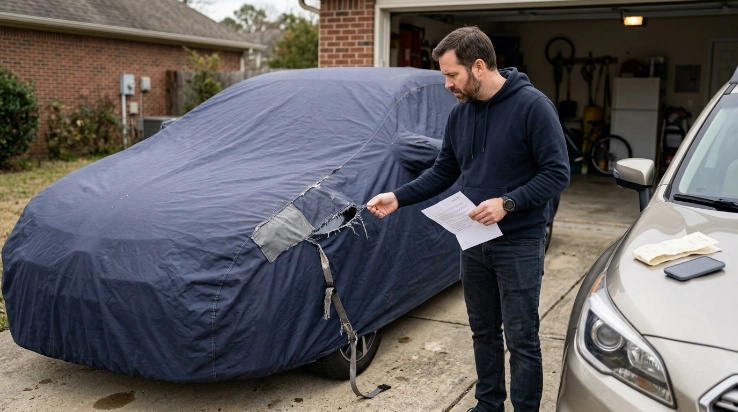
A car cover warranty claim is commonly denied when the company decides the failure falls outside its written coverage. The disagreement often centers on what caused the damage rather than whether damage exists.
A car cover warranty claim is a request for repair, replacement, or another remedy under the written warranty supplied with a cover. Approval depends on that warranty’s specific terms.
Common denial reasons include:
- Normal wear: The fabric gradually wore thin instead of failing from a manufacturing defect.
- Misuse or abuse: The cover was dragged, overstretched, punctured, burned, or otherwise used outside normal conditions.
- Weather-related damage: Wind, hail, storms, excessive heat, or another environmental event caused the failure.
- Installation problems: Incorrect attachment or excessive tension damaged seams, straps, grommets, or fabric.
- Wrong application: An indoor-rated cover was used outdoors or the product was used for something other than its intended purpose.
- Expired coverage: The warranty period has already ended.
- Ownership restrictions: The warranty applies only to the original purchaser.
- Missing documentation: The claimant cannot provide an order number, receipt, photos, or other required evidence.
For example, Covercraft states that its warranty covers defects in materials and workmanship under normal use. Its published claim guidance excludes misuse, accidents, normal wear, and weather-caused damage.
You can review the company’s current Covercraft warranty terms to see why checking the exact product line matters.
CarCovers.com also publishes product-specific warranty periods and a detailed list of exclusions. Those include several types of rips, normal wear, staining, improper handling, and other forms of damage.
The important lesson is simple. A long warranty period does not mean every type of failure during that period is covered.
What Does a Car Cover Warranty Actually Cover?
Most car cover warranties focus on defects in materials or workmanship. They are not necessarily insurance against every problem that happens while you own the cover.
That wording matters more than phrases such as “10-year warranty” or “lifetime warranty.” Always read what the warranty promises to repair or replace.
A typical limited warranty may address problems such as:
- Premature material failure caused by a covered defect
- Defective stitching or construction
- Manufacturing-related seam failure
- Other covered workmanship defects under normal use
It may separately exclude:
- Fading or staining
- Ordinary aging
- Accidental cuts and punctures
- Damage from sharp vehicle accessories
- Wind-related tearing
- Improper storage
- Improper installation
- Damage to the vehicle underneath the cover
There’s another detail owners sometimes miss. A replacement cover may not start a brand-new warranty period.
Some manufacturers continue coverage from the original purchase or shipment date. That can matter if a replacement fails several years later.
I also separate a warranty from a return policy. A 30-day return period may allow refunds or exchanges, while the longer warranty may offer only repair or replacement for qualifying defects.
The CarCovers.com warranty policy, for example, distinguishes its return period from its longer product warranties and explains that warranty coverage can be prorated for some products.
Is the Problem a Defect or Excluded Damage?
The strongest warranty disputes usually turn on causation. You need evidence showing why the cover failed, not simply evidence showing that it is damaged.
When I inspect a failed cover, I look closely at the starting point of the damage. A clean seam separation can tell a different story from a jagged tear centered around an antenna or sharp body accessory.
| What You See | Possible Explanation | Warranty Position | Evidence to Gather |
|---|---|---|---|
| Stitching separates without torn surrounding fabric | Possible workmanship failure | Potentially stronger claim | Close photos of stitching and full cover |
| Fabric tears at antenna or sharp accessory | Contact or installation damage | Often excluded | Fit photos and installation instructions |
| Cover gradually becomes thin or worn | Normal wear or environmental exposure | Depends heavily on policy | Age, usage history, product terms |
| Grommet pulls out after severe flapping | Wind, fit, or attachment damage | Frequently disputed | Fit, straps, weather conditions, grommet photos |
| Fabric fails repeatedly in an unstressed area | Possible material defect | Worth documenting carefully | Wide and close photos plus purchase history |
Do not alter the damage before the claim is reviewed. Cutting loose fabric, adding patches, washing away evidence, or making major repairs may make the original failure harder to evaluate.
Keep the cover if possible. A manufacturer may request a physical inspection instead of accepting photographs alone.
How Do You Appeal a Denied Car Cover Warranty Claim?
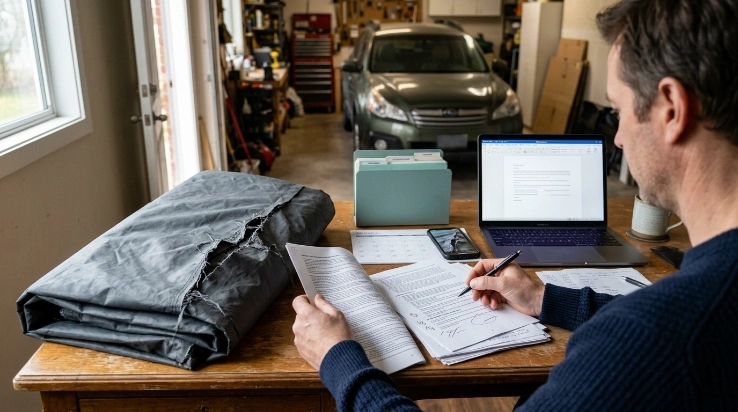
An effective appeal should address the company’s reason for denying the claim. Sending the same description and photographs again rarely adds anything.
I would handle the appeal in this order:
- Request the denial reason in writing. Ask which specific warranty clause or exclusion applies.
- Download the warranty terms. Save the version available at the time of your dispute.
- Verify your dates. Check purchase date, shipment date, warranty period, and claim date.
- Confirm eligibility. Verify original ownership and any authorized-retailer requirements.
- Match evidence to the denial. Address the claimed cause directly.
- Write a short timeline. Include purchase, first use, discovery of failure, and claim submission.
- Request reconsideration. State the remedy you believe the written warranty provides.
- Keep the correspondence. Save emails, ticket numbers, photographs, shipping records, and names.
Suppose the company says the cover tore because it was too tight. Photos showing the cover properly fitted before the tear may be more useful than ten close-ups of the damaged fabric.
If the denial says “normal wear,” show why the failure appears abnormal for the age and use of the product. Focus on observable facts instead of anger or speculation.
Keep your appeal concise. A claims reviewer should be able to understand the dispute in a minute or two.
What Evidence Makes a Warranty Appeal Stronger?
The best warranty evidence connects the purchase, product, failure, and claimed cause. Think of it as building a simple file rather than sending random photos.
Start with the paperwork:
- Original order confirmation or receipt
- Order number
- Product model or fabric name
- Purchase or shipment date
- Vehicle year, make, and model if relevant
- Warranty terms that apply to that product
- Original claim number
- Written denial
Then document the physical problem:
- One photo of the entire cover
- One photo showing the cover fitted to the vehicle when practical
- Several close photographs of the failure
- Photos of nearby seams, straps, hems, or attachment points
- Photos showing both sides of damaged fabric when useful
I also write down how the cover was normally used. Include whether the vehicle stayed indoors or outdoors, how the cover was secured, and roughly when the problem first appeared.
Avoid making claims your evidence cannot support. Saying “the seam opened during normal installation” is more useful than declaring that the entire product is defective without showing why.
If a company requests the physical cover, photograph everything before shipping it. Keep tracking information and a copy of the shipment receipt.
When Should You Escalate a Warranty Dispute?
Escalation makes sense when you have addressed the stated exclusion but the company still refuses to reconsider the claim. It is most useful when the written warranty appears inconsistent with the explanation you received.
Start inside the company:
- Ask the original representative to reconsider the evidence.
- Request review by a supervisor or warranty specialist.
- Contact the manufacturer if the retailer handled the first claim.
- Use any written dispute procedure listed in the warranty.
If the dispute remains unresolved, federal and state consumer protections may become relevant. The exact remedy depends on the written warranty, product, transaction, facts, and applicable state law.
The federal Magnuson-Moss Warranty Act guidance explains requirements and restrictions applying to certain written consumer-product warranties. The FTC also explains that consumers can pursue unresolved warranty problems through available dispute-resolution or legal channels when appropriate.
For an unresolved consumer warranty problem, keep your communications written and organized. The FTC recommends contacting the seller first and, if necessary, contacting the manufacturer in writing.
Do not confuse a disagreement over the cover with a claim for vehicle paint damage. Many car-cover warranties expressly limit remedies to the cover itself and exclude consequential vehicle damage.
If the dollar amount or property damage is substantial, consider obtaining advice from your state consumer protection office or a qualified consumer-law attorney. This guide explains the process but is not legal advice.
Frequently Asked Questions
Can a company deny my warranty claim because the car cover ripped?
Yes, depending on the cause and warranty language. A rip caused by misuse, sharp accessories, wind movement, excessive stretching, or ordinary wear may be excluded, while a qualifying material or workmanship failure may receive different treatment.
Does a lifetime car cover warranty mean every failure is covered forever?
No. “Lifetime” warranties can still contain eligibility rules, exclusions, remedy limits, ownership restrictions, and definitions of the covered lifetime. Read the complete written policy instead of relying on the warranty length alone.
Can a car cover warranty require proof of purchase?
Yes. Manufacturers commonly request a receipt, invoice, order number, or similar record to establish the product, original purchaser, and warranty start date. Keep the purchase record for as long as you own a covered product.
What if I bought the cover from an unauthorized seller?
Check the warranty carefully. Some manufacturers limit coverage to purchases made directly or through authorized retailers, while others use different rules. Save the seller information and original transaction record before contacting the manufacturer.
Can the company require me to mail the damaged cover back?
Potentially, yes, if the warranty or claims procedure allows inspection. Some companies approve claims from photographs while reserving the right to request the physical product before deciding whether a failure is covered.
Does getting a replacement restart my warranty?
Not necessarily. Some car-cover manufacturers state that a replacement continues under the original warranty period instead of starting a new one. Check the specific replacement terms before assuming you receive another full coverage period.
What should I do if my appeal is denied again?
Request the final decision and reason in writing, keep your evidence, and review the warranty’s dispute process. For unresolved consumer disputes, you can also review FTC guidance and applicable state consumer-protection options.
Bottom line: A denied car cover warranty claim deserves a careful review, not an automatic assumption that either side is right. The written warranty, the cause of failure, and your documentation matter most.
Get the denial reason, match your evidence to it, and make one organized appeal. If the written terms appear to support your claim and the dispute remains unresolved, move through the company’s escalation process before considering outside consumer-protection options.
