
How to Stop a Car Cover From Fading

Quick Answer
You cannot completely stop an outdoor car cover from fading, but you can slow it significantly. Reduce direct sunlight when possible, choose a UV-resistant outdoor cover, keep the fabric clean, avoid harsh cleaning chemicals, and store the cover away from sunlight when it is not being used. You can also compare construction and outdoor suitability in Car and Driver’s car-cover guide.
Quick steps to slow car cover fading
- 1. Reduce direct sun: Use a garage, carport, shade structure, or naturally shaded parking spot whenever practical.
- 2. Choose UV resistance: Use an outdoor-rated cover specifically designed for prolonged sunlight exposure.
- 3. Keep it clean: Remove dirt, pollen, bird droppings, and other contamination before they remain baked onto the fabric.
- 4. Wash it gently: Follow the manufacturer’s care instructions and avoid bleach, aggressive detergents, or excessive dryer heat.
- 5. Store it correctly: Dry the cover completely and keep it in a cool, shaded location whenever it is off the vehicle.
- 6. Inspect the fabric: Fading alone may be cosmetic, but brittleness, cracking, powdering, or tearing can signal UV deterioration.
If you’re wondering how to stop a car cover from fading, the most important thing to know is that outdoor fading cannot be eliminated forever. Sunlight eventually ages most exposed fabrics, coatings, stitching, and pigments.
I treat fading as something to manage rather than something I can magically prevent. In this 2026 guide, I’ll show you how I reduce UV exposure, clean covers safely, choose better materials, and recognize when fading has become actual deterioration.
In This Guide
Why Does a Car Cover Fade in the Sun?
A car cover fades because sunlight gradually changes pigments, coatings, and fibers in the exposed material. Ultraviolet radiation and heat can accelerate this aging during long-term outdoor use.
A car cover is a removable fabric barrier designed to protect a parked vehicle from environmental exposure such as sunlight, dust, pollen, rain, bird droppings, and debris.
UV exposure is usually the main culprit
Outdoor covers spend hours absorbing sunlight that would otherwise strike the vehicle. That makes the cover a sacrificial protective layer.
Color loss is often the first thing you notice. A rich black, blue, or gray fabric may become lighter or washed out across the roof and hood areas.
- Direct UV exposure: Long periods in unshaded sunlight accelerate pigment and material aging.
- Heat: Hot outdoor conditions can place extra stress on coatings, elastic, adhesives, and synthetic fibers.
- Weather contamination: Dirt, pollutants, sap, and bird droppings can stain or chemically attack exposed surfaces.
- Harsh washing: Bleach, aggressive cleaners, and incorrect machine settings may strip finishes or weaken fabric.
- Age: Repeated exposure eventually affects even a good outdoor cover.
Fading and UV damage are not exactly the same thing
A faded cover is not automatically a failed cover. Pigment can change before the underlying fabric loses useful strength.
UV damage becomes more concerning when fading appears with stiffness, thin spots, cracking, powdery residue, weak seams, or easy tearing.
That distinction matters. I would rather keep using an ugly but strong cover than trust a good-looking cover whose fabric has become fragile.
For broader information about how environmental exposure affects parked vehicles, see the Consumer Reports street-parking guide.
How Do You Stop a Car Cover From Fading?
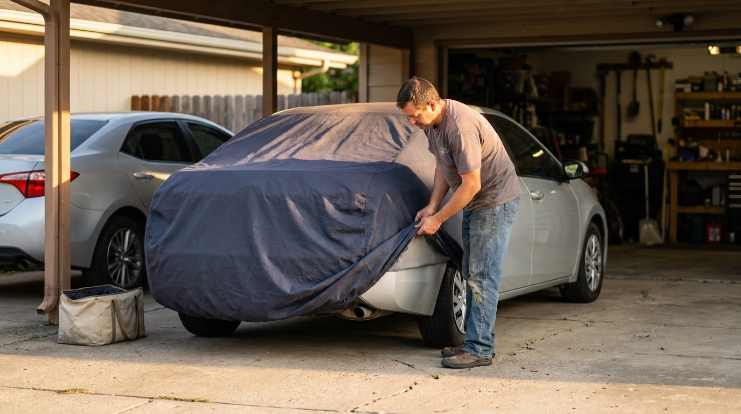
You slow car cover fading by reducing UV exposure and treating the fabric according to its intended design. Shade, proper material choice, gentle cleaning, and correct storage make the biggest practical difference.
1. Park in shade whenever possible
Reducing direct sunlight is the simplest solution. Even a durable outdoor cover receives less UV exposure when the vehicle spends part of the day under shade.
A garage offers the strongest protection. A carport, parking structure, or shaded driveway can also reduce exposure.
2. Use an outdoor-rated UV-resistant cover
Do not assume every car cover is suitable for year-round outdoor parking. Lightweight indoor dust covers solve a different problem.
Look for manufacturer information describing the cover as suitable for outdoor use and UV exposure. I give that information more weight than vague claims about having many layers.
3. Keep contamination from baking into the material
Bird droppings, tree sap, pollen, dust, and other debris should not remain on the cover indefinitely. Contamination becomes harder to remove after repeated sun and heat exposure.
- Shake off loose leaves and debris.
- Remove bird droppings according to the manufacturer’s cleaning instructions.
- Do not aggressively scrub coated fabric.
- Clean problem areas before stains become permanent.
4. Avoid bleach and harsh household cleaners
A strong cleaner can make a faded cover look worse instead of better. It may also affect waterproof coatings, water repellency, stitching, or colored fabric.
I start with the cleaning method listed by the cover manufacturer. If the label prohibits bleach, fabric softener, machine drying, or specific detergents, I follow that restriction.
5. Do not leave the cover outside when you do not need it
An uncovered cover still receives UV exposure if it is tossed over a fence, chair, or driveway surface. Store it after removal instead.
I dry it first, fold it without grinding the inner surface into the ground, and move it somewhere shaded.
6. Inspect the most exposed areas
The roof, hood, and trunk sections usually receive more overhead sunlight than lower side panels. Those are the areas I check first for color changes and weakening.
On an outdoor-covered sedan, I have seen the upper fabric lose color much faster than the material hanging near the rocker panels. That uneven fading was a useful reminder of where the solar exposure was concentrated.
| Prevention Method | What It Helps With | When to Use It | Main Caution |
|---|---|---|---|
| Garage or covered parking | Reduces direct UV exposure | Whenever available | Watch for garage moisture |
| Outdoor UV-resistant cover | Improves suitability for prolonged sunlight | Regular outdoor parking | Still ages with long exposure |
| Regular inspection | Catches brittleness and failed seams early | Every few weeks during heavy outdoor use | Do not judge condition by color alone |
| Manufacturer-approved cleaning | Removes damaging contamination safely | When dirty or stained | Incorrect detergent may damage coatings |
| Indoor shaded storage | Stops unnecessary exposure while removed | Whenever the cover is off the car | Cover must be dry before storage |
Section Takeaway: The best way to slow fading is to reduce unnecessary sunlight and use a cover built for the environment. Cleaning and storage habits then help preserve the material you already have.
Can You Use UV Protectant Spray on a Car Cover?
Sometimes, but only when the cover manufacturer says the product is compatible with the fabric. A random UV spray can change breathability, water resistance, appearance, or surface texture.
I never treat every cover like patio furniture. Vehicle covers can use specialized coatings and multi-layer constructions that react differently to aftermarket chemicals.
Check the care label before spraying anything
Find the sewn label, instruction sheet, product page, or manufacturer’s customer-support information. Look specifically for approved fabric treatments.
- Confirm compatibility: Know whether the material is polyester, polypropylene, acrylic, or another construction.
- Check waterproofing: Make sure the treatment will not interfere with an existing water-repellent finish.
- Test carefully: If permitted, test an inconspicuous area first.
- Let it cure: Follow the treatment maker’s drying instructions before putting the cover back on the vehicle.
If the manufacturer does not recommend aftermarket treatment, I would not experiment just to restore color. Protecting the car matters more than making the cover look newer.
Which Car Cover Materials Handle Sun Exposure Best?
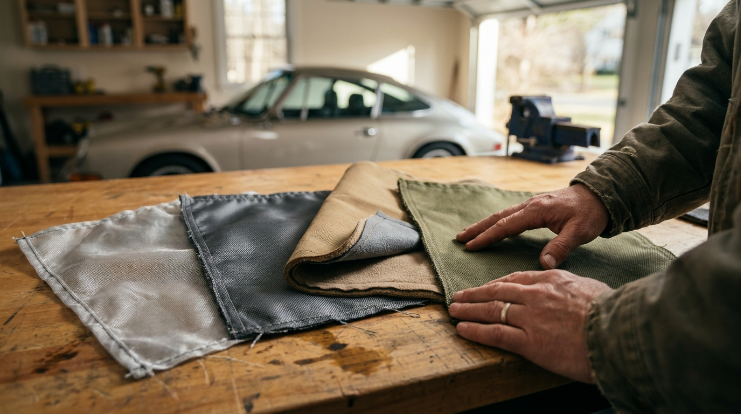
No single material is automatically best for every climate. The better choice is an outdoor cover whose manufacturer specifically rates its construction for sustained sunlight and your storage conditions.
Material labels alone can be misleading. Two polyester covers, for example, may use different weaves, coatings, stabilizers, thicknesses, stitching, and inner surfaces.
Outdoor versus indoor construction matters most
An indoor dust cover mainly handles dust and light contact in a controlled environment. An outdoor cover may also need to handle sun, wind, rain, pollen, temperature changes, and airborne contamination.
- Outdoor-rated synthetic covers: Often designed to balance weather resistance, weight, and breathability.
- Multi-layer covers: Can combine different functions, but layer count alone does not prove superior UV resistance.
- Woven outdoor fabrics: May offer strong durability when specifically engineered for continuous exterior exposure.
- Light indoor fabrics: Better suited to garages and controlled storage than full-time sunlight.
Fit matters too. A sun-resistant material still performs poorly if a loose cover constantly flaps, tears, or exposes sections of the vehicle.
The Edmunds car-maintenance section is also a useful reference when evaluating vehicle protection and long-term storage habits.
How Should You Wash and Store a Car Cover?
Wash the cover according to its manufacturer’s instructions and dry it completely before storage. Avoid improvising with hot dryers, bleach, fabric softener, or concentrated cleaners unless the manufacturer specifically permits them.
Use the least aggressive cleaning method that works
First remove loose dirt without grinding it deeper into the fabric. Spot treatment may be enough when only one section is dirty.
- Check the care label before washing.
- Shake or brush away loose debris gently.
- Use the recommended detergent and water temperature.
- Rinse thoroughly if the instructions require rinsing.
- Dry the cover completely before folding it.
- Store it away from sunlight, excessive heat, and standing moisture.
Never store a damp cover just because the outside feels dry. Seams, hems, straps, and thicker sections can retain moisture longer.
Keep the clean side clean
The surface touching your paint deserves special attention. Do not drop it onto a gritty driveway while folding or unfolding the cover.
I fold each side inward toward the center before lifting the remaining section away from the vehicle. That reduces ground contact and makes the cover easier to store cleanly.
For general exterior-care practices, Kelley Blue Book’s car-advice section provides another useful automotive reference.
When Does a Faded Car Cover Need Replacement?
Do not replace a cover solely because its color looks lighter. Replace it when fading accompanies physical deterioration that affects protection, fit, or safe contact with the vehicle.
I use my hands as much as my eyes during inspection. Fabric condition tells me more than appearance alone.
Warning signs that matter more than faded color
- Brittle fabric: The material feels dry, stiff, crunchy, or paper-like.
- Easy tearing: Light tension causes the fabric or seams to separate.
- Powdery residue: The outer surface sheds material when handled.
- Thin spots: Sun-exposed sections become noticeably weaker than protected sections.
- Failed seams: Stitching opens around mirrors, hems, straps, or panel joints.
- Loose fit: Worn elastic or stretched material allows excessive movement.
- Damaged inner surface: Rough, peeling, or contaminated material can threaten the paint.
A faded but flexible and structurally sound cover may still have useful life. A brittle cover with strong original color may be the bigger problem.
When several warning signs appear together, I stop trying to save the cover. Replacing a deteriorated barrier is usually smarter than letting weakened fabric fail during wind or bad weather.
Frequently Asked Questions
Why did my black car cover turn gray?
Long-term sunlight can fade dark pigments, making black material appear charcoal or gray. Dirt, weather exposure, washing methods, and material age can contribute too, so inspect the fabric for brittleness or thinning rather than judging it only by color.
Can I restore the original color of a faded car cover?
Usually, restoring the exact factory color is not practical or necessary. Dyes and coatings may affect water resistance, breathability, or the paint-contact surface, so I would only use a restoration product specifically approved by the cover manufacturer.
Does a faded car cover still block UV rays?
It may, because visible color fading does not automatically mean the fabric has lost all protective ability. However, heavy fading combined with thinning, cracking, powdering, or brittleness suggests the material is deteriorating and deserves closer inspection.
Does washing a car cover make it fade faster?
Correct washing should help remove damaging contamination, but improper washing can accelerate wear. Hot water, harsh detergents, bleach, aggressive scrubbing, fabric softener, or high dryer heat may harm some covers, so follow the manufacturer’s instructions.
Is a lighter-colored car cover better in direct sun?
Color can affect how a surface absorbs and reflects solar energy, but color alone does not determine outdoor durability. UV-resistant construction, fabric quality, coatings, fit, breathability, and manufacturer-rated outdoor use are more important buying factors.
Should I keep my car cover on all day?
If the vehicle needs outdoor protection, leaving a suitable cover installed can make sense. However, remove and store it when it is unnecessary, damaged, heavily contaminated, wet, or unable to remain secure in the conditions.
How often should I inspect an outdoor car cover?
I give a heavily used outdoor cover a quick visual check whenever I handle it and a closer inspection every few weeks. Severe sun, wind, storms, contamination, or frequent daily use justify checking it more often.
Bottom line: You probably cannot keep an outdoor car cover looking brand-new forever, but you can slow fading considerably. Reduce sunlight where practical, choose a genuine outdoor UV-resistant cover, clean it correctly, store it in shade, and pay attention to fabric condition rather than color alone.
A few minutes of inspection can tell you whether the fading is merely cosmetic or whether the cover is beginning to fail. That is the difference that matters when you’re trying to protect your vehicle.