
Dust Under Car Cover: Why It Happens and How to Stop It

Quick Answer
Dust under a car cover usually gets there through gaps around the wheels, bumpers, mirrors, and lower edges, or it was already on the vehicle or inside the cover. Fine airborne particles can also pass through some breathable fabrics. The safest approach is to cover a clean, dry vehicle with a clean, properly fitted cover and follow sensible car maintenance and exterior-care practices.
Most likely causes
- Loose fit: Wind can carry fine dust through openings and move it beneath the cover.
- Dirty paint: Dust already on the vehicle becomes trapped as soon as you install the cover.
- Dirty lining: A cover placed on the ground can transfer grit back onto the paint.
- Breathable fabric: Some materials allow limited air movement, which may also let very fine particles through.
- Frequent removal: Repeated handling can introduce dust, pollen, sand, and garage-floor debris.
Best first step
- Inspect the vehicle, the cover’s inner surface, and its fit before assuming dust is passing directly through the fabric.
Finding dust under a car cover can be frustrating because the cover is supposed to keep the vehicle cleaner. In practice, a cover reduces contamination rather than creating a perfectly sealed environment.
I pay more attention to where the dust appears than to how much is present. Its location often tells you whether the problem is wind, dirty fabric, poor fit, or contamination that was already on the car.
In This Guide
Why Is Dust Getting Under My Car Cover?
Dust gets under a car cover because most covers are not airtight or sealed around the vehicle. Air can enter around the lower edges, wheel wells, mirrors, bumpers, antennas, and other openings.
Dust under a car cover means fine airborne particles, pollen, sand, garage debris, or road contamination has collected between the vehicle’s exterior and the cover’s inner surface.
Wind can push dust through open edges
This is especially common outdoors. A cover may look secure while small gusts repeatedly lift sections near the rocker panels or bumpers.
Every movement creates another opportunity for dusty air to enter.
- Loose hems can leave gaps near the wheels.
- Oversized covers may billow when wind reaches them.
- Poorly positioned straps can allow the cover to shift.
- Open parking areas expose the vehicle to more airborne dirt.
The car may already be dusty
Sometimes the cover isn’t introducing the dust at all. The vehicle may have collected a light film before you covered it.
I’ve seen this catch people out after a short drive. Paint can look clean from several feet away while still carrying fine road dust.
The inside of the cover may be contaminated
A clean exterior doesn’t help if the vehicle-facing side of the cover contains grit. Dragging or folding a cover on concrete is one of the easiest ways to contaminate it.
Check the lining under bright light. Pay special attention to the lower sections, which are more likely to touch dirty ground during removal.
Can Dust Under a Car Cover Scratch Paint?
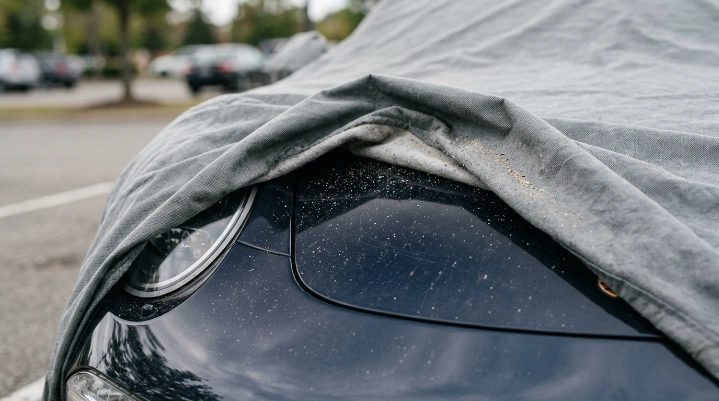
Yes, dust under a car cover can contribute to fine paint scratches when abrasive particles are combined with pressure and movement. Dust sitting motionless on paint is less concerning than grit being rubbed across the clear coat.
The important word is movement.
Fine dust and gritty dirt are not identical
Soft household-style dust is different from sand, dried road grime, mineral particles, or gritty garage debris. You can’t easily tell what’s in a dusty film by looking at it.
That is why I avoid rubbing or wiping covered paint while it is dry.
- Fine airborne dust: Usually lower risk until rubbed across the finish.
- Sand and grit: More abrasive and more likely to produce visible marks.
- Road contamination: May include harder particles picked up while driving.
- Dirty cover fibers: Can hold particles against the clear coat during movement.
A loose cover increases the risk
Outdoor wind can move fabric repeatedly across the hood, roof, fenders, mirrors, and body lines. A few particles trapped at those contact points can create repeated abrasion.
Dark paint often makes light swirls easier to notice. The underlying problem can still occur on lighter finishes.
A sensible exterior-care routine matters here. Edmunds’ car-maintenance resources are a useful general reference when building a broader vehicle-care schedule.
How Do You Stop Dust From Getting Under a Car Cover?
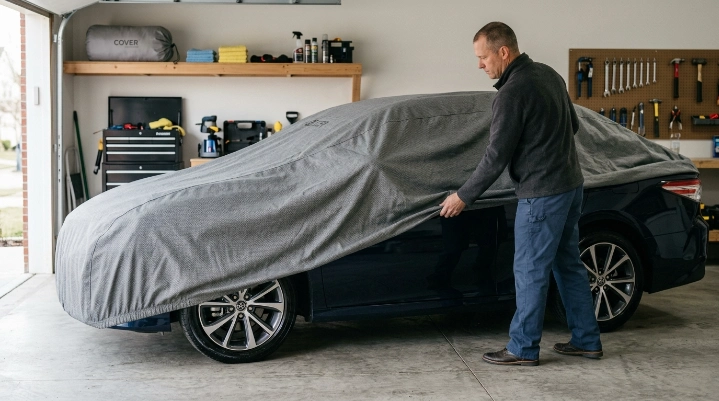
You probably can’t eliminate every microscopic particle, but you can dramatically reduce dust by controlling cleanliness, fit, storage, and handling. Start before the cover touches the car.
1. Cover only a clean vehicle
Don’t install the cover over visible dust, sand, dried mud, or heavy pollen. Wash the vehicle when necessary and let it dry before covering it.
A quick dry wipe is not my preferred shortcut. Rubbing dry contamination across paint can create the problem you’re trying to prevent.
2. Keep the inside of the cover clean
Treat the inner surface almost like a large detailing towel. Don’t throw it onto the driveway, garage floor, grass, or a dusty shelf.
- Fold the cover inward so the clean lining stays protected.
- Shake loose debris from the outside before storage.
- Let a damp cover dry before packing it away.
- Follow the manufacturer’s washing instructions.
- Keep the storage bag away from sanding, woodworking, or dusty garage work.
3. Improve the fit
A properly sized cover should follow the vehicle’s shape without large loose sections flapping around. It also shouldn’t be stretched so tightly that seams or trim are under excessive tension.
Check the front and rear hems first. Then inspect the sides and mirror areas for places where air can easily get underneath.
4. Control the parking environment
Garage owners have an advantage because they can reduce the dust source itself. Sweep or vacuum the floor and avoid blowing compressed air near the covered vehicle.
Outdoors, avoid parking next to loose soil, construction activity, unpaved shoulders, or areas where wind regularly carries sand.
Section Takeaway: The best dust prevention comes from three clean surfaces: clean paint, a clean cover lining, and a cleaner parking area. A secure fit then reduces how much contaminated air moves underneath.
Indoor vs Outdoor Car Cover Dust
Indoor and outdoor covers face different dust problems. Identifying your environment helps you choose the right fix instead of simply buying a heavier cover.
| Condition | Common Dust Source | Main Concern | Best Response |
|---|---|---|---|
| Indoor garage | Concrete dust, sweeping, shelves, workshop debris | Dirty cover lining | Clean garage and store cover carefully |
| Open outdoor parking | Windborne soil, road dust, pollen | Dust entering beneath edges | Improve fit and reduce wind movement |
| Carport | Outdoor dust entering from open sides | Combination of indoor and outdoor contamination | Use a secure cover and keep the floor clean |
| Workshop garage | Sawdust, sanding dust, grinding debris | Potentially abrasive particles | Separate the vehicle from dusty work |
An indoor cover can be lighter because it doesn’t need to deal with the same wind and weather exposure. Outdoors, fit, fastening, and suitable weather protection become much more important.
As of 2026, I still wouldn’t choose a cover based only on layer count or marketing terms. The correct fit and intended environment matter more than an impressive-sounding material description.
What Should You Do When You Find Dust Under the Cover?
Don’t immediately rub the dusty paint with a towel. Remove the cover carefully, inspect the contamination, and clean the vehicle using a method appropriate for how dirty it is.
Remove the cover without dragging it
I prefer lifting and folding the cover in sections rather than pulling the entire thing lengthwise across the car. This limits unnecessary fabric movement over dusty surfaces.
- Release straps or fastening points.
- Lift the sides away from the paint.
- Fold each side toward the roof or centerline.
- Roll or lift the remaining section away.
- Place it on a clean surface.
Inspect before deciding how to clean
A barely visible layer of fine garage dust is different from a vehicle covered in gritty outdoor contamination. When in doubt, choose the safer cleaning method rather than rubbing the surface dry.
For general ownership and paint-care context, Kelley Blue Book’s car-advice section provides broader maintenance guidance for everyday drivers.
Clean the cover too
Look at the inside before reinstalling it. If you can see grit, dirt, stains, or transferred road debris, don’t put that lining back against clean paint.
Always follow the cover maker’s care label. Fabric coatings, waterproof treatments, and soft linings can require different washing and drying methods.
When Is Your Car Cover Part of the Problem?
Your cover may be contributing to the dust problem if it fits poorly, stays dirty, moves constantly, or has deteriorated. A cover should reduce exposure without creating repeated rubbing against the paint.
Watch for these warning signs
- Constant flapping: Large sections move whenever wind increases.
- Loose lower edges: Gaps remain around bumpers or rocker panels.
- Dirty inner fabric: The vehicle-facing side no longer stays clean.
- Worn elastic: The cover no longer holds its original shape.
- Rough areas: Seams, patches, or damaged lining touch painted panels.
- Repeated dust patterns: Dirt consistently appears beneath the same openings.
A custom-fit cover can reduce excess fabric and movement, but even a well-fitted cover isn’t airtight. A small amount of fine dust over a long storage period doesn’t automatically mean the cover has failed.
What concerns me more is visible grit combined with obvious cover movement.
Sometimes leaving the car uncovered is safer
If you drive the vehicle every day and cannot keep the cover or paint clean, repeated installation may create more handling than you need. An indoor vehicle in a clean garage may only need a lightweight dust cover.
Outdoor storage is different. A suitable cover can protect against several contaminants, but only when its fit, material, fastening, and maintenance match the environment.
Frequently Asked Questions
Why is my car still dusty after being covered?
Your car can remain dusty because contamination was already on the paint, fine particles entered around the edges, or the inside of the cover was dirty. A car cover reduces dust exposure but does not create an airtight seal around the vehicle.
Can dust pass through a breathable car cover?
Some very fine particles may pass through or enter around openings while air moves through and beneath a breathable cover. Breathability is still useful because a completely sealed cover can create other problems with trapped moisture and poor drying.
Should I wipe dust off before putting on a car cover?
Avoid rubbing visible dry grit directly across the paint. If the vehicle has significant dust, pollen, sand, or road grime, clean it using a paint-safe washing method and let it dry before installing the cover.
Does a tighter car cover keep all dust out?
No. A secure fit can reduce wind movement and large openings, but the cover should not be dangerously stretched over mirrors, spoilers, antennas, or sharp trim. Even a fitted cover cannot create a completely dust-proof seal.
How often should I clean my car cover?
There is no universal schedule because usage and material vary. Clean it when the inner surface becomes dusty or dirty, after significant contamination, or according to the manufacturer’s instructions. Always make sure it is suitable for reuse before placing it against clean paint.
Is a garage enough to stop dust under a car cover?
A garage reduces outdoor contamination but can still contain concrete dust, workshop debris, pollen, and particles from sweeping. Keeping the floor and surrounding storage area clean can make an indoor car cover noticeably more effective.
Should I replace a cover that keeps letting dust underneath?
Not automatically. First check the vehicle’s cleanliness, the cover lining, fit, elastic hems, and parking environment. Replace the cover when damaged fabric, worn fastening points, poor fit, or deterioration prevents it from doing its job properly.
Bottom line: Dust under a car cover usually comes from openings, wind, contaminated paint, or a dirty cover rather than one single defect. Keep the car and lining clean, control cover movement, and match the cover to where you park.
If dust keeps returning in the same locations, inspect those areas first. The pattern will usually lead you to the gap, handling habit, or environmental source that needs attention.
