
Coastal Climate Car Cover Issues: Problems, Risks, and Prevention

Quick Answer
Coastal climate car cover issues usually come from salt-laden moisture, high humidity, wind, strong sunlight, and repeated wet-dry cycles. A cover can protect a parked vehicle, but the wrong material or poor fit may trap moisture, hold salt against surfaces, or rub dirt across the paint. Good vehicle-care practices from resources such as Kelley Blue Book are still important even when the car stays covered.
Main coastal car cover problems
- Trapped humidity: Moist air can condense beneath the cover and keep paint, trim, and metal surfaces damp.
- Salt contamination: Fine sea-salt residue can settle on the car and cover, where moisture makes it more troublesome.
- Wind rubbing: A loose cover can move repeatedly across dusty or salty paint.
- Slow drying: Rain, dew, and humid air may keep both the cover and vehicle wet longer.
- Sun damage: Coastal parking often combines intense UV exposure with heat that ages outdoor cover materials.
- Hardware corrosion: Buckles, grommets, straps, and exposed vehicle hardware need extra inspection around salt air.
Best first step
- Cover only a clean, dry vehicle with a breathable outdoor cover that fits securely, then inspect underneath it regularly.
Living near the coast changes how I think about car covers. Rain is only part of the problem because humid air, salt residue, wind, and sunshine can work together.
A cover still makes sense in many coastal locations. You just need the right material, fit, cleaning routine, and inspection schedule for the environment.
In This Guide
- Why Do Coastal Climates Cause Car Cover Problems?
- Can a Car Cover Trap Humidity Near the Coast?
- How Does Salt Air Affect a Covered Car?
- Can Coastal Wind Make a Car Cover Scratch Paint?
- What Type of Car Cover Works Best in a Coastal Climate?
- How Should You Maintain a Car Cover Near the Ocean?
- Frequently Asked Questions
Why Do Coastal Climates Cause Car Cover Problems?
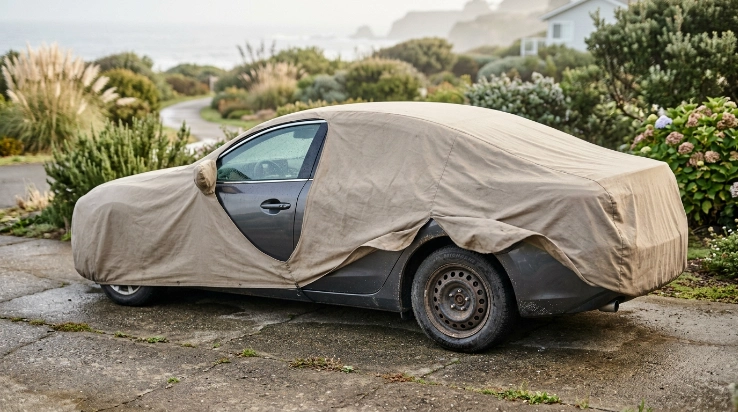
Coastal climates expose a parked vehicle to several problems at once. Humidity, airborne salt, wind, rain, dew, and ultraviolet light can all influence how well a cover works.
Coastal climate car cover issues are problems caused or accelerated by using a vehicle cover in an environment with persistent moisture, salt-containing air, frequent wind, or marine weather.
The cover itself isn’t automatically harmful. Trouble usually starts when moisture or abrasive contamination gets trapped between the fabric and the vehicle.
Humidity rarely stays constant
Coastal air can feel damp even when it isn’t raining. Temperature changes overnight can also cool the vehicle enough for moisture to collect on surfaces.
That moisture may appear beneath a cover even when the fabric never leaked. Condensation can come from humid air already trapped around the car.
- Warm humid air: Carries significant moisture around the vehicle.
- Cool body panels: Can encourage condensation as temperatures fall.
- Limited airflow: May slow evaporation beneath the cover.
- Wet pavement: Can keep the immediate parking area damp.
Salt makes contamination more important
Fine marine salt can settle on paint, glass, trim, wheels, and the cover itself. You may not always see the deposits easily.
Once dirt and salt sit between two moving surfaces, I treat them as contamination rather than harmless dust. Dragging a cover over that contamination increases abrasion risk.
Wind changes the equation
A cover that feels secure on a calm driveway can behave differently during a strong coastal breeze. Repeated lifting and flapping can stress seams and move fabric over the paint.
Wind can also push sand and debris underneath loose edges. That makes correct sizing and secure attachment more important than simply buying a thick cover.
| Coastal Condition | Possible Cover Problem | What to Check |
|---|---|---|
| High humidity | Condensation and slow drying | Breathability and moisture beneath cover |
| Salt air | Salt residue on paint and hardware | Vehicle cleanliness and cover lining |
| Strong wind | Flapping, lifting, and abrasion | Fit, elastic hems, straps, and tie-downs |
| Frequent rain or dew | Long wet periods | Drying time and water resistance |
| Strong sun | Fabric aging and fading | UV resistance and material condition |
Section Takeaway: Coastal car cover problems rarely have one cause. Humidity, salt, wind, rain, and sunlight often interact, so the safest setup must control moisture and movement together.
Can a Car Cover Trap Humidity Near the Coast?
Yes. Moisture can remain beneath a car cover when humid air, rainwater, dew, or water from washing reaches the vehicle faster than it can evaporate.
A breathable cover can reduce the problem, but breathability doesn’t mean the area beneath it will always stay dry.
Where trapped moisture comes from
- A recently washed car: Water remains around mirrors, trim, badges, door seals, and panel gaps.
- Morning dew: Condensation forms before the cover or vehicle has warmed.
- Wet cover fabric: A saturated cover may stay damp during humid weather.
- Moist ground: Grass, soil, or wet pavement contributes moisture around the vehicle.
- Temperature swings: Humid air beneath the cover can condense as surfaces cool.
One mistake I’ve learned to avoid is covering a car immediately after washing it. The paint may look dry while water remains inside mirrors and around weather stripping.
I give those hidden areas more time. A few extra minutes of drying is easier than dealing with persistent moisture later.
Waterproof and breathable are different things
A water-resistant cover is designed to resist outside moisture. A breathable cover allows water vapor to move through the material more readily.
The ideal outdoor design balances both qualities. An airtight sheet may block rain yet still create poor conditions for evaporation underneath.
That distinction matters in humid coastal locations. The goal isn’t to seal the car inside a bag.
How to check for a moisture problem
- Remove the cover during a dry part of the day.
- Check the roof, hood, glass, trunk, and lower body panels.
- Feel the underside of the cover for dampness.
- Inspect seams, mirrors, door handles, and trim edges.
- Look for musty odors or repeated condensation.
- Let both the vehicle and cover dry before reinstalling it.
If the same areas remain wet repeatedly, find the moisture source first. Changing covers without correcting the underlying condition may not solve anything.
For broader maintenance and vehicle-condition guidance, Consumer Reports provides automotive ownership resources worth consulting alongside the vehicle manufacturer’s instructions.
Section Takeaway: A breathable cover helps moisture escape, but it cannot compensate for covering a wet car, storing a wet cover, or parking in a constantly damp location.
How Does Salt Air Affect a Covered Car?
Salt air can leave fine deposits on a vehicle and its cover. In humid conditions, those deposits deserve more attention because moisture may remain around contaminated surfaces.
A cover can reduce direct exposure, but it doesn’t eliminate the need for cleaning. Salt can reach the vehicle during driving and collect on the cover during storage.
Salt can get underneath the cover
Every time you drive near the coast, road spray and airborne contamination can reach lower body panels, wheels, trim, and underbody components. Covering the car afterward doesn’t remove those deposits.
Wind may also push fine particles beneath loose cover edges. That’s another reason I prefer a secure fit over an oversized universal cover that billows easily.
Do not turn the cover into sandpaper
The biggest paint concern is friction combined with contamination. Salt, sand, dust, or grit between the lining and clear coat can become abrasive when the fabric moves.
Before installing a cover, check the surfaces most likely to hold debris.
- Roof and hood
- Trunk lid
- Windshield edges
- Mirror housings
- Wheel arches
- Lower doors and rocker areas
- Bumpers and license-plate areas
If the car is visibly dusty, sandy, or salt-streaked, I don’t pull a tight cover across it. Cleaning first is the safer approach.
Watch exposed hardware too
Car-cover straps, buckles, hooks, grommets, and cable systems deserve inspection in a marine environment. Replace components that show significant deterioration or stop working correctly.
The same principle applies to the car itself. Inspect exposed metal, fasteners, wheel areas, and damaged paint instead of assuming the cover protects every surface.
Mechanic Alert: If you find significant corrosion on structural, brake, suspension, steering, electrical, or other safety-related components, have the vehicle inspected by a qualified mechanic.
The National Highway Traffic Safety Administration is also a useful resource for vehicle safety information and recall checks. A car cover cannot correct an existing safety defect.
Can Coastal Wind Make a Car Cover Scratch Paint?
Coastal wind can contribute to scratching when a loose cover repeatedly moves over contaminated paint. The fabric touching the vehicle isn’t necessarily the problem by itself.
The dangerous combination is movement plus grit. Fit and cleanliness therefore matter together.
Signs your cover is moving too much
- Repeated flapping: Large sections lift and slap back against the vehicle.
- Loose corners: The cover repeatedly climbs above a bumper or wheel opening.
- Shifting seams: Reference seams no longer stay aligned with the body.
- Polished-looking rub areas: Certain edges show repeated contact.
- Debris underneath: Sand, leaves, or dirt appear after windy weather.
A tightly stretched cover isn’t automatically better either. Excessive tension around mirrors, spoilers, antennas, or sharp edges can strain the fabric.
The goal is a stable fit that follows the vehicle without excessive loose material.
Secure the cover correctly
Use the attachment system intended by the cover manufacturer. Improvised cords can create concentrated pressure points or damage the vehicle if they loosen.
After a windy day, check the cover rather than assuming it stayed correctly positioned.
- Confirm both ends remain seated around the bumpers.
- Check that straps haven’t loosened.
- Look around mirrors and protruding accessories.
- Inspect the paint for trapped grit before repositioning fabric.
- Remove debris instead of dragging the cover across it.
I pay particular attention after windy nights. A cover can appear normal from several feet away while one lower corner has been rubbing for hours.
For broader ownership and vehicle-care information, Edmunds is another established automotive reference.
Section Takeaway: Preventing wind damage is mostly about controlling movement and contamination. A clean car under a correctly fitted, secured cover is safer than a dirty car beneath loose fabric.
What Type of Car Cover Works Best in a Coastal Climate?
The best coastal car cover is usually a breathable outdoor cover with good water resistance, UV resistance, a soft vehicle-facing surface, and a secure fit.
No single fabric feature solves every coastal problem. Prioritize the conditions where the vehicle actually sits.
Breathability matters in humid air
Breathable material gives moisture vapor a better opportunity to escape. That’s useful when overnight condensation and humid weather are common.
Don’t confuse breathability with poor rain protection. Many outdoor covers balance water resistance with vapor movement.
Fit matters in coastal wind
A vehicle-specific or closely fitted cover generally leaves less loose fabric available to flap. Mirror pockets and shaped contours can also help stabilize the cover.
Universal covers may still work, but check dimensions carefully. Extra material isn’t always extra protection.
UV resistance matters for outdoor parking
Strong sunlight gradually ages exposed materials. A cover used outdoors should be intended for regular UV exposure rather than indoor dust protection.
Inspect it as it ages. Brittle fabric, thinning areas, damaged seams, failing elastic, or peeling coatings are signs the cover may no longer perform properly.
| Cover Feature | Why It Matters Near the Coast | Priority |
|---|---|---|
| Breathable construction | Helps moisture vapor escape | High |
| Water resistance | Reduces direct exposure to rain and dew | High |
| Secure fit | Reduces wind movement | High |
| Soft inner surface | Reduces harsh contact with paint | High |
| UV-resistant outdoor material | Handles long-term sun exposure better | High for outdoor parking |
| Secure strap system | Helps stabilize the cover during wind | High in windy areas |
Indoor covers are different
If your coastal home has a dry, enclosed garage, an outdoor weather cover may be unnecessary. A breathable indoor cover can protect against dust while remaining lighter and easier to handle.
The garage still needs attention. Moist floors, roof leaks, damp walls, or poor ventilation can create humidity problems indoors too.
Do not shop by the word “waterproof” alone
I would never choose a coastal cover based on one marketing word. I want to know how it handles moisture, wind, fit, UV exposure, and repeated outdoor use.
A completely sealed material may look attractive because water stays out. However, trapped moisture underneath can still become a separate problem.
Section Takeaway: In coastal environments, prioritize breathable weather protection and a stable fit rather than maximum thickness or a waterproof label alone.
How Should You Maintain a Car Cover Near the Ocean?
Regular cleaning and inspection matter more near the coast because the cover itself collects salt, sand, pollen, dirt, and moisture.
I treat the cover as a washable protective surface, not a permanent shield that can stay on the car indefinitely.
Start with a clean vehicle
Never assume a cover will protect dirty paint from itself. Abrasive contamination remains between the fabric and clear coat once the cover goes on.
Before longer storage, wash the vehicle when needed and let it dry fully.
- Check mirror housings for trapped water.
- Dry around badges and trim.
- Inspect lower body panels for salt or sand.
- Check wheels and wheel arches.
- Remove obvious bird droppings or tree residue.
Keep the inside of the cover clean
The inner surface matters because it touches the vehicle. Don’t drag it across pavement, gravel, or sandy ground during installation.
If the lining becomes contaminated, follow the manufacturer’s washing directions. Different fabrics and coatings can require different cleaning methods.
Never fold the cover while wet
A damp cover needs to dry before storage. Folding wet fabric into a storage bag can encourage odor, staining, and deterioration.
Salt residue also stays with the cover when you fold it. Cleaning before long storage makes the next installation safer.
Inspect after severe coastal weather
Strong wind, heavy rain, and storms can change the cover’s position. Inspect the setup after significant weather passes.
- Check whether the cover shifted.
- Look for torn seams or stretched elastic.
- Inspect straps, buckles, and grommets.
- Check underneath for sand or debris.
- Look for moisture on the vehicle.
- Dry the car and cover when necessary.
If severe weather is approaching, follow local emergency guidance first. Vehicle protection should never take priority over personal safety.
General automotive resources from Car and Driver can also help owners stay current on broader vehicle-care considerations.
Use a simple coastal inspection routine
You don’t need special tools. A quick visual and touch inspection catches many cover problems before they become expensive.
- Before covering: Confirm the car and cover are clean and dry.
- After rain: Check for persistent moisture underneath.
- After wind: Check fit, straps, and trapped debris.
- Periodically: Inspect the cover for thinning, tears, or hard contamination.
- Before long storage: Clean both the vehicle and cover.
As of 2026, I still consider this basic routine more important than chasing a single “coastal-proof” product claim. How you use the cover matters as much as what you buy.
Section Takeaway: Coastal car-cover maintenance is about cleanliness, drying, secure fit, and frequent inspection. Those four habits address most problems caused by salt, humidity, and wind.
Frequently Asked Questions
Are car covers good for cars near the ocean?
Yes, a suitable car cover can help protect a parked vehicle from sun, airborne debris, bird droppings, and some weather exposure. Near the ocean, choose breathable outdoor material and a secure fit, then keep both the vehicle and cover clean.
Can a car cover make rust worse in a coastal climate?
A cover can contribute to poor conditions if it keeps a vehicle damp for long periods. Salt contamination and persistent moisture deserve attention, so inspect beneath the cover regularly and let wet surfaces dry instead of leaving them enclosed.
Should I use a waterproof car cover near the beach?
Water resistance is useful, but don’t choose by the waterproof label alone. Coastal storage also requires breathability, wind stability, UV resistance, and a clean inner surface so moisture and contamination don’t become trapped against the vehicle.
How often should I remove a car cover in humid weather?
There isn’t one universal schedule because weather and parking conditions vary. Remove it often enough to confirm the vehicle stays dry, especially after rain, heavy dew, washing, strong wind, or major temperature changes.
Can salt air get through a car cover?
A cover reduces direct exposure but cannot create a perfectly sealed environment. Fine salt, sand, and moisture can reach the vehicle through open edges, during driving, or while the cover is being installed and removed.
Why is my car wet underneath the cover when it didn’t rain?
Condensation is a common explanation. Humid air underneath the cover can cool until moisture forms on the vehicle or fabric, especially overnight or during rapid temperature changes.
Should I cover my car immediately after washing it?
No. Let the vehicle dry thoroughly first, including mirrors, trim gaps, weather seals, wheels, and other places that retain water. Covering those areas while wet can prolong moisture underneath the cover.
The bottom line: A car cover can work well in a coastal climate, but it needs more attention than the same cover used in a dry inland garage.
Keep the car clean, use a breathable and secure outdoor cover, inspect for salt and moisture, and never store the cover wet. Those habits give the cover a much better chance of protecting the vehicle instead of creating another problem.
“`
