
How to Protect a Car Cover From UV Damage
Quick Answer
To protect a car cover from UV damage, choose an outdoor-rated cover with documented UV resistance, reduce direct sunlight exposure, clean the fabric according to its care instructions, and store it in a cool, dry place when not in use. Inspect the seams, elastic, and exposed panels regularly, and replace the cover when it becomes brittle, thin, or structurally weak.
Essential protection steps
- Choose the right cover: Buy a product designed for prolonged outdoor exposure.
- Reduce sunlight: Park under a garage, carport, or suitable shade whenever possible.
- Control friction: Secure the cover properly to reduce wind-driven movement.
- Clean it correctly: Remove dirt without damaging the fabric or protective coating.
- Store it safely: Keep the clean, dry cover away from sunlight and excessive heat.
- Check for damage: Inspect the fabric, stitching, and fastening system before deterioration spreads.
A car cover helps protect your vehicle from dust, bird droppings, tree sap, and other outdoor contaminants. However, the cover itself must withstand sunlight, heat, wind, and changing weather conditions.
Over time, ultraviolet (UV) radiation can fade the fabric and weaken certain fibers, coatings, and elastic components. The good news is that choosing the right cover and following a consistent maintenance routine can help extend its useful life.
In this guide, I’ll explain how to protect a car cover from UV damage, which materials are worth considering, how to clean and store the cover, and when replacement makes more sense than repair.
In This Guide
- What Is UV Damage to a Car Cover?
- How to Protect a Car Cover From UV Damage
- Which Car Cover Materials Offer Better UV Protection?
- How to Clean and Store a Car Cover Properly
- Should You Use UV Protectant Spray on a Car Cover?
- Signs Your Car Cover Has UV Damage
- Should You Repair or Replace a Damaged Car Cover?
- Frequently Asked Questions
What Is UV Damage to a Car Cover?
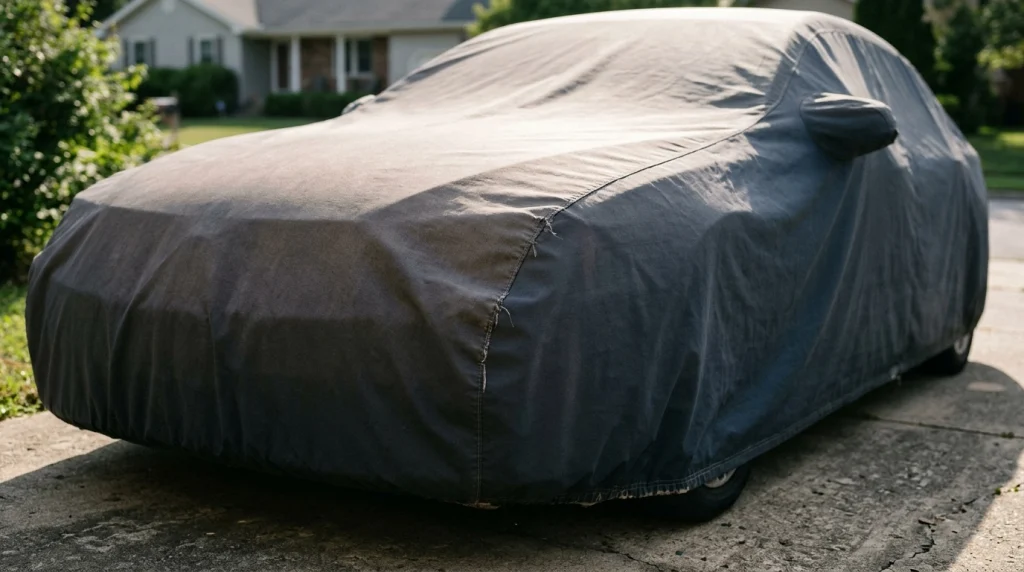
UV damage is the gradual deterioration of a material caused by exposure to ultraviolet radiation from sunlight. On a car cover, this process can cause fading, reduced flexibility, weaker fibers, and deterioration of protective coatings.
Many outdoor car covers use polyester, polypropylene, or other synthetic materials. Although these materials can be suitable for outdoor use, their durability depends on the formulation, UV stabilizers, coatings, manufacturing quality, and environmental exposure.
Why does sunlight damage car cover fabric?
Sunlight contains ultraviolet radiation that can trigger chemical changes in susceptible materials. Repeated exposure can gradually affect the polymers that provide a cover with flexibility and strength.
Heat can add to the stress, especially when a cover remains exposed in a hot parking area for long periods. Wind, dust, rain, and repeated folding can contribute to wear as well.
Several parts of a car cover deserve particular attention:
- Roof and hood sections: These broad panels may receive prolonged direct sunlight.
- Upper trunk and door panels: Exposed areas can show uneven fading or changes in texture.
- Stitching and seams: Repeated tension and weather exposure can weaken these connection points.
- Elastic hems: Heat, sunlight, and age may reduce elasticity and holding strength.
- Protective coatings: Some coatings can deteriorate, peel, or lose their original properties.
Does a faded car cover always need replacing?
No. Fading alone doesn’t prove that a car cover has lost its protective ability. A cover can change color while remaining structurally sound.
However, fading combined with brittle fabric, thinning, cracked coatings, or loose stitching deserves closer attention. These changes may indicate that the cover is approaching the end of its useful life.
Check the material’s flexibility, seams, fastening points, and overall condition rather than judging the cover by its appearance alone.
Section takeaway: UV damage affects more than color. Fabric strength, flexibility, seams, and coatings are better indicators of whether your car cover remains suitable for continued use.
How to Protect a Car Cover From UV Damage
The most effective way to protect a car cover is to reduce unnecessary sunlight exposure while keeping the fabric clean, properly fitted, and correctly stored. No maintenance routine can stop natural aging completely, but sensible habits can help limit avoidable damage.
1. Park your vehicle in a shaded location
Reducing direct sunlight is one of the simplest ways to limit UV exposure. A garage provides the most straightforward protection from direct sunlight, while a carport or suitable shaded parking area can also help.
Consider how sunlight reaches your parking space throughout the day. A location that is shaded in the morning may receive intense afternoon sun.
To reduce exposure:
- Use covered parking whenever possible.
- Choose a carport that blocks direct sunlight across the vehicle.
- Consider a suitable parking canopy if your vehicle remains outdoors regularly.
- Keep a removed cover inside rather than leaving it exposed on the driveway.
Be cautious when parking beneath trees. Shade can reduce sunlight, but falling branches, sap, pollen, and bird droppings can introduce other maintenance problems.
2. Choose a UV-resistant outdoor car cover
A cover designed for indoor dust protection may not withstand prolonged outdoor exposure. Before buying a replacement, check whether the manufacturer explicitly recommends it for outdoor parking and provides information about UV resistance.
Don’t assume that a thick fabric or a product labeled all-weather automatically offers strong UV protection. Look for documented performance information, material details, and care instructions.
Compare these features before purchasing:
- UV resistance: Check the manufacturer’s stated protection or testing information.
- Weather suitability: Confirm that the cover is intended for your expected outdoor conditions.
- Breathability: Check how the material manages moisture vapor.
- Inner lining: Choose a paint-friendly surface that can be kept free of dirt.
- Construction: Examine the seams, hems, and fastening system.
3. Secure the cover to reduce wind damage
Wind can make a loose cover flap against the vehicle. Repeated movement can increase wear at the corners, seams, elastic hems, and other areas under tension.
Use the supplied straps and fasteners according to the manufacturer’s instructions. The cover should fit securely without excessive tightness or loose sections that move unnecessarily.
Check the fit after installation, especially if the cover is exposed to regular wind. Replace damaged straps and avoid improvised sharp fasteners that could scratch the paint.
4. Keep the cover clean and free of grit
Dirt and dust trapped between the cover and the vehicle can create friction as the material moves. Keeping both surfaces reasonably clean helps reduce this risk.
Before installing the cover, inspect its inner surface and remove loose debris using an approved cleaning method. Check the vehicle’s exterior as well, particularly after driving on dusty roads or parking beneath trees.
Cleaning doesn’t prevent UV degradation directly, but it helps address another common source of wear.
5. Inspect the cover regularly
A quick inspection can reveal early signs of deterioration before small problems become more serious. For a cover used outdoors every day, a monthly visual check is a practical starting point.
During each inspection, check the following:
- Compare the color and texture of exposed panels with less-exposed areas.
- Look for brittle spots, thinning fabric, or small holes.
- Examine the seams for loose or broken stitching.
- Check the elastic hems and straps for loss of tension.
- Look for peeling coatings or repeated tears.
Inspect the cover more frequently after strong winds or severe weather. Follow any inspection schedule specified by the manufacturer.
Section takeaway: Shade, suitable materials, a secure fit, regular cleaning, and routine inspections work together to protect your investment. Start with reduced exposure and correct maintenance before considering additional treatments.
Which Car Cover Materials Offer Better UV Protection?
Outdoor-rated materials with documented UV resistance are generally the best starting point for vehicles parked in direct sunlight. However, the actual performance of a car cover depends on its complete construction, not simply its material name.
Fabric formulation, UV stabilizers, coatings, stitching, and manufacturing quality can make a meaningful difference. A premium material without suitable outdoor specifications may be less appropriate than a well-designed cover made from a different fabric.
Compare common car cover materials
| Material or construction | Potential benefits | Important considerations |
|---|---|---|
| UV-treated polyester | Can provide a practical balance of durability and outdoor protection. | Check UV specifications, coating quality, and breathability. |
| Solution-dyed acrylic | Can offer good color retention and outdoor durability in suitable products. | Confirm that the specific fabric is designed for automotive use. |
| Multilayer nonwoven fabric | Can combine weather protection, cushioning, and moisture management. | Check layer bonding, washing requirements, and UV performance. |
| Indoor stretch or cotton-blend fabric | Can provide soft dust protection in a suitable indoor environment. | Don’t assume it is suitable for prolonged outdoor exposure. |
| Basic plastic sheet or unverified tarp | May block direct sunlight over covered areas. | Fit, abrasion, moisture retention, and UV durability may be unsuitable. |
Why breathability matters alongside UV resistance
UV resistance helps a cover withstand sunlight, while breathability allows moisture vapor to escape. These are separate properties, and a cover should be evaluated for both.
Moisture can accumulate beneath a cover through condensation, damp weather, or installation over a wet vehicle. Depending on the construction and conditions, trapped moisture can contribute to odors, mildew, or other problems.
Choose a cover intended for your actual parking environment. A cover designed for occasional indoor use may not be suitable for a vehicle exposed to intense sun and rain throughout the year.
For additional background, consult this guide to choosing a car cover, and verify the resource’s URL before publishing.
Section takeaway: Choose a cover based on documented outdoor performance, UV resistance, moisture management, and fit. Fabric thickness alone is not a reliable measure of durability.
How to Clean and Store a Car Cover Properly
Correct cleaning removes dirt and contaminants, while proper storage prevents unnecessary exposure between uses. The manufacturer’s care instructions should determine which cleaning products, washing methods, and drying procedures are safe.
How often should you clean a car cover?
Clean the cover when dust, pollen, bird droppings, tree residue, or other contaminants begin to accumulate. A vehicle parked beneath trees or near a dusty road may need more frequent cleaning than one kept in a clean garage.
Don’t rely on a fixed calendar alone. Visible dirt, the condition of the inner surface, and the manufacturer’s recommended maintenance schedule provide better guidance.
Follow these cleaning steps
- Remove loose debris: Shake or brush off dirt using a method approved for the fabric.
- Read the care label: Confirm whether hand washing, rinsing, or machine washing is permitted.
- Use an approved cleaner: Avoid bleach, solvents, and harsh detergents unless the manufacturer allows them.
- Rinse carefully: Remove cleaning residue according to the product instructions.
- Dry thoroughly: Follow the specified drying method before storing or reinstalling the cover.
- Inspect the material: Check the inner surface, seams, and coatings before putting it back on the vehicle.
Never assume every automotive cover can go into a washing machine or tumble dryer. Some materials require gentle hand cleaning, and excessive heat can damage certain fabrics or coatings.
How should you store a car cover between uses?
Store the cover in a clean, dry location away from direct sunlight and excessive heat. A storage bag can help protect the folded fabric from dust, sharp objects, and accidental damage.
- Clean the cover when necessary before storing it.
- Let it dry completely according to the manufacturer’s instructions.
- Fold or roll it using the recommended method.
- Keep it away from sharp tools, solvents, and hot surfaces.
- Avoid leaving it on sunlit pavement or exposed outdoor furniture.
Don’t pack a damp cover tightly for long-term storage. Trapped moisture may encourage mildew or unpleasant odors and can affect some materials.
Section takeaway: Clean the cover when needed, dry it correctly, and store it away from sunlight. Avoiding incompatible cleaning products and excessive heat helps preserve the fabric and its protective treatments.
Should You Use UV Protectant Spray on a Car Cover?
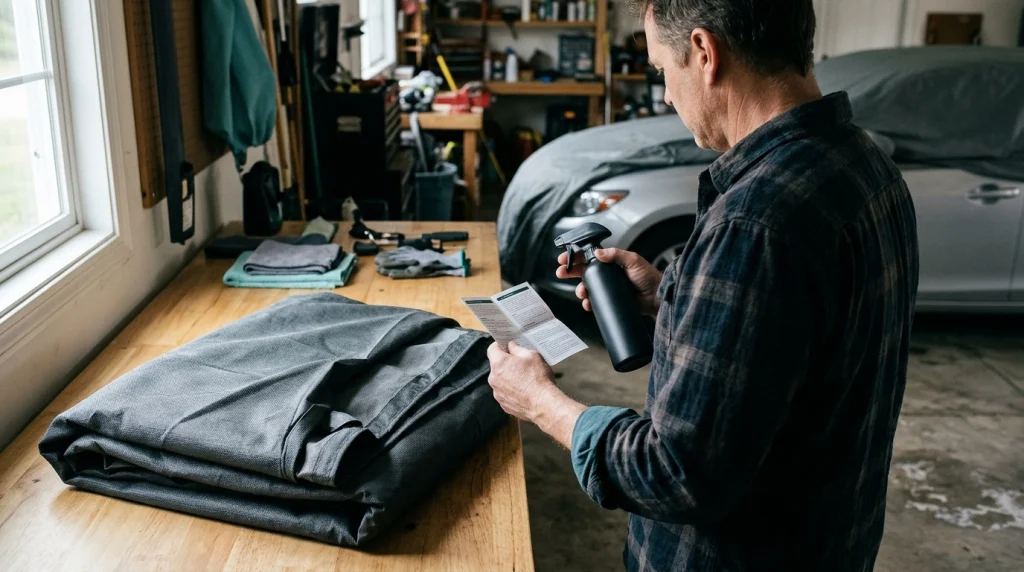
Use UV protectant spray only when the car cover manufacturer confirms that the product is compatible with the fabric and its coatings. An unsuitable spray may alter breathability, water repellency, texture, or the surface that touches the vehicle’s paint.
Some covers receive UV stabilizers or protective treatments during manufacturing. Applying an unapproved product may interfere with those treatments instead of improving durability.
How to check whether a UV treatment is suitable
Start by identifying the cover’s material and manufacturer. Review the care documentation before buying or applying any chemical treatment.
- Identify the exact cover model and fabric.
- Read the manufacturer’s maintenance instructions.
- Check whether a specific UV treatment is approved.
- Follow the application and drying instructions.
- Perform a small-area test only if the manufacturer recommends it.
Don’t assume a spray designed for tents, outdoor furniture, or convertible tops is automatically safe for a car cover. Similar-looking fabrics can use different coatings and construction methods.
Can UV spray reverse existing damage?
A topical treatment cannot reliably rebuild fibers that have become brittle or restore the original strength of a severely degraded coating. An approved treatment may help maintain certain surface properties, but it isn’t a substitute for sound fabric.
If the cover has widespread thinning, repeated tears, failing seams, or material that cracks during gentle handling, replacement is generally more sensible than experimenting with sprays.
Section takeaway: UV protectant sprays are optional, not essential. Manufacturer-approved care and reduced sunlight exposure should come first, especially when the cover already shows signs of deterioration.
Signs Your Car Cover Has UV Damage
UV damage often develops gradually, so regular inspections can help you identify deterioration before the cover fails. Color changes may be an early clue, but changes in flexibility, strength, and coating condition deserve more attention.
Warning signs to look for
- Uneven fading: Exposed panels may look noticeably different from shaded areas.
- Stiff or brittle fabric: Material may feel less flexible than it did when new.
- Surface cracking: Coatings may develop cracks, peeling, or powdery residue.
- Thinning material: Heavily exposed areas may become more vulnerable to tearing.
- Weak seams: Stitching may loosen or separate at stress points.
- Damaged elastic: The hem may no longer hold the cover securely.
- Repeated tears: Small holes may keep appearing in different areas.
How can you distinguish UV damage from ordinary wear?
UV damage often affects areas that receive the most sunlight, while friction-related damage may concentrate around contact points, corners, and areas where the cover moves against the vehicle.
However, these causes can overlap. A sun-weakened cover may tear more easily when exposed to wind, and dirt can increase abrasion during movement.
Inspect the whole cover rather than focusing on one damaged patch. If several areas show similar deterioration, the material may be reaching the end of its useful life.
Section takeaway: Use fading as a prompt to inspect the cover, then assess flexibility, seams, coatings, and overall strength. Widespread deterioration is more important than cosmetic changes alone.
Should You Repair or Replace a Damaged Car Cover?
Repair a car cover only when the damage is limited and the surrounding material remains strong. Replace it when deterioration is widespread or the cover can no longer provide reliable protection.
When is a repair worth considering?
A small tear or isolated seam problem may be repairable if the manufacturer provides an approved repair method. Suitable patches or stitching repairs can sometimes extend the cover’s service life.
Before repairing it, check whether the cover is still under warranty. An unapproved modification may affect warranty coverage or create additional problems.
When should you replace the cover?
Replacement is the better option when the fabric has lost substantial strength or several components are failing at once. Repeated repairs won’t solve widespread deterioration.
Consider replacement if you notice:
- Brittle or cracked fabric across multiple panels.
- Widespread thinning or repeated holes.
- Peeling or failing protective coatings.
- Multiple loose seams or broken fastening components.
- A fit that no longer holds the cover securely.
How long should a UV-resistant car cover last?
There is no universal lifespan for every car cover. Material quality, sunlight intensity, climate, storage habits, installation frequency, and maintenance all influence how long it remains useful.
A cover used every day in direct sunlight may age differently from one used occasionally under a carport. Follow the manufacturer’s guidance and judge replacement by the cover’s condition rather than an arbitrary age limit.
As of 2026, condition-based maintenance remains a sensible approach: inspect the material regularly, retain the care instructions, and replace the cover when its protective function becomes unreliable.
Section takeaway: Repair isolated damage only when the remaining fabric is sound. Replace covers with widespread brittleness, thinning, coating failure, or repeated structural damage.
Frequently Asked Questions
Can the sun destroy a car cover?
Yes. Prolonged ultraviolet exposure can contribute to fading, brittle fabric, coating deterioration, and weakened fibers. The rate of damage depends on material quality, protective treatments, climate, and the amount of time the cover spends in direct sunlight.
Does parking in the shade help a car cover last longer?
Yes. Shade reduces direct sunlight exposure and can help limit cumulative UV damage. A garage or carport is particularly useful, while partial shade can also help when fully covered parking isn’t available.
Can I use ordinary waterproofing spray on my car cover?
Not without checking compatibility first. Some sprays can change the fabric’s breathability, water repellency, or surface texture. Use only products that the manufacturer confirms are suitable for your specific cover material.
Will washing a car cover prevent UV damage?
No. Washing removes dirt and contaminants but doesn’t stop ultraviolet radiation from degrading susceptible materials. Correct cleaning can reduce other sources of wear when you follow the manufacturer’s washing and drying instructions.
Are black car covers more likely to suffer UV damage?
Color alone isn’t a reliable predictor of UV durability. Dark fabrics can absorb more solar energy than lighter ones, but material formulation, UV stabilizers, coatings, and overall construction also influence performance.
Can a faded car cover still protect my vehicle?
Yes, sometimes. Fading may be cosmetic, so inspect the fabric’s strength, flexibility, seams, and coatings before deciding. A brittle, thin, or repeatedly torn cover should not be trusted simply because it still fits the vehicle.
How often should I inspect an outdoor car cover?
A monthly visual inspection is a practical starting point for a cover used outdoors every day. Check it more frequently after strong winds or severe weather, and follow any inspection recommendations from the manufacturer.
Final Takeaway: Protect Your Car Cover Before Damage Develops
Protecting a car cover from UV damage starts with choosing a product designed for outdoor exposure. Parking in shade, securing the fit, cleaning the fabric correctly, and storing it away from sunlight can help reduce avoidable wear.
Inspect the cover regularly, especially around exposed panels, seams, elastic hems, and fastening points. If the material becomes brittle, thin, or repeatedly tears, replace it rather than relying on unapproved sprays or temporary patches.
Your car cover needs care just like the vehicle underneath it. A suitable product and a consistent maintenance routine are the best starting points for keeping both the cover and your car better protected.