
Sun Damage Under a Car Cover: Can It Still Happen?

Quick Answer
Yes, sun damage under a car cover can still happen if the cover lacks good UV protection, has become thin or worn, fits poorly, or leaves parts of the vehicle exposed. A quality outdoor cover should reduce direct ultraviolet exposure significantly, but outdoor car-cover construction and fit still matter.
Why sun damage can still happen
- Weak UV protection: Thin indoor covers may not be designed for continuous outdoor sunlight.
- Material deterioration: Years of sunlight can weaken the cover itself and reduce its protective ability.
- Exposed areas: Mirrors, bumpers, wheels, lower panels, and cover gaps may receive direct sunlight.
- Poor fit: Wind can move a loose cover and repeatedly expose the same areas.
- Heat buildup: Dark covers can absorb substantial solar heat even when they block direct sunlight.
Best protection
- Use an outdoor-rated, UV-resistant cover that fits securely, and inspect it regularly for thinning, fading, tears, and loose areas.
Putting a cover over your car feels like it should completely solve the sunlight problem. In practice, the level of protection depends heavily on the cover you use and how well it fits.
I pay particular attention to this with vehicles parked outside for weeks at a time. A cover can be doing its job over most of the car while one exposed corner slowly takes the punishment.
In This Guide
Can a Car Get Sun Damage Under a Cover?
Yes. A car can experience sun-related deterioration while covered, although a suitable outdoor cover should dramatically reduce direct exposure compared with leaving the vehicle uncovered.
The important distinction is that a car cover is a barrier, not automatically a perfect barrier. Its material, condition, coverage, color, thickness, and fit all affect how much protection you get.
Definition: Sun damage under a car cover is deterioration caused by ultraviolet radiation, solar heat, or repeated exposure of inadequately covered areas while a vehicle is stored beneath a cover.
UV exposure is the biggest concern
Ultraviolet radiation can contribute to fading and deterioration of exterior and interior materials. Automotive clear coat helps protect the paint beneath it, but long-term environmental exposure still matters.
Consumer Reports’ street-parking guidance identifies UV radiation among the environmental threats that can affect automotive finishes. This is one reason outdoor storage deserves more attention than indoor storage.
- Clear coat: Prolonged exposure can contribute to oxidation, dullness, and finish deterioration.
- Color coat: Fading can become noticeable when protective layers deteriorate.
- Plastic trim: Black exterior plastics may become faded or chalky.
- Rubber: Weatherstripping and exposed rubber can dry and age over time.
A covered car is still sitting in the sun
The cover receives the sunlight instead of the paint. That is exactly what you want, but it also means the cover becomes the component absorbing years of outdoor exposure.
Once fabric becomes brittle, thin, torn, or stretched, its protection can change. That is why I inspect the cover itself instead of assuming it remains effective forever.
Section Takeaway: A cover greatly reduces sun exposure when it is designed for outdoor use, but protection depends on the material staying intact and covering the entire vehicle.
Why Does Sun Damage Happen Under a Car Cover?
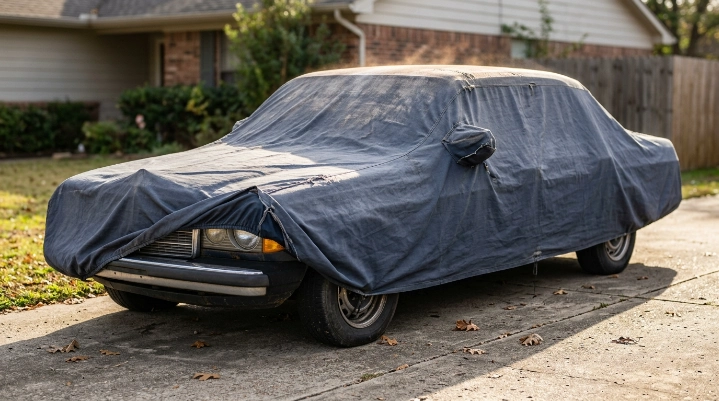
The most common reasons are inadequate UV resistance, deteriorated material, poor fit, and areas that remain exposed. Heat can contribute to aging too, especially around interior materials and exterior plastics.
The cover was designed for indoor storage
This is one of the first things I check. An indoor dust cover and an outdoor weather cover may look similar while serving very different jobs.
Indoor covers mainly protect against dust, light contact, and garage contamination. They may not be designed for months of direct sunlight, rain, and wind.
The fabric has aged
UV exposure attacks the cover before it reaches the car. Over time, some materials fade, stiffen, weaken, or develop thin spots.
Watch for these warning signs:
- Faded or bleached outer fabric
- A dry or brittle texture
- Pinholes visible when held toward bright light
- Cracked coatings
- Split seams
- Torn mirror pockets
- Weak elastic around the hem
I would not keep trusting a badly deteriorated cover simply because it has no large hole. Significant thinning can be enough reason to reconsider it.
The cover keeps moving
A loose cover may creep upward or shift sideways during windy weather. That can expose the same bumper corner, rocker panel, mirror, or trunk edge day after day.
Movement creates another problem. Dirt trapped between the paint and moving fabric can act like an abrasive.
The cover absorbs heat
Sun protection is not only about UV radiation. Solar heat matters, especially with dark materials that absorb more energy.
Heat beneath a cover does not automatically mean your paint will fail. However, reducing unnecessary heat exposure is useful for interior plastics, rubber, adhesives, trim, and the cover itself.
Section Takeaway: Most sun damage under a cover comes from using the wrong cover, keeping a worn cover too long, or allowing poor fit to expose parts of the vehicle.
What Parts of the Car Can Still Be Damaged?
Paint is the obvious concern, but it is not the only one. Trim, rubber, lights, interior surfaces, and partially exposed areas can all receive sunlight.
Paint and clear coat
The horizontal panels deserve the closest attention because the roof, hood, and trunk receive intense overhead sunlight when exposed. A correctly fitted cover should shield them continuously.
Look for uneven fading around places where the cover frequently moves. A noticeable color difference between protected and exposed sections can indicate inconsistent coverage.
Exterior plastic and rubber
Mirrors, bumper edges, windshield cowls, door seals, and lower trim are easy to overlook. Some universal covers simply do not reach every exterior component equally.
Inspect exposed materials for:
- Gray or chalky plastic
- Loss of gloss
- Dry rubber surfaces
- Fine cracking
- Uneven color between covered and uncovered sections
The interior
A full exterior cover blocks much of the sunlight that would otherwise enter through the glass. Gaps or partial covers can still leave windows exposed.
UV exposure can fade dashboards, upholstery, carpeting, steering wheels, and other cabin materials. Car and Driver’s 2026 sunshade testing also emphasizes complete windshield coverage when trying to reduce sunlight reaching the cabin.
A windshield shade can therefore provide another layer of protection when the vehicle’s cover does not completely shade the glass.
Which Car Covers Protect Best From Sun?
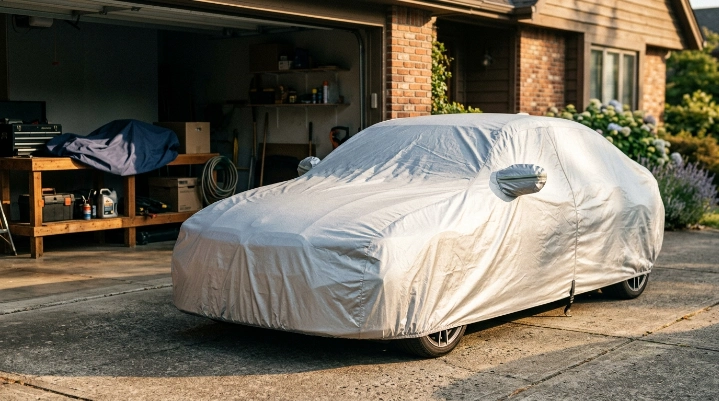
An outdoor-rated cover with UV-resistant material, good coverage, and a secure fit is generally the right choice for a car stored in direct sunlight. Indoor covers should stay indoors unless their manufacturer specifically approves outdoor use.
| Cover Type | Sun Protection | Best Use | Main Concern |
|---|---|---|---|
| Indoor dust cover | Limited unless specifically UV-rated | Garage storage | Not intended for constant outdoor UV and weather |
| Basic outdoor cover | Moderate to good when UV-rated | Normal outdoor parking | Fit and material durability vary |
| Reflective outdoor cover | Good when designed for UV exposure | Hot, sunny parking areas | Reflective coating must remain intact |
| Custom or model-specific outdoor cover | Potentially excellent with UV-rated material | Long-term regular outdoor use | Usually costs more than a universal cover |
UV resistance matters more than layer count alone
Do not assume a cover is ideal for intense sunlight because a seller advertises many layers. The relevant question is whether the manufacturer designed the material for sustained outdoor UV exposure.
Look for clear information about outdoor use, UV resistance, breathability, fastening, and vehicle compatibility.
Fit deserves equal attention
A premium material cannot protect an area it does not cover. Too much loose fabric also makes wind movement more likely.
I prefer enough room to install and remove the cover without pulling hard against the paint. Once installed, it should remain secure without large sections ballooning in the wind.
Section Takeaway: Choose a cover based on outdoor rating, UV resistance, fit, breathability, and construction rather than marketing terms or layer count alone.
How Do You Prevent Sun Damage Under a Cover?
The best approach is to combine a suitable cover with clean paint, proper fit, regular inspections, and basic paint protection. None of these steps requires specialized mechanical tools.
1. Use the correct outdoor cover
Confirm that the manufacturer specifically recommends the cover for outdoor sunlight. Do not rely only on terms such as “heavy duty.”
Check for:
- UV-resistant or sun-resistant construction
- Outdoor-use approval
- Secure straps or fastening points
- Breathable construction
- A paint-friendly inner surface
- Correct dimensions for your vehicle
2. Cover a clean, dry vehicle
Dust under a moving cover can create fine scratches. Moisture can also create separate storage problems even when sunlight is the original reason you bought the cover.
This step is simple. I would rather spend a few minutes removing grit than trap it against the clear coat for several weeks.
3. Maintain the paint itself
A healthy clear coat remains the vehicle’s first protective exterior layer. Washing contaminants away and maintaining an appropriate wax or sealant gives the finish another line of defense.
Automotive paint sealants are designed to provide protection from environmental exposure, including UV and heat, as explained in Car and Driver’s guide to automotive paint sealants.
4. Reduce direct sunlight when possible
A carport, garage, or shaded parking position reduces the workload placed on the cover. The cover then becomes supplemental protection rather than the only barrier between the vehicle and daily sunlight.
Avoid long-term parking beneath trees simply for shade when sap, falling debris, or bird droppings create new problems.
5. Inspect the setup regularly
For a car parked outside continuously, I like a quick inspection about once a month. After severe wind or weather, I check it sooner.
- Check whether the cover has shifted.
- Inspect exposed bumper and mirror areas.
- Look for thinning or holes.
- Check seams and straps.
- Look for dirt beneath the cover.
- Make sure the car and cover are not staying damp.
Section Takeaway: A clean vehicle, UV-resistant outdoor cover, secure fit, and regular inspection provide much better long-term protection than simply covering the car and forgetting about it.
How Can You Tell if Your Cover Is Failing?
Fading alone does not automatically mean the cover has failed. Physical deterioration, poor fit, exposed areas, and significant thinning are more useful warning signs.
Try a simple daylight inspection
Remove the cover and inspect it in bright daylight. Look closely at the roof section because it normally receives some of the strongest direct exposure.
Compare that area with fabric farther down the sides. Large differences in texture, thickness, stiffness, or surface condition deserve attention.
Watch the car for uneven exposure
Your vehicle can also tell you when the setup is not working well. Inspect areas where the cover ends or frequently moves.
| What You Notice | Possible Cause | What to Do |
|---|---|---|
| One bumper corner fading | Cover is too short or keeps shifting | Correct the fit or replace the cover |
| Cover fabric feels brittle | Material deterioration | Inspect closely and consider replacement |
| Fine paint scratches | Dirty lining or wind movement | Clean the car and cover, then improve fit |
| Excessive flapping | Loose sizing or poor fastening | Secure or replace with a better-fitting cover |
One lesson I keep coming back to is that cover condition matters more than age alone. A cover living outside every day may deteriorate much faster than the same material stored in a garage.
Section Takeaway: Replace or stop using a cover when the material, fit, seams, or fastening system no longer provide consistent protection across the vehicle.
Frequently Asked Questions
Can UV rays go through a car cover?
Some covers block sunlight more effectively than others. A quality outdoor UV-resistant cover should provide strong protection, while thin, deteriorated, or indoor-only materials may offer less dependable shielding.
Can a car fade even when it is covered?
Yes, especially if parts remain exposed or the cover frequently shifts. Uneven fading is most likely around mirrors, bumper corners, rocker panels, and other areas that receive inconsistent coverage.
Does a black car cover make the car hotter?
Dark materials generally absorb more solar energy than reflective materials. That does not automatically mean the cover is unsafe, but heat management becomes more important in consistently hot, sunny conditions.
Should I use a reflective car cover in summer?
A reflective outdoor cover can be useful in strong summer sun because its outer surface reflects more incoming solar energy. Make sure it also provides proper UV protection, breathability, and a secure fit.
Can a car cover damage clear coat?
A clean, soft, properly fitted cover should reduce environmental exposure rather than harm the clear coat. Problems can develop when dirt becomes trapped underneath or a loose cover repeatedly rubs against dusty paint.
Should I wax my car if I keep it covered?
Yes, maintaining the vehicle’s finish still makes sense. A cover provides an external barrier, while appropriate wax or paint sealant helps protect the clear coat when the vehicle is uncovered and driven.
Is a garage better than a car cover for sun protection?
A garage provides more complete shelter from direct sunlight, wind, rain, and many contaminants. When garage parking is unavailable, a properly fitted outdoor UV-resistant cover is a practical alternative.
Bottom line: Sun damage under a car cover is possible, but it should not be considered normal when a suitable cover is working correctly. Use an outdoor-rated UV-resistant cover, keep the car clean, secure the fit, and replace deteriorated material before exposed areas begin showing damage.
If your vehicle lives outside year-round, make checking the cover part of your normal car-care routine. A two-minute inspection today is much easier than correcting faded paint or deteriorated trim later.
