
Can a Car Cover Scratch Paint? Causes, Prevention, and Safe Use

Quick Answer
Yes, a car cover can scratch paint, but the cover itself usually isn’t the main problem. Scratches and swirl marks are more likely when dirt gets trapped between the cover and paint, the cover moves in wind, or its inner surface is dirty or abrasive. A soft-lined, clean, secure cover used on a clean vehicle greatly lowers the risk, which matches Consumer Reports’ car-cover guidance.
The biggest causes of cover-related paint marks
- Trapped dirt: Dust, sand, and road grit can rub against the clear coat underneath the cover.
- Wind movement: A loose outdoor cover can repeatedly slide across painted panels.
- Dirty fabric: Contaminants embedded inside the cover can act like fine abrasive particles.
- Poor fit: Excess material can flap against mirrors, fenders, doors, and quarter panels.
- Wrong material: Rough tarps and unlined covers are more likely to mark delicate finishes.
Best prevention tip
- Only install the cover when both the paint and the cover’s inner surface are reasonably clean.
If you’re worried that a car cover scratches paint, you’re asking the right question. Covers can protect a daily driver from sun, dust, bird droppings, tree debris, and weather, but poor cover habits can create the exact cosmetic damage you’re trying to avoid.
My go-to rule is simple: treat anything touching automotive paint as a detailing tool. If I wouldn’t drag a dirty towel across a hood, I don’t want a dirty cover moving across it either.
In This Guide
- Can a Car Cover Scratch Paint?
- Why Does a Car Cover Scratch Paint?
- How Do You Prevent a Car Cover From Scratching Paint?
- What Type of Car Cover Is Safest for Paint?
- Are Car Covers Safer Indoors or Outdoors?
- What Should You Do if a Car Cover Already Scratched Your Paint?
- FAQ About Car Cover Scratches
Can a Car Cover Scratch Paint?
Yes. A car cover can contribute to scratches or swirl marks when abrasive contamination is trapped beneath it or when the cover repeatedly moves across the paint.
A clean, soft cover sitting securely on clean paint is a different situation. In that setup, the risk is much lower.
Definition: A car-cover scratch is usually a fine surface defect created when the cover, or contamination trapped beneath it, rubs against the vehicle’s clear coat.
Most cover damage is friction damage
Modern glossy automotive finishes usually have a clear coat over the color layer. Fine scratches often affect that upper clear layer rather than cutting through every layer of paint.
That explains why many cover-related marks appear as faint swirls under bright sunlight. Dark colors can make those defects especially noticeable.
- Dust alone isn’t always the problem: Movement turns contamination into an abrasive.
- A cover alone isn’t always the problem: A clean cover can protect paint from outside contaminants.
- Contact plus movement matters: Repeated rubbing is what you want to minimize.
A quick test before installing the cover
Run a clean hand lightly over the hood after washing and drying it. If the surface feels gritty or you can see visible dust, don’t put the cover on yet.
You should also inspect the inside of the cover. Look for sand, dried mud, plant debris, or anything stuck to the fabric.
As of 2026, the basic paint-care principle remains straightforward: clean materials should contact clean paint. Consumer Reports’ car-washing guidance similarly recommends nonabrasive materials to reduce hairline scratches.
Why Does a Car Cover Scratch Paint?
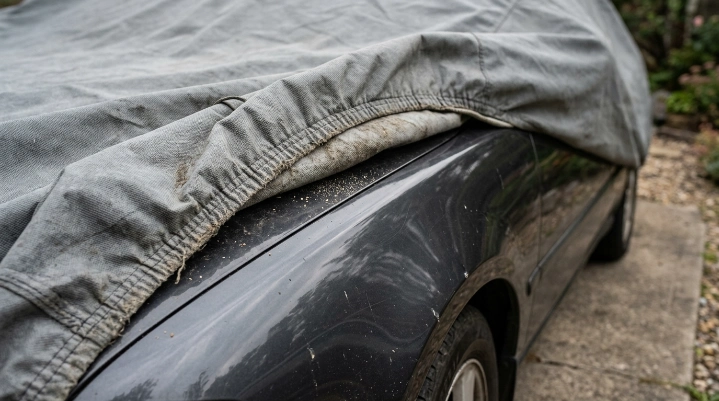
The most common causes are trapped contamination, a loose fit, wind, rough fabric, and poor handling. Several of these problems often happen at the same time.
1. Dirt and grit get trapped underneath
A vehicle can look fairly clean while still carrying a thin layer of road dust. Once covered, those particles sit directly between the fabric and clear coat.
If the cover shifts, the particles can move across the finish. Think of it as rubbing a dusty cloth over a glossy surface.
2. Wind makes a loose cover move
Outdoor use creates a second problem. Wind can lift, pull, and reposition loose sections of fabric for hours.
The hood corners, roof edges, mirror housings, fender peaks, and trunk area can receive repeated contact. A cover that looks harmless while parked may move considerably during gusts.
- Elastic hems help hold the lower edge.
- Underbody straps reduce lifting.
- Mirror pockets can improve alignment on fitted designs.
- Correct sizing reduces unnecessary loose fabric.
3. The inside of the cover becomes dirty
People often wash the vehicle but forget the cover. Over time, the cover can collect dust each time it’s removed, folded, stored, or placed on the ground.
That’s why I avoid setting the clean side of a cover on pavement. Once grit gets embedded inside the fabric, it can return to the paint the next time you install it.
4. The material is too rough
A general-purpose plastic tarp isn’t the same thing as a purpose-built automotive cover. Stiff or rough material can be especially troublesome when it moves.
Purpose-designed covers may use softer inner surfaces and vehicle-specific shaping. Car and Driver’s tested car-cover guide also distinguishes covers by storage environment, fit, and construction.
5. The cover is dragged across the vehicle
Installation technique matters even with a good cover. Pulling a bunched cover sideways across a dusty roof or hood adds unnecessary friction.
Rolling or unfolding the cover over the vehicle is gentler. Removal should follow the same controlled approach.
Section Takeaway: Car covers are most likely to scratch paint when dirt, movement, and pressure combine. Keep the vehicle and cover clean, then minimize movement.
How Do You Prevent a Car Cover From Scratching Paint?
Start with clean paint, use a clean and correctly fitted cover, and secure it so it can’t flap. Those three habits prevent most avoidable problems.
Clean the vehicle before long-term covering
You don’t necessarily need a full detail every time. You do need to avoid trapping obvious dust, sand, dried mud, pollen buildup, or road grime.
- Rinse away loose contamination.
- Wash with a product intended for automotive finishes.
- Use clean wash media.
- Rinse thoroughly.
- Dry with a clean, paint-safe microfiber towel.
- Let trapped water around mirrors and trim drain before covering.
Don’t wipe a dusty vehicle dry just to make it “cover ready.” Dry wiping can move contamination directly across the finish.
Keep the cover off dirty floors
A clean cover can become contaminated in seconds if its inner surface touches a garage floor, driveway, or lawn. Fold it so the paint-facing side stays protected.
If your cover is washable, follow its care label. Cover materials and coatings vary, so one cleaning method doesn’t fit every design.
Secure the cover without overtightening it
The goal is to stop flapping while avoiding concentrated pressure against sharp body edges. Use the cover’s intended straps, buckles, or securing system.
Don’t improvise with ropes pulled tightly across painted panels. Hardware should never bang against the body.
Consider another layer of paint protection
Wax, sealant, ceramic coatings, and paint protection film serve different purposes. None makes careless cover use harmless, but an appropriate protective layer can make regular exterior care easier.
For high-impact areas, Edmunds’ paint protection film overview explains how modern PPF is designed as a physical protective film over automotive paint.
- Wax or sealant: Adds a sacrificial surface layer and can simplify cleaning.
- Ceramic coating: Helps with chemical resistance and cleaning but isn’t scratch-proof armor.
- PPF: Adds a physical film over the paint and can provide greater protection in covered areas.
None of these means you should place a dirty cover on a dirty vehicle. Good contact habits still matter.
What Type of Car Cover Is Safest for Paint?
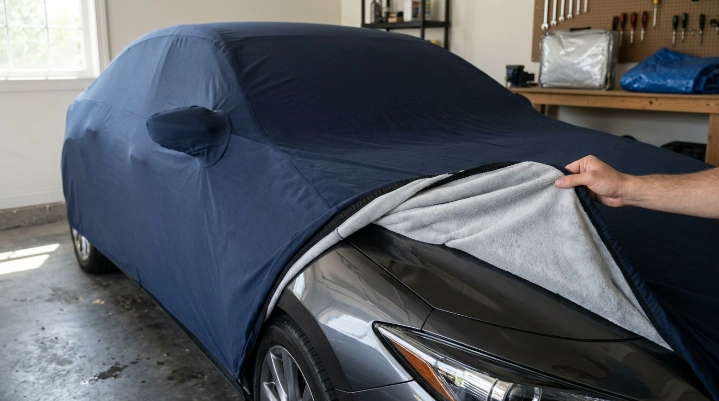
For paint protection, look for a clean, soft inner surface and a fit that limits unnecessary movement. Choose the cover for the environment where the vehicle will actually be stored.
| Cover Setup | Movement Risk | Potential Scratch Risk | Best Use |
|---|---|---|---|
| Soft-lined custom-fit cover | Low when secured | Low on clean paint | Frequent or long-term storage |
| Quality fitted or semi-custom cover | Low to moderate | Low to moderate | General indoor/outdoor use when rated for it |
| Loose universal cover | Moderate to high outdoors | Moderate if it shifts | Short-term use in sheltered conditions |
| General plastic tarp | High unless carefully secured | Higher | Not my choice for direct paint contact |
Fit matters as much as fabric
A soft cover that’s several sizes too large can still create trouble outdoors. Excess fabric gives wind more material to grab.
Custom-fit covers usually follow body contours more closely. Semi-custom covers can also work well when the dimensions and securing system match the vehicle.
Breathability matters for storage
A cover also needs to manage moisture appropriately for its intended environment. A breathable design can help prevent moisture from remaining trapped against the vehicle for long periods.
Don’t assume “waterproof” automatically means “best.” Storage conditions, ventilation, weather exposure, and manufacturer instructions all matter.
Are Car Covers Safer Indoors or Outdoors?
Indoor covering generally presents fewer movement-related problems because wind isn’t constantly pulling at the fabric. Outdoor covers face a much harsher environment.
Indoor storage
A clean indoor cover can keep dust off a vehicle that sits for days or weeks. It can also provide a light barrier against incidental contact in a busy garage.
- Use a breathable indoor-rated material.
- Keep the garage and cover reasonably clean.
- Don’t cover a wet vehicle for storage.
- Keep the fabric away from hot exhaust components after driving.
Outdoor storage
Outside, the cover must deal with wind, rain, pollen, dust, UV exposure, bird droppings, tree debris, and changing temperatures. Secure fit becomes much more important.
If a storm is expected, check the straps and lower edges beforehand. After severe wind, inspect the cover before simply pulling it off and reinstalling it.
What if you cover and uncover the car every day?
Daily installation increases the number of times fabric contacts the finish. That doesn’t automatically make daily covering harmful, but careful handling matters more.
If your vehicle becomes dusty during the day, don’t repeatedly trap that contamination beneath the cover. Sometimes leaving the car uncovered until it can be cleaned is the gentler choice.
What Should You Do if a Car Cover Already Scratched Your Paint?
First determine whether you’re seeing light clear-coat swirls or a deeper scratch. Don’t start polishing aggressively before you know what you’re dealing with.
Wash the area before inspecting it
A dirty surface can make damage difficult to judge. Wash and dry the panel with clean, paint-safe materials first.
Then inspect it in bright, indirect daylight or with a detailing light. Consumer Reports recommends daylight inspection because good lighting makes paint imperfections easier to see.
Check the depth carefully
- Faint swirls: Often appear only from certain angles and may be limited to the clear coat.
- Visible line without exposed color: May need polishing or professional paint correction.
- Scratch through the color: May require touch-up paint or body-shop work.
- Bare metal exposed: Address it promptly to protect the panel from corrosion.
A simple fingernail test can provide a rough clue. If your nail catches strongly, the damage is more likely to be deeper than a light surface swirl.
Don’t attack every mark with an aggressive compound
Polishing removes a tiny amount of the upper finish to level defects. More aggressive isn’t automatically better.
Start with the least aggressive correction suitable for the defect. Kelley Blue Book’s current paint-care guidance also warns that excessive pressure during scratch removal can introduce additional defects.
Mechanic Alert: If a scratch is deep, the finish is matte or satin, bare metal is visible, or you’re considering aggressive machine polishing, have a qualified paint or body professional inspect it instead of experimenting on the panel.
Fix the cause before reinstalling the cover
Correcting the scratch accomplishes little if the same dirty or loose cover goes straight back onto the car. Inspect both the vehicle and cover before using it again.
- Clean the inside of the cover according to its care instructions.
- Check for embedded grit or damaged fabric.
- Confirm the cover is the correct size.
- Inspect straps and elastic sections.
- Clean the vehicle before reinstalling it.
- Watch the cover during the next windy day.
Section Takeaway: Light cover marks may be correctable, but prevention is cheaper and safer than repeated polishing. Fix the contamination, fit, or movement problem before using the cover again.
FAQ About Car Cover Scratches
Do car covers cause swirl marks?
They can. Swirl marks are more likely when dust or grit sits between the cover and clear coat while the fabric moves across the vehicle. A clean, soft-lined cover with a secure fit lowers that risk considerably.
Should I put a car cover on a dusty car?
It’s better not to. A layer of dust can contain abrasive particles, and covering the vehicle traps those particles directly against the paint. If the cover shifts during installation or in wind, the contamination can create fine marks.
Can I put a car cover on a wet car?
Avoid covering a wet vehicle for long-term storage unless the cover manufacturer specifically permits that use. Let the car dry first, especially around mirrors, trim, seams, and weatherstripping where water tends to remain.
Will a soft car cover scratch paint?
A soft cover is less likely to scratch clean paint, but soft material isn’t a guarantee. Dirt trapped inside the fabric, incorrect sizing, or repeated wind movement can still create friction and surface marks.
Is a custom-fit car cover worth it?
It can be worthwhile when the vehicle is covered frequently or stored outdoors. A closer fit generally leaves less loose material available to flap in wind, though cleanliness and correct installation remain just as important.
Can a car cover damage ceramic coating?
A ceramic coating doesn’t make the surface immune to abrasion. Dirt trapped beneath a moving cover can still create marks, so use the same clean-cover and clean-paint habits you would use on an uncoated vehicle.
Should I use a car cover every day?
Daily use can make sense when your parking environment exposes the vehicle to contaminants or weather. However, covering a dirty car every day may create more paint-contact risk than leaving it uncovered until you can clean it properly.
Final takeaway: A car cover should protect your finish, not polish it with trapped dirt. Choose a paint-friendly cover, keep both surfaces clean, control wind movement, and stop using the cover if you see repeated marks in the same areas.
If you’re seeing fresh scratches after every use, inspect the cover before spending money on paint correction. Solving the cause first is the best way to keep those marks from coming back.