
Hail Cover Not Working? Why It Fails and What to Do

Quick Answer
If your hail cover is not working, the usual problem is inadequate padding, poor fit, loose fastening, worn material, or hail that exceeds the cover’s protection limits. A cover can reduce some impacts, but solid shelter remains safer when severe hail threatens, as explained in the National Weather Service severe thunderstorm guidance.
Check these first
- Cover type: A thin weather cover may protect against dust and rain but provide little impact cushioning.
- Padding depth: Flattened or thin padding cannot absorb as much impact energy.
- Fit: Loose fabric can move, expose panels, and rub against paint during strong wind.
- Fasteners: Missing or loose straps can let the cover lift during a storm.
- Hail size: Larger hail can damage vehicles through covers that handle smaller impacts.
- Condition: Tears, compressed foam, weak seams, and stretched elastic can reduce protection.
Best next move
- Inspect the cover before the next storm, then choose solid covered parking whenever severe hail is forecast.
A hail cover not working is frustrating because you usually discover the problem after a storm has already reached your car. The good news is that you can often identify whether the problem came from the cover, its installation, or the storm itself.
I start by separating those three possibilities. That prevents you from replacing a usable cover when the real issue is simply that it was never designed for severe hail.
In This Guide
Why Is My Hail Cover Not Working?
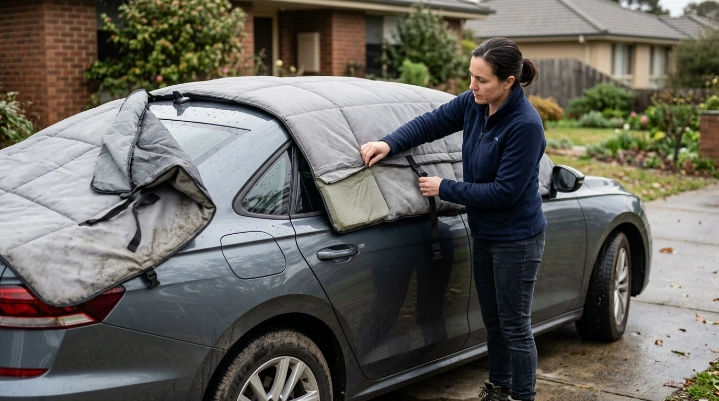
A hail cover usually seems ineffective because its material cannot absorb enough impact, or because the cover is moving during the storm. Fit, padding, fastening, condition, and hail severity all matter.
A hail cover is a vehicle cover designed to place cushioning material between falling hail and the vehicle’s exterior panels. It can reduce impact, but that doesn’t make every cover hail-proof.
A regular outdoor cover may not be a hail cover
This is the first detail I check. Many products described as weatherproof focus on rain, sunlight, snow, dust, and dirt rather than impact protection.
A thin fabric layer doesn’t create much distance between a hailstone and the metal underneath. It may protect paint from small debris while doing little against dent-producing impacts.
The padding may have compressed
Purpose-built hail covers often rely on foam or another cushioning layer. Repeated folding, long-term compression, age, or heavy storage can change how that padding behaves.
- Flat areas: Compare the roof padding with less-used areas near the sides.
- Hard spots: Look for sections that feel noticeably thinner or firmer.
- Permanent creases: Check whether folded areas remain compressed after installation.
- Damaged seams: Inspect places where padding has shifted inside the cover.
The cover may be moving in the wind
Hailstorms can bring strong wind. A loose cover can lift away from panels, expose edges, or repeatedly rub the paint.
That means a cover can have good padding yet perform poorly because it won’t stay where the manufacturer intended.
| What you notice | Likely cause | What to check | Best next step |
|---|---|---|---|
| Dents through covered panels | Insufficient impact protection | Padding thickness and hail severity | Use better shelter or purpose-built protection |
| Damage near edges | Poor coverage or shifting | Mirror pockets, hems, and straps | Correct the fit before reuse |
| Cover blows partly off | Weak fastening | Buckles, straps, elastic, and anchor points | Repair or replace damaged fasteners |
| New paint scuffs | Movement or trapped grit | Inner lining and vehicle cleanliness | Clean both surfaces before reinstalling |
| One area dents worse | Uneven padding | Compressed or displaced cushioning | Replace if the padding cannot recover |
Section Takeaway: A hail cover can fail because of its design, condition, or installation. Start with those basics before assuming the entire product is defective.
Is the Cover Failing, or Is the Hail Too Large?
Sometimes nothing is mechanically wrong with the cover. The hail simply carries more impact energy than the cover can absorb.
The National Weather Service classifies hail measuring about one inch in diameter as severe. Hail that large can damage vehicles and other property.
There is no safe assumption that fabric prevents dents
Even manufacturers of quality covers avoid guaranteeing complete hail protection. Covercraft, for example, states that hail damage isn’t guaranteed to be prevented by its normal car covers.
You can review its official hail-protection guidance for that limitation.
Controlled testing has found major limitations
One useful reality check comes from IAG Research Centre testing published through RCAR. Researchers tested seven vehicle covers using controlled simulated hail impacts.
The RCAR vehicle hail-cover testing report concluded that those tested covers provided little or no effective additional protection overall. Results also varied by hailstone size.
This doesn’t prove every specialized product performs identically. It does show why I wouldn’t treat a fabric cover as guaranteed dent protection.
Solid shelter changes the equation
A roof prevents direct hail impact instead of trying to cushion it. That fundamental difference makes garages and other sturdy covered areas the preferred choice.
Kelley Blue Book also recommends covered parking first and discusses padded barriers when shelter isn’t available. Its hail-damage prevention guide is a useful reference.
- Small hail: Padding may reduce some impact or surface damage.
- Severe hail: Dent risk remains even with a cover installed.
- Very large hail: Glass and body panels can still suffer major damage.
- Strong wind: Protection can decrease if the cover shifts or lifts.
Section Takeaway: Don’t judge a hail cover only by whether damage occurred. Compare the storm severity with what the product was actually designed and tested to handle.
How Do I Check Whether My Hail Cover Fits Correctly?
A properly fitted hail cover should sit consistently over the protected panels without large loose sections. Fasteners should keep it positioned before wind arrives.
I prefer doing this inspection on a calm, dry day. Trying to diagnose fit while a thunderstorm is approaching creates unnecessary risk.
Inspect the cover from front to rear
- Center the cover: Make sure equal material reaches both sides of the vehicle.
- Check the bumpers: The front and rear hems should stay seated securely.
- Inspect mirrors: Confirm mirror areas aren’t pulling nearby material out of position.
- Look across the roof: Large loose pockets can catch wind.
- Check every strap: Buckles and attachment points should be intact.
- Inspect padding: Cushioning should cover the areas the manufacturer intended to protect.
Look underneath before installing it again
Grit between the cover and clear coat can become abrasive when fabric moves. That becomes more concerning during wind-driven weather.
Shake out the cover and inspect the liner. Clean the vehicle first if dust, sand, or road grime covers the paint.
A secure fit should not require improvised attachments that could hit the bodywork. Avoid hard hooks or sharp objects near painted panels.
What Should I Do Before the Next Hailstorm?
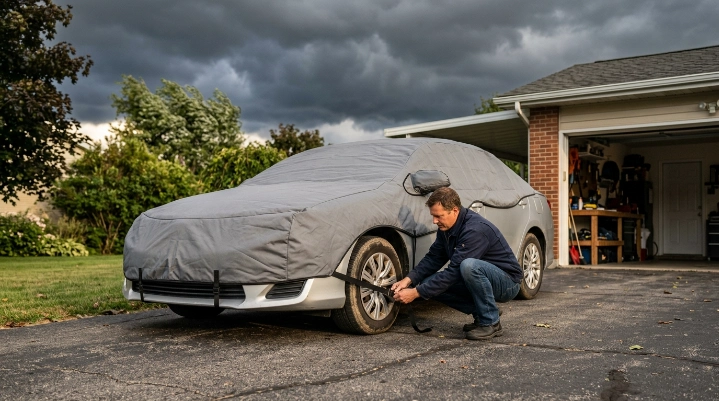
The best strategy is to act before hail starts. Once large hail is falling, protecting yourself matters more than saving the vehicle.
As of 2026, official weather guidance still recommends moving vehicles into garages or under covered structures before severe storms when time and safety allow.
Use this order of priority
- Move under solid shelter: A garage, sturdy carport, or suitable covered parking area is the first choice.
- Install protection early: Fit your hail cover before wind and hail reach you.
- Secure every attachment: Check straps, hems, buckles, and manufacturer-provided anchors.
- Protect exposed panels: Make sure the roof, hood, trunk, and other intended areas remain covered.
- Go indoors: Don’t remain outside adjusting a cover once severe weather arrives.
Don’t drive through a severe thunderstorm just to find better parking. Weather, visibility, falling branches, lightning, and hail can create greater risks than vehicle damage.
If you receive regular severe-weather alerts, make your parking decision early. A few extra minutes can matter.
Can I Improve a Regular Car Cover for Hail?
You may be able to add cushioning under a regular cover before a storm, but this remains damage reduction rather than guaranteed protection. Purpose-built padded protection is generally easier to secure correctly.
Soft padding can add another impact layer
Thick moving blankets or similar soft materials can create extra space between hail and metal panels. Kelley Blue Book lists padded barriers as an option when solid shelter isn’t available.
- Prioritize horizontal panels: Cover the hood, roof, and trunk first.
- Keep materials soft: Avoid rough surfaces against the paint.
- Prevent sliding: Padding that moves can expose the area you meant to protect.
- Secure the outer cover: Wind can remove loosely placed materials quickly.
Never use hard objects that might become projectiles. Don’t attach anything that can scratch glass or body panels.
Most importantly, finish the setup before the storm reaches your location. Don’t run outside during severe hail to add another blanket.
Know when replacement makes more sense
Extra padding won’t solve torn fabric, failed straps, displaced foam, or a badly sized cover. Those problems need repair or replacement.
If the same cover has failed repeatedly in moderate conditions, review its manufacturer specifications. Don’t rely on marketing words such as “all-weather” as proof of hail performance.
What Should I Do After Hail Damages My Car?
Wait until the storm has passed, then inspect the vehicle in good light. Look beyond obvious roof and hood dents.
- Roof and hood: Look across the surface from a low angle for shallow dents.
- Trunk or hatch: Check broad horizontal sections carefully.
- Glass: Look for cracks, chips, or impact marks.
- Mirrors and trim: Inspect housings and exterior plastic pieces.
- Paint: Check for chips, scratches, and marks caused by cover movement.
Photograph the damage before washing or repairing anything. Include wide views and close-ups so the location and extent remain documented.
Don’t assume every dent needs conventional bodywork
Some shallow dents with intact paint may qualify for paintless dent repair. Deeper dents, cracked paint, sharp creases, and damaged panels can require different methods.
Mechanic Alert: If hail has damaged glass, structural areas, electrical equipment, cameras, or safety sensors, have the vehicle inspected by a qualified repair professional.
Check your insurance coverage
Hail damage is commonly associated with comprehensive auto coverage rather than liability-only insurance. Exact coverage, deductibles, exclusions, and claim rules depend on your policy.
Car and Driver provides a general explanation in its hail-damage insurance overview. Your insurer’s current policy documents should make the final decision.
Keep the damaged cover too. Photos of torn straps, compressed padding, or displaced material may help explain what happened during the storm.
Frequently Asked Questions
Why did my car dent even though I used a hail cover?
The hail may have exceeded the cover’s impact capacity. Thin padding, compressed material, poor fit, exposed panels, or cover movement can also let enough force reach the bodywork to create dents.
Does a hail cover guarantee that my car won’t get damaged?
No. A hail cover can reduce some impacts, but it shouldn’t be treated as guaranteed protection from severe or very large hail. Solid overhead shelter prevents direct hail impact and remains the safer option.
How do I know if my hail cover is worn out?
Look for flattened padding, torn fabric, failed seams, stretched hems, damaged buckles, missing straps, and sections that no longer stay positioned. Significant deterioration is a reason to repair or replace the cover.
Can wind make a hail cover stop working?
Yes. Wind can lift or shift the cover, reducing padding over exposed panels. Movement can also allow contaminated fabric to rub against paint, so correct fit and fastening matter.
Can I put blankets under my car cover for more protection?
Soft, thick padding may help reduce some impacts when shelter isn’t available. Keep it clean, secure it before the storm, and don’t treat the setup as guaranteed protection against severe hail.
Should I go outside and fix my cover during a hailstorm?
No. Severe hail, lightning, strong wind, and flying debris can injure you. Make adjustments before the storm arrives and remain in a safe location once severe weather begins.
Is a waterproof car cover automatically good for hail?
No. Waterproofing deals with moisture, while hail resistance requires impact cushioning. A cover designed mainly for rain, dust, snow, or ultraviolet exposure may provide little meaningful protection against dent-producing hail.
The main takeaway: If your hail cover isn’t working, inspect its padding, fit, fasteners, age, and intended protection level before buying another one.
For the next storm, prioritize early preparation and solid shelter. A cover is best treated as an extra layer of protection, not a substitute for a roof during severe hail.
“`
