
Cheap Car Cover Problems: What Goes Wrong and How to Avoid Damage

Quick Answer
Cheap car cover problems usually come from poor fit, rough inner fabric, weak seams, poor water management, and thin material that moves in the wind. A low-cost cover isn’t automatically bad, but I would inspect its fit and fabric before trusting it on clean paint, especially outdoors. Good exterior car care also matters because dirt trapped between the paint and cover can increase rubbing.
Common Cheap Car Cover Problems
- Poor fit: Loose fabric can flap against paint when wind gets underneath it.
- Rough lining: Coarse material may rub dusty or delicate paint surfaces.
- Weak seams: Stitching can stretch, leak, or tear after repeated outdoor use.
- Trapped moisture: Low-breathability material can slow drying under the cover.
- Weak straps: Poor fastening can let the cover shift or blow off.
- Fast material wear: Thin fabric can become brittle, faded, or torn after weather exposure.
Before Using One
- Check the inside surface, fit, seams, straps, and ventilation before leaving the vehicle covered outdoors.
I understand why cheap car covers are tempting. You want simple protection from dust, sun, bird mess, rain, or tree debris without spending much.
The trouble starts when the cover itself becomes part of the problem. In this guide, I’ll show you what I check before trusting a budget cover on a daily driver and what warning signs make me stop using one.
In This Guide
What Problems Do Cheap Car Covers Cause?
The most common cheap car cover problems involve fit, fabric quality, moisture control, and fastening. Any one of these can turn a useful cover into an annoyance.
Price alone doesn’t tell me whether a cover is safe. I pay more attention to how the cover behaves once it’s installed.
A car cover is a removable fabric barrier placed over a vehicle to reduce exposure to dust, debris, sunlight, moisture, and other environmental contaminants.
Loose fit and wind movement
A universal budget cover may have enough fabric to fit several vehicle sizes. That sounds convenient, but excess material can create large loose areas.
Once wind gets beneath those areas, the fabric can repeatedly move across the body.
- Mirror areas may pull tight and then loosen.
- Roof fabric may balloon upward.
- Door panels may experience repeated fabric movement.
- Bumpers may let air enter beneath a weak elastic hem.
When I assess a cover, I grab the fabric near the door and roof. A little movement is normal, but large folds sliding across the panel concern me.
Thin or rough material
A lightweight cover can be useful indoors. Outdoors, however, thin material may offer less resistance to wind, branches, and repeated handling.
I also run my hand across the inside surface. If it feels rough against my skin, I don’t want it rubbing a dusty clear coat.
Weak seams and straps
Budget covers sometimes save cost in areas you don’t notice immediately. Stitching, buckle quality, elastic hems, and strap attachment points deserve a close look.
- Look for stretched stitching.
- Check for gaps around seams.
- Pull lightly on strap attachment points.
- Inspect plastic buckles for cracking.
- Check whether the elastic hem still grips the vehicle.
A torn strap isn’t just inconvenient. Once one side becomes loose, wind can put much more stress on the remaining fabric.
Section Takeaway: A cheap cover becomes risky when poor fit, coarse material, or weak fastening allows uncontrolled movement against the vehicle.
Can a Cheap Car Cover Damage Your Paint?
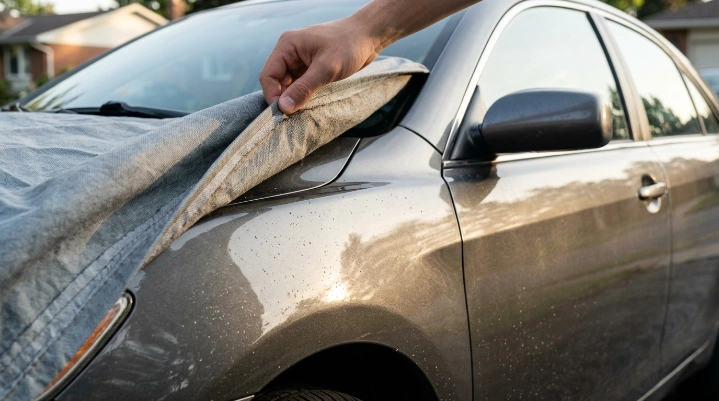
Yes, a cheap car cover can contribute to paint marks if dirt becomes trapped underneath and the cover moves across it. The cover doesn’t need to be visibly abrasive for this to happen.
The combination matters most: dust plus pressure plus movement.
Dirt beneath the cover acts differently
I never like installing a cover over a visibly dirty car. Dust, sand, pollen, and road grime can remain between the fabric and clear coat.
If the cover then moves in wind, those particles can rub against the finish.
- Contamination sits on the paint.
- The cover presses against the contamination.
- Wind or handling moves the fabric.
- Particles move across the clear coat.
- Fine marks may become visible under strong light.
That’s why I treat vehicle cleanliness as part of cover safety. The Consumer Reports car maintenance and repair guide is also a useful general resource for maintaining a vehicle’s condition.
Moisture can create another problem
A waterproof label doesn’t mean moisture can never appear beneath a cover. Humid air, a wet vehicle, condensation, and water entering around openings can all leave moisture underneath.
A cover with poor airflow may slow evaporation. That becomes more important when a vehicle remains covered for long periods.
- Don’t cover a dripping-wet car for extended storage.
- Check beneath the cover after heavy rain.
- Look for persistent dampness on glass and body panels.
- Dry the cover before storing it folded.
Plastic parts and sharp edges matter too
A badly fitted cover can catch around license plates, spoilers, antennas, roof accessories, or other protruding parts. Repeated tension can damage the cover itself.
If your vehicle has an unusual accessory, don’t force a generic cover over it. A correct fit is usually safer than stretching fabric until it reaches the bumper.
Mechanic Alert: If you discover damaged paint, exposed metal, corrosion, or a body component that has loosened, have the area inspected by a qualified body or repair professional.
Section Takeaway: Most cover-related paint trouble comes from contamination, movement, trapped moisture, or a bad fit rather than the cover simply touching the car.
How Can You Tell a Cheap Car Cover Is Failing?
A failing car cover usually gives you warning signs before it becomes useless. I check both the cover and the vehicle underneath.
The fastest inspection takes only a few minutes.
| What You Notice | Likely Problem | What I Would Do |
|---|---|---|
| Large fabric movement in light wind | Cover is too loose | Adjust straps or replace with a better fit |
| Wet areas remain underneath | Poor drying or ventilation | Remove cover and dry both surfaces |
| Seams separating | Material or stitching fatigue | Repair only if minor; replace if spreading |
| Powdery or flaky fabric | Material degradation | Replace the cover |
| New fine paint marks | Dirt and cover movement may be involved | Stop using it until the cause is identified |
| Broken buckle or strap | Fastening system failure | Repair securely or replace the cover |
Check the cover in daylight
Hold the material toward daylight and inspect high-stress areas. Thin spots, pinholes, frayed stitching, and small tears are easier to see this way.
Then inspect the underside. Pay special attention to dirt buildup and any rough areas that contact painted panels.
Look at the car after removal
I also look at the paint from an angle after removing the cover. Strong side lighting makes fine marks, moisture patches, and residue easier to notice.
One mark doesn’t automatically prove the cover caused it. Repeated marks in the same contact areas are more meaningful.
Cheap vs Better-Built Car Covers: What Changes?
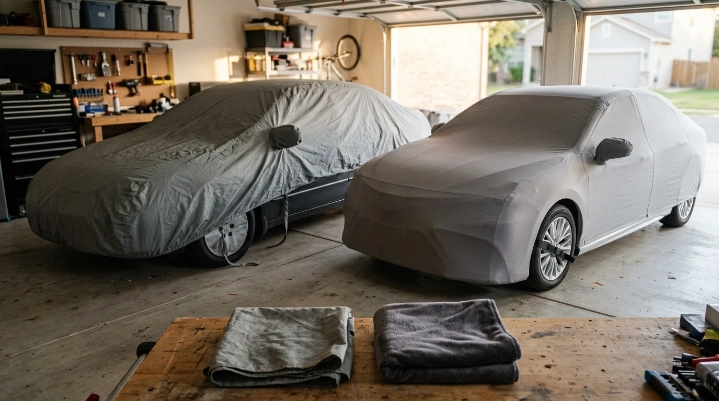
The biggest difference isn’t always the number printed on the price tag. A better-built cover should solve the weaknesses that matter for your storage situation.
For me, fit comes first. Fancy marketing means little if the cover moves constantly across the vehicle.
| Feature | Basic Cheap Cover | Better-Built Cover |
|---|---|---|
| Fit | Often broad universal sizing | More vehicle-specific sizing options |
| Inner surface | May use simple lightweight fabric | May use a softer paint-contact surface |
| Fastening | Basic elastic or limited straps | More secure attachment design |
| Weather use | Quality varies widely | Clearer intended-use specifications |
| Construction | Simpler seams and materials | Usually stronger stress points and seams |
I wouldn’t buy based only on claims such as “10-layer” or “all weather.” Those terms don’t tell me enough about fit, seam construction, airflow, or how the inner surface feels.
Instead, I match the cover to the job.
- Indoor storage: Prioritize dust protection and a soft surface.
- Outdoor driveway: Prioritize fit, fastening, weather resistance, and ventilation.
- Windy location: Give extra attention to straps and excess fabric.
- Long-term storage: Check moisture control and inspect the vehicle regularly.
As of 2026, there are many universal and vehicle-specific designs available. That makes it worth comparing construction instead of choosing the lowest price automatically.
How Do You Prevent Problems With a Budget Car Cover?
You can reduce many cheap car cover problems with careful installation and routine inspection. A budget cover needs more attention when its fit or materials are basic.
These are the steps I use.
- Start with a reasonably clean vehicle. Remove loose grit and abrasive debris before covering it.
- Make sure the vehicle is dry. Avoid trapping obvious rainwater beneath the fabric.
- Find the front and rear first. Don’t drag the entire cover around while searching for orientation.
- Unroll it across the vehicle. Try to minimize sliding across painted panels.
- Secure the fastening system. Use the supplied straps exactly as designed.
- Remove large loose folds. Excess material becomes a problem when wind catches it.
- Inspect after bad weather. Check for movement, water, torn seams, and loose straps.
Don’t turn fastening straps into hazards
Straps should secure the cover without hanging near moving parts or dragging beneath the vehicle. Follow the manufacturer’s routing instructions when they are available.
Never crawl beneath an unsupported vehicle to retrieve or attach a strap.
Mechanic Alert: Never work beneath a vehicle supported only by a jack. If fastening or retrieving the cover requires going underneath the vehicle, use a safer method or get professional assistance.
Inspect the vehicle regularly
A cover is not a “fit it and forget it” product. I would check an outdoor-covered vehicle regularly, especially after wind or heavy rain.
- Confirm the cover hasn’t shifted.
- Check whether the paint is dry.
- Remove accumulated leaves and debris.
- Inspect the straps and buckles.
- Look for torn or thinning fabric.
For broader vehicle safety information, the National Highway Traffic Safety Administration vehicle safety resource is a useful reference for everyday owners.
Section Takeaway: Good preparation and regular checks can make a basic cover safer, but maintenance cannot correct badly deteriorated fabric or a seriously wrong fit.
When Should You Replace a Cheap Car Cover?
Replace the cover when its defects prevent it from staying clean, secure, dry, and stable on the car. Trying to stretch its life isn’t worth risking the finish underneath.
I would stop using a cover immediately if it repeatedly comes loose or develops a rough damaged inner surface.
Replacement signs I wouldn’t ignore
- Large tears that keep spreading.
- Seams opening in several places.
- Straps pulling away from the fabric.
- Elastic that no longer holds the cover in place.
- Material becoming brittle or powdery.
- Persistent water problems beneath the cover.
- A fit loose enough to cause constant flapping.
- Rough areas contacting painted surfaces.
A small clean tear may be repairable with a suitable repair product. Widespread material failure is different.
Once several areas begin breaking down, replacement is usually the simpler choice.
Don’t replace cheap with cheap blindly
If the old cover failed, identify why before buying the next one. Otherwise, it’s easy to repeat the same problem.
- If it blew around, improve fit and fastening.
- If it held moisture, look closer at ventilation and intended weather use.
- If it scratched or marked paint, improve cleanliness, inner-surface quality, and fit.
- If it tore quickly, choose stronger construction for your environment.
I would rather use a simple cover that fits correctly than a feature-heavy cover that hangs loosely. Fit determines how the product interacts with the car every day.
Frequently Asked Questions About Cheap Car Cover Problems
Are cheap car covers bad for cars?
Not automatically. A cheap cover can work for basic protection if it fits correctly, stays clean, remains secure, and doesn’t trap persistent moisture. Problems become more likely when loose fabric, rough material, dirt, weak straps, or poor ventilation affect how the cover contacts the vehicle.
Can a cheap car cover scratch paint?
It can contribute to fine scratches when dirt or grit sits between the cover and paint and the fabric moves. Keeping the vehicle and cover clean, reducing wind movement, and choosing a soft inner surface can reduce the risk.
Why does my car cover keep blowing off?
A cover usually blows off because wind gets underneath loose material or the fastening system can’t hold it securely. Check the fit, elastic hem, straps, buckles, and exposed openings before leaving the vehicle covered again.
Why is my car wet under a waterproof cover?
Moisture underneath doesn’t always mean rain passed directly through the material. Condensation, trapped humid air, covering a wet vehicle, leaking seams, and poor drying can all leave water beneath a cover.
Should a car cover fit tight?
A car cover should fit securely without being stretched dangerously tight over mirrors, spoilers, antennas, or sharp edges. It should have little enough excess fabric that large sections don’t flap freely in normal wind.
Can I put a car cover on a dirty car?
I avoid it when the vehicle has visible dust, sand, or road grit. Those particles can become trapped between the cover and clear coat, where movement may rub them across the finish.
Is a cheap car cover worth buying?
It can be worth buying for light-duty protection when the construction and fit suit your storage conditions. For frequent outdoor use, focus less on the lowest price and more on fit, fastening, inner fabric, moisture management, seams, and durability.
Bottom line: Cheap car cover problems usually start when low price is combined with poor fit or unsuitable materials. Check the cover like you would any other piece of protective equipment instead of assuming that simply covering the car makes it safer.
If your current cover flaps, stays wet underneath, tears at the straps, or leaves new marks on the paint, stop and find the cause. Replacing a failing cover is easier than correcting damage it was supposed to prevent.
