
How to Stop Dust Getting Under a Car Cover: 2026 Guide

Quick Answer
To stop dust getting under a car cover, start with a clean, dry vehicle and a clean cover, then use a correctly fitted cover with secure lower edges. Reduce wind movement, keep the inner lining off dirty floors, and remove loose contamination before covering the car. Consumer Reports’ car-washing guidance also recommends rinsing away loose dirt before rubbing the paint.
Six steps that make the biggest difference
- Clean the car: Don’t trap road dust, pollen, or sand under the cover.
- Clean the cover: Keep the paint-side surface free from grit and garage-floor debris.
- Improve the fit: Loose lower edges give wind more opportunities to carry dust underneath.
- Secure the cover: Use the straps, elastic hems, or fastening system supplied for your cover.
- Limit movement: Repeated flapping can move trapped contamination across the clear coat.
- Store it cleanly: Fold the cover inward so its paint-side surface doesn’t touch the ground.
Dust underneath a car cover is frustrating because the cover is supposed to keep the vehicle clean. The problem usually comes from gaps, contamination, wind movement, or the way the cover is handled.
My rule is simple: control both sides of the cover. Keeping the vehicle clean matters just as much as keeping the cover’s inner surface clean.
In This Guide
Why Does Dust Get Under a Car Cover?
Dust gets underneath mainly because a car cover isn’t an airtight enclosure. Air can move around the lower edges, wheel openings, bumpers, mirrors, and other areas where the fabric doesn’t sit tightly.
Dust ingress under a car cover means airborne or transferred contamination reaches the space between the cover and the vehicle. It can arrive before, during, or after the cover is installed.
The dust may already be there
Sometimes the cover isn’t allowing dust inside at all. The contamination was already sitting on the paint or trapped in the cover’s inner surface.
- Dirty paint: Road film, pollen, sand, and fine dirt become trapped immediately.
- Dirty lining: A cover previously dropped on concrete can carry grit back to the vehicle.
- Dirty hands: Handling dusty lower panels and then touching the inside fabric can transfer contamination.
- Poor storage: Leaving the cover uncovered in a dusty garage lets particles settle on both surfaces.
Wind creates pressure around the edges
Outdoor wind can push air beneath a loose hem and move it through the space under the fabric. A badly fitted cover makes that pathway larger.
Movement creates another concern. Once gritty contamination gets underneath, repeated rubbing can increase the chance of fine marks in the paint.
| What you notice | Likely cause | Best first move |
|---|---|---|
| Dust mainly around lower panels | Loose lower edges or dusty parking surface | Improve fit and clean the storage area |
| Dust across the whole car | Dirty cover, dirty paint, or airborne fine dust | Clean both surfaces before reuse |
| Marks around mirrors and corners | Cover movement with trapped contamination | Secure the cover and inspect the lining |
| Dust returns soon after cleaning | Dusty environment or unsuitable fit | Address the environment and cover sizing |
How Do You Stop Dust Getting Under a Car Cover?
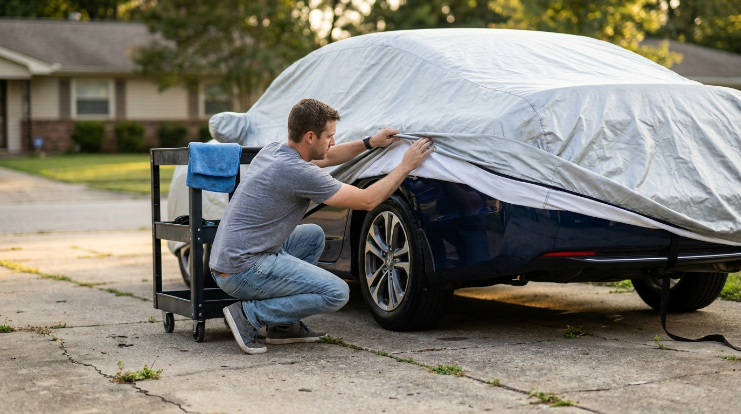
The best approach is to remove contamination first, reduce openings around the car, and keep the fabric from moving unnecessarily. No normal fabric cover can guarantee a completely dust-free vehicle.
Use this routine whenever possible.
- Wash or safely rinse the vehicle. Remove loose dust, sand, pollen, and road grime before covering it.
- Let the vehicle dry. Avoid trapping unnecessary moisture underneath the fabric.
- Inspect the cover’s inner surface. Look for sand, leaves, grit, or anything picked up during storage.
- Center the cover correctly. Position mirror pockets and shaped sections before stretching the lower edges into place.
- Secure every intended fastening point. Use the manufacturer’s straps, elastic sections, or tie-down system correctly.
- Keep the cover off the ground. Don’t let the paint-facing side drag across concrete, gravel, grass, or a garage floor.
Don’t try to make the cover airtight
Wrapping the lower edge completely in plastic or improvised tape may seem like an easy dust fix. It can create new problems if moisture or condensation needs to escape.
A better goal is a stable, close fit without excessive openings. The cover should protect the vehicle while remaining appropriate for its intended indoor or outdoor use.
As of 2026, I would prioritize cleanliness and fit before buying extra accessories. Those two factors solve more of the problem than complicated homemade sealing methods.
Which Car Cover Features Help Keep Dust Out?
A fitted cover generally controls dust better than a loose, oversized cover because it leaves less excess fabric around the vehicle. The correct design still depends on whether you’re parking indoors or outside.
Choose the right size first
A cover that’s too large can hang away from bumpers and rocker panels. That gives moving air more room to reach underneath.
- Vehicle-specific shape: Usually follows mirrors, rooflines, and bumpers more closely.
- Secure elastic hems: Help hold the lower front and rear edges against the vehicle.
- Proper straps: Reduce movement when used according to the cover manufacturer’s instructions.
- Soft paint-facing surface: Helps reduce harsh contact, provided the lining remains clean.
- Suitable fabric: Choose a material specifically designed for your indoor or outdoor storage conditions.
Breathability and dust resistance involve a tradeoff
A cover designed to manage moisture may not behave like an impermeable plastic sheet. Extremely fine airborne particles can be difficult to eliminate completely in dusty surroundings.
That doesn’t automatically mean the cover has failed. Judge its performance by how much contamination appears, where it collects, and whether the cover stays stable.
If a cover is torn, stretched, or no longer hugs the vehicle, replacement can make more sense than adding more straps. Worn fabric and tired elastic can change how the whole cover fits.
How Should You Clean the Car and Cover?
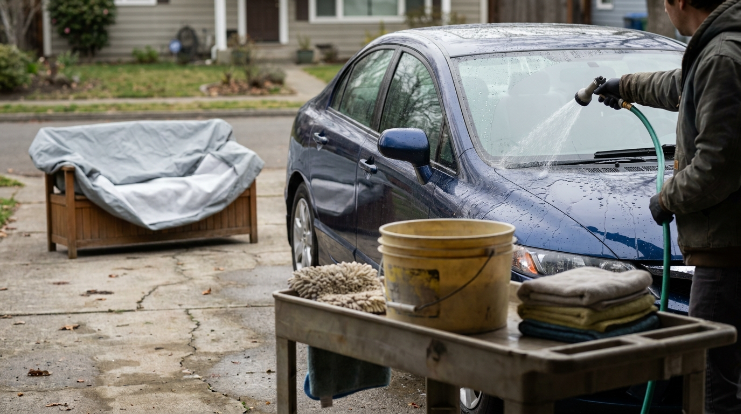
Cleanliness is one of the strongest defenses against scratches and visible dust. Never assume a covered vehicle is safe to wipe with a dry towel.
Edmunds’ car-washing guidance recommends rinsing loose contamination before making contact with the paint. That principle matters even more when a cover may have held particles against the surface.
Clean the vehicle without grinding in dirt
- Rinse first: Flush loose debris away before using a wash mitt.
- Use automotive wash soap: Follow the product’s dilution and use instructions.
- Work from cleaner areas downward: Lower panels often carry heavier contamination.
- Use clean wash media: Don’t reuse a mitt after it lands on dirty pavement without cleaning it.
- Dry gently: Use clean paint-safe drying materials instead of rubbing with a dirty towel.
Consumer Reports also notes that dirt caught in cleaning tools can mar automotive finishes. Its 2026 detailing guidance reinforces the value of clean tools and sensible washing practices.
Clean the cover according to its care label
Don’t guess whether your specific cover can go into a household washing machine. Material, coating, size, and construction vary between manufacturers.
- Check instructions: Follow the cover manufacturer’s washing and drying method.
- Remove loose debris: Shake off leaves and surface dirt before washing.
- Avoid ground contact: Keep the clean interior surface away from concrete and soil.
- Dry it properly: Don’t store a wet cover tightly folded.
- Fold inward: Keep the paint-facing side protected when storing the cover.
Section Takeaway: A clean cover over dirty paint is still a contamination problem. Clean both surfaces and keep them separated from dirty floors.
How Do You Stop Wind Pushing Dust Underneath?
Start by eliminating unnecessary fabric movement. The more a loose cover lifts and shifts, the easier it is for surrounding air and dirt to move beneath its edges.
Check the fit at common problem areas
- Front bumper: Confirm the lower edge hasn’t slipped upward.
- Rear bumper: Check that the hem still sits where the manufacturer intended.
- Mirrors: Make sure mirror pockets aren’t pulling the surrounding fabric sideways.
- Rocker panels: Look for large gaps along the sides.
- Straps: Secure them correctly without letting hard parts strike the paint.
Never rely on random heavy objects placed against the body to hold the cover down. They can damage paint, fall away, or create concentrated pressure points.
Don’t overtighten straps either. Use the fastening system as designed rather than trying to stretch an incorrect-size cover onto the car.
Watch exposed parking surfaces
A dusty gravel area creates a different environment from a clean paved garage. Wind can lift loose surface material and carry it toward the vehicle.
Manufacturer storage guidance hosted by the National Highway Traffic Safety Administration has also emphasized reducing dust around vehicle storage areas and keeping stored vehicles clean.
When outdoor dust is severe, changing the parking location may accomplish more than changing covers. A paved, sheltered area removes one major source of airborne grit.
Is Dust Prevention Different Indoors and Outdoors?
Yes. Indoor covers mostly deal with settled garage dust, while outdoor covers must also handle wind, weather, pollen, road contamination, and changing moisture conditions.
| Storage situation | Main dust problem | Priority |
|---|---|---|
| Clean enclosed garage | Fine settled dust | Clean fabric and vehicle |
| Working garage | Sawdust, workshop debris, floor dirt | Protect cover during removal and storage |
| Paved outdoor parking | Windborne dust and pollen | Fit and wind security |
| Gravel or dusty outdoor area | Airborne grit from the ground | Improve parking environment first |
Indoor storage still requires good habits
Garage dust can contain more than harmless household fluff. Workshop areas may contain sand, dried mud, wood particles, or other debris you don’t want pressed against clear coat.
Store the folded cover on a clean shelf or inside its storage bag. Don’t toss it onto the floor between uses.
Outdoor storage needs closer inspection
Check the cover after strong winds or unusually dusty conditions. Look for shifted hems, loose straps, new tears, and contamination near lower openings.
You don’t need to remove it every day. Instead, inspect it when conditions suggest the fit may have changed.
Section Takeaway: Indoors, focus on cleanliness. Outdoors, combine cleanliness with secure fit, reduced wind movement, and a cleaner parking surface.
Frequently Asked Questions
Why is my car dusty even though I use a cover?
The dust may have been on the car beforehand, transferred from the cover’s lining, or entered around loose edges. Fine airborne contamination can also reach areas beneath some covers, especially when wind moves the fabric.
Can dust under a car cover scratch the paint?
Dust itself varies, but gritty particles such as sand and road debris can contribute to fine scratches when pressure and movement rub them across the clear coat. Avoid dry wiping a dusty covered vehicle.
Should I put a car cover on a dusty car?
It’s better to remove loose contamination safely first. Covering a dusty vehicle traps particles between the fabric and paint, where later installation, wind movement, or removal may move them across the finish.
Can I seal the bottom of a car cover to keep all dust out?
Airtight homemade sealing isn’t a good general solution. Use a correctly sized cover and its intended fastening system instead, while choosing a material suitable for the storage environment and moisture conditions.
Does a tighter car cover keep more dust out?
A correctly fitted cover usually leaves fewer large openings and reduces excess fabric movement. However, tighter isn’t always better if the cover is the wrong size or must be overstretched to fit the vehicle.
How often should I check underneath an outdoor car cover?
Check after strong wind, heavy dust, storms, or whenever the cover visibly shifts. For long-term storage, periodic inspection also helps you catch contamination, trapped moisture, damaged seams, or worn fastening points before they become larger problems.
Should I use a plastic tarp over my car instead?
A generic plastic tarp isn’t automatically a better solution. It may fit poorly, move against the vehicle, or manage moisture differently from a purpose-built automotive cover. Use equipment intended for vehicle storage conditions whenever possible.
The simplest way to stop dust getting under a car cover is to control contamination, fit, and movement. Start with a clean car, protect the clean inner lining, secure the cover correctly, and fix the parking environment when dust keeps returning.
If you still find heavy dust underneath after following those steps, inspect the cover for worn elastic, torn seams, poor sizing, or excessive movement. Replacing an unsuitable cover may be more effective than trying to seal every gap.