50 Percent Window Tint

Contents
- 1 Key Takeaways
- 2 📑 Table of Contents
- 3 What Exactly is 50 Percent Window Tint?
- 4 Why BMW Owners Love 50% Tint: The Perfect Balance
- 5 The Legal Landscape: Navigating Tint Laws with Your BMW
- 6 The BMW-Specific Edge: How 50% Tint Complements Your Beamer
- 7 Installation Insights: DIY vs. Professional for Your BMW
- 8 Caring for Your 50% Tint: Maintenance Tips for Longevity
- 9 Frequently Asked Questions



50 percent window tint offers a perfect balance for BMW owners, providing moderate privacy and significant heat reduction while maintaining excellent visibility. It’s legal for front side windows in most states, making it a practical and popular choice. This tint level protects your BMW’s interior from UV damage without compromising safety or sensor functionality.
Key Takeaways
- Understanding 50 Percent Window Tint: Provides essential knowledge
📑 Table of Contents
- What Exactly is 50 Percent Window Tint?
- Why BMW Owners Love 50% Tint: The Perfect Balance
- The Legal Landscape: Navigating Tint Laws with Your BMW
- The BMW-Specific Edge: How 50% Tint Complements Your Beamer
- Installation Insights: DIY vs. Professional for Your BMW
- Caring for Your 50% Tint: Maintenance Tips for Longevity
What Exactly is 50 Percent Window Tint?
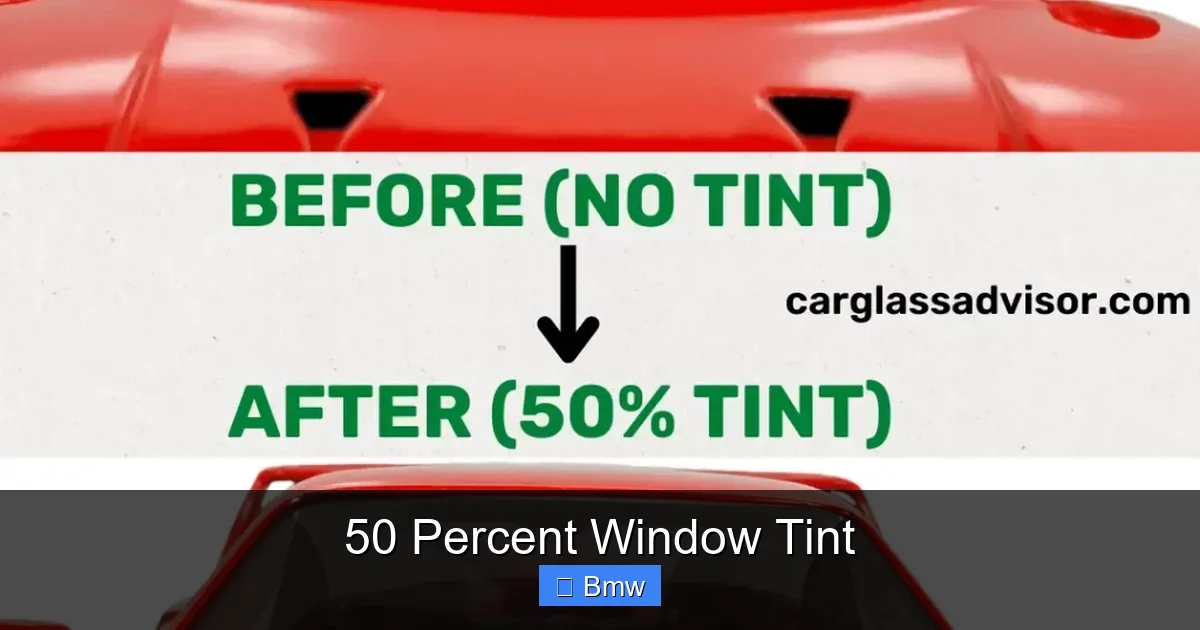
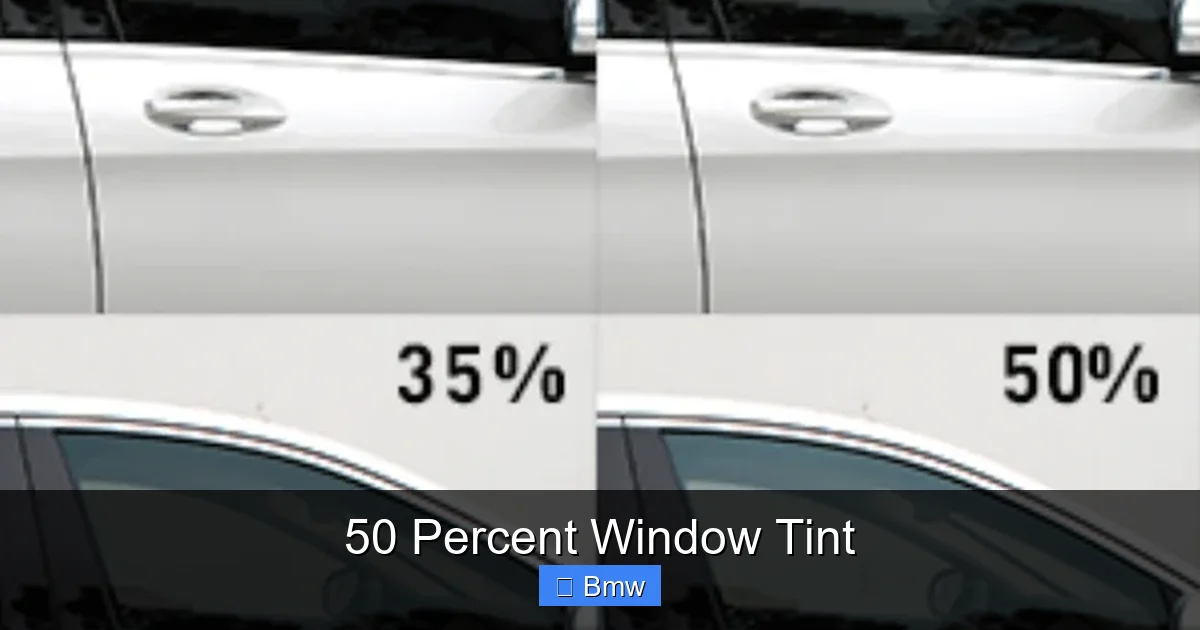
Let’s clear up the mystery right away. When we talk about “50 percent window tint,” we’re referring to the Visible Light Transmission, or VLT, percentage. Simply put, VLT is the amount of visible light that a window film allows to pass through. A 50% VLT film means that 50% of the sunlight hitting your window will get inside your car, and the other 50% is reflected or absorbed by the film. It creates a light, smoky appearance. For a BMW owner, this is a crucial starting point because it’s not about making your car look like a mystery mobile; it’s about a subtle, sophisticated enhancement.
How VLT is Measured and Why It Matters
The measurement is done with a specialized spectrophotometer on the installed film, not just the roll. This is important because the glass itself already has some VLT. Factory automotive glass typically has a VLT of around 70-80%. So, applying a 50% film over that factory glass results in a combined VLT that is darker than 50%. For precise calculations, you multiply the glass VLT by the film VLT. For example, 75% factory glass x 50% film = 37.5% combined VLT. This nuance is why understanding the final installed result is key for both aesthetics and legality.
Think of it like sunglasses. A light grey lens (50% VLT) is comfortable for bright days but you can still see clearly. A dark grey lens (15% VLT) is for very bright conditions but drastically reduces clarity. Your BMW’s windows are the same. The 50% shade is that comfortable, all-day pair of sunglasses. It’s the Goldilocks zone of window tint: not too light, not too dark. It’s a deliberate choice for the driver who values function and a clean, OEM+ look over extreme privacy.
Why BMW Owners Love 50% Tint: The Perfect Balance
BMW drivers are a particular bunch. We appreciate engineering, driving dynamics, and understated luxury. A 50% tint aligns perfectly with that ethos. It’s not the flashiest mod, but it’s one of the most functional and intelligent upgrades you can make. Let’s break down why this specific shade is a favorite among the BMW community.
Visual guide about 50 Percent Window Tint
Image source: carglassadvisor.com
Superior Heat and UV Rejection
The sun does more than just make your cabin hot; it’s a silent assassin of your interior. UV rays fade dashboards, crack leather, and degrade plastics. Infrared radiation is what you feel as heat. Quality 50% automotive films, especially ceramic ones, are engineered to block over 99% of UV rays and a significant portion of infrared heat—often 40-60%. For a black BMW with a black leather interior parked in the summer sun, this is a game-changer. You’ll notice the difference when you open the door. The “whoosh” of hot air is replaced by a merely warm cabin. Your AC works less, saving battery power and fuel. Your dashboard won’t fade into a patchwork of sun-bleached and shaded areas. This isn’t just comfort; it’s preserving a significant financial investment.
Maintaining Optimal Visibility and Safety
This is the biggest safety argument for 50% tint. Very dark tints, like 20% or 5% (limo tint), can severely reduce visibility at night or in poor weather. They can make it harder to see pedestrians, cyclists, or obstacles in dark parking lots. With 50% tint, your daytime visibility remains excellent—you can see out clearly, and others can see you clearly. This two-way visibility is a cornerstone of safe driving. For a performance-oriented driver who enjoys winding roads or track days, maintaining maximum situational awareness is non-negotiable. You’re not sacrificing safety for style.
The Aesthetic Appeal: That “OEM Plus” Look
Let’s be honest, it looks great. Factory glass on most BMWs is very clear. Adding a 50% film gives the windows a uniform, deep charcoal or neutral grey tint that makes the car look lower, sleeker, and more cohesive. It eliminates the “four separate windows” look and ties the glass areas together. It’s a subtle upgrade that enthusiasts notice and appreciate. It whispers “this car is cared for” rather than shouting “I have aftermarket tint.” For a brand like BMW, which sells a lifestyle as much as a car, this aesthetic refinement is perfectly on-brand. It enhances the car’s lines without altering its fundamental design.
Here’s where things get serious. Window tint laws are not federal; they are set by each state, and sometimes even by local municipalities. This creates a patchwork of rules. The good news for BMW owners considering 50% tint is that it is the most commonly accepted legal limit for front side windows in the United States. However, you must know your specific state’s rules.
Visual guide about 50 Percent Window Tint
Image source: lh4.googleusercontent.com
Front vs. Rear: The Universal Split
Almost every state has a different standard for the front driver and passenger windows versus the rear side and back windows. The front side windows almost always have a stricter VLT limit. 50% is legal for front sides in many states, but not all. States like California, Arizona, and Alaska allow as dark as 70% for front sides (which is very light), while others like New York and Virginia mandate a minimum of 70% light transmission (i.e., a maximum of 30% tint). You must check your state’s law. For the rear windows, laws are typically much more relaxed, often allowing 35%, 20%, or even 5%.
State-by-State Variations and Medical Exemptions
Beyond VLT, some states regulate reflectivity (how much light the film reflects outward) and whether certain colors (like red or blue) are permitted for non-commercial vehicles. This is rarely an issue with standard charcoal or grey 50% films. Some states also have medical exemptions for individuals with conditions like lupus or xeroderma pigmentosum, allowing darker tint with a doctor’s note. For a BMW owner, the critical action is simple: lookup your state’s specific window tint law. A fantastic resource for this is the comprehensive guide to Window Tint Laws By State Updated 2026, which breaks down the VLT, reflectivity, and other rules for all 50 states.
Ignorance is not an excuse with law enforcement. A tint ticket can cost anywhere from $50 to over $200, and you’ll likely be ordered to remove the illegal film. For a BMW, this means a frustrating and costly correction. Always install film that complies with the laws of the state where the car is registered and primarily driven.
The BMW-Specific Edge: How 50% Tint Complements Your Beamer
Applying window tint to a BMW isn’t the same as tinting a base-model commuter car. Modern BMWs are packed with technology that lives in and around the glass. A 50% tint, when professionally installed, plays very nicely with these systems.
Visual guide about 50 Percent Window Tint
Image source: i.ytimg.com
Peace of Mind for Advanced Driver-Assistance Systems (ADAS)
This is the most important technical consideration. BMWs are equipped with cameras behind the windshield (for lane departure warning, adaptive cruise control, automatic emergency braking) and sometimes in the rear bumper or side mirrors (for parking sensors and blind-spot monitoring). These systems rely on clear, unobstructed optical paths. Very dark window tints, especially metallic films, can interfere with the signals and camera clarity. A quality 50% ceramic film is mostly non-metallic and, at that lightness, is highly unlikely to cause any interference with the forward-facing camera behind the rearview mirror. It’s a safe, worry-free choice that lets your BMW’s tech work as intended. For peace of mind, always discuss your specific model year and equipment with your tint installer.
Protecting Your Investment and Interior
A BMW’s interior is a premium space. The leather (or SensaTec), the wood trim, the aluminum accents—they all command a high price to repair or replace. The sun’s UV rays are the number one enemy of these materials. A 50% ceramic film blocks over 99% of UV radiation, acting as a constant, invisible sunscreen for your cabin. Over a 5-10 year period, this prevents cracking, fading, and warping. When it comes time to sell your BMW, a well-preserved interior with no sun damage is a massive selling point that can command a higher price. It shows meticulous care.
Factory Warranty Considerations
Some BMW owners worry about voiding their factory warranty. The Magnuson-Moss Warranty Act protects consumers; a dealer cannot void a warranty simply because you added an aftermarket part like window tint. However, if a problem arises with a window component (like a regulator or sensor) and the dealer can prove the aftermarket tint directly caused the damage (e.g., improper installation trapped moisture or caused a short), they could deny that specific repair. This is another powerful argument for using a reputable, experienced installer who understands BMW door panels and wiring. The risk is extremely low with a correct installation of a standard film.
Installation Insights: DIY vs. Professional for Your BMW
You might be a handy person. You might have watched a few YouTube videos. But tinting a BMW’s complex curved windows, especially the rear window with its defroster lines and sometimes antenna, is one of the most challenging DIY automotive tasks. A 50% film is forgiving in terms of visibility during installation, but the skill required for a flawless, bubble-free, and lasting job is immense.
The Perils of a DIY Tint Job on a BMW
Common DIY mistakes include: getting dust and debris under the film, creating permanent creases or scratches during the squeegee process, improperly shrinking the film around the rear window’s severe curve (leading to “orange peel” texture or lifting edges), and accidentally cutting the film too short or misaligning it. On a BMW, you also risk damaging the delicate window regulator mechanisms inside the door when removing the door panel to properly tint the front windows (a best practice for a clean installation). One small mistake can ruin a $200+ sheet of film and look terrible. The tools—a heat gun, professional squeegees, spray bottle, and a pristine workspace—are also an investment.
Why a Professional Installation is Worth Every Penny
A professional tint shop does this every day. They have the experience to handle the complex curves of a BMW 4 Series Gran Coupe or the large panoramic sunroof of an X5. They use plotter cutters to computer-cut the film to your exact window templates, ensuring a perfect fit. They have the technique to properly wet and reposition the film, squeegee out every last bubble, and heat-shrink it seamlessly. They often remove door panels and rear trim to get a clean, factory-like edge. The result is a warranty-backed installation that will look perfect for years. When you consider the cost of the film, the labor, and the value of your BMW, skimping on installation is a false economy. To avoid the pitfalls, check out our list of Common Car Window Tinting Mistakes so you know what to watch for, even when hiring a pro.
Caring for Your 50% Tint: Maintenance Tips for Longevity
You’ve made the investment. Now, keep it looking new for as long as possible. Proper care is simple but specific. The main enemy of window tint is abrasive cleaners and rough tools.
The Right Way to Clean Your Tinted BMW Windows
Always use a soft, lint-free microfiber cloth. Never, ever use paper towels. They are slightly abrasive and can cause fine scratches over time, especially on the slightly softer surface of the film. For the cleaning solution, avoid any ammonia-based window cleaners (like Windex) or harsh chemicals. Ammonia degrades the film’s adhesive and can cause it to dry out, crack, and turn purple or bubbly. Instead, use a dedicated automotive window cleaner (many are ammonia-free) or a simple mixture of water and a drop of baby shampoo. Spray the cleaner on the cloth, not directly on the window, to prevent seeping into the edges. Wipe with gentle, overlapping strokes.
Be extra cautious around the edges of the film. This is where it is most vulnerable. Don’t use sharp scrapers or ice scrapers on the outside of the window. If you must, use a plastic one and be gentle. During automatic car washes, the high-pressure spray and brushes are usually fine, but hand washing gives you more control. For the interior, never use a stiff brush or abrasive pad on the glass.
What to Expect Over Time
Even with perfect care, all window film will show some minor changes over 5-10 years. You might see a very slight fading or a change in the shade (often a slight brownish or purple hue with very low-quality films). This is a sign of adhesive breakdown. High-quality ceramic films from reputable brands like Llumar, 3M, or SunTek are engineered to resist this for a decade or more. The lifespan of your car window tint depends almost entirely on the quality of the film and the quality of the installation. A good 50% ceramic film, properly installed and cared for, will look great for the life of your BMW.
Frequently Asked Questions
Is 50% window tint legal on the front windows of my BMW in all states?
No. While 50% is a common legal limit, states vary. Some allow darker (e.g., 35% VLT), while others require lighter (e.g., 70% VLT). You must check the specific law for your state of residence. Failing to comply can result in a fix-it ticket and the cost of removal.
Will 50% tint affect my BMW’s parking sensors or backup camera?
It should not. The 50% VLT level is light enough that it does not significantly obstruct the optical clarity needed for cameras. Metallic films can cause minor interference, but standard dyed or ceramic 50% films are generally safe. Always confirm with your tint installer about your specific BMW model and its sensor locations.
How much does it typically cost to tint a BMW with 50% film?
For a full set of windows (front two, rear two, and rear glass) on a typical BMW sedan or SUV, expect to pay between $250 and $600. The price depends on the film brand/quality (ceramic is more expensive), the vehicle’s window complexity, and the shop’s reputation. For a specific estimate on a BMW 3 Series, you can see a detailed breakdown here.
Can I install 50% tint on my BMW myself to save money?
While possible, we strongly advise against it for a BMW. The complex curves, integrated antennas, and risk of damaging interior door panels or creating a poor-quality installation (bubbles, peeling, scratches) are high. A professional installation ensures a perfect fit, longevity, and protects your vehicle’s interior. The cost savings are rarely worth the potential damage and frustration.
How long will a 50% tint last on my BMW before it needs replacing?
A high-quality ceramic film professionally installed will last 10+ years with proper care. Cheaper dyed films may start to show fading or purple discoloration in 3-5 years. The lifespan is a direct function of film quality and installation skill. Always ask your installer about the film’s warranty.
Does 50% tint provide enough privacy for a BMW?
It provides moderate privacy. From the outside, especially at night when interior lights are on, people will see a darkened silhouette but not clear details. During the day, with the sun behind you, visibility is quite good from the inside out. It’s a balance—you get a significant reduction in glare and heat without the “blacked-out” look of darker tints that severely limit two-way visibility.