
16 Inch Tire Size Chart

Understanding a 16 inch tire size chart is essential for selecting the right tires that match your vehicle’s performance, safety, and comfort needs. This guide breaks down tire sizing, compatibility, and practical tips to help you make informed decisions.
Key Takeaways
- Standard Format: 16 inch tire sizes follow a format like 225/60R16, indicating width, aspect ratio, construction, and rim diameter.
- Vehicle Compatibility: Not all 16 inch tires fit every vehicle—check your owner’s manual or door jamb sticker for correct sizing.
- Performance Impact: Tire width and aspect ratio affect handling, fuel efficiency, ride comfort, and traction.
- Load & Speed Ratings: Always match or exceed your vehicle’s required load index and speed rating for safety.
- Seasonal Considerations: Choose all-season, summer, or winter 16 inch tires based on your climate and driving habits.
- Upgrading Options: You can often switch to a different 16 inch size within limits, but ensure overall diameter stays within 3% of original.
- Professional Help: Consult a tire specialist when in doubt—proper fitment prevents damage and ensures optimal performance.
📑 Table of Contents
- Understanding the 16 Inch Tire Size Chart: A Complete Guide
- Breaking Down the 16 Inch Tire Size Notation
- Common 16 Inch Tire Sizes and Their Applications
- How to Read and Use a 16 Inch Tire Size Chart
- Factors to Consider When Choosing 16 Inch Tires
- Maintaining Your 16 Inch Tires for Longevity and Safety
- Conclusion: Making the Right Choice with the 16 Inch Tire Size Chart
Understanding the 16 Inch Tire Size Chart: A Complete Guide
When it comes to maintaining your vehicle, few components are as critical as your tires. They’re the only part of your car that touches the road, influencing everything from braking distance and handling to fuel economy and ride comfort. If your vehicle uses 16 inch wheels, understanding the 16 inch tire size chart is your first step toward making smart, safe, and cost-effective tire choices.
Tire sizes might look like a random string of numbers and letters—such as 225/60R16 or 205/55R16—but each digit has a specific meaning. Decoding this information helps you pick tires that not only fit your rims but also match your driving style, climate, and vehicle requirements. Whether you’re replacing worn-out tires, upgrading for better performance, or simply curious about what those numbers mean, this guide will walk you through everything you need to know about 16 inch tires.
From compact sedans and SUVs to light trucks and crossovers, 16 inch tires are among the most common sizes on the road today. Their popularity stems from a balance of affordability, availability, and versatility. But with so many options available, it’s easy to feel overwhelmed. That’s why we’ve created this comprehensive guide—to simplify the process and empower you with knowledge. Let’s dive into the details of the 16 inch tire size chart and how to use it effectively.
Breaking Down the 16 Inch Tire Size Notation
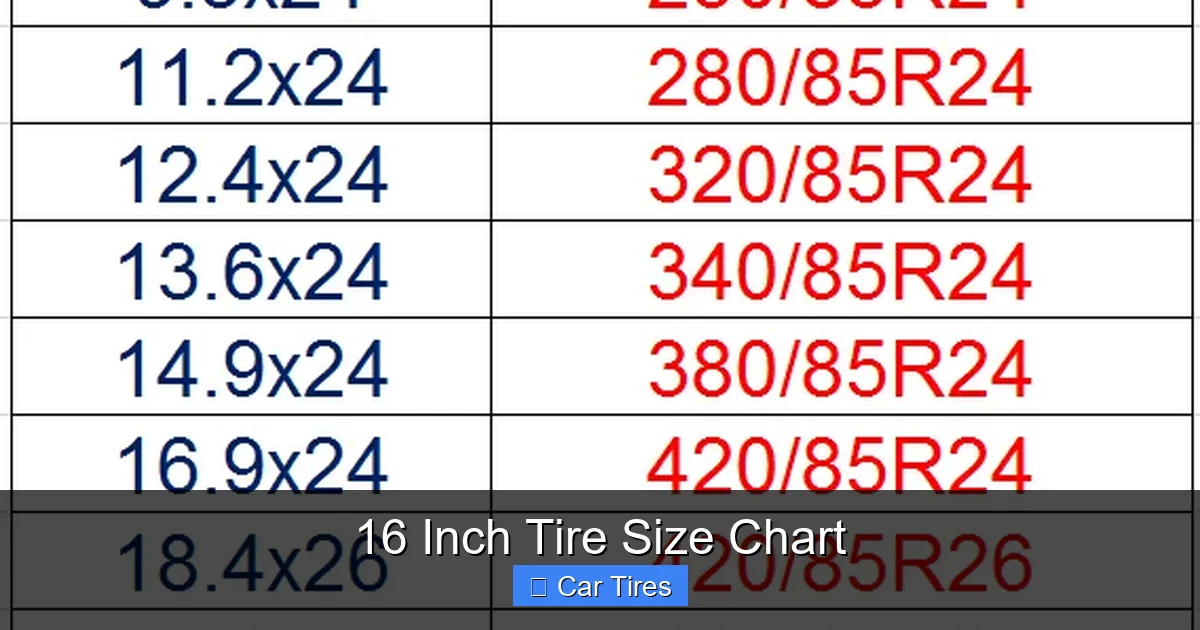
Visual guide about 16 Inch Tire Size Chart
Image source: i2.wp.com
Every tire size follows a standardized format set by organizations like the Tire and Rim Association (TRA) and the European Tire and Rim Technical Organization (ETRTO). For 16 inch tires, the size is typically written in a sequence like **225/60R16**. Let’s break down what each part means.
Tire Width (First Number)
The first number—225 in our example—represents the tire’s width in millimeters from sidewall to sidewall when mounted and inflated to the recommended pressure. A wider tire generally offers better grip and stability, especially during cornering, but may reduce fuel efficiency due to increased rolling resistance. For instance, a 225 mm wide tire is about 8.86 inches wide.
Most 16 inch tires range from 185 mm to 255 mm in width, depending on the vehicle type. Compact cars might use 195 or 205 mm tires, while SUVs and crossovers often go up to 225 or 235 mm. Choosing the right width depends on your vehicle’s design and intended use.
Aspect Ratio (Second Number)
The second number—60 in 225/60R16—is the aspect ratio. This is the height of the tire’s sidewall expressed as a percentage of the tire’s width. So, a 60 aspect ratio means the sidewall height is 60% of 225 mm, which equals 135 mm (or about 5.3 inches).
A lower aspect ratio (like 50 or 45) means a shorter sidewall, which improves handling and responsiveness—common in performance or sporty vehicles. A higher aspect ratio (like 65 or 70) means a taller sidewall, offering a smoother, more comfortable ride, often found on family sedans or older SUVs.
Construction Type (Letter)
The letter “R” stands for radial construction, which is the standard for nearly all modern tires. Radial tires have layers of fabric running radially across the tire, with steel belts underneath the tread for strength and durability. This design provides better fuel efficiency, longer tread life, and improved heat dissipation compared to older bias-ply tires (marked with a “B”).
You’ll almost always see “R” in 16 inch tire sizes, so you don’t need to worry about alternatives unless you’re working with vintage or specialty vehicles.
Rim Diameter (Final Number)
The last number—16 in our example—is the diameter of the wheel (rim) the tire is designed to fit, measured in inches. This is where the “16 inch” designation comes from. It’s crucial that this number matches your wheel size exactly. A 16 inch tire will not fit a 15 or 17 inch rim, no matter how close the other dimensions are.
Common 16 Inch Tire Sizes and Their Applications

Visual guide about 16 Inch Tire Size Chart
Image source: biketips.com
Now that you understand the notation, let’s look at some of the most common 16 inch tire sizes and the vehicles they’re typically used on. This will help you identify what might work for your car or truck.
205/55R16
This size is popular on compact and mid-size sedans like the Honda Civic, Toyota Corolla, and Mazda3. The 205 mm width offers a good balance of grip and fuel economy, while the 55 aspect ratio provides responsive handling without sacrificing too much comfort. It’s a great all-around choice for daily driving in moderate climates.
215/60R16
Found on vehicles like the Ford Focus, Hyundai Elantra, and older Nissan Sentras, this size offers a slightly wider footprint and taller sidewall than the 205/55R16. The increased width improves traction, especially in wet conditions, while the 60 aspect ratio adds a bit more cushion over bumps. It’s ideal for drivers who want a smoother ride without switching to a larger wheel.
225/60R16
This is one of the most versatile 16 inch sizes, commonly used on SUVs, crossovers, and larger sedans like the Toyota RAV4, Honda CR-V, and Ford Escape. The 225 mm width enhances stability, especially when carrying heavy loads or towing, while the 60 aspect ratio maintains a comfortable ride. It’s a favorite among drivers who want a blend of performance and practicality.
235/60R16
Slightly wider than the 225/60R16, this size appears on heavier SUVs and light trucks, such as the Jeep Cherokee or Chevrolet Equinox. The extra width improves cornering grip and load-carrying capacity, making it suitable for drivers who frequently haul gear or drive on rough terrain.
195/65R16
A narrower option, this size is often found on fuel-efficient compact cars and hybrids like the Toyota Prius or Honda Insight. The 195 mm width reduces rolling resistance, helping improve gas mileage, while the 65 aspect ratio ensures a soft, quiet ride. It’s perfect for city driving and long highway commutes.
245/55R16
Less common but still used on performance-oriented vehicles or sport trims, this size offers a lower profile (55 aspect ratio) and wider tread. It’s ideal for drivers who prioritize handling and cornering precision over comfort. Vehicles like the Subaru Impreza WRX or certain Ford Focus ST models may use this size.
How to Read and Use a 16 Inch Tire Size Chart

Visual guide about 16 Inch Tire Size Chart
Image source: i0.wp.com
A tire size chart is more than just a list of numbers—it’s a tool that helps you compare different sizes, understand compatibility, and make informed decisions. Here’s how to use one effectively.
Finding Your Current Tire Size
The easiest way to find your current tire size is to look at the sidewall of your existing tires. You’ll see a sequence like 225/60R16, along with other information such as load index, speed rating, and manufacturing date. Alternatively, check your vehicle’s owner’s manual or the sticker on the driver’s side door jamb. This sticker lists the recommended tire size, pressure, and sometimes even the wheel specifications.
Using the Chart to Compare Sizes
Once you know your current size, you can use a 16 inch tire size chart to explore alternatives. These charts typically list multiple sizes side by side, showing how they compare in terms of overall diameter, width, sidewall height, and revolutions per mile.
For example, switching from a 215/60R16 to a 225/60R16 increases the width by 10 mm but keeps the aspect ratio and rim diameter the same. The overall diameter increases slightly, which may affect your speedometer accuracy and ground clearance. Most charts include a “+/- %” column to show how much the diameter changes—ideally, you want to stay within 3% of the original size.
Checking Compatibility
Not all 16 inch tires will fit your vehicle, even if the rim diameter matches. You must also consider:
– **Rim Width:** Tires have a recommended rim width range. A 225/60R16 tire, for example, typically fits rims between 6.0 and 8.0 inches wide. Installing it on a rim that’s too narrow or too wide can cause poor handling, uneven wear, or even tire failure.
– **Load Index:** This number (e.g., 95) indicates the maximum weight the tire can support. Your new tires must meet or exceed the load index of your original tires.
– **Speed Rating:** Letters like H, V, or T represent the maximum safe speed the tire can sustain. Always match or exceed your vehicle’s required speed rating.
Upgrading or Downsizing
Some drivers choose to upgrade to a wider or lower-profile 16 inch tire for better performance or aesthetics. Others may downsize to a narrower tire for better fuel economy or winter traction. As long as the overall diameter stays within 3% of the original, these changes are usually safe.
For example, switching from a 225/60R16 (overall diameter ~26.6 inches) to a 205/65R16 (overall diameter ~26.5 inches) is acceptable—the difference is less than 0.5%. But going to a 245/50R16 (overall diameter ~25.7 inches) might be too drastic and could affect your speedometer and ABS system.
Factors to Consider When Choosing 16 Inch Tires
Selecting the right 16 inch tire involves more than just matching the size. Here are key factors to keep in mind.
Climate and Driving Conditions
Your local weather plays a big role in tire performance. If you live in an area with snow and ice, consider winter or all-weather 16 inch tires with deeper tread and specialized rubber compounds. For hot, dry climates, summer tires offer superior grip and responsiveness. Most drivers, however, opt for all-season tires, which provide a balanced performance year-round.
Driving Style and Habits
Do you drive aggressively, take sharp corners, or frequently carry heavy loads? If so, look for tires with higher speed ratings, reinforced sidewalls, and performance-oriented tread patterns. Conversely, if you prioritize comfort and quietness, choose tires with softer compounds and noise-reducing technology.
Fuel Efficiency
Tire choice affects gas mileage. Narrower tires with low rolling resistance (like 195/65R16) can improve fuel economy by reducing the energy needed to keep the car moving. Some manufacturers even label tires as “eco” or “fuel-efficient” to highlight this benefit.
Tread Life and Warranty
Check the treadwear rating, which indicates how long the tire is expected to last compared to a baseline tire. A rating of 400 means it should last twice as long as a tire rated 200. Also, look for mileage warranties—many brands offer 50,000 to 80,000 miles of coverage.
Brand and Price
While premium brands like Michelin, Bridgestone, and Continental offer excellent performance and durability, budget-friendly options from Cooper, General, or Kumho can also deliver great value. Don’t sacrifice safety for price, but you don’t always need the most expensive tire to get good results.
Maintaining Your 16 Inch Tires for Longevity and Safety
Once you’ve chosen the right 16 inch tires, proper maintenance ensures they perform well and last as long as possible.
Regular Inspections
Check your tires monthly for signs of wear, cracks, bulges, or embedded objects. Look for uneven tread wear, which could indicate alignment or inflation issues.
Proper Inflation
Underinflated tires wear faster, reduce fuel economy, and increase the risk of blowouts. Overinflated tires can lead to a harsh ride and reduced traction. Use a reliable tire pressure gauge and inflate to the PSI recommended by your vehicle manufacturer—not the maximum listed on the tire sidewall.
Rotation and Alignment
Rotate your tires every 5,000 to 7,500 miles to promote even wear. Front tires typically wear faster due to steering and braking forces. Also, have your alignment checked annually or if you notice pulling to one side or uneven wear.
Balancing
Unbalanced tires cause vibrations at high speeds and accelerate wear. Have your tires balanced whenever they’re mounted or if you feel shaking in the steering wheel.
Seasonal Storage
If you use winter tires, store your summer or all-season 16 inch tires in a cool, dry place away from sunlight and ozone sources (like electric motors). Use tire covers or stack them horizontally to prevent flat spots.
Conclusion: Making the Right Choice with the 16 Inch Tire Size Chart
The 16 inch tire size chart is more than just a reference—it’s a roadmap to safer, smarter, and more efficient driving. By understanding how to read tire sizes, compare options, and consider your vehicle’s needs, you can confidently choose tires that enhance performance, comfort, and longevity.
Whether you’re replacing a single tire or upgrading your entire set, always prioritize compatibility, safety ratings, and real-world conditions. Don’t hesitate to consult a professional if you’re unsure—tire fitment errors can lead to costly repairs or dangerous situations on the road.
With the right 16 inch tires, your vehicle will handle better, ride smoother, and go further. So take the time to study the chart, ask questions, and make an informed decision. Your car—and your passengers—will thank you.
Frequently Asked Questions
What does 225/60R16 mean on a tire?
The number 225 is the tire width in millimeters, 60 is the aspect ratio (sidewall height as a percentage of width), R stands for radial construction, and 16 is the rim diameter in inches. This size is common on SUVs and crossovers.
Can I put a different 16 inch tire size on my car?
Yes, as long as the new size fits your rim width, meets load and speed requirements, and the overall diameter is within 3% of the original. Always check compatibility before switching.
How do I find the correct 16 inch tire size for my vehicle?
Check the tire sidewall, your owner’s manual, or the sticker on the driver’s door jamb. These sources list the manufacturer-recommended tire size and specifications.
Are all 16 inch tires the same width?
No, 16 inch refers only to the rim diameter. Tire width can vary from 185 mm to 255 mm or more, depending on the vehicle and intended use.
What’s the difference between 215/60R16 and 225/60R16?
The 225/60R16 is 10 mm wider, offering slightly better grip and stability, while the 215/60R16 may provide better fuel economy. Both have the same aspect ratio and rim size.
Do I need to replace all four tires at once?
It’s best to replace tires in sets of four for balanced handling and traction. If replacing one, ensure the new tire matches the others in size, type, and tread depth as closely as possible.