
Why Is My Nissan Murano Not Starting?

If your Nissan Murano won’t start, it’s often due to a dead battery, faulty starter, or fuel system issue. This guide walks you through the most common causes, how to diagnose them, and when to call a professional—so you can get back on the road safely and confidently.
Key Takeaways
- Dead or weak battery: The most common reason a Nissan Murano won’t start—check voltage and connections.
- Faulty starter motor: A clicking sound with no engine turnover often points to a bad starter.
- Fuel delivery problems: Clogged fuel filters or a failing fuel pump can prevent ignition.
- Ignition switch or key fob issues: Worn keys or malfunctioning fobs may disrupt the starting sequence.
- Alternator failure: If the battery keeps dying, the alternator might not be charging it properly.
- Security system interference: The Murano’s anti-theft system can mistakenly block startup.
- Timing belt damage: A broken timing belt can cause severe engine damage and prevent starting.
📑 Table of Contents
- Why Is My Nissan Murano Not Starting? A Complete Troubleshooting Guide
- Common Causes of a Nissan Murano Not Starting
- Electrical and Ignition System Issues
- Alternator and Charging System Failures
- Security System and Anti-Theft Interference
- Timing Belt and Engine Mechanical Problems
- When to Call a Professional
- Preventative Maintenance Tips
- Conclusion
Why Is My Nissan Murano Not Starting? A Complete Troubleshooting Guide
You’re running late for work, you hop into your Nissan Murano, turn the key—or press the start button—and nothing happens. No engine roar, no dashboard lights, maybe just a faint click. Your heart sinks. Why won’t your Murano start?
It’s a frustrating situation that happens to even the most reliable vehicles. The Nissan Murano is known for its smooth ride, spacious interior, and dependable performance, but like any vehicle, it’s not immune to starting issues. Whether you drive a 2010 model or a brand-new 2023 Murano, the reasons behind a no-start condition can range from simple fixes to more complex mechanical failures.
In this guide, we’ll walk you through the most common causes of a Nissan Murano not starting, how to diagnose them, and what you can do about it. We’ll keep it practical, easy to understand, and focused on real-world solutions—so you don’t have to guess or panic when your SUV refuses to cooperate.
Common Causes of a Nissan Murano Not Starting
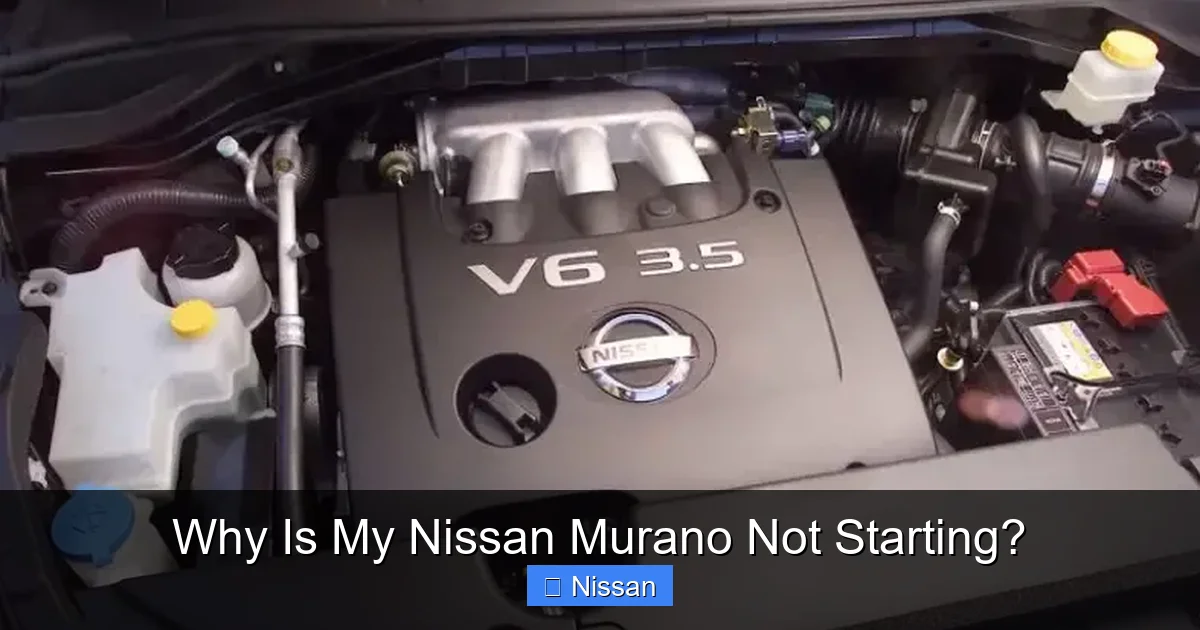
Visual guide about Why Is My Nissan Murano Not Starting?
Image source: autokitslab.com
When your Murano won’t start, it’s important to think like a detective. The engine needs three things to fire up: fuel, spark, and compression. If any of these are missing, the car won’t start. But before we dive into the technical details, let’s look at the most frequent culprits.
The good news? Most starting problems are preventable or fixable without a major repair bill. The bad news? Ignoring early warning signs can lead to bigger issues down the road. So, let’s break down the top reasons your Murano might be giving you the silent treatment.
1. Dead or Weak Battery
The battery is the heart of your vehicle’s electrical system. Without it, nothing works—no lights, no radio, and certainly no engine start. In fact, a dead or weak battery is the number one reason most cars, including the Nissan Murano, fail to start.
Symptoms of a bad battery include:
– Dim headlights or interior lights
– Slow cranking when you turn the key
– A clicking sound but no engine turnover
– Dashboard warning lights flickering
If your Murano’s battery is more than three to five years old, it’s living on borrowed time. Cold weather, frequent short trips, and leaving lights on can all drain the battery prematurely.
How to test it: Use a multimeter to check the voltage. A healthy battery should read around 12.6 volts when the car is off. If it’s below 12 volts, it’s likely too weak to start the engine. You can also try jump-starting the car—if it starts with a jump but dies again soon after, the battery may not be holding a charge.
Pro tip: Clean the battery terminals regularly. Corrosion (that white, powdery buildup) can prevent proper electrical contact. Use a mixture of baking soda and water to scrub the terminals, then rinse and dry.
2. Faulty Starter Motor
If you hear a single loud click when you turn the key, but the engine doesn’t turn over, the starter motor might be the problem. The starter is a small electric motor that physically turns the engine’s flywheel to begin the combustion process.
Over time, the starter’s internal components—like the solenoid or brushes—can wear out. This is especially common in high-mileage Muranos (over 100,000 miles).
Other signs of a bad starter:
– Intermittent starting (works sometimes, doesn’t other times)
– Grinding noise when trying to start
– No sound at all when turning the key
Diagnosing a starter issue can be tricky because it shares symptoms with a bad battery. One way to tell the difference: if jump-starting the car doesn’t help, and the battery tests fine, the starter is a likely suspect.
Replacing a starter isn’t usually a DIY job—it’s located under the engine and requires removing other components. Expect to pay between $300 and $600 for parts and labor, depending on your model year and location.
3. Fuel System Problems
Your Murano’s engine needs fuel to run. If fuel isn’t reaching the engine, it won’t start—even if everything else is working perfectly. Common fuel-related issues include a clogged fuel filter, a failing fuel pump, or an empty gas tank (yes, it happens!).
Fuel Pump Failure
The fuel pump sits inside the gas tank and sends pressurized fuel to the engine. When it fails, you might notice:
– Engine cranks but doesn’t start
– Sputtering or stalling while driving
– A whining noise from the rear of the car (near the fuel tank)
Fuel pumps typically last 100,000 to 150,000 miles, but they can fail earlier due to contaminated fuel or overheating. If your Murano has been running rough or stalling, a failing fuel pump could be the root cause.
Clogged Fuel Filter
The fuel filter removes dirt and debris from the fuel before it reaches the engine. Over time, it can become clogged, restricting fuel flow. Symptoms include:
– Hard starting, especially when the engine is cold
– Loss of power during acceleration
– Engine misfires
Most mechanics recommend replacing the fuel filter every 30,000 to 60,000 miles. It’s a relatively inexpensive part (around $20–$50), but labor costs can add up if it’s hard to access.
Empty Gas Tank
It sounds silly, but it happens more often than you’d think. The Murano’s fuel gauge isn’t always accurate, especially if the fuel level sensor is faulty. Running on “E” for too long can also damage the fuel pump, since it relies on fuel for cooling.
Always keep your tank at least a quarter full to avoid fuel pump strain and unexpected breakdowns.
Electrical and Ignition System Issues
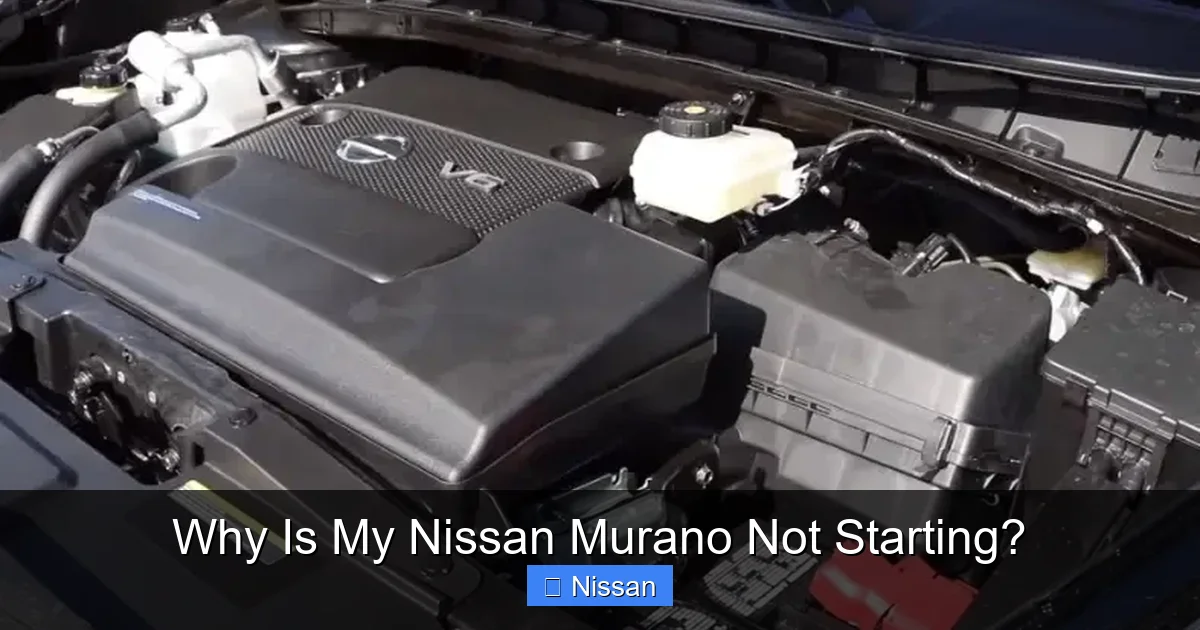
Visual guide about Why Is My Nissan Murano Not Starting?
Image source: autokitslab.com
Modern vehicles like the Nissan Murano rely heavily on electronics. A problem with the ignition system, key fob, or wiring can prevent the engine from starting—even if the battery and fuel system are fine.
Ignition Switch Problems
The ignition switch is what sends power to the starter and other systems when you turn the key or press the start button. If it’s worn out or damaged, the car may not recognize the key or fail to send the signal to start.
Symptoms of a bad ignition switch:
– Dashboard lights flicker or don’t come on
– Car starts intermittently
– Key feels loose or wobbly in the ignition
In push-button Murano models, the issue could be with the start button itself or the wiring behind it. Sometimes, simply cleaning the contacts or replacing the switch resolves the problem.
Key Fob or Smart Key Malfunction
Many newer Muranos use a smart key system—no physical key needed. You just need to have the fob in the car to start it. But if the fob’s battery is dead or the signal is weak, the car won’t recognize it.
Signs your key fob is the issue:
– The car doesn’t respond when you press the start button
– The “Key Not Detected” message appears on the dashboard
– The fob works intermittently
Solution: Replace the fob battery (usually a CR2032 coin cell). If that doesn’t work, try holding the fob directly against the start button—some Muranos have a backup感应 area for this exact situation.
Also, avoid storing your fob near metal objects or other electronic devices, which can interfere with the signal.
Blown Fuses or Relays
Fuses protect your car’s electrical circuits from overloads. If a fuse blows—say, due to a short circuit—it can disable critical systems like the starter or fuel pump.
Check the fuse box (usually under the dashboard or in the engine bay) for any blown fuses. Look for a broken wire inside the fuse or use a test light to check continuity.
Relays are switches that control high-current circuits. A faulty relay can prevent the fuel pump or starter from receiving power. Relays often fail without warning, so if you’ve ruled out other causes, have them tested.
Alternator and Charging System Failures
Visual guide about Why Is My Nissan Murano Not Starting?
Image source: m.media-amazon.com
You might think the battery is the only thing that powers your car, but it’s actually the alternator that keeps it charged while the engine runs. If the alternator fails, the battery will drain quickly—even if it was fully charged.
How the Alternator Works
The alternator generates electricity to recharge the battery and power the car’s electrical systems. It’s driven by a belt connected to the engine. When it fails, the battery can’t recharge, leading to a no-start condition.
Symptoms of a bad alternator:
– Battery warning light on the dashboard
– Dim or flickering headlights
– Electrical accessories (radio, windows) working slowly
– Car starts but dies shortly after
If your Murano starts with a jump but won’t stay running, the alternator is a prime suspect. You can test it with a multimeter: with the engine running, the voltage should be between 13.8 and 14.2 volts. If it’s lower, the alternator isn’t charging properly.
Replacing an alternator can cost $400–$800, depending on the model. It’s not a DIY-friendly job for most people, as it involves removing belts and electrical connections.
Belt and Pulley Issues
The alternator is driven by a serpentine belt. If this belt is loose, worn, or broken, the alternator won’t spin, and the battery won’t charge.
Look for:
– Squealing noises from the engine
– Visible cracks or fraying on the belt
– Belt tension that feels too loose
Replacing the serpentine belt is relatively inexpensive ($50–$150 for parts and labor), but it’s important to do it before it breaks and leaves you stranded.
Security System and Anti-Theft Interference
The Nissan Murano comes equipped with an advanced anti-theft system called the Nissan Vehicle Immobilizer System (NVIS). It uses a chip in the key fob to verify that the key is authorized before allowing the engine to start.
If the system doesn’t recognize the key, it will block the engine from starting—even if you turn the key or press the button.
Common Immobilizer Issues
– **Damaged or worn key chip:** Over time, the chip in the key can degrade. If the car doesn’t recognize the key, you’ll see a flashing security light on the dashboard.
– **Low fob battery:** As mentioned earlier, a weak fob battery can weaken the signal.
– **Faulty antenna ring:** The antenna ring around the ignition cylinder reads the key chip. If it’s damaged, the system won’t detect the key.
What to do:
1. Try using a spare key fob.
2. Replace the fob battery.
3. If the problem persists, visit a Nissan dealer or locksmith with the right tools to reprogram or replace the key.
Note: Reprogramming keys often requires specialized equipment and can cost $100–$300, depending on the model year.
Timing Belt and Engine Mechanical Problems
This is the most serious—and potentially expensive—cause of a no-start condition. The timing belt synchronizes the engine’s camshaft and crankshaft. If it breaks, the engine can’t run.
Timing Belt Failure
In many Nissan Muranos (especially 2003–2014 models with the 3.5L V6 engine), the timing belt is a critical component. Unlike timing chains, belts wear out and must be replaced periodically—usually every 60,000 to 100,000 miles.
Signs of a failing timing belt:
– Ticking noise from the engine
– Engine misfires or runs rough
– Oil leaks near the timing cover
If the belt breaks while driving, the engine can suffer catastrophic damage—valves can bend, pistons can crack. This is known as “interference engine” damage, and repairs can cost thousands.
If your Murano cranks but doesn’t start, and you suspect timing belt failure, do not attempt to restart it. Have it towed to a mechanic immediately.
Other Mechanical Issues
Less common but still possible causes include:
– **Cracked engine block or blown head gasket:** These can cause compression loss, preventing the engine from starting.
– **Faulty crankshaft position sensor:** This sensor tells the engine computer when to fire the spark plugs. If it fails, the engine won’t start.
– **Low engine compression:** Worn piston rings or valves can reduce compression, making it hard to start.
These issues usually come with other symptoms—like smoke, overheating, or poor performance—so they’re easier to spot before a complete no-start occurs.
When to Call a Professional
While many starting issues can be diagnosed at home, some require expert help. Here’s when to call a mechanic:
– You’ve tried jump-starting, checked the battery, and inspected fuses—but the car still won’t start.
– You hear unusual noises (grinding, knocking, or ticking) when trying to start.
– The engine cranks but doesn’t fire, and you suspect fuel or ignition problems.
– You suspect timing belt or internal engine damage.
– The dashboard shows warning lights you can’t explain.
A professional mechanic has diagnostic tools that can read error codes from your Murano’s computer, test fuel pressure, and check compression. They can also perform repairs safely and correctly.
Preventative Maintenance Tips
The best way to avoid a no-start situation is regular maintenance. Here’s how to keep your Murano starting reliably:
– **Check the battery annually:** Test voltage and clean terminals.
– **Replace the timing belt on schedule:** Follow Nissan’s recommended interval (usually 90,000–105,000 miles).
– **Use quality fuel and change the fuel filter:** Keep the fuel system clean.
– **Keep the key fob battery fresh:** Replace it every 1–2 years.
– **Avoid short trips:** They don’t allow the battery to fully recharge.
– **Park in a garage in cold weather:** Cold reduces battery efficiency.
A little prevention goes a long way. Spending $50 on a battery test today could save you $1,000 in tow fees and repairs tomorrow.
Conclusion
A Nissan Murano not starting can be stressful, but it’s rarely a mystery without a solution. From a simple dead battery to a complex timing belt failure, the causes are usually identifiable with careful troubleshooting.
Start with the basics: check the battery, listen for sounds, and look for warning lights. If you’re unsure, don’t force it—call a professional. Your Murano is a reliable SUV, and with proper care, it’ll keep starting for years to come.
Remember, most starting problems are preventable. Stay on top of maintenance, pay attention to early warning signs, and you’ll spend less time stranded and more time enjoying the ride.
Frequently Asked Questions
Why won’t my Nissan Murano start even with a new battery?
If your Murano won’t start despite a new battery, the issue could be a faulty starter, bad alternator, or fuel system problem. Check for clicking sounds, test the alternator output, and ensure fuel is reaching the engine.
Can a bad key fob prevent my Murano from starting?
Yes, a dead or malfunctioning key fob can prevent the car from recognizing the key, especially in push-button models. Try replacing the fob battery or using the backup感应 method by holding the fob against the start button.
How do I know if my Murano’s fuel pump is failing?
Signs include engine cranking but not starting, sputtering while driving, or a whining noise from the rear. A fuel pressure test can confirm if the pump is delivering adequate pressure.
What does it mean if my Murano clicks but won’t start?
A single loud click usually points to a faulty starter motor or a weak battery. If the battery tests fine, the starter is likely the culprit and may need replacement.
Can cold weather cause my Murano not to start?
Yes, cold weather reduces battery efficiency and thickens engine oil, making it harder to start. Keep the battery charged, use a block heater in extreme cold, and avoid leaving the car unused for long periods.
How often should I replace the timing belt on my Murano?
Nissan typically recommends replacing the timing belt every 90,000 to 105,000 miles. Check your owner’s manual for the exact interval, and don’t delay—failure can cause severe engine damage.
