
Where Is Cylinder 3 on a Dodge Ram 1500?

Knowing where cylinder 3 is on your Dodge Ram 1500 is essential for diagnosing engine issues, replacing spark plugs, or performing maintenance. This guide breaks down the location based on engine type, explains the firing order, and offers practical tips to avoid confusion.
If you’re a Dodge Ram 1500 owner—or thinking about becoming one—you’ve probably heard terms like “cylinder 3,” “misfire,” or “firing order” thrown around during maintenance or repair discussions. But where exactly is cylinder 3 on a Dodge Ram 1500? The answer isn’t always obvious, especially if you’re new to working under the hood or unfamiliar with V8 engine layouts. Whether you’re replacing spark plugs, diagnosing a check engine light, or just curious about your truck’s inner workings, knowing the location of each cylinder—especially cylinder 3—can save you time, money, and frustration.
The Dodge Ram 1500 has been offered with several engine options over the years, but the most common in recent models are the 5.7L HEMI V8 and the 3.6L Pentastar V6. Each engine has a different cylinder configuration, which directly affects where cylinder 3 is located. Misidentifying a cylinder can lead to incorrect repairs, wasted parts, and even engine damage. For example, if you’re trying to replace the coil pack on cylinder 3 but accidentally work on cylinder 5, you won’t solve the problem—and might create a new one. That’s why understanding the layout is so important.
In this guide, we’ll walk you through everything you need to know about locating cylinder 3 on your Dodge Ram 1500. We’ll cover the differences between engine types, explain how cylinder numbering works, and give you practical tips for identifying the right cylinder during maintenance or repairs. Whether you’re a DIY mechanic or just want to understand your truck better, this article will give you the confidence to tackle engine-related tasks with ease.
Key Takeaways
- Engine Type Matters: Cylinder numbering differs between the 5.7L HEMI V8 and 3.6L Pentastar V6 engines in the Dodge Ram 1500.
- Driver’s Side vs. Passenger Side: On V8 engines, cylinder 3 is on the passenger side (right bank), second from the front.
- Firing Order Confusion: The 5.7L HEMI has a firing order of 1-8-4-3-6-5-7-2, which affects diagnostics and repairs.
- Visual Identification Tips: Use spark plug wires, coil packs, or engine diagrams to locate cylinder 3 accurately.
- Common Issues Linked to Cylinder 3: Misfires, rough idling, or check engine lights often point to problems in this cylinder.
- Maintenance Importance: Regular inspection of cylinder 3 can prevent costly repairs and maintain engine performance.
- Use Factory Resources: Always refer to your owner’s manual or service guide for accurate cylinder layout.
📑 Table of Contents
Understanding Engine Layouts in the Dodge Ram 1500
Before we dive into the specifics of cylinder 3, it’s important to understand the basic engine layouts used in the Dodge Ram 1500. The truck has evolved over the years, and with it, the engines have changed. However, two powerplants dominate the modern Ram 1500 lineup: the 5.7L HEMI V8 and the 3.6L Pentastar V6. Each has a distinct cylinder arrangement, which affects how cylinders are numbered and where they’re positioned.
The 5.7L HEMI V8 is a popular choice for drivers who want power and towing capability. It’s an eight-cylinder engine arranged in a “V” shape, with four cylinders on each side—commonly referred to as the left bank (driver’s side) and the right bank (passenger side). This V8 configuration is common in American trucks and muscle cars, and it follows a standard cylinder numbering system used by Chrysler, Dodge, and Jeep.
On the other hand, the 3.6L Pentastar V6 is a six-cylinder engine also arranged in a V-shape, but with three cylinders per bank. This engine is known for its balance of fuel efficiency and performance, making it a great option for daily driving and light towing. While it has fewer cylinders, the numbering system is still consistent with Chrysler’s standards.
So why does this matter? Because cylinder numbering isn’t random—it follows a specific pattern based on the engine’s design and firing order. In both the V6 and V8, cylinders are numbered starting from the front of the engine (closest to the radiator) and moving toward the back (near the firewall). The front cylinder on the driver’s side is typically cylinder 1, and the numbering continues sequentially from there.
For the 5.7L HEMI V8, the driver’s side (left bank) contains cylinders 1, 4, 5, and 8, while the passenger side (right bank) has cylinders 2, 3, 6, and 7. This means cylinder 3 is on the passenger side, second from the front. On the 3.6L V6, the layout is similar but simplified: the driver’s side has cylinders 1, 2, and 3, and the passenger side has 4, 5, and 6. Wait—that would put cylinder 3 on the driver’s side? Yes, but only for the V6. This is where confusion often arises.
Because the V6 and V8 use different numbering systems, it’s crucial to know which engine your Ram 1500 has before trying to locate cylinder 3. Checking your owner’s manual or looking up your vehicle’s specs online can help confirm the engine type. Once you know that, you can use the correct cylinder map to identify where cylinder 3 is located.
Locating Cylinder 3 on the 5.7L HEMI V8
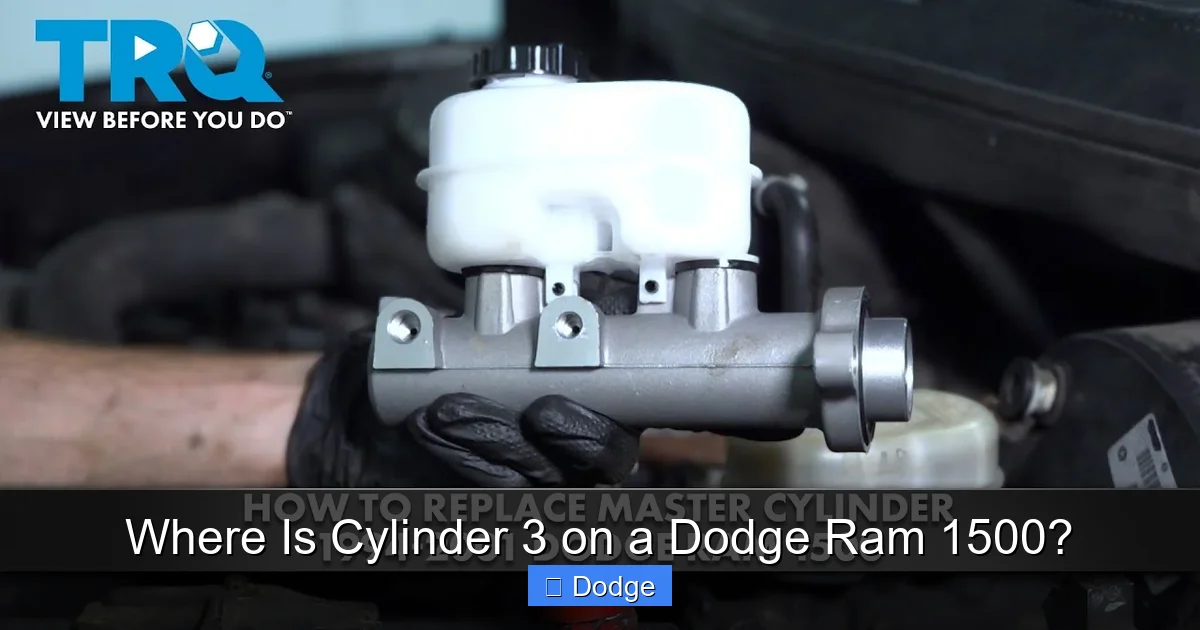
Visual guide about Where Is Cylinder 3 on a Dodge Ram 1500?
Image source: i.ytimg.com
Now let’s focus on the most common scenario: finding cylinder 3 on a Dodge Ram 1500 with the 5.7L HEMI V8 engine. This engine is found in many Ram 1500 models from 2009 onward, especially in trims like the Laramie, Rebel, and TRX. If you’ve ever popped the hood and seen the iconic “HEMI” badge on the intake manifold, you’re likely looking at this engine.
As mentioned earlier, the 5.7L HEMI V8 has eight cylinders arranged in two banks of four. The driver’s side (left bank) houses cylinders 1, 4, 5, and 8, while the passenger side (right bank) contains cylinders 2, 3, 6, and 7. Cylinder numbering starts at the front of the engine—closest to the grille—and moves toward the back. So, on the passenger side, cylinder 2 is first (front), cylinder 3 is second, cylinder 6 is third, and cylinder 7 is fourth (rear).
This means cylinder 3 is located on the passenger side of the engine, second from the front. To visualize it, imagine standing in front of your truck and looking into the engine bay. The passenger side is to your right. The first cylinder you’ll see on that side is cylinder 2, and just behind it is cylinder 3. It’s tucked in behind the alternator and near the firewall, so it might not be immediately visible without removing some components.
One of the easiest ways to confirm the location is by following the spark plug wires or coil packs. On older models with traditional spark plug wires, each wire connects to a specific cylinder. The wire for cylinder 3 will run from the distributor (or ignition coil) to the second spark plug on the passenger side. On newer models with coil-on-plug ignition systems, each spark plug has its own coil mounted directly on top. The coil for cylinder 3 will be the second one from the front on the passenger side.
You can also use a flashlight and mirror to peek into the engine bay. Look for the coil packs or spark plugs on the passenger side. The frontmost one is cylinder 2, and the next one back is cylinder 3. If you’re still unsure, consult the engine diagram in your owner’s manual or search for a “5.7L HEMI cylinder diagram” online. Many forums and repair websites have labeled images that make identification simple.
It’s worth noting that the 5.7L HEMI has a firing order of 1-8-4-3-6-5-7-2. This sequence determines the order in which the cylinders fire during the combustion cycle. Cylinder 3 fires fourth in this sequence, right after cylinder 4. Understanding the firing order is important for diagnosing misfires or timing issues, as a problem with cylinder 3 can affect the entire engine’s performance.
Locating Cylinder 3 on the 3.6L Pentastar V6
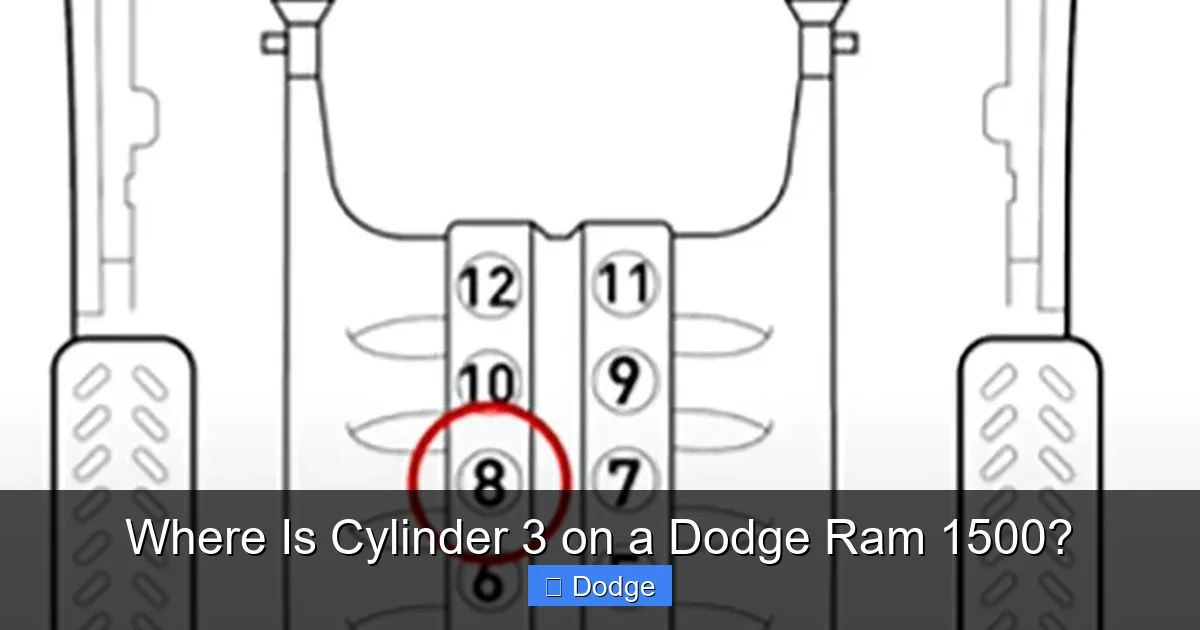
Visual guide about Where Is Cylinder 3 on a Dodge Ram 1500?
Image source: bryansgarage.com
If your Dodge Ram 1500 is equipped with the 3.6L Pentastar V6 engine, the location of cylinder 3 is different—and often a source of confusion for owners who assume all Ram 1500s follow the same cylinder numbering. The Pentastar V6 is a six-cylinder engine introduced in 2013 and used in many Ram 1500 models, especially in base and mid-level trims. It’s known for its smooth operation, good fuel economy, and reliability.
Like the HEMI V8, the Pentastar V6 uses a V-shaped configuration with three cylinders per bank. However, the numbering system is slightly different. On this engine, the driver’s side (left bank) contains cylinders 1, 2, and 3, while the passenger side (right bank) has cylinders 4, 5, and 6. Cylinder numbering still starts at the front of the engine and moves toward the back.
This means cylinder 3 is located on the driver’s side, third from the front—or more accurately, the rearmost cylinder on the driver’s side. To find it, stand on the driver’s side of the truck and look into the engine bay. You’ll see three coil packs or spark plugs in a row. The front one is cylinder 1, the middle is cylinder 2, and the one closest to the firewall is cylinder 3.
Because the V6 is smaller and more compact than the V8, accessing cylinder 3 can be a bit tighter, especially if you’re working on a model with a lot of under-hood components like air intake tubing or engine covers. You may need to remove the engine cover or disconnect the air intake hose to get a clear view. But once you do, identifying cylinder 3 is straightforward.
The firing order for the 3.6L Pentastar V6 is 1-6-5-4-3-2. This means cylinder 3 fires fifth in the sequence, just before cylinder 2. While the firing order doesn’t change the physical location of the cylinder, it’s useful to know when diagnosing engine performance issues or performing timing-related repairs.
One common mistake owners make is assuming that cylinder 3 is always on the passenger side, as it is in the HEMI V8. But on the V6, it’s on the driver’s side. This mix-up can lead to incorrect repairs—like replacing the wrong coil pack or spark plug. To avoid this, always double-check your engine type before starting any work.
If you’re unsure which engine your Ram 1500 has, look for badges on the fenders or intake manifold. The “HEMI” badge indicates the 5.7L V8, while the “Pentastar” badge (or no badge at all) usually means the 3.6L V6. You can also check your vehicle identification number (VIN) online or consult your owner’s manual.
Why Cylinder 3 Matters: Common Issues and Diagnostics
Visual guide about Where Is Cylinder 3 on a Dodge Ram 1500?
Image source: i.ytimg.com
Now that you know where cylinder 3 is located, you might be wondering: why does it matter so much? The truth is, cylinder 3 is just one of several cylinders in your engine, but it’s often involved in common performance issues that can affect your truck’s drivability. Understanding these problems and how to diagnose them can help you maintain your Ram 1500 and avoid costly repairs.
One of the most frequent issues related to cylinder 3 is a misfire. A misfire occurs when the air-fuel mixture in the cylinder fails to ignite properly. This can be caused by a faulty spark plug, a bad coil pack, a clogged fuel injector, or low compression. When cylinder 3 misfires, you may notice symptoms like rough idling, hesitation during acceleration, reduced fuel economy, or a check engine light.
Modern vehicles, including the Dodge Ram 1500, are equipped with onboard diagnostics (OBD-II) that can detect misfires and other engine problems. If cylinder 3 is misfiring, the engine control unit (ECU) will store a diagnostic trouble code (DTC), such as P0303, which specifically indicates a misfire in cylinder 3. This code can be read using an OBD-II scanner, which plugs into a port usually located under the dashboard on the driver’s side.
Once you’ve confirmed a P0303 code, the next step is to inspect the components associated with cylinder 3. Start with the spark plug. Remove the coil pack (on coil-on-plug systems) or disconnect the spark plug wire, then use a spark plug socket to remove the plug. Check for signs of wear, fouling, or damage. A healthy spark plug should have a light tan or gray insulator tip. If it’s black and sooty, it may be running rich; if it’s white and blistered, it could be overheating.
Next, inspect the coil pack. On the 5.7L HEMI, each cylinder has its own coil mounted directly on the spark plug. These coils can fail over time, especially in high-heat environments. A bad coil won’t deliver enough voltage to ignite the fuel, leading to a misfire. You can test the coil with a multimeter or swap it with a known-good coil from another cylinder to see if the problem follows.
Fuel injectors are another common culprit. Each cylinder has its own fuel injector that sprays fuel into the combustion chamber. If the injector for cylinder 3 is clogged or malfunctioning, it can cause a lean condition (too much air, not enough fuel), leading to a misfire. Cleaning or replacing the injector may resolve the issue.
Compression problems are less common but more serious. Low compression in cylinder 3 can be caused by worn piston rings, a damaged valve, or a blown head gasket. A compression test can help diagnose this issue. If compression is low, further inspection by a professional mechanic may be needed.
In addition to misfires, cylinder 3 can be involved in other issues like rough shifting (in automatic transmissions), increased emissions, or even engine knocking. Addressing problems early can prevent damage to the catalytic converter or other engine components.
Practical Tips for Working on Cylinder 3
Working on cylinder 3—whether you’re replacing a spark plug, swapping a coil pack, or diagnosing a misfire—requires some preparation and know-how. Here are some practical tips to make the job easier and safer.
First, always disconnect the negative battery terminal before starting any engine work. This prevents accidental electrical shorts and protects the vehicle’s electronics. It’s a simple step, but one that’s often overlooked.
Next, let the engine cool down. Working on a hot engine can lead to burns or damage to sensitive components. If you’ve been driving, wait at least 30 minutes before opening the hood.
Use the right tools. A spark plug socket (usually 5/8” or 13/16”), a ratchet, and an extension are essential for removing spark plugs. For coil packs, you may need a Torx or socket wrench, depending on the mounting bolts. A torque wrench is recommended when reinstalling spark plugs to ensure they’re tightened to the manufacturer’s specifications.
Label everything. If you’re removing multiple coil packs or spark plug wires, label them with tape or a marker to avoid mixing them up. Even though each cylinder has a specific location, it’s easy to get confused in the heat of the moment.
Work in a clean environment. Dirt, oil, and debris can fall into the spark plug well when you remove the plug, potentially causing engine damage. Use compressed air to blow out the area around the plug before removal.
When replacing spark plugs, use OEM or high-quality aftermarket parts. Cheap plugs may not last as long or perform as well. For the 5.7L HEMI, recommended plugs include NGK Iridium or Champion Copper. For the 3.6L V6, check your owner’s manual for specifications.
Finally, clear any diagnostic trouble codes after repairs. Use an OBD-II scanner to reset the check engine light and verify that the misfire is gone. Take the truck for a test drive to ensure smooth operation.
Conclusion
Knowing where cylinder 3 is on your Dodge Ram 1500 is more than just a trivia fact—it’s a key part of maintaining your truck’s performance and reliability. Whether you drive a 5.7L HEMI V8 or a 3.6L Pentastar V6, understanding the cylinder layout helps you diagnose issues, perform repairs, and communicate effectively with mechanics.
On the HEMI V8, cylinder 3 is on the passenger side, second from the front. On the V6, it’s on the driver’s side, third from the front. The firing order, diagnostic codes, and common problems all tie back to this cylinder, making it a focal point for many engine-related tasks.
By following the tips in this guide—using visual identification, checking your engine type, and using the right tools—you can confidently work on cylinder 3 and keep your Ram 1500 running strong for years to come.
Frequently Asked Questions
Where is cylinder 3 on a Dodge Ram 1500 with a 5.7L HEMI?
Cylinder 3 is located on the passenger side of the engine, second from the front. It’s part of the right bank in the V8 configuration.
Is cylinder 3 on the driver’s side or passenger side?
It depends on the engine. On the 5.7L HEMI V8, it’s on the passenger side. On the 3.6L V6, it’s on the driver’s side.
What does a P0303 code mean?
A P0303 code indicates a misfire in cylinder 3. It’s commonly caused by a faulty spark plug, coil pack, or fuel injector.
How do I find cylinder 3 without a diagram?
Look for the second coil pack or spark plug from the front on the passenger side (V8) or the third on the driver’s side (V6).
Can I drive with a misfire in cylinder 3?
It’s not recommended. A misfire can damage the catalytic converter and reduce engine performance. Have it diagnosed and repaired promptly.
Do all Dodge Ram 1500s have the same cylinder layout?
No. The 5.7L HEMI V8 and 3.6L Pentastar V6 have different cylinder numbering systems, so the location of cylinder 3 varies.
