
Why Does My Dodge Ram Idle Up and Down?

If your Dodge Ram idle up and down, it’s often due to a vacuum leak, faulty idle air control valve, or dirty throttle body. These issues disrupt airflow and engine management, causing erratic RPMs. With proper diagnosis and maintenance, you can restore smooth idling and prevent future problems.
Key Takeaways
- Vacuum leaks are a top cause: Cracked hoses or gaskets let unmetered air into the engine, confusing the ECU and causing idle fluctuations.
- Idle Air Control (IAC) valve failure: This valve regulates idle speed; if clogged or broken, it can’t maintain steady RPMs.
- Dirty throttle body: Carbon buildup restricts airflow, leading to inconsistent idle behavior.
- Faulty Mass Air Flow (MAF) sensor: Incorrect air intake readings trick the engine into adjusting fuel delivery erratically.
- Throttle Position Sensor (TPS) issues: A malfunctioning TPS sends wrong throttle angle data, disrupting idle control.
- ECU or software glitches: Outdated or corrupted engine control software may mismanage idle parameters.
- Regular maintenance prevents problems: Cleaning sensors and inspecting hoses can stop idle issues before they start.
📑 Table of Contents
Why Does My Dodge Ram Idle Up and Down?
You’re sitting at a red light, foot on the brake, and suddenly your Dodge Ram’s engine starts revving up and down like it’s trying to decide whether to idle or race. The RPM needle bounces between 800 and 1,500—sometimes even stalling. It’s frustrating, confusing, and maybe a little scary. If this sounds familiar, you’re not alone. Many Dodge Ram owners experience this exact issue, and while it might seem alarming at first, the good news is that it’s usually fixable.
The phrase “my Dodge Ram idle up and down” is one of the most common search queries among Ram truck owners. It points to a symptom known as “hunting idle” or “erratic idle,” where the engine RPM fluctuates unpredictably while the vehicle is stationary. This isn’t just annoying—it can also signal underlying mechanical or electronic problems that, if ignored, might lead to reduced fuel efficiency, poor performance, or even engine damage over time.
So why does this happen? Modern Dodge Rams, especially models from 2009 onward, rely heavily on electronic engine management systems. These systems constantly monitor air intake, fuel delivery, throttle position, and exhaust feedback to maintain optimal performance. When one component sends incorrect data or fails to function properly, the engine control unit (ECU) can’t maintain a steady idle. The result? Your truck’s RPMs go on a rollercoaster ride.
In this guide, we’ll walk you through the most common reasons your Dodge Ram idle up and down, how to diagnose them, and what you can do to fix them—whether you’re a DIY enthusiast or planning to visit a mechanic. We’ll keep it simple, practical, and focused on real-world solutions.
Common Causes of Erratic Idle in Dodge Rams
Visual guide about Why Does My Dodge Ram Idle Up and Down?
Image source: i.ytimg.com
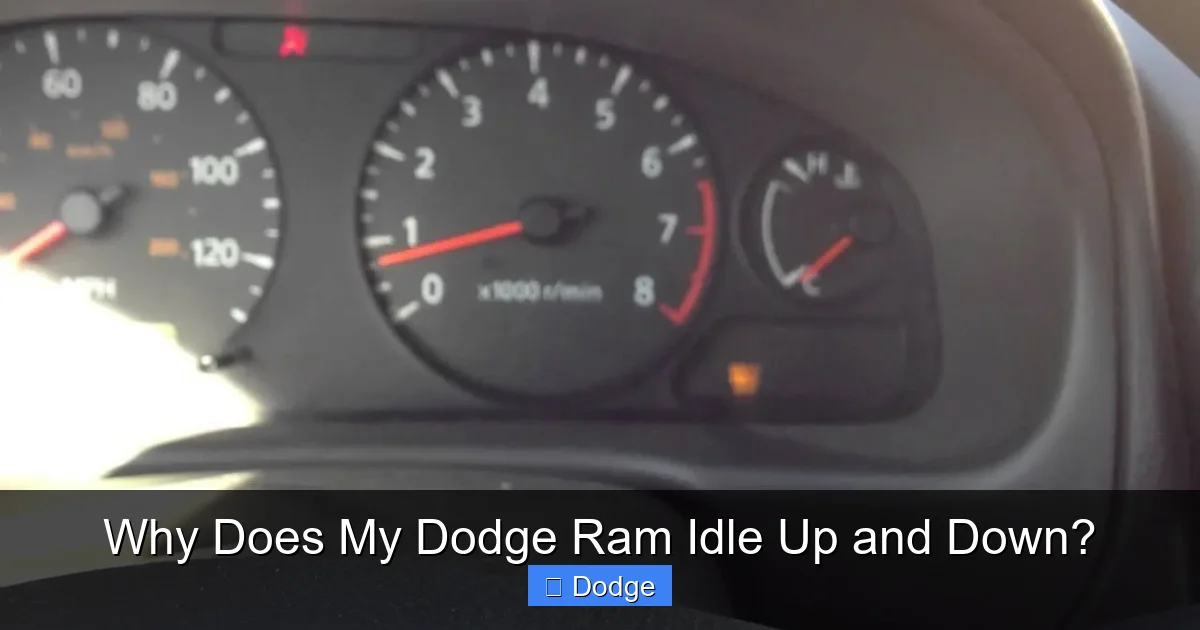
When your Dodge Ram idle up and down, it’s usually because the engine isn’t getting the right balance of air and fuel at idle. The ECU tries to compensate, but if the input signals are wrong or airflow is disrupted, it overcorrects—leading to surging, dipping, or stalling. Let’s break down the most frequent culprits.
Vacuum Leaks: The Silent Saboteur
One of the leading causes of erratic idle is a vacuum leak. Your engine uses vacuum pressure to operate various components, including the brake booster, PCV system, and emissions controls. When a hose cracks, a gasket fails, or a connection loosens, unmetered air sneaks into the intake manifold. This extra air isn’t measured by the Mass Air Flow (MAF) sensor, so the ECU doesn’t know it’s there. As a result, the air-fuel mixture becomes too lean (too much air, not enough fuel), and the engine stumbles.
For example, a cracked PCV valve hose or a deteriorated intake manifold gasket can create a small but significant leak. You might not hear it, but your engine will feel it. The idle will surge when the ECU adds fuel to compensate, then drop when it realizes the mixture is too rich. This back-and-forth creates the “hunting” effect.
Idle Air Control (IAC) Valve Malfunction
The Idle Air Control valve is a small but critical component located on or near the throttle body. Its job is to regulate how much air bypasses the throttle plate when the engine is idling. When you press the accelerator, the throttle opens. But at idle, the throttle is mostly closed, so the IAC valve opens a small passage to let just enough air in to keep the engine running smoothly.
Over time, carbon buildup can clog the IAC valve or its passage. When this happens, the valve can’t open or close properly. If it’s stuck open, too much air gets in, causing high idle. If it’s stuck closed, the engine may stall. Even if it’s moving, a dirty or failing IAC valve can respond too slowly or inaccurately, leading to the up-and-down idle behavior.
In older Rams (like the 5.7L Hemi models from 2009–2013), the IAC valve is a common failure point. Many owners report that cleaning or replacing it resolves the issue immediately.
Dirty Throttle Body
The throttle body is the gateway for air entering your engine. Every time you drive, especially in stop-and-go traffic or dusty conditions, carbon deposits build up on the throttle plate and bore. This buildup restricts airflow and disrupts the precise control the ECU needs to maintain a steady idle.
Imagine trying to sip through a straw that’s half-clogged—your breathing becomes uneven. That’s what happens to your engine. The ECU tries to compensate by adjusting fuel and timing, but the restricted airflow causes hesitation, surging, or stalling.
A dirty throttle body is especially common in trucks that idle frequently—like those used for towing, work, or city driving. You might notice the problem worsens when the engine is cold, as the ECU relies more on precise air control during warm-up.
Faulty Mass Air Flow (MAF) Sensor
The MAF sensor measures how much air is entering the engine. This data is essential for the ECU to calculate the correct amount of fuel to inject. If the MAF sensor is dirty, damaged, or malfunctioning, it sends inaccurate readings. The ECU then injects too much or too little fuel, causing the engine to run rich or lean.
A faulty MAF sensor can cause a wide range of symptoms, including poor fuel economy, hesitation during acceleration, and—you guessed it—erratic idle. In some cases, the MAF sensor may work fine at higher RPMs but fail at low speeds, making the idle issue more noticeable when the truck is stopped.
Dust, oil, or debris on the sensor’s wire or film can interfere with its readings. Even using the wrong type of air filter (like an oiled performance filter) can coat the sensor and cause problems.
Throttle Position Sensor (TPS) Issues
The Throttle Position Sensor tells the ECU how far the throttle plate is open. This helps the computer manage fuel delivery, ignition timing, and transmission shifting. If the TPS is faulty, it might send incorrect signals—like saying the throttle is partially open when it’s actually closed.
When this happens at idle, the ECU thinks you’re pressing the gas slightly, so it adds fuel. But since the throttle isn’t actually open, the engine revs up. Then the ECU realizes something’s wrong and cuts fuel, causing the RPMs to drop. This cycle repeats, creating the up-and-down idle.
A failing TPS can also cause hesitation, poor acceleration, or even a check engine light. In some Dodge Rams, the TPS is integrated into the throttle body, making replacement a bit more involved.
Engine Control Unit (ECU) or Software Problems
Modern Dodge Rams rely on sophisticated software to manage engine functions. If the ECU’s programming is outdated or corrupted, it may not handle idle control properly. This is less common than mechanical issues, but it does happen—especially after battery disconnections, voltage spikes, or failed software updates.
Some owners have reported that a simple ECU reset (by disconnecting the battery for 10–15 minutes) resolved their idle issues. Others needed a software update from a dealership to fix bugs related to idle speed control.
How to Diagnose the Problem
Visual guide about Why Does My Dodge Ram Idle Up and Down?
Image source: cdn.carcomplaints.com
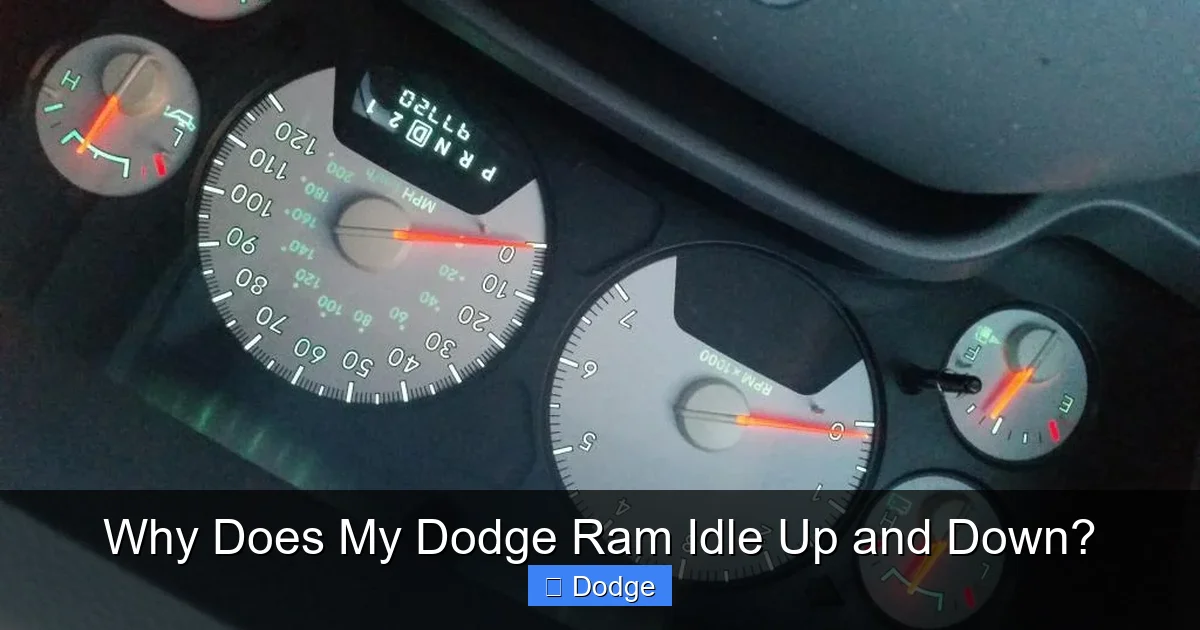
Now that you know the possible causes, the next step is figuring out which one is affecting your truck. Diagnosing why your Dodge Ram idle up and down doesn’t require a degree in engineering—just some basic tools and a methodical approach.
Step 1: Check for Obvious Signs
Start with a visual inspection. Pop the hood and look for:
– Cracked or disconnected vacuum hoses (especially around the intake manifold, PCV valve, and brake booster)
– Oil leaks near the valve cover or intake gaskets
– Loose or damaged air intake components
Listen for a hissing sound when the engine is running—this could indicate a vacuum leak. You can also spray small amounts of carb cleaner around suspected areas. If the engine RPM changes when you spray near a leak, you’ve found your culprit.
Step 2: Use an OBD2 Scanner
Plug in an OBD2 scanner (available at most auto parts stores or online) to check for trouble codes. Even if the check engine light isn’t on, there may be pending codes related to the MAF sensor, TPS, or IAC valve.
Common codes to watch for:
– P0505: Idle Air Control System Malfunction
– P0171/P0174: System Too Lean (often due to vacuum leaks)
– P0121/P0221: Throttle Position Sensor/Switch Circuit Range/Performance Problem
– P0101: Mass Air Flow Sensor Circuit Range/Performance Problem
These codes can point you directly to the faulty component.
Step 3: Inspect the IAC Valve and Throttle Body
Remove the air intake duct to access the throttle body. Look for heavy carbon buildup on the throttle plate and bore. If it’s black and crusty, it’s time for a cleaning.
Next, locate the IAC valve (usually a small cylindrical component with an electrical connector). Remove it and inspect for carbon buildup or damage. You can clean it with throttle body cleaner, but if it’s physically damaged or doesn’t respond when tested with a multimeter, it likely needs replacement.
Step 4: Test the MAF Sensor
With the engine off, unplug the MAF sensor and start the truck. If the idle improves, the MAF sensor may be faulty. (Note: This is a temporary test—don’t drive the vehicle this way.)
You can also use a multimeter to check the sensor’s output voltage or resistance, but this requires knowing the specifications for your specific model. Alternatively, clean the sensor with MAF-specific cleaner and see if the problem resolves.
Step 5: Check the TPS
Use a multimeter to test the TPS for proper resistance and voltage output as you slowly open the throttle. If the readings are erratic or don’t change smoothly, the sensor may be bad.
Some mechanics also perform a “wiggle test”—gently moving the sensor while the engine is running to see if the idle changes. If it does, the sensor or its wiring may be faulty.
DIY Fixes You Can Try at Home
Visual guide about Why Does My Dodge Ram Idle Up and Down?
Image source: grimmermotors.co.nz
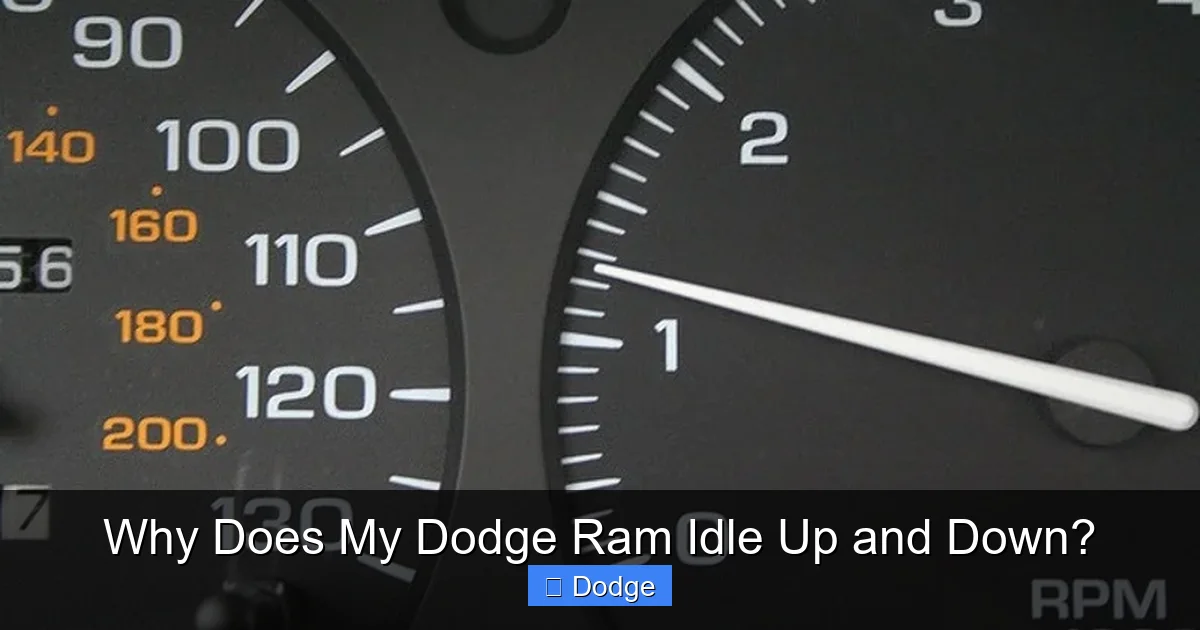
If you’re comfortable working on your truck, many of these issues can be resolved without a trip to the shop. Here’s how to fix the most common causes of your Dodge Ram idle up and down.
Clean the Throttle Body
This is one of the easiest and most effective fixes. You’ll need:
– Throttle body cleaner (not regular carb cleaner)
– A soft brush or rag
– Screwdriver or socket set (to remove the air intake duct)
Steps:
1. Disconnect the negative battery terminal.
2. Remove the air intake duct to access the throttle body.
3. Spray cleaner on the throttle plate and bore, scrubbing gently to remove carbon.
4. Wipe clean with a rag.
5. Reassemble and reconnect the battery.
6. Start the engine and let it idle for 10–15 minutes to relearn idle settings.
Tip: Avoid forcing the throttle plate open—it’s delicate and can be damaged.
Clean or Replace the IAC Valve
If the IAC valve is dirty, cleaning it may solve the problem. Use throttle body cleaner and a soft brush to remove carbon from the valve and its seat.
If cleaning doesn’t help, replace the valve. Most IAC valves cost between $50 and $150 and can be installed in under an hour. Be sure to disconnect the battery before removal.
Replace Vacuum Hoses
Inspect all vacuum hoses for cracks, brittleness, or disconnections. Replace any that look damaged. Use OEM or high-quality aftermarket hoses for the best fit and durability.
Pay special attention to the PCV hose, brake booster hose, and any small vacuum lines running to the intake manifold.
Clean the MAF Sensor
Use a can of MAF sensor cleaner (available at auto parts stores) to gently spray the sensor element. Do not touch the wires or film—just spray and let it dry.
Avoid using compressed air or regular cleaners, as they can damage the sensor.
Reset the ECU
After making repairs, reset the ECU to clear learned adaptations:
1. Disconnect the negative battery terminal.
2. Wait 10–15 minutes.
3. Reconnect the battery.
4. Start the engine and let it idle for 10–15 minutes without touching the throttle.
This allows the ECU to relearn idle parameters and often resolves lingering issues.
When to See a Mechanic
While many idle issues can be fixed at home, some problems require professional diagnosis and repair. See a mechanic if:
– The check engine light is on and you’re getting complex codes
– You suspect an internal engine issue (like a leaking head gasket)
– The problem persists after trying all DIY fixes
– You’re not comfortable working on electrical or fuel systems
A certified Dodge technician can perform advanced diagnostics, including smoke testing for vacuum leaks, ECU programming, and sensor calibration.
Preventing Future Idle Problems
The best way to avoid your Dodge Ram idle up and down is through regular maintenance:
– Clean the throttle body every 30,000–50,000 miles
– Replace air and fuel filters on schedule
– Inspect vacuum hoses annually
– Use quality fuel and avoid cheap additives
– Keep the MAF sensor clean by using a dry, high-flow air filter
Staying proactive can save you time, money, and frustration down the road.
Conclusion
If your Dodge Ram idle up and down, don’t panic. This common issue is usually caused by something simple—like a dirty throttle body, vacuum leak, or faulty sensor. With the right diagnosis and a few basic tools, many owners can fix it themselves. But if the problem persists, don’t hesitate to seek professional help.
By understanding the root causes and staying on top of maintenance, you can keep your Ram running smoothly and confidently. After all, your truck deserves to idle like the reliable workhorse it is—steady, strong, and ready for whatever comes next.
Frequently Asked Questions
Why does my Dodge Ram idle high when cold?
It’s normal for the engine to idle higher when cold as the ECU enriches the fuel mixture for faster warm-up. However, if the idle stays high or fluctuates excessively, it could indicate a faulty IAC valve or coolant temperature sensor.
Can a bad battery cause erratic idle?
Yes, a weak or failing battery can cause voltage fluctuations that affect the ECU and sensors. This may lead to poor idle control, especially in newer Rams with advanced electronics.
How often should I clean the throttle body?
Every 30,000 to 50,000 miles, or sooner if you notice rough idle, hesitation, or stalling. Frequent short trips and city driving can accelerate carbon buildup.
Will a dirty air filter cause idle problems?
Yes, a clogged air filter restricts airflow, causing the engine to run rich and potentially leading to erratic idle. Replace the air filter every 15,000–30,000 miles.
Can I drive my Ram with a bad IAC valve?
You may be able to drive short distances, but a faulty IAC valve can cause stalling, poor fuel economy, and difficulty starting. It’s best to repair it as soon as possible.
Does premium fuel help with idle issues?
Not necessarily. Most Dodge Rams are designed to run on regular unleaded fuel. Using premium won’t fix mechanical or sensor problems, though it may reduce carbon buildup in high-performance engines.
