
Why Does Bmw Alert at 37 Degrees?

Your BMW’s alert at 37 degrees is a critical warning that the engine coolant temperature is abnormally low, preventing the engine from reaching optimal operating heat. This can be caused by issues like a stuck thermostat, low coolant, or faulty sensors. Ignoring it risks poor performance, increased emissions, and potential engine damage over time.
Hey there, BMW owners! Ever been driving along, only to see a puzzling alert on your dash that says “37” or triggers a temperature warning at exactly 37 degrees? You’re definitely not alone. This specific alert is one of the more common—and confusing—messages that can pop up in a BMW. It leaves many drivers wondering: is this a serious problem? Is my engine overheating? Or is it something else entirely? Let’s clear the air right away: when your BMW alerts at 37 degrees, it’s almost always referring to your engine coolant temperature in Celsius, and that number is far too low for a properly functioning engine. Your engine needs to be hot, not lukewarm. This alert is your car’s way of saying, “Hey, I’m not warming up like I should!” and it’s a signal you shouldn’t ignore. In this complete guide, we’ll break down exactly why this happens, what it means for your beloved Bimmer, and what steps you can take to fix it. We’ll talk about thermostats, coolant levels, sensors, and when it’s time to call in the pros. So, buckle up, and let’s get into the nitty-gritty of your BMW’s temperature warning system.
Key Takeaways
- The 37-degree alert refers to coolant temperature in Celsius. Normal operating range is 90-105°C; 37°C (98.6°F) indicates the engine isn’t warming properly.
- Common causes include a thermostat stuck open, low coolant from leaks, or a faulty temperature sensor. These prevent the engine from achieving and maintaining heat.
- Always check coolant level first. A low reservoir is the simplest fix but may indicate a leak needing professional repair.
- Driving with this alert active leads to poor fuel economy, rough idling, and accelerated engine wear. The engine runs inefficiently in a “cold” state.
- Use an OBD-II scanner to read fault codes. This helps pinpoint whether the issue is the sensor, thermostat, or another component.
- Regular coolant system maintenance is key. Flush intervals and using genuine BMW coolant prevent many temperature-related issues.
- If the alert persists after basic checks, consult a BMW specialist. Modern BMWs have complex systems that often require expert diagnostics.
📑 Table of Contents
Understanding BMW’s Temperature Alert System
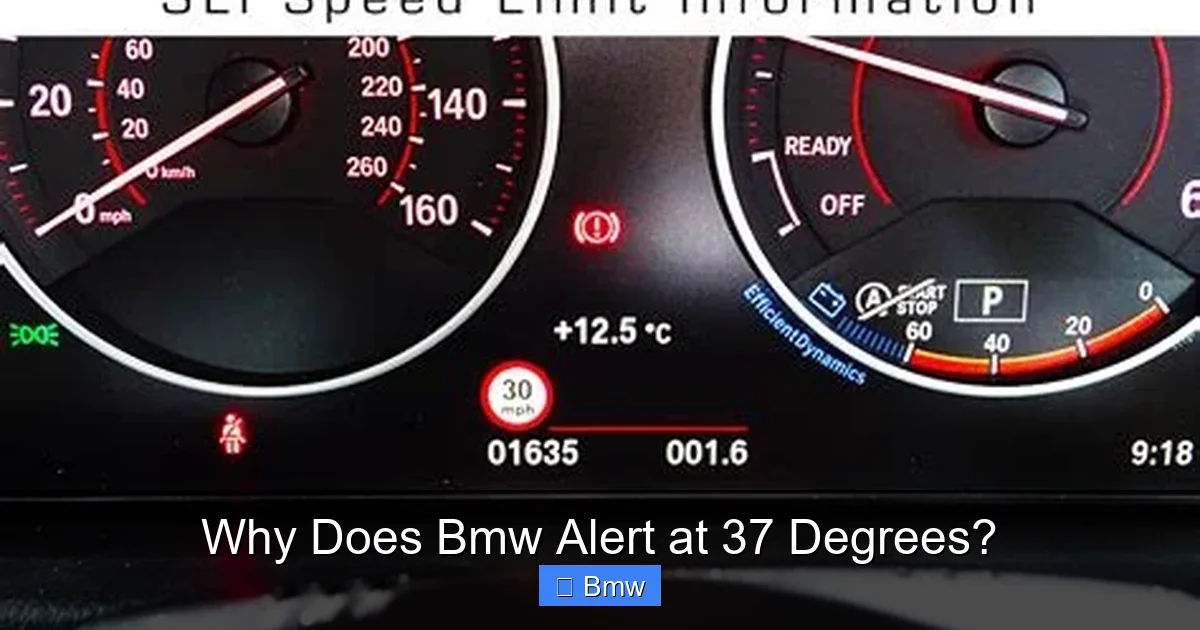
Before we dive into the “why” of the 37-degree alert, it helps to understand how BMW’s engine temperature monitoring works. Your BMW is a high-tech machine with a sophisticated network of sensors and computers constantly talking to each other. At the heart of this system is the Engine Control Unit (ECU), the car’s main computer brain. The ECU receives data from multiple sources, but the most critical for engine temperature is the Coolant Temperature Sensor (CTS). This sensor is usually located on the engine block or thermostat housing and directly measures the temperature of the engine coolant as it circulates.
How BMW Monitors Engine Temperature
The coolant itself is the lifeblood of your engine’s thermal management. It absorbs heat from the combustion chambers and carries it to the radiator, where it’s cooled before circulating again. The CTS sends a continuous voltage signal to the ECU that varies with temperature. The ECU interprets this signal and uses it for several vital functions: it controls the fuel injection amount (a cold engine needs more fuel), adjusts ignition timing, manages the electric radiator fan, and operates the temperature gauge on your dash. If the sensor data falls outside the expected parameters—like reading a stubbornly low 37°C—the ECU triggers a warning. This might illuminate a blue “coolant” light (for cold engine), a red “temperature” light (for overheating), or in many modern BMWs, display a specific message like “37” or “Engine Temperature Low” on the iDrive screen or instrument cluster. The system is designed to be sensitive because BMWs are built for performance and efficiency, both of which suffer dramatically if the engine isn’t at its ideal operating temperature.
The Role of the Coolant Temperature Sensor
Think of the CTS as your engine’s thermometer. It’s a small electronic component, often with a brass or plastic housing, that contains a thermistor—a resistor that changes resistance based on temperature. When the coolant is cold, resistance is high; as it heats up, resistance drops. The ECU translates this into a temperature reading. If this sensor fails, gets contaminated with debris or air bubbles, or has damaged wiring, it can send an inaccurate, stuck, or erratic signal. A common failure mode is a sensor that reads “open circuit” or a fixed, low voltage, which the ECU interprets as a very low temperature like 37°C, even when the engine is hot. This is a classic cause of the persistent 37-degree alert. Diagnosing a bad sensor often requires a multimeter to check resistance at different temperatures or simply swapping it with a known good unit.
Why 37 Degrees? The Threshold Explained
Now, the million-dollar question: why 37? It seems so specific. The answer lies in the engineering thresholds set by BMW. The number 37°C (98.6°F) is significant because it’s roughly the temperature of the human body and, more importantly, it’s the approximate temperature of coolant when an engine has just been started and is still very cold. In a healthy BMW, the coolant temperature should climb rapidly from this ambient-ish temperature to its normal operating range of about 90-105°C (194-221°F) within a few minutes of driving. The 37-degree alert is essentially a “cold engine” warning that refuses to turn off because the ECU believes the engine is stuck in a permanently cold state. It’s not an overheating warning (that would be red and at a much higher number, like 120°C+); it’s the opposite—an under-heating warning.
Visual guide about Why Does Bmw Alert at 37 Degrees?
Image source: thecarhow.com
Normal Operating Temperature vs. Alert Threshold
For any modern gasoline engine, efficiency and emissions are optimized at a specific, high temperature. A BMW’s engine needs to be hot to burn fuel completely, reduce friction, and ensure catalytic converters work effectively. Normal operating temperature typically sits between 90°C and 105°C (194°F to 221°F). The thermostat is the gatekeeper here; it remains closed when the engine is cold to block coolant flow to the radiator, allowing the engine to warm up quickly. Once it reaches its opening temperature (usually around 85-90°C), it opens and maintains that range. The 37-degree alert threshold is set well below this normal range. It’s the point at which the ECU says, “We should be warmer by now.” If the coolant temperature gauge or readout lingers at or near 37°C after 10-15 minutes of driving, something is preventing the engine from generating and retaining heat. It’s a clear flag that the warming-up process is broken.
Celsius vs. Fahrenheit: Clearing the Confusion
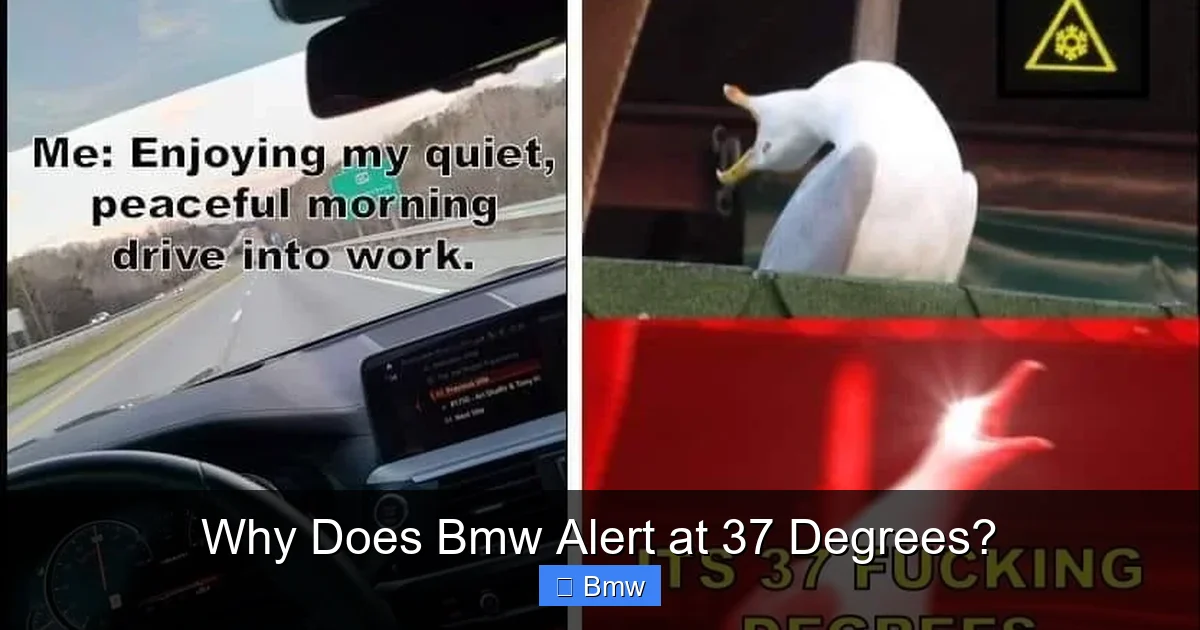
Some BMW owners, particularly in the United States, might wonder if this is in Fahrenheit. After all, 37°F is just above freezing (2.8°C). Could it be an outside temperature warning? While some BMW models do have an outside temperature display and may warn of potential ice when external temperatures drop near freezing, that alert is usually a separate snowflake icon or a message like “Outside Temperature: 2°C” with no persistent “37” code. The specific “37” alert tied to engine performance is almost universally in Celsius because BMW is a German manufacturer using the metric system. A reading of 37°C (98.6°F) is not cold enough to cause ice concerns; it’s simply too low for an engine’s internal temperature. So, rest assured, when your BMW says “37” in this context, it’s Celsius and it’s telling you the engine coolant is at body temperature, not operating temperature.
Common Causes for a 37-Degree Alert
So, your BMW is stuck at 37 degrees. What’s actually broken? Several components could be the culprit, ranging from simple fixes to more complex repairs. Let’s walk through the most likely suspects, starting with the most common.
Visual guide about Why Does Bmw Alert at 37 Degrees?
Image source: autozonic.com
Low Coolant Level or Leaks
This is the first thing you should check. If your coolant level is low, there might not be enough fluid to properly immerse the temperature sensor or circulate through the system. This can cause the sensor to read air pockets or simply be out of the coolant, giving a false low reading. Low coolant is often due to a leak—common spots include the water pump, thermostat housing, radiator, hoses, or even a faulty coolant reservoir cap. A slow leak might not leave a huge puddle but will gradually lower the level. If you find the coolant reservoir (usually a translucent plastic tank with “MAX” and “MIN” marks) is below the minimum line when the engine is cold, top it up with the correct BMW-approved coolant (often a 50/50 mix with distilled water) and monitor for further loss. If it drops again quickly, you have a leak that needs finding and fixing. For major leaks, the repair cost can vary widely; you can get a detailed estimate from resources like our guide on how much it costs to fix a coolant leak on a BMW.
Thermostat Stuck Open
The thermostat is a mechanical valve that regulates coolant flow. Its job is to stay closed when the engine is cold, trapping coolant inside the engine block to let it warm up fast. Once the target temperature is reached, it opens to allow flow to the radiator. If the thermostat fails and gets stuck in the open position, coolant is constantly pumped through the radiator, which acts like a giant heat sink. This means the engine can never build up heat—it’s trying to warm up while being cooled at the same time. The result? The coolant temperature will hover around ambient temperature or barely climb above 40-50°C, triggering the 37-degree alert. A thermostat stuck open is a very common cause of this specific problem. Symptoms include very slow warm-up, poor heater output (since heater core gets coolant flow too), and potentially a Check Engine Light with codes like P0128 (Coolant Thermostat Temperature Below Thermostat Regulating Temperature). Replacing a thermostat on a BMW is a moderate DIY job for the mechanically inclined, but often requires specific tools and cooling system bleeding procedures.
Faulty Temperature Sensor
As mentioned earlier, the Coolant Temperature Sensor itself can fail. A failed sensor might send a constant “cold” signal (low voltage) to the ECU, making it think the engine is always at 37°C. Electrical issues like corroded connectors, broken wires, or poor grounds can also mimic a bad sensor. Diagnosing this involves checking the sensor’s resistance with a multimeter at various temperatures (consult a repair manual for specs) or simply swapping it with a new one. CTS failures are less common than thermostat issues but are still a frequent player. Sometimes, air trapped in the cooling system can also cause false readings by surrounding the sensor with air instead of coolant, so proper bleeding after any coolant work is essential.
Wiring or ECU Issues
Less common, but possible. The wiring harness from the CTS to the ECU can get damaged, chafed, or have corroded connections, interrupting the signal. In rare cases, the ECU itself might have a problem interpreting the signal. These are harder to diagnose and typically require a professional with advanced scan tools to monitor live sensor data and wiring tests. If you’ve ruled out the thermostat, coolant level, and the sensor itself, the fault may lie in the wiring or the computer.
External Temperature Sensors (A Less Likely Scenario)
Some BMW models have an external ambient air temperature sensor, usually behind the front grille or bumper. This sensor feeds data to the climate control system and may also be used for other functions. If this sensor fails and reads a fixed 37°F (2.8°C), it might trigger a warning about outside temperature or even affect engine management in some models. However, this would typically display as an outside temperature reading of “37°F” rather than an engine-specific “37” alert. The persistent engine temperature alert at startup is almost always an internal coolant issue. But it’s worth noting if you see an outside temp display stuck at 37, that sensor might be faulty.
Diagnostic Steps You Can Take
Before you panic or rush to a dealer, there are several logical, safe steps you can perform yourself to narrow down the problem. Always let the engine cool completely before opening any coolant-related components to avoid burns from hot, pressurized fluid.
Visual guide about Why Does Bmw Alert at 37 Degrees?
Image source: images.mid-day.com
Visual Inspection of Coolant Level
This is your first and easiest check. Locate the coolant expansion tank (consult your owner’s manual). It’s usually a white or clear plastic container with a cap labeled “COOLANT” or with a thermometer symbol. Only open it when the engine is stone cold, as the system is pressurized when hot. Look at the level against the “MIN” and “MAX” marks on the side. If it’s low, top it up with the correct BMW coolant (using the wrong type can cause gelling or corrosion). Note the color—BMW coolants are typically blue, green, or turquoise. If it looks rusty, brown, or has oil floating on top, that indicates a more serious problem like a head gasket issue. After topping up, start the engine and see if the level drops again. Monitor for leaks underneath the car. If you consistently lose coolant, you’ll need a pressure test to find the leak source.
Checking for Warning Lights and Codes
Pay attention to all dashboard warnings. Is the Check Engine Light (CEL) on? Is there a specific “Coolant” or “Temperature” icon? Modern BMWs store fault codes in the ECU that can be read with an OBD-II scanner. While a basic scanner might only give a code like “P0128” (thermostat issue) or “P0115” (sensor circuit), a more advanced BMW-specific scanner (like BMW ISTA, Carly, or a professional tool) can read live data, including the actual coolant temperature the ECU is seeing. This is gold for diagnosis. If the live data shows 37°C while the engine is hot, the sensor or its circuit is bad. If it shows the correct hot temperature but the alert still triggers, the alert logic itself might be faulty, which is rarer. Reading codes is a crucial step.
Monitoring Temperature Gauge Behavior
Observe your temperature gauge (or digital readout) during a normal drive. Does it creep up slowly and then plateau at 37°C, even after 20 minutes of highway driving? Does it ever reach the normal middle zone? If it stays stubbornly low, the engine is not warming. You might also notice poor heater performance—the air from the vents never gets hot. This is a strong indicator of a stuck-open thermostat or very low coolant. If the gauge jumps around erratically, that points more to a faulty sensor or electrical gremlin.
When to Use an OBD-II Scanner
Investing in a decent OBD-II adapter and a smartphone app (like BimmerCode, BimmerLink, or Carly) designed for BMWs is one of the best things a DIY enthusiast can do. These tools can read and clear BMW-specific codes, view live sensor data (like coolant temp, oil temp, thermostat status), and even perform some basic functions. Plug it in, run a diagnostic, and look for codes related to the coolant temperature sensor (P0115-P0119), thermostat (P0128), or engine temperature (P0528, P0529). The live data will tell you exactly what temperature the ECU thinks the coolant is at. If it reads 37°C when the engine is hot to the touch, the problem is definitely in the sensing circuit. If it reads correctly high but the alert still shows, the alert threshold logic might be misconfigured, which sometimes can be reset or recoded with the right software.
Preventing False Alarms and Maintaining Your BMW
Once you’ve diagnosed and fixed the immediate issue, the goal is to prevent it from happening again. BMW’s cooling systems are robust but require proper maintenance. Here’s how to keep your temperature warning at bay.
Regular Coolant System Maintenance
BMW recommends specific intervals for coolant system flushes, typically every 4 years or 50,000 miles, but this varies by model and year. Over time, coolant breaks down, loses its anti-corrosion properties, and can become acidic, eating away at seals and metal components. A proper flush involves completely draining old coolant, flushing the system with distilled water or a flushing agent, and refilling with the exact BMW-approved coolant (usually a phosphate-free, silicate-free type like G48 or HT-12). Using the wrong coolant or mixing types can cause gel formation and block passages. Always use a 50/50 mix with distilled water unless you buy pre-mixed. A healthy cooling system with fresh coolant operates more efficiently and is less prone to sensor fouling and leaks.
Importance of Genuine BMW Parts
When replacing components like the thermostat, water pump, or coolant sensor, consider using OEM (Original Equipment Manufacturer) or genuine BMW parts. These are made to the exact specifications and tolerances of the original components. Aftermarket thermostats, in particular, are notorious for failing early or not opening at the correct temperature, which can bring you right back to the 37-degree alert. The same goes for coolant hoses and the expansion tank—cheap plastics can become brittle and crack. While genuine parts cost more upfront, they save you from repeated repairs and potential engine damage. When in doubt, consult a BMW specialist about the best parts for your specific model year.
Driving Habits That Affect Engine Warm-up
Your driving style can influence how quickly and effectively your engine reaches temperature. Short, frequent trips (less than 10-15 minutes) where the engine never fully warms up can exacerbate a marginal thermostat or sensor issue. The engine spends most of its time in a “cold enrichment” mode, which increases fuel consumption and leads to carbon buildup. Try to combine errands and ensure you get at least one longer drive (20+ minutes) per week where the engine reaches and sustains normal operating temperature. Also, avoid excessive idling in cold weather to warm up; modern BMWs warm up faster when driven gently right after start. Letting it idle for too long can actually prolong the cold cycle and put more strain on the system.
When to Seek Professional Help
While many diagnostic steps are DIY-friendly, some situations call for a professional BMW technician. Here’s when to hang up the wrench and make an appointment.
Signs That Indicate Serious Issues
If you’ve topped up coolant and it immediately drops again, or you see a steady drip or puddle of green/blue/orange fluid under the car, you have a significant leak that needs professional location and repair. If the temperature gauge, after initially rising, suddenly spikes into the red zone (overheating), stop driving immediately—this indicates a catastrophic failure like a broken water pump, snapped serpentine belt, or major leak, and driving further will destroy the engine. If the Check Engine Light is flashing, that signals a severe misfire that could damage the catalytic converter. Also, if you’ve replaced the thermostat and sensor but the alert persists, the issue may be deeper, like a blocked coolant passage, a faulty ECU, or air lock that requires specialized bleeding procedures. BMW cooling systems can be tricky to bleed properly, and trapped air is a common cause of false temperature readings and overheating.
Choosing the Right BMW Specialist
Not all mechanics are created equal when it comes to BMWs. The complex electronic systems, specific tool requirements, and proprietary software make it essential to find a technician with BMW-specific training and experience. Look for independent shops that specialize in European cars or BMW-certified technicians. They will have access to the latest technical service bulletins (TSBs), which often address known issues like specific thermostat failures or sensor problems for certain model years. They also have the advanced scanners needed for live data monitoring and coding. While dealerships have the ultimate factory support, a reputable independent BMW specialist often provides excellent service at a lower cost. Don’t be afraid to ask about their experience with your particular model (e.g., a 2011 328i vs. a 2020 X5) and their diagnostic process.
Conclusion
That persistent “37” alert on your BMW is more than just a quirky number—it’s a serious communication from your car’s computer that the engine coolant temperature is stuck far below its optimal range. The root causes are usually a thermostat stuck open, low coolant from a leak, or a faulty coolant temperature sensor, but they all point to one thing: your engine is running cold when it should be hot. This leads to poor fuel economy, rough idling, increased emissions, and long-term wear as the engine operates outside its designed efficiency window. The good news is that with a systematic approach—starting with checking coolant levels, scanning for codes, and monitoring gauge behavior—you can often pinpoint the issue yourself. For simple fixes like topping up coolant or replacing a thermostat, a confident DIYer can save money. But for complex diagnostics, wiring issues, or persistent problems, enlisting a BMW specialist is the smart move to protect your investment. Remember, your BMW is a precision machine; treating temperature alerts with urgency ensures it stays healthy, happy, and performing at its best for years to come. Don’t ignore the 37—warm it up to the problem and get it fixed.
Frequently Asked Questions
What does the 37-degree alert mean on my BMW?
It means your engine coolant temperature is reading approximately 37°C (98.6°F), which is abnormally low. A healthy BMW engine should warm to 90-105°C during normal operation. This alert indicates the engine is not reaching proper operating temperature, usually due to a stuck thermostat, low coolant, or a faulty sensor.
Is it safe to drive my BMW with the 37-degree alert on?
You can drive short distances cautiously, but it’s not advisable for extended periods. Driving with a cold engine causes poor fuel economy, rough idling, and increased engine wear. If the alert is due to low coolant, continuing to drive risks overheating and severe engine damage. Get the issue diagnosed promptly.
How much does it typically cost to fix a coolant leak on a BMW?
The cost varies widely depending on the leak source. A simple hose replacement might cost $150-$300, while a water pump or thermostat housing repair can range from $500 to over $1,500, especially if the water pump is internal and requires extensive labor. For a detailed breakdown, see our article on BMW coolant leak repair costs.
Can I reset the 37-degree alert myself?
You can clear the alert light with an OBD-II scanner after fixing the problem, but simply resetting it without repair is pointless—the alert will return. The underlying cause must be addressed first. If the alert persists after a repair, there may be air in the system requiring a professional bleed, or another fault needs diagnosis.
Why does my BMW’s temperature gauge stay at 37 degrees even after driving for 20 minutes?
The most common reason is a thermostat that is stuck open, constantly cooling the engine. Other possibilities include critically low coolant (check the reservoir), a faulty coolant temperature sensor giving a false reading, or air trapped in the cooling system preventing proper circulation.
Does this 37-degree alert have anything to do with the outside temperature?
No. The 37-degree alert specifically refers to engine coolant temperature in Celsius. While some BMWs have separate outside temperature warnings (often with a snowflake icon), those are distinct. 37°C (98.6°F) is far above any freezing warning threshold, so this is purely an under-heating engine issue.
