
What Is Bci Malfunction in Infiniti Qx80

A BCI (Battery Control Module) malfunction in your Infiniti QX80 indicates a failure in the computer that manages your vehicle’s charging system and battery health. This can lead to dead batteries, erratic electrical behavior, and engine stalling. It’s a serious issue requiring professional diagnosis, as it often stems from a failing battery, wiring problems, or a faulty module itself. Ignoring it can leave you stranded and potentially cause damage to other electrical components.
Key Takeaways
- BCI is the Battery Control Module: It’s the sophisticated computer that monitors your QX80’s battery charge, regulates the alternator, and manages power distribution to all systems.
- Symptoms are varied and serious: Look for intermittent electrical failures, dashboard warning lights (especially battery/charging icons), difficulty starting, and unexpected engine stalls.
- Common causes include a weak battery: The #1 trigger is an aging or failing original battery, which confuses the BCI. Other causes are corroded terminals, damaged wiring, or a failed BCI unit.
- Diagnosis requires professional tools: A simple code reader isn’t enough. Mechanics need advanced scan tools to read BCI-specific data and test the charging circuit.
- Driving with a BCI malfunction is risky: You risk a complete electrical system failure while driving, which can disable vital systems like power steering and brakes.
- Fix often starts with the battery: Because the BCI is so sensitive to battery health, a full battery replacement and system reset is the most common first-step repair.
- Prevention is key: Regular battery checks, clean terminals, and addressing any other electrical warnings immediately can help avoid BCI failures.
📑 Table of Contents
- Understanding the Beast: What is the BCI in Your Infiniti QX80?
- Decoding the Dashboard: Symptoms of a BCI Malfunction
- Why Does it Happen? Common Causes of BCI Failure
- The Diagnostic Journey: How Mechanics Find the Problem
- Fixing the Fault: Repair Options and What to Expect
- Prevention and Proactive Care for Your QX80’s BCI
- Conclusion: Don’t Ignore the Messenger
Understanding the Beast: What is the BCI in Your Infiniti QX80?
Your Infiniti QX80 is a technological marvel, a luxurious fortress on wheels packed with computers managing everything from the adaptive suspension to the rear-seat entertainment. Tucked away under the hood, often near the battery itself, is a critical but rarely discussed component: the BCI, or Battery Control Module. Think of it as the brain for your SUV’s entire electrical nervous system. Its sole job is to constantly monitor the state of your battery, regulate the alternator’s output, and intelligently distribute power where it’s needed most. In a modern, feature-rich vehicle like the QX80, with its numerous control modules, sensors, and convenience features, this is a monumental task. When this BCI develops a fault, it sends a distress signal—the dreaded “BCI Malfunction” warning—that you cannot ignore. This isn’t a minor glitch; it’s your vehicle telling you its central power management system is compromised.
The BCI’s Role in the QX80’s Electrical Ecosystem
To understand the malfunction, you first need to grasp the normal operation. The BCI in your Infiniti QX80 is a smart regulator. It doesn’t just let the alternator pump out maximum voltage all the time. Instead, it uses complex algorithms to decide the optimal charging strategy. It might tell the alternator to produce less power when the battery is fully charged to save fuel, or ramp it up during cold starts when the battery is weakened. It also acts as a gatekeeper, ensuring that high-drain systems like the heated seats or the compressor for the air suspension don’t inadvertently drain the battery when the engine is off. This constant, intelligent balancing act is what keeps all your QX80’s electronics happy and your battery healthy for years. A malfunction here throws this entire ecosystem into chaos.
Decoding the Dashboard: Symptoms of a BCI Malfunction
When the BCI fails, it doesn’t always scream with a single, obvious warning. The symptoms can be subtle, intermittent, and maddeningly inconsistent, which is why many owners ignore them until a major failure occurs. Recognizing these early signs is your best defense against being stranded.
Visual guide about What Is Bci Malfunction in Infiniti Qx80
Image source: cartipsdaily.com
Electrical Gremlins and Phantom Drains
The most common early symptom is a series of unexplained electrical quirks. You might notice your power windows operating more slowly than usual. The infotainment screen might reboot randomly. Interior lights could seem dimmer. These are signs that the BCI is no longer providing stable voltage to these systems. A more alarming symptom is a “phantom drain”—where the battery is fully charged when you park, but the vehicle won’t start the next morning. The BCI may have failed to properly put certain modules into a deep sleep mode, allowing them to slowly sap the battery’s charge overnight.
The Illuminated Warnings: Battery and Charging System Lights
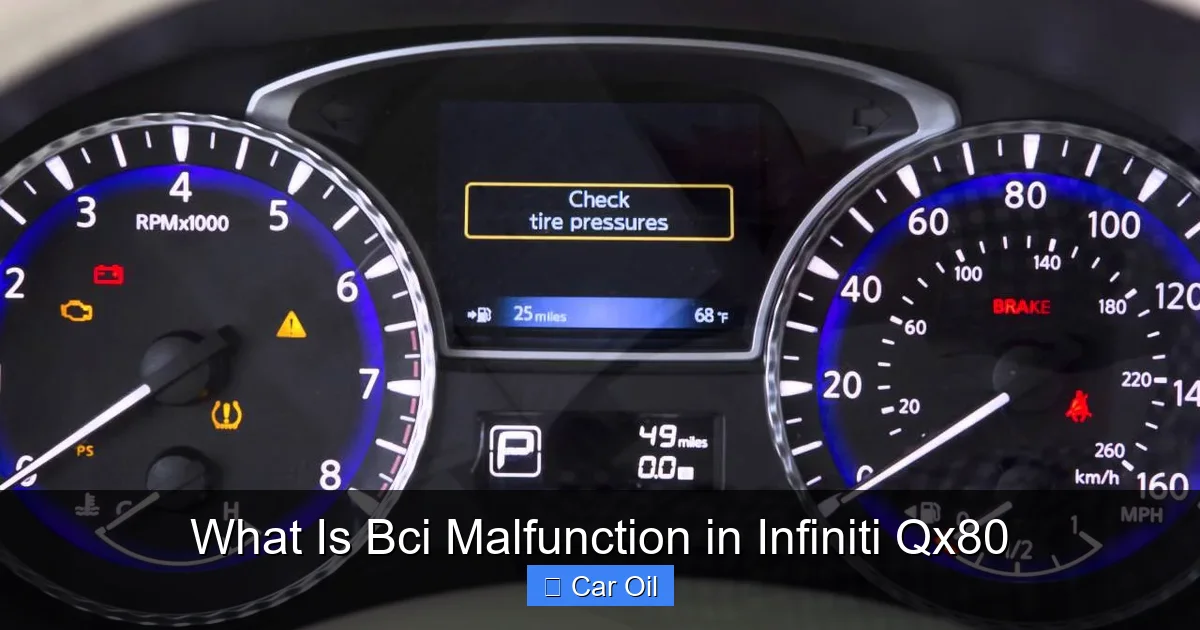
This is the most direct signal. Your dashboard will illuminate the battery/charging system warning light (a little battery icon). Sometimes, it will be accompanied by the “BCI Malfunction” message specifically on the driver information display. However, a critical nuance: sometimes these lights will come on and then mysteriously turn off again, even though the problem persists. This on-again, off-again behavior is classic for a BCI issue that is struggling but not completely failed. Do not be fooled by a temporarily extinguished light. The underlying fault remains.
Engine Stalling and No-Start Conditions
In the later stages, the BCI’s failure can directly impact engine operation. The QX80’s engine control unit (ECU) relies on stable voltage from the charging system. If the BCI allows voltage to drop too low or fluctuate wildly, the ECU can get confused and shut down, causing the engine to stall—often at idle or low speeds. Eventually, the system may not provide enough power to the starter motor, resulting in a slow crank or a complete “click-click-click” no-start situation, mistaking a power management problem for a dead battery.
Why Does it Happen? Common Causes of BCI Failure
So, what kills the Battery Control Module? It’s rarely a spontaneous electronics failure. More often, it’s the victim of a related problem or environmental stress.
Visual guide about What Is Bci Malfunction in Infiniti Qx80
Image source: i.ytimg.com
The Usual Suspect: A Weak or Failing Battery
This is, by far, the number one cause. The BCI is designed to work with a healthy, robust battery. Over time, a stock battery loses its capacity. The BCI constantly senses this weakened state and works overtime to compensate, putting extra stress on its own circuits. Eventually, this chronic overwork can cause the BCI to fail. Conversely, a brand-new, high-quality battery that is properly installed can often resolve a BCI malfunction code because it removes the underlying stressor. Always rule out the battery first.
Corrosion, Damage, and Poor Connections
The BCI communicates with the battery via thick, high-current cables and with the vehicle’s networks via delicate data wires. Corrosion on the battery terminals or the BCI’s own connectors creates high resistance, disrupting both power flow and signal integrity. Physical damage—from a chafing wire harness, an impact near the engine bay, or even improper service—can sever these critical connections. A single broken ground strap can cause the BCI to lose its reference point and throw a fault.
Software Glitches and Module Failure
Like any computer, the BCI runs software. Infiniti/Nissan has issued technical service bulletins (TSBs) over the years for specific QX80 model years addressing software updates that can resolve false BCI codes. If the software is corrupted or has a bug, it can misinterpret normal battery data as a fault. Finally, the BCI unit itself can simply wear out. The internal capacitors and circuitry can fail due to heat, vibration, and age, necessitating a replacement.
The Diagnostic Journey: How Mechanics Find the Problem
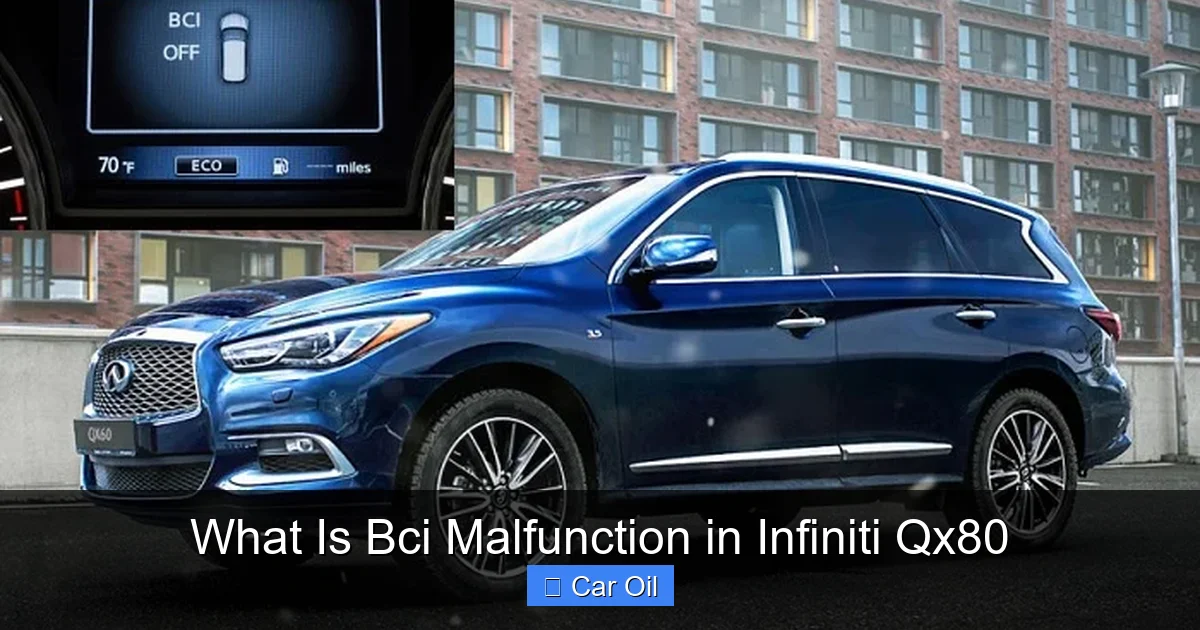
You cannot diagnose a BCI malfunction with a $20 OBD-II scanner from the auto parts store. Those tools will read a generic code like “P0562 – System Voltage” or a manufacturer-specific code, but they provide no actionable data. Professional diagnosis is a multi-step process.
Visual guide about What Is Bci Malfunction in Infiniti Qx80
Image source: cararac.com
Step 1: Advanced Scan Tool Deep Dive
A qualified technician, preferably one familiar with Infiniti/Nissan platforms, will connect an advanced scan tool like a Consult III or equivalent. This tool can access the BCI module’s live data stream. They will look at parameters like battery voltage, charging system voltage, battery current, and the BCI’s internal state of health. They’ll check for any stored trouble codes and, crucially, see if the code is “current” or “history.” A history code with a good battery might be a past issue; a current code with abnormal voltage readings confirms an active problem.
Step 2: The Classic Load Test and Visual Inspection
No diagnosis is complete without a load test on the battery itself. This involves applying a heavy electrical load to the battery to see if it can maintain voltage under stress. A weak battery will fail this test. Simultaneously, a thorough visual inspection of the battery, its terminals, the BCI module, and all associated wiring harnesses is conducted. They’ll look for corrosion, cracks, loose connectors, and signs of heat damage. This step is critical because it often reveals the root cause—like a corroded terminal—that a scan tool alone cannot see.
Step 3: Isolating the Circuit
If the battery tests strong and wiring looks good, the technician may perform voltage drop tests across the charging circuit to check for hidden resistance. They might also try disconnecting the BCI (if possible on that model) to see if the charging system defaults to a safe, non-smart mode, which would confirm the BCI is at fault. This methodical elimination process separates a true BCI failure from a battery or wiring issue that’s merely *triggering* a BCI code.
Fixing the Fault: Repair Options and What to Expect
Once the diagnosis is clear, the repair path becomes evident. The approach depends entirely on the root cause.
The Most Common Fix: Battery Replacement and Reset
If the diagnosis points to an old, weak battery (which it often does), the solution is straightforward but important. It’s not just about putting in any new battery. You must install a battery that meets or exceeds the OEM specifications (typically an AGM – Absorbent Glass Mat – battery for the QX80). After replacement, the new battery’s specs must be registered with the vehicle’s BCI system using the professional scan tool. This tells the BCI the new battery’s capacity and type, allowing it to calibrate its charging strategy correctly. Skipping this registration can lead to undercharging or overcharging, shortening the new battery’s life and potentially causing the BCI to throw new codes. This is a perfect example of why professional service is essential.
Wiring and Connection Repairs
If corrosion or damage is found, the affected components must be repaired or replaced. This might mean cleaning terminals with a special brush and solution, replacing corroded battery cables, or splicing/repairing damaged wires in the harness. All connections must be torqued to specification to ensure a solid, low-resistance bond. This work is labor-intensive but usually less expensive than module replacement.
BCI Module Replacement and Programming
If the BCI itself is confirmed dead, it must be replaced. This is not a simple plug-and-play part. The new BCI module often requires programming or configuration to match your specific QX80 (VIN, battery type, etc.). This programming can only be done with the dealer-level diagnostic equipment. Furthermore, after replacement, the entire charging system must be tested to ensure the new module is communicating and regulating correctly. The cost for this repair can be significant, combining the part price (which can be several hundred dollars) and the labor for diagnosis and programming.
Software Updates (TSBs)
In some cases, the fix is purely digital. If a known software bug is causing the issue, the technician will perform a simple software update or reflash of the BCI module. This is the least invasive and often least expensive fix, but it only applies if a relevant TSB exists for your specific model year and VIN.
Prevention and Proactive Care for Your QX80’s BCI
Given the cost and hassle of a BCI failure, prevention is your best strategy. The health of your BCI is inextricably linked to the health of your battery and electrical system.
Respect the Battery’s Lifespan
Infiniti typically recommends battery replacement every 3-5 years, depending on climate and usage. In extremely hot climates like Arizona or Florida, the lifespan can be even shorter. Don’t wait for the symptoms. Have your battery’s health tested annually, especially after a harsh summer or winter. A proactive replacement with a quality OEM-spec AGM battery is a wise investment.
Keep it Clean and Tight
Make it a habit to periodically check your battery terminals. If you see any white, crusty corrosion, clean it off immediately with a terminal cleaning brush and a baking soda/water solution. Ensure the battery hold-down clamp is secure. Vibration can loosen connections and damage the battery case. Also, if you ever have work done under the hood, ensure mechanics don’t leave tools or metal parts that could accidentally short or damage wiring near the BCI or battery.
Heed All Early Warnings
The moment you see a battery/charging light, even if it goes out, get it checked. The moment your infotainment system starts acting up or your starts feel sluggish, have the charging system tested. Catching a slightly weak battery before it completely fails is the single most effective way to save your BCI. Ignoring these early whispers often leads to a loud, expensive scream later. Remember, issues in one system can sometimes affect others; for instance, a severe electrical fault might also trigger warnings related to systems like the Vehicle Dynamics Control (VDC), highlighting the interconnected nature of your QX80’s electronics.
Conclusion: Don’t Ignore the Messenger
A “BCI Malfunction” message in your Infiniti QX80 is not a suggestion; it’s a critical alert from the command center of your vehicle’s electrical life. It signifies that the delicate balance of power management—essential for starting your engine, running your luxury features, and ensuring your safety systems have power—has been disrupted. While the culprit is often an aging battery, the consequences of misdiagnosis or neglect can range from a frustrating dead battery to a complete, dangerous electrical failure on the road. The path forward is clear: seek a professional diagnosis with the proper tools, address the root cause (be it battery, wiring, or module), and always ensure any new battery is properly registered. By treating this warning with the seriousness it deserves, you protect the heart of your QX80’s modern technology and ensure many more miles of reliable, luxurious driving. Understanding your vehicle’s systems, from the BCI to the importance of proper oil pressure and engine oil health, is the cornerstone of responsible ownership.
Frequently Asked Questions
What does “BCI Malfunction” mean on my Infiniti QX80?
It means the Battery Control Module, the computer that manages your SUV’s charging system and battery health, has detected a fault it cannot correct. This is a serious electrical system warning that requires immediate professional diagnosis.
Can I drive my QX80 with a BCI malfunction?
You should not drive it. Driving with this fault risks a complete electrical system failure, which could disable power steering, brakes, and other critical systems at any moment, creating a dangerous situation. Have it towed to a qualified shop.
How much does it cost to fix a BCI malfunction?
The cost varies wildly based on the cause. A simple battery replacement and registration might cost $250-$400. Wiring repairs could be $200-$600. If the BCI module itself is faulty, total costs (part + programming + diagnosis) can range from $800 to over $1,500.
Will disconnecting the battery clear the BCI malfunction?
Temporarily, yes, but it will return. Disconnecting the battery resets the system but does not fix the underlying problem—whether it’s a weak battery, bad connection, or failed module. The fault will reappear, often within a few drive cycles.
Is a BCI malfunction related to the alternator?
Indirectly, yes. The BCI controls the alternator’s output. A faulty BCI can cause the alternator to undercharge or overcharge. However, a mechanically failed alternator can also cause a BCI code because it cannot maintain the system voltage the BCI expects. Diagnosis is needed to determine the source.
How long does it take to diagnose and repair?
Diagnosis typically takes 1-2 hours of diagnostic time. If the fix is a battery replacement and registration, the total shop time might be 2-3 hours. If it requires BCI module replacement and programming, it could take 4-6 hours or more, depending on parts availability.
