Why Are Tesla Owners So Annoying

Contents
- 1 Key Takeaways
- 2 📑 Table of Contents
- 3 The Cult of Over-the-Air Updates and Tech Evangelism
- 4 The Charging Station Cold War
- 5 The Moral High Ground and Environmental Superiority
- 6 Social Media: The Loudest Voices in the Room
- 7 The “I Don’t Need a Dealership” Smugness
- 8 The Performance Mindset and the Soul Debate
- 9 Conclusion: Disruption Always Bumps Against the Status Quo
- 10 Frequently Asked Questions


The perception that Tesla owners are often “annoying” stems from a potent mix of disruptive technology, aggressive brand evangelism, and unique ownership rituals that clash with traditional car culture. This article isn’t about bashing electric vehicles but dissecting the social behaviors—from charging etiquette debates to unyielding tech optimism—that create friction on the road and online. Understanding these dynamics reveals more about our relationship with technology and status than it does about any single group of drivers.
Let’s be honest. You’ve probably thought it, or at least heard someone else mutter it under their breath while a silent, sleek Tesla glides past a gas station. “Ugh, Tesla drivers.” There’s a stereotype, a cultural meme, that the owner of a Tesla Model 3, Model Y, or Cybertruck is somehow… extra. Annoying. Preachy. The eye-roll heard ’round the highway. But why? Is it just jealousy of the instant acceleration? Is it the silent operation seeming smug? Or is there a deeper, more complex social dynamic at play? This article isn’t about hating on electric cars—the technology is fascinating and the environmental argument is strong. Instead, we’re taking a sociological pit stop to unpack the specific behaviors, cultural forces, and psychological quirks that have combined to make “Tesla owner” a charged label in the automotive world.
We’ll explore the unique ecosystem Tesla has built, from its software-centric updates to its proprietary charging network, and how these features create rituals and frustrations unseen in traditional car ownership. We’ll examine the shadow of its famous CEO, the dynamics of online communities, and the simple fact that being an early adopter of a world-changing technology can, for some, go to your head. By the end, you might not love every Tesla driver on the road, but you’ll understand the “why” behind the annoyance. And hey, if you’re a Tesla owner reading this, maybe you’ll even recognize a few of these traits in yourself or your peers—self-awareness is the first step to better charging lane etiquette, after all.
Key Takeaways
- The “Tesla Talk” Phenomenon: A culture of constant software updates and over-the-air fixes has fostered an environment where owners feel compelled to evangelize technical minutiae, often coming across as condescending to those driving “legacy” vehicles.
- Charging Infrastructure as a Social Battleground: The relative novelty of public charging leads to frequent, heated debates over etiquette, speed, and ownership, creating visible tension that other drivers witness.
- Performance as a New Moral Metric: For some, the instant torque and tech prowess of a Tesla become a substitute for traditional automotive passion, framing efficiency and acceleration as superior values, which can dismiss other forms of motoring enjoyment.
- The Elon Musk Effect: The CEO’s polarizing public persona and his integration into the product’s identity mean owner pride is often inextricably linked to a controversial figure, amplifying both advocacy and backlash.
- Data-Driven Superiority Complex: Tesla’s focus on metrics (range, 0-60 times, safety ratings) encourages a hyper-competitive, spreadsheet-style comparison that overlooks subjective qualities like driving feel or craftsmanship.
- Social Media Amplification: The most vocal and extreme proponents (and critics) dominate online discourse, creating a skewed perception that doesn’t represent the average, quiet Tesla owner.
- Disruption Breeds Resentment: Tesla’s success directly challenges the century-old internal combustion engine ecosystem, and the visible, early-adopter owners become the human face of that disruptive economic threat.
📑 Table of Contents
- The Cult of Over-the-Air Updates and Tech Evangelism
- The Charging Station Cold War
- The Moral High Ground and Environmental Superiority
- Social Media: The Loudest Voices in the Room
- The “I Don’t Need a Dealership” Smugness
- The Performance Mindset and the Soul Debate
- Conclusion: Disruption Always Bumps Against the Status Quo
The Cult of Over-the-Air Updates and Tech Evangelism
To understand the Tesla owner psyche, you must first understand the fundamental shift in what a “car” is. For over a century, a car was a mechanical device that depreciated the moment it left the lot. Its features were fixed. Its software, if it had any, was static. Then came Tesla, treating the vehicle as a “computers on wheels” that could get better over time with wireless updates. This isn’t just a feature; it’s a foundational philosophy that reshapes ownership.
The “I Got an Update!” Brag
Think about the traditional car owner’s joy. It’s in the revs, the feel of the steering wheel, the sound of the exhaust. For a Tesla owner, a significant source of joy and identity can come from a notification on their phone: “Version 2024.14.5 is now available.” Suddenly, their car can play new games, has a slightly different light show, or its Autopilot navigates a curve a fraction more smoothly. This isn’t inherently bad—it’s cool! The problem arises in the sharing. The constant, unsolicited commentary about update contents, the debates over whether a new UI change is “progress” or “regression,” and the subtle (or not-so-subtle) implication that their car is literally evolving while your 2018 Honda Accord is fossilizing. It creates a knowledge hierarchy. They are on the cutting edge; you are in the past. This technical one-upmanship is a prime source of the “annoying” label, as it frames car ownership as a software competition rather than a mechanical or experiential one.
Autopilot as a Status Symbol and Conversational Landmine
Few things spark more heated debates than Tesla’s driver-assistance features. For owners, using Autopilot on the highway can be a genuinely relaxing and impressive experience. The frustration for others comes from two places. First, the over-zealous evangelism: “You should really try it, it’s so much safer!” This ignores the fact that many drivers simply enjoy driving, or don’t trust the system, and it comes across as a lecture on safety. Second, the visible behavior: a Tesla in the left lane cruising at a steady speed with minimal steering input can feel like a passive-aggressive statement to drivers stuck behind slower traffic in the right. It looks lazy, or worse, like the driver is disengaged. The National Highway Traffic Safety Administration (NHTSA) has investigated these systems extensively, and while data is complex, the perception of a “zombie driver” is powerful. This isn’t about most Tesla drivers—it’s about the few who misuse the system and create a stereotype that tarnishes the whole group. It also ties into a broader frustration with tech companies solving problems people didn’t know they had, sometimes at the expense of other values. For example, the precision of a Toyota’s reliability, as discussed in Why Toyota Is So Reliable, represents a different, long-standing value proposition that doesn’t involve beta-testing features on public roads.
The Charging Station Cold War
If the software creates an intellectual divide, the charging network creates a physical and logistical one. Tesla’s Supercharger network is its killer app, a proprietary ecosystem that provides a relatively seamless (though not perfect) long-distance travel experience. But its very existence and the behavior within it have birthed a new subset of road rage.
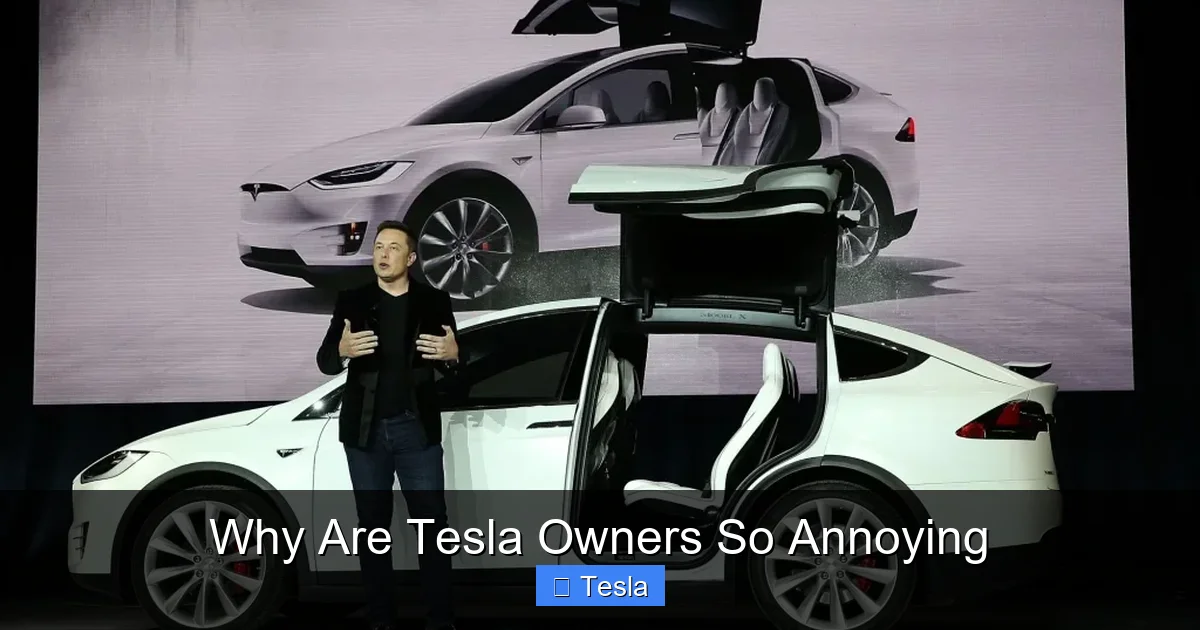
Visual guide about Why Are Tesla Owners So Annoying
Image source: jtlegalgroup.com
Stall Hogging and “Charge Anxiety”
The etiquette is simple: charge up, then move. Yet, the sight of a fully charged Tesla (often with a “100%” icon glowing on the dash) sitting in a coveted Supercharger stall while the driver shops, eats, or naps is a universal irritant. It’s the electric equivalent of a gas pump blocker, but with higher stakes because stalls are fewer and charging times are longer. This behavior crystallizes the “annoying” stereotype: a sense of entitlement to a scarce, shared resource, enabled by the car’s data (they can see their charge status) but ignored for convenience. It breeds a specific kind of schadenfreude when a non-Tesla owner, perhaps in a Subaru who values practicality, needs a charge and finds every stall occupied by a car that’s already full. The friction is practical and deeply personal.
The Adapter Arms Race
Then there’s the adapter drama. As other networks (Electrify America, EVgo) have opened, Tesla owners use a finicky CCS1 adapter to access them. The experience is often inferior: slower speeds, broken stations, payment hassles. To a non-Tesla driver, this looks like a first-world problem tantrum. “Your special network isn’t enough? You need *our* network too?” The complaints about non-Tesla charger quality, while often valid, can sound like a luxury complaint from someone who already has a superior, dedicated solution. It’s a paradox of abundance that creates its own annoyance.
The Moral High Ground and Environmental Superiority
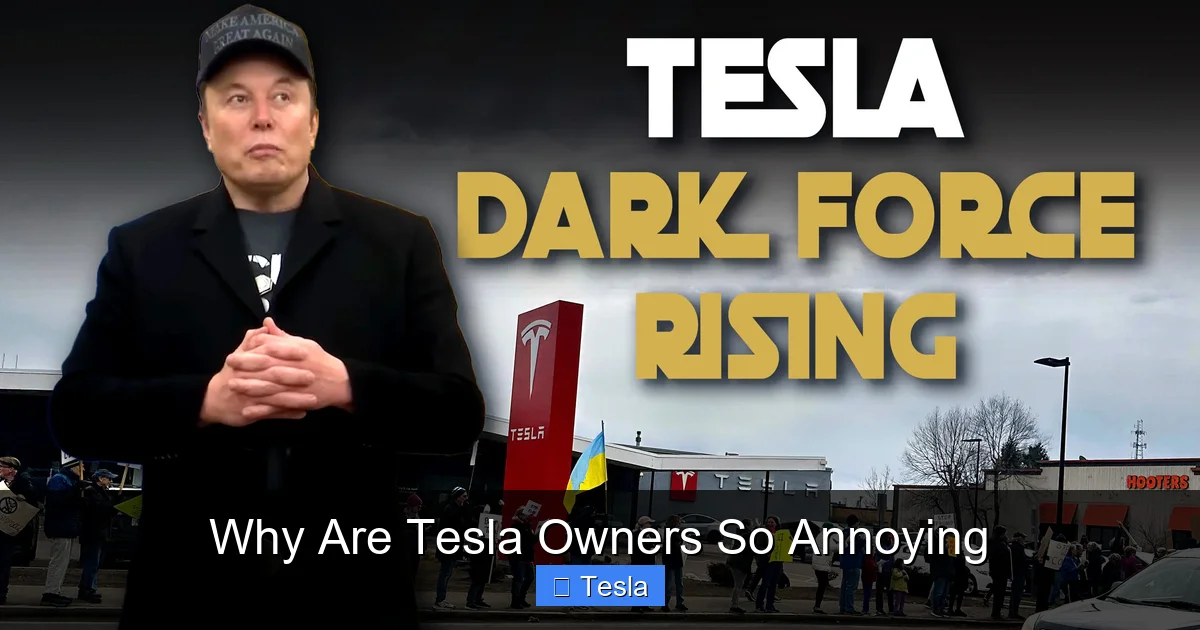
Buying a Tesla is frequently framed as a moral and environmental choice. And for many, it is genuinely a step toward reducing their carbon footprint. But when this choice becomes a cudgel, it transforms from virtue signaling into a source of irritation. The subtext of many a Tesla conversation is, “My transportation choice is ethically superior to yours.”
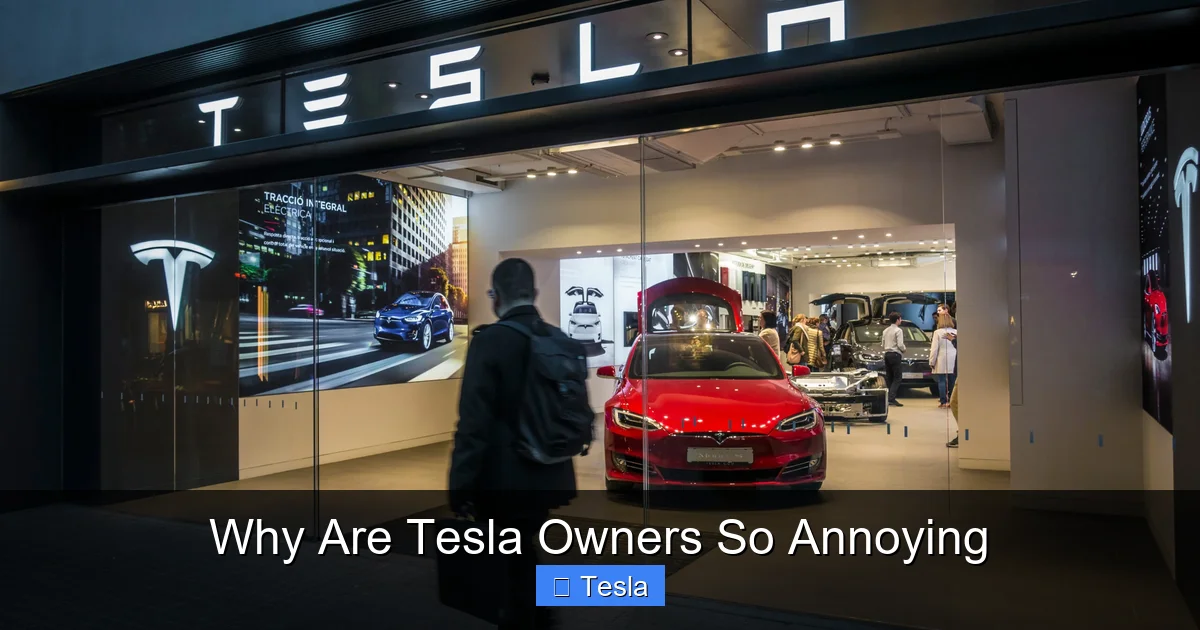
Visual guide about Why Are Tesla Owners So Annoying
Image source: img-s-msn-com.akamaized.net
“My Car is Saving the Planet (And You’re Not)”
This isn’t usually stated outright—it’s conveyed through tone, bumper stickers (“Zero Emissions” is a classic), and social media posts. It positions the Tesla owner as part of a forward-thinking, responsible vanguard, implicitly casting drivers of gasoline cars as selfish, backward, or ignorant. This is a powerful social lever, but it’s also incredibly grating. It discounts the vast complexity of personal transportation: the environmental cost of battery production, the electricity grid’s reliance on fossil fuels, the practical needs of families and workers for whom an EV isn’t feasible, and the simple joy of an internal combustion engine. The annoyance here is reflexive; nobody likes being judged, especially by someone in a car that cost more than their house down payment. It’s the automotive equivalent of the person who constantly mentions their yoga practice and kale smoothies—the health benefit is real, but the constant reminder feels like a critique.
The “Fossil Fuel” Pejorative
The language used matters. Referring to gasoline as “dinosaur juice” or internal combustion engines as “explosion motors” is deliberately reductive and infantilizing. It frames a mature, global technology as primitive. This linguistic framing is a common tactic in ideological debates to delegitimize the opposition. When Tesla owners use it, it signals they’ve fully bought into a narrative where their side is science and progress, and the other is superstition and pollution. It’s an effective way to win an argument in one’s own mind, but a surefire way to make the other person feel like an idiot, which is, by definition, annoying behavior.
Social Media: The Loudest Voices in the Room
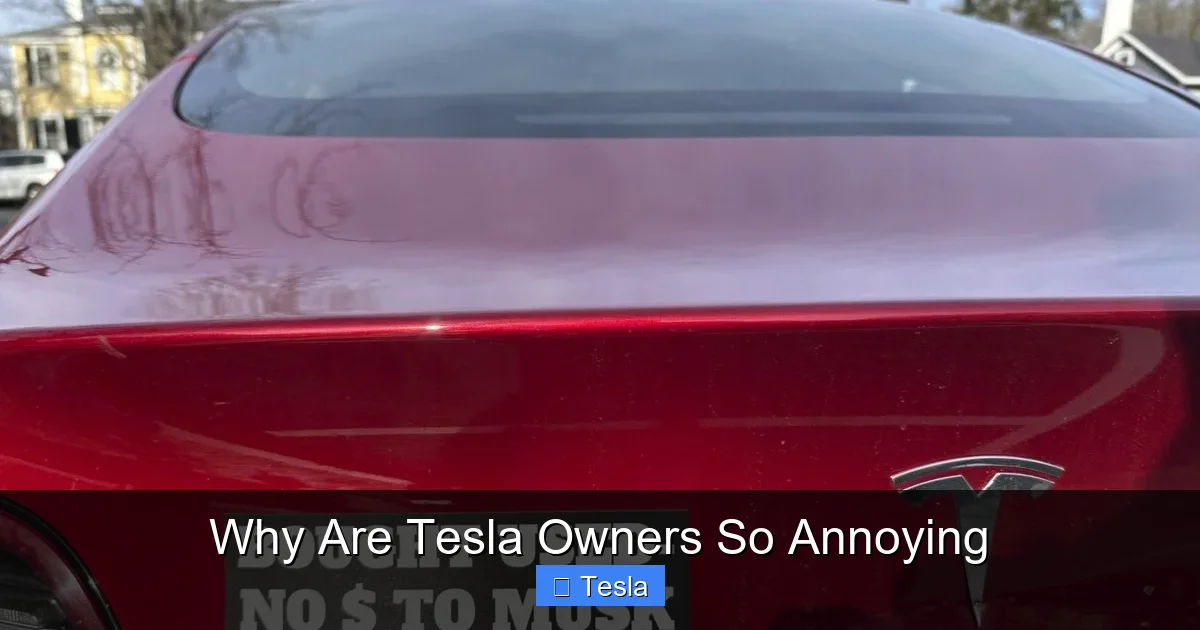
The stereotype of the “annoying Tesla owner” is disproportionately shaped by social media, particularly Twitter (X), Reddit, and YouTube. The platforms reward extreme, confident, and repetitive statements. The quiet, normal Tesla owner who loves their car but also appreciates a good V8 soundtrack is rarely seen. Instead, we see the Tesla Twitter super-fan with 50,000 replies debating paint colors, the Reddit mod who deletes any criticism of build quality, and the YouTube creator whose entire identity is defending Tesla from “the mainstream media.”
Visual guide about Why Are Tesla Owners So Annoying
Image source: vmcdn.ca
The “Stan” Culture and Defensiveness
This is where fandom crosses into cult-like behavior. Any critique of Tesla—be it about panel gaps, service delays, Full Self-Driving (FSD) promises, or Musk’s tweets—is met not with reasoned discussion but with a barrage of counter-arguments, whataboutism (“But have you seen the paint on a [insert German luxury brand]?”), and personal accusations of being a “short seller” or “oil shill.” This defensiveness is exhausting to witness. It creates an environment where the product is beyond reproach, and any problem is either a lie or the user’s fault. This mirrors the intense brand loyalty seen in other tech spheres, but it’s amplified because a car is a major, emotional, and identity-based purchase. Admitting your $60,000+ product has flaws feels like a personal failure. The high insurance costs for some performance models, which owners often attribute to unfair algorithms rather than repair data, is another point of collective grievance that fuels this “us vs. them” mentality.
The Cybertruck as a Peak Example
Nowhere is this social media-fueled dynamic more visible than with the Cybertruck. Its radical design broke the internet. For supporters, it’s a bold, futuristic statement. For critics, it’s an impractical, dangerous novelty. The online discourse around it has been uniquely toxic, with owners and fans engaging in aggressive, often personal, defense of every design choice, from the lack of a trunk to the stainless steel finish. The truck itself becomes a meme, and owning one is an immediate declaration. You are now a participant in a global cultural argument. That’s a lot of pressure and, for outsiders, a prime example of why the Tesla owner stereotype is so pronounced—they’ve willingly stepped into the center of a storm and seem to enjoy the fight.
The “I Don’t Need a Dealership” Smugness
Another pillar of the annoying stereotype is the perceived disdain for the traditional car buying and servicing experience. Tesla’s direct sales model and its approach to service (often mobile, sometimes frustratingly backlogged) are held up as revolutionary. The narrative is: “We’re cutting out the greedy, lying middleman.”
The Death of Haggling and the Birth of a New Frustration
For anyone who dreads the dealership dance, the fixed-price, online-only Tesla sales process sounds like heaven. And in many ways, it is. But this ease has bred a new kind of frustration. When things go wrong—and they do, with any mass-produced product—the lack of a local, empowered dealer service department can leave owners feeling stranded in a corporate support maze. The annoyance for non-owners comes from the dichotomy: Tesla owners tout the superior buying experience while simultaneously complaining endlessly about service wait times, mobile appointment availability, and body shop authorization. It can seem like they want the benefits of disruption without any of its inevitable early-adopter headaches. Furthermore, the dismissal of the entire dealership ecosystem—which, for all its flaws, provides local jobs, community investment, and a tangible point of contact—can come across as naive and elitist. It ignores the fact that for many, especially in rural areas, the local dealer is the only practical option for purchase and service, a point often highlighted in discussions about vehicles built for durability and dealer network support.
The Performance Mindset and the Soul Debate
Let’s talk about the driving experience. A Tesla’s straight-line speed is breathtaking. The silent, instant surge of torque is a novelty that never fully wears off. But for enthusiasts of traditional automobiles, this is only one dimension of a rich, multi-sensory art form. The “annoying” Tesla owner, in this context, is the one who believes 0-60 mph is the only metric that matters, who dismisses steering feel, engine note, chassis balance, and manual engagement as irrelevant “legacy” qualities.
“It’s Just a Computer” vs. “It’s a Symphony”
This is a fundamental philosophical clash. To the Tesla enthusiast, the car is an optimized appliance, a perfect tool for point-A-to-point-B with thrilling bursts. To the enthusiast of a Porsche 911, a Mazda MX-5, or even a Subaru with its boxer engine, the car is a mechanical extension of the driver, a dialogue between human and machine filled with noise, vibration, feedback, and skill. When a Tesla owner says, “Your car is slow and noisy,” they are stating a fact based on their metrics. But they are also, intentionally or not, invalidating an entire different philosophy of what makes driving fun and meaningful. This isn’t just about speed; it’s about the soul of the machine. The annoyance stems from this reductionism, the idea that technological progress means abandoning all previous sensory experiences. It feels like saying a digital photo is inherently better than a film photograph because it’s sharper and more convenient, ignoring the artistry and process of the latter.
Conclusion: Disruption Always Bumps Against the Status Quo
So, are Tesla owners inherently more annoying than owners of other polarizing brands? Probably not. The intensity of the stereotype comes from the unique position Tesla occupies. It is not just another car company; it is a tech company, an energy company, and a cultural movement led by a famously divisive CEO. Its owners are early adopters in a grand experiment, and that comes with a level of evangelism, defensiveness, and identity-fusion that is rare in the automotive world. The behaviors we’ve dissected—the update bragging, the charging etiquette wars, the moral superiority, the social media stanning, the dealership disdain, and the performance reductionism—are all amplified by this context.
The truth, as ever, is nuanced. Millions of Tesla owners are normal people who simply like their quiet, quick, tech-filled cars. They don’t lecture you at stoplights or camp in Superchargers. But the vocal minority, empowered by a sense of being on the “right side of history” and armed with an arsenal of software metrics and environmental arguments, creates a loud and memorable impression. The annoyance is a symptom of disruption. When a product challenges not just an industry but a deeply ingrained set of values—about driving, about ownership, about what progress looks like—it creates friction. The Tesla owner, as the human face of that disruption, inevitably rubs some people the wrong way. Perhaps the path forward is mutual understanding: recognition that different people value different things in their vehicles, and that enjoying a silent, software-updated commute doesn’t make you a better person, just a person with different priorities. And maybe, just maybe, let’s all agree to move our fully charged cars out of the stall. It’s the least we can do.
Frequently Asked Questions
Is the “annoying Tesla owner” stereotype based on a real trend or just online exaggeration?
The stereotype is amplified by social media, where extreme voices are most visible. However, it’s rooted in real, observable behaviors stemming from Tesla’s unique ownership model— evangelism about updates, charging etiquette disputes, and a defensive brand loyalty that are more pronounced than in traditional car cultures.
Do Tesla owners really think they are better than other drivers?
Not all, certainly. But the environmental and technological narratives Tesla promotes can foster a sense of moral and intellectual superiority among some owners. The constant comparison of metrics (range, acceleration) and the framing of EVs as the “future” inherently positions gasoline car drivers as being on the “wrong side” of progress.
What is the most common complaint other drivers have about Tesla behavior on the road?
Beyond the stereotypical preachy attitude, the most common *observable* complaint is related to Autopilot use—specifically, drivers using it in the left lane while appearing disengaged, or the car’s conservative following distances causing traffic flow issues. The silent operation can also be startling to pedestrians and other drivers used to engine noise.
Are Tesla’s Supercharger etiquette problems unique?
The core issue—people not moving after charging—isn’t unique to EVs; gas pump blockers exist too. However, Tesla’s proprietary network and longer charging times make the problem more visible and consequential. The “I own the network” mentality that can develop among Tesla owners, combined with the visibility of a fully charged car sitting in a stall, creates a specific friction point.
How much does Elon Musk’s persona influence how people view Tesla owners?
Significantly. Because Musk is so intertwined with the brand’s identity, owner pride is often linked to him. His polarizing political and social media activity means that loving a Tesla can be conflated with supporting his views, whether accurate or not. This causes many to project their feelings about Musk onto the drivers, intensifying the “annoying” perception for those who dislike him.
Is the defensiveness of Tesla fans on social media different from other brand loyalists?
It shares DNA with Apple or sports team fanboyism, but it’s intensified by three factors: Tesla is a high-stakes, expensive purchase; its technology is still in a relatively immature, rapidly evolving phase (so criticisms can feel like attacks on the future); and its leader actively encourages a combative culture. This creates a “siege mentality” where any external criticism is seen as an attack on the mission itself.