
Who Owns the Company Ferrari?

Ferrari is primarily owned by Exor N.V., a holding company controlled by the Agnelli family, with additional shares held by the public and institutional investors. Despite being publicly traded, Ferrari maintains operational independence and a unique brand identity in the luxury automotive world.
When you think of luxury sports cars, few names evoke as much passion, prestige, and performance as Ferrari. The prancing horse logo is instantly recognizable, symbolizing speed, innovation, and Italian craftsmanship. But behind the roaring engines and sleek red exteriors lies a complex corporate structure. Who actually owns the company Ferrari? It’s a question that blends family legacy, global finance, and automotive history.
Ferrari isn’t just a car company—it’s a cultural icon. From Formula 1 dominance to limited-edition hypercars, Ferrari has built a reputation that transcends the automotive industry. Yet, despite its global fame, the ownership of Ferrari is often misunderstood. Many assume it’s still privately held by the Ferrari family, or that it’s fully absorbed into a larger automotive conglomerate. The truth is more nuanced. Ferrari operates as an independent public company, but its ownership is heavily influenced by one powerful family: the Agnellis of Italy.
To understand who owns Ferrari today, we need to trace its journey from a small racing team in the 1940s to a multi-billion-dollar luxury brand. Along the way, we’ll explore the role of Exor N.V., the Agnelli family’s investment arm, the spin-off from Fiat Chrysler, and how Ferrari maintains its exclusivity in an increasingly competitive market. Whether you’re a car enthusiast, an investor, or just curious about corporate ownership, this deep dive will give you a clear picture of Ferrari’s ownership structure and what it means for the brand’s future.
Key Takeaways
- Exor N.V. is the majority owner: The Agnelli family’s holding company holds a controlling stake in Ferrari, ensuring strategic influence.
- Publicly traded since 2015: Ferrari listed on the New York Stock Exchange under the ticker RACE, but retains a concentrated ownership model.
- Operational independence: Despite public ownership, Ferrari operates with autonomy, focusing on exclusivity and high-performance engineering.
- Founder’s legacy endures: Enzo Ferrari’s vision continues to shape the company’s culture, branding, and product development.
- Strategic separation from Fiat Chrysler: Ferrari was spun off from FCA in 2016 to focus on luxury and performance, not mass-market production.
- Global brand with Italian roots: Ferrari remains headquartered in Maranello, Italy, preserving its heritage while expanding internationally.
- Investor appeal: Ferrari’s stock is favored by investors seeking exposure to luxury brands with strong pricing power and brand loyalty.
📑 Table of Contents
The Origins of Ferrari: From Racing Roots to Global Brand
Ferrari’s story begins not with a factory, but with a man: Enzo Ferrari. Born in 1898 in Modena, Italy, Enzo was passionate about racing from a young age. He started his career as a driver and later founded Scuderia Ferrari in 1929, initially as a racing team for Alfa Romeo. It wasn’t until 1947 that the first car bearing the Ferrari name—the 125 S—rolled out of the Maranello workshop. This marked the birth of Ferrari as an independent automaker.
For decades, Ferrari remained a relatively small operation, focused on building high-performance sports cars and dominating the world of motorsport. Enzo Ferrari was known for his relentless pursuit of excellence and his hands-on approach to engineering. He famously said, “The client is not always right,” emphasizing that Ferrari would not compromise on performance or design to meet market demands. This philosophy laid the foundation for the brand’s exclusivity and prestige.
The Agnelli Family Enters the Picture
In the 1960s, Ferrari faced financial difficulties. Enzo Ferrari, then in his 60s, recognized the need for capital to expand production and compete more effectively in racing. In 1969, he sold a 50% stake in the company to Fiat, the Italian automaker controlled by the Agnelli family. This partnership proved transformative. Fiat provided the financial backing and industrial expertise, while Enzo retained control over racing and car development.
Over time, Fiat increased its stake, eventually owning 90% of Ferrari by the 1980s. Enzo Ferrari passed away in 1988, but his legacy lived on. The company continued to thrive under the Agnelli umbrella, blending Italian heritage with modern manufacturing. However, the relationship between Ferrari and Fiat was always unique. Unlike other brands in the Fiat portfolio, Ferrari was treated as a standalone entity, with its own identity, culture, and leadership.
The Spin-Off and Public Listing
Fast forward to the 2010s. Fiat had merged with Chrysler to form Fiat Chrysler Automobiles (FCA), a global automotive giant. But FCA’s strategy was shifting toward mass-market vehicles and cost efficiency. Ferrari, with its low-volume, high-margin business model, no longer fit neatly into that vision. In 2014, FCA announced plans to spin off Ferrari as an independent company.
The process culminated in 2015 with Ferrari’s initial public offering (IPO) on the New York Stock Exchange under the ticker symbol “RACE.” The IPO was a major event, raising over $1 billion and valuing the company at around $10 billion. However, the public offering was structured to ensure that the Agnelli family retained control. Exor N.V., the Agnelli family’s holding company, maintained a majority stake through a dual-class share structure.
This means that while anyone can buy Ferrari stock, voting power is concentrated in the hands of Exor. This structure is common among family-controlled businesses and allows Ferrari to make long-term decisions without being swayed by short-term market pressures.
Who Owns Ferrari Today? The Role of Exor N.V.
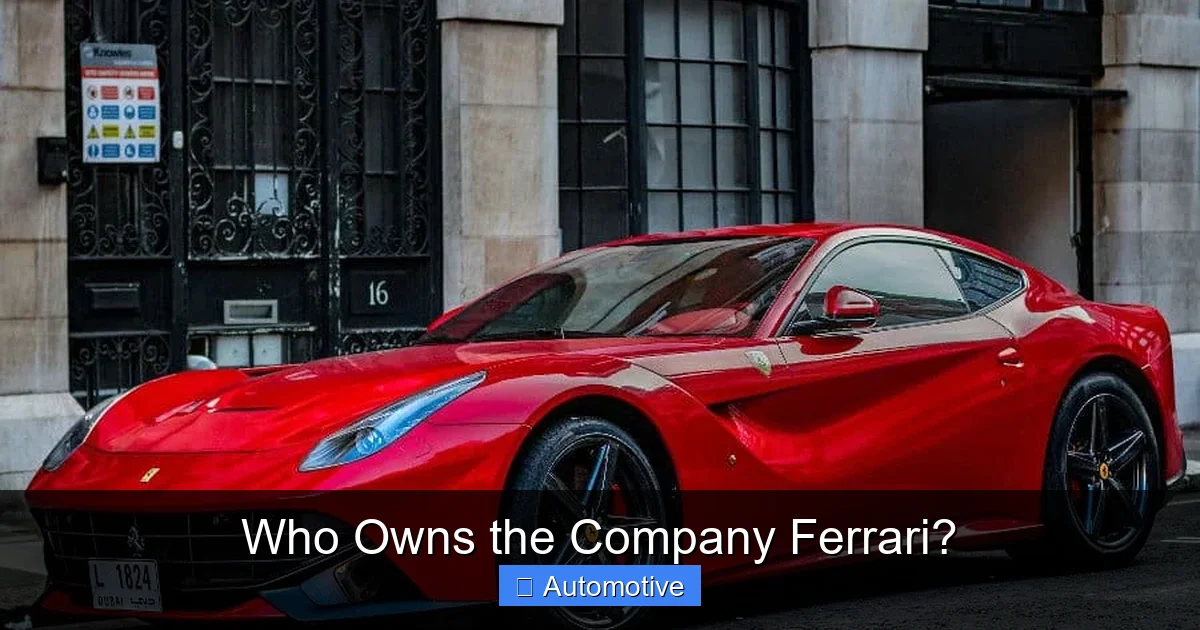
Visual guide about Who Owns the Company Ferrari?
Image source: carroar.com
So, who owns Ferrari in 2024? The answer lies with Exor N.V., a Dutch-based holding company that serves as the investment arm of the Agnelli family. Exor owns approximately 24% of Ferrari’s shares but controls about 34% of the voting rights due to the dual-class share system. This gives the Agnelli family decisive influence over Ferrari’s strategic direction, board appointments, and major corporate decisions.
Exor’s portfolio is vast, including stakes in companies like Stellantis (the successor to FCA), CNH Industrial, and the Juventus football club. But Ferrari remains one of its crown jewels. The Agnelli family has long viewed Ferrari not just as a business, but as a symbol of Italian excellence. Their stewardship has allowed Ferrari to maintain its independence and brand integrity, even as it operates in a competitive global market.
The Dual-Class Share Structure Explained
To understand Ferrari’s ownership, it’s important to grasp the concept of dual-class shares. Ferrari issued two types of stock during its IPO:
– **Common shares (Class A):** These are held by public investors and institutional shareholders. They carry one vote per share.
– **Voting shares (Class B):** These are held primarily by Exor and carry ten votes per share.
This structure ensures that Exor retains control even as the company raises capital from the public. For example, if Exor owns 24% of the total shares but those shares have ten times the voting power, they can outvote the remaining 76% of shareholders on key decisions.
This model is not without controversy. Critics argue that it reduces accountability to public shareholders and concentrates power in the hands of a few. However, supporters believe it protects Ferrari from hostile takeovers and allows the company to focus on long-term brand building rather than quarterly earnings.
Other Major Shareholders
While Exor is the dominant owner, Ferrari’s shareholder base includes several institutional investors. As of 2023, major shareholders include:
– **BlackRock:** One of the world’s largest asset managers, holding around 5% of Ferrari’s shares.
– **Vanguard Group:** Another major investment firm with a significant stake.
– **Capital Research and Management:** Known for investing in high-growth companies, including luxury brands.
These investors are typically long-term holders who appreciate Ferrari’s strong brand, pricing power, and consistent profitability. They don’t seek to influence day-to-day operations but benefit from the company’s financial performance and dividend payouts.
Ferrari’s Independence: How the Brand Stays Unique
Visual guide about Who Owns the Company Ferrari?
Image source: i0.wp.com
One of the most remarkable aspects of Ferrari’s ownership structure is how it maintains operational independence. Unlike many luxury brands that are absorbed into larger conglomerates (think Lamborghini under Volkswagen or Rolls-Royce under BMW), Ferrari operates with a high degree of autonomy.
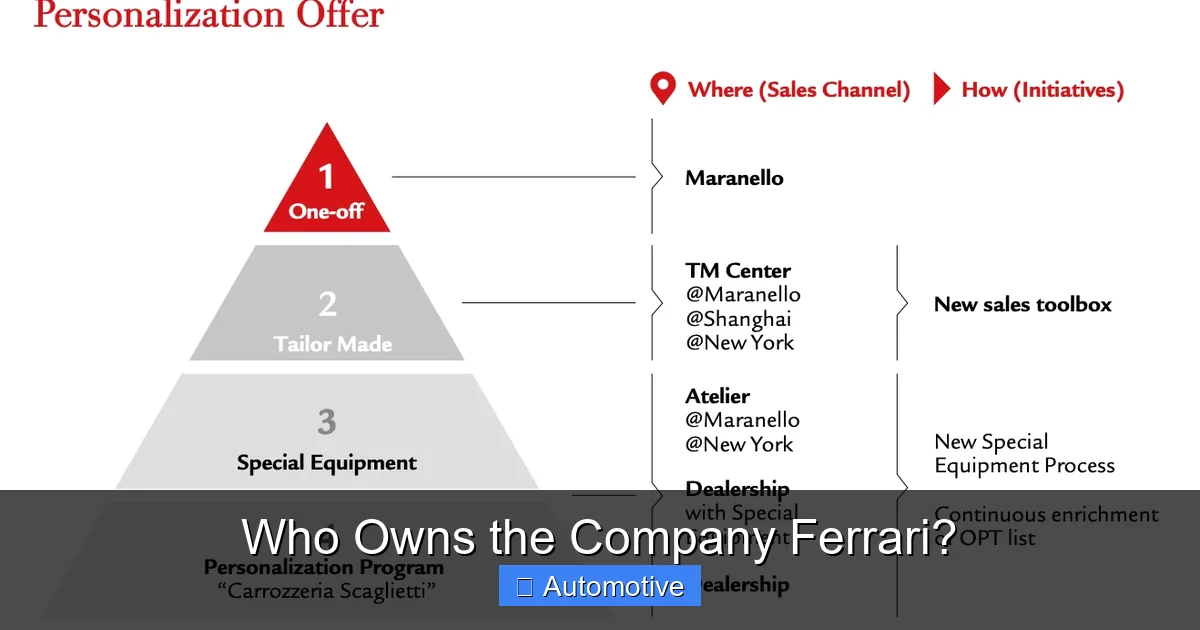
This independence is by design. When Ferrari was spun off from FCA, the agreement included provisions to protect its brand identity. For example, Ferrari has its own board of directors, CEO, and management team. It controls its own manufacturing, design, and racing operations. Even its supply chain is carefully managed to ensure quality and exclusivity.
Focus on Exclusivity and Scarcity
Ferrari’s business model is built on scarcity. The company deliberately limits production to maintain high demand and resale values. In 2023, Ferrari produced just over 13,000 vehicles—far fewer than luxury rivals like Porsche or Mercedes-AMG. This strategy allows Ferrari to command premium prices and maintain strong profit margins.
For example, the Ferrari SF90 Stradale, a hybrid supercar, has a starting price of around $625,000. Yet, demand far exceeds supply. Prospective buyers often wait years and must be approved by Ferrari’s sales team. This exclusivity is a key part of the brand’s appeal and is protected by its ownership structure.
Investment in Innovation and Racing
Despite its focus on tradition, Ferrari is also a leader in automotive innovation. The company invests heavily in research and development, particularly in hybrid and electric technology. The SF90 Stradale, for instance, features a plug-in hybrid powertrain that delivers over 1,000 horsepower.
Ferrari’s commitment to racing is another pillar of its identity. The company has won more Formula 1 World Championships than any other team. Racing success not only enhances the brand’s prestige but also drives technological advancements that trickle down to road cars.
This dual focus—on heritage and innovation—is made possible by Ferrari’s stable ownership. The Agnelli family has consistently supported long-term investments in R&D and motorsport, even when short-term profits might be affected.
The Financial Performance of Ferrari
Visual guide about Who Owns the Company Ferrari?
Image source: s.abcnews.com
Ferrari’s ownership model has also contributed to its strong financial performance. The company consistently reports high profit margins, often exceeding 20%—far above the automotive industry average. In 2023, Ferrari generated over €5.5 billion in revenue and €1.3 billion in net profit.
Revenue Streams Beyond Car Sales
While car sales are the primary revenue source, Ferrari has diversified its income streams. These include:
– **Brand licensing:** Ferrari licenses its name and logo to companies producing merchandise, watches, and apparel.
– **Racing and sponsorship:** Ferrari earns revenue from Formula 1 broadcasting rights, sponsorships, and team partnerships.
– **Services and maintenance:** Ferrari offers high-margin after-sales services, including maintenance, repairs, and customization.
This diversification helps stabilize earnings and reduces reliance on vehicle sales alone.
Dividend Policy and Shareholder Returns
Ferrari is known for returning value to shareholders through dividends and share buybacks. In 2023, the company paid a dividend of €1.38 per share, reflecting its strong cash flow. Exor, as the majority owner, benefits significantly from these payouts, but public shareholders also receive a share of the profits.
The company’s stock has performed well since its IPO, outperforming many automotive peers. Investors are drawn to Ferrari’s resilient business model, global brand recognition, and ability to weather economic downturns.
Challenges and Future Outlook
Despite its success, Ferrari faces challenges. The shift toward electric vehicles (EVs) is one of the biggest. While Ferrari has introduced hybrid models, it has been slower to embrace full electrification than some competitors. The company plans to launch its first all-electric car by 2025, but this transition requires significant investment and poses risks to its brand identity.
Balancing Tradition and Innovation
Ferrari must navigate the tension between its heritage and the demands of a changing automotive landscape. Purists worry that electrification could dilute the emotional appeal of Ferrari’s roaring V12 engines. However, the company insists that its electric vehicles will deliver the same level of performance and driving excitement.
Another challenge is maintaining exclusivity in a world of increasing wealth and demand for luxury goods. As more people can afford high-end cars, Ferrari must carefully manage production and brand perception to avoid overexposure.
Global Expansion and Market Trends
Ferrari is expanding its presence in key markets like China and the Middle East, where demand for luxury cars is growing. However, it must adapt to local tastes and regulations without compromising its core values. For example, Ferrari has introduced models with more comfortable interiors and advanced driver assistance systems to appeal to a broader audience.
At the same time, the company remains committed to its Italian roots. All Ferrari cars are still hand-built in Maranello, and the factory is a major tourist attraction. This blend of global reach and local authenticity is a key part of Ferrari’s enduring appeal.
Conclusion: A Legacy of Ownership and Excellence
So, who owns the company Ferrari? The answer is a blend of family legacy, strategic investment, and public ownership. Exor N.V., controlled by the Agnelli family, holds the majority of voting power, ensuring that Ferrari remains true to its heritage. Yet, the company is publicly traded, allowing investors worldwide to share in its success.
This unique ownership structure has allowed Ferrari to thrive as an independent luxury brand. It can focus on innovation, exclusivity, and performance without being constrained by the demands of a mass-market automaker. The result is a company that continues to inspire passion and admiration, both on the road and on the stock exchange.
As Ferrari looks to the future—embracing electrification, expanding globally, and staying true to its racing roots—its ownership will remain a critical factor in its success. The Agnelli family’s stewardship, combined with the support of public investors, ensures that the prancing horse will continue to gallop forward for generations to come.
Frequently Asked Questions
Who is the majority owner of Ferrari?
Exor N.V., the holding company of the Agnelli family, is the majority owner of Ferrari. It holds about 24% of the shares but controls 34% of the voting rights through a dual-class share structure.
Is Ferrari still owned by the Ferrari family?
No, the Ferrari family no longer owns the company. Enzo Ferrari sold a majority stake to Fiat in the 1960s, and today, the Agnelli family, through Exor, holds controlling interest.
When did Ferrari go public?
Ferrari went public in October 2015 with an IPO on the New York Stock Exchange under the ticker symbol “RACE.” The spin-off from Fiat Chrysler was completed in 2016.
Can anyone buy Ferrari stock?
Yes, Ferrari stock is publicly traded and available to individual and institutional investors. However, voting power is concentrated with Exor due to the dual-class share system.
Why does Ferrari limit car production?
Ferrari limits production to maintain exclusivity, high demand, and strong resale values. This strategy supports premium pricing and protects the brand’s luxury image.
What is Ferrari’s plan for electric vehicles?
Ferrari plans to launch its first fully electric car by 2025. The company is investing in hybrid and electric technology while aiming to preserve the driving experience and performance its brand is known for.