
How Much Is a Used 2010 Honda Civic Worth?

The value of a used 2010 Honda Civic depends on trim level, mileage, condition, and location. On average, prices range from $5,000 to $9,500, with well-maintained models commanding higher prices. Understanding key factors helps buyers and sellers make smart decisions.
[FEATURED_IMAGE_PLACEOLDER]
If you’re in the market for a reliable, fuel-efficient compact car, the 2010 Honda Civic might just be on your radar. Known for its durability, low maintenance costs, and strong resale value, this model has stood the test of time. But how much is a used 2010 Honda Civic actually worth today?
The answer isn’t one-size-fits-all. While some listings might show a Civic priced at $5,000, others could go for nearly $10,000. The real value depends on a mix of factors—mileage, trim level, condition, service history, and even where you live. Whether you’re buying or selling, understanding these variables helps you make a smarter, more confident decision.
In this guide, we’ll break down everything you need to know about pricing a 2010 Honda Civic. We’ll explore average market values, compare trims, discuss depreciation, and share practical tips for evaluating a used car. By the end, you’ll have a clear picture of what to expect—and how to get the best deal.
Key Takeaways
- Price Range: Most 2010 Honda Civics sell between $5,000 and $9,500, depending on condition and mileage.
- Mileage Matters: Lower-mileage models (under 80,000 miles) typically cost more than high-mileage ones (over 120,000 miles).
- Trim Level Impact: Higher trims like EX-L and Si can be worth $1,000–$2,000 more than base LX models.
- Vehicle History: Clean titles, regular maintenance, and no accidents significantly increase resale value.
- Location Affects Price: Prices vary by region due to demand, climate, and local market trends.
- Private vs. Dealer Sales: Private sellers often offer better prices, but dealers provide more security and warranties.
- Inspection Is Key: Always get a pre-purchase inspection to avoid hidden mechanical issues.
📑 Table of Contents
- Understanding the 2010 Honda Civic: A Quick Overview
- Average Market Value of a Used 2010 Honda Civic
- Factors That Influence the Value of a Used 2010 Honda Civic
- How to Determine the Right Price for Your 2010 Honda Civic
- Tips for Buying or Selling a Used 2010 Honda Civic
- Conclusion: Is a 2010 Honda Civic Still a Good Buy?
Understanding the 2010 Honda Civic: A Quick Overview
The 2010 Honda Civic was part of the eighth generation, which ran from 2006 to 2011. This generation was praised for its modern design, improved safety features, and fuel efficiency. It came in several body styles, including sedan and coupe, and offered a range of trims to suit different budgets and preferences.
Honda positioned the Civic as a practical, no-nonsense vehicle for daily commuting, college students, and small families. It wasn’t flashy, but it delivered on reliability—something Honda has long been known for. The 2010 model year didn’t introduce major changes from the previous year, but it did benefit from Honda’s reputation for building long-lasting engines and transmissions.
One of the standout features of the 2010 Civic was its fuel economy. The base 1.8-liter four-cylinder engine delivered around 25 mpg in the city and 36 mpg on the highway—impressive numbers even by today’s standards. For drivers looking to save on gas without sacrificing performance, the Civic was a top choice.
Available Trims and Features
The 2010 Honda Civic was offered in several trims, each adding more features and comfort. Here’s a quick breakdown:
– LX: The base model. It came with power windows, power locks, air conditioning, and a four-speaker audio system. It was simple but functional.
– EX: Added a sunroof, upgraded audio with a CD player and auxiliary input, and cruise control. The EX also featured a split-folding rear seat for added cargo flexibility.
– EX-L: Included leather upholstery, heated front seats, and an automatic climate control system. This trim offered a more premium feel.
– Si: The sporty version. It had a more powerful 2.0-liter engine, sport-tuned suspension, 17-inch alloy wheels, and a rear spoiler. The Si was aimed at drivers who wanted a bit more excitement.
– GX: A natural gas-powered version, primarily sold in California and a few other states. It was eco-friendly but had limited availability.
Each trim level affects the used car’s value. For example, an EX-L with low mileage will typically sell for more than a base LX with high mileage. The Si, while less common, can also command a premium due to its performance upgrades.
Safety and Reliability Ratings
The 2010 Honda Civic earned high marks for safety. It received a five-star overall rating from the National Highway Traffic Safety Administration (NHTSA) and was named a Top Safety Pick by the Insurance Institute for Highway Safety (IIHS). Standard safety features included dual-stage front airbags, side-impact airbags, and anti-lock brakes.
Reliability has always been a strong suit for Honda, and the 2010 Civic is no exception. According to Consumer Reports and J.D. Power, this model has above-average predicted reliability. Common issues are minor—things like worn brake pads or aging suspension components—and are typically easy and affordable to fix.
One thing to watch for is the automatic transmission. While most Civics from this era have reliable five-speed automatics, a small number of 2006–2011 models experienced premature wear. Honda issued technical service bulletins but did not issue a full recall. If you’re considering a used Civic, ask for maintenance records and consider a transmission fluid change if it hasn’t been done recently.
Average Market Value of a Used 2010 Honda Civic
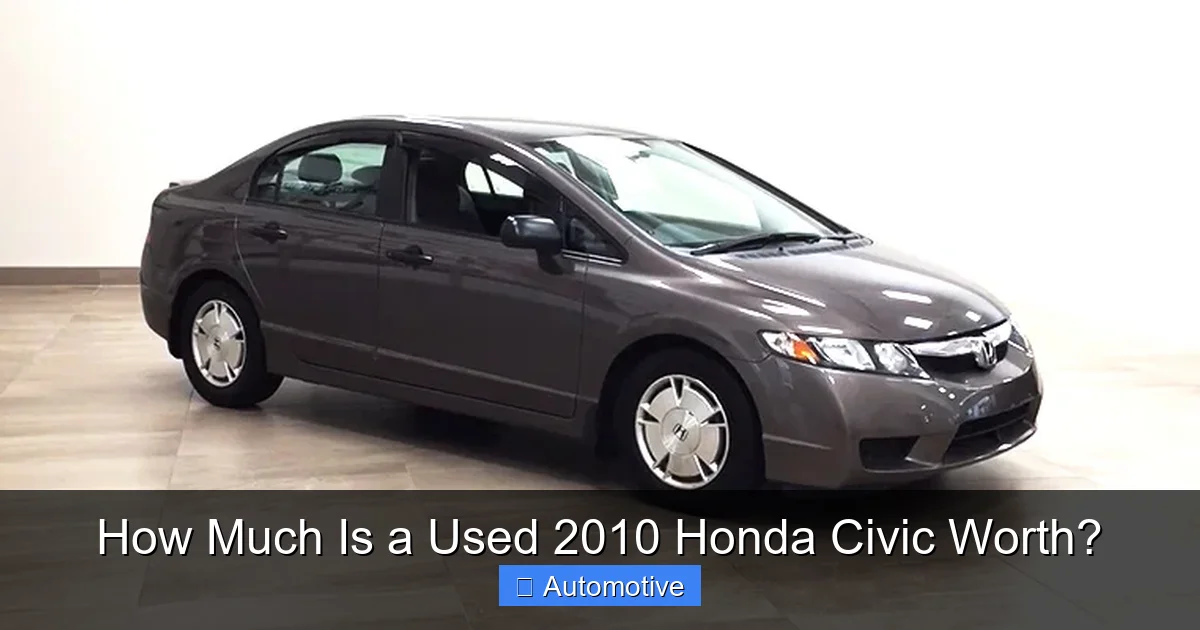
Visual guide about How Much Is a Used 2010 Honda Civic Worth?
Image source: hondatheotherside.com
So, how much is a used 2010 Honda Civic worth in 2024? The answer depends on several factors, but we can establish a general price range based on current market data.
As of mid-2024, most used 2010 Honda Civics are priced between $5,000 and $9,500. This range accounts for differences in trim, mileage, condition, and location. Here’s a more detailed breakdown:
– Low-end models (high mileage, base trim, fair condition): $4,500–$6,000
– Mid-range models (moderate mileage, mid-tier trim, good condition): $6,500–$8,000
– High-end models (low mileage, top trim, excellent condition): $8,500–$10,000+
For example, a 2010 Civic LX sedan with 120,000 miles in average condition might sell for around $5,800. Meanwhile, a well-maintained EX-L coupe with 70,000 miles could fetch $9,200 or more.
How Mileage Affects Value
Mileage is one of the biggest factors in determining a used car’s worth. The 2010 Civic was built to last, but higher mileage means more wear and tear.
– Under 80,000 miles: These are considered low-mileage for a 14-year-old car. Expect to pay a premium—often $1,000–$2,000 more than average.
– 80,000–120,000 miles: This is the sweet spot for most buyers. The car has been driven, but not excessively. Prices fall in the middle of the range.
– Over 120,000 miles: High-mileage Civics are still valuable, but depreciation accelerates. Buyers may expect discounts or negotiate harder.
Keep in mind that mileage alone doesn’t tell the whole story. A car with 100,000 miles that’s been well-maintained can be a better buy than one with 80,000 miles and a spotty service history.
Trim Level and Feature Impact
Trim level plays a significant role in pricing. Here’s how different trims typically compare:
– LX: Base model. Prices start around $5,000 and go up to $7,000 for low-mileage examples.
– EX: Adds comfort and convenience features. Expect to pay $600–$1,000 more than an LX.
– EX-L: Leather and heated seats make this a popular choice. Prices range from $7,500 to $9,500.
– Si: The performance variant. Due to limited supply and enthusiast demand, Si models can sell for $8,000–$10,000, even with higher mileage.
Features like a sunroof, upgraded audio, or automatic climate control can also add value. However, aftermarket modifications (like loud exhausts or custom wheels) may actually reduce resale value unless they’re high-quality and professionally installed.
Geographic Location and Market Demand
Where you live affects how much a 2010 Civic is worth. In urban areas with high traffic and parking challenges, compact cars like the Civic are in demand. In colder climates, models with heated seats (like the EX-L) may sell faster.
For example, a 2010 Civic in California or Florida—where rust is less of a concern—might hold its value better than one in the Rust Belt. Similarly, in college towns or cities with strong public transit, fuel-efficient cars are popular.
Online marketplaces like Autotrader, Cars.com, and Craigslist show regional price differences. A quick search might reveal that Civics in Texas average $6,800, while those in New York average $7,500. Always check local listings to get a realistic idea of pricing in your area.
Factors That Influence the Value of a Used 2010 Honda Civic
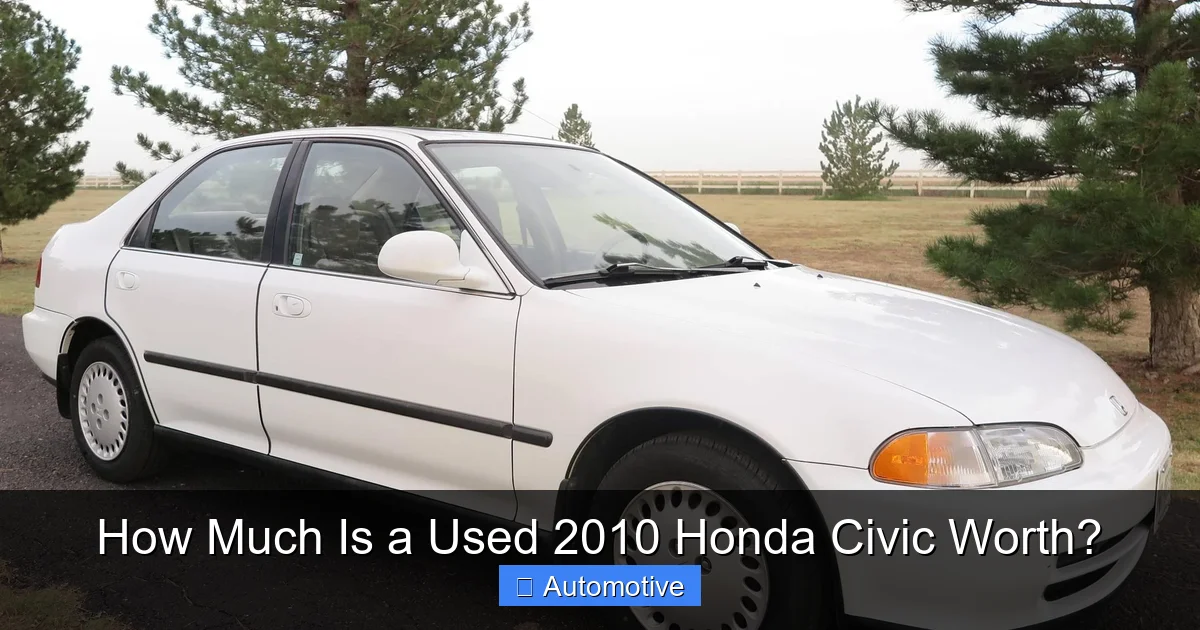
Visual guide about How Much Is a Used 2010 Honda Civic Worth?
Image source: assets.oldcarsdata.com
Beyond mileage and trim, several other factors can influence how much a used 2010 Honda Civic is worth. Understanding these can help you spot a good deal or price your car fairly if you’re selling.
Vehicle Condition and Maintenance History
A car’s physical and mechanical condition is crucial. A Civic with a clean interior, no dents, and a well-maintained engine will always be worth more than one with stains, scratches, or warning lights on the dashboard.
Look for signs of regular maintenance:
– Oil changes every 5,000–7,500 miles
– Brake inspections and replacements
– Timing belt replacement (if applicable—most 2010 Civics have timing chains, which don’t need replacing)
– Transmission fluid changes
A detailed service record can increase a car’s value by $500 or more. If the seller can’t provide records, consider getting a pre-purchase inspection.
Accident History and Title Status
A clean title is essential. Cars with salvage or rebuilt titles are worth significantly less—often 20–40% below market value. Even minor accidents can affect resale if repairs weren’t done properly.
Use services like Carfax or AutoCheck to check the vehicle history report. Look for:
– Number of previous owners
– Accident reports
– Flood or fire damage
– Odometer rollback
A single-owner car with no accidents will typically sell for more than a multi-owner vehicle with a minor fender bender.
Market Trends and Seasonality
The used car market fluctuates throughout the year. Demand for compact cars like the Civic tends to rise in spring and summer, when students are buying cars for college or people are preparing for road trips.
In winter, prices may dip slightly, especially in colder regions. Sellers may be more willing to negotiate during slower months.
Additionally, economic factors like gas prices and interest rates can influence demand. When gas prices rise, fuel-efficient cars like the Civic become more attractive—and prices may climb.
Private Seller vs. Dealership Pricing
Where you buy matters. Private sellers often price their cars lower than dealerships because they don’t have overhead costs. A private seller might list a 2010 Civic for $6,500, while a dealer might ask $7,200 for the same car.
However, dealers offer advantages:
– Certified pre-owned (CPO) options with warranties
– Financing assistance
– Return policies or exchange options
– Reconditioning (cleaning, repairs, detailing)
If you’re buying from a private seller, be prepared to handle paperwork and inspections yourself. If you’re short on time or want peace of mind, a dealership might be worth the extra cost.
How to Determine the Right Price for Your 2010 Honda Civic

Visual guide about How Much Is a Used 2010 Honda Civic Worth?
Image source: motortrend.com
Whether you’re buying or selling, knowing how to assess value is key. Here’s a step-by-step approach to finding the right price.
Step 1: Research Comparable Listings
Start by searching online for similar 2010 Civics in your area. Use filters for:
– Year, make, and model
– Trim level
– Mileage range (e.g., ±10,000 miles)
– Location (within 50–100 miles)
Look at both active listings and recently sold vehicles (if available). This gives you a sense of what buyers are actually paying.
For example, if you see three EX models with 90,000 miles priced at $7,200, $7,500, and $7,800, you can estimate the market value at around $7,500.
Step 2: Use Valuation Tools
Online tools can help estimate value:
– Kelley Blue Book (KBB): Enter your VIN or details to get a private party, trade-in, and dealer retail value.
– Edmunds True Market Value (TMV): Shows what others are paying in your area.
– NADA Guides: Often used by dealers; tends to be slightly higher than KBB.
These tools are helpful, but they’re not perfect. They rely on averages and may not account for unique features or local demand. Use them as a starting point, not the final word.
Step 3: Assess the Car’s Condition
Be honest about the car’s condition. Use a grading system:
– Excellent: Like new, no flaws, full service history
– Good: Minor wear, well-maintained, no major issues
– Fair: Noticeable wear, needs some repairs
– Poor: Significant damage, mechanical problems
Adjust the price accordingly. A “good” condition Civic might be worth 10–15% less than an “excellent” one.
Step 4: Negotiate Smartly
If you’re buying, don’t be afraid to negotiate. Start with a reasonable offer—say, 10% below the asking price—and be ready to justify it with your research.
If you’re selling, price your car competitively. Overpricing can lead to long listing times. Consider pricing slightly below market value to attract quick buyers.
Always be prepared to walk away. There are plenty of 2010 Civics on the market, so don’t feel pressured to accept a bad deal.
Tips for Buying or Selling a Used 2010 Honda Civic
Whether you’re in the market to buy or ready to sell, these tips will help you get the best outcome.
For Buyers: What to Look For
– Get a Pre-Purchase Inspection: Spend $100–$150 to have a mechanic check the car. They can spot issues like worn suspension, leaks, or transmission problems.
– Test Drive Thoroughly: Pay attention to engine noise, shifting smoothness, brake feel, and steering response.
– Check for Rust: Especially in wheel wells, undercarriage, and door sills. Surface rust is common, but structural rust is a red flag.
– Verify Ownership and Title: Make sure the seller is the legal owner and the title is clean.
For Sellers: How to Maximize Value
– Clean the Car Inside and Out: A detailed cleaning can add $200–$500 to the sale price.
– Fix Minor Issues: Replace burnt-out bulbs, fix small dents, and top off fluids.
– Gather Documentation: Have service records, owner’s manual, and warranty info ready.
– Take High-Quality Photos: Show the car from multiple angles, including interior and engine bay.
Avoid Common Pitfalls
– Don’t Skip the Inspection: Even if the car looks good, hidden problems can cost thousands.
– Don’t Overpay for Modifications: Custom parts rarely increase value unless they’re high-end and professionally installed.
– Don’t Rush the Sale: Take your time to find the right buyer or car. Patience pays off.
Conclusion: Is a 2010 Honda Civic Still a Good Buy?
So, how much is a used 2010 Honda Civic worth? The answer is: it depends—but in most cases, it’s a solid investment.
With prices ranging from $5,000 to $9,500, the 2010 Civic offers excellent value for a reliable, fuel-efficient compact car. Whether you’re a first-time buyer, a student, or someone looking to downsize, this model delivers on practicality and longevity.
While it may not have the latest tech or flashy design, the Civic’s strengths—durability, low cost of ownership, and strong resale—make it a smart choice. Just be sure to do your homework: check the vehicle history, inspect the car, and compare prices in your area.
If you find a well-maintained 2010 Honda Civic with reasonable mileage and a clean title, you’re likely getting a car that will serve you well for years to come. In the world of used cars, that’s about as good as it gets.
Frequently Asked Questions
What is the average price of a used 2010 Honda Civic?
The average price of a used 2010 Honda Civic ranges from $5,000 to $9,500, depending on trim, mileage, and condition. Well-maintained, low-mileage models can cost closer to $9,000 or more.
How many miles is too many for a 2010 Honda Civic?
There’s no hard rule, but Civics with over 120,000 miles are considered high-mileage. However, with proper maintenance, these cars can last 200,000 miles or more. Focus on service history, not just odometer reading.
Which trim of the 2010 Honda Civic holds its value best?
The EX-L and Si trims tend to hold their value best due to added features and desirability. The Si, in particular, appeals to enthusiasts and can command a premium.
Are 2010 Honda Civics reliable?
Yes, the 2010 Honda Civic is known for its reliability. It scores well in consumer reports and has few major mechanical issues when properly maintained.
Should I buy a 2010 Honda Civic with high mileage?
It can be a good buy if the car has a clean history and regular maintenance. Have it inspected by a mechanic to check for wear on the engine, transmission, and suspension.
Can I negotiate the price of a used 2010 Honda Civic?
Absolutely. Most sellers expect some negotiation. Use comparable listings and the car’s condition to justify your offer and aim for a fair deal.
