
Where on Tire Does It Say Psi

Knowing where on tire does it say psi is essential for safe driving and optimal vehicle performance. This guide explains how to locate psi information, understand tire sidewall markings, and maintain correct inflation levels.
Key Takeaways
- Tire psi is not printed directly on the tire tread but appears on the sidewall. Look for numbers like “MAX PRESS 51 PSI” to find the maximum safe inflation level.
- The vehicle’s recommended psi is usually found on a sticker inside the driver’s door jamb. This number may differ from the tire’s maximum psi and should be followed for best performance.
- Overinflated or underinflated tires can reduce fuel efficiency, cause uneven wear, and increase accident risk. Regular pressure checks help prevent these issues.
- Use a reliable tire pressure gauge to measure psi accurately. Digital or analog gauges are widely available and easy to use at home or at gas stations.
- Tire pressure changes with temperature—check it monthly and before long trips. Cold weather can drop psi, while heat can increase it.
- Understanding tire sidewall codes helps you interpret psi and other vital information. Learning to read these markings empowers smarter tire maintenance.
- Properly inflated tires improve handling, braking, and overall safety. Make psi checks a regular part of your vehicle care routine.
📑 Table of Contents
- Why Tire Pressure Matters: The Basics of Psi
- Where on Tire Does It Say Psi? A Step-by-Step Guide
- Recommended vs. Maximum Psi: What’s the Difference?
- How to Check and Adjust Tire Pressure
- The Impact of Incorrect Tire Pressure
- Understanding Tire Markings and Codes
- Maintaining Proper Tire Pressure: Best Practices
- Conclusion: Stay Safe, Stay Informed
Why Tire Pressure Matters: The Basics of Psi
When it comes to car maintenance, few things are as simple yet critical as checking your tire pressure. But before you can do that, you need to know where on tire does it say psi. Psi stands for pounds per square inch—a unit of measurement that tells you how much air is inside your tire. Getting this number right affects everything from fuel economy to ride comfort and, most importantly, safety.
Imagine driving on tires that are too soft. They might feel sluggish, wear out faster on the edges, and even overheat on long drives. On the flip side, overinflated tires can make your ride bumpy, reduce traction, and increase the risk of a blowout. That’s why knowing the correct psi and where to find it is so important. It’s not just about following a rule—it’s about protecting yourself, your passengers, and your vehicle.
Many drivers assume the psi number is stamped right on the tire tread or listed in the owner’s manual only. While the manual does provide guidance, the actual psi information is also clearly marked on the tire itself. This redundancy ensures you can always verify the correct pressure, even if you’ve misplaced your manual or are using a different set of tires. Let’s dive into exactly where to look and what those numbers mean.
Where on Tire Does It Say Psi? A Step-by-Step Guide
Visual guide about Where on Tire Does It Say Psi
Image source: trucknews.com
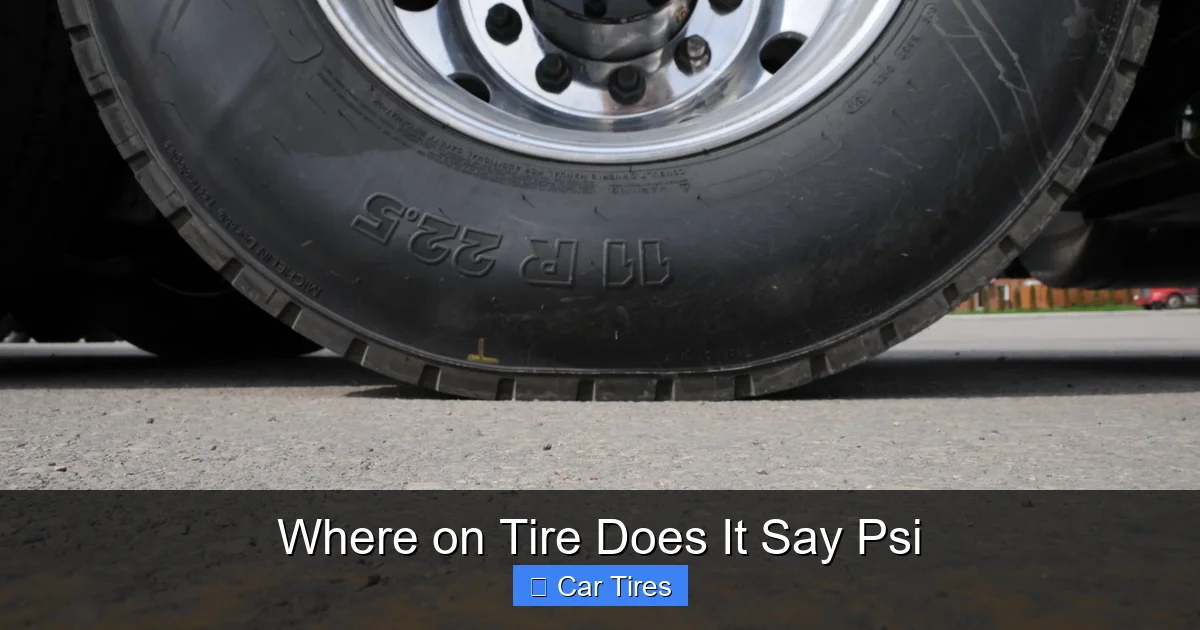
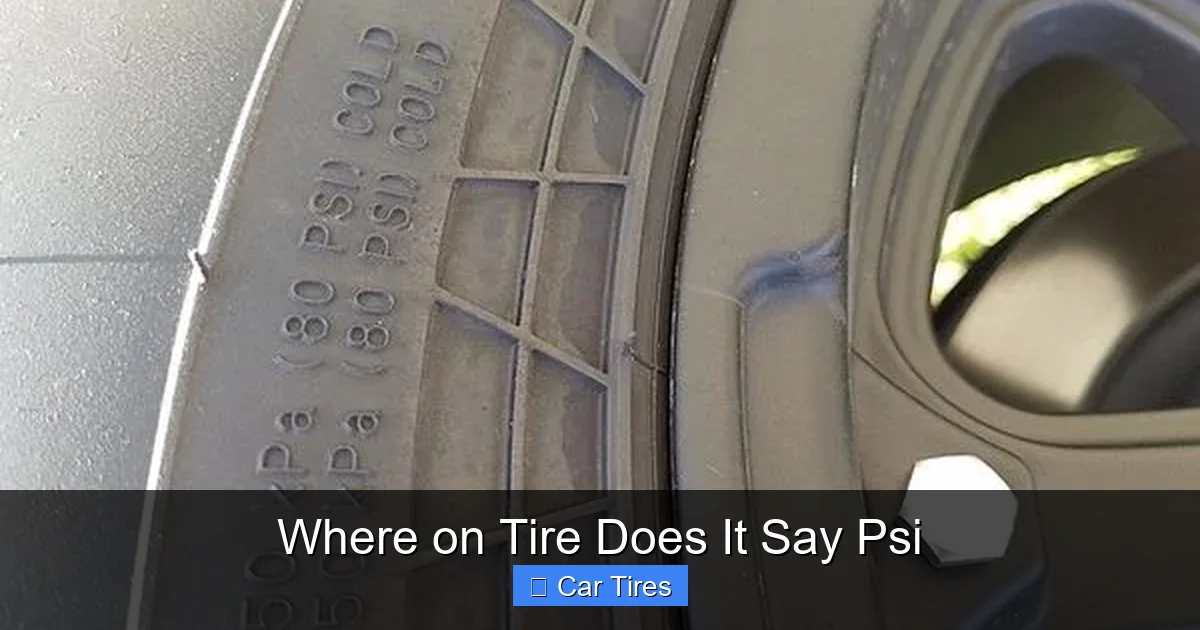
So, where on tire does it say psi? The answer lies on the tire’s sidewall—the flat, vertical part that wraps around the wheel. This area is packed with useful information, including size, load index, speed rating, and yes, the maximum psi. To find it, stand next to your car and look at the side of the tire facing outward. You don’t need to remove the tire or get under the car—just a quick glance will do.
Look for a phrase like “MAX PRESS” followed by a number and “PSI.” For example, you might see “MAX PRESS 51 PSI.” This means the tire should never be inflated beyond 51 psi. It’s the manufacturer’s recommended upper limit for safe operation. Keep in mind, this is the *maximum* pressure the tire can handle—not necessarily the *ideal* pressure for your vehicle.
The psi marking is usually located near other important details like the tire size (e.g., 225/60R16) and the DOT serial number. It’s often in bold or uppercase letters to make it stand out. If you’re having trouble finding it, try wiping off any dirt or grime from the sidewall. Sometimes, road debris can obscure the text, making it harder to read.
Reading the Sidewall: What Else Is There?
While you’re looking for psi, take a moment to scan the rest of the sidewall. You’ll find a wealth of information that helps you understand your tire’s capabilities. For instance, the tire size tells you the width, aspect ratio, and wheel diameter. The load index indicates how much weight the tire can support, and the speed rating shows the maximum safe speed.
But back to psi—why is it listed on the tire at all? Because tires are designed to operate within a specific pressure range. Exceeding that range can compromise structural integrity. That’s why manufacturers stamp the maximum psi directly on the tire. It’s a safety feature, plain and simple.
Common Locations for Psi Markings
Psi markings are typically found in one of two places on the sidewall:
– Near the bead area (where the tire meets the rim)
– Along the middle section of the sidewall
In most cases, it’s toward the outer edge, making it easy to see when the tire is mounted. Some tires also include a “Cold Inflation Pressure” note, which reminds you to check pressure when the tires are cold—meaning the car hasn’t been driven for at least three hours.
Recommended vs. Maximum Psi: What’s the Difference?
Visual guide about Where on Tire Does It Say Psi
Image source: autovfix.com
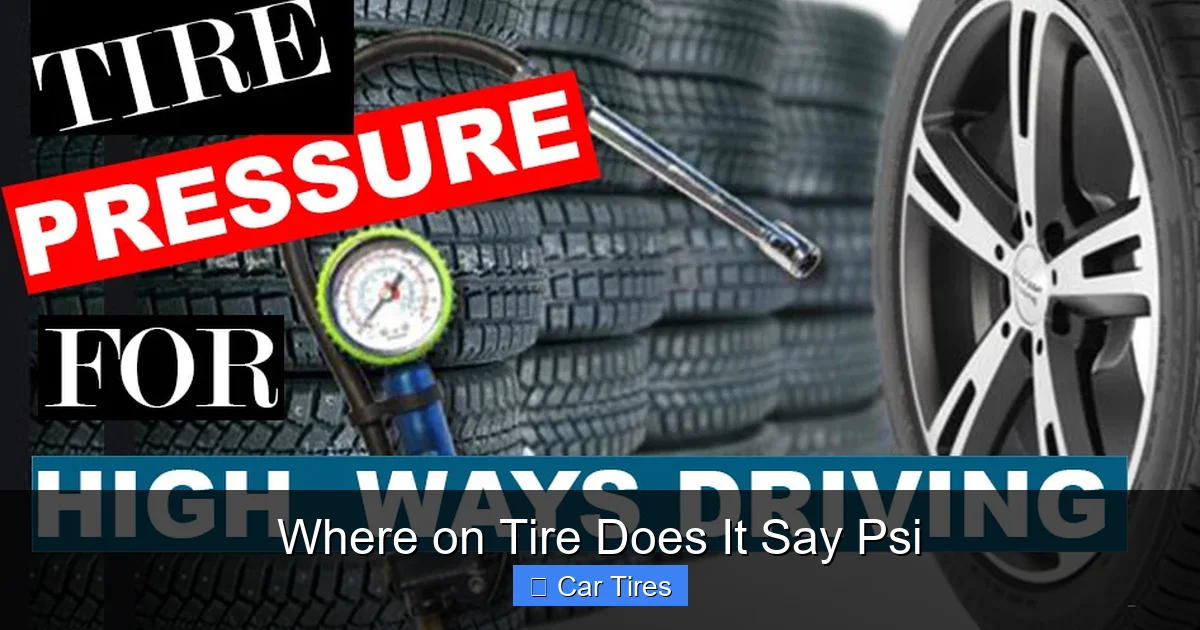
Here’s a common point of confusion: the psi number on the tire is the *maximum* pressure, but your car’s *recommended* psi might be lower. For example, your tire might say “MAX PRESS 51 PSI,” but your vehicle’s door jamb sticker recommends 35 psi. Which one should you follow?
Always follow the vehicle manufacturer’s recommendation. Why? Because the recommended psi is calculated based on your car’s weight, suspension, and handling characteristics. It ensures optimal performance, comfort, and safety. The maximum psi on the tire is just the upper safety limit—not the ideal operating pressure.
Think of it like a speed limit sign on a highway. The sign might say “MAX SPEED 75 MPH,” but your car’s manual recommends driving at 65 MPH for best fuel efficiency. You wouldn’t drive 75 just because you can, right? The same logic applies to tire pressure.
Where to Find Your Vehicle’s Recommended Psi
The best place to find your car’s recommended psi is on a sticker inside the driver’s side door jamb. Open the door and look for a white or yellow label. It usually lists front and rear tire pressures, sometimes with different values for normal and full load conditions.
If you can’t find the sticker, check your owner’s manual. Most manufacturers include a section on tire care with the correct psi values. Some newer cars even display tire pressure information on the dashboard or infotainment screen, especially if they have a tire pressure monitoring system (TPMS).
Why the Numbers Don’t Always Match
You might wonder why the tire’s maximum psi is higher than your car’s recommended psi. It’s simple: tires are built to fit a range of vehicles. A tire rated for 51 psi might be used on a compact car, a sedan, or even a light truck. Each vehicle has different needs, so the recommended psi varies.
Using the maximum psi on a lighter vehicle could make the ride harsh and reduce grip. That’s why it’s crucial to follow your car’s specific guidelines, not just the tire’s limits.
How to Check and Adjust Tire Pressure
Visual guide about Where on Tire Does It Say Psi
Image source: thecampingadvisor.com
Now that you know where on tire does it say psi and what the correct pressure should be, it’s time to learn how to check and adjust it. This is a simple task that takes just a few minutes but can make a big difference in your driving experience.
Start by gathering a few tools: a reliable tire pressure gauge and an air compressor. You can find both at most gas stations or purchase them for home use. Digital gauges are easy to read, while analog (dial) gauges are durable and don’t require batteries.
Step-by-Step Tire Pressure Check
1. **Make sure the tires are cold.** Drive the car for less than a mile or wait at least three hours after driving. Heat from driving increases pressure, giving a false reading.
2. **Remove the valve cap.** Twist it counterclockwise and set it aside. Don’t lose it—it protects the valve from dirt and moisture.
3. **Press the gauge onto the valve stem.** Push firmly to create a seal. You’ll hear a brief hiss of air—that’s normal. Hold it steady for a second or two.
4. **Read the pressure.** The gauge will show the current psi. Compare it to the recommended value on your door jamb sticker.
5. **Add or release air as needed.** If the pressure is too low, use an air compressor to add air. If it’s too high, press the gauge’s release button (or use a small tool) to let out a little air.
6. **Recheck and replace the cap.** Once the pressure is correct, twist the valve cap back on securely.
Tips for Accurate Readings
– Check all four tires, including the spare if you have one.
– Don’t rely solely on the gauge at gas stations—they’re often worn or inaccurate.
– Check pressure at least once a month and before long trips.
– In cold weather, check more frequently—temperature drops can reduce psi by 1 psi for every 10°F decrease.
The Impact of Incorrect Tire Pressure
Driving with incorrect tire pressure might seem like a minor issue, but it can have serious consequences. Let’s explore what happens when your tires are underinflated or overinflated.
Underinflated Tires: The Silent Danger
When tires don’t have enough air, they flex more than they should. This increases rolling resistance, which means your engine has to work harder to move the car. The result? Lower fuel efficiency—sometimes by as much as 3%.
Underinflation also causes uneven wear. The outer edges of the tire wear down faster than the center, shortening the tire’s lifespan. In extreme cases, the excess flexing generates heat, which can lead to a blowout—especially at high speeds.
Wet weather performance also suffers. Underinflated tires have a smaller contact patch with the road, reducing traction and increasing the risk of hydroplaning.
Overinflated Tires: A Rough Ride
On the other hand, overinflated tires become stiff and less able to absorb road shocks. This leads to a bumpy, uncomfortable ride. The center of the tire wears faster, while the edges remain relatively untouched.
Overinflation also reduces the tire’s contact area with the road. This can hurt braking performance and make the car feel less stable, especially during sharp turns or sudden stops.
In hot weather, overinflated tires are more prone to damage from potholes or debris. The increased pressure leaves less room for the air to expand, raising the risk of a rupture.
Real-World Example: A Summer Road Trip
Imagine you’re driving cross-country in the summer. You filled your tires to the recommended 35 psi before leaving, but after a few hours on the highway, the tires heat up. The air inside expands, increasing the pressure to 38 or 39 psi. That’s normal and usually not a problem.
But if you had overinflated the tires to 45 psi before leaving, the pressure could climb to dangerous levels—especially if you hit a rough patch of road. The result could be a blowout, leaving you stranded on the side of the highway.
This is why it’s so important to check pressure when the tires are cold and to follow the manufacturer’s recommendations, not the tire’s maximum psi.
Understanding Tire Markings and Codes
To truly master tire care, it helps to understand the full range of markings on the sidewall. While psi is important, other codes provide valuable insights into your tire’s design and capabilities.
Breaking Down the Tire Size
Let’s say your tire reads “P225/60R16 98H.” Here’s what that means:
– **P**: Passenger vehicle tire
– **225**: Tire width in millimeters
– **60**: Aspect ratio (sidewall height as a percentage of width)
– **R**: Radial construction
– **16**: Wheel diameter in inches
– **98**: Load index (maximum weight the tire can support)
– **H**: Speed rating (up to 130 mph)
These details help you choose the right replacement tires and ensure compatibility with your vehicle.
Load Index and Speed Rating
The load index tells you how much weight each tire can safely carry. For example, a load index of 98 means the tire can support 1,653 pounds. Multiply that by four tires, and you get the total load capacity of your vehicle.
The speed rating indicates the maximum speed the tire can sustain under optimal conditions. Common ratings include S (112 mph), T (118 mph), H (130 mph), and V (149 mph). Always use tires with a speed rating that meets or exceeds your car’s capabilities.
Other Important Markings
You might also see:
– **DOT number**: A code indicating the tire’s manufacturing plant and date (e.g., DOT XXXXXXXX3523 means it was made in the 35th week of 2023)
– **Treadwear, traction, and temperature ratings**: These help compare tire performance
– **M+S or All-Season symbols**: Indicate suitability for mud and snow or year-round use
Understanding these codes helps you make informed decisions when buying new tires or troubleshooting issues.
Maintaining Proper Tire Pressure: Best Practices
Now that you know where on tire does it say psi and why it matters, let’s talk about how to maintain the right pressure over time. Good habits can extend tire life, improve safety, and save money.
Create a Tire Maintenance Routine
Set a reminder to check your tire pressure once a month. Use a calendar alert or a phone app to stay on track. Make it part of your regular car care routine, like checking oil or washing the car.
Before long trips, always check the pressure. Even if you checked it a week ago, temperature changes or slow leaks could have affected the readings.
Invest in Quality Tools
A good tire pressure gauge is worth the investment. Look for one with a clear display and accurate readings. Some models even have built-in lights for nighttime use.
If you frequently check pressure at home, consider a portable air compressor. Many are compact, rechargeable, and easy to store in your trunk.
Monitor for Slow Leaks
If you notice that one tire consistently loses pressure, it might have a slow leak. Common causes include punctures, damaged valve stems, or a poor seal between the tire and rim.
Visit a tire shop for a professional inspection. They can perform a bubble test or use a special dye to locate the leak.
Use Nitrogen for Stability (Optional)
Some drivers opt to fill their tires with nitrogen instead of regular air. Nitrogen molecules are larger and less likely to seep through the tire wall, resulting in more stable pressure over time.
While not necessary for most drivers, nitrogen can be beneficial for those who want maximum consistency—especially in extreme climates.
Don’t Ignore the Spare Tire
Many people forget about the spare tire, but it’s just as important as the others. A flat spare is useless in an emergency. Check its pressure every few months and ensure it’s in good condition.
Conclusion: Stay Safe, Stay Informed
Knowing where on tire does it say psi is more than just a trivia fact—it’s a vital part of responsible car ownership. The psi marking on your tire’s sidewall gives you the upper limit, but your vehicle’s recommended pressure is what truly matters. By checking your tires regularly, using the right tools, and understanding the codes on your sidewall, you can ensure a safer, smoother, and more efficient ride.
Tire pressure affects everything from fuel economy to handling and safety. A few minutes each month can prevent costly repairs, extend tire life, and keep you safe on the road. So the next time you’re near your car, take a look at the sidewall. Find that psi number, check your pressure, and drive with confidence.
Frequently Asked Questions
Where exactly on the tire does it say psi?
The psi is printed on the tire’s sidewall, usually near the bead or middle section. Look for text like “MAX PRESS 51 PSI” in bold or uppercase letters.
Is the psi on the tire the same as the recommended pressure for my car?
No, the psi on the tire is the maximum safe pressure, while your car’s recommended psi is usually lower. Always follow the vehicle manufacturer’s recommendation found on the door jamb sticker.
Can I drive with tires overinflated to the maximum psi?
It’s not recommended. Overinflating can cause a harsh ride, reduced traction, and uneven wear. Stick to the pressure recommended for your vehicle.
How often should I check my tire pressure?
Check your tire pressure at least once a month and before long trips. Always check when the tires are cold for accurate readings.
What happens if my tire pressure is too low?
Low pressure increases rolling resistance, reduces fuel efficiency, causes uneven wear, and raises the risk of a blowout due to overheating.
Do I need a special gauge to check psi?
Any reliable tire pressure gauge—digital or analog—will work. Avoid using gas station gauges, as they’re often inaccurate or worn out.