
Where Is the Tpms Reset Button on a Nissan Frontier?

Knowing where the TPMS reset button on a Nissan Frontier is can save you time, stress, and trips to the mechanic. This guide walks you through the exact location, step-by-step reset procedures, and troubleshooting tips for different model years.
Key Takeaways
- Understanding Where Is the TPMS Reset Button on a Nissan Frontier?: Provides essential knowledge
📑 Table of Contents
- Understanding TPMS: Why It Matters on Your Nissan Frontier
- Where Is the TPMS Reset Button on a Nissan Frontier?
- Step-by-Step Guide to Resetting the TPMS on a Nissan Frontier
- Common Mistakes to Avoid When Resetting TPMS
- Troubleshooting Persistent TPMS Issues
- Tips for Maintaining Your TPMS System
- Conclusion: Stay Safe and Informed
Understanding TPMS: Why It Matters on Your Nissan Frontier
If you’ve ever been driving your Nissan Frontier and noticed a yellow warning light shaped like a flat tire on your dashboard, you’ve encountered the Tire Pressure Monitoring System (TPMS). This system is designed to alert you when one or more of your tires are significantly underinflated—typically 25% below the recommended pressure. Underinflated tires aren’t just a safety hazard; they can reduce fuel efficiency, cause uneven tire wear, and even lead to blowouts, especially on long drives or rough terrain.
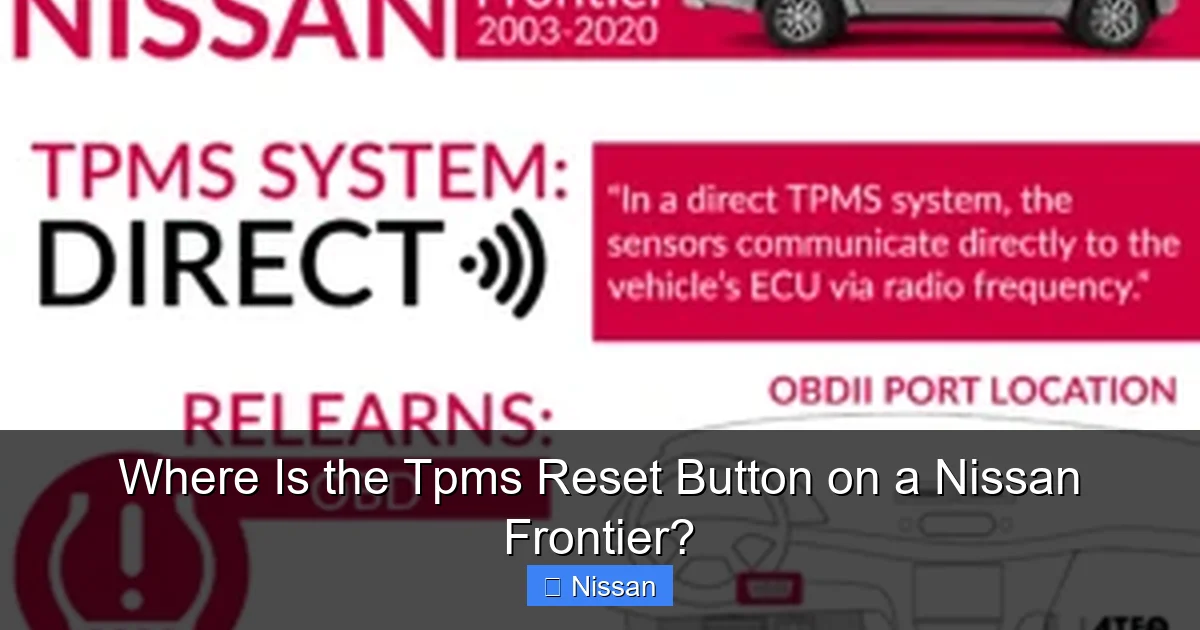
The TPMS in your Frontier works by using sensors mounted inside each tire (usually attached to the valve stem) that transmit real-time pressure data to the vehicle’s onboard computer. When the system detects low pressure, it triggers the warning light. While this feature is incredibly helpful, it can also be a bit finicky—especially after tire rotations, seasonal temperature changes, or replacing a tire. That’s where the TPMS reset button comes in.
Resetting the TPMS isn’t just about turning off a light. It’s about ensuring your vehicle accurately monitors tire pressure going forward. Without a proper reset, the system might continue to show incorrect readings, leaving you unsure whether your tires are safe. Whether you’re a weekend off-roader, a daily commuter, or someone who uses their Frontier for towing, knowing how and when to reset the TPMS is a valuable skill.
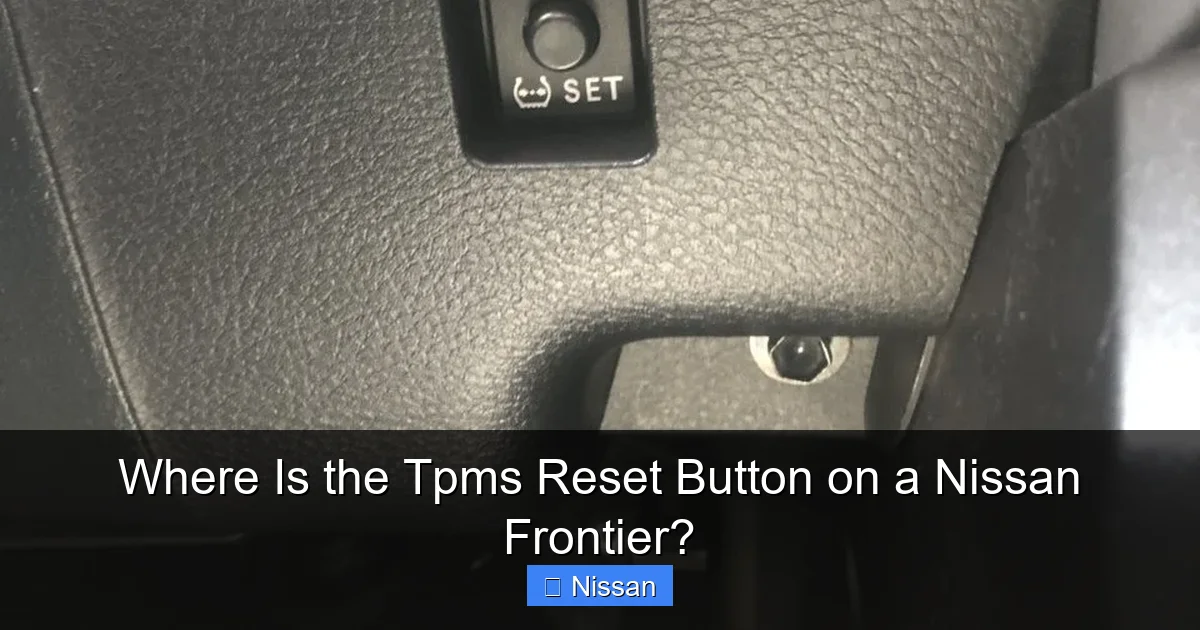
Where Is the TPMS Reset Button on a Nissan Frontier?

Visual guide about Where Is the Tpms Reset Button on a Nissan Frontier?
Image source: vehiclefreak.com
Now, let’s get to the heart of the question: Where is the TPMS reset button on a Nissan Frontier? The answer isn’t always the same across all model years, but there are consistent patterns you can rely on.
For most Nissan Frontier models from 2005 to 2023, the TPMS reset button is located **under the dashboard on the driver’s side**, usually near the steering column or the lower knee panel. It’s a small, often black or gray button, sometimes labeled “SET” or “TPMS.” You may need to crouch down or use a flashlight to spot it, as it’s tucked away in a less visible area.
In some cases, especially on older models (2005–2012), the button might be behind a small access panel or require you to remove a trim piece. On newer models (2013–2023), particularly those with advanced infotainment systems, the reset process might not involve a physical button at all. Instead, you’ll use the vehicle’s dashboard menu or touchscreen to initiate the reset.
Here’s a quick breakdown by model year:
– **2005–2012 Nissan Frontier:** Look for a physical reset button under the dashboard, near the fuse box or steering column. It’s often unmarked but can be identified by its small size and recessed design.
– **2013–2019 Nissan Frontier:** Some models retain the physical button, while others use a combination of ignition and brake pedal presses. Check your owner’s manual for specifics.
– **2020–2023 Nissan Frontier:** These newer models often rely on the instrument cluster or touchscreen menu. There may be no physical reset button at all.
If you can’t find a button, don’t panic. The absence of a physical button doesn’t mean the system is broken—it just means the reset process is different.
How to Locate the Button: A Step-by-Step Visual Guide
To help you find the TPMS reset button, follow these steps:
1. **Turn off the engine** and ensure the vehicle is in park (for automatics) or neutral (for manuals) with the parking brake engaged.
2. **Open the driver’s side door** and kneel down to look under the dashboard.
3. **Look near the steering column**, particularly on the left side (driver’s side), about 6–12 inches above the floor mat.
4. **Scan for a small, round or rectangular button**—usually black or gray—that’s recessed into the panel.
5. **Use a flashlight** if needed, as the area can be dark and cluttered with wires and panels.
6. **Check the owner’s manual** for a diagram. Nissan often includes a detailed illustration of the dashboard and under-dash components.
If you still can’t find it, consider that your model might not have a physical button. In that case, proceed to the menu-based reset method (covered later).
What If There’s No Reset Button?
Not every Nissan Frontier has a physical TPMS reset button. This is especially true for models equipped with the Advanced Drive-Assist Display or the NissanConnect infotainment system. In these cases, the reset is performed through the vehicle’s digital interface.
For example, on a 2021 Nissan Frontier SV with the 8-inch touchscreen, you’d:
– Press the “Settings” button on the steering wheel or screen.
– Navigate to “Vehicle Settings” > “Tire Pressure” > “Reset.”
– Confirm the reset when prompted.
This method is cleaner and more intuitive, but it requires familiarity with the menu system. If you’re unsure, consult your owner’s manual or visit a Nissan dealer for assistance.
Step-by-Step Guide to Resetting the TPMS on a Nissan Frontier
Visual guide about Where Is the Tpms Reset Button on a Nissan Frontier?
Image source: alligator-tpms.com
Now that you know where to look, let’s walk through the actual reset process. The steps vary slightly depending on your model year, but the core principles remain the same.
For Models with a Physical Reset Button (2005–2012, some 2013–2019)
Follow these steps carefully:
1. **Ensure all tires are properly inflated** to the recommended PSI (found on the driver’s side door jamb sticker).
2. **Turn the ignition to the “ON” position** (do not start the engine).
3. **Locate the TPMS reset button** under the dashboard.
4. **Press and hold the reset button** for about 3–5 seconds until the TPMS light blinks three times.
5. **Release the button** and wait for the system to recalibrate.
6. **Drive the vehicle** at speeds above 15 mph for at least 10 minutes to allow the sensors to relearn the tire positions.
After completing these steps, the TPMS light should turn off. If it remains on, repeat the process or check for sensor issues.
For Models Without a Physical Button (2013–2023, menu-based systems)
If your Frontier uses the dashboard or touchscreen menu:
1. **Inflate all tires** to the correct PSI.
2. **Turn the ignition to “ON”** (engine off).
3. **Press the “Menu” or “Settings” button** on the steering wheel or center console.
4. **Navigate to “Vehicle Settings”** > “Tire Pressure” > “Reset.”
5. **Confirm the reset** when prompted.
6. **Drive the vehicle** for 10–15 minutes at moderate speed to complete the relearn process.
Some models may require you to press the brake pedal during the reset. Always refer to your owner’s manual for model-specific instructions.
Alternative Method: Using the Brake Pedal (Common on 2013–2019 Models)
On certain Frontier models, especially those without a clear reset button, you can reset the TPMS using a combination of ignition and brake pedal actions:
1. **Turn the ignition to “ON”** (engine off).
2. **Press and hold the brake pedal** firmly.
3. **Press and hold the TPMS reset button** (if present) or the “SET” button on the instrument panel.
4. **Wait for the TPMS light to flash** three times, then release both.
5. **Drive the vehicle** to complete the relearn cycle.
This method is particularly common on 2015–2019 Frontier models and is often mentioned in the owner’s manual under “Tire Pressure Monitor System Reset.”
Common Mistakes to Avoid When Resetting TPMS
Visual guide about Where Is the Tpms Reset Button on a Nissan Frontier?
Image source: ateq-tpms.com
Even with the right steps, it’s easy to make mistakes that prevent a successful reset. Here are some common pitfalls and how to avoid them:
1. Not Inflating Tires to the Correct PSI
One of the most frequent errors is attempting a reset with underinflated tires. The TPMS system won’t reset properly if any tire is below the recommended pressure. Always check the door jamb sticker for the correct PSI (usually around 33–35 PSI for most Frontier models) and use a reliable tire gauge.
2. Forgetting to Drive After the Reset
The reset process doesn’t end when the light turns off. Most TPMS systems require a “relearn” phase where the vehicle drives at a certain speed (usually 15–20 mph) for 10–15 minutes. This allows the sensors to communicate their positions to the computer. Skipping this step can cause the light to come back on.
3. Using the Wrong Ignition Position
Some owners try to reset the TPMS with the engine running. This won’t work. Always turn the ignition to “ON” (dashboard lights on) but leave the engine off. Starting the engine can interfere with the reset signal.
4. Pressing the Button Too Briefly or Too Long
Holding the reset button for too short a time may not trigger the reset. Holding it too long (over 10 seconds) can cause the system to enter a different mode. Aim for 3–5 seconds, or until the light blinks.
5. Ignoring Sensor Battery Life
TPMS sensors are powered by small batteries that last 5–10 years. If your Frontier is older and the TPMS light won’t reset despite correct procedures, one or more sensors may have a dead battery. This requires professional replacement.
6. Assuming All Models Are the Same
Don’t assume your friend’s 2010 Frontier reset method will work on your 2022 model. Nissan has changed the TPMS system over the years. Always check your owner’s manual or consult a Nissan technician if you’re unsure.
Troubleshooting Persistent TPMS Issues
Sometimes, even after a proper reset, the TPMS light remains on. This doesn’t always mean you did something wrong—it could indicate a deeper issue.
When the Light Won’t Turn Off
If the TPMS light stays on after a reset, consider these possibilities:
– **One or more sensors are faulty:** Sensors can fail due to age, damage, or corrosion. A professional scan tool can diagnose which sensor is malfunctioning.
– **Temperature fluctuations:** Cold weather can cause tire pressure to drop, triggering the light. Inflate tires and reset again when temperatures stabilize.
– **Aftermarket wheels or tires:** Some aftermarket setups aren’t compatible with factory TPMS sensors. You may need to install new sensors or use a TPMS bypass module.
– **System needs a hard reset:** In rare cases, disconnecting the battery for 10–15 minutes can reset the entire electrical system, including TPMS.
When to Visit a Mechanic
You should seek professional help if:
– The TPMS light flashes and stays on (indicating a system malfunction).
– You’ve replaced a tire and the light won’t reset.
– You suspect a sensor is damaged or dead.
– You’re uncomfortable performing the reset yourself.
A certified Nissan technician can run a diagnostic scan, check sensor signals, and replace faulty components if needed.
Tips for Maintaining Your TPMS System
Prevention is always better than repair. Here are some best practices to keep your TPMS working smoothly:
Check Tire Pressure Monthly
Even with TPMS, it’s wise to manually check tire pressure once a month. Sensors can fail, and the system only alerts you after a significant pressure drop. Use a digital tire gauge for accuracy.
Rotate Tires Regularly
Tire rotation is essential for even wear, but it can confuse the TPMS if not reset afterward. Always reset the system after rotating tires.
Replace Sensors When Needed
If a sensor fails, don’t ignore it. Driving with a faulty sensor means you lose real-time pressure monitoring. Most sensors cost $50–$100 each, plus installation.
Use OEM or Compatible Sensors
When replacing sensors, use OEM (Original Equipment Manufacturer) parts or high-quality aftermarket sensors that are compatible with your Frontier’s system.
Keep the Owner’s Manual Handy
Your owner’s manual is the most reliable source for TPMS information. Store it in the glove box and refer to it whenever you’re unsure.
Conclusion: Stay Safe and Informed
Knowing where the TPMS reset button on a Nissan Frontier is—and how to use it—is a small but important part of vehicle ownership. Whether you’re dealing with a physical button under the dashboard or a menu-based system on the touchscreen, the process is straightforward once you understand your model’s specifics.
Remember, the TPMS is there to protect you. It alerts you to potential tire issues before they become dangerous. By resetting it correctly and maintaining your tires, you’ll enjoy better fuel economy, longer tire life, and safer drives—whether you’re cruising the highway or tackling off-road trails.
Don’t let a blinking TPMS light stress you out. With this guide, you’re equipped to handle it like a pro. And if all else fails, your local Nissan dealer is always there to help.
Frequently Asked Questions
Where is the TPMS reset button on a 2010 Nissan Frontier?
The TPMS reset button on a 2010 Nissan Frontier is typically located under the dashboard on the driver’s side, near the steering column. Look for a small, recessed button about 6–12 inches above the floor mat. You may need a flashlight to spot it.
Do all Nissan Frontiers have a TPMS reset button?
No, not all models have a physical reset button. Older models (2005–2012) usually do, but newer models (2013–2023) may use the vehicle’s menu system instead. Check your owner’s manual to confirm.
How long do I need to drive after resetting the TPMS?
After resetting the TPMS, drive your Frontier at speeds above 15 mph for at least 10–15 minutes. This allows the system to relearn the tire sensor positions and complete the calibration.
Why won’t my TPMS light turn off after a reset?
If the light stays on, it could mean a sensor is faulty, a tire is still underinflated, or the system needs more time to relearn. Check tire pressure, ensure proper reset steps were followed, or visit a mechanic for diagnostics.
Can I reset the TPMS without a button?
Yes, on newer models, you can reset the TPMS through the dashboard or touchscreen menu. Navigate to “Vehicle Settings” > “Tire Pressure” > “Reset” and follow the prompts.
Is it safe to drive with the TPMS light on?
Driving with the TPMS light on is not recommended, as it indicates low tire pressure. This can lead to poor handling, reduced fuel efficiency, and increased risk of a blowout. Inflate your tires and reset the system as soon as possible.