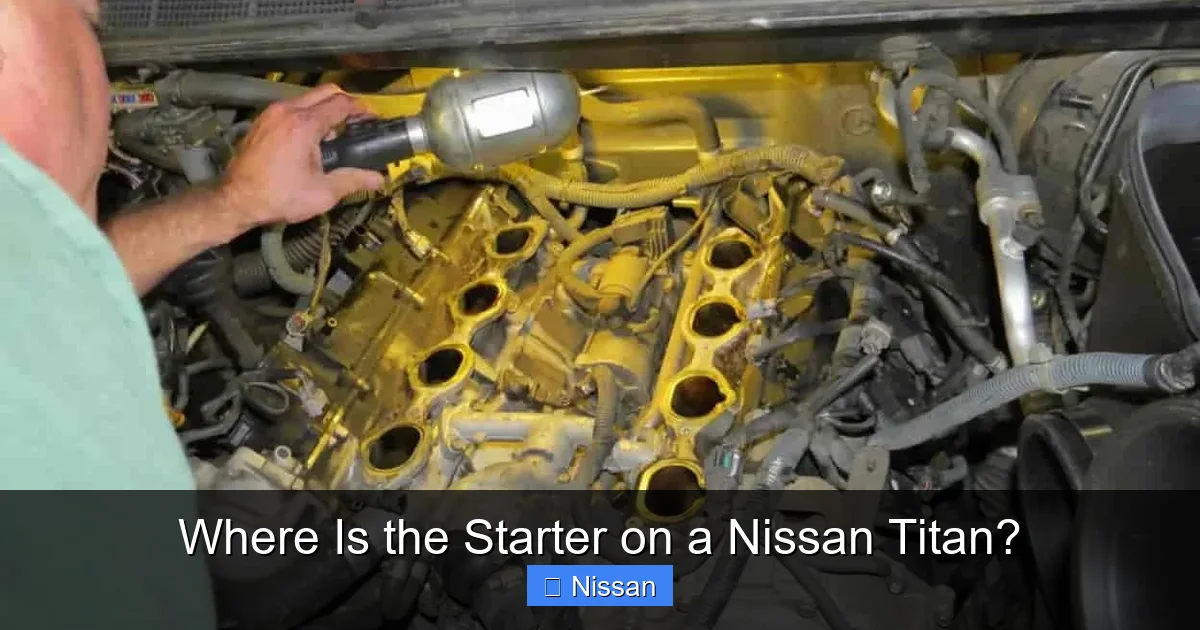
Where Is the Starter on a Nissan Titan?

Contents
- 1 Key Takeaways
- 2 📑 Table of Contents
- 3 Introduction: Why Knowing Your Starter Location Matters
- 4 Understanding the Nissan Titan Starter System
- 5 Where Is the Starter on a Nissan Titan? Exact Location and Access
- 6 Symptoms of a Failing Starter on a Nissan Titan
- 7 Step-by-Step Guide to Replacing the Starter on a Nissan Titan
- 8 Tips for Maintaining Your Nissan Titan Starter
- 9 When to Call a Professional
- 10 Conclusion: Stay Prepared and Informed
- 11 Frequently Asked Questions


Knowing where is the starter on a Nissan Titan can save you time and money during troubleshooting or replacement. This guide walks you through the exact location, common signs of failure, step-by-step removal, and helpful maintenance tips to keep your truck running smoothly.
Key Takeaways
- Location: The starter on a Nissan Titan is typically mounted on the passenger side of the engine block, near the transmission bell housing.
- Access Difficulty: Replacing the starter requires removing the front passenger-side wheel and inner fender liner for better access.
- Symptoms of Failure: Clicking noises, slow cranking, or no response when turning the key often indicate a failing starter.
- Tools Needed: A socket set, jack stands, torque wrench, and basic hand tools are essential for DIY replacement.
- Professional Help: If you’re unsure about electrical connections or torque specs, consult a certified mechanic.
- Preventive Maintenance: Regular inspections and cleaning electrical connections can extend starter life.
- Model Variations: Starter location and access may vary slightly between 2004–2015 and 2016–2024 Titan models.
📑 Table of Contents
- Introduction: Why Knowing Your Starter Location Matters
- Understanding the Nissan Titan Starter System
- Where Is the Starter on a Nissan Titan? Exact Location and Access
- Symptoms of a Failing Starter on a Nissan Titan
- Step-by-Step Guide to Replacing the Starter on a Nissan Titan
- Tips for Maintaining Your Nissan Titan Starter
- When to Call a Professional
- Conclusion: Stay Prepared and Informed
Introduction: Why Knowing Your Starter Location Matters
If you own a Nissan Titan, you know it’s a rugged, dependable full-size pickup built for work and adventure. But like any vehicle, it’s not immune to mechanical issues—and one of the most critical components that can leave you stranded is the starter. Whether you’re dealing with a no-start condition or planning routine maintenance, understanding where is the starter on a Nissan Titan is essential knowledge for any owner.
The starter is the heart of your truck’s ignition system. When you turn the key or press the start button, it sends a powerful electrical signal to crank the engine. Without a functioning starter, your Titan won’t even attempt to start—no matter how much gas or battery power you have. That’s why being able to locate and assess this component quickly can make the difference between a quick fix and a costly tow.
In this comprehensive guide, we’ll walk you through everything you need to know about the Nissan Titan starter. From pinpointing its exact location to diagnosing common problems and performing a DIY replacement, we’ve got you covered. Whether you’re a seasoned DIY mechanic or a first-time Titan owner, this article will give you the confidence to handle starter-related issues with ease.
Understanding the Nissan Titan Starter System
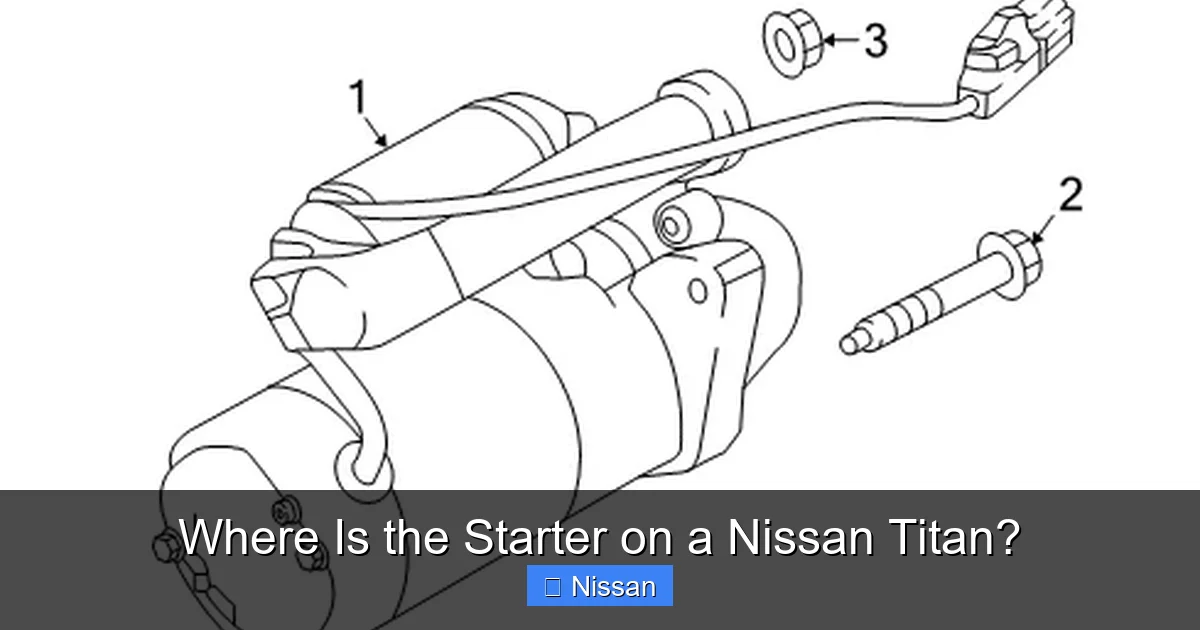
Visual guide about Where Is the Starter on a Nissan Titan?
Image source: nissanpartsdeal.com
Before diving into the physical location, it’s helpful to understand how the starter system works in your Nissan Titan. The starter motor is an electric motor that engages with the engine’s flywheel to turn the crankshaft and begin the combustion process. It’s activated by the ignition switch, which sends power through a relay (often called the starter solenoid) to the motor.
The Titan uses a conventional gear-reduction starter, which is known for its durability and high torque output—perfect for a heavy-duty truck. This type of starter is designed to handle the demands of a V8 engine, especially in cold weather or after long periods of inactivity.
One key feature of the Titan’s starter system is its integration with the vehicle’s security and immobilizer systems. Modern Titans (especially 2016 and newer) have advanced electronics that prevent unauthorized starting. If your truck doesn’t respond at all when you turn the key, it could be due to a faulty starter, a bad relay, or even an issue with the key fob or immobilizer.
How the Starter Interacts with Other Components
The starter doesn’t work in isolation. It’s part of a larger network that includes the battery, alternator, ignition switch, and engine control module (ECM). A weak battery, for example, can mimic starter failure by not providing enough current to turn the motor. Similarly, corroded wiring or loose connections can interrupt the power flow, making the starter seem faulty when the real issue lies elsewhere.
That’s why diagnosing a no-start condition requires a systematic approach. Always check the battery voltage first—ideally, it should be around 12.6 volts when the engine is off. If the battery is good, listen for a clicking sound when you turn the key. A single loud click usually points to a starter issue, while rapid clicking often indicates a weak battery.
Where Is the Starter on a Nissan Titan? Exact Location and Access
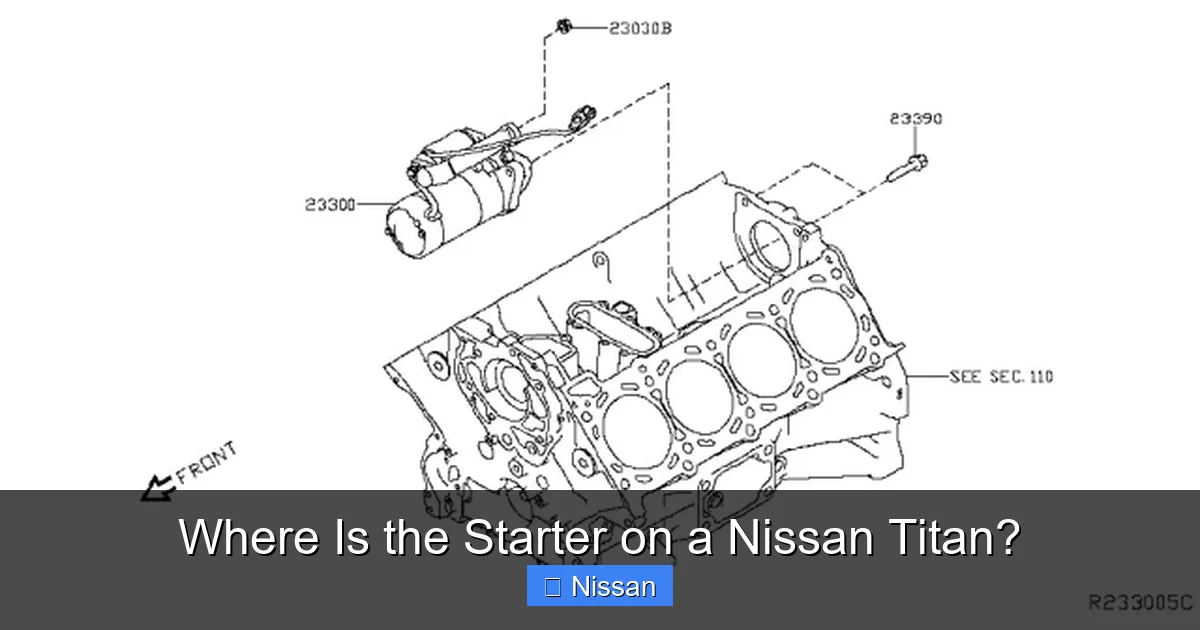
Visual guide about Where Is the Starter on a Nissan Titan?
Image source: nissanpartsdeal.com
Now, let’s get to the heart of the matter: where is the starter on a Nissan Titan? The answer depends slightly on your model year, but the general location remains consistent across most generations.
For the majority of Nissan Titans—especially models from 2004 to 2024—the starter is mounted on the passenger side of the engine block, just above the transmission bell housing. It’s positioned low in the engine bay, near the oil pan, and is typically bolted directly to the engine with two or three mounting bolts.
Visual Identification Tips
To spot the starter, look for a cylindrical or slightly conical metal component with electrical wires connected to it. It’s usually about the size of a large soda can and has a prominent solenoid (a smaller cylindrical unit) attached to one end. The main power cable from the battery connects directly to the solenoid, while a smaller wire links to the ignition system.
On most Titans, you’ll also see a heat shield or protective cover over the starter. This is designed to shield the electrical components from excessive heat generated by the exhaust manifold, which runs close by on the passenger side.
Access Challenges and Solutions
One of the biggest challenges with the Titan’s starter location is accessibility. Because it’s tucked low and behind other components, you can’t easily reach it from the top of the engine bay. In fact, most mechanics recommend removing the front passenger-side wheel and the inner fender liner to gain proper access.
This process involves:
– Safely lifting the truck with a jack and securing it on jack stands
– Removing the lug nuts and taking off the wheel
– Unscrewing the plastic clips or bolts holding the fender liner in place
– Carefully pulling the liner aside to expose the starter area
While this may sound daunting, it’s a common procedure for Titan owners and takes about 30–45 minutes for someone with basic mechanical skills. Having a good set of tools—especially a long extension and universal joint—will make the job much easier.
Symptoms of a Failing Starter on a Nissan Titan
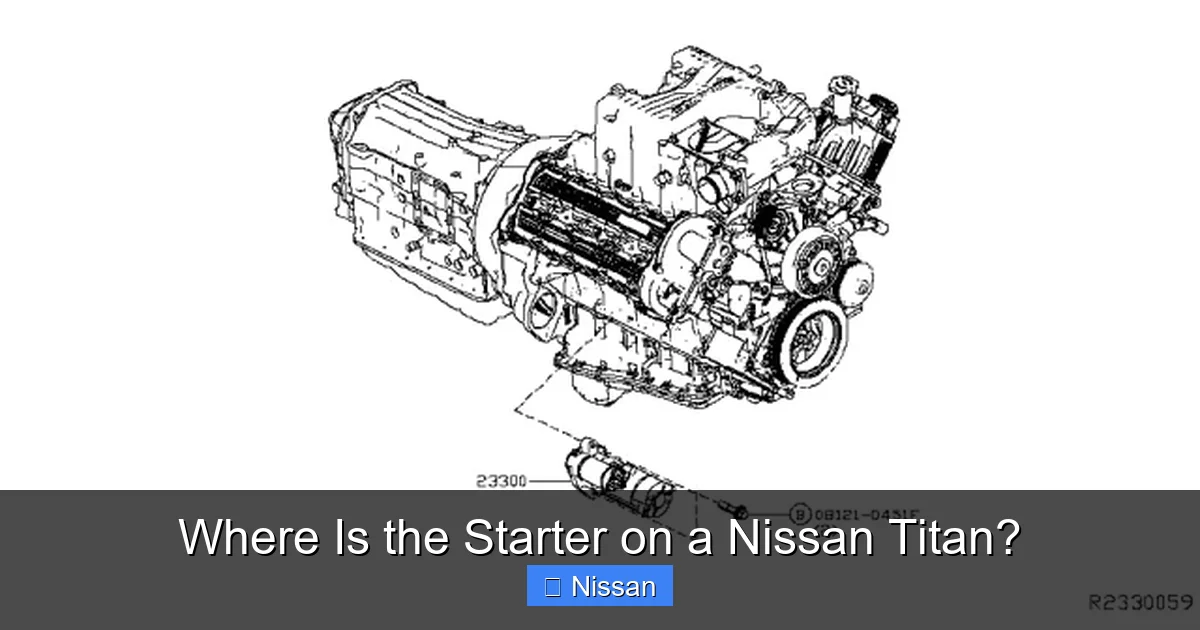
Visual guide about Where Is the Starter on a Nissan Titan?
Image source: nissanpartsdeal.com
Recognizing the signs of a failing starter can help you address the problem before it leaves you stranded. While some symptoms overlap with other issues (like a dead battery), there are telltale clues that point directly to the starter.
Common Warning Signs
One of the most common symptoms is a clicking noise when you turn the key. If you hear a single, loud click but the engine doesn’t crank, the starter solenoid may be engaging, but the motor isn’t spinning. This often indicates worn brushes or a seized armature inside the starter.
Another red flag is slow or labored cranking. If the engine turns over very slowly—especially when cold—it could mean the starter is drawing too much current due to internal wear. This can also strain the battery and alternator over time.
In some cases, the engine may crank normally but not start. While this could be a fuel or ignition issue, a weak starter might not provide enough torque to reach the necessary RPM for combustion.
Intermittent Starting Problems
Intermittent issues are particularly tricky. Your Titan might start fine one day and refuse to turn over the next. This inconsistency often points to loose electrical connections, corroded terminals, or a failing solenoid.
If the problem comes and goes, try tapping the starter gently with a rubber mallet while someone turns the key. If the engine suddenly starts, it’s a strong indication that the starter is on its way out. This “percussive maintenance” trick works because it can temporarily free up stuck internal components—but it’s only a short-term fix.
Electrical vs. Mechanical Failure
It’s important to distinguish between electrical and mechanical starter failure. Electrical issues—like a bad relay, blown fuse, or faulty ignition switch—can mimic starter problems but are often easier and cheaper to fix. Mechanical failure, on the other hand, usually requires a full starter replacement.
To test the electrical side, use a multimeter to check for voltage at the starter solenoid when the key is turned to the “start” position. If power is present but the starter doesn’t engage, the issue is likely internal.
Step-by-Step Guide to Replacing the Starter on a Nissan Titan
Replacing the starter on a Nissan Titan is a manageable DIY project if you have the right tools and a bit of patience. Here’s a detailed, step-by-step guide to help you through the process.
Tools and Materials Needed
Before you begin, gather the following:
– Socket set (including 10mm, 12mm, and 14mm sockets)
– Ratchet and extensions (a 6-inch and 12-inch extension are helpful)
– Universal joint (for tight angles)
– Torque wrench
– Jack and jack stands (or a hydraulic lift)
– Wheel chocks
– Safety glasses and gloves
– New starter (ensure it’s compatible with your Titan’s year and engine)
– Dielectric grease (for electrical connections)
– Wire brush or sandpaper (to clean terminals)
Step 1: Safety First
Always start by disconnecting the negative battery terminal. This prevents accidental short circuits or sparks while working on the electrical system. Use a wrench to loosen the clamp and remove the cable from the battery post.
Next, park your Titan on a flat, level surface and engage the parking brake. Place wheel chocks behind the rear tires to prevent rolling. Then, lift the front passenger side of the truck using a jack and secure it with jack stands. Never rely solely on the jack—safety is paramount.
Step 2: Remove the Wheel and Fender Liner
Use a lug wrench to loosen the lug nuts on the front passenger wheel (don’t remove them yet). Once the truck is lifted, fully remove the lug nuts and take off the wheel.
Now, locate the inner fender liner. It’s held in place by plastic push pins and sometimes small bolts. Use a flathead screwdriver or trim removal tool to gently pop out the pins. Carefully pull the liner away from the wheel well to expose the starter area.
Step 3: Locate and Disconnect the Starter
With the fender liner removed, you should now have a clear view of the starter. Identify the two main electrical connections:
– The large power cable from the battery (usually red, with a nut securing it)
– The smaller ignition wire (often black or yellow, connected with a spade connector)
Use a socket or wrench to loosen the nut on the power cable and carefully remove it. Then, disconnect the smaller ignition wire by pulling it straight off the solenoid.
Next, locate the mounting bolts. Most Titans use two or three bolts (typically 14mm) to secure the starter to the engine block. Use your socket and extension to remove them. Be careful—the starter is heavy and may drop once the bolts are out.
Step 4: Install the New Starter
Before installing the new starter, compare it to the old one to ensure it’s the correct model. Apply a small amount of dielectric grease to the electrical terminals to prevent corrosion.
Position the new starter in place and hand-tighten the mounting bolts. Then, use your torque wrench to tighten them to the manufacturer’s specification—usually around 30–35 ft-lbs. Over-tightening can damage the threads or housing.
Reconnect the electrical wires: first the power cable (tighten the nut securely), then the ignition wire. Double-check all connections to ensure they’re snug and free of debris.
Step 5: Reassemble and Test
Replace the inner fender liner and secure it with the plastic pins. Reinstall the wheel and tighten the lug nuts in a star pattern. Lower the truck from the jack stands and torque the lug nuts to the proper specification (around 100 ft-lbs).
Finally, reconnect the negative battery terminal. Turn the key to the “start” position and listen for a smooth, strong cranking sound. If the engine starts immediately, you’ve successfully replaced the starter.
Tips for Maintaining Your Nissan Titan Starter
While starters are designed to last 100,000 miles or more, proper maintenance can extend their life and prevent unexpected failures.
Regular Inspections
During routine oil changes or tire rotations, take a moment to inspect the starter area. Look for signs of oil leaks, corrosion, or loose wiring. Clean any dirt or debris that may have accumulated around the starter and solenoid.
Keep Electrical Connections Clean
Corrosion on the battery terminals or starter connections can impede current flow. Use a wire brush to clean the terminals periodically, and apply dielectric grease to prevent future buildup.
Avoid Short Trips
Frequent short trips don’t allow the battery to fully recharge, which can strain the starter over time. If possible, take longer drives occasionally to keep the electrical system healthy.
Listen for Changes
Pay attention to how your Titan starts. If you notice slower cranking, unusual noises, or intermittent issues, address them early. Catching a problem before it worsens can save you from a complete breakdown.
When to Call a Professional
While many Titan owners successfully replace their starters at home, there are times when it’s best to leave it to the experts.
If you’re uncomfortable working with electrical systems, lack the proper tools, or encounter unexpected complications (like seized bolts or wiring damage), don’t hesitate to visit a certified mechanic. They have the experience and equipment to diagnose and fix the issue safely and efficiently.
Additionally, if your Titan is still under warranty, DIY repairs could void certain coverage. Always check your warranty terms before attempting major repairs.
Conclusion: Stay Prepared and Informed
Knowing where is the starter on a Nissan Titan is more than just a trivia fact—it’s a practical skill that can save you time, money, and frustration. Whether you’re troubleshooting a no-start condition or planning a preventive replacement, this guide equips you with the knowledge and confidence to handle the job.
From understanding the starter’s role in your truck’s ignition system to locating it beneath the passenger-side wheel well, we’ve covered every step. We’ve also shared tips for diagnosing common issues, performing a safe replacement, and maintaining your starter for long-term reliability.
Remember, regular maintenance and early detection are your best defenses against starter failure. Keep your tools handy, stay alert to changes in your truck’s behavior, and don’t be afraid to seek professional help when needed.
With the right approach, your Nissan Titan will continue to start strong—mile after mile.
Frequently Asked Questions
Where exactly is the starter located on a Nissan Titan?
The starter on a Nissan Titan is mounted on the passenger side of the engine block, just above the transmission bell housing. It’s positioned low in the engine bay and is typically accessed by removing the front passenger wheel and inner fender liner.
Can I replace the starter myself on a Nissan Titan?
Yes, many Titan owners successfully replace the starter themselves with basic tools and mechanical knowledge. However, you’ll need to lift the truck, remove the wheel and fender liner, and work in a tight space. If you’re unsure, consult a professional.
What tools do I need to replace the Nissan Titan starter?
You’ll need a socket set, ratchet, extensions, universal joint, torque wrench, jack and jack stands, and safety gear. A multimeter can also help test electrical connections before and after replacement.
How much does it cost to replace a starter on a Nissan Titan?
A new starter typically costs between $150 and $300, depending on the model year and whether you choose OEM or aftermarket. Labor costs at a shop can add $100–$200, making DIY replacement a cost-effective option.
What are the signs of a bad starter on a Nissan Titan?
Common signs include a clicking noise when turning the key, slow cranking, no response at all, or intermittent starting issues. If the engine cranks but won’t start, the problem may be fuel- or ignition-related rather than starter-related.
Does the starter location differ between Titan model years?
The general location remains the same across most Titan models (2004–2024), but access may vary slightly. Newer models (2016+) may have tighter engine compartments or additional components, making removal a bit more challenging.