
When the Suzuki Swift Sport Was Launched

The Suzuki Swift Sport was first launched in 2005 as a high-performance variant of the popular Swift hatchback, combining sporty design with agile handling. Since then, it has evolved through multiple generations, earning praise for its lightweight build, turbocharged engines, and fun-to-drive character.
Key Takeaways
- First launched in 2005: The Suzuki Swift Sport debuted as a sportier version of the standard Swift, targeting young drivers and performance enthusiasts.
- Lightweight and agile: Known for its compact size and low curb weight, the Swift Sport delivers sharp handling and responsive steering.
- Turbocharged powertrains: Later models, especially from 2018 onward, feature turbocharged engines offering strong performance without sacrificing fuel efficiency.
- Global popularity: The Swift Sport has been sold in over 100 countries, with strong followings in Europe, Asia, and Oceania.
- Evolution through generations: The model has seen three major generations, each improving on performance, technology, and safety features.
- Affordable hot hatch: It remains one of the most budget-friendly performance cars in its class, offering great value for money.
- Discontinued in some markets: As of 2023, the Swift Sport is no longer sold in the UK and some European markets due to stricter emissions regulations, but it remains available elsewhere.
📑 Table of Contents
- When the Suzuki Swift Sport Was Launched: A Complete History
- The Origins of the Suzuki Swift Sport
- The Evolution of the Swift Sport: Generations and Upgrades
- Global Popularity and Market Reception
- Why the Swift Sport Stood Out
- The End of an Era: Discontinuation in Key Markets
- Conclusion: A Legacy of Fun and Freedom
When the Suzuki Swift Sport Was Launched: A Complete History
If you’ve ever driven a Suzuki Swift Sport, you know it’s more than just a small car with a spoiler. It’s a pocket rocket—a compact, zippy hatchback that punches well above its weight. But when exactly did this beloved hot hatch first hit the roads? The answer takes us back to 2005, a pivotal year for Suzuki and for fans of affordable performance cars.
The Suzuki Swift Sport was officially launched in 2005 as a high-performance variant of the standard Suzuki Swift. It was designed to appeal to younger drivers, urban commuters, and anyone who wanted a car that was both practical and fun to drive. Unlike many performance cars that come with a hefty price tag, the Swift Sport offered an accessible entry point into the world of sporty driving. With its bold styling, upgraded suspension, and a more powerful engine, it quickly gained attention across Europe and Asia.
What made the Swift Sport stand out wasn’t just its speed—it was the way it made driving feel alive. The car was light, nimble, and incredibly responsive. Whether you were zipping through city streets or carving up a winding country road, the Swift Sport delivered a sense of joy that few cars in its class could match. And because it was based on the regular Swift, it retained everyday usability—good fuel economy, decent cargo space, and a comfortable ride when needed.
The Origins of the Suzuki Swift Sport
Visual guide about When the Suzuki Swift Sport Was Launched
Image source: img.indianautosblog.com
To truly understand when the Suzuki Swift Sport was launched, we need to look at the broader context of the Suzuki Swift lineup. The original Swift, known as the Cultus in some markets, first appeared in the early 1980s. Over the decades, it evolved into a global favorite, known for its reliability, affordability, and compact design. By the early 2000s, Suzuki was looking to inject more excitement into the Swift brand.
That’s where the Swift Sport came in. The idea was simple: take the already popular Swift and turn it into a sportier, more dynamic version. Suzuki wanted to compete with other small performance cars like the Ford Fiesta ST, Volkswagen Polo GTI, and Honda Jazz Sport. But instead of going all-out with a high-displacement engine or all-wheel drive, Suzuki focused on what it did best—lightweight engineering and efficient design.
The 2005 Debut: A New Era for Hot Hatches
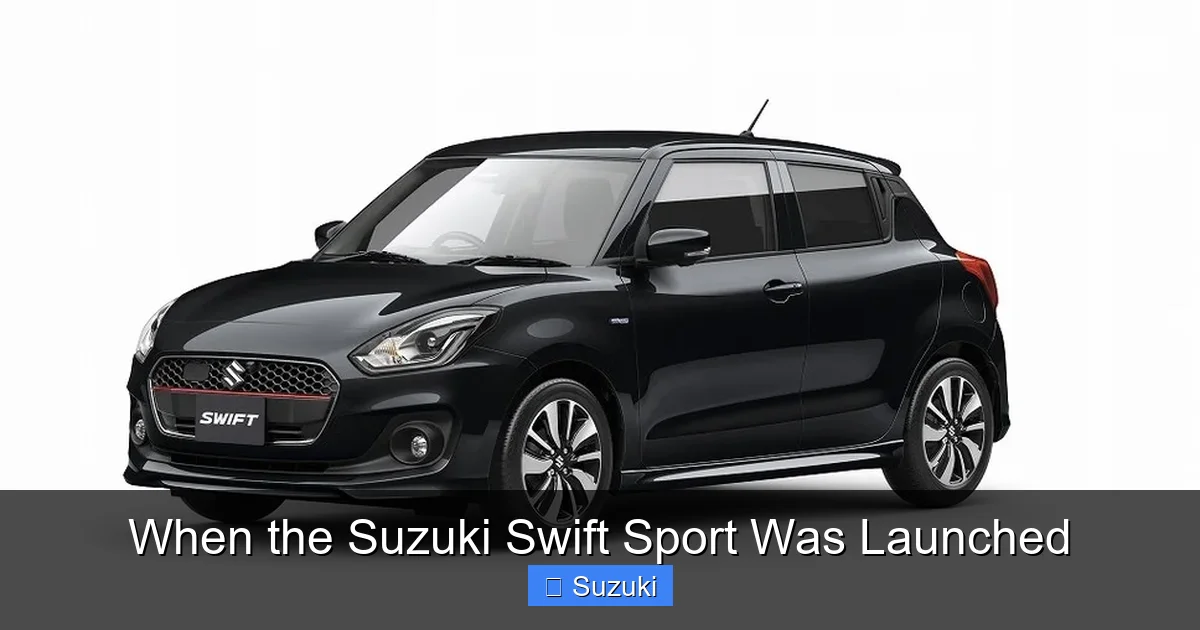
The Suzuki Swift Sport made its global debut in 2005, first appearing in Japan and then rolling out across Europe and other markets. It was based on the second-generation Swift (codenamed ZC), which had just been redesigned with a more modern look and improved build quality. The Sport version took that foundation and added a host of performance and styling upgrades.
Under the hood, the first-generation Swift Sport featured a 1.6-liter naturally aspirated inline-4 engine, producing around 125 horsepower. While that might not sound like much by today’s standards, it was more than enough to make the car feel lively, especially given its curb weight of just over 1,000 kg (about 2,200 lbs). The power was sent to the front wheels via a 5-speed manual transmission, which was praised for its precise shift action.
But the engine was only part of the story. Suzuki also upgraded the suspension, adding stiffer springs, revised dampers, and a lower ride height. The result was a car that hugged corners with confidence and felt planted even at higher speeds. Steering was sharp and communicative, giving drivers a real sense of connection to the road.
Design and Styling: Sporty Without Being Over the Top
One of the Swift Sport’s strengths has always been its balanced design. It looks sporty without being garish. The 2005 model featured a more aggressive front bumper with larger air intakes, side skirts, a rear spoiler, and unique 16-inch alloy wheels. The interior got sport seats with better bolstering, a leather-wrapped steering wheel, and aluminum pedals.
What’s impressive is how Suzuki managed to keep the car practical. The rear seats still folded down for extra cargo space, and the cabin remained quiet and comfortable for daily use. This blend of performance and practicality helped the Swift Sport stand out in a crowded market.
The Evolution of the Swift Sport: Generations and Upgrades
Visual guide about When the Suzuki Swift Sport Was Launched
Image source: images.carexpert.com.au
Since its launch in 2005, the Suzuki Swift Sport has gone through several updates and generational changes. Each iteration brought improvements in performance, technology, and safety, while staying true to the car’s core philosophy: lightweight, fun, and affordable.
Second Generation (2009–2017): Refinement and Reliability
The second-generation Swift Sport arrived in 2009, based on the third-generation Swift platform. This version featured a completely redesigned body with sharper lines, a more aerodynamic shape, and improved interior materials. The 1.6-liter engine was carried over but received minor tweaks for better efficiency and smoother power delivery.
One of the key improvements was the introduction of a 6-speed manual transmission, which allowed for better highway cruising and slightly improved fuel economy. The suspension was also retuned for a more balanced ride—firmer than the standard Swift, but not as harsh as some competitors.
This generation was also notable for its reliability. Many owners reported trouble-free driving for well over 100,000 miles with regular maintenance. It became a favorite among driving enthusiasts who wanted a no-nonsense performance car that didn’t break the bank.
Third Generation (2018–2023): Turbocharged Thrills
The most significant leap came in 2018 with the launch of the third-generation Swift Sport. This was a complete redesign, built on Suzuki’s new HEARTECT platform, which emphasized lightweight construction and improved rigidity. The new model was lighter, safer, and more efficient than ever before.
The biggest change was under the hood. Suzuki ditched the naturally aspirated 1.6-liter engine in favor of a 1.4-liter Boosterjet turbocharged inline-4. This engine produced 138 horsepower and 173 lb-ft of torque—significantly more than the previous model, especially in the low and mid-range. The turbocharger gave the car a much broader power band, making it feel quicker off the line and more responsive during overtaking.
The 2018 Swift Sport also came with a 6-speed manual or an optional 6-speed automatic transmission. The automatic was a dual-clutch unit that offered quick shifts and paddle shifters for a more engaging drive. Despite the added tech, the car remained light, tipping the scales at just 1,025 kg (about 2,260 lbs)—lighter than many of its rivals.
Technology and Safety Upgrades
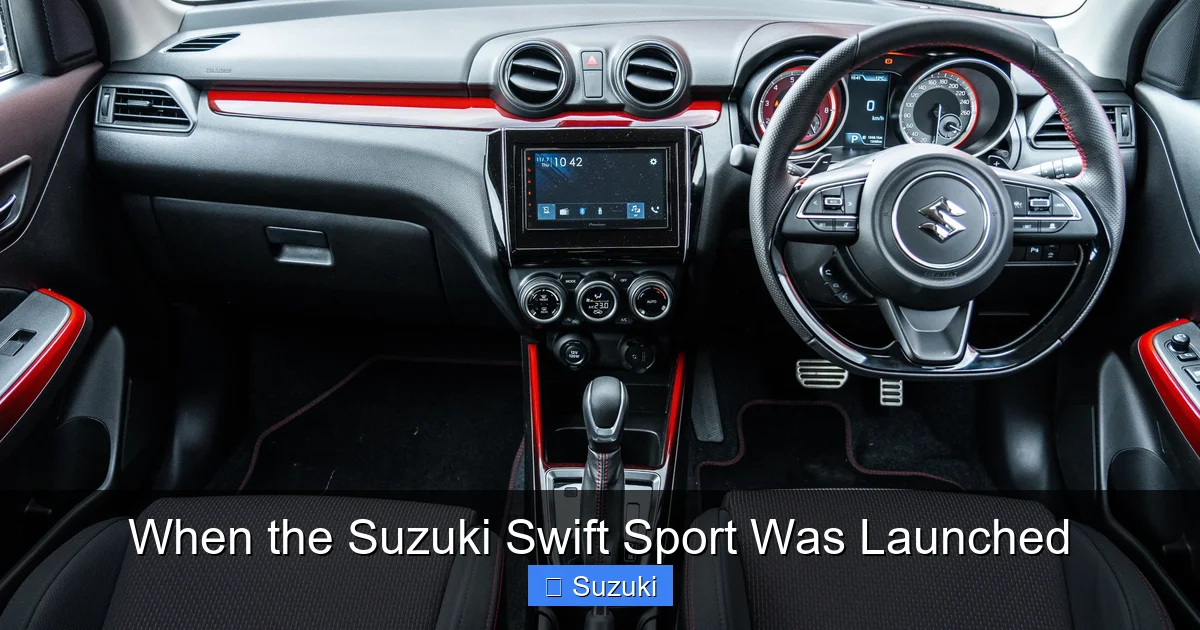
As the Swift Sport evolved, so did its technology. The third-generation model introduced a 7-inch touchscreen infotainment system with Apple CarPlay and Android Auto, a big step up from the basic audio systems of earlier versions. Higher trim levels also offered features like dual-zone climate control, a reversing camera, and keyless entry.
Safety was another area of improvement. The 2018 model earned a 5-star Euro NCAP safety rating, thanks to features like six airbags, electronic stability control, and advanced driver assistance systems such as lane departure warning and adaptive cruise control (on automatic models).
Global Popularity and Market Reception
Visual guide about When the Suzuki Swift Sport Was Launched
Image source: carscoops.com
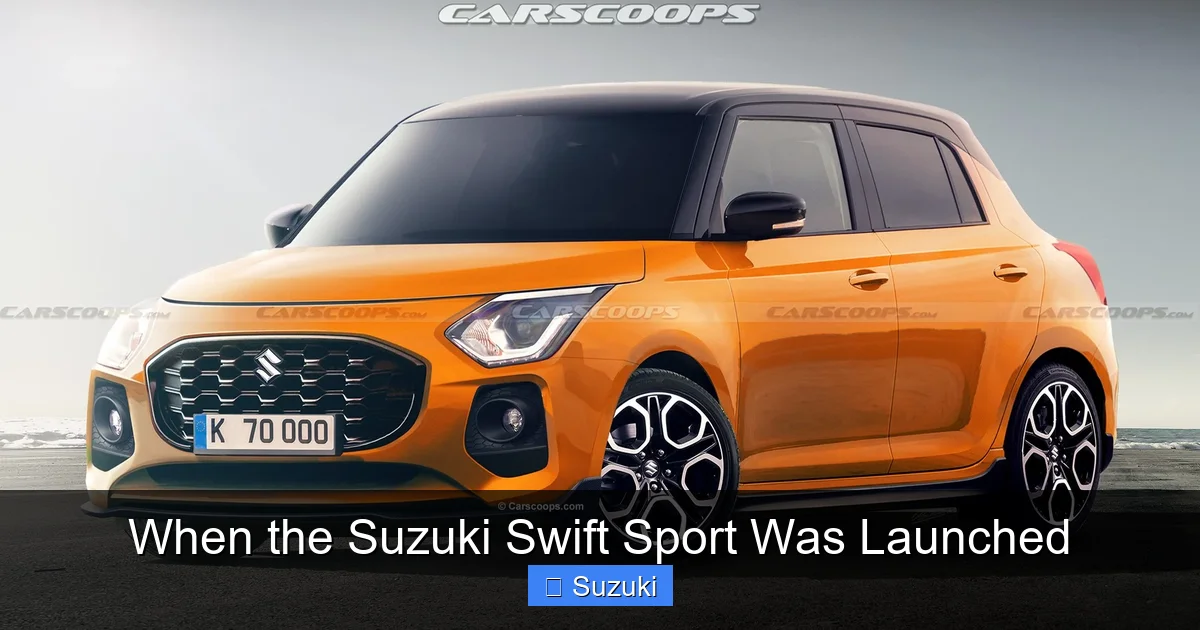
The Suzuki Swift Sport wasn’t just a hit in Japan or Europe—it found fans all over the world. It was sold in over 100 countries, including Australia, New Zealand, India, and parts of Africa and South America. Its combination of affordability, reliability, and driving fun made it a favorite among young drivers, first-time performance car buyers, and even seasoned enthusiasts looking for a second car.
Europe: A Hot Hatch Favorite
In Europe, the Swift Sport competed directly with cars like the Ford Fiesta ST, Renault Clio RS, and Volkswagen Polo GTI. While it didn’t have the outright power of some rivals, it made up for it with its lightweight design and nimble handling. Many reviewers praised its balance and driver engagement, calling it one of the most fun-to-drive cars in its class.
The car was particularly popular in the UK, Germany, and Italy, where compact performance cars have a strong following. Suzuki often offered special edition models, such as the “Championship Edition” or “Limited Edition,” with unique paint colors, interior trim, and badging.
Asia and Oceania: Practical Performance
In markets like Australia and New Zealand, the Swift Sport was marketed as a practical yet sporty option for urban and suburban drivers. It was often compared to the Mazda2 and Toyota Yaris, but with a clear performance edge. The turbocharged engine and manual transmission were especially appreciated by driving purists.
In India, the Swift Sport was sold as the “Swift Sport Turbo” and became a cult classic among car enthusiasts. Despite higher import taxes making it relatively expensive, it developed a loyal fanbase who appreciated its engineering and driving dynamics.
Why the Swift Sport Stood Out
So what made the Suzuki Swift Sport so special? Why did it earn a place in the hearts of so many drivers? The answer lies in its unique combination of qualities that are rare in the automotive world.
Lightweight Engineering
One of the Swift Sport’s biggest advantages has always been its weight. Suzuki has consistently prioritized lightweight construction, using high-strength steel and smart design to keep the car light without sacrificing safety or rigidity. This low weight translates directly into better acceleration, braking, and cornering.
For example, the 2018 Swift Sport weighed about 100 kg less than the Ford Fiesta ST, despite having similar power. That difference is felt immediately behind the wheel—the Swift feels more eager to turn in, more responsive to steering inputs, and more playful overall.
Driver Engagement
Unlike many modern cars that are tuned for comfort and ease, the Swift Sport was designed to engage the driver. The steering is hydraulic (in earlier models) or electric with a sporty feel, offering good feedback and precision. The manual transmission has a short, crisp shift action that makes gear changes a joy.
The suspension is firm but not punishing, allowing the car to communicate what’s happening at the tires without beating up your spine. It’s a car that rewards skilled driving, whether you’re on a twisty backroad or just commuting to work.
Affordability and Value
Perhaps the Swift Sport’s greatest strength is its value. It has always been priced lower than most of its competitors. For example, when the 2018 model launched, it cost around £18,000 in the UK—significantly less than the £22,000+ Fiesta ST. Yet it offered similar performance and even better fuel economy.
Ownership costs were also low. Insurance groups were reasonable, fuel economy was excellent (around 45 mpg combined), and maintenance was straightforward thanks to Suzuki’s reliable engineering. This made it an ideal choice for students, young professionals, and anyone on a budget who still wanted a fun car.
The End of an Era: Discontinuation in Key Markets
Despite its popularity, the Suzuki Swift Sport faced challenges in the late 2010s and early 2020s. Stricter emissions regulations, especially in Europe, made it difficult for small-displacement turbo engines to meet new standards without costly modifications. In 2020, Suzuki announced that the Swift Sport would be discontinued in the UK and several European markets.
The decision was met with disappointment from fans, many of whom saw the Swift Sport as one of the last true driver’s cars in its class. While the standard Swift continues to be sold, the Sport variant is no longer available in many regions. However, it remains on sale in countries like Australia, Japan, and parts of Asia, where emissions rules are less strict.
What’s Next for the Swift Sport?
There’s always hope for a comeback. Suzuki has not ruled out a future return of the Swift Sport, possibly with a hybrid or mild-hybrid powertrain to meet emissions standards. In fact, the brand has been investing in electrification, with hybrid versions of the Swift already available in some markets.
A hybrid Swift Sport could combine the best of both worlds: the lightweight, agile chassis of the original with modern efficiency and performance. If Suzuki can pull it off, the next generation could be even more exciting.
Conclusion: A Legacy of Fun and Freedom
When the Suzuki Swift Sport was launched in 2005, it wasn’t just another car—it was a statement. A statement that performance didn’t have to be expensive, that driving could be fun without being impractical, and that small cars could still have big personalities.
Over nearly two decades, the Swift Sport has evolved, improved, and won over countless drivers with its blend of agility, affordability, and charm. It may no longer be available in every market, but its legacy lives on in every smile it put on a driver’s face.
Whether you’re a longtime fan or just discovering the Swift Sport for the first time, one thing is clear: this little hot hatch left a big mark on the automotive world. And who knows? With the rise of electrification and a renewed focus on driving enjoyment, the Swift Sport might just make a comeback when the time is right.
Frequently Asked Questions
When was the Suzuki Swift Sport first launched?
The Suzuki Swift Sport was first launched in 2005 as a high-performance variant of the standard Swift hatchback. It debuted in Japan and quickly expanded to Europe and other global markets.
What engine did the original Swift Sport have?
The first-generation Swift Sport (2005–2009) was powered by a 1.6-liter naturally aspirated inline-4 engine producing around 125 horsepower. It was paired with a 5-speed manual transmission.
When did the turbocharged Swift Sport come out?
The turbocharged version of the Swift Sport was introduced in 2018 with the third-generation model. It featured a 1.4-liter Boosterjet turbo engine producing 138 horsepower and 173 lb-ft of torque.
Is the Suzuki Swift Sport still in production?
The Swift Sport was discontinued in the UK and several European markets in 2020 due to emissions regulations. However, it remains available in countries like Australia, Japan, and parts of Asia.
How much did the Swift Sport cost when it launched?
At launch in 2005, the Swift Sport was priced competitively, typically starting around £14,000–£16,000 in the UK. The 2018 model started at approximately £18,000, offering strong value compared to rivals.
What made the Swift Sport different from other hot hatches?
The Swift Sport stood out for its lightweight design, agile handling, and affordability. It prioritized driver engagement and fun over outright power, making it a favorite among enthusiasts who valued driving dynamics.
