
Why the Windshield Is So Important for Your Car

Your car’s windshield is far more than a piece of glass—it’s a vital safety component that protects you in crashes, supports your roof, and keeps airbags working right. Ignoring cracks or damage can put you and your passengers at serious risk.
When you think about car safety, your mind probably jumps to seat belts, airbags, or anti-lock brakes. But there’s one part of your vehicle that quietly plays a huge role in keeping you safe every single time you drive—the windshield. Yes, that big sheet of glass at the front of your car. It might seem simple, but the windshield is so important for your car that it’s considered a critical safety feature by engineers and safety experts alike.
Most drivers see the windshield as just a barrier against wind and bugs. But in reality, it’s a high-tech, multi-layered component designed to do much more than keep rain out of your eyes. From supporting your car’s roof during a rollover to helping airbags inflate properly, the windshield is a silent hero in your vehicle’s safety system. And if it’s cracked, chipped, or improperly installed, that hero can’t do its job.
In this article, we’ll explore why the windshield is so important for your car—not just for comfort, but for survival. We’ll break down its role in crash protection, structural integrity, visibility, and even cabin comfort. Whether you’re a daily commuter or a weekend road-tripper, understanding your windshield’s true value can help you make smarter decisions about maintenance, repairs, and replacements.
Key Takeaways
- Structural Support: The windshield contributes up to 40% of a vehicle’s structural strength in a rollover, helping prevent roof collapse.
- Airbag Deployment: Front airbags rely on the windshield as a backstop to deploy correctly and protect occupants during a crash.
- Impact Protection: A properly installed windshield helps absorb and distribute crash forces, reducing injury risk.
- Visibility and Clarity: A clean, undamaged windshield ensures clear vision, especially in rain, glare, or nighttime driving.
- Weather and Debris Defense: It shields you from wind, rain, snow, insects, rocks, and other road hazards.
- Noise Reduction: Modern windshields are designed to reduce wind and road noise for a quieter, more comfortable ride.
- UV Protection: Many windshields block harmful UV rays, protecting your skin and preventing interior fading.
📑 Table of Contents
The Windshield as a Structural Component
You might be surprised to learn that your windshield isn’t just glued on—it’s actually a key part of your car’s frame. Modern vehicles are engineered with something called a “safety cage” or “passenger compartment,” designed to protect occupants during a crash. The windshield plays a major role in maintaining the strength and shape of this cage, especially during rollovers.
How the Windshield Supports the Roof
In the event of a rollover—one of the most dangerous types of accidents—the roof must resist crushing to keep the cabin intact. Studies show that the windshield can contribute up to 40% of a vehicle’s structural rigidity in such scenarios. Without a properly installed and intact windshield, the roof is far more likely to collapse, increasing the risk of serious injury or death.
Think of it like a tent. The poles hold the fabric up. If one pole breaks, the whole structure sags. The windshield acts like one of those poles—supporting the roof and helping distribute the force of impact across the vehicle’s frame. This is why even small cracks or chips can weaken the windshield’s structural integrity over time.
Impact on Crash Performance
During a frontal collision, the windshield helps absorb and redirect energy away from the passenger compartment. It works in tandem with the car’s frame, airbags, and seat belts to slow down the occupants gradually, reducing the force they experience.
For example, in a crash at 30 mph, the human body can experience forces equivalent to being hit by a small truck. The windshield, along with other safety systems, helps manage that energy. If the windshield is compromised—say, from a large crack or poor installation—it may not hold up under stress, leading to partial or complete failure during impact.
Why Installation Matters
Not all windshield replacements are created equal. A poorly installed windshield can lose up to 70% of its structural strength. That’s why it’s crucial to use certified technicians and high-quality urethane adhesives when replacing a windshield. Cheap or DIY fixes might save money upfront, but they can put your life at risk.
Always check that the replacement windshield meets OEM (Original Equipment Manufacturer) standards. This ensures it’s designed specifically for your vehicle’s make and model, providing the right fit and performance.
Windshield and Airbag Safety

Visual guide about Why the Windshield Is So Important for Your Car
Image source: autodeal.com.ph
One of the most overlooked roles of the windshield is its partnership with your car’s airbags. You might think airbags just pop out of the dashboard or steering wheel—but they need something solid to push against. That’s where the windshield comes in.
The Windshield as an Airbag Backstop
Front passenger airbags are designed to deploy upward and outward, then bounce off the windshield to cushion the occupant. Without a stable windshield, the airbag can’t form the proper protective cushion. In some cases, a weak or improperly installed windshield can even cause the airbag to deploy incorrectly—either too slowly, too weakly, or in the wrong direction.
Imagine a trampoline. If the frame is wobbly, the bounce won’t work right. The windshield acts like that frame—providing a solid surface for the airbag to rebound off. This helps position the airbag correctly between the passenger and the dashboard, reducing the risk of head and chest injuries.
Real-World Consequences of Failure
There have been documented cases where faulty windshield installations led to airbag malfunctions during crashes. In one incident, a driver survived a high-speed collision but suffered severe facial injuries because the airbag didn’t deploy properly due to a loose windshield. The airbag deployed, but instead of cushioning the impact, it pushed against a shifting windshield, reducing its effectiveness.
This is why automakers and safety organizations stress the importance of professional windshield installation. It’s not just about visibility—it’s about ensuring all safety systems work together as intended.
Advanced Airbag Systems and Windshield Integration
Modern vehicles often come with advanced airbag systems, including side curtain airbags and knee airbags. These systems rely on sensors and precise timing to deploy correctly. The windshield helps maintain the structural integrity needed for these systems to function.
For instance, side curtain airbags deploy from the roof rail and need a stable cabin structure to unfold properly. If the windshield is compromised, the roof may flex or collapse, interfering with the airbag’s deployment path.
Visibility and Driving Safety
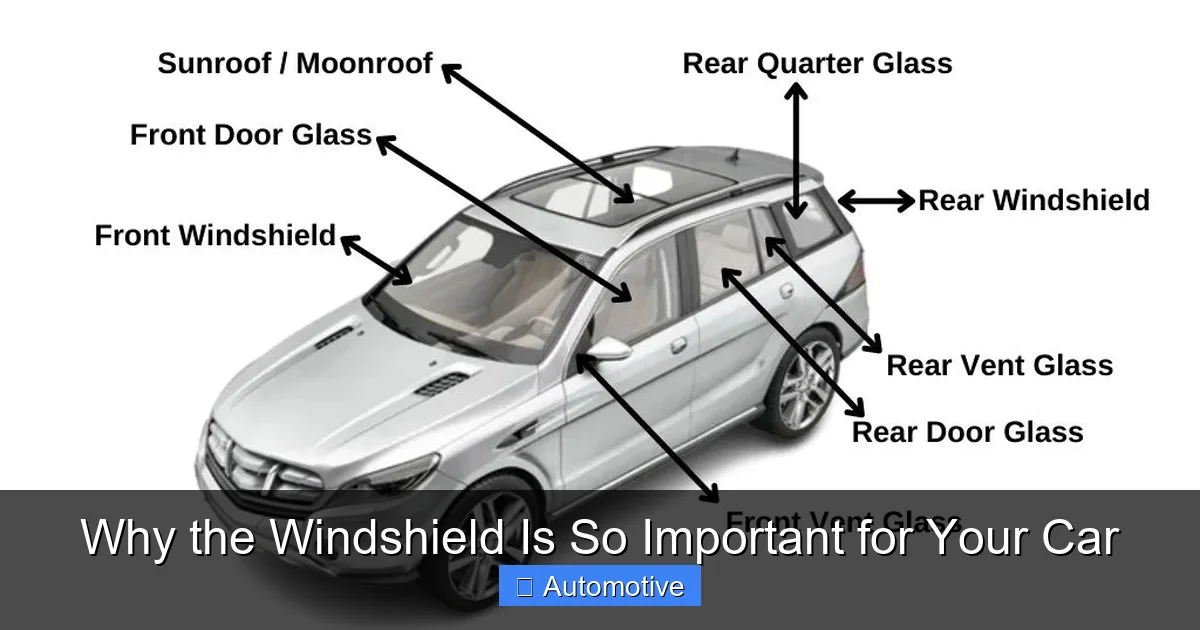
Visual guide about Why the Windshield Is So Important for Your Car
Image source: glassfixitauto.com
Let’s not forget the most obvious function of the windshield: giving you a clear view of the road. But visibility isn’t just about seeing—it’s about seeing clearly, safely, and without distraction.
Clarity in All Conditions
A clean, undamaged windshield is essential for safe driving. Cracks, chips, and scratches can distort your vision, especially when sunlight hits them at certain angles. This can create glare, blind spots, or even double images—making it harder to judge distances or spot hazards.
For example, a small chip near the driver’s line of sight might seem harmless, but over time, it can spread into a crack that blocks your view of a traffic light or pedestrian. In rain or fog, a dirty or streaky windshield can make it nearly impossible to see, increasing the risk of accidents.
Impact of Weather and Road Debris
Your windshield is your first line of defense against the elements. It keeps rain, snow, and wind out of the cabin, allowing you to drive comfortably and safely. But it also protects you from flying debris—like rocks kicked up by other vehicles.
A single pebble hitting your windshield at highway speeds can cause a chip or crack. While small damage might seem minor, it can quickly grow due to temperature changes, vibrations, or pressure from the car’s frame. That’s why it’s important to repair chips as soon as they happen.
Night Driving and Glare Reduction
Modern windshields often include tinting or coatings to reduce glare from headlights, streetlights, and the sun. This helps reduce eye strain and improves nighttime visibility. Some high-end models even feature electrochromic glass that automatically dims to reduce glare.
But if your windshield is damaged or poorly maintained, these features can be compromised. Scratches or haze from old wiper blades can scatter light, making it harder to see in low-light conditions.
Windshield and Passenger Comfort

Visual guide about Why the Windshield Is So Important for Your Car
Image source: i0.wp.com
Beyond safety, the windshield contributes significantly to your driving comfort. It’s not just about protection—it’s about creating a pleasant, quiet, and climate-controlled environment inside your car.
Noise Reduction
Wind noise can be a major source of fatigue on long drives. Modern windshields are designed with acoustic interlayers—thin layers of sound-dampening material sandwiched between glass panels. These help reduce wind roar and road noise, making your ride quieter and more relaxing.
For example, luxury vehicles often use double-pane or laminated acoustic glass to create a near-silent cabin. Even in economy cars, a well-sealed windshield helps keep noise levels down.
Temperature and Climate Control
The windshield also plays a role in regulating cabin temperature. In summer, it can block a significant amount of solar heat, reducing the load on your air conditioning. In winter, it helps retain warmth inside the car.
Many windshields now include infrared-reflective coatings that deflect heat without reducing visibility. This keeps the interior cooler and reduces UV exposure, which brings us to our next point.
UV Protection
Prolonged exposure to UV rays can cause skin damage and increase the risk of skin cancer. Windshields are typically made with laminated glass that blocks up to 99% of UV radiation. This protects both you and your passengers, especially on long drives.
Additionally, UV protection helps preserve your car’s interior. Without it, sunlight can fade upholstery, crack dashboards, and damage electronics over time.
Maintenance and Repair Tips
Now that you know why the windshield is so important for your car, it’s clear that proper maintenance is essential. Ignoring small issues can lead to bigger problems—and bigger risks.
When to Repair vs. Replace
Not all windshield damage requires a full replacement. Small chips (usually under the size of a quarter) and cracks shorter than three inches can often be repaired, especially if they’re not in the driver’s direct line of sight.
Repairs involve injecting a special resin into the damaged area, which is then cured and polished. This restores strength and clarity, often preventing the damage from spreading.
However, if the damage is in the driver’s view, is larger than a dollar bill, or extends to the edge of the glass, replacement is usually necessary. Edge damage is particularly dangerous because it can weaken the entire windshield.
DIY vs. Professional Service
While DIY repair kits are available, they’re best suited for very minor chips. For anything more serious, or for full replacements, always use a certified professional. They have the tools, training, and materials to ensure a safe, secure installation.
Professional technicians also calibrate advanced driver-assistance systems (ADAS), like lane departure warnings and automatic emergency braking, which rely on cameras mounted near the windshield. Improper installation can throw these systems off, reducing their effectiveness.
Regular Cleaning and Inspection
Keep your windshield clean inside and out. Use a glass cleaner and microfiber cloth to remove dirt, bugs, and residue. Don’t forget the wiper blades—replace them every 6 to 12 months or when they start streaking.
Inspect your windshield regularly for chips, cracks, or signs of wear. Early detection can save you time, money, and potentially your life.
Future of Windshield Technology
The windshield is evolving. What was once just a piece of glass is now becoming a high-tech interface between driver and vehicle.
Heads-Up Displays (HUDs)
Many new cars feature heads-up displays that project speed, navigation, and safety alerts onto the windshield. This keeps your eyes on the road while still accessing important information.
Some systems use special coatings or embedded screens to make the display clearer and reduce glare.
Smart Glass and Augmented Reality
Future windshields may include smart glass that can change tint on demand, adjust transparency, or even display augmented reality navigation cues—like arrows floating over the road.
These innovations aim to improve safety, comfort, and convenience, making the windshield an even more important part of the driving experience.
Sustainability and Recycling
As environmental concerns grow, manufacturers are exploring ways to make windshields more sustainable. New recycling methods are being developed to reclaim glass and plastic from old windshields, reducing waste and conserving resources.
Some companies are also using bio-based resins and recycled materials in windshield production.
Conclusion
The windshield is so important for your car that it’s hard to overstate its value. It’s not just a piece of glass—it’s a critical safety component that protects you in crashes, supports your roof, ensures airbags work correctly, and keeps you comfortable and informed on the road.
From structural integrity to advanced technology, the windshield does far more than most drivers realize. And because it plays such a vital role, even small damage should never be ignored.
By understanding its importance and taking proper care of it—through timely repairs, professional installations, and regular maintenance—you’re not just protecting your car. You’re protecting yourself, your passengers, and everyone else on the road.
So the next time you see a chip or crack, don’t wait. Treat your windshield with the respect it deserves. Because when it comes to safety, every detail matters.
Frequently Asked Questions
Can I drive with a cracked windshield?
It depends on the size, location, and severity of the crack. Small chips may be safe temporarily, but cracks in the driver’s line of sight or longer than a few inches should be repaired or replaced immediately. Driving with a damaged windshield can compromise safety and may be illegal in some areas.
How long does a windshield replacement take?
Most professional windshield replacements take about 1 to 2 hours. However, the adhesive needs time to cure—usually 30 minutes to an hour before you can drive, and up to 24 hours for full strength. Always follow your technician’s instructions.
Will my insurance cover windshield repair or replacement?
Many auto insurance policies cover windshield repair or replacement with little or no deductible, especially if you have comprehensive coverage. Some states even require insurers to cover it fully. Check with your provider to confirm your coverage.
Can a repaired windshield be as strong as a new one?
A professionally repaired windshield can restore up to 70–90% of its original strength, depending on the damage. However, for structural safety and peace of mind, replacement is often recommended for larger or more critical damage.
Why does my windshield fog up so quickly?
Fogging is usually caused by moisture buildup inside the car, often due to humidity, wet clothes, or a malfunctioning HVAC system. Using the defroster, cracking a window, or using a dehumidifier can help. If fogging persists, there may be a seal leak or internal issue.
Do all windshields block UV rays?
Most modern windshields are made with laminated glass that blocks over 99% of UV radiation. However, side and rear windows may not offer the same protection unless they’re tinted or treated. Consider UV-blocking window film for added safety.