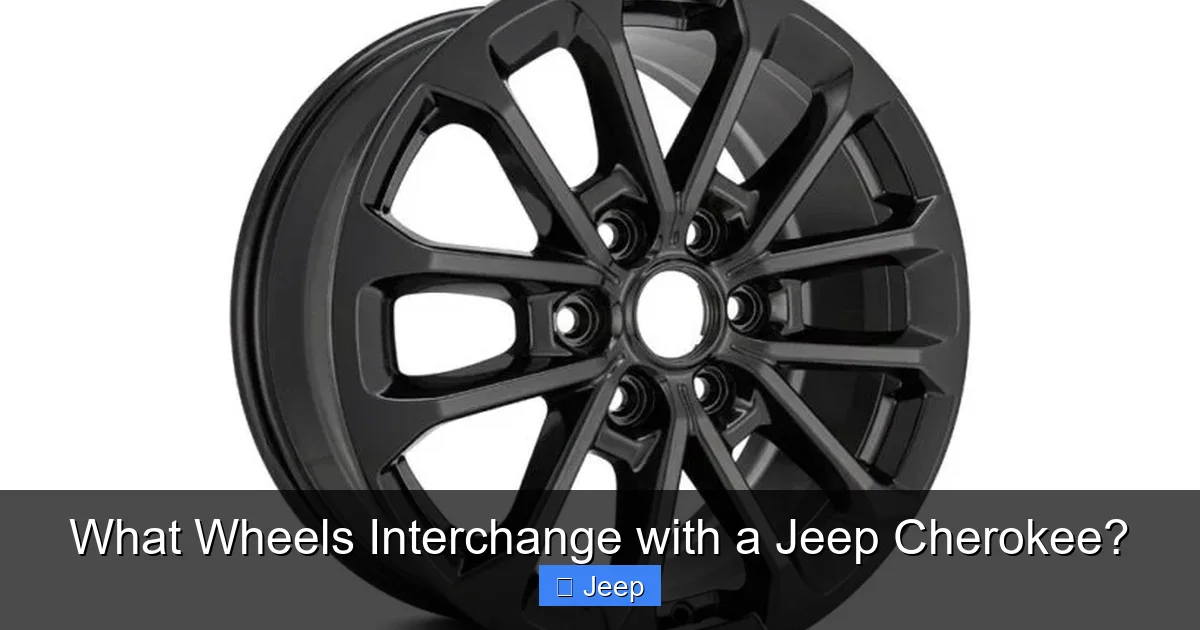
What Wheels Interchange with a Jeep Cherokee?

Contents
- 1 Key Takeaways
- 2 📑 Table of Contents
- 3 Introduction: Unlocking the Wheel Compatibility Puzzle for Your Jeep Cherokee
- 4 The Golden Rule: Core Wheel Fitment Measurements Explained
- 5 Generation-by-Generation Breakdown: Which Cherokee Are You Driving?
- 6 The Grand Cherokee Conundrum: A Different Vehicle Entirely
- 7 Wheels from Other Jeeps: Wrangler, Gladiator, and Beyond
- 8 Aftermarket Wheels and the “Will It Fit?” Checklist
- 9 Common Pitfalls and Safety Considerations
- 10 Conclusion: Your Path to the Perfect Wheel
- 11 Frequently Asked Questions

Car Interior LED Light
Car Neck Pillow
Car Wash Mitt
Foam Cannon
Wheel interchangeability with a Jeep Cherokee depends heavily on the specific model year and generation. While many Jeeps share the 5×4.5″ bolt pattern, critical factors like center bore, wheel offset, and tire size must be matched precisely to ensure safe operation. Always verify fitment with a professional before installing non-stock wheels on your Cherokee or Grand Cherokee.
Key Takeaways
- Bolt Pattern is Primary: The 5×4.5″ (5×114.3mm) pattern is common for many Cherokee and Wrangler models, but some Grand Cherokees use 5×5″. Always confirm your vehicle’s exact pattern first.
- Center Bore Must Match or Be Adapted: The Cherokee’s hub-centric bore (typically 71.5mm or 78.3mm) must match the wheel’s bore for proper seating. Using hub-centric rings is a safe solution for minor mismatches.
- Offset and Backspacing dictate Fitment: Incorrect offset can cause rubbing against brakes, suspension, or fenders. Cherokee SUVs generally need positive offset wheels; off-road wheels often have less offset.
- Not All “Jeep” Wheels Are Interchangeable: Wheels from a Wrangler, Grand Cherokee, or older Comanche may not fit due to bore size, lug nut type, or brake caliper clearance differences.
- TPMS Sensors are Mandatory: Modern Cherokees require functional Tire Pressure Monitoring System sensors in every wheel, adding a compatibility layer for older or aftermarket wheels.
- Grand Cherokee ≠ Cherokee: The larger Grand Cherokee has different fitment requirements. Do not assume interchangeability between these two distinct model lines without verification.
- Test Fitment is Non-Negotiable: Before driving, always mount the wheel and check for clearance at full lock and full compression. A test fit on the ground is crucial for safety.
📑 Table of Contents
- Introduction: Unlocking the Wheel Compatibility Puzzle for Your Jeep Cherokee
- The Golden Rule: Core Wheel Fitment Measurements Explained
- Generation-by-Generation Breakdown: Which Cherokee Are You Driving?
- The Grand Cherokee Conundrum: A Different Vehicle Entirely
- Wheels from Other Jeeps: Wrangler, Gladiator, and Beyond
- Aftermarket Wheels and the “Will It Fit?” Checklist
- Common Pitfalls and Safety Considerations
- Conclusion: Your Path to the Perfect Wheel
Introduction: Unlocking the Wheel Compatibility Puzzle for Your Jeep Cherokee
So, you’re eyeing a set of new or used wheels for your Jeep Cherokee. Maybe you found a great deal on a set of Wrangler wheels, or you’re wondering if those Grand Cherokee rims at the salvage yard will work. The question “what wheels interchange with a Jeep Cherokee?” is one of the most common in the Jeep community, and the answer is both wonderfully simple and frustratingly complex. At its heart, wheel fitment is a science of precise measurements—bolt pattern, center bore, offset, and diameter—all working in harmony with your specific vehicle’s suspension and bodywork.
For Jeep owners, the good news is that the brand has maintained a remarkable degree of consistency across decades and models. The legendary 5×4.5″ bolt pattern is a Jeep hallmark. However, the devil is in the details. A wheel that bolts on physically might still rub your brake caliper, interfere with your ABS sensor wires, or cause your TPMS (Tire Pressure Monitoring System) to throw a constant error. This guide will cut through the noise. We’ll break down compatibility by Cherokee generation, compare it to sibling models like the Wrangler and Grand Cherokee, and give you the exact checklist to determine if a wheel will truly interchange with your rig safely and effectively.
The Golden Rule: Core Wheel Fitment Measurements Explained
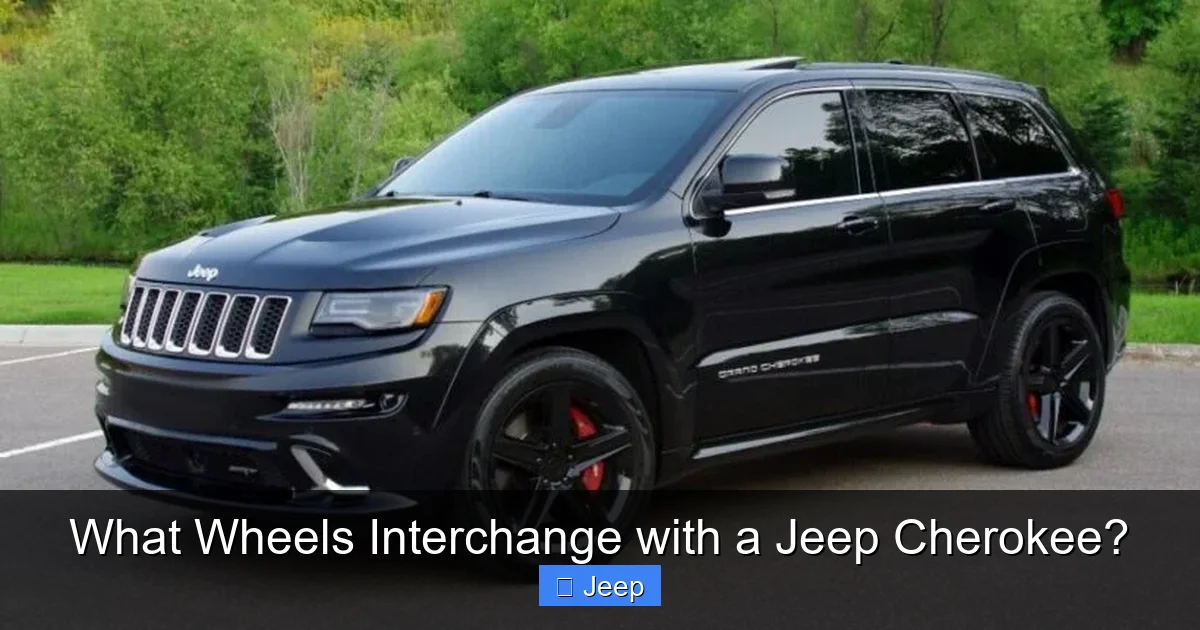
Before we dive into specific model years, you must understand the four critical numbers that govern wheel interchangeability. Think of these as the wheel’s “DNA.” If three match but one is off, you likely have a problem.
Visual guide about What Wheels Interchange with a Jeep Cherokee?
Image source: carsoid.net
1. Bolt Pattern (PCD)
This is the number of lug holes (5 for most Jeeps) and the diameter of the circle they form (e.g., 4.5 inches or 114.3mm). A 5×4.5″ wheel will physically bolt onto any Jeep with a 5×4.5″ pattern, but that’s just the first step. Most Jeep Cherokee XJ models (1984-2001) and the KL (2014-2023) use the 5×4.5″ pattern. The Jeep Wrangler (TJ, JK, JL) also predominantly uses 5×4.5″. However, the Jeep Grand Cherokee (ZJ, WJ, WK, WL) switched to a 5×5″ (5x127mm) pattern starting with the 1999 models. This is the single biggest barrier to interchange between the Cherokee and its larger sibling.
2. Center Bore
This is the hole in the center of the wheel that slides over your vehicle’s axle hub. It must be either an exact match or slightly larger. Jeep hub-centric wheels are designed to fit snugly over the hub, taking the vehicle’s weight. A wheel with a larger bore than the hub will cause a dangerous imbalance. A wheel with a smaller bore simply won’t fit. Common Cherokee bores are 71.5mm (XJ, some KL) and 78.3mm (many KL, Grand Cherokee). Using high-quality hub-centric rings is a standard and safe practice to correct a bore that is 1-2mm larger.
3. Wheel Offset and Backspacing
Offset is the distance from the wheel’s mounting surface to its centerline. It determines how far the wheel “sticks out” or “tucks in” relative to the fender. Backspacing is the similar measurement from the mounting surface to the back lip. Cherokee SUVs, especially the unibody KL model, have tight fender and suspension clearances. They typically require a positive offset (e.g., +35mm to +45mm). Using a wheel with too little offset (zero or negative) will almost certainly cause rubbing on the inner fender, brake caliper, or suspension components during turns or over bumps. Off-road-oriented wheels often have less offset, so they may require minor fender modifications or wheel spacers (used cautiously).
4. Wheel Diameter and Width
This is the overall size (e.g., 17×8). Your Cherokee’s suspension and fender design will dictate the maximum width and diameter you can fit without rubbing. A Cherokee XJ on stock suspension can often fit a 30×9.5″ tire on a 15-inch wheel, while a modern KL with its independent front suspension might max out at a 245/70R17 on a 17×7.5″ wheel without minor trimming. Always check tire size compatibility charts for your specific model year.
Generation-by-Generation Breakdown: Which Cherokee Are You Driving?
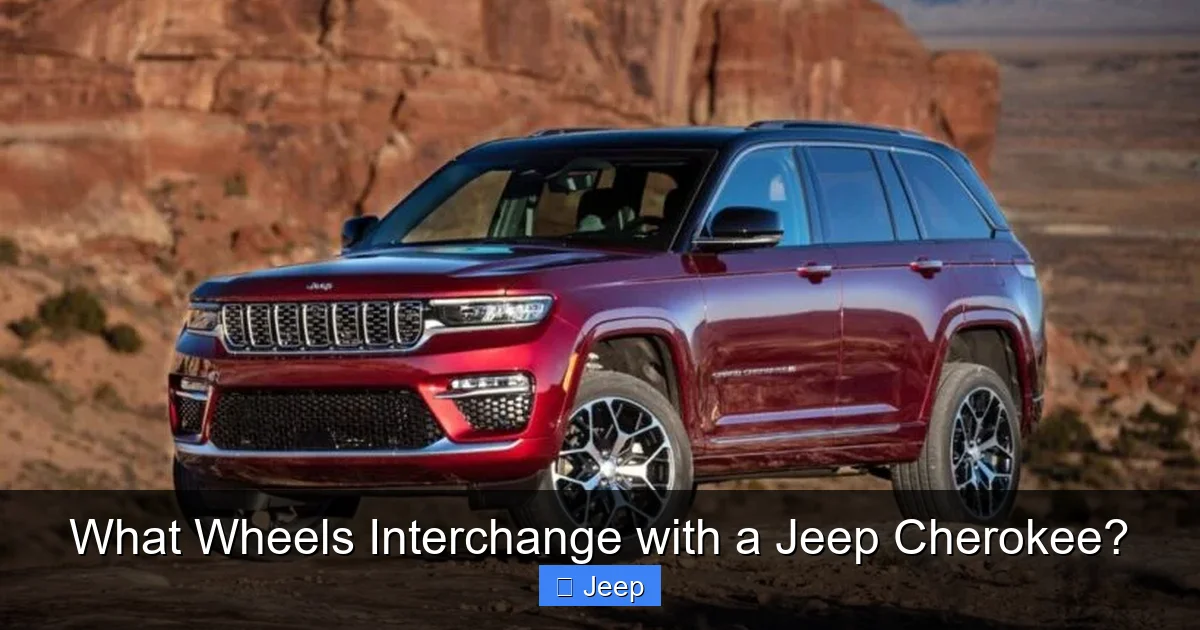
Interchangeability is impossible to discuss without pinpointing your Cherokee’s generation. The Jeep Cherokee nameplate has been applied to vastly different vehicles over the years.
Visual guide about What Wheels Interchange with a Jeep Cherokee?
Image source: carsoid.net
The Legendary Jeep Cherokee XJ (1984-2001)
The boxy, iconic XJ is a wheel interchange king in the classic Jeep world. Its 5×4.5″ bolt pattern and 71.5mm center bore are shared with:
- Jeep Wrangler YJ (1987-1995) & TJ (1997-2006): Direct bolt-on compatibility for wheels and even often tires. This is why you see so many XJ wheels on Wranglers and vice-versa.
- Jeep Comanche (1986-1992): The pickup truck sibling shares full wheel compatibility.
- Early Jeep Grand Cherokee ZJ (1993-1998): Caution! While the ZJ Grand Cherokee also used a 5×4.5″ bolt pattern for 1993-1998, its center bore is larger (78.3mm). An XJ wheel (71.5mm bore) will NOT fit a ZJ hub without an adapter, which is not recommended. A ZJ wheel (78.3mm bore) will fit an XJ hub but will be hub-centric only if you use 71.5mm to 78.3mm hub-centric rings. The offset on ZJ wheels is also often different, so test fitting is mandatory.
- Many Dodge Dakota and Ram 1500 (1994-2002) 5-lug models: They share the 5×4.5″ pattern, but bore size and offset differ. For example, will Jeep 5 lug wheels fit a Dodge Ram 1500? The answer is often yes on bolt pattern, but you must verify bore and offset. This cross-brand compatibility is a popular swap.
Practical Tip: If you have an XJ, you have the widest range of affordable, compatible used wheels from the Jeep and Dodge ecosystem of the 1990s.
The Modern Jeep Cherokee KL (2014-2023)
The KL is a completely different animal—a unibody crossover SUV. Its most common configuration is:
- Bolt Pattern: 5×4.5″ (5×114.3mm) on most trims. Some higher-trim or special edition KLs may vary, so always check your door jamb sticker.
- Center Bore: Typically 78.3mm. This is larger than the XJ’s bore.
- Offset: Usually ranges from +35mm to +45mm. This is a relatively high positive offset to clear the front suspension and fenders.
Due to its independent front suspension (IFS) and tighter packaging, the KL has less tolerance for offset variations than the solid-axle XJ. Wheels from the following might fit, but with extreme diligence:
- Jeep Wrangler JL/JT (2018+): Shares the 5×4.5″ pattern, but JL wheels often have a different offset (around +30mm). A +35mm to +45mm KL wheel will fit a JL, but a JL wheel on a KL may rub the front caliper. The bore is also typically 78.3mm for both, so that matches.
- Jeep Renegade/Buick Encore: Shares the Fiat Small Wide platform. They use the same 5×4.5″ pattern and often a similar bore and offset. This is a viable source for alternative wheels.
- Many modern import crossovers: Vehicles like the Toyota Tacoma (5×4.5″), Honda CR-V, and others share the pattern, but bore and offset must be checked meticulously. The KL’s IFS makes it sensitive to offset.
Key Limitation: The KL’s TPMS system is sensitive. You need either direct-fit sensors or very good aftermarket sensors that are compatible with the Cherokee’s receiver. This is a major hurdle when using older Jeep wheels or wheels from other brands.
The Grand Cherokee Conundrum: A Different Vehicle Entirely
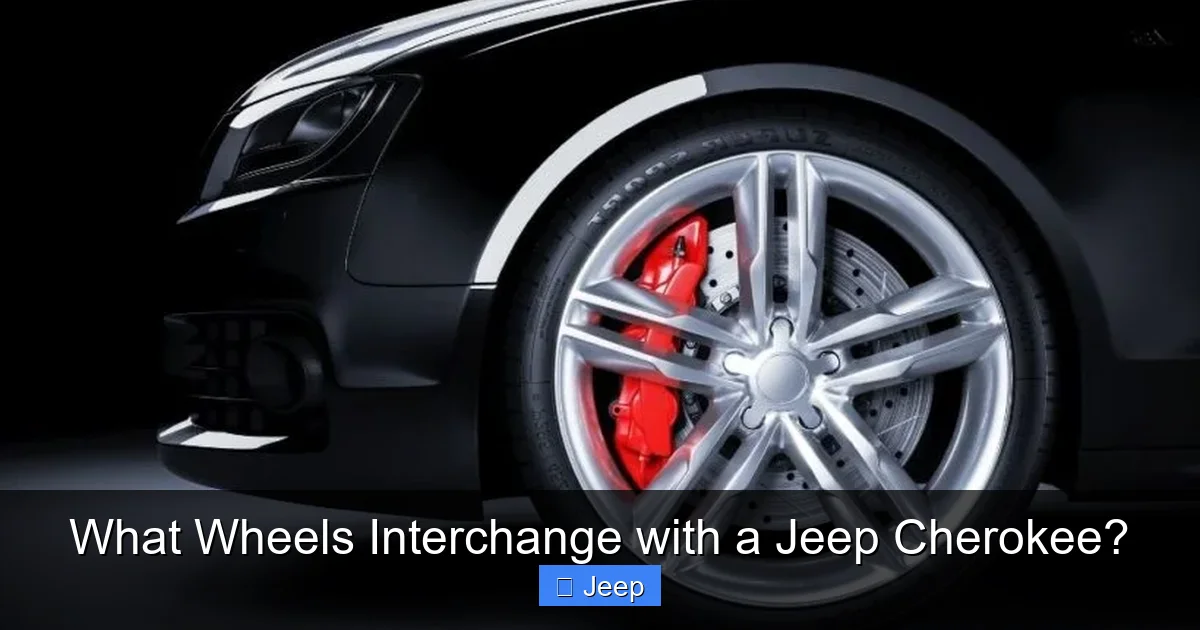
This is the most critical point of confusion. The Jeep Cherokee and Jeep Grand Cherokee are separate model lines with minimal wheel interchangeability. Assuming they are the same is the #1 mistake.
Visual guide about What Wheels Interchange with a Jeep Cherokee?
Image source: carsoid.net
- Bolt Pattern Split: Grand Cherokees from 1999 onward (WJ, WK, WL generations) use a 5×5″ (127mm) bolt pattern. The earlier ZJ (1993-1998) used 5×4.5″, overlapping only with the XJ Cherokee. A 5×5″ Grand Cherokee wheel will never bolt onto a 5×4.5″ Cherokee or Wrangler without a dangerous and expensive wheel adapter.
- Center Bore: Grand Cherokees typically have a 78.3mm bore. This matches the KL Cherokee’s bore, but the bolt pattern mismatch makes it irrelevant for 1999+ models.
- Size and Offset: Grand Cherokees are wider and heavier, often accommodating larger wheels (up to 20s or 22s on later models) with offsets that differ from the Cherokee KL.
Bottom Line: If you own a Cherokee (XJ or KL), you cannot use wheels from a 1999+ Grand Cherokee. The only overlap is between a 1993-1998 ZJ Grand Cherokee and an XJ Cherokee, and even then, you must solve the bore difference with rings and verify offset. For a deep dive into Grand Cherokee specifics, you might explore resources on Grand Cherokee ownership, but the fitment rules remain distinct.
Wheels from Other Jeeps: Wrangler, Gladiator, and Beyond
Within the Jeep family, the Wrangler (and its pickup sibling, the Gladiator) is the closest sibling to the Cherokee XJ.
Wrangler (YJ, TJ, JK, JL) to Cherokee XJ
This is a near-perfect swap for the solid-axle XJ. They share:
- 5×4.5″ bolt pattern
- 71.5mm center bore (on most TJ/JK/JL models; some later JLs may vary)
- Similar tire sizes
- Often the same lug nut cone angle (60-degree)
You can typically take wheels and tires directly from a Wrangler and bolt them onto an XJ with no modifications. This is a hugely popular upgrade path. For the KL Cherokee, compatibility with a JL Wrangler is possible (same pattern and often bore), but the offset difference is the primary concern. A JL wheel with a +30mm offset on a KL that calls for +40mm might rub the front inner fender at full lock.
What About the Newer Jeep Models?
The Compass, Renegade, and Gladiator all generally use the 5×4.5″ pattern, making them potential sources. The Gladiator, being Wrangler-based, shares much of that compatibility. The Renegade, as mentioned, is a good candidate for KL Cherokee wheels due to platform sharing. Always, always check your specific door jamb sticker for the manufacturer’s recommended wheel size and offset.
Aftermarket Wheels and the “Will It Fit?” Checklist
This is where the real freedom lies. When shopping for new aftermarket wheels, you’re not limited by what another Jeep had. You can spec exactly what you need. Here is your definitive pre-purchase checklist for any wheel you’re considering for your Cherokee:
- Confirm Bolt Pattern: 5×4.5″ for XJ, KL, and most Wranglers. 5×5″ for 1999+ Grand Cherokees. No exceptions.
- Match Center Bore: Find a wheel with a bore equal to your Cherokee’s hub (71.5mm or 78.3mm are common). If the wheel’s bore is 1-2mm larger, purchase high-quality hub-centric rings in the correct size. Never use a wheel with a bore smaller than your hub.
- Check Offset/Backspacing: This is the most common cause of rubbing. For an XJ on stock suspension, an offset between +10mm and +25mm is common for classic looks with standard tires. For a KL, stay closer to the stock +35mm to +45mm range. Use an online wheel offset calculator to visualize how a new offset will change the wheel’s position relative to the fender and suspension.
- Verify Clearances: Research or ask the wheel manufacturer about clearance for your specific Cherokee’s brake caliper, ABS sensor, and vacuum hose (on some XJs). Some aftermarket wheels have deeper pockets that can clear larger brakes but might not clear a stock caliper on an XJ.
- TPMS Compatibility: For 2007+ Cherokees (including all KLs), this is mandatory. You need either:
- Wheels with built-in TPMS sensor pockets that accept your Cherokee’s sensor type.
- Plan to have new aftermarket sensors programmed and installed by a tire shop.
- Be prepared for a constant TPMS warning light if you use wheels without sensors (not recommended and may be illegal in your state).
- Tire Size Compatibility: A wheel’s width determines the range of tire widths that are safe. A 7-inch wide wheel is ideal for 235-245mm wide tires. An 8-inch wheel can handle 255-265mm tires. Mismatching can cause poor wear and handling. Also, consider overall diameter to avoid speedometer error.
Pro Tip: The absolute best way to verify fitment is to do a “test fit.” Mount the wheel with a tire (or even without) on your Cherokee. Turn the steering wheel fully lock-to-lock. Jack up the front and compress the suspension. Check for any contact with the brake caliper, fender liner, sway bar, or control arms. There should be at least 3-5mm of clearance at all points under full articulation.
Common Pitfalls and Safety Considerations
Even if a wheel bolts on, ignoring these points can lead to catastrophic failure.
The Dangers of Wheel Spacers
Using wheel spacers to make a non-fitting wheel “fit” is a red flag. They reduce the effective offset, pushing the wheel outward. This is a common fix for people trying to put zero-offset off-road wheels on a KL Cherokee. While hub-centric, high-quality spacers can be used safely in some applications, they add a point of failure and increase stress on the wheel studs. They also move the wheel’s weight outward, increasing leverage on the bearings. The better solution is always to buy a wheel with the correct offset for your vehicle in the first place.
Lug Nut Confusion
Jeeps use either conical-seat (60-degree) or ball-seat lug nuts. XJ and Wrangler wheels typically use conical seat. Some aftermarket wheels and Grand Cherokees may use a different seat. Using the wrong lug nut type will prevent the wheel from seating properly on the hub, leading to a wobble and eventual loosening. Your new wheels must match your vehicle’s lug nut type, or you must purchase a new set of correct lug nuts.
Ignoring Load Rating
Your Cherokee, especially if used for towing or off-roading, needs wheels with a sufficient load rating. This is stamped on the wheel (e.g., 2500 lbs). The wheel’s load rating must meet or exceed the vehicle’s Gross Axle Weight Rating (GAWR). For a heavy Grand Cherokee or a loaded Cherokee XJ, this is critical. Cheap, lightweight aftermarket wheels may not have the capacity.
TPMS Sensor Damage
When mounting tires, especially on wheels with deep pockets, ensure the TPMS sensor is not cracked or the valve stem is not bent. A damaged sensor will fail immediately. Always have tires mounted by professionals who understand TPMS.
The “It Looks Fine” Deception
A wheel may clear the fender at rest but rub violently during a turn or when the suspension compresses over a bump. This can shred a tire sidewall in minutes or cause a loss of control. This is why the dynamic test fit is non-negotiable. Do not rely on static measurements or photos from the internet for your specific vehicle.
Conclusion: Your Path to the Perfect Wheel
Finding wheels that interchange with your Jeep Cherokee is a rewarding puzzle. Start with the unshakable foundation: your vehicle’s exact bolt pattern, center bore, and stock offset. For the classic XJ, you have a world of options from the 1990s Jeep and Dodge family. For the modern KL Cherokee, your safest bets are other KLs, Renegades, and Wrangler JLs, with a sharp eye on offset. Always, always remember that the Grand Cherokee is a different beast—do not let the similar name fool you. The most reliable method is to use your door jamb sticker as your bible, consult with a reputable wheel and tire shop that understands Jeeps, and perform a thorough physical test fit before hitting the road. The right set of wheels transforms your Cherokee’s look and capability. Taking the time to do it correctly ensures that transformation is safe and lasts for years to come.
Frequently Asked Questions
Will Jeep Wrangler wheels fit a Jeep Cherokee XJ?
Yes, almost always. Both the Jeep Cherokee XJ (1984-2001) and Jeep Wrangler (YJ/TJ/JK/JL) share the 5×4.5″ bolt pattern and typically the 71.5mm center bore. They also use the same lug nut type. This is one of the most straightforward and popular wheel swaps in the Jeep world.
Can I put Jeep Grand Cherokee wheels on my Cherokee?
It depends entirely on the year. Grand Cherokees from 1993-1998 (ZJ) use the same 5×4.5″ bolt pattern as the Cherokee XJ, but have a larger 78.3mm center bore. You would need hub-centric rings to fit them on an XJ. Grand Cherokees from 1999 onward (WJ+) use a 5×5″ bolt pattern, which will not fit a Cherokee at all without unsafe adapters.
What is the most common bolt pattern for a Jeep Cherokee?
The 5×4.5″ (also written as 5×114.3mm) bolt pattern is the standard for the vast majority of Jeep Cherokee models, including all XJ (1984-2001) and KL (2014-2023) generations. This is also the pattern for Jeep Wranglers and many Dodge trucks of the same era.
Do I need special TPMS sensors for aftermarket wheels on a Cherokee?
Yes, for any Cherokee model from 2007 onward. Your new wheels must either have a pocket designed for a TPMS sensor, or you must purchase and have installed new aftermarket TPMS sensors that are compatible with your Cherokee’s system. The sensors must be programmed to the vehicle’s computer.
How can I tell if a wheel will rub on my Cherokee?
The only sure way is a physical test fit. Mount the wheel and tire on your Cherokee. Turn the steering wheel fully in both directions. Have someone compress the front suspension by pushing down on the bumper. Check for any contact between the tire/tire sidewall and the fender liner, plastic guards, brake caliper, or control arms. Clearance is especially critical on independent front suspension models like the Cherokee KL.
What offset is best for a stock-height Jeep Cherokee XJ?
For a stock-height Cherokee XJ with typical 30-31″ tires, an offset between +10mm and +25mm is common and usually provides good fender and suspension clearance. Wheels with very low or negative offset (0 or less) will likely cause rubbing on the inner fender or control arms and may require minor trimming or the use of wheel spacers, which have their own drawbacks.