
Will Jeep 5-lug Wheels Fit a Dodge Ram 1500?

Jeep 5-lug wheels can fit a Dodge Ram 1500, but only if the bolt pattern, center bore, and offset are compatible. Most modern Jeep models (like the Wrangler JK/JL and Grand Cherokee) share the same 5×5-inch (5x127mm) bolt pattern as many Dodge Ram 1500 trucks, making them a potential match. However, you must verify hub-centric dimensions and consider using hub-centric rings or adapters to ensure a safe, vibration-free fit.
So, you’ve got a set of cool Jeep wheels sitting in your garage, and you’re wondering—can I slap these on my Dodge Ram 1500? It’s a fair question, especially if you’re into customizing your truck or just trying to save some cash by reusing parts. The short answer? Maybe. But like most things in the world of automotive mods, it’s not quite that simple.
Jeep and Dodge have a long, intertwined history—both under the Stellantis umbrella today—and that shared DNA means some parts cross over more easily than you’d think. But wheels? They’re a bit trickier. While the bolt pattern might look similar, there are a few hidden details that can turn a promising swap into a dangerous mistake. Getting it right means understanding not just the numbers on the wheel, but how those numbers interact with your truck’s suspension, brakes, and overall geometry.
In this guide, we’ll break down everything you need to know about fitting Jeep 5-lug wheels on a Dodge Ram 1500. We’ll cover bolt patterns, center bores, offsets, and real-world fitment tips—so you can make an informed decision without risking your safety or your suspension. Whether you’re swapping wheels for style, off-road capability, or just because you found a great deal, this article will help you do it the right way.
Key Takeaways
- Bolt Pattern Compatibility: Most Jeep 5-lug wheels (5×5″ or 5x127mm) match the Dodge Ram 1500’s bolt pattern, especially from 2009 onward.
- Center Bore Matters: Jeep wheels often have a smaller center bore than Ram trucks, requiring hub-centric rings to prevent wobbling.
- Offset and Backspacing: Incorrect offset can cause rubbing or handling issues—check clearance before installing.
- Model Year Variations: Older Ram 1500s (pre-2009) may have a 5×5.5″ pattern, so confirm your truck’s specs first.
- Use Quality Adapters if Needed: If there’s a mismatch, high-quality hub-centric adapters can bridge the gap safely.
- Tire Size Compatibility: Ensure your tire size works with both the Jeep wheel and your Ram’s suspension setup.
- Professional Installation Recommended: Always have a mechanic or tire shop verify fitment to avoid safety risks.
📑 Table of Contents
- Understanding Bolt Patterns: The Foundation of Wheel Compatibility
- Center Bore: The Hidden Key to a Smooth Ride
- Offset and Backspacing: Getting the Fit Just Right
- Tire Size and Clearance: The Final Piece of the Puzzle
- Real-World Examples and Success Stories
- Conclusion: Can Jeep 5-Lug Wheels Fit a Dodge Ram 1500?
Understanding Bolt Patterns: The Foundation of Wheel Compatibility
When it comes to wheel fitment, the bolt pattern is the first thing you need to check. It’s the most basic—and most critical—factor in determining whether a wheel will even physically attach to your truck. The bolt pattern is typically expressed as two numbers: the number of lug nuts (or bolts) and the diameter of the circle they form, measured in either inches or millimeters.
For example, a 5×5″ bolt pattern means five lug nuts arranged in a circle with a 5-inch diameter. In metric terms, that’s 5x127mm (since 5 inches equals 127 millimeters). This is where Jeep and Dodge start to align. Most modern Jeep models—like the Wrangler JK (2007–2018), Wrangler JL (2018–present), and Grand Cherokee (WK2, 2011–2022)—use a 5×5″ (5x127mm) bolt pattern. And here’s the good news: many Dodge Ram 1500 trucks, especially those from 2009 onward, also use the same 5×5″ pattern.
But don’t get too excited just yet. While the bolt pattern might match, that doesn’t automatically mean the wheels will fit perfectly. There are other factors at play—like center bore size, offset, and backspacing—that can cause issues even when the lugs line up. Think of the bolt pattern as the invitation to the party. It gets you in the door, but you still need to make sure you’re dressed appropriately and don’t knock over the punch bowl.
Why Bolt Pattern Matching Isn’t Always Enough
Let’s say you’ve confirmed that both your Jeep wheels and your Ram 1500 have a 5×5″ bolt pattern. Great! You’re halfway there. But here’s the catch: wheels are more than just lug holes. They’re precision components designed to work with specific hubs, suspensions, and tire sizes. If any of the other dimensions are off, you could end up with vibrations, premature wear, or even a dangerous failure while driving.
For instance, imagine trying to wear a shoe that’s the right length but way too narrow. It might fit your foot, but it’ll be uncomfortable and could cause blisters—or worse, make you trip. The same principle applies to wheels. The bolt pattern might “fit,” but if the center bore is too small or the offset is wrong, your truck will let you know—usually with a annoying wobble at highway speeds or uneven tire wear.
So while matching bolt patterns is essential, it’s only the first step. You’ll need to dig deeper to ensure a safe and smooth ride.
Checking Your Ram 1500’s Bolt Pattern
Before you even think about swapping wheels, you need to know your Ram 1500’s exact bolt pattern. This can vary depending on the model year and trim level. Here’s a quick breakdown:
– **1994–2001 Ram 1500:** 5×5.5″ (5×139.7mm) — This is a common pattern for older trucks, but it’s different from most Jeeps.
– **2002–2008 Ram 1500:** Still 5×5.5″ — So if you have one of these, Jeep 5×5″ wheels won’t fit without adapters.
– **2009–2024 Ram 1500:** 5×5″ (5x127mm) — This is where the magic happens. These trucks share the same bolt pattern as many modern Jeeps.
So if you’ve got a Ram from 2009 or later, you’re in luck—the bolt pattern matches. But if your truck is older, you’ll need to use bolt pattern adapters (more on that later) or look for wheels specifically designed for 5×5.5″ patterns.
Pro tip: Don’t rely solely on model year. Always double-check your truck’s specs using the owner’s manual, a VIN decoder, or by measuring the bolt pattern yourself. You can do this by measuring from the center of one lug hole to the center of the hole directly across (for even-numbered patterns). For a 5-lug wheel, measure from the center of one hole to the back of the second hole over—this gives you the bolt circle diameter.
Center Bore: The Hidden Key to a Smooth Ride
Visual guide about Will Jeep 5-lug Wheels Fit a Dodge Ram 1500?
Image source: m.media-amazon.com
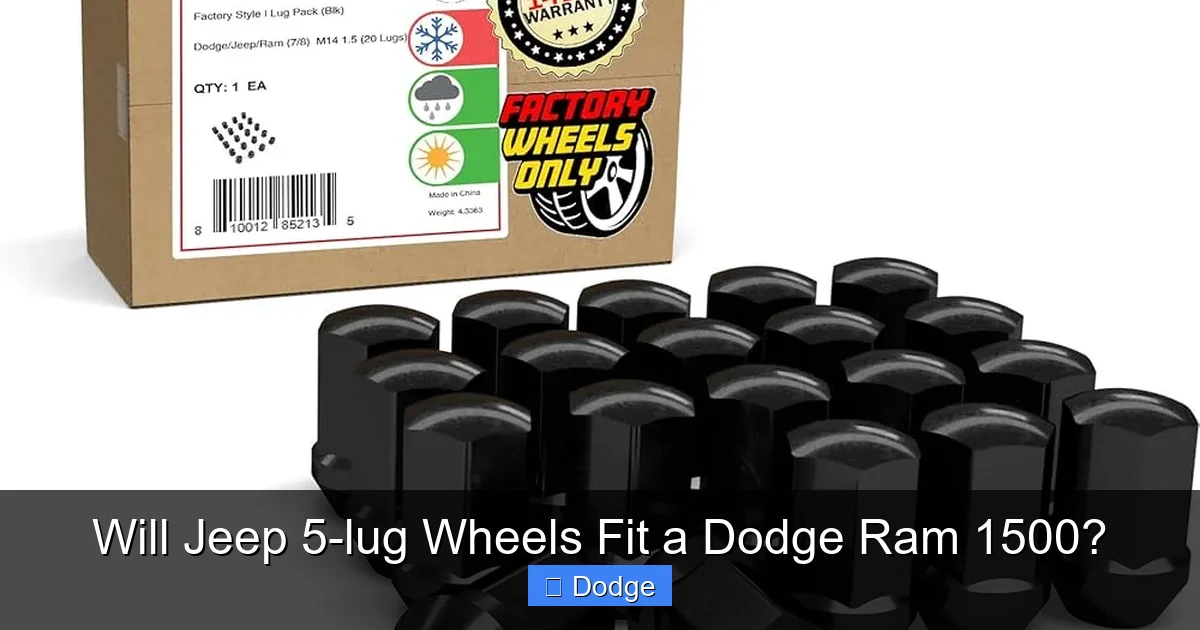
Now that we’ve covered bolt patterns, let’s talk about the center bore—the large hole in the middle of the wheel that fits over the hub of your truck. This might seem like a minor detail, but it’s actually one of the most important factors in wheel fitment. Why? Because the center bore ensures the wheel is perfectly centered on the hub. If it’s too small, the wheel won’t fit. If it’s too large, the wheel can wobble, causing vibrations and uneven wear.
Here’s where Jeep and Dodge start to diverge. Most Jeep wheels—especially those from the Wrangler and Grand Cherokee—have a center bore of around 71.5mm to 73mm. Meanwhile, Dodge Ram 1500 trucks typically have a larger hub diameter, often around 77.8mm. That means if you try to mount a Jeep wheel directly onto a Ram hub, the center bore will be too small—and the wheel won’t seat properly.
This is a common mistake. Some people think, “Well, the bolt pattern matches, so it should fit.” But without a proper center bore match, the wheel will only be held in place by the lug nuts, not the hub. That’s a recipe for disaster. Over time, the repeated stress can warp the wheel, damage the hub, or even cause the wheel to come loose while driving.
Hub-Centric vs. Lug-Centric Wheels
To understand why the center bore matters so much, it helps to know the difference between hub-centric and lug-centric wheels.
– **Hub-centric wheels** are designed to be centered by the hub. The center bore matches the hub diameter exactly, so the wheel sits perfectly centered without relying on the lug nuts for alignment. This is the ideal setup—it reduces vibrations, improves handling, and extends the life of your wheels and tires.
– **Lug-centric wheels**, on the other hand, rely solely on the lug nuts to center the wheel. This is less precise and can lead to wobbling, especially at high speeds.
Most modern vehicles—including both Jeeps and Rams—are designed for hub-centric wheels. That means you should always aim for a hub-centric fit when swapping wheels. If the center bore doesn’t match, you’ll need to use hub-centric rings.
Using Hub-Centric Rings to Bridge the Gap
So what do you do if your Jeep wheel has a 71.5mm center bore but your Ram hub is 77.8mm? You use hub-centric rings.
These are simple plastic or metal rings that fit inside the center bore of the wheel, reducing its diameter to match the hub. They’re inexpensive (usually $10–$20 per set) and easy to install—just snap them into place before mounting the wheel. But not all hub-centric rings are created equal. Cheap plastic rings can crack or wear out over time, so it’s worth investing in high-quality aluminum or nylon rings from a reputable brand.
When shopping for hub-centric rings, make sure you get the right size:
– Inner diameter: Matches your Ram’s hub (e.g., 77.8mm)
– Outer diameter: Matches your Jeep wheel’s center bore (e.g., 71.5mm)
Installing them is straightforward: clean the center bore, insert the ring, and mount the wheel as usual. The ring will ensure the wheel is perfectly centered, eliminating vibrations and improving safety.
Offset and Backspacing: Getting the Fit Just Right
Visual guide about Will Jeep 5-lug Wheels Fit a Dodge Ram 1500?
Image source: adventurejeep.com
Even if the bolt pattern and center bore are compatible, you’re not out of the woods yet. Offset and backspacing play a huge role in how the wheel sits in your wheel well—and whether it will rub against suspension components, brakes, or fenders.
Offset is the distance between the wheel’s mounting surface and its centerline. It’s usually measured in millimeters and can be positive, negative, or zero:
– **Positive offset:** The mounting surface is toward the front (street side) of the wheel. Common on factory wheels.
– **Negative offset:** The mounting surface is toward the back (tire side) of the wheel. Common on off-road wheels.
– **Zero offset:** The mounting surface is exactly in the center.
Backspacing is the distance from the mounting surface to the inner edge of the wheel. It’s often used interchangeably with offset, but they’re not the same—backspacing is measured in inches and gives a better sense of how much space the wheel takes up inside the wheel well.
Why does this matter? Because if the offset is too negative, the wheel will stick out too far, potentially rubbing against the fender or suspension. If it’s too positive, the wheel might tuck in too far, causing clearance issues with the brake caliper or suspension components.
Comparing Jeep and Ram Wheel Offsets
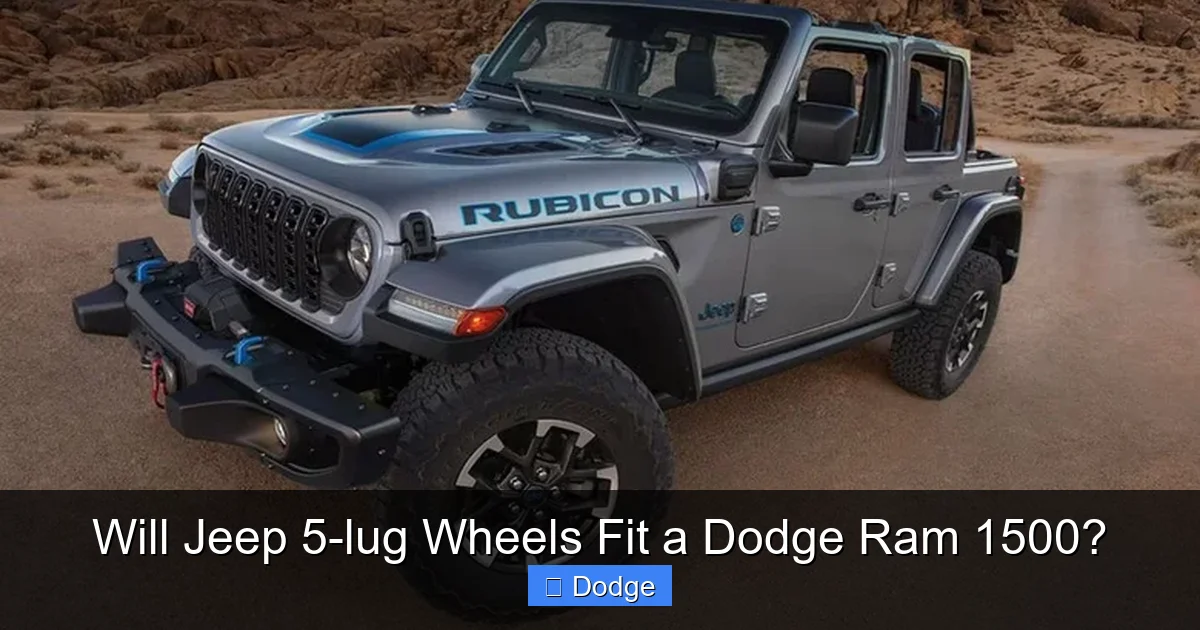
Jeep wheels—especially those designed for off-roading—often have a more negative offset than factory Ram wheels. For example, a typical Jeep Wrangler wheel might have an offset of +10mm to -12mm, while a stock Ram 1500 wheel might be around +15mm to +25mm. That means a Jeep wheel could stick out several inches more than your factory setup.
This isn’t necessarily a bad thing—many people prefer the aggressive, wide stance that negative offset provides. But you need to make sure your truck can handle it. Check for:
– Fender clearance: Will the tire rub when turning or going over bumps?
– Suspension clearance: Is there enough room for the wheel to move up and down without hitting the control arm or strut?
– Brake clearance: Will the wheel clear the caliper, especially if you’ve upgraded to larger brakes?
If you’re unsure, do a test fit. Mount the wheel with a tire and slowly turn the steering wheel lock to lock, checking for any contact. You can also use a jack to simulate suspension travel.
Adjusting Offset with Spacers
If the offset is close but not quite right, you can use wheel spacers to fine-tune the fit. These are metal discs that bolt onto the hub, effectively moving the wheel outward. They’re commonly used to correct offset issues or to make room for larger tires.
But spacers aren’t a cure-all. They add stress to the wheel bearings and can cause premature wear if not installed correctly. Always use high-quality, hub-centric spacers and torque them to the manufacturer’s specifications. And never use spacers to fix a major offset mismatch—if the wheel is way too far in or out, it’s better to find a different wheel.
Tire Size and Clearance: The Final Piece of the Puzzle

Visual guide about Will Jeep 5-lug Wheels Fit a Dodge Ram 1500?
Image source: i.ebayimg.com
Once you’ve sorted out the wheels, you still need to think about tires. Even if the wheel fits, the tire might not. Larger tires can rub against the fender, suspension, or frame—especially when the suspension is compressed or the steering is turned.
Jeep wheels are often designed for larger, more aggressive tires—like 33-inch or 35-inch all-terrains. But your Ram 1500 might not have the clearance to handle them without modifications. You may need to:
– Trim the fender liners
– Install a lift kit or leveling kit
– Upgrade to extended brake lines
– Re-gear the differentials for better performance
Before committing to a tire size, do a dry fit. Mount the tire on the wheel and install it on your truck. Check for clearance at full turn, full suspension compression, and during normal driving. If there’s any rubbing, you’ll need to adjust either the tire size, the wheel offset, or the suspension setup.
Real-World Examples and Success Stories
Plenty of Ram 1500 owners have successfully installed Jeep wheels—and lived to tell the tale. One popular combo is using 17×9-inch Jeep Wrangler JL wheels with 33-inch tires on a 2015 Ram 1500 with a 2-inch leveling kit. With the right hub-centric rings and a slight fender trim, the fit is clean and aggressive.
Another example: a 2020 Ram 1500 Rebel owner swapped in 18×9-inch Grand Cherokee wheels with 275/65R18 tires. The bolt pattern matched, the center bore required rings, and the offset was close enough to work without spacers. The result? A sleek, upscale look that still handles off-road trails.
But not all swaps go smoothly. One owner tried to install 16×8-inch Jeep TJ wheels on a 2012 Ram 1500. The bolt pattern was close (5×5″ vs. 5×5.5″), but not exact. He used cheap adapters, which led to vibrations and a failed wheel bearing after 5,000 miles. Lesson learned: don’t cut corners on adapters or fitment.
Conclusion: Can Jeep 5-Lug Wheels Fit a Dodge Ram 1500?
So, will Jeep 5-lug wheels fit a Dodge Ram 1500? The answer is: yes, but with conditions.
If your Ram 1500 is from 2009 or later, and you’re using wheels from a modern Jeep (like a Wrangler JK/JL or Grand Cherokee), the bolt pattern will likely match. But you must also check the center bore, offset, and tire clearance. Use hub-centric rings if needed, avoid cheap adapters, and always test fit before driving.
With the right preparation, a Jeep wheel swap can give your Ram a fresh, rugged look—without sacrificing safety or performance. Just remember: when it comes to wheels, the details matter. Take your time, do your research, and when in doubt, consult a professional.
Frequently Asked Questions
Can I put Jeep Wrangler wheels on a Dodge Ram 1500?
Yes, if your Ram 1500 is from 2009 or later and the wheels have a 5×5″ (5x127mm) bolt pattern. You’ll likely need hub-centric rings due to differences in center bore size, and you should check offset and tire clearance to avoid rubbing.
What year Ram 1500 has a 5×5 bolt pattern?
The Dodge Ram 1500 switched to a 5×5″ (5x127mm) bolt pattern in 2009. Models from 2009 to 2024 use this pattern, making them compatible with many modern Jeep wheels.
Do I need hub-centric rings when swapping Jeep wheels to a Ram?
Most likely, yes. Jeep wheels often have a smaller center bore (around 71.5mm) than Ram hubs (77.8mm). Hub-centric rings ensure the wheel is properly centered and reduce vibrations.
Can I use wheel spacers to fit Jeep wheels on a Ram 1500?
Spacers can help adjust offset, but they should only be used for minor corrections. Always use high-quality, hub-centric spacers and avoid them if there’s a major mismatch in bolt pattern or center bore.
Will 35-inch tires fit on a Ram 1500 with Jeep wheels?
It depends on your suspension setup. A 2- to 3-inch lift or leveling kit is usually required, along with fender trimming. Always test fit before driving to check for rubbing.
Are Jeep and Dodge wheels interchangeable?
Not always, but many modern Jeep and Dodge wheels share the same 5×5″ bolt pattern. Compatibility also depends on center bore, offset, and tire size—so always verify fitment before installing.
