
What Is the Normal Coolant Temperature for a Jeep Wrangler?

For a Jeep Wrangler, a normal operating coolant temperature typically ranges between 190°F and 220°F (88°C and 104°C). This range ensures optimal engine performance, fuel efficiency, and emissions control. Significant deviations, especially overheating above 230°F, require immediate attention to prevent serious engine damage. Always consult your specific owner’s manual, as exact norms can vary slightly by model year and engine type.
Key Takeaways
- Normal Operating Range: Your Jeep Wrangler’s coolant should stabilize between 190°F and 220°F once fully warmed up. This is the sweet spot for performance and longevity.
- The “Cold” Gauge is Misleading: The temperature gauge needle resting at the first mark after “C” is usually normal. A centered needle often indicates overheating in Jeeps.
- Model Variations Exist: Exact normal temps can differ between TJ, JK, JL, and JT models, and between 3.6L V6, 2.0L turbo, and 3.0L EcoDiesel engines. Your manual is the final authority.
- Over 230°F is a Red Flag: Consistently seeing temperatures above 230°F, or a warning light/chime, means you must pull over safely and shut down the engine to avoid catastrophic failure.
- Weather & Load Impact Temp: Extreme heat, steep climbs, towing, and deep water fording will naturally raise coolant temps. Understanding this helps distinguish normal strain from a problem.
📑 Table of Contents
- Understanding Your Jeep Wrangler’s Temperature Gauge
- The Normal Temperature Range for Your Wrangler
- Reading the Gauge: What Your Needle is Saying
- Common Reasons Your Wrangler Runs Hot
- Diagnosing Temperature Issues: A Step-by-Step Guide
- What To Do If Your Wrangler Overheats
- Maintenance: Keeping Your Cooling System Healthy
- Conclusion: Your Wrangler’s Temperature is Non-Negotiable
Understanding Your Jeep Wrangler’s Temperature Gauge
That little temperature gauge on your Jeep Wrangler’s instrument cluster is one of the most important—and often most misunderstood—dials in your vehicle. It’s not just a suggestion; it’s a direct window into your engine’s health. For a Wrangler, knowing what “normal” looks like is the first step in preventing a costly breakdown on the trail or the street.
Unlike some cars where the needle parks perfectly in the middle when hot, Jeep’s design is different. A resting point at the first mark after “C” (Cold) is typically the engine’s designed operating temperature. If that needle creeps toward the center or, worse, into the red “H” (Hot) zone, your cooling system is under stress. This guide will decode exactly what temperature your Wrangler should run, why it might run hot, and what you must do about it.
Why Coolant Temperature Matters So Much
Engine coolant, or antifreeze, does more than just prevent freezing. Its primary job is to absorb heat from the engine block and transfer it to the radiator, where air flow cools it down. This cycle maintains a precise engine temperature.
- Efficiency: An engine running at its optimal temp (around 200°F) burns fuel most efficiently. Too cold, and you get poor fuel economy and increased emissions. Too hot, and you risk pre-ignition (knock) and power loss.
- Lubrication: Oil works best at operating temperature. A constantly cold engine causes faster wear.
- Emissions: Modern engines rely on specific temps for catalytic converters to function properly.
- Longevity: Sustained high heat warps metal components, degrades seals and gaskets, and can lead to a blown head gasket or a cracked engine block—a repair that often exceeds the value of the Wrangler itself.
The Normal Temperature Range for Your Wrangler
So, what is the magic number? For the vast majority of Jeep Wranglers, from the classic TJ (1997-2006) through the modern JL and JT Gladiator (2018-present), the target operating temperature falls within a specific window.
Visual guide about What Is the Normal Coolant Temperature for a Jeep Wrangler?
Image source: cimg0.ibsrv.net
The General Rule: Once your Wrangler is fully warmed up (usually after 5-10 minutes of driving in moderate weather), the coolant temperature should stabilize between 190°F and 220°F (88°C and 104°C). The needle on your gauge should be resting at or just above the first tick mark after the “C”.
Model-Specific Nuances
While the 190-220°F range is a safe bet, there are slight variations based on engine and model generation:
- TJ & JK (1997-2018) with 3.6L Pentastar V6: This workhorse engine typically runs around 200-210°F at highway speed. In stop-and-go traffic or extreme heat, it may creep toward 220°F.
- JL/JT with 2.0L Turbo (2018-2023): Turbocharged engines often run slightly hotter. Seeing 210-220°F in normal driving is not uncommon. They have more aggressive cooling systems to manage the increased heat from forced induction.
- JL/JT with 3.0L EcoDiesel: Diesel engines operate at higher compression and can run hotter. A stable 200-215°F is normal, but they are also equipped with robust cooling systems.
- Rubicon vs. Sport Models: The core cooling system is identical. The difference comes from accessories like larger aftermarket radiators, electric fans, or auxiliary oil coolers often added by owners for heavy off-roading.
Pro Tip: The absolute best source for your specific vehicle is the owner’s manual. It will have the exact specifications and warning thresholds set by the manufacturer. When in doubt, trust the book over the internet.
Reading the Gauge: What Your Needle is Saying
Interpreting the gauge correctly is crucial. Jeep’s gauge logic can be counter-intuitive to new owners.
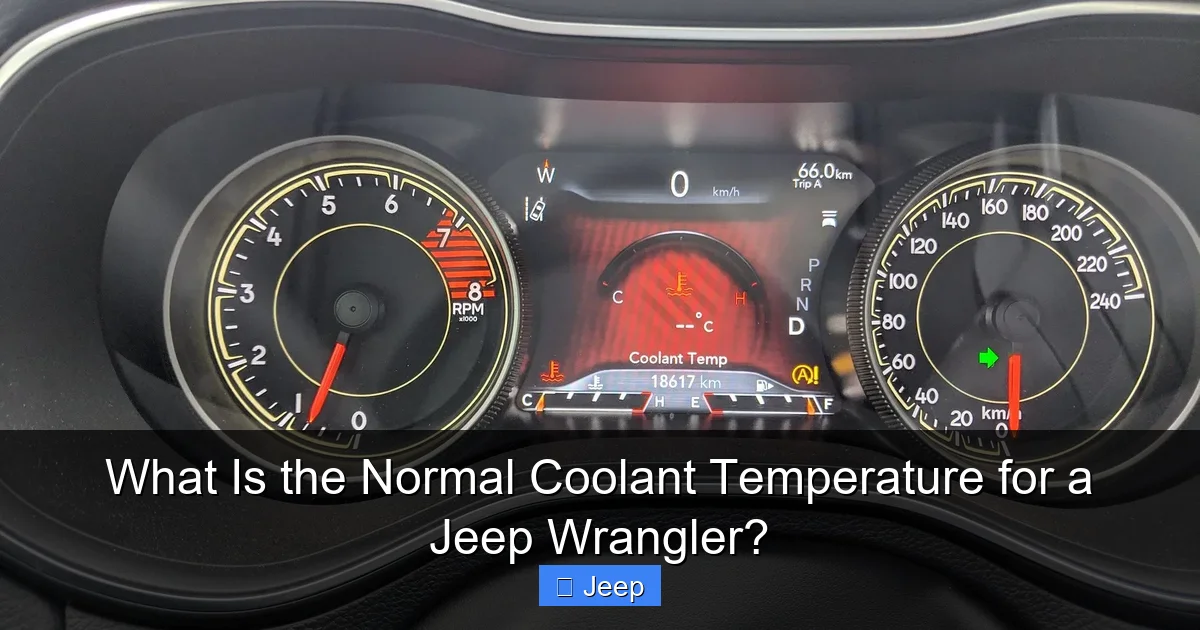
Visual guide about What Is the Normal Coolant Temperature for a Jeep Wrangler?
Image source: i2.wp.com
- Needle at “C” (Cold): Engine is cold. Do not rev high or load the engine until it moves.
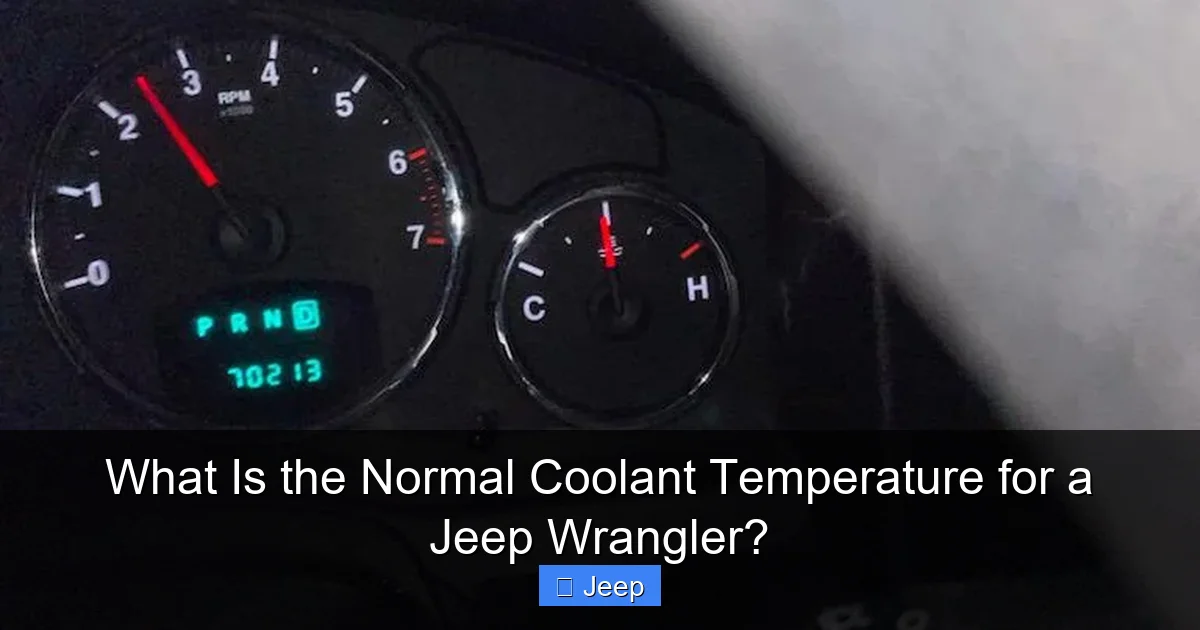
- Needle at first mark after “C”: This is NORMAL and CORRECT. Your engine has reached its designed operating temperature. The cooling system is functioning as intended.
- Needle in the middle of the gauge: This is NOT normal for most Wranglers. It indicates the coolant is significantly hotter than its design spec, often 230°F+. This is a warning state. You should reduce speed, turn on the A/C (which engages the cooling fan), and find a safe place to stop and investigate.
- Needle in the red “H” zone: EMERGENCY. The engine is overheating, typically above 250°F. You have a very short time (sometimes just a minute or two) before severe damage occurs. Pull over immediately, shut off the engine, and let it cool completely before checking coolant levels.
The Digital Temperature Readout
Many newer Wranglers (especially JL and JT models) have a configurable digital display that can show the exact coolant temperature in degrees. This is an invaluable tool. If you have this feature, enable it. It removes all guesswork. You’ll see the temp rise quickly from cold, then settle into that 190-220°F range. Watch it on a long uphill to see how high it climbs under load.
Common Reasons Your Wrangler Runs Hot
If your temperature gauge is reading higher than normal, it’s a symptom, not the disease. The cooling system is a network of parts working together. A failure in one area stresses the whole system.
Visual guide about What Is the Normal Coolant Temperature for a Jeep Wrangler?
Image source: i.redd.it
1. Low Coolant Level
This is the #1 cause of overheating. Coolant escapes through leaks (hoses, water pump, radiator, freeze plugs) or evaporates slowly. Never open a hot radiator cap. Check the coolant level in the overflow reservoir when the engine is cold. It should be between the “MIN” and “MAX” lines. If it’s low, you must find and fix the leak. Simply adding coolant is a temporary fix that will fail again.
2. Faulty Thermostat
The thermostat is a valve that regulates coolant flow. It stays closed when the engine is cold to help it warm up quickly, then opens at a specific temperature (usually around 195°F) to allow flow to the radiator. A stuck-closed thermostat is a classic cause of rapid overheating—the coolant can’t circulate to the radiator. A stuck-open thermostat will cause the engine to run too cold, which is bad for efficiency and oil life.
3. Failed Water Pump
The water pump is the heart of the system, driven by the serpentine belt. It circulates coolant. If its internal bearings or seal fail, it stops pumping effectively. You might hear a grinding or whining noise from the front of the engine. Without circulation, heat builds up instantly.
4. Clogged or Damaged Radiator
Off-roading in mud, sand, or dusty conditions can clog the delicate fins of the radiator, blocking air flow. A physical impact (rock, curb) can bend these fins or damage the core internally, restricting flow. A clogged radiator can’t shed heat effectively.
5. Inoperative Cooling Fan(s)
Electric fans pull air through the radiator when the vehicle is stopped or moving slowly. They are controlled by temperature sensors and relays. If a fan motor, relay, or sensor fails, you lose this critical airflow. This is a common issue in traffic or on the trail at low speed. Listen for the fans kicking on when the engine gets hot.
6. Air in the Cooling System (Air Lock)
After a coolant drain/fill or a leak that let the system run low, air pockets can get trapped. Air doesn’t circulate like liquid and creates hot spots. The engine will run hot, then suddenly drop to normal as the pocket moves—a very inconsistent gauge. This requires a specific “burping” procedure to remove the air, often involving raising the front of the vehicle and opening a bleed valve.
7. Extreme Conditions: Towing & Off-Roading
This is “expected strain,” not a fault. Towing a heavy trailer or rock crawling in low gear puts immense load on the engine, generating extra heat. Deep water fording also reduces radiator airflow. In these scenarios, seeing 220-230°F is within the realm of possibility, but it should stabilize and not keep climbing. If it does, you have a pre-existing weakness in your cooling system that is being exposed. For serious off-roaders, upgrades like a larger aluminum radiator or an auxiliary transmission cooler are wise investments.
Diagnosing Temperature Issues: A Step-by-Step Guide
Before you panic or spend money, follow this logical diagnostic path.
Step 1: Cold Check
When the engine is completely cold (overnight), open the radiator cap (if your model has one; many modern cars use a sealed system—check the overflow tank only). The coolant should be at the top of the radiator neck or within the “MAX” line on the overflow tank. It should also be clean and vibrant in color (green, orange, pink). Rusty, muddy, or oily coolant indicates a serious problem.
Step 2: Visual Inspection
With the engine running and warmed up (be careful of fans and belts!), look for obvious leaks. Check hoses for bulges, cracks, or feel for spray. Look at the water pump (usually behind the pulley) for drips. Check the radiator for damage or debris. Inspect the engine block and cylinder heads for seepage from the head gasket area (often a sweet-smelling white residue or oil mixed with coolant).
Step 3: Fan Test
Let the engine idle until it gets hot. Listen and look for the electric cooling fan(s) to engage. They should turn on with a noticeable whir, usually when the temp gauge is at or past the first mark. If they never come on, you have a fan circuit problem (relay, sensor, motor, or fuse). You can often test by turning the A/C on; this should immediately trigger the fan(s).
Step 4: Pressure Test the System
The most reliable way to find a small leak is a cooling system pressure test. A mechanic uses a tool that pressurizes the system with the engine off, simulating pressure. You then look for leaks at hoses, the radiator, water pump, and thermostat housing. This test also checks if the system can hold pressure—a weak radiator cap can cause overheating by allowing coolant to boil at a lower temperature.
Step 5: Scan for Codes
Modern Jeeps are full of sensors. A faulty coolant temperature sensor can give a false reading to the gauge and the engine computer (PCM), causing poor performance and incorrect fuel mixture. Use an OBD2 scanner to check for any related trouble codes.
What To Do If Your Wrangler Overheats
This is an emergency procedure. Acting fast can save your engine.
- Recognize the Signs: Gauge in red, temperature warning light (a thermometer icon) illuminates, or you hear a chime. Steam or coolant smell is also a clue.
- Pull Over Safely: Immediately find a safe spot off the road. Turn off the engine. Do not just idle; shut it down.
- Do NOT Open the Radiator Cap: The system is pressurized and scalding hot. Opening it will cause boiling coolant to erupt, causing severe burns. Wait at least 30-45 minutes for everything to cool completely.
- Check Coolant Level (When Cold): Once cool, check the overflow tank. If it’s empty, you have a significant leak. If it’s full, the problem is likely circulation (thermostat, water pump, fan).
- Call for Help: Do not try to drive an overheated vehicle. Have it towed to a trusted mechanic. Trying to “make it” to a shop is the #1 way to turn a $500 repair into a $5,000 engine replacement.
Can I Just Add Coolant and Drive?
Sometimes, if the gauge only spiked temporarily and the level is just slightly low, adding coolant and getting to a safe location might be okay. But if the gauge is pegged in the red or the engine feels rough (from overheating), the rule is absolute: shut down and tow. Driving even a short distance with an overheated engine can cause the aluminum cylinder heads to warp, leading to a blown head gasket. The repair involves machining or replacing the heads—a major job.
Maintenance: Keeping Your Cooling System Healthy
Prevention is always cheaper than repair. Follow these Wrangler-specific maintenance tips.
Follow the Service Schedule
Jeep’s official maintenance schedule, found in your owner’s manual, specifies coolant service intervals. For many models, it’s every 10 years or 150,000 miles for ” lifetime” coolant, but many mechanics recommend a drain-and-fill every 3-5 years/30,000-50,000 miles as a preventive measure. Coolant degrades, losing its anti-corrosion and anti-boil properties.
Use the Correct Coolant
Do not mix coolants or use generic “universal” antifreeze. Jeep has used different formulas over the years. Pre-2013 models often used a green “G12” or “G11” type. 2013+ models (especially Pentastar engines) typically require a specific OAT (Organic Acid Technology) coolant, often orange or pink, like Mopar® Antifreeze/Coolant. Using the wrong type can cause gelling, clogging, and corrosion. When in doubt, use the Mopar brand specified for your model year.
Inspect Hoses & Belts Regularly
Every oil change, visually inspect the upper and lower radiator hoses, the heater hoses, and the serpentine belt that drives the water pump. Look for cracks, bulges, a mushy feel, or leaks at the clamps. The serpentine belt should be free of glazing (shiny) and fraying. A belt failure means instant water pump failure and overheating.
Consider Upgrades for Heavy Use
If you regularly tow, live in very hot climates (like Arizona or desert trails), or do serious rock crawling, consider these upgrades:
- High-Capacity Aluminum Radiator: Replaces the stock plastic/aluminum unit. Offers superior heat dissipation and durability.
- Electric Fan Controller: Allows you to manually turn fans on for extra cooling while idling on the trail.
- Auxiliary Transmission Oil Cooler: For automatic transmissions, especially when towing. Overheated transmission fluid is a common failure point. This is a popular mod that also helps keep engine coolant temps down by reducing overall heat soak in the engine bay.
- Thermostat with Lower Opening Temperature: A 180°F thermostat (vs. stock 195°F) opens earlier, promoting more coolant flow. This keeps temps slightly lower but can slightly affect warm-up time and cabin heat in winter.
Remember, any cooling system modification should be done with quality parts and, if unsure, by a professional.
Conclusion: Your Wrangler’s Temperature is Non-Negotiable
Understanding your Jeep Wrangler’s normal coolant temperature is fundamental ownership knowledge. That needle resting at the first mark after “C” is your sign that all is well. Anything significantly beyond that is a warning you cannot afford to ignore. The Wrangler’s legendary capability is built on a robust platform, but its engine is just as vulnerable to heat as any other vehicle’s.
By knowing the normal 190-220°F range, recognizing the signs of trouble, performing regular inspections, and acting decisively in an overheating situation, you protect your investment and ensure your Wrangler is ready for the next adventure—whether it’s a daily commute or a Moab trail. When in doubt, consult your manual and build a relationship with a trusted mechanic who knows Jeeps. A healthy cooling system means a happy, reliable Wrangler for years to come.
Frequently Asked Questions
Is it normal for my Jeep Wrangler’s temperature gauge to be at the first mark after “C”?
Yes, absolutely. For almost all Wrangler models, this is the correct and normal operating position. A centered gauge usually indicates overheating.
What should I do if my Wrangler’s temperature gauge goes into the red while driving?
Immediately and safely pull over, shut off the engine, and do not open the radiator cap. Wait for the engine to cool completely, then check coolant levels. Have the vehicle towed to a mechanic. Driving with a red gauge can destroy the engine in minutes.
Can I use regular green antifreeze in my newer Jeep Wrangler?
It depends on your model year and engine. Many newer Wranglers (2013+) require a specific OAT (orange/pink) coolant. Using the wrong type can cause serious corrosion and clogging. Always check your owner’s manual for the exact specification, which is usually Mopar® Antifreeze/Coolant.
Why does my Wrangler run hotter in traffic or when rock crawling?
At low speeds or stopped, there is little to no air flowing through the radiator. The electric cooling fans must work alone to dissipate heat. Under heavy load (crawling, towing), the engine generates more heat. This is normal strain. If the temperature continues to rise uncontrollably in these conditions, it points to a weak cooling system (failing fan, clogged radiator, low coolant) that needs repair.
How often should I flush my Jeep Wrangler’s coolant?
Jeep’s “lifetime” coolant recommendation is often debated. For preventive maintenance, many experts recommend a complete drain-and-fill every 3-5 years or 30,000-50,000 miles, especially if you drive in extreme conditions. This prevents the buildup of rust, scale, and depleted corrosion inhibitors.
Can a bad thermostat cause my Wrangler to run hot?
Yes, a thermostat that is stuck closed is a very common cause of rapid overheating. It prevents hot coolant from flowing to the radiator. Symptoms include the temperature rising very quickly after start-up and the heater blowing cold air (since no hot coolant is circulating through the heater core).
