What Is the Difference Between Maserati Ghibli and Ghibli S?

Contents
- 1 Key Takeaways
- 2 📑 Table of Contents
- 3 Heart of the Matter: Engine and Performance
- 4 Handling and Dynamics: The Suspension and Brakes Divide
- 5 Style and Presence: Exterior and Interior Clues
- 6 Technology and Comfort: Are They the Same?
- 7 Pricing, Value, and Which One Should You Choose?
- 8 The 2026 Context and Final Thoughts
- 9 Frequently Asked Questions



The Maserati Ghibli and Ghibli S share the same stunning Italian design but diverge significantly in performance and sport-tuned features. The Ghibli S packs more power, adaptive suspension, and premium Brembo brakes for an exhilarating drive, while the standard Ghibli offers refined luxury for everyday comfort. Your choice depends on whether you prioritize thrilling dynamics or serene touring.
So, you’re eyeing a Maserati Ghibli. Excellent choice. That sleek, Italian-designed sedan turns heads like few others. But then you see the badge: “Ghibli” and “Ghibli S.” What gives? It’s a common point of confusion, and honestly, a crucial one to understand before you hand over your hard-earned money. Think of it not as two completely different cars, but as two distinct personalities within the same stunning family. One is the sophisticated, worldly traveler. The other is the sharp-suited athlete who also happens to love fine leather and espresso. Let’s break down exactly what sets the Maserati Ghibli and Ghibli S apart in the 2026 model year.
At first glance, you’d be forgiven for thinking they’re identical. They share the same dramatic front grille with the iconic Trident, the same flowing side profile, and that unmistakable rear end. The fundamental architecture, the luxurious cabin space, and the core Italian character are identical. The magic—and the difference—is all in the details, primarily under the hood and in the chassis tuning. The “S” stands for “Sport,” and Maserati doesn’t use that label lightly. It signifies a comprehensive upgrade in performance, handling, and visual aggression. For 2026, these differences remain conceptually the same, even if there are minor tweaks to horsepower figures or standard feature bundles. Understanding this split is key to knowing which sedan will truly make you smile every time you get behind the wheel.
Key Takeaways
- Engine Power: The Ghibli S uses a higher-tuned version of the 3.0L twin-turbo V6, producing significantly more horsepower and torque than the base Ghibli.
- Suspension System: The Ghibli S features a sport-tuned adaptive suspension for sharper handling, while the standard Ghibli has a comfort-focused setup.
- Braking Performance: Ghibli S models come standard with high-performance Brembo brakes, offering superior stopping power compared to the base model’s discs.
- Exterior Styling Cues: Look for red brake calipers, specific wheel designs, and subtle “S” badging to visually identify the Ghibli S.
- Interior Ambiance: The Ghibli S often includes sport seats, carbon-fiber accents, and a sport steering wheel, enhancing the cockpit’s aggressive feel.
- Price and Value: The Ghibli S commands a notable price premium, justified for enthusiasts seeking maximum performance from this luxury sedan.
- Target Driver: Choose the Ghibli for grand touring comfort; opt for the Ghibli S if you crave a more engaging, driver-focused experience.
📑 Table of Contents
Heart of the Matter: Engine and Performance
This is the single biggest, most tangible difference between the two models. Both are powered by Maserati’s excellent 3.0-liter twin-turbocharged V6 engine, an engine with a glorious, raspy exhaust note that is pure poetry. However, the calibration, boost pressure, and tuning are vastly different.
Twin-Turbo V6 Power Disparity
The standard Maserati Ghibli uses a version of this V6 that prioritizes smooth, accessible power. For 2026, you can expect output to be in the range of 345 horsepower and 369 lb-ft of torque. It’s more than adequate, launching the car from 0-60 mph in a respectable 5.5 seconds or so. Power delivery is linear and progressive, making it a graceful and effortless expressway cruiser.
The Ghibli S, however, extracts every possible pony from that same engine block. Thanks to a more aggressive tune, higher boost pressure, and a sport exhaust system, its power figures jump significantly. The 2026 Ghibli S likely pushes that to around 424 horsepower and 406 lb-ft of torque. That’s a nearly 80-horsepower leap! The result is a 0-60 mph time that drops into the low 4-second range (around 4.1 seconds). The difference is not subtle. The S model feels urgent, with a more explosive shove in your back as the turbos spool. The exhaust note is also more pronounced and aggressive, a key sensory reward for the driver. If you’re comparing the two, the engine is where you feel the “S” badge’s meaning most immediately.
Handling and Dynamics: The Suspension and Brakes Divide
Power is nothing without control. Maserati ensures the Ghibli S has the hardware to harness its extra grunt. This is where the driving experience truly diverges from merely fast to genuinely sporting.

Visual guide about What Is the Difference Between Maserati Ghibli and Ghibli S?
Image source: huggingface.co
Adaptive Suspension vs. Comfort-Focused Tuning
The standard Ghibli comes with a well-tuned, comfort-oriented suspension. It soaks up bumps admirably for a rear-wheel-drive sports sedan, offering a plush, isolated ride that’s perfect for long journeys or daily commuting in style. The body lean in corners is minimal but present, reminding you this is a heavy luxury sedan.
The Ghibli S swaps this for a sport-tuned adaptive suspension system. This isn’t just a stiffer spring set; it’s a fully electronic system that constantly adjusts damping force based on driving style and road conditions. In “Sport” mode, the shocks firm up dramatically, reducing body roll to almost nothing. The car feels flatter, more agile, and far more connected to the road. The steering, often a weak point in luxury sedans, also receives a weighted, more direct feel in the S model. You feel more involved, more in touch with what the front tires are doing. This system transforms the Ghibli from a comfortable cruiser into a canyon-carving tool. For a deeper dive into how suspension technology affects drive quality across brands, you might enjoy our piece on what is the difference between motorcycle oil and car oil, which touches on how different mechanical systems require specialized fluids for optimal performance.
Brembo Brakes: Stopping Power with Pedigree
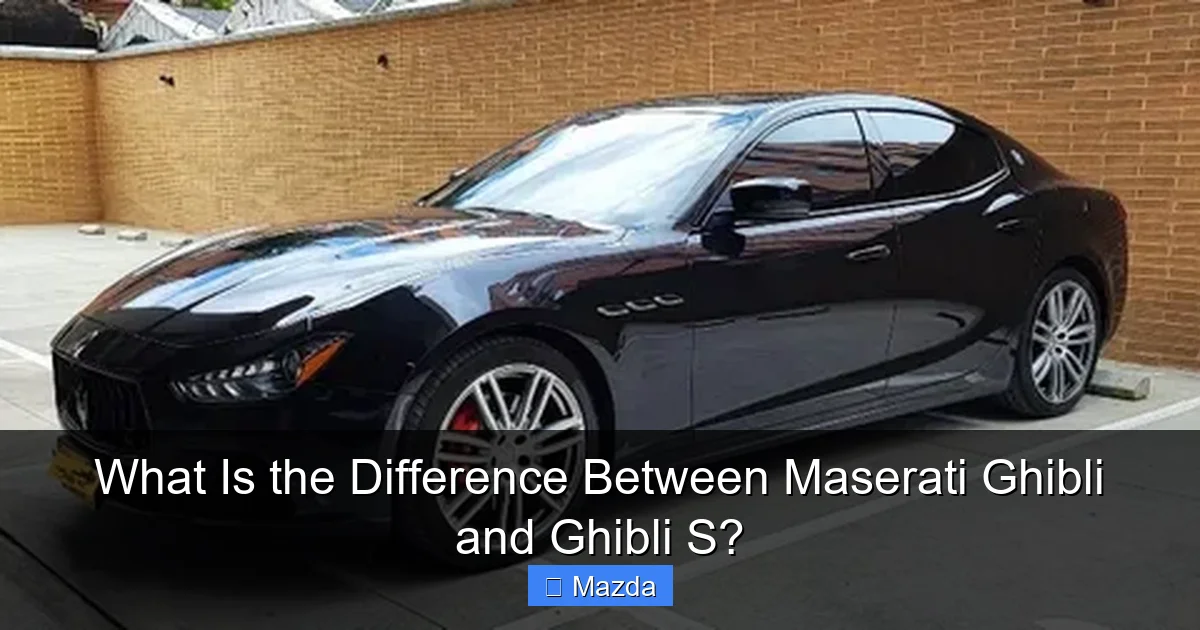
Another hallmark of the Ghibli S is its standard Brembo high-performance brake system. Brembo is a legendary name in braking, used in everything from supercars to Formula 1. The S model gets larger, ventilated discs (often 14.2 inches front) with distinctive red-painted calipers—a clear visual differentiator. These brakes offer a firmer pedal feel, more consistent performance under hard use, and a greater resistance to fade. The standard Ghibli has very capable brakes, but they lack the outright stopping power and high-temperature resilience of the Brembo setup. For the driver who enjoys exploring the limits of the S model’s extra power, those Brembos are a critical safety and performance component.
Style and Presence: Exterior and Interior Clues
While the silhouette is shared, Maserati’s designers cleverly used subtle cues to signal the sportier intent of the Ghibli S. Spotting these is like a secret handshake for enthusiasts.
Visual guide about What Is the Difference Between Maserati Ghibli and Ghibli S?
Image source: eurospares.co.uk
Exterior Giveaways
The most obvious exterior change is the wheel design. The Ghibli S almost always comes with larger, more intricate multi-spoke alloy wheels (typically 20 inches) that fill the wheel wells better and reveal the red Brembo calipers behind them. The base Ghibli might have 18 or 19-inch wheels with a more conservative design. Look also for a more aggressive front splitter and rear diffuser on the S model, and sometimes a subtle rear spoiler. The “S” badge is discretely placed on the front fenders and sometimes the trunk lid. It’s not about being gaudy; it’s about subtle, purposeful aggression. The philosophy here is similar to how the Dodge Charger and Challenger use different styling elements to communicate their distinct characters—one a sleek sports sedan, the other a bold muscle coupe.
Interior Ambiance and Materials
Step inside, and the differences become more about texture and touch than major layout changes. Both have sumptuous leather, real wood or carbon-fiber trim, and impeccable build quality. The Ghibli S typically upgrades the seats to more heavily bolstered sport seats, often with a combination of leather and Alcantara suede for better lateral support during aggressive driving. The steering wheel is wrapped in perforated leather and may have paddle shifters that feel more substantial. You’ll also find more carbon-fiber interior trim accents replacing some of the wood, dialing up the motorsport vibe. The base Ghibli focuses on classic, opulent luxury with softer seats and more traditional wood trim. The S’s interior says “sport,” while the base model’s says “luxury lounge.”
Technology and Comfort: Are They the Same?
Here, the gap narrows considerably, which can be a point of confusion. In terms of infotainment, driver aids, and core comfort features, the Ghibli and Ghibli S are largely identical. Both use Maserati’s updated infotainment system (likely an 8.8-inch or larger touchscreen with Apple CarPlay and Android Auto), a premium sound system (often from Harman Kardon or Bowers & Wilkins), and a suite of advanced safety features like adaptive cruise control, lane-keep assist, and blind-spot monitoring. The spacious rear seat and trunk capacity are the same. The difference isn’t in *what* technology you get, but in *how* it’s presented and integrated with the driving experience. The sport seats in the S are still heated and ventilated; the adaptive suspension still has a comfortable “Comfort” mode. The S simply gives you a more engaging platform to enjoy all that technology from.
Visual guide about What Is the Difference Between Maserati Ghibli and Ghibli S?
Image source: images.pistonheads.com
Pricing, Value, and Which One Should You Choose?
Performance comes at a premium. The Ghibli S commands a significant price jump over the base model. For the 2026 year, expect the starting MSRP difference to be in the range of $15,000 to $20,000, depending on options and packages. This isn’t just for the engine tune; it’s for the entire performance package: the adaptive suspension, Brembo brakes, sport seats, specific wheels, and unique styling.
Calculating the “S” Premium
Is it worth it? That’s the million-dollar question. If your driving is 95% highway cruising, grocery gettering, and being chauffeured, the base Ghibli is an absolute gem and represents fantastic value. You get 90% of the style, luxury, and presence for less money. However, if you genuinely enjoy driving—the twisty back roads, the track days, the feeling of a car responding to your every input—the Ghibli S is transformative. The extra power is intoxicating, but the true value is in the complete chassis package. That adaptive suspension and those Brembo brakes make the car feel like a cohesive, high-performance instrument. It’s the difference between a good pianist and a concert pianist playing the same piano.
The Practical Buyer’s Checklist
Before you decide, you must test drive both back-to-back. Here’s what to focus on:
- Feel the Power: On a safe, empty stretch, floor the accelerator in each. Listen to the exhaust, feel the turbo lag (minimal in both, but the S is more urgent), and note the 0-60 sensation.
- Test the Suspension: Find a road with some imperfections. Drive the base Ghibli in Comfort mode, then switch the Ghibli S to Sport mode over the same stretch. Notice the body control, the cabin noise, and the steering weight.
- Brake Pedal Feel: Find a safe place to brake firmly from speed. The Brembo system in the S should offer a more confident, linear pedal with less travel.
- Seat Comfort vs. Support: Sit in both. The S sport seats will hold you tighter, which is great for dynamic driving but could be less comfortable for very long, relaxed trips if you prefer a plush, flat seat.
Think about your typical driving scenario. If you live in a city with smooth highways and want a luxurious statement piece, the Ghibli is perfect. If you have access to enjoyable roads and want a car that excites you every single time you drive it, the S is worth every penny of its premium. Remember, understanding trim levels is crucial in any model. For instance, the distinction between Infiniti QX60 Pure and Luxe models shows how a single model line can cater to vastly different buyer priorities through feature bundling.
The 2026 Context and Final Thoughts
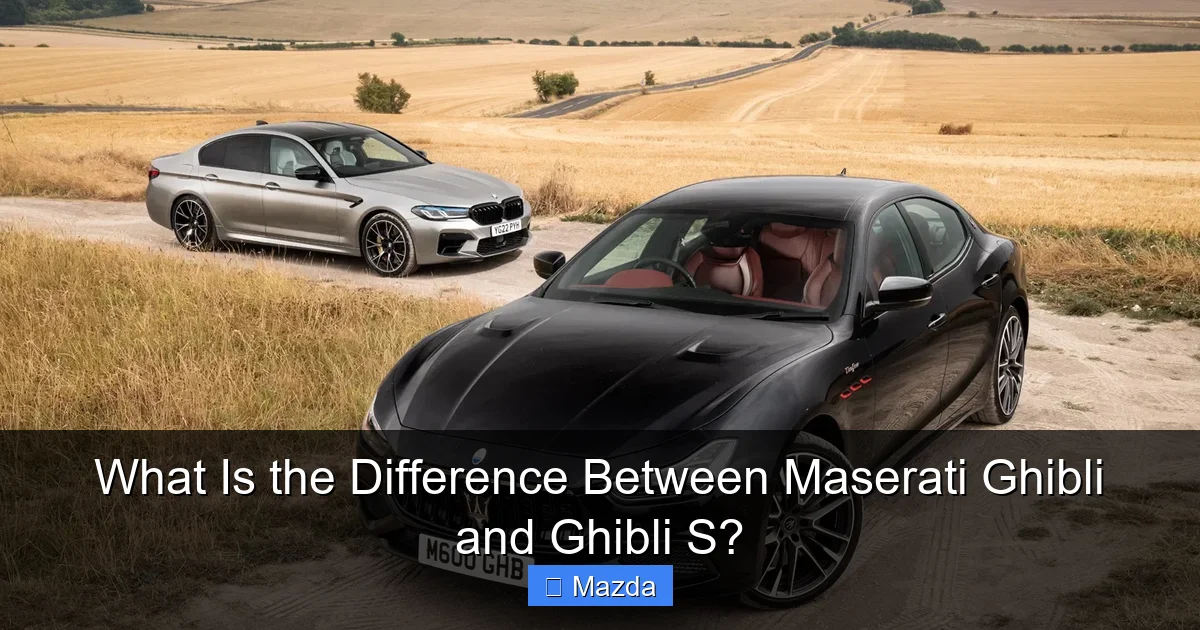
Looking ahead to the 2026 model year, Maserati is likely to continue refining its lineup with incremental updates—perhaps a small horsepower bump for both models, new infotainment features, or additional standard safety tech. However, the fundamental difference between the Maserati Ghibli and Ghibli S will remain constant: one is a luxurious performance sedan, the other is a performance sedan with luxurious trappings. The S will always be the more engaging, capable, and visceral choice. The base Ghibli will always be the more serene, comfortable, and value-oriented proposition.
Your decision ultimately comes down to your personal driving philosophy. Are you an enthusiast who believes a car should be a source of joy and engagement? Then the Ghibli S is your chariot. Do you seek a beautiful, comfortable, and prestigious vehicle that makes every arrival an event? The standard Ghibli delivers that in spades. Both are exceptional cars that capture the magic of the Maserati brand. Don’t get hung up on badges alone. Understand what those badges represent in terms of hardware and tuning. A test drive will tell you more than any spec sheet ever could. Whichever you choose, you’re getting a piece of Italian automotive passion that is utterly unique in the luxury sedan landscape.
Frequently Asked Questions
Is the Ghibli S significantly faster than the regular Ghibli?
Yes, the difference is substantial. The Ghibli S’s higher-tuned V6 provides nearly 80 more horsepower, cutting the 0-60 mph time by over a second. This makes the acceleration feel much more urgent and explosive compared to the standard model’s smooth and linear power delivery.
Do they have the same interior space and tech features?
For the most part, yes. Both models share the same infotainment system, passenger volume, and trunk space. The key interior differences are the sport seats with more bolstering, the sport steering wheel, and the increased use of carbon-fiber trim (instead of wood) in the Ghibli S, which changes the aesthetic and feel more than the functionality.
Is the Ghibli S worth the extra money?
It’s worth the extra money if you plan to use the car’s performance capabilities. The price premium buys you the more powerful engine, the adaptive sport suspension, and the Brembo brakes—a complete performance package. If you rarely drive spiritedly and prioritize comfort and value, the base Ghibli is the smarter buy.
Can I make a regular Ghibli handle like an S model with aftermarket parts?
You can improve the handling with aftermarket springs, dampers, and brakes, but you won’t fully replicate the factory-engineered, integrated system of the Ghibli S. The adaptive suspension in the S is a sophisticated, electronically controlled system that’s very difficult and expensive to match with aftermarket parts. It’s best to buy the correct model for your needs from the start.
Are maintenance costs higher for the Ghibli S?
Routine maintenance costs (oil changes, brakes, tires) are generally comparable, though the larger Brembo rotors and performance tires on the S may have a slightly higher replacement cost. The more complex adaptive suspension could potentially be more expensive to repair if it fails out of warranty, but both models share the same core engine and have similar long-term reliability expectations. It’s wise to review maintenance fundamentals like the oil pan to understand common service points for any high-performance vehicle.
Which model is better for daily driving and long trips?
The standard Ghibli is arguably better for pure daily comfort and long-distance touring due to its comfort-tuned suspension and softer seats. However, the Ghibli S’s adaptive suspension has a “Comfort” mode that makes it very compliant as well. The choice really depends on your tolerance for a slightly firmer ride in exchange for vastly superior handling when you want it. Both are superb grand tourers.