
What Is Included in a Toyota Multi-point Inspection?

A Toyota Multi-Point Inspection is a comprehensive health check for your vehicle, typically performed during routine oil changes. A technician systematically examines over 40 key areas across major systems like engine, brakes, suspension, and electronics. This proactive service identifies potential issues early, helping you avoid costly repairs, maintain safety, and preserve your Toyota’s long-term value and reliability.
Key Takeaways
- It’s a Proactive Check-Up: The inspection is a systematic review of critical vehicle components, designed to catch small problems before they become major, expensive repairs.
- Covers All Major Systems: It goes beyond just oil and filters, thoroughly checking brakes, suspension, steering, fluids, belts, hoses, tires, and electronic systems.
- Provides a Clear Report: You receive a detailed checklist or digital report categorizing items as “Good,” “Check,” or “Service/Repair Needed,” often with photos.
- Essential for Safety & Reliability: Regularly identifying worn brake pads, leaking fluids, or damaged belts is crucial for your safety and your Toyota’s dependable performance.
- Frequency Matters: Toyota recommends this inspection with every oil change, typically every 5,000-10,000 miles, to maintain optimal vehicle health.
- Dealership vs. Independent Shop: While dealerships use factory-trained techs and OEM specs, reputable independent shops perform equally thorough inspections using professional standards.
- It’s an Investment, Not an Expense: The cost of the inspection is minimal compared to the potential savings from preventing a breakdown or a catastrophic component failure.
📑 Table of Contents
- Introduction: Your Toyota’s Annual Physical
- Section 1: The Heart of the Matter – Engine & Under-Hood Components
- Section 2: Stopping Power – The Brake System Deep Dive
- Section 3: The Foundation – Tires, Wheels & Suspension
- Section 4: The Exhaust & Underbody – Emissions & Protection
- Section 5: The Nervous System – Electrical, Lights & HVAC
- Section 6: The Final Sweep – Other Critical Checks & The Report
- Conclusion: Peace of Mind on the Road
Introduction: Your Toyota’s Annual Physical
You take your car for granted. It starts when you turn the key, it gets you to work, and it hauls your family around town. But like any complex machine, your Toyota needs regular check-ups to stay in top shape. That’s where the Toyota Multi-Point Inspection (MPI) comes in. Think of it as your vehicle’s annual physical exam, but one you should get every time you have your oil changed.
This isn’t just a quick glance under the hood. It’s a meticulous, standardized process where a trained technician uses a checklist to evaluate the condition of dozens of components. The goal? To find wear and tear, leaks, and potential failures before they leave you stranded on the side of the road. Understanding what’s included in this inspection empowers you as a vehicle owner. It helps you ask the right questions, understand the technician’s recommendations, and make informed decisions about your car’s maintenance. Let’s pop the hood, crawl under the chassis, and dive deep into every single thing a proper Toyota Multi-Point Inspection should cover.
Section 1: The Heart of the Matter – Engine & Under-Hood Components
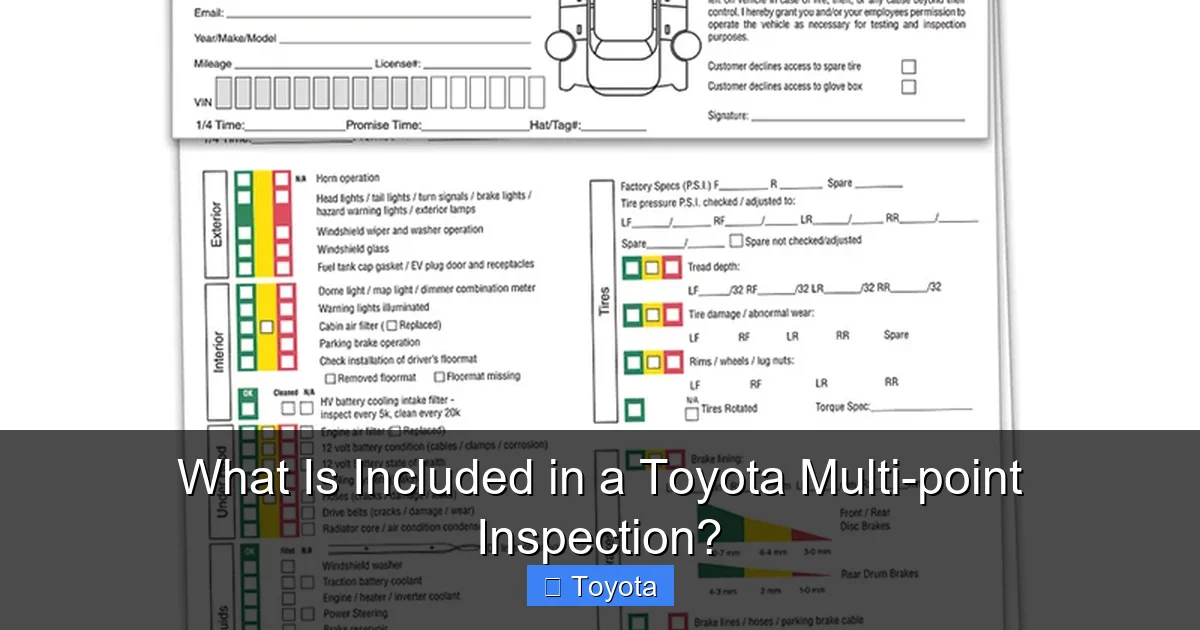
The inspection begins where the power is made. The engine bay is a complex network of belts, hoses, filters, and fluids. A thorough check here is fundamental.
Visual guide about What Is Included in a Toyota Multi-point Inspection?
Image source: paadps.com
Fluids: The Lifeblood of Your Engine
This is often the first step. The technician will check the level and condition of:
- Engine Oil: Level is checked with a dipstick, but the real insight is in the oil’s color and consistency. Clean, amber-colored oil is good. Dark, gritty, or milky oil indicates it’s overdue for a change, has sludge, or has a coolant leak, respectively.
- Coolant (Antifreeze): Level is checked in the reservoir. The technician will also inspect its condition. Rusty, cloudy, or low coolant can signal a failing radiator, water pump, or head gasket issue.
- Brake Fluid: Level and condition are critical. Brake fluid is hygroscopic, meaning it absorbs moisture over time, which lowers its boiling point and reduces braking efficiency. It should be clear or amber; dark brown or black fluid means it needs a flush.
- Power Steering Fluid: Level and condition are checked. Low fluid can indicate a leak in the rack, pump, or hoses. Dirty fluid can cause premature wear.
- Transmission Fluid: For automatics, level and condition are paramount. The fluid should be a clear red (though some newer Toyotas use specific colors). A burnt smell or dark color indicates overheating and internal wear. For manuals, the level is checked via a plug.
- Windshield Washer Fluid: Simply checked for level and topped off if low.
Belts & Hoses: The Circulatory System
These rubber and composite components have a finite lifespan. The technician will physically inspect them for:
- Cracks, Glazing, or fraying: Visible signs of age and wear on serpentine belts, timing belts (if accessible), and accessory belts.
- Bulges or Soft Spots: Feel along radiator and heater hoses. Bulges indicate internal weakening and imminent failure.
- Coolant Leaks: Looking for stains, crusty deposits, or active dripping around hose connections, water pump, and radiator.
A broken belt can leave you stranded instantly. A ruptured hose causes rapid overheating and engine destruction. Catching these early is a huge win.
Filters: Keeping Contaminants Out
The inspection confirms the status of:
- Engine Air Filter: Removed and visually inspected. A clogged, dirty filter starves the engine of air, reducing power and fuel economy. It’s a simple, cheap replacement.
- Cabin Air Filter: Often located behind the glovebox. A dirty cabin filter reduces HVAC airflow and allows allergens into the cabin. It’s frequently replaced at this service.
- Fuel Filter: Location varies. Some are in the tank (lifetime), some are external. The service interval and need for replacement are checked against maintenance schedules.
Battery & Electrical Connections
Technicians will:
- Check Battery Terminals: For corrosion (white/blue powder) which can prevent starting. They may clean and coat them.
- Inspect Battery Case: For cracks, bulges, or leaks—signs of a failing battery.
- Test Battery Voltage & Load: Using a multimeter or dedicated tester to measure charge and cold cranking amps (CCA) capacity. A weak battery might still start but will fail in cold weather.
- Check Drive Belts: For tension and wear, as they also drive the alternator.
Section 2: Stopping Power – The Brake System Deep Dive
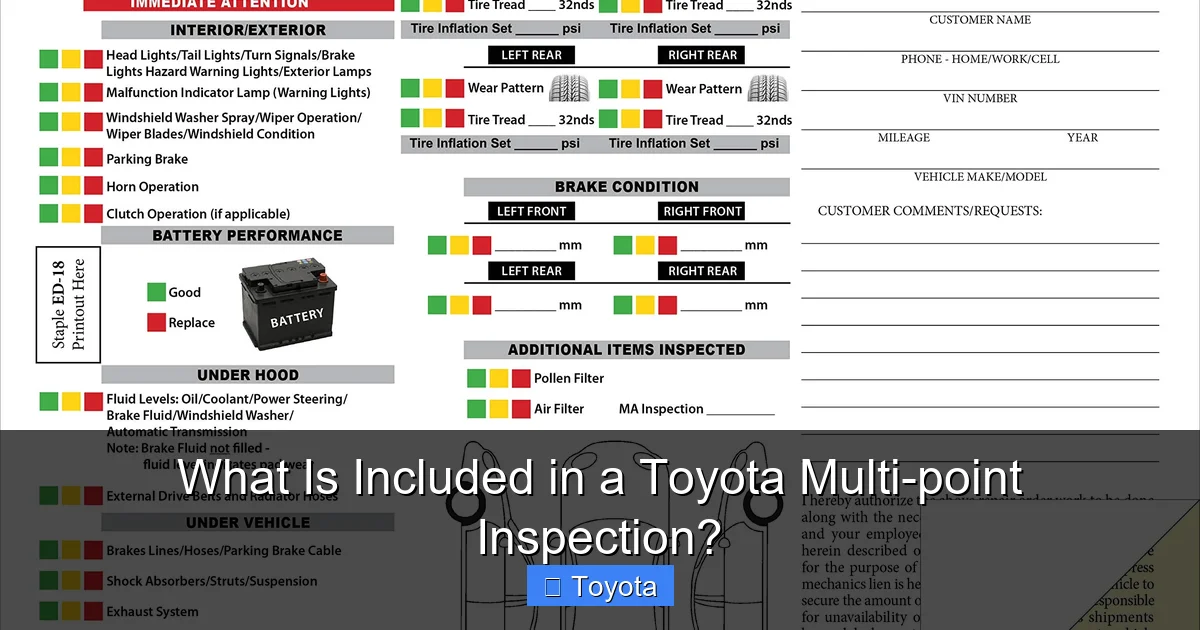
Your brakes are non-negotiable for safety. A Multi-Point Inspection gives them extreme attention.
Visual guide about What Is Included in a Toyota Multi-point Inspection?
Image source: m.media-amazon.com
Brake Pads & Shoes
The technician will measure the remaining friction material thickness on all four wheels. They’ll compare it to the manufacturer’s minimum spec (often 2-3mm). They’ll also look for:
- Uneven Wear: One pad significantly thinner than its pair can indicate a stuck caliper piston or slide pin.
- Grooves or Scoring: Deep grooves on the pad surface mean the rotor is damaged and may need replacement or resurfacing.
- Contamination: Oil or grease on a pad (from a leaking caliper seal) renders it useless and requires replacement.
Brake Rotors & Drums
Rotors (disc brakes) and drums (drum brakes, often on rear wheels of some models) are inspected for:
- Thickness: Measured with a micrometer. Rotors have a minimum safe thickness stamped on the hat. Below this, they must be replaced.
- Surface Condition: Checking for deep scoring, rust pitting, blue discoloration (from overheating), or excessive runout (warpage) that causes pedal pulsation.
- Cracks: Any visible crack, especially a radial one from the hub outward, means the rotor must be replaced immediately.
Brake Lines, Hoses & Calipers
The hydraulic system is inspected for:
- Leaks: At the master cylinder, brake lines (metal), flexible rubber hoses (at each wheel), and caliper/wheel cylinder seals. Any fluid leak is a serious red flag.
- Hoses: Bulging, cracking, or abrasion on flexible hoses. They weaken with age and can burst under pressure.
- Caliper Operation: The piston should move freely. A stuck caliper causes rapid pad wear on one side and can lead to a dragging brake, overheating, and reduced fuel economy.
If your Toyota has features like Toyota’s A-Trac system or a DAC (Downhill Assist Control) button on a 4Runner, these systems rely on the ABS module and wheel speed sensors, which are also part of the brake system check. A fault in these sensors can disable those advanced features.
Section 3: The Foundation – Tires, Wheels & Suspension
Your tires are the only contact point with the road. The suspension and steering components connect them to your vehicle and control how it handles.
Visual guide about What Is Included in a Toyota Multi-point Inspection?
Image source: fixedopsdigital.s3.amazonaws.com
Tire Health & Pressure
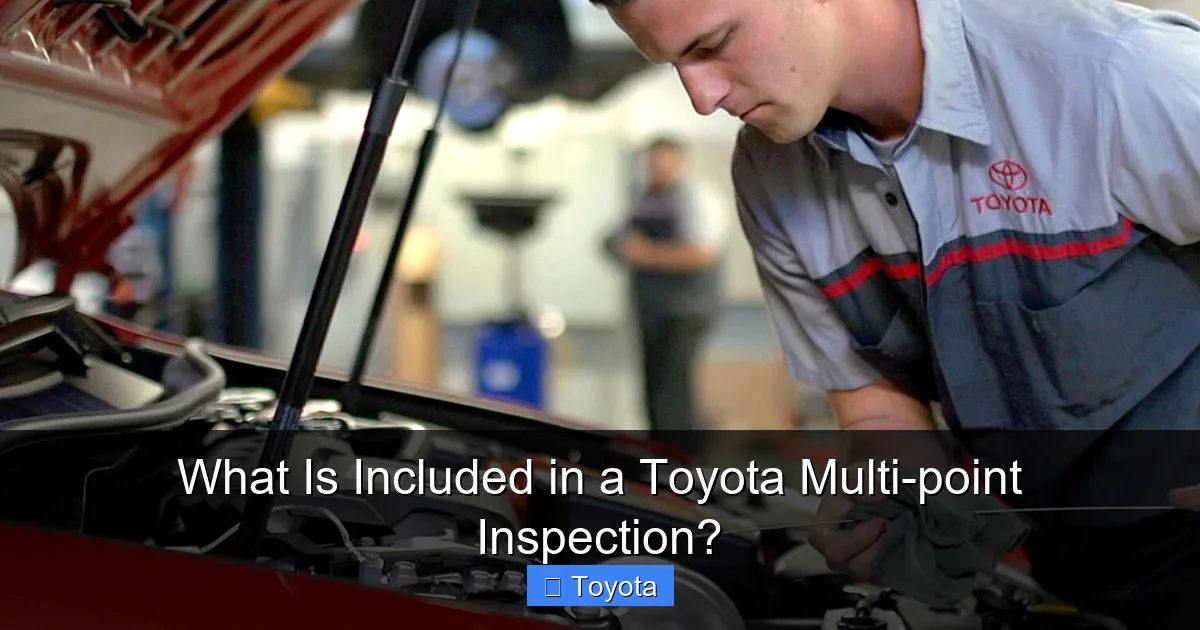
Every tire is removed (or the vehicle is lifted) for a full inspection:
- Tread Depth: Measured with a tread gauge at multiple points on each tire. The legal minimum is usually 2/32”. Good practice is to replace at 4/32” for wet/snowy conditions. Uneven wear patterns point to alignment issues, suspension problems, or incorrect inflation.
- Tire Pressure: Checked against the placard on the driver’s door jamb. Under-inflation causes excessive wear, poor fuel economy, and overheating. Over-inflation reduces traction and causes center wear.
- Sidewall Condition: Inspected for cuts, gashes, bubbles (indicating a broken belt), cracks (dry rot), and bulges.
- Age: The DOT code on the sidewall indicates the week and year of manufacture. Many manufacturers recommend replacing tires after 6-10 years, regardless of tread, due to rubber degradation.
Wheel Bearings
With the tire off, the technician will grab the wheel at 12 and 6 o’clock and try to rock it. Excessive play indicates worn wheel bearings, which can lead to a wheel coming off—a catastrophic failure. They’ll also listen for grinding or growling noises when spinning the wheel by hand.
Suspension & Steering Components
Under the vehicle, a visual and physical inspection of these parts occurs:
- Shocks/Struts: Checked for leaks (oil on the body), physical damage (bent shaft), and worn bushings. A “bounce test” (pushing down on the front/rear) can reveal if they’re still functioning. Worn shocks cause excessive body roll, poor handling, and uneven tire wear.
- Tie Rod Ends & Ball Joints: These are the pivot points for steering and suspension. They are checked for excessive play by grasping and attempting to move them. Any noticeable slack means imminent failure and must be replaced.
- Control Arm Bushings: Rubber bushings that isolate vibration. Cracks, splits, or deterioration allow metal-on-metal contact, causing clunks and poor alignment.
- CV Joints / Axles: The rubber boots that hold grease are inspected for tears. A torn boot leads to grease loss and joint contamination, causing a clicking noise when turning and eventual failure.
- Steering Rack: Checked for leaks and play in the steering shaft.
Section 4: The Exhaust & Underbody – Emissions & Protection
This section focuses on emissions control and protecting the vehicle’s vital components from road debris and the elements.
Exhaust System
The entire system, from the engine manifold to the tailpipe, is inspected:
- Leaks: At the manifold, gaskets, pipes, muffler, and catalytic converter. Exhaust leaks are dangerous (carbon monoxide) and cause loud noises.
- Hangers & Mounts: Broken or missing rubber hangers cause the exhaust to sag, potentially dragging on the ground or damaging other components.
- Corrosion: Rust is the #1 enemy of exhaust systems, especially in regions that use road salt. Severe rust can cause pipes or the muffler to fall off.
- Catalytic Converter: Checked for physical damage and rattles (indicating broken internal ceramic substrates). A failed cat will trigger a check engine light and fail emissions tests.
Underbody & Protection
The technician will look at what’s underneath:
- Oil Leaks: Checking for drips from the engine oil pan, valve cover gaskets, transmission, or differential. Identifying the source and severity of a leak is key.
- Coolant Leaks: Often from the radiator, hoses, or heater core (dripping inside the firewall).
- Fuel Leaks: Any smell of gasoline or visible wetness around fuel lines, rail, or injector seals is a major fire hazard.
- Frame & Body: Looking for significant rust, damage, or signs of prior unrepaired accidents.
- Skid Plates & Shields: Ensuring they are secure and not damaged, as they protect the engine, transmission, and fuel tank.
Section 5: The Nervous System – Electrical, Lights & HVAC
Modern Toyotas are rolling computers. This part of the inspection ensures all the electronic systems that control comfort, safety, and communication are functioning.
Lighting Systems
Every single exterior and interior light is turned on and checked:
- Headlights (low/high beam)
- Parking lights, turn signals (front & rear)
- Brake lights (including center high-mount stop lamp)
- Reverse lights
- Hazard lights
- Fog lights
- License plate lights
- Interior dome lights, map lights, trunk/hatch light
They’ll also check headlight aim. Misaimed headlights can blind oncoming drivers or fail to illuminate the road properly.
Wipers & Washers
Wiper blades are inspected for cracks, hardening, and streaking. The washer system is tested for fluid spray and proper nozzle aim. Poor wipers are a major safety issue in rain and snow.
Heating, Ventilation, and Air Conditioning (HVAC)
The technician will:
- Confirm the blower motor works on all speed settings.
- Check that the A/C produces cold air (using a thermometer if available).
- Verify the heater blows hot air.
- Ensure all vents operate and direct airflow correctly.
- Check for unusual noises from the HVAC system (blend door motors, blower).
- Inspect the cabin air filter (often replaced at this service).
If your Toyota has features like Eco Heat & Cool or a Snow Button, their function is tied to the HVAC and drivetrain systems, which are part of this overall check.
Battery, Starter & Charging System
Beyond the visual battery check mentioned earlier, a more thorough inspection may include:
- Starter Draw Test: To see if the starter is drawing too much current, which can kill a good battery.
- Alternator Output: Checking that the alternator is charging the battery properly (typically 13.8-14.4 volts at the battery terminals with the engine running).
- Corroded or Loose Connections: At the battery posts, starter motor, and ground straps. Poor connections cause starting issues and charging problems.
Section 6: The Final Sweep – Other Critical Checks & The Report
The last parts of the Multi-Point Inspection tie everything together and ensure no stone is left unturned.
Axles & Driveline
For front-wheel-drive Toyotas, constant velocity (CV) axles are checked (as mentioned in suspension). For rear-wheel-drive and 4×4 models:
- Differential Fluid: Level and condition are checked. Metal shavings in the fluid indicate internal wear.
- U-Joints: On the driveshaft, checked for play, rust, or tears in the seals.
- Transfer Case: On 4WD/AWD models, fluid level and condition are checked.
Accessory & Drive Components
A final look at items that affect multiple systems:
- Serpentine Belt: Reiterating the check for cracks, glazing, and proper tension.
- Idler Pulleys & Tensioners: Checked for smooth rotation and bearing noise.
- Radiator & Coolant Reservoir: Physical check for leaks, damage, and proper cap seal.
The Digital Report: Understanding Your Results
This is the most important part for you. A professional shop doesn’t just tell you what’s wrong; they show you. You should receive a detailed report, often on a tablet or printed, that lists every item inspected. It will categorize findings, typically with color codes:
- GREEN / GOOD: Item is within factory specifications and requires no service at this time.
- YELLOW / CHECK / CAUTION: Item is showing wear but is not yet critical. It should be monitored and likely addressed at the next service.
- RED / SERVICE / REPLACE: Item is failed, outside specifications, or a safety concern. Repair or replacement is recommended immediately.
The best reports include photos of the problematic components. Seeing a cracked bushing, a leaking strut, or a worn brake pad with the measurement callout next to it removes all doubt. Ask the technician to walk you through the report. A reputable shop will welcome questions and explain the “why” behind each recommendation.
Conclusion: Peace of Mind on the Road
A Toyota Multi-Point Inspection is far more than a checklist to upsell services. It is the cornerstone of intelligent, preventive maintenance. It translates the complex language of your vehicle’s health into a clear, actionable plan. By committing to this inspection with every oil change, you are not spending money; you are investing it. You’re investing in the safety of your family, the reliability of your daily driver, and the long-term value of your asset. You’re turning uncertainty into control. So, the next time your technician hands you that report, take a deep breath, review it carefully, ask questions, and make decisions from a place of knowledge. Your Toyota—and your wallet—will thank you for it in the long run.
Frequently Asked Questions
How much does a Toyota Multi-Point Inspection cost?
Many dealerships and reputable shops offer the Multi-Point Inspection for free as part of an oil change service. If performed as a standalone service, it typically ranges from $50 to $150, depending on the shop’s labor rate. The value it provides in preventing costly repairs makes it a worthwhile investment.
How often should I get a Multi-Point Inspection?
Toyota recommends having the full Multi-Point Inspection performed with every oil change. For most vehicles using conventional oil, this is every 5,000 miles. For those using synthetic oil, the interval is often 7,500 to 10,000 miles. Regular inspections are key to catching gradual wear.
Is a Multi-Point Inspection the same at a dealership and an independent shop?
The core checklist is very similar, covering the same critical safety and wear items. The main difference may be the specific factory bulletin information a dealership has access to. A reputable independent shop with Toyota-certified technicians will perform an equally thorough inspection using professional standards and manufacturer specifications.
What should I do if the inspection finds problems?
Review the report carefully. Prioritize any items marked “RED” or “SERVICE NEEDED,” especially those related to brakes, steering, tires, or major fluid leaks. Ask the technician for a clear explanation, a parts and labor estimate, and the urgency of the repair. You are not obligated to have the work done at that shop, though it’s often convenient.
Can I refuse parts of the inspection?
Technically yes, but it’s not advisable. The inspection is designed as a comprehensive system check. Refusing a check on, for example, the brakes or suspension, defeats the purpose of the safety and preventive maintenance you’re paying for. It’s best to have the full inspection performed.
Does the inspection include checking my Toyota’s advanced safety features?
The physical components that support those features are checked. For example, the wheel speed sensors (critical for ABS, Trac, and stability control) are inspected for damage and connection. However, a full diagnostic scan of the vehicle’s computer systems to check for stored fault codes in those advanced modules is typically a separate, more in-depth service.