What Is Covered Under the Nissan Powertrain Warranty?

Contents
- 1 Key Takeaways
- 2 📑 Table of Contents
- 3 What Is the Nissan Powertrain Warranty?
- 4 What Components Are Covered Under the Nissan Powertrain Warranty?
- 5 What Is NOT Covered Under the Nissan Powertrain Warranty?
- 6 How Long Does the Nissan Powertrain Warranty Last?
- 7 How to Make the Most of Your Nissan Powertrain Warranty
- 8 Real-World Examples of Powertrain Warranty Claims
- 9 Tips for New Nissan Buyers
- 10 Conclusion
- 11 Frequently Asked Questions



The Nissan powertrain warranty covers major components like the engine, transmission, and drivetrain for up to 60,000 miles or 60 months. It protects against defects in materials and workmanship but excludes wear-and-tear parts and routine maintenance.
When you buy a new Nissan, one of the biggest perks—and peace-of-mind factors—is the factory warranty. Among its most valuable components is the **Nissan powertrain warranty**, which safeguards the heart of your vehicle: the systems that make it move. Whether you’re driving a rugged Frontier pickup, a sleek Altima sedan, or an eco-friendly Leaf EV, understanding what this warranty covers can save you thousands in unexpected repair costs.
But here’s the thing: not all warranties are created equal. While some automakers offer limited powertrain coverage, Nissan stands out with a comprehensive, straightforward plan that protects critical mechanical components for years. The powertrain warranty isn’t just about the engine—it extends to the transmission, drivetrain, and other essential parts that transfer power from the engine to the wheels. This means fewer surprises at the service bay and more confidence on the road.
In this guide, we’ll break down exactly what’s covered under the Nissan powertrain warranty, what’s not, how long it lasts, and how to make the most of it. Whether you’re shopping for a new Nissan, recently purchased one, or just curious about your coverage, this article will give you the full picture—no fine print, no confusion.
Key Takeaways
- Engine Coverage: Includes internal engine parts like pistons, crankshaft, and cylinder heads.
- Transmission Protection: Covers both automatic and manual transmissions, including torque converters and internal gears.
- Drivetrain Components: Axles, driveshafts, differentials, and transfer cases are included.
- Hybrid & Electric Models: Electric motors and hybrid-specific powertrains are covered under the same terms.
- Duration & Mileage: Standard coverage lasts 60 months or 60,000 miles, whichever comes first.
- Exclusions Apply: Wear items like clutches, CV boots, and fluids are not covered.
- Transferable Warranty: Remains valid if you sell your vehicle within the coverage period.
📑 Table of Contents
- What Is the Nissan Powertrain Warranty?
- What Components Are Covered Under the Nissan Powertrain Warranty?
- What Is NOT Covered Under the Nissan Powertrain Warranty?
- How Long Does the Nissan Powertrain Warranty Last?
- How to Make the Most of Your Nissan Powertrain Warranty
- Real-World Examples of Powertrain Warranty Claims
- Tips for New Nissan Buyers
- Conclusion
What Is the Nissan Powertrain Warranty?
The Nissan powertrain warranty is a limited warranty that covers the major components responsible for generating and delivering power to your vehicle’s wheels. It’s designed to protect you against defects in materials or workmanship during normal use. Unlike bumper-to-bumper warranties that cover nearly everything for a shorter period, the powertrain warranty focuses specifically on the mechanical “power-producing” parts of your car.
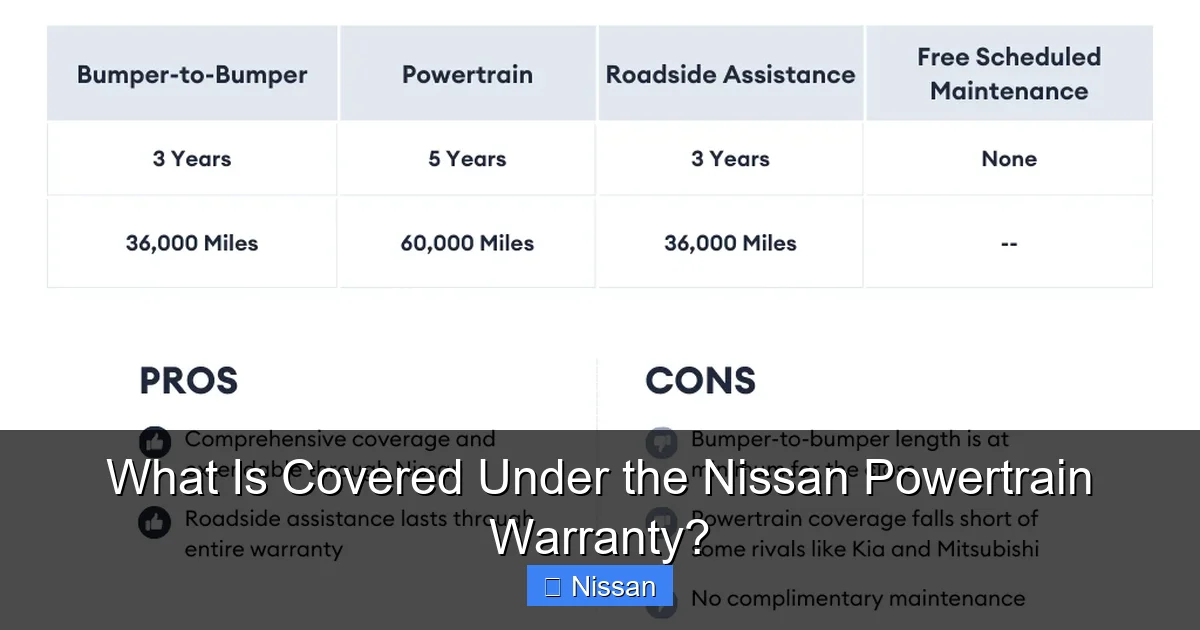
This warranty applies to all new Nissan vehicles sold in the United States and typically begins on the date the vehicle is first delivered to the original purchaser or put into service by a dealer. It runs for **60 months or 60,000 miles**, whichever comes first. That means if you hit 60,000 miles in four years, your coverage ends—even if you haven’t reached the five-year mark.
It’s important to note that this warranty is **transferable**. If you sell your Nissan before the 60-month or 60,000-mile limit, the new owner automatically receives the remaining coverage. This can be a major selling point and adds value to your vehicle.
How Does It Differ from Other Nissan Warranties?
Nissan offers several types of warranties, and it’s easy to get them confused. Here’s a quick breakdown:
– **Basic (Bumper-to-Bumper) Warranty:** Covers most vehicle components for 36 months or 36,000 miles. This includes things like electronics, air conditioning, and interior features.
– **Powertrain Warranty:** Lasts 60 months or 60,000 miles and focuses only on engine, transmission, and drivetrain parts.
– **Corrosion Warranty:** Covers rust perforation for 60 months, unlimited mileage.
– **Federal Emissions Warranty:** Required by law and covers emissions-related parts for varying periods (up to 8 years or 80,000 miles for certain components).
The powertrain warranty is longer than the basic warranty but narrower in scope. Think of it as a targeted safety net for the most expensive and critical parts of your vehicle.
What Components Are Covered Under the Nissan Powertrain Warranty?
Visual guide about What Is Covered Under the Nissan Powertrain Warranty?
Image source: carid.com
Now for the good stuff: what exactly does the Nissan powertrain warranty cover? Let’s dive into the key systems and parts that are protected.
Engine Coverage
The engine is the star of the powertrain show, and Nissan’s warranty covers nearly all internal components. This includes:
– Cylinder block and heads
– Pistons and piston rings
– Crankshaft and connecting rods
– Camshafts and valve train
– Timing chain or belt (if defective, not due to wear)
– Oil pump and water pump
– Engine mounts (if failed due to material defect)
For example, if your engine develops a cracked cylinder head due to a manufacturing flaw, Nissan will repair or replace it at no cost. However, if the damage is caused by overheating due to low coolant (a maintenance issue), it won’t be covered.
Transmission Protection
Whether you drive an automatic or manual transmission, the powertrain warranty has you covered. Covered components include:
– Transmission case and internal parts (gears, shafts, bearings)
– Torque converter (in automatics)
– Clutch assembly (in manuals, but only if defective—not due to normal wear)
– Transmission control module (TCM)
Say your CVT (continuously variable transmission) starts slipping or making unusual noises within the warranty period. If a technician determines it’s due to a factory defect, Nissan will handle the repair. But if the issue stems from missed fluid changes or aggressive driving, you’re on the hook.
Drivetrain Components
The drivetrain is what transfers power from the transmission to the wheels. Covered parts include:
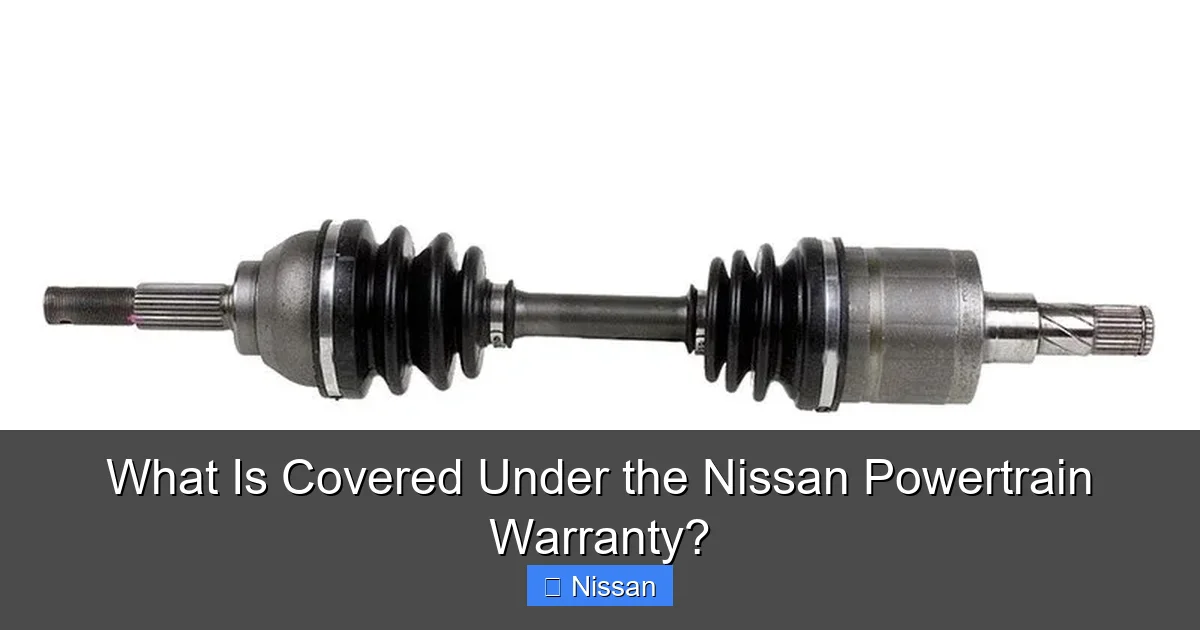
– Driveshafts and half-shafts
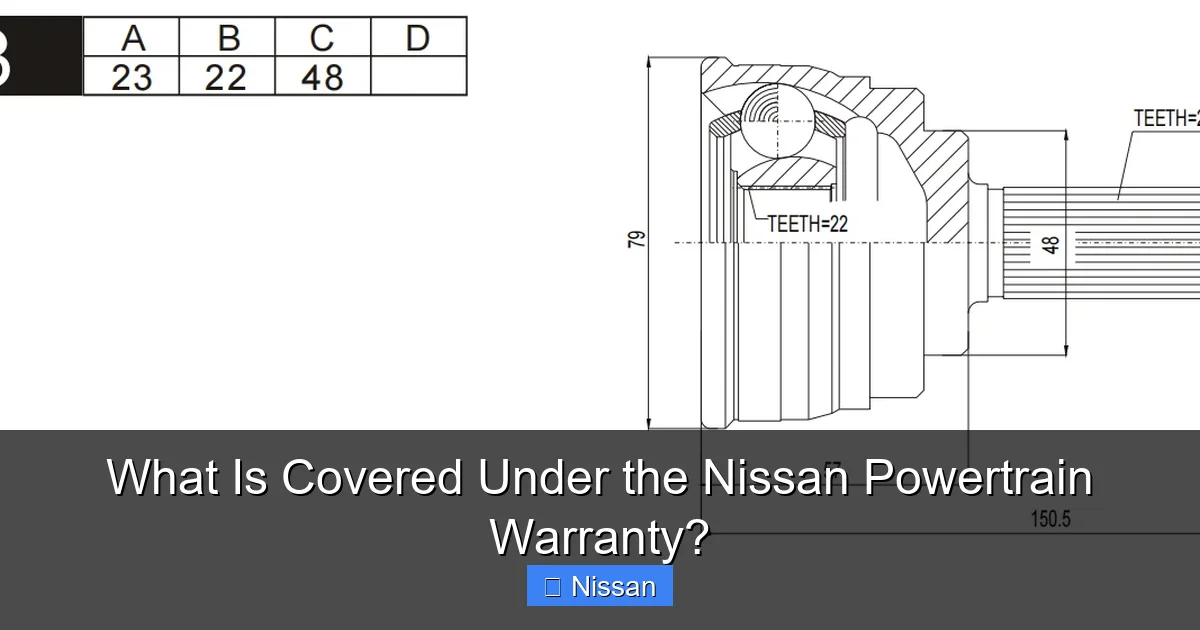
– Constant velocity (CV) joints (internal components only—boots are not covered)
– Differential assemblies (front and rear)
– Transfer case (in 4WD and AWD models)
– Final drive gears
For instance, if your all-wheel-drive Rogue develops a faulty transfer case that won’t engage, and it’s due to a manufacturing defect, Nissan will fix it. However, if the CV joint fails because the rubber boot tore and let dirt in, that’s considered wear and tear—and not covered.
Hybrid and Electric Vehicle Powertrains
Nissan’s electric and hybrid models—like the Leaf and e-Power vehicles—also benefit from powertrain coverage. This includes:
– Electric motor(s)
– Power inverter
– Transmission (if equipped)
– Drivetrain components
– High-voltage battery cooling system (related to powertrain function)
Note: The high-voltage battery itself is covered under a separate **8-year/100,000-mile warranty**, which is longer than the standard powertrain coverage. But the motor and inverter that use that battery’s power are included in the 60-month/60,000-mile powertrain warranty.
Four-Wheel Drive and All-Wheel Drive Systems
If your Nissan has 4WD or AWD, the powertrain warranty covers the components that make it work. This includes:
– Transfer case
– Front and rear differentials
– Driveshafts and axles
– Control modules for AWD engagement
For example, if your Pathfinder’s AWD system fails to switch modes due to a defective control module, that’s covered. But if the transfer case is damaged from off-roading beyond the vehicle’s design limits, it’s not.
What Is NOT Covered Under the Nissan Powertrain Warranty?
Visual guide about What Is Covered Under the Nissan Powertrain Warranty?
Image source: p.globalsources.com
While the powertrain warranty is robust, it’s not a catch-all. Understanding what’s excluded can prevent frustration down the road.
Wear-and-Tear Items
Normal wear items are not covered, even if they’re part of the powertrain. These include:
– Clutch discs (in manual transmissions)
– CV joint boots
– Transmission fluid and filters
– Engine oil and oil filters
– Spark plugs and ignition components
– Belts and hoses (unless defective)
For example, if your clutch wears out after 50,000 miles of city driving, that’s expected—and not covered. Similarly, if a CV boot cracks and allows grease to leak out, leading to joint failure, Nissan won’t pay for the repair because the boot itself isn’t covered.
Damage from Misuse or Neglect
The warranty doesn’t cover damage caused by:
– Accidents or collisions
– Off-road abuse (unless the vehicle is rated for it, like the Titan or Frontier)
– Towing beyond the vehicle’s capacity
– Lack of maintenance (e.g., low oil, overdue fluid changes)
– Use of incorrect fluids or fuels
Imagine you forget to change your transmission fluid for 100,000 miles. When the transmission fails at 55,000 miles due to sludge buildup, Nissan will deny the claim—even though it’s within the mileage limit. Why? Because proper maintenance is your responsibility.
Modifications and Aftermarket Parts
If you’ve modified your Nissan with performance chips, turbo kits, or non-OEM parts, any resulting damage may be denied. For example, installing a cold air intake that causes engine flooding could void coverage for related repairs.
Commercial Use and Rental Vehicles
Vehicles used for commercial purposes (like delivery, rideshare, or towing for profit) may have reduced or excluded coverage. Always check your warranty booklet if you use your Nissan for business.
How Long Does the Nissan Powertrain Warranty Last?

Visual guide about What Is Covered Under the Nissan Powertrain Warranty?
Image source: mckinnonnissan.com
The standard Nissan powertrain warranty lasts **60 months or 60,000 miles**, whichever comes first. This applies to all new Nissan vehicles sold in the U.S., including cars, trucks, SUVs, and EVs.
Does It Differ by Model or Year?
Generally, no. Whether you buy a 2024 Sentra or a 2023 Armada, the powertrain warranty terms are the same. However, always verify with your owner’s manual or Nissan’s official website, as policies can change slightly from year to year.
What About Certified Pre-Owned (CPO) Vehicles?
Nissan Certified Pre-Owned vehicles come with an extended powertrain warranty. If the original warranty has expired, CPO adds **7 years or 100,000 miles total** from the original in-service date. So if you buy a 3-year-old CPO Altima with 40,000 miles, you’ll have 4 more years or 60,000 more miles of coverage.
Can the Warranty Be Extended?
Yes! Nissan offers **Extended Service Contracts** (also called extended warranties) that can extend powertrain coverage beyond the factory limit. These are optional and paid for separately, but they can provide peace of mind for high-mileage drivers.
How to Make the Most of Your Nissan Powertrain Warranty
Getting the most out of your warranty isn’t just about knowing what’s covered—it’s about using it wisely.
Keep Detailed Maintenance Records
Nissan may deny claims if you can’t prove regular maintenance. Keep receipts for oil changes, fluid flushes, and inspections. Use the Nissan Maintenance Schedule in your owner’s manual as a guide.
Use Genuine Nissan Parts and Fluids
While not always required, using OEM parts and recommended fluids reduces the risk of compatibility issues and strengthens your warranty claim.
Report Issues Early
If you notice unusual noises, vibrations, or warning lights, get them checked immediately. Small problems can become big—and expensive—if ignored.
Visit Authorized Nissan Service Centers
While you can technically go to any mechanic, having repairs done at a Nissan dealership ensures proper documentation and increases the chances of a smooth warranty claim.
Understand the Claims Process
If a covered component fails, contact your Nissan dealer. They’ll diagnose the issue and determine if it’s warranty-related. You’ll need your vehicle identification number (VIN), mileage, and maintenance records.
Real-World Examples of Powertrain Warranty Claims
Let’s look at a few scenarios to see how the warranty works in practice.
Example 1: Engine Misfire Due to Defective Fuel Injector
Maria’s 2022 Nissan Rogue starts misfiring at 45,000 miles. The dealer diagnoses a faulty fuel injector—a defect in manufacturing. Since fuel injectors are part of the engine and the issue isn’t due to neglect, Nissan covers the repair at no cost.
Example 2: Transmission Failure from Lack of Fluid Changes
John’s 2021 Sentra has transmission problems at 58,000 miles. The dealer finds metal shavings in the fluid, indicating internal damage. However, John hasn’t changed the transmission fluid in 80,000 miles. Nissan denies the claim due to lack of maintenance.
Example 3: CV Joint Failure from Torn Boot
Lisa’s 2020 Murano makes a clicking noise when turning. The CV joint is worn out, but the rubber boot tore months ago, allowing dirt to enter. Since the boot is a wear item and not covered, Nissan won’t pay for the joint replacement.
Example 4: Electric Motor Failure in a Leaf
David’s 2023 Leaf stops moving. The electric motor has a wiring defect. Even though the car is electric, the motor is part of the powertrain. Nissan replaces it under warranty.
Tips for New Nissan Buyers
If you’re considering a Nissan, here are some tips to maximize your warranty benefits:
– **Read the Warranty Booklet:** It’s included with your vehicle and explains all terms in detail.
– **Ask About CPO Benefits:** If buying used, a CPO vehicle offers stronger protection.
– **Consider an Extended Warranty:** If you plan to keep your car long-term, an extended contract can be worth the investment.
– **Stay on Top of Maintenance:** Set reminders for oil changes, tire rotations, and inspections.
– **Document Everything:** Use apps or a folder to store service records.
Conclusion
The Nissan powertrain warranty is one of the best in the industry, offering five years or 60,000 miles of protection for the most critical parts of your vehicle. From the engine and transmission to the drivetrain and electric motors, it covers the components that keep you moving—without surprise repair bills.
But like any warranty, it comes with responsibilities. Regular maintenance, proper use, and timely reporting of issues are key to keeping your coverage valid. By understanding what’s included—and what’s not—you can drive with confidence, knowing your Nissan is backed by strong factory protection.
Whether you’re cruising in a Maxima, hauling in a Titan, or going green in a Leaf, the powertrain warranty is your safety net. Use it wisely, maintain your vehicle well, and enjoy the reliability that Nissan is known for.
Frequently Asked Questions
Does the Nissan powertrain warranty cover the transmission?
Yes, the transmission—including internal gears, torque converter, and control module—is covered under the Nissan powertrain warranty for 60 months or 60,000 miles.
Is the engine covered under the powertrain warranty?
Absolutely. The engine, including pistons, crankshaft, cylinder heads, and oil pump, is fully covered as long as the failure is due to a manufacturing defect.
Are hybrid and electric motors covered?
Yes, electric motors and hybrid powertrains are included in the powertrain warranty. However, the high-voltage battery has a separate 8-year/100,000-mile warranty.
Can I transfer the powertrain warranty if I sell my Nissan?
Yes, the warranty is transferable to a new owner at no extra cost, as long as the vehicle is sold within the 60-month or 60,000-mile limit.
What voids the Nissan powertrain warranty?
Damage from accidents, lack of maintenance, misuse, or modifications with aftermarket parts can void coverage. Always follow the maintenance schedule.
Does the warranty cover routine maintenance like oil changes?
No, routine maintenance such as oil changes, fluid top-offs, and filter replacements are not covered. These are the owner’s responsibility.