
What Does “service Shifter” Mean on a Dodge Ram?

The “service shifter” message on a Dodge Ram indicates an issue with the transmission or electronic shift system. It’s not just a warning—it’s a signal to check your truck’s shifting mechanism, sensors, or software. Ignoring it can lead to bigger problems, so understanding the cause and taking quick action is key.
If you’ve ever been driving your Dodge Ram and suddenly seen the words “service shifter” flash across your dashboard, you’re not alone. It’s one of those messages that can stop you in your tracks—literally and figuratively. You might wonder, “Is this serious? Can I keep driving? What even is a shifter, anyway?” These are all fair questions, especially if you’re not familiar with the inner workings of modern truck transmissions.
The good news is that while the “service shifter” warning shouldn’t be ignored, it doesn’t always mean your truck is on the verge of a breakdown. In many cases, it’s a sign that something in the electronic shifting system needs attention—whether it’s a sensor, a software glitch, or a fluid issue. But to understand what’s really going on, we need to dig into how the shifter system works in today’s Dodge Rams.
Gone are the days when shifting gears was purely mechanical. Most newer Dodge Ram models—especially those from 2013 onward—use an electronic shift-by-wire system. That means when you move the gear selector (whether it’s a dial, lever, or button), you’re not physically moving a cable connected to the transmission. Instead, you’re sending an electronic signal to the Transmission Control Module (TCM), which then tells the transmission what gear to engage. This system allows for smoother shifts, better fuel efficiency, and more advanced features like manual shift modes and tow/haul settings.
But with more electronics comes more potential for glitches. The “service shifter” message is the TCM’s way of saying, “Hey, something’s not right here.” It could be a minor sensor hiccup or a sign of a deeper mechanical issue. The key is not to panic—but also not to ignore it. In this guide, we’ll walk you through what the message means, why it appears, how to troubleshoot it, and when to call in the pros.
Key Takeaways
- “Service Shifter” is a diagnostic alert: It means your Dodge Ram’s transmission control module (TCM) has detected a problem with the gear shifter or related components.
- Common causes include faulty sensors or low transmission fluid: Issues like a bad range sensor, damaged wiring, or low fluid levels often trigger this warning.
- Electronic shift systems are sensitive: Modern Rams use electronic shifters that rely on software and sensors—glitches can cause false alerts.
- Don’t ignore the message: Continuing to drive with a service shifter issue can damage the transmission or leave you stranded.
- Basic troubleshooting helps: Checking fluid levels, restarting the system, or scanning for codes can resolve minor issues.
- Professional diagnosis is recommended: For persistent problems, a certified mechanic with Dodge-specific tools is best.
- Software updates may fix it: Sometimes, a TCM firmware update from a dealership resolves the issue without hardware repairs.
📑 Table of Contents
What Is the “Service Shifter” Message?
The “service shifter” warning is a diagnostic trouble code (DTC) that appears on the instrument cluster of certain Dodge Ram models. It’s part of the vehicle’s onboard diagnostics system, designed to alert drivers when something in the transmission or shifting mechanism isn’t functioning correctly. Unlike older mechanical shifters, modern Rams rely heavily on electronic components, and this message is often triggered when the system detects an inconsistency or fault.
When the message appears, it usually means the Transmission Control Module (TCM) has logged an error related to the gear selector, range sensor, or communication between the shifter and the transmission. The TCM constantly monitors inputs from various sensors—like the gear position sensor, brake pedal sensor, and ignition switch—to ensure the vehicle shifts safely and correctly. If any of these inputs are out of range or missing, the system may disable certain functions and display the “service shifter” alert.
It’s important to note that this message is not the same as a “check engine” light. While both are warning indicators, the “service shifter” is specifically tied to the transmission and shifting system. That said, in some cases, it can be accompanied by other warning lights, such as the “check engine” or “transmission temperature” light, depending on the root cause.
One common misconception is that the “service shifter” message means the physical shifter is broken. In reality, the shifter itself is rarely the problem. More often, it’s an electronic component—like a sensor or wiring harness—that’s malfunctioning. For example, if the range sensor (which tells the TCM what gear you’ve selected) sends incorrect data, the system may not allow the truck to start or shift properly, triggering the warning.
Another reason this message appears is due to communication errors between modules. Modern vehicles like the Dodge Ram have multiple control modules (engine, transmission, body, etc.) that communicate over a network. If there’s a disruption in this communication—due to a faulty connection, low battery voltage, or software bug—the TCM may not receive the correct signals, leading to the “service shifter” alert.
In short, the “service shifter” message is your truck’s way of saying, “I can’t confirm the gear position or there’s a problem with the shift system.” It’s a protective measure to prevent unsafe driving conditions, such as shifting into drive while the engine is revving or failing to engage park properly.
Common Causes of the “Service Shifter” Warning
Visual guide about What Does “service Shifter” Mean on a Dodge Ram?
Image source: driverlessrevolutions.com
Now that we know what the message means, let’s look at the most common reasons it appears. While each case can be unique, several issues pop up repeatedly across Dodge Ram owners. Understanding these causes can help you diagnose the problem faster and avoid unnecessary repairs.
Faulty Range Sensor (Transmission Range Sensor)
The range sensor, also known as the transmission range sensor (TRS), is one of the most frequent culprits. This sensor is located on or near the transmission and tells the TCM what gear the shifter is in (Park, Reverse, Neutral, Drive, etc.). If the sensor fails or sends incorrect signals, the TCM can’t confirm the gear position, triggering the “service shifter” message.
Symptoms of a bad range sensor include:
– The truck won’t start (even though the battery is good)
– The gear indicator on the dashboard shows the wrong gear
– The shifter feels “stuck” or unresponsive
– The “service shifter” message appears intermittently
In many cases, replacing the range sensor resolves the issue. However, it’s important to have the correct part installed and properly calibrated, as some sensors require alignment during installation.
Low or Contaminated Transmission Fluid
Transmission fluid does more than just lubricate—it also acts as a hydraulic fluid that helps engage gears and cools the transmission. If the fluid level is low or the fluid is old and contaminated, it can cause shifting problems and trigger warning messages.
Signs of low or bad transmission fluid include:
– Delayed or harsh shifting
– Slipping gears
– Burning smell from under the hood
– Transmission overheating
Checking the fluid level is a simple first step. On most Dodge Rams, you’ll need to check the fluid with the engine running and the transmission in park. If the fluid is dark, smells burnt, or is below the “full” mark, it’s time for a fluid change or top-off. However, if the fluid is severely degraded, a full flush and filter replacement may be needed.
Electrical Issues and Wiring Problems
Because the shifter system is electronic, it relies on a network of wires, connectors, and fuses. Corrosion, loose connections, or damaged wiring can interrupt the signal between the shifter and the TCM, causing the “service shifter” alert.
Common electrical issues include:
– Corroded connectors near the transmission or shifter
– Broken or frayed wires in the harness
– Blown fuses in the fuse box (especially those related to the TCM or ignition)
These problems can be tricky to diagnose without the right tools. A multimeter can help test for continuity and voltage, but if you’re not comfortable working with electrical systems, it’s best to leave this to a professional.
Software or Firmware Glitches
Believe it or not, sometimes the “service shifter” message is caused by a software bug—not a hardware failure. The TCM runs on firmware, and if it’s outdated or corrupted, it may misinterpret sensor data or fail to communicate properly with other modules.
This is especially common after a battery replacement or jump-start, which can cause a temporary voltage drop and reset the system. In some cases, simply restarting the vehicle or performing a system reset can clear the error.
However, if the problem persists, a dealership or certified mechanic can check for available TCM software updates. Dodge occasionally releases firmware updates to fix known issues, and installing one might resolve the “service shifter” message without any physical repairs.
Faulty Shift Solenoids
Shift solenoids are small electronic valves inside the transmission that control fluid flow to engage gears. If one or more solenoids fail, the transmission may not shift correctly, leading to the “service shifter” warning.
Symptoms of bad shift solenoids include:
– Harsh or delayed shifts
– Getting stuck in one gear
– Transmission slipping
While solenoids are part of the transmission, they’re often replaceable without a full rebuild. However, diagnosing which solenoid is faulty usually requires a scan tool that can read transmission-specific codes.
Ignition or Brake Switch Problems
The shifter system also relies on inputs from the ignition switch and brake pedal sensor. For example, the truck won’t shift out of park unless the brake pedal is pressed and the ignition is on. If either of these switches fails, the system may think the conditions for shifting aren’t met, triggering the warning.
A faulty brake switch is a common cause—especially if the brake lights don’t work or stay on. Replacing the switch is usually inexpensive and straightforward, but it’s worth checking if other symptoms are present.
Symptoms That Accompany the “Service Shifter” Message
Visual guide about What Does “service Shifter” Mean on a Dodge Ram?
Image source: i.ytimg.com
When the “service shifter” warning appears, it’s rarely the only sign something’s wrong. Paying attention to other symptoms can help you pinpoint the issue faster. Here are some common ones to watch for:
Truck Won’t Start or Shift Out of Park
One of the most frustrating symptoms is when your Ram won’t start or won’t move out of park, even though the engine turns over. This often happens when the TCM doesn’t recognize the gear position or detects a safety issue.
For example, if the range sensor says the truck is in “Drive” but the shifter is in “Park,” the system may prevent starting to avoid sudden movement. Similarly, if the brake switch isn’t working, the truck won’t allow you to shift out of park for safety reasons.
Erratic Gear Indicator
You might notice that the gear display on your dashboard shows the wrong gear—like showing “Reverse” when you’re in “Drive.” This is a clear sign that the range sensor or shifter position input is faulty.
In some cases, the display may flicker or show multiple gears at once. This usually indicates a communication error or loose connection in the shifter circuit.
Shifter Feels “Stuck” or Unresponsive
Even if the truck starts, the shifter might feel stiff, sticky, or unresponsive when you try to move it. This can happen if the electronic lockout system is engaged due to a detected fault.
Some Rams have a manual override feature—usually a small button or slot near the shifter—that allows you to physically release the shifter in case of an electrical failure. Check your owner’s manual for instructions.
Check Engine Light or Other Warnings
While the “service shifter” message is specific, it can appear alongside other warning lights. For example, a “check engine” light might come on if the TCM detects a related issue, or the “transmission temperature” light might illuminate if the transmission is overheating due to low fluid.
If multiple lights are on, it’s a sign that the problem may be more complex and requires professional diagnosis.
Intermittent or Random Appearance
Sometimes, the “service shifter” message appears and disappears randomly—especially after driving over bumps or during hot weather. This often points to a loose connection, corroded wire, or sensor that’s failing intermittently.
Intermittent issues are harder to diagnose because they don’t happen consistently. Keeping a log of when the message appears (e.g., after starting, during acceleration, in cold weather) can help your mechanic narrow down the cause.
How to Troubleshoot the “Service Shifter” Warning
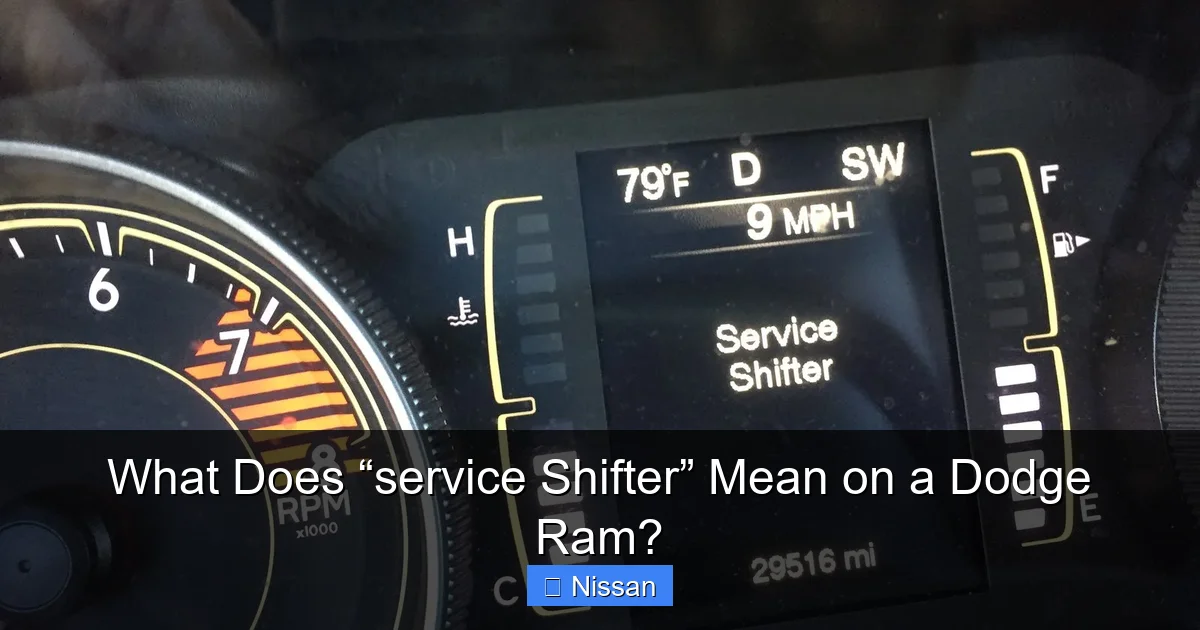
Visual guide about What Does “service Shifter” Mean on a Dodge Ram?
Image source: static.cargurus.com
If you see the “service shifter” message, don’t panic. There are several steps you can take to troubleshoot the issue before heading to a mechanic. While some problems require professional tools, others can be resolved with basic checks and resets.
Step 1: Check the Transmission Fluid
Start by checking the transmission fluid level and condition. Here’s how:
1. Park your truck on a level surface and let the engine run.
2. Shift through all gears (P-R-N-D) and return to Park.
3. Locate the transmission dipstick (usually near the back of the engine bay).
4. Pull it out, wipe it clean, reinsert it, and check the level.
5. The fluid should be between the “Full” and “Add” marks and should be red or pink (not brown or burnt-smelling).
If the fluid is low, top it off with the correct type (check your owner’s manual). If it’s dark or smells burnt, schedule a fluid change.
Step 2: Restart the Vehicle
Sometimes, a simple restart can clear a temporary glitch. Turn off the engine, wait 30 seconds, and restart it. If the message disappears, it may have been a one-time error.
If the message returns, try a longer reset: disconnect the negative battery terminal for 10–15 minutes, then reconnect it. This resets the TCM and other modules, which can clear stored errors.
Step 3: Check for Obvious Electrical Issues
Inspect the shifter area and under the hood for loose wires, corroded connectors, or blown fuses. Look for:
– Frayed or damaged wiring near the transmission
– Corrosion on battery terminals or ground connections
– Blown fuses in the fuse box (refer to your owner’s manual for fuse locations)
If you find a blown fuse, replace it with one of the same rating. If it blows again, there’s likely a short circuit that needs professional attention.
Step 4: Use an OBD2 Scanner
An OBD2 scanner can read diagnostic trouble codes (DTCs) stored in the TCM. While basic scanners may not read transmission-specific codes, advanced ones (like those from Autel or Snap-on) can.
Common codes related to the “service shifter” message include:
– P0705: Transmission Range Sensor Circuit Malfunction
– P0706: Transmission Range Sensor Circuit Range/Performance
– P0715: Input/Turbine Speed Sensor Circuit Malfunction
These codes can help pinpoint the exact component at fault. If you don’t have a scanner, many auto parts stores offer free code reading.
Step 5: Try the Manual Shifter Override
If your truck won’t shift out of park, use the manual override. On most Rams, there’s a small button or slot near the shifter that you can press with a key or screwdriver to release the shifter.
This won’t fix the underlying issue, but it can get you moving in an emergency. Once you’re parked safely, avoid driving until the problem is resolved.
Step 6: Visit a Dodge Dealership or Certified Mechanic
If troubleshooting doesn’t resolve the issue, it’s time to see a professional. Dodge dealerships have access to factory diagnostic tools and software updates that independent shops may not.
They can perform a full system scan, test sensors and solenoids, and update the TCM firmware if needed. While dealership service can be more expensive, it’s often the best option for complex electronic issues.
Can You Drive with a “Service Shifter” Warning?
This is a critical question—and the answer is: it depends.
In some cases, you may be able to drive short distances if the truck starts and shifts normally. However, this is risky. The “service shifter” message indicates that the system has detected a fault, and continuing to drive could lead to:
– Transmission damage
– Sudden loss of power
– Being stranded if the truck won’t shift
If the truck won’t start or won’t shift out of park, do not attempt to drive it. Have it towed to a repair shop.
Even if the truck seems to run fine, it’s best to limit driving and get it checked as soon as possible. Ignoring the warning could turn a $200 sensor replacement into a $2,000 transmission repair.
Preventing Future “Service Shifter” Issues
While not all problems can be prevented, regular maintenance can reduce the risk of electronic and mechanical failures.
Maintain Transmission Fluid
Follow the manufacturer’s recommended service interval for transmission fluid changes (usually every 60,000–100,000 miles). Clean fluid helps prevent sensor and solenoid issues.
Keep Electrical Connections Clean
Periodically inspect under-hood connections for corrosion, especially in humid or salty environments. Use dielectric grease to protect connectors.
Avoid Aftermarket Modifications
Some aftermarket parts (like performance tuners or non-OEM sensors) can interfere with the TCM. Stick to factory-recommended components when possible.
Stay Updated on Recalls and Technical Service Bulletins (TSBs)
Dodge occasionally issues recalls or TSBs for known shifter or transmission issues. Check the NHTSA website or contact your dealership to see if your truck is affected.
Conclusion
The “service shifter” message on a Dodge Ram is more than just a dashboard warning—it’s a call to action. While it can be alarming, understanding what it means and how to respond can save you time, money, and stress. From faulty sensors to software glitches, the causes are varied, but most are fixable with the right approach.
Start with simple checks like fluid level and system resets, but don’t hesitate to seek professional help if the problem persists. Your Ram’s electronic shifting system is complex, and diagnosing it requires the right tools and expertise.
By staying informed and proactive, you can keep your truck running smoothly and avoid being left stranded by a seemingly mysterious warning light. Remember: when it comes to your vehicle’s health, it’s always better to be safe than sorry.
Frequently Asked Questions
What does “service shifter” mean on a Dodge Ram?
The “service shifter” message indicates a problem with the electronic shifting system, such as a faulty sensor, low transmission fluid, or software glitch. It’s triggered by the Transmission Control Module when it detects an issue with gear selection or communication.
Can I drive my Dodge Ram with the “service shifter” warning on?
It’s not recommended. While you might be able to drive short distances if the truck shifts normally, continuing to drive could cause transmission damage or leave you stranded. Have it checked as soon as possible.
How much does it cost to fix a “service shifter” issue?
Costs vary depending on the cause. A range sensor replacement may cost $150–$300, while solenoid or wiring repairs can range from $200–$600. Software updates at a dealership are often free or low-cost.
Why does my Dodge Ram say “service shifter” after a battery change?
A battery replacement can cause a voltage drop that resets the TCM, leading to temporary communication errors. Restarting the vehicle or performing a system reset often clears the message.
Can a bad brake switch cause the “service shifter” message?
Yes. The brake switch tells the system when the pedal is pressed, which is required to shift out of park. If it’s faulty, the TCM may prevent shifting and display the warning.
How do I reset the “service shifter” message?
Try turning the vehicle off for 30 seconds and restarting it. If that doesn’t work, disconnect the negative battery terminal for 10–15 minutes to reset the TCM. For persistent issues, a professional scan tool may be needed.
