
What Does Run Mean on a Jeep Compass

On a Jeep Compass, “Run” primarily refers to the ignition position that powers all electronic accessories without starting the engine. It can also appear as a dashboard indicator related to driving modes or system statuses. Understanding this setting prevents battery drain, avoids confusion with other modes, and ensures you operate your vehicle correctly. Always refer to your owner’s manual for model-specific details.
If you’ve ever stared at your Jeep Compass ignition switch or dashboard and wondered, “What does ‘Run’ mean?” you’re not alone. This simple term causes plenty of confusion for owners, especially when transitioning from other vehicles or learning the ropes of a new Compass. The word “Run” isn’t about a special driving mode or a performance setting. Instead, it’s a fundamental part of your vehicle’s startup sequence and electrical system. Understanding it is crucial for preventing dead batteries, avoiding unnecessary worry, and using your SUV exactly as intended. In this complete guide, we’ll break down every aspect of “Run” on a Jeep Compass, from the physical key position to its digital representations, and clear up common myths along the way.
Key Takeaways
- The “Run” position is an ignition setting: It powers the entire electrical system (radio, lights, dash) but does not engage the engine, which requires moving to “Start.”
- It is distinct from “Accessory” (Acc): “Accessory” powers only limited electronics like the radio, while “Run” activates everything needed for driving once the engine is started.
- Dashboard “Run” messages are rare: If “Run” appears on the instrument cluster, it typically indicates the ignition is in that position or relates to a specific driving mode in certain trims, not a warning.
- Leaving the vehicle in “Run” drains the battery: The engine is off, but all electronics remain powered, which can deplete the battery if left for an extended period.
- Selec-Terrain does not have a “Run” mode: The Compass off-road system uses modes like Auto, Snow, Mud, Sand, and Rock (on Trailhawk), but “Run” is not one of them.
- Safety first: Always ensure the vehicle is in “Park” (or neutral for manual) and the parking brake is set before exiting, even if the engine is off but the key is in “Run.”
- Consult your manual: Exact functions can vary by model year and trim (e.g., keyless push-button start vs. traditional key).
📑 Table of Contents
- Understanding the Ignition System: Off, Acc, Run, Start
- Dashboard Indicators: When “Run” Appears on the Screen
- Selec-Terrain and Driving Modes: Is There a “Run” Mode?
- Safety and Practical Implications of the “Run” Position
- Troubleshooting: “Run” Issues and What to Do
- Best Practices for Using the “Run” Position
- Conclusion: Mastering the Basics for a Better Driving Experience
Understanding the Ignition System: Off, Acc, Run, Start
At the heart of the “Run” question is the ignition switch. Whether you have a traditional key or a push-button start system, your Jeep Compass uses a series of positions to control power flow. Think of it as a staircase: each step unlocks a new level of functionality.
The Four Positions of a Traditional Key
For models with a physical key (typically older Compass models), you’ll turn the key through four distinct positions:
- OFF (Lock): This is the base position. The key can be removed here (in most cases). All electrical systems are off. The steering wheel may lock.
- ACC (Accessory): Turn the key one click forward from OFF. This powers limited accessories like the radio, power windows, and cigarette lighter. The engine remains off. This is for using electronics without draining the battery too quickly.
- RUN (On): The next click forward. This is the “Run” position. Here, the entire electrical system comes alive—the dash lights illuminate, the fuel pump primes, and all systems necessary for engine operation are powered. However, the engine itself is not running yet. You must move the key to the next position to start it.
- START: This is a spring-loaded position. You turn the key here to engage the starter motor and crank the engine. Once the engine fires, you release the key, and it automatically springs back to the “Run” position, where it stays while the engine is running.
So, in a traditional system, “Run” is the steady state when your engine is actually running. The key rests there during your drive.
Push-Button Start Systems: Where’s “Run”?
Modern Jeep Compass models (and most new vehicles) use keyless push-button start. There’s no physical “Run” position on a key cylinder. Instead, the system has electronic states:
- OFF: The vehicle is off, key fob may be in the car or pocket.
- ACC/RUN (Combined): Pressing the start button without pressing the brake pedal (or clutch in manual) cycles through OFF -> ACC -> RUN -> OFF. In the RUN state (often indicated by dash lights coming on fully), all electronics are powered, but the engine is off. This is functionally identical to the traditional “Run” position.
- START: Pressing the button with the brake pedal depressed starts the engine. The button’s illumination may change (e.g., from white to green or amber) to confirm engine running.
With push-button start, you might not see the word “Run” anywhere, but the vehicle is in that electronic state between pressing the button for accessories and starting the engine.
What Actually Happens in the “Run” Position?
When your Compass is in “Run” (whether via key or button), you’re essentially telling the vehicle: “Get ready to drive.” This activates:
- The entire instrument cluster (speedometer, fuel gauge, warning lights).
- The infotainment system.
- Climate control (fan, blower).
- Power seats, windows, and locks.
- Interior and exterior lighting (headlights if switched on).
- The fuel pump and engine control module (ECM) for immediate startup.
It’s the “everything-on” mode, but crucially, without the combustion process happening. The engine is silent, but the vehicle is “awake.”
Dashboard Indicators: When “Run” Appears on the Screen
While the physical “Run” position is standard, you might occasionally see the word “RUN” appear on your Jeep Compass’s instrument cluster display, usually in the driver information screen. This is less common but can happen for a couple of reasons.
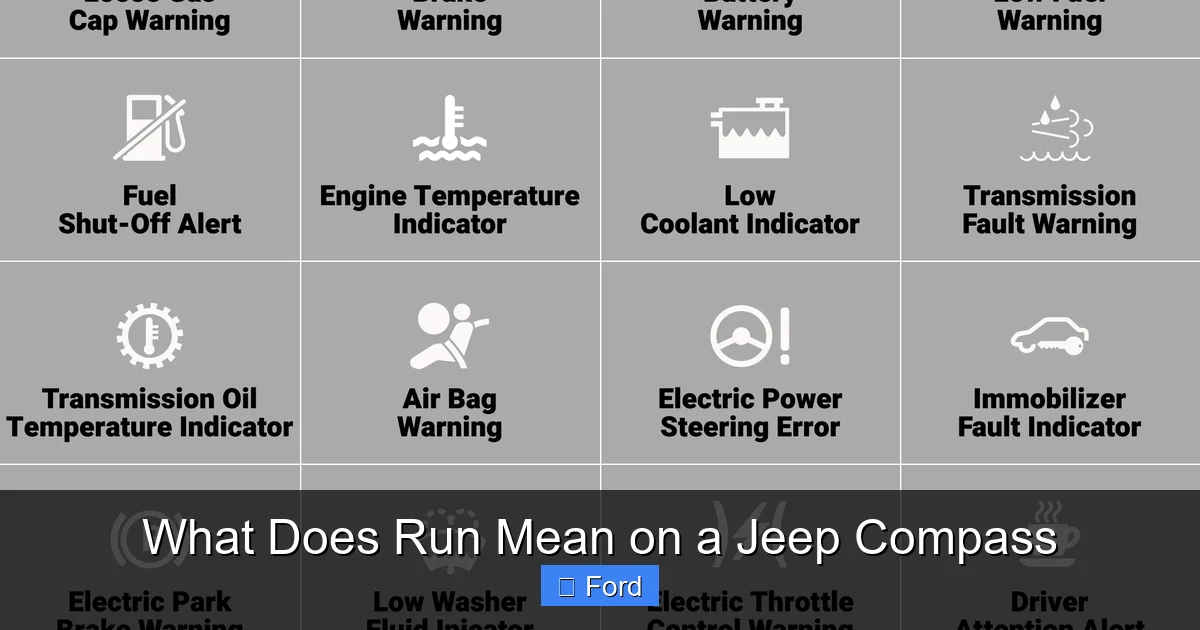
Visual guide about What Does Run Mean on a Jeep Compass
Image source: dealerimages.dealereprocess.com
Ignition Status Confirmation
In some model years, when you turn the key or press the start button to the “Run” position (engine off), the display might briefly show “RUN” or “IGNITION RUN” to confirm the electrical system is active. This is purely informational and not a warning. It’s the vehicle’s way of saying, “All systems are powered; you can now start the engine or use accessories.” You’ll typically see this before you press the brake and start the engine.
Transmission or Mode Display
On very specific trims or with certain packages, the display might show the current transmission range (P, R, N, D). It’s unlikely to say “Run” for a gear. However, if you’re referring to a message like “4WD RUN” or something similar, that would be highly unusual for a Compass. The Compass Selec-Terrain system displays modes like “AUTO,” “SNOW,” “MUD,” etc. If you see an ambiguous message that looks like “RUN,” consult your owner’s manual—it could be a generic term for “vehicle operational” in a specific menu, but this is rare.
Is It a Warning Light?
No. A standalone “RUN” message on the dash is not a warning or trouble code. It’s a status indicator. If it appears alongside a warning light (like a check engine light), the issue is with whatever triggered that warning, not the “Run” status itself. For understanding other dashboard warnings, you might find it helpful to read about general indicator lights, such as the Check Gauges warning on a Dodge Ram, which operates on a similar principle of informing the driver of a system status that needs attention—though “Run” on a Compass is not a warning.
Selec-Terrain and Driving Modes: Is There a “Run” Mode?
This is a major point of confusion. Jeep owners love their off-road capabilities, and the Compass comes with Selec-Terrain® on most models. You might think “Run” is a mode for high-speed desert running or something similar. Let’s clear that up.

Visual guide about What Does Run Mean on a Jeep Compass
Image source: alexie.co
The Actual Selec-Terrain Modes
The Jeep Compass Selec-Terrain system typically offers these selectable modes via a dial or button near the shifter:
- Auto: The system automatically manages torque distribution for normal conditions.
- Snow: Optimizes for slippery, snowy surfaces.
- Mud: Allows more wheel slip to clear mud and deep tracks.
- Sand: Manages power for driving on loose sand, often holding gears longer.
- Rock (Trailhawk models only): For extreme off-road crawling, often paired with a low-range transfer case.
Notice “Run” is not listed. There is no driving mode officially called “Run.” The term might be misheard or misread from “Rock” or from generic marketing language about “running off-road.”
Where the Confusion Might Come From
Sometimes, owners see a display message like “4WD RUN” in other Jeep models (like the Grand Cherokee with Quadra-Trac) that indicate the system is actively managing power in real-time. The Compass’s simpler system doesn’t typically display “RUN” dynamically. If your Compass display shows a mode like “AUTO” or “SAND,” that’s your active Selec-Terrain setting. If you’re looking for a performance-oriented “Run” mode, you won’t find it—you’d use Sport mode in the drivetrain settings if equipped, which adjusts throttle response and shift points.
Related Drivetrain Warnings
While “Run” isn’t a mode, your Compass can display service warnings for the 4×4 system. For instance, “SERV 4WD” or “CHECK 4WD” indicates a fault that needs diagnosis. These are serious and require service. The concept is similar to the “SERV 4WD” message on a Dodge Ram, which signals a problem with the transfer case or its controls. If you see a service message, don’t ignore it.
Safety and Practical Implications of the “Run” Position
Knowing about “Run” isn’t just trivia—it has real-world consequences for safety and vehicle health.
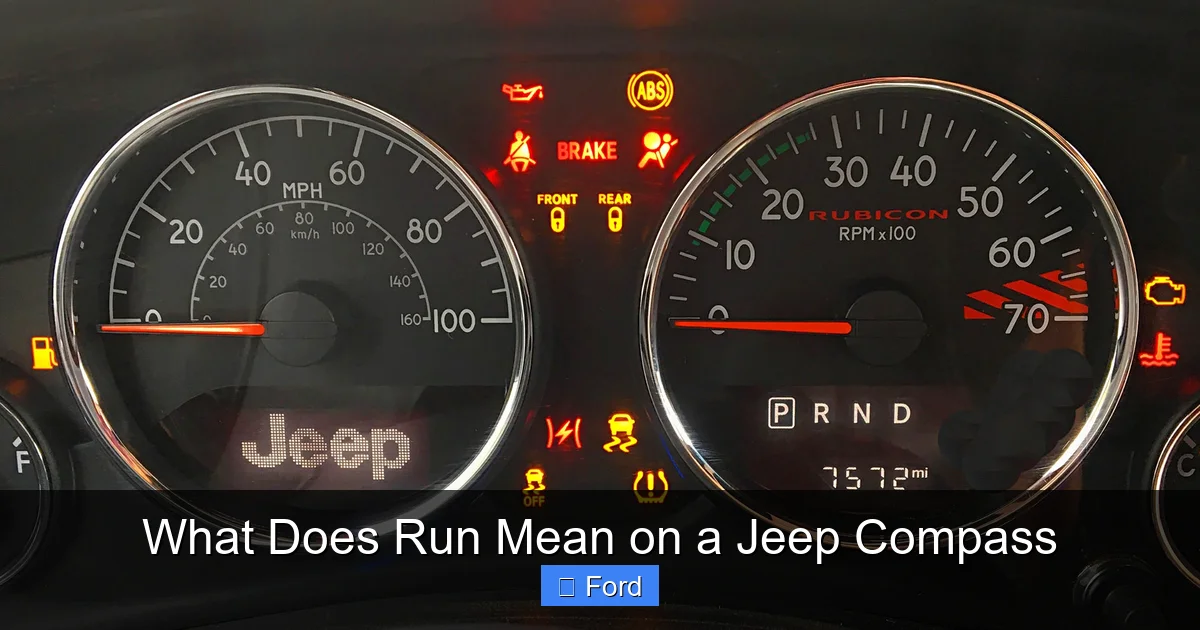
Visual guide about What Does Run Mean on a Jeep Compass
Image source: motortrend.com
The Silent Battery Drain
This is the most common issue. Because “Run” powers everything—including the engine control module and fuel pump—but the engine isn’t running to recharge the battery, leaving your Compass in “Run” (key in that position, engine off) will slowly drain the battery. Modern vehicles have many always-on systems (like keyless entry receivers, security modules), but “Run” adds a significant load. You might get 30 minutes to a few hours before the battery is too weak to start. Never leave your vehicle in “Run” unattended for long periods. Always turn it fully to “OFF” and remove the key (if applicable) when parked.
Preventing Accidental Movement
In “Run,” the vehicle is ready to drive. If you have an automatic, it must be in “Park” to start, but once running, you can shift to “Drive.” If you exit the vehicle while it’s in “Run” and “Drive” or “Neutral,” there’s a risk of rollaway if the parking brake isn’t set. The “Park” pawl is the primary safety, but always set the parking brake as a backup. This is especially important if you’re just running into a store and leave the engine running (which is “Run” + “Started”). But if you leave the engine off but key in “Run,” the vehicle is still in “Park,” so it won’t move, but you’re draining the battery.
Key Removal and Steering Lock
In traditional key systems, you can usually only remove the key in the “OFF” position (and sometimes “ACC” on older cars). If you try to remove it in “Run,” it will be locked. This prevents accidentally taking the key out while driving. If your steering wheel locks in “OFF” and you can’t turn the key to “Run,” it’s often because the wheel is locked against the lock pin; gently wiggle the wheel while turning the key.
Emergency Situations
If your Compass is running but you need to power everything off quickly (e.g., in an emergency where you want to disable the engine but keep steering/brakes), turning the key to “OFF” while driving is dangerous—it locks the steering and kills power assist. The correct procedure is to brake firmly, shift to “Neutral,” and then turn off. But in a true emergency (runaway throttle), some drivers might turn the key to “OFF” as a last resort, accepting the loss of power steering/brakes to stop the engine. This is a last-resort maneuver, not for routine use.
Troubleshooting: “Run” Issues and What to Do
Sometimes, things go wrong with the ignition system. Here are common “Run”-related problems and solutions.
Key Won’t Turn to “Run” or “Start”
If your key is stuck in “OFF” or won’t turn past “ACC,” check:
- Steering Wheel Lock: The most common cause. Gently turn the wheel left and right while trying to turn the key. The lock pin must disengage.
- Transmission Not in Park/Neutral: For automatics, the key won’t turn to “Start” unless the shifter is in “Park” (or “Neutral” for some). Ensure it’s fully in “P.”
- Dead Battery: A severely dead battery can cause the ignition lock to seize. Try jump-starting.
- Worn Key or Ignition Cylinder: Over time, keys and tumblers wear out. You may need a new key cut or ignition repair.
Vehicle Won’t Shift Out of “Run” (Push-Button Start)
With push-button start, if the vehicle is in “Run” (engine off) and you can’t start it, ensure:
- The brake pedal is fully depressed.
- The key fob is inside the vehicle and has a good battery.
- The vehicle is in “Park.”
- There are no warning lights indicating a system fault (like “Key Not Detected”).
If the start button is unresponsive, it could be a faulty brake switch, neutral safety switch, or start button relay. A professional diagnosis is needed.
Stuck in “Run” After Engine Stalls
If the engine dies while driving but the key remains in “Run” (or the vehicle stays in “Run” mode with push-start), you’ll lose power steering and brakes but can often coast. Safely steer to the roadside, shift to “Neutral” or “Park,” and then turn the ignition to “OFF.” This is normal behavior; the “Run” position remains until you actively turn it off. If the engine stalls and you cannot restart it (key stays in “Run”), you may have a fuel delivery, ignition, or sensor issue. Check for fuel, listen for the fuel pump priming when turning the key to “Run,” and look for check engine lights. A wrench light or service indicator on other vehicles often points to similar electronic or engine management faults that could prevent starting.
Battery Drain from “Run”
If your battery dies and you suspect you left the vehicle in “Run,” jump-start it. Once running, let the engine idle for at least 20-30 minutes or drive for longer to fully recharge the battery. If it happens repeatedly, inspect for parasitic drain (something staying on when it shouldn’t) or an aging battery. A healthy battery should hold a charge for weeks when the vehicle is fully “OFF.”
Best Practices for Using the “Run” Position
To maximize convenience and avoid problems, follow these tips.
Starting and Stopping Sequence
For a traditional key:
- Press brake (automatic) or clutch (manual).
- Turn key to “Start,” release when engine fires.
- Key will stay in “Run.”
- When parking, apply parking brake, shift to “Park,” turn key to “OFF,” and remove.
For push-button start:
- With brake depressed, press start button once. Engine starts, button may glow green.
- To use accessories without engine, press button once without brake (goes to “Run”/ACC).
- To turn off, press button again with vehicle in “Park.”
Using Accessories Wisely
If you want to listen to the radio with the engine off, use the “Acc” or “Run” (without starting) position. But be mindful of time. The radio alone won’t drain quickly, but adding headlights, climate control on high, or heated seats will. A good rule: if you’re stationary for more than 10-15 minutes with the engine off, turn the ignition to “OFF” to save battery.
Winter and Hot Weather Considerations
In very cold weather, you might want to let the engine idle in “Run” to warm up. Modern Compass engines don’t need long idles; 30 seconds is sufficient for oil circulation. Driving gently warms it faster. In hot weather, running the A/C while parked is a huge battery and fuel drain. If you must, limit it to a few minutes.
When to Use “Run” for Diagnostics
Sometimes, a technician will turn the key to “Run” (engine off) to listen for fuel pump priming (a 2-second hum from the rear) or to check if certain electrical systems work before starting. This is a standard diagnostic step. If your fuel pump doesn’t prime when you turn to “Run,” it could indicate a failed pump, relay, or fuse.
Conclusion: Mastering the Basics for a Better Driving Experience
The “Run” position on your Jeep Compass is a simple but essential piece of the puzzle. It’s not a secret off-road mode or a performance setting—it’s the electrical heart of your vehicle when the engine is off but everything else is on. By understanding that “Run” powers all systems without combustion, you can avoid dead batteries, prevent confusion with dashboard messages, and operate your Compass with confidence. Remember the key differences: “Acc” for minimal accessories, “Run” for full electrical readiness, and “Start” for engine ignition. If you ever see “Run” on the display, it’s likely just a status indicator, not a problem. But if your vehicle won’t start, won’t shift, or shows other warnings, consult your owner’s manual or a trusted mechanic. For more on interpreting dashboard lights across different brands, resources explaining warnings like the Check Gauges alert on a Dodge Ram can provide context for how manufacturers communicate system statuses. Ultimately, your Jeep Compass is designed for adventure, and mastering these fundamentals ensures it’s always ready to run when you are.
Frequently Asked Questions
What does the “Run” position do on a Jeep Compass?
The “Run” position powers all the vehicle’s electrical systems—like the dash, radio, and lights—but does not start the engine. It’s the state the ignition is in after you turn the key from “Start” or press the start button once without the brake.
Is it bad to leave my Jeep Compass in “Run” with the engine off?
Yes, it can drain the battery over time because all electronics are active but the engine isn’t running to recharge the battery. Avoid leaving it in “Run” for more than 10-15 minutes without the engine on.
How is “Run” different from “Accessory” (Acc)?
“Accessory” powers only limited items like the radio and power outlets. “Run” activates the full electrical system, including the fuel pump, dash cluster, and climate control, preparing the vehicle to start.
Why would “Run” appear on my Jeep Compass dashboard?
It’s usually a status message confirming the ignition is in the “Run” position (engine off). It’s informational, not a warning. If it appears with other warning lights, the issue is with those systems, not the “Run” status.
Is there a “Run” driving mode in Selec-Terrain?
No. Selec-Terrain offers Auto, Snow, Mud, Sand, and Rock (on Trailhawk). “Run” is not a selectable off-road mode. It refers only to the ignition position.
What should I do if my Jeep Compass is stuck in “Run” and won’t start?
Ensure the brake is fully pressed (for push-start) or the shifter is in Park/Neutral (for key models). Check the key fob battery if applicable. If it still won’t start, there may be a fault with the starter, ignition switch, or neutral safety switch requiring professional service.
