
What Color Is Positive on Car Battery

The positive terminal on a car battery is almost always marked with a red cover or red cable, along with a plus (+) sign. Knowing this simple detail can prevent dangerous short circuits, damage to your vehicle, and personal injury when jump-starting or replacing a battery.
Key Takeaways
- Red means positive: The positive terminal on a car battery is typically covered in red plastic or connected to a red cable, making it easy to identify at a glance.
- Look for the plus (+) sign: Alongside the color, the positive terminal will almost always have a “+” symbol stamped or printed nearby.
- Black is usually negative: The negative terminal is commonly black or connected to a black cable and marked with a minus (–) sign.
- Color isn’t always reliable: In rare cases, aftermarket modifications or damaged covers may confuse colors—always double-check with symbols or a multimeter.
- Safety first: Connecting cables incorrectly can cause sparks, battery explosions, or damage to your car’s electrical system—always confirm polarity before touching terminals.
- Jump-starting tips: When jump-starting, connect red to red (positive to positive) first, then black to black (negative to negative), and finally attach the last black clamp to an unpainted metal surface on the dead car.
- Modern batteries may vary: Some newer batteries use color-coded labels or integrated handles—still follow the + and – symbols as the ultimate guide.
📑 Table of Contents
Understanding Car Battery Basics
Car batteries are the unsung heroes of your vehicle. They provide the initial burst of power needed to start your engine, run your lights, power your radio, and keep all the electronic systems functioning when the engine isn’t running. Without a working battery, your car simply won’t start—no matter how well-maintained the rest of it is.
At the heart of every car battery are two terminals: positive and negative. These terminals are where electrical current flows in and out of the battery. The positive terminal supplies power to your vehicle’s electrical system, while the negative terminal completes the circuit by grounding the system back to the chassis. Getting these two mixed up isn’t just inconvenient—it can be dangerous.
That’s why knowing what color is positive on car battery is so important. It’s one of those small details that can make a big difference in safety and functionality. Whether you’re jump-starting a dead battery, replacing an old one, or simply checking connections, identifying the correct terminal is the first and most crucial step.
How Car Batteries Work
Car batteries are rechargeable devices that store chemical energy and convert it into electrical energy. Most modern vehicles use lead-acid batteries, which consist of lead plates submerged in a sulfuric acid solution. When you turn the key, a chemical reaction occurs, releasing electrons that flow through the positive terminal, power the starter motor, and ignite the engine.
Once the engine is running, the alternator takes over, recharging the battery and supplying power to the vehicle’s systems. This cycle continues every time you drive. Over time, batteries lose their ability to hold a charge due to age, extreme temperatures, or repeated deep discharges.
Understanding this basic function helps explain why polarity matters. The flow of electricity must follow a specific path—from positive to negative—to work correctly. Reversing this flow can damage sensitive electronics, blow fuses, or even cause the battery to overheat and explode.
Why Terminal Identification Matters
Imagine you’re stranded on the side of the road with a dead battery. A kind stranger offers to help jump-start your car. You grab the jumper cables, but in your rush, you accidentally connect the red clamp to the negative terminal and the black clamp to the positive. The result? A loud pop, sparks flying, and possibly a ruined alternator or blown fuse.
This scenario is more common than you might think. In fact, many people assume that red is always positive and black is always negative—and while that’s usually true, it’s not a guarantee. Some older vehicles or custom setups might use different color schemes. That’s why relying solely on color can be risky.
The safest approach is to use multiple indicators: color, symbols, and physical location. Most manufacturers follow standardized conventions, but it’s always smart to double-check. A quick glance at the battery label or owner’s manual can save you from costly mistakes.
What Color Is Positive on Car Battery?
Visual guide about What Color Is Positive on Car Battery
Image source: i2.wp.com
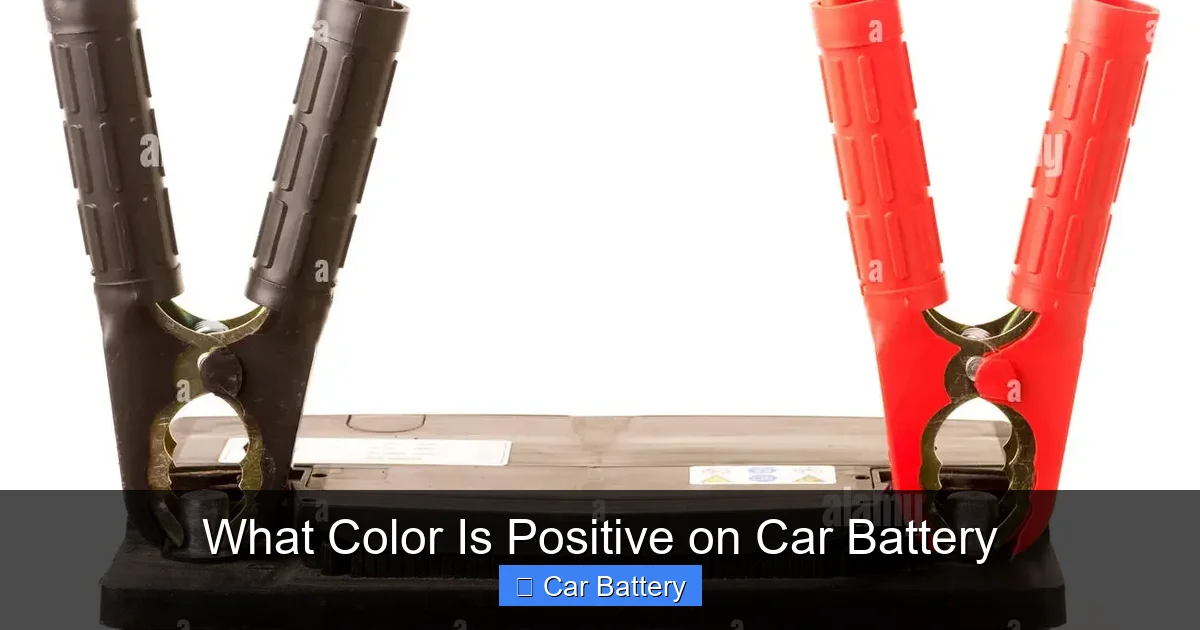
So, what color is positive on car battery? The short answer: red. In the vast majority of vehicles, the positive terminal is marked with a red cover, red cable, or red plastic cap. This color coding is part of a universal standard adopted by automotive manufacturers worldwide to reduce confusion and improve safety.
The red color serves as a visual cue, helping drivers and mechanics quickly identify the correct terminal. It’s especially helpful in low-light conditions or when working in tight engine bays where visibility is limited. Alongside the red color, you’ll almost always find a plus (+) sign stamped directly onto the battery casing near the terminal.
This combination—red and a plus sign—is the gold standard for identifying the positive terminal. It’s so consistent that many people never think twice about it. But it’s worth noting that this standard isn’t just about convenience. It’s about preventing accidents.
Standard Color Coding Across Vehicles
Most car manufacturers follow the same color scheme: red for positive, black for negative. This includes brands like Toyota, Ford, Honda, BMW, and Mercedes-Benz. Even motorcycles, boats, and RVs typically use the same system.
The positive cable (usually red) connects directly to the starter motor and the vehicle’s main electrical system. The negative cable (usually black) is grounded to the car’s chassis, completing the circuit. This design ensures that electricity flows in the correct direction, protecting sensitive components like the ECU (engine control unit), sensors, and infotainment systems.
In some cases, the battery terminals themselves may not be red or black—especially if the battery is older or has been replaced. However, the cables connected to them usually retain their original colors. For example, you might see a black terminal with a red cable clamped onto it. In that case, the red cable indicates the positive side.
Exceptions to the Rule
While red is the standard, there are exceptions. Some aftermarket batteries or custom installations may use different colors. For instance, a performance battery might come with blue or yellow terminals. In rare cases, a previous owner may have replaced cables with non-standard colors.
Additionally, some modern vehicles use sealed or maintenance-free batteries with integrated handles or protective covers. These covers might be gray or black, but they often include color-coded labels or symbols. Always look for the + and – signs, as they are the most reliable indicators.
Another exception is in hybrid or electric vehicles, where high-voltage battery systems may use different color codes (like orange for high voltage). However, the 12-volt auxiliary battery in these vehicles still typically follows the red-positive standard.
How to Identify the Positive Terminal Safely
Visual guide about What Color Is Positive on Car Battery
Image source: m.media-amazon.com
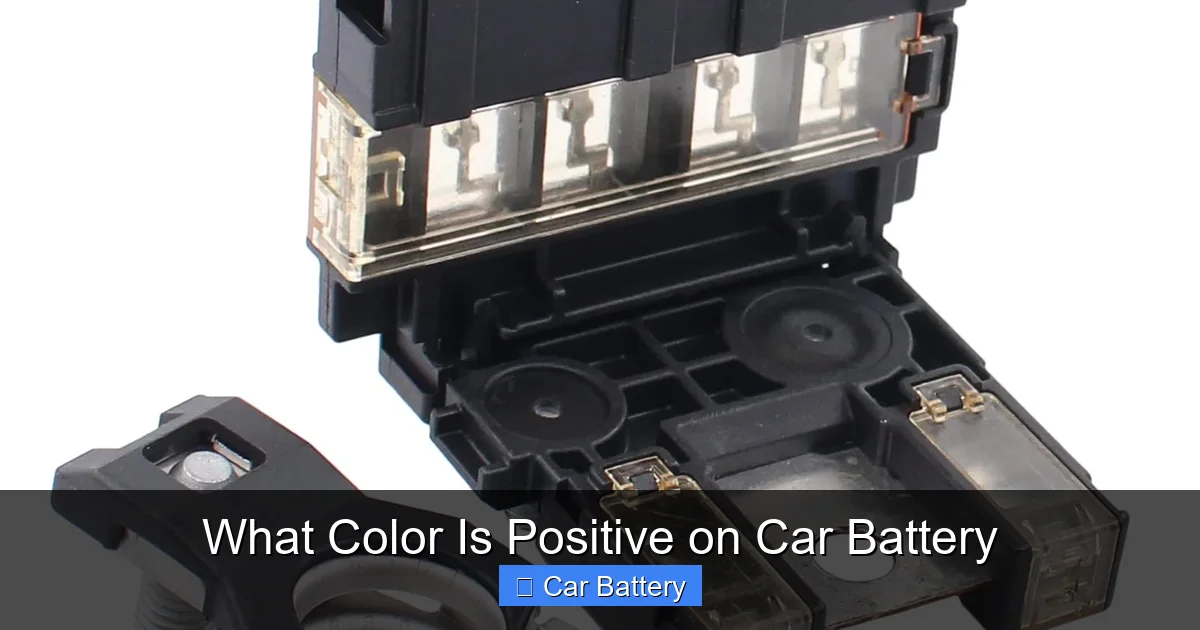
Knowing what color is positive on car battery is helpful, but it’s not the only way to identify the terminal. In fact, relying solely on color can lead to mistakes, especially if the cables are faded, dirty, or replaced. Here are several reliable methods to confirm the positive terminal:
Look for the Plus (+) Sign
The most foolproof way to identify the positive terminal is to look for the plus (+) symbol. This marking is usually stamped directly onto the battery casing, right next to the terminal. It’s often accompanied by the word “POSITIVE” or “POS” in small print.
Even if the color is misleading or missing, the + sign will always indicate the positive side. This is especially useful when working with older batteries where the red cover has cracked or fallen off.
Check the Cable Colors
If the terminal itself isn’t clearly marked, look at the cables connected to it. The positive cable is almost always red, while the negative cable is black. These cables are typically thicker and more rigid than other wires in the engine bay.
You can also trace the cables back to their connections. The positive cable usually runs to the starter motor and the main fuse box, while the negative cable is bolted directly to the car’s frame or engine block.
Use a Multimeter for Confirmation
When in doubt, use a digital multimeter to test the voltage. Set the meter to DC voltage (usually marked as “V~” or “VDC”) and touch the red probe to one terminal and the black probe to the other.
If the reading is positive (e.g., +12.6 volts), the red probe is on the positive terminal. If the reading is negative (e.g., -12.6 volts), the red probe is on the negative terminal. This method is 100% accurate and recommended if you’re unsure.
Consult the Owner’s Manual or Battery Label
Most car owner’s manuals include a diagram of the battery and its terminals. If you’re working on an unfamiliar vehicle, this is a great resource. Additionally, many batteries have a label on top that clearly marks the positive and negative terminals.
Some labels even include warnings like “Connect red cable first” or “Do not reverse polarity.” These reminders are there for a reason—don’t ignore them.
Safety Tips When Working with Car Batteries
Visual guide about What Color Is Positive on Car Battery
Image source: m.media-amazon.com
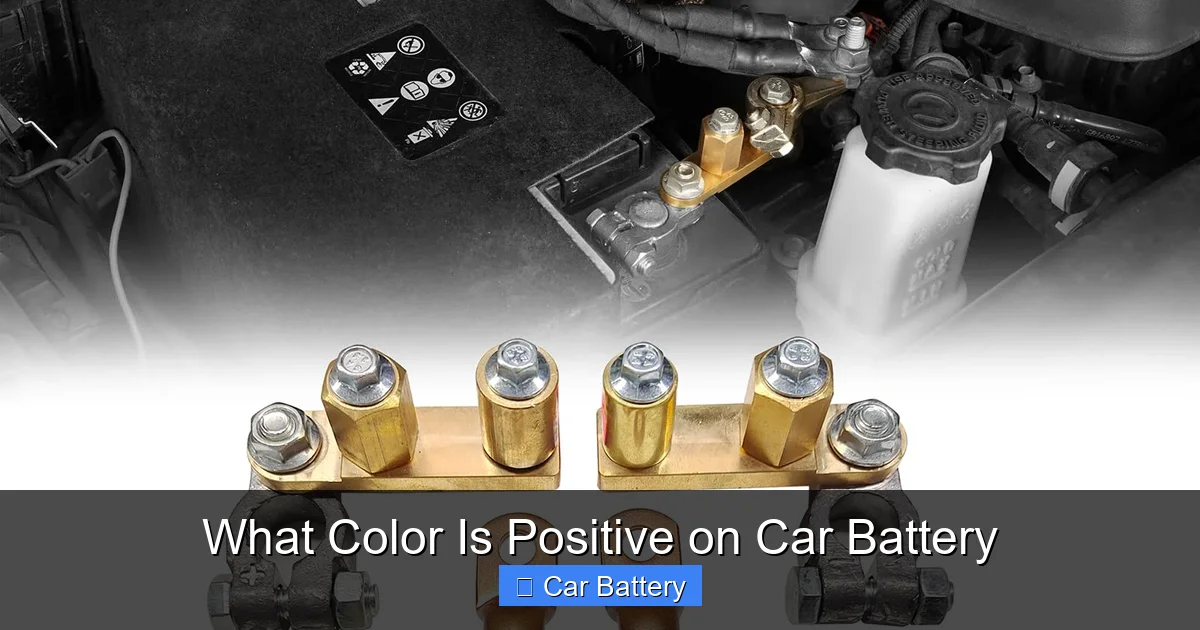
Working with car batteries involves risks, including electrical shock, chemical burns, and fire. A car battery can deliver a powerful current, and short-circuiting it can cause sparks, melting metal, or even an explosion. That’s why safety should always come first.
Wear Protective Gear
Always wear safety glasses and gloves when handling a car battery. Battery acid is corrosive and can cause severe burns if it contacts your skin or eyes. Even if the battery appears intact, cracks or leaks can occur unexpectedly.
Avoid wearing jewelry, especially rings or bracelets, as they can conduct electricity and cause short circuits if they touch both terminals at once.
Work in a Well-Ventilated Area
Car batteries emit hydrogen gas, which is highly flammable. Working in a closed garage or confined space increases the risk of explosion if a spark occurs. Always work outdoors or in a well-ventilated area.
Keep open flames, cigarettes, and sparks away from the battery. Even a small spark from a tool can ignite the gas.
Disconnect the Negative Terminal First
When removing a battery, always disconnect the negative terminal first. This reduces the risk of short circuits. Use a wrench to loosen the nut, but avoid letting the wrench touch both terminals at the same time.
After disconnecting the negative cable, move it away from the terminal and secure it with a cable tie or tape. Then disconnect the positive terminal.
When reinstalling the battery, connect the positive terminal first, then the negative. This sequence minimizes the chance of accidental grounding.
Handle the Battery Carefully
Car batteries are heavy and can tip over easily. Always lift with your legs, not your back, and use both hands. If the battery is leaking or damaged, place it in a plastic battery tray or container to prevent acid spills.
Never tip or shake the battery, as this can cause internal damage or leakage.
Jump-Starting a Car: A Step-by-Step Guide
Jump-starting a dead battery is one of the most common reasons people need to identify the positive terminal. Done correctly, it’s a quick and safe way to get your car running again. Done incorrectly, it can cause serious damage.
What You’ll Need
– A set of jumper cables (preferably heavy-duty)
– A working vehicle with a charged battery
– Safety glasses and gloves
Step-by-Step Instructions
1. Park the vehicles close together but not touching. Turn off both engines and remove the keys.
2. Identify the positive and negative terminals on both batteries. Look for the red cable and + sign on the positive side.
3. Connect the red (positive) clamp to the positive terminal of the dead battery.
4. Connect the other red clamp to the positive terminal of the good battery.
5. Connect the black (negative) clamp to the negative terminal of the good battery.
6. Attach the final black clamp to an unpainted metal surface on the dead car’s engine block—not the negative terminal. This reduces the risk of sparks near the battery.
7. Start the working car and let it run for a few minutes to charge the dead battery.
8. Try starting the dead car. If it doesn’t start, wait a few more minutes and try again.
9. Once the dead car starts, disconnect the cables in reverse order: black from the engine block, black from the good battery, red from the good battery, and finally red from the dead battery.
What Not to Do
– Never connect the black clamp to the negative terminal of the dead battery—this can cause sparks and ignite hydrogen gas.
– Don’t let the clamps touch each other while they’re connected to a battery.
– Avoid jump-starting a frozen or damaged battery—it could explode.
Common Mistakes and How to Avoid Them
Even experienced drivers can make mistakes when working with car batteries. Here are some common errors and how to avoid them:
Mixing Up the Terminals
This is the most dangerous mistake. Connecting the cables backward can fry your car’s electronics, damage the alternator, or cause the battery to explode. Always double-check the + and – signs before connecting.
Using Damaged Jumper Cables
Frayed or corroded cables can cause poor connections or sparks. Inspect your cables before use and replace them if they’re worn.
Forgetting to Turn Off Electronics
Before jump-starting, turn off lights, radio, and air conditioning. These draw power and can make it harder to start the engine.
Leaving the Battery Disconnected Too Long
If you’re replacing a battery, don’t leave the terminals disconnected for more than 15–30 minutes. This can cause the car’s computer to lose settings like radio presets or clock time.
Ignoring Battery Age
Even if a battery holds a charge, it may be nearing the end of its life. Most car batteries last 3–5 years. If your battery is old, consider replacing it instead of repeatedly jump-starting.
Conclusion
Knowing what color is positive on car battery is a simple but essential skill for any car owner. The positive terminal is almost always red and marked with a plus (+) sign, while the negative terminal is black with a minus (–) sign. This color coding is part of a global standard designed to keep drivers safe and prevent costly mistakes.
While red is the standard, it’s always wise to confirm polarity using multiple methods—especially symbols, cable colors, and a multimeter. Safety should always come first: wear protective gear, work in a ventilated area, and follow proper procedures when jump-starting or replacing a battery.
By understanding how car batteries work and how to identify their terminals correctly, you can avoid dangerous situations, protect your vehicle’s electronics, and keep your car running smoothly. Whether you’re a seasoned mechanic or a first-time driver, this knowledge is invaluable.
Remember: when in doubt, take a moment to double-check. A few seconds of caution can save you hours of frustration—and potentially prevent a serious accident.
Frequently Asked Questions
Is the positive terminal always red on a car battery?
In most cases, yes—the positive terminal is marked with a red cover or red cable. However, some aftermarket or custom batteries may use different colors, so always check for the plus (+) sign as the most reliable indicator.
What happens if I connect the battery cables backward?
Reversing the cables can cause sparks, damage your car’s electrical system, blow fuses, or even make the battery explode. Always double-check the positive and negative terminals before connecting.
Can I jump-start a car without knowing the terminal colors?
Yes, but it’s risky. Use the plus (+) and minus (–) symbols on the battery instead. If you’re unsure, use a multimeter to test the voltage and confirm polarity.
Why is the negative terminal connected to the engine block?
The negative terminal is grounded to the car’s chassis to complete the electrical circuit. This design reduces the number of wires needed and protects the system from interference.
Do electric cars use the same battery terminal colors?
The 12-volt auxiliary battery in electric and hybrid vehicles typically follows the same red-positive standard. However, high-voltage battery systems may use different colors like orange for safety.
How often should I replace my car battery?
Most car batteries last 3 to 5 years. If your car struggles to start, the battery warning light is on, or it’s more than 3 years old, consider having it tested or replaced.
