
How to Remove Tree Sap From a Car Cover Without Damage

Quick Answer
To remove tree sap from a car cover, take the cover off the vehicle, remove loose dirt, soften the sap with cool or lukewarm water, and gently blot the area with a soft microfiber cloth and manufacturer-approved cleaner. Rinse thoroughly and let the cover dry according to its care label. For stubborn sap, consult the manufacturer’s cleaning instructions before using alcohol or another solvent.
Steps for safe sap removal
- Remove the cover: Keep the contaminated section away from your vehicle’s paint while taking it off.
- Clear loose dirt: Shake off leaves, dust, and grit before wet cleaning.
- Soften the sap: Hold a damp microfiber cloth against the stain instead of scraping it.
- Clean gently: Apply a mild cleaner approved for your cover’s fabric and coating.
- Rinse and inspect: Remove all cleaner and check both sides for remaining sticky residue.
- Dry completely: Follow the manufacturer’s drying instructions before reinstalling or storing the cover.
Important: Never assume a cleaner that is safe for automotive paint is also safe for car-cover fabric.
Tree sap can turn a useful car cover into a sticky, difficult-to-clean mess, especially when it sits in the sun and hardens. The good news is that many sap spots can be removed with patience and the right cleaning method.
In this guide, I’ll explain how to remove fresh and dried sap, which cleaning methods to consider, what products to avoid, and how to protect your vehicle before putting the cover back on. The main goal is to remove the residue without damaging the fabric, waterproof coating, or paint-facing lining.
In This Guide
Why Is Tree Sap a Problem for Car Covers?
Tree sap is sticky plant residue that can adhere to the outer fabric, seams, and surface treatments of a car cover. As it dries, it may become harder to remove and collect dust, pollen, and other particles.
The concern isn’t limited to the stain itself. Contaminated fabric can transfer sticky residue or trapped grit to your vehicle when the cover moves across the paint.
What happens when sap stays on the cover?
- Sticky buildup: Sap attracts airborne dirt and can spread when rubbed.
- Fabric staining: Some residues leave discoloration even after the sticky material is removed.
- Coating concerns: An unsuitable cleaner may affect a water-resistant treatment or other surface finish.
- Paint contamination: Sap and dirt on the inner lining can transfer to the vehicle during installation or removal.
Fresh sap is often easier to handle than hardened deposits. However, the result depends on the type of sap, the length of exposure, and the cover’s construction.
Section takeaway: Remove sap promptly, but don’t sacrifice the cover’s protective properties just to eliminate a stain. Gentle cleaning is the best starting point.
What Should You Check Before Cleaning Tree Sap?
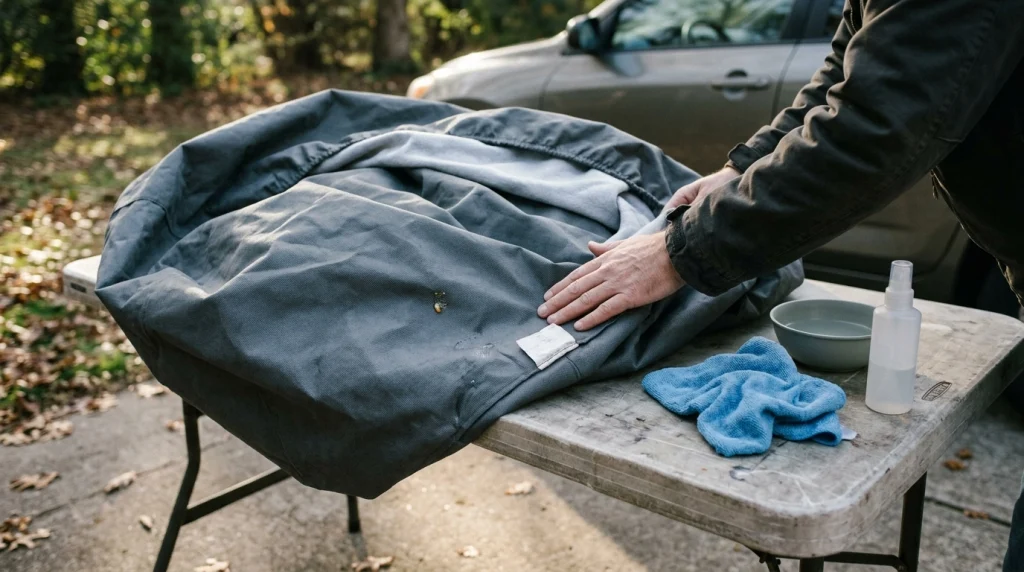
Before applying water or a cleaning product, identify the cover material and read its care label. Different covers may use woven fabrics, nonwoven materials, soft linings, waterproof coatings, or laminated layers that require different treatment.
Remove the cover carefully
Take the cover off the vehicle before spot cleaning whenever practical. Keep the sap-covered section folded outward so it doesn’t drag across the hood, roof, trunk, or other painted panels.
Place the cover on a clean surface away from gravel, dirty pavement, and sharp objects. This prevents additional grit from becoming trapped in the fabric.
Gather the basic cleaning supplies
- A clean microfiber cloth or soft sponge.
- Cool or lukewarm water, subject to the care label.
- A mild detergent or fabric cleaner approved by the manufacturer.
- A clean water source for rinsing.
- A clean area where the cover can dry safely.
A stiff brush, razor blade, or strong solvent should not be part of your initial cleaning setup. These tools and products can damage the material before the sap has had a chance to soften.
Test unfamiliar products first
If the manufacturer approves a cleaner but you haven’t used it on this cover before, test it on a small, inconspicuous area. Allow the test spot to dry and check for fading, discoloration, stiffness, or changes to the coating.
If you cannot identify the material or confirm whether a product is compatible, contact the cover manufacturer before proceeding.
Section takeaway: Check the care instructions, remove the cover safely, and prepare a clean workspace before treating the stain.
How Do You Remove Fresh Tree Sap From a Car Cover?
Fresh tree sap is generally easier to remove because it hasn’t fully hardened. Start with water and gentle blotting before considering a stronger cleaning product.
Follow these cleaning steps
- Lay the cover flat. Position the affected section on a clean surface without stretching or bunching the fabric.
- Remove loose debris. Gently shake or brush away leaves, dust, pollen, and other particles before adding water.
- Moisten the stain. Use a clean microfiber cloth dampened with cool or lukewarm water, provided the care label allows it.
- Blot the sap. Press the damp cloth against the residue and lift it away. Rotate to a clean part of the cloth as it collects sap.
- Apply approved cleaner if needed. Use a small amount of manufacturer-approved mild detergent or cleaner according to its directions.
- Rinse the area. Remove loosened residue and cleaning product with clean water.
- Check and dry. Inspect both sides, then dry the cover according to its care instructions.
Why should you blot instead of scrub?
Hard rubbing can spread sticky sap into a wider area or push it deeper into textured material. If dust or grit is present, friction can also damage the fabric or its finish.
Blotting with a clean cloth gives the softened sap a chance to transfer onto the cloth rather than spread across the cover. Repeat the process patiently instead of applying more pressure.
Cleaning tip
Work in small areas and keep track of which sections you’ve cleaned. This helps prevent sticky residue from being transferred back onto a treated spot.
Section takeaway: For fresh sap, remove loose dirt, soften the residue, blot gently, rinse thoroughly, and dry the cover properly.
How Do You Remove Dried or Hardened Tree Sap?
Dried sap often needs repeated softening before it releases from the fabric. Avoid trying to chip, peel, or scrape off a hardened deposit with a sharp tool.
Start with repeated softening
- Place a clean, damp cloth over the sap using water at a temperature permitted by the care label.
- Allow the moisture to soften the residue, checking periodically rather than forcing it loose.
- Gently blot the area with a clean section of microfiber cloth.
- If needed, repeat the process with an approved mild cleaner.
- Rinse thoroughly and inspect the fabric before allowing it to dry.
If the sap remains hard after several gentle attempts, stop before damaging the cover. Contact the manufacturer about an approved spot treatment for the specific material.
Can you use rubbing alcohol on hardened sap?
Isopropyl alcohol may help with certain sap deposits, but it isn’t automatically safe for car-cover fabric. It may affect dyes, adhesives, laminated layers, or water-resistant treatments.
Only use alcohol if the cover manufacturer approves it for your particular material and specifies an appropriate application method. Otherwise, stick to approved cleaning products.
Never substitute gasoline, paint thinner, or acetone for a recommended fabric cleaner. These products introduce unnecessary chemical hazards and may damage the cover.
What if the stain remains after cleaning?
A stain can remain visible even after the sticky residue has been removed. Don’t keep scrubbing simply to make the fabric look new, as excessive friction can cause permanent damage.
Check whether the area is still tacky or merely discolored. If it is no longer sticky and the fabric remains intact, additional aggressive cleaning may do more harm than good.
Section takeaway: Soften hardened sap gradually and use only approved treatments. If the residue won’t release safely, seek guidance from the cover manufacturer.
Which Cleaning Methods Are Safest for Different Car Covers?
The safest cleaning method depends on the cover’s material, coating, lining, and care instructions. There is no single solvent or washing method suitable for every car cover.
| Cleaning method | Best use | Important caution |
|---|---|---|
| Water and microfiber cloth | First attempt for fresh or softened sap | Use an appropriate water temperature and gentle pressure. |
| Mild approved detergent | Residue that water alone doesn’t remove | Rinse thoroughly to remove remaining cleaner. |
| Manufacturer-approved spot cleaner | Persistent or hardened sap | Follow the product directions and test first when appropriate. |
| Rubbing alcohol or other solvent | Only when explicitly permitted for the cover | May affect coatings, adhesives, dyes, or fabric finishes. |
| Machine washing | Covers whose care instructions permit it | Check washer type, cycle, detergent, and drying restrictions. |
Should you machine-wash the entire cover?
Not necessarily. Spot cleaning may be enough for a few sap deposits, while widespread contamination may require a full wash if the manufacturer allows it.
For example, CarCovers.com’s cleaning guide describes a hand-washing approach. Other covers may have different requirements, so use the instructions for your own product rather than copying another brand’s washing settings.
For another reference, Simple Green’s car-cover cleaning guidance recommends checking compatibility and testing a small area before broader application.
What should you avoid when removing sap?
- Sharp scrapers: These can cut fibers, puncture material, or damage coatings.
- Harsh solvents: These may weaken adhesives, alter dyes, or affect water resistance.
- Bleach: Avoid it unless the manufacturer specifically permits its use.
- Fabric softener: It may interfere with the intended performance of some cover materials.
- Excessive heat: Hot water and machine drying may damage certain fabrics or fitted components.
- Pressure washing: Concentrated water pressure can stress lightweight material and seams.
Section takeaway: Choose cleaning methods according to the exact cover’s care instructions. A mild cleaner that works for one material may not be suitable for another.
How Do You Protect the Cover and Car After Cleaning?
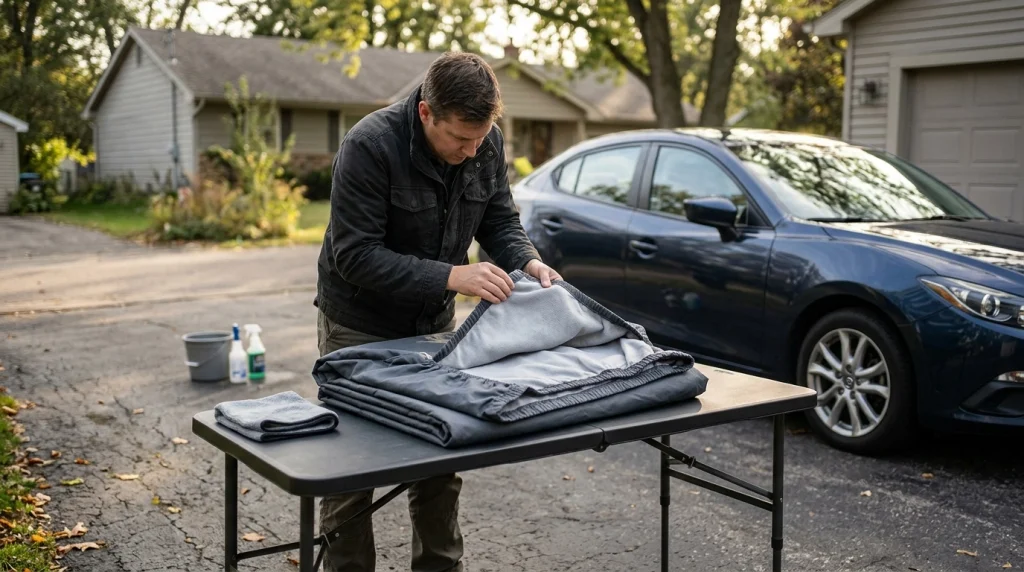
Removing visible sap is only part of the job. Before reinstalling the cover, make sure the fabric and the vehicle’s paint-contact surfaces are clean and dry.
Inspect both sides of the cover
Check the cleaned area for sticky residue, loose debris, and changes in texture. Pay attention to the inner lining, seams, elastic hems, and folds where contamination may collect.
If sap has passed through the fabric, clean the inner side according to the manufacturer’s instructions. Don’t place a sticky or gritty section against the vehicle.
Check the vehicle before reinstalling
- Inspect the roof, hood, trunk, and other areas beneath the affected cover section.
- Remove any transferred sap using a cleaning method intended for automotive paint.
- Wash away dust and grit before covering the vehicle.
- Allow the vehicle to dry before installation.
- Check the cover again to confirm that no tacky residue remains.
For paint-specific care, Consumer Reports’ car-maintenance resources provide broader vehicle-care context. However, paint-cleaning advice should not be treated as approval to use the same products on cover fabric.
How can you prevent tree sap from returning?
- Choose parking carefully: When possible, avoid parking beneath trees that repeatedly drip sap.
- Inspect the cover regularly: Look for sticky deposits before they harden.
- Clean promptly: Address fresh contamination using an approved method.
- Keep the cover clean: Remove accumulated dust, pollen, and grit according to the care label.
- Store it properly: Follow the manufacturer’s folding and storage instructions, and don’t store it damp.
A car cover is a protective barrier, but it still needs maintenance. Keeping both the cover and the vehicle clean helps reduce the chance of transferring contamination onto the paint.
Section takeaway: Inspect both sides, remove any transferred sap from the vehicle, and reinstall the cover only when the relevant surfaces are clean and dry.
Frequently Asked Questions
Can I use vinegar to remove tree sap from a car cover?
Don’t use vinegar automatically. Its suitability depends on the fabric, dyes, coatings, and manufacturer instructions. Start with water and an approved mild cleaner instead, and use vinegar only if the manufacturer explicitly permits it for your cover.
Can rubbing alcohol damage a car cover?
Yes, it may affect certain dyes, coatings, adhesives, or laminated materials. Use rubbing alcohol only when the manufacturer confirms it is suitable for your specific cover and provides compatible cleaning directions.
Will tree sap permanently stain a car cover?
It can leave discoloration or a stiff patch, especially after prolonged exposure. Prompt, gentle cleaning may improve the result, but some stains remain even after the sticky residue is gone. Avoid aggressive scrubbing to chase a cosmetic mark.
Can I use a pressure washer to remove tree sap?
A pressure washer is not a good first choice for spot cleaning. Concentrated pressure can stress fabric, seams, and coatings. Use gentle rinsing and an approved cleaner unless the manufacturer specifically permits pressure washing.
Can I machine-wash a car cover after sap removal?
Only if the cover’s care label permits machine washing. Check the recommended machine type, cycle, detergent, water temperature, and drying method. Some covers require hand washing or other specific cleaning procedures.
Can I put my car cover back on while it is damp?
Follow the manufacturer’s drying instructions and allow the cover to dry fully before reuse or storage. Check seams, hems, and thick sections carefully because they may retain moisture longer than the main fabric.
What should I do if tree sap has reached my car’s paint?
Remove the cover without dragging the contaminated area across the vehicle. Clean the paint separately using a suitable automotive sap-removal method, and remove loose dirt before rubbing the surface. Seek professional detailing help if the residue or paint damage persists.
Final Takeaway: Remove Tree Sap Without Damaging Your Car Cover
The safest way to remove tree sap from a car cover is to start with gentle cleaning and increase the treatment only when the manufacturer’s instructions allow it. Remove the cover carefully, clear away grit, soften the sap, blot rather than scrape, and rinse the treated area thoroughly.
For hardened residue, patience is more useful than aggressive chemicals or sharp tools. If a mild, approved cleaner doesn’t work, contact the manufacturer before trying a solvent that could damage the cover’s protective treatment.
Finally, inspect the inner lining and the vehicle before reinstalling the cover. A clean, dry cover placed on a clean vehicle is far more likely to protect the paint without transferring sap, dirt, or abrasive debris.
Disclosure: This article is for general vehicle-care information. Always follow the care instructions supplied with your specific car cover and cleaning products.