
New Battery Car Won’t Start

Even with a brand-new battery, your car might refuse to start due to hidden electrical issues, poor connections, or faulty components. This guide walks you through the most common reasons—and how to fix them fast.
You just installed a shiny new car battery—confident that your starting troubles are over. You turn the key… nothing. Or maybe it clicks once and dies. Your heart sinks. “But the battery is brand new!” you think. Don’t panic. A new battery car won’t start isn’t as rare as you’d hope, and the culprit is often something other than the battery itself.
Modern vehicles are complex machines with dozens of interconnected systems. The battery is just one piece of the puzzle. While it provides the initial jolt to crank the engine, everything from wiring to software plays a role in getting your car to fire up. In fact, up to 40% of “dead battery” calls actually stem from issues unrelated to the battery’s charge or condition. Understanding these hidden causes can save you time, money, and frustration.
This guide will walk you through the most common reasons why a new battery car won’t start—even when the battery is fresh out of the box. We’ll cover everything from simple fixes you can do in your driveway to warning signs that mean it’s time to call a professional. Whether you’re dealing with a late-model sedan or an older truck, these troubleshooting steps apply across the board.
Key Takeaways
- Corroded or loose battery terminals can prevent power from reaching the starter, even with a new battery.
- A failing alternator won’t charge the battery while driving, leading to a dead start despite a recent replacement.
- Faulty ignition switches or starter motors mimic battery problems but require different repairs.
- Extreme temperatures reduce battery efficiency, especially in cold weather, affecting performance regardless of age.
- Parasitic drain from accessories or electronics can slowly deplete a new battery overnight.
- Incorrect battery installation—like reversed polarity or loose cables—can stop your car from starting immediately.
- Software glitches in modern vehicles may require a reset or diagnostic scan to restore normal operation.
📑 Table of Contents
Why Your New Battery Car Won’t Start: Top Causes
When your car refuses to start despite a new battery, it’s easy to assume the battery is defective. But that’s rarely the case. Most new batteries come fully charged and tested. Instead, the problem usually lies elsewhere in the electrical system. Let’s break down the most common culprits.
Battery Terminal Corrosion or Loose Connections
One of the simplest—and most overlooked—reasons a new battery car won’t start is poor contact at the terminals. Over time, battery terminals can accumulate a white, powdery substance called corrosion. This buildup acts like insulation, blocking the flow of electricity from the battery to the rest of the car.
Even if you’ve cleaned the terminals before installing the new battery, residue might remain. Or worse, the cables might not be tightened properly. A loose connection means inconsistent power delivery, which can prevent the starter from engaging.
What to do: Pop the hood and inspect the battery terminals. Look for green or white crust around the clamps. If you see any, disconnect the cables (negative first, then positive), scrub the terminals and cable ends with a wire brush or baking soda solution, rinse with water, dry thoroughly, and reconnect—tightening securely. Always reconnect the positive cable first, then the negative.
Faulty Alternator
The alternator is your car’s onboard charger. It replenishes the battery while the engine runs. If it’s failing, your new battery will drain quickly—even if it started fully charged. You might notice dim headlights, a battery warning light on the dashboard, or electrical components acting sluggish.
A bad alternator won’t keep the battery charged, so after sitting overnight (or even a few hours), the battery lacks enough power to start the engine. This creates the illusion that the new battery is defective.
How to test: Use a multimeter to check voltage at the battery with the engine off (should be 12.4–12.7V) and then with the engine running (should be 13.8–14.8V). If the running voltage is below 13V, your alternator likely isn’t charging properly.
Starter Motor or Solenoid Failure
The starter motor is what physically turns the engine over when you turn the key. If it’s worn out or the solenoid (the switch that activates it) is faulty, you’ll hear a clicking sound but the engine won’t crank—even with a strong battery.
This is especially common in high-mileage vehicles. The starter draws a massive amount of current, and over time, its internal components wear down.
Signs to watch for: A single loud click when turning the key, no cranking sound, or intermittent starting issues. If the problem only happens when the engine is hot, it could be a heat-sensitive starter failure.
Ignition Switch Problems
The ignition switch sends power to the starter and other critical systems when you turn the key. If it’s worn or damaged, it may not complete the circuit—even if the battery is fully charged.
You might notice that dashboard lights flicker or don’t come on at all when you turn the key to the “on” position. In some cases, the car starts intermittently or only when you jiggle the key.
Tip: Try turning the key slowly and listen for any change in electrical activity. If the lights dim or go out when you turn the key, the ignition switch could be the issue.
Parasitic Battery Drain
Parasitic drain happens when something in your car continues to draw power from the battery even when the engine is off. Common culprits include interior lights left on, faulty relays, aftermarket electronics (like dash cams or alarms), or a malfunctioning module that won’t “sleep.”
Even a small drain—say, 50 milliamps—can kill a new battery overnight if the car sits for several days.
How to check: Use a multimeter in series with the negative battery cable to measure current draw. A normal parasitic drain is under 50mA. If it’s higher, start pulling fuses one by one to isolate the circuit causing the drain.
Environmental and Installation Factors
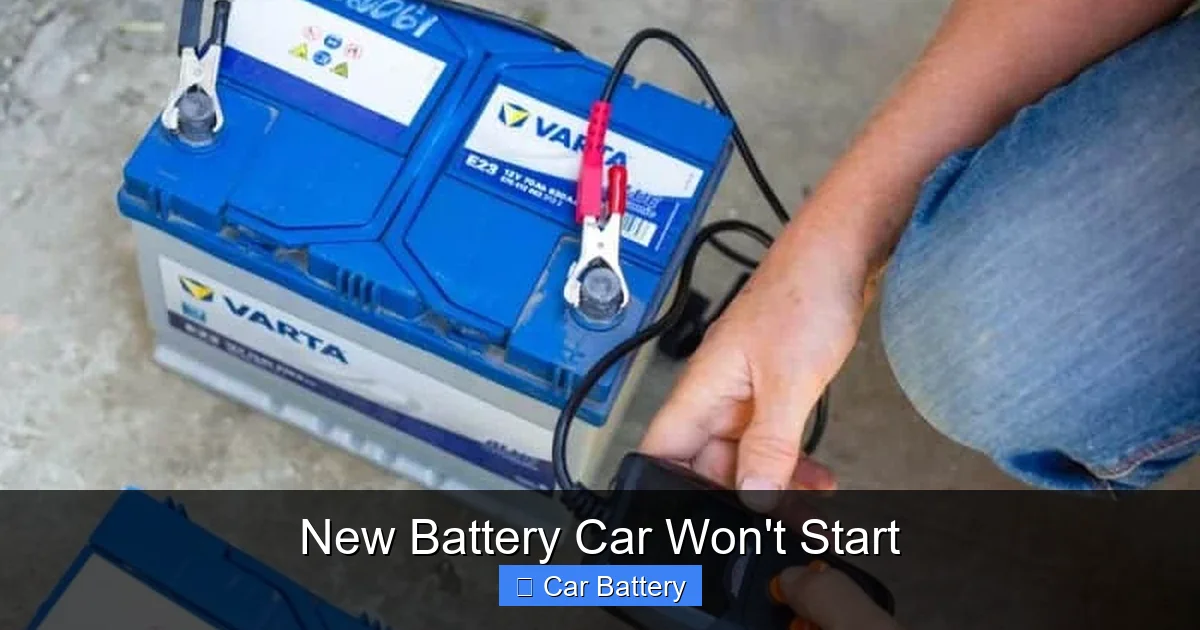
Visual guide about New Battery Car Won’t Start
Image source: rxmechanic.com
Sometimes, the reason a new battery car won’t start has nothing to do with mechanical failure—it’s about environment or installation error.
Extreme Cold Weather
Cold temperatures slow down the chemical reactions inside a battery, reducing its ability to deliver peak power. Even a new battery can struggle to start an engine in sub-zero conditions.
This is especially true for engines that are harder to crank in the cold (like diesel engines or older gasoline engines with thick oil). You might hear the starter turn slowly or not at all.
What helps: Use a battery blanket or trickle charger in winter. Park in a garage if possible. If your car has a block heater, use it—it warms the engine block, making it easier to start.
Incorrect Battery Installation
Installing a new battery seems simple, but mistakes happen. Reversing the positive and negative cables can damage electronics or prevent the car from starting. Even loosely connected cables can cause intermittent power loss.
Also, some vehicles require a “battery reset” or registration after replacement. Modern cars with advanced electronics (like BMW, Mercedes, or hybrids) often need the new battery registered with the car’s computer so it knows how to charge and manage power.
Pro tip: Always disconnect the negative terminal first when removing the old battery, and reconnect it last when installing the new one. This reduces the risk of short circuits.
Battery Type or Size Mismatch
Not all batteries are created equal. Using a battery with the wrong group size, cold cranking amps (CCA), or reserve capacity can lead to starting issues—even if it fits in the tray.
For example, a battery with insufficient CCA won’t deliver enough power to start the engine in cold weather. Or a battery with low reserve capacity might not sustain electrical loads if the alternator fails.
Check your owner’s manual or the label on the old battery to ensure the replacement matches the original specifications.
Electrical and Software Issues in Modern Vehicles
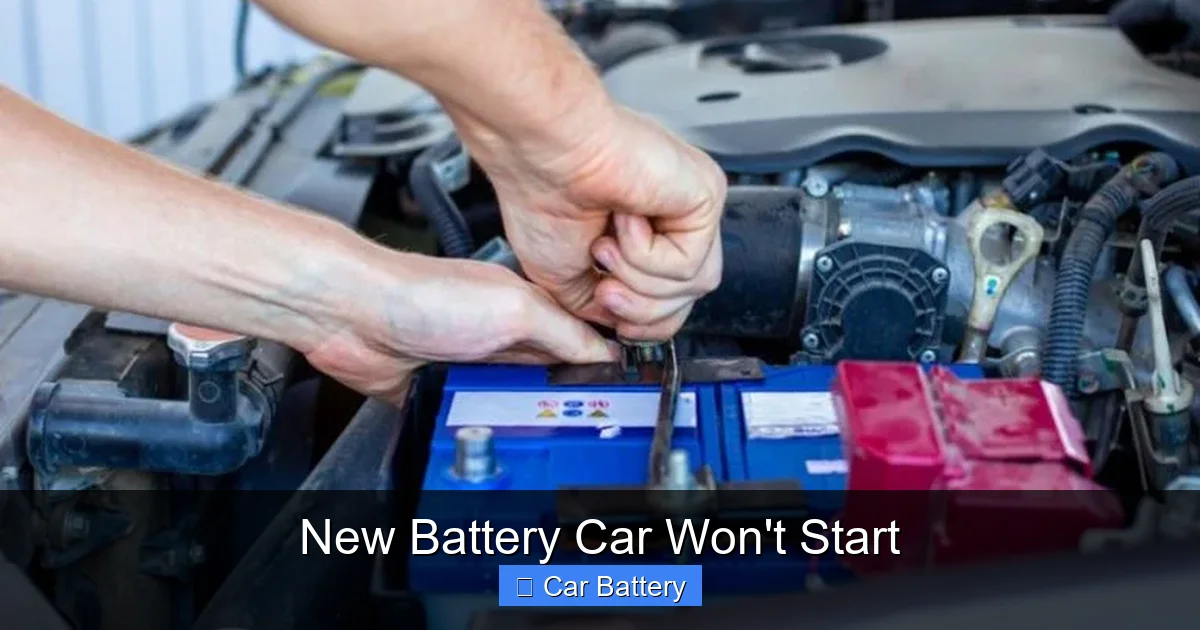
Visual guide about New Battery Car Won’t Start
Image source: rxmechanic.com
Today’s cars are more like computers on wheels. While this brings convenience, it also introduces new ways for things to go wrong—even with a new battery.
Faulty Body Control Module (BCM) or ECU
The Body Control Module manages everything from door locks to interior lighting. If it malfunctions, it can prevent the car from starting by interrupting the starter signal or disabling the ignition system.
Similarly, the Engine Control Unit (ECU) might refuse to allow the engine to crank if it detects a fault—even if the battery is fine.
Symptoms: No response when turning the key, dashboard warning lights behaving erratically, or the car starting only after a delay.
Security System or Immobilizer Lockout
Many modern cars have anti-theft systems that disable the engine if they don’t recognize the key. If the immobilizer system malfunctions or the key fob battery is dead, the car may not start—even with a fully charged battery.
You might see a flashing security light on the dashboard or hear the fuel pump not priming.
What to try: Use the physical key to unlock the door (if applicable), replace the key fob battery, or try a spare key. Some cars allow a “valet mode” or reset procedure in the owner’s manual.
Software Glitches or Need for Reset
After a battery replacement, some vehicles require a software reset to relearn charging parameters or re-sync systems. Without this, the car might not start or may exhibit odd electrical behavior.
For example, some Ford models need a “battery monitoring system reset” using a scan tool. Hybrids like the Toyota Prius often require a specific procedure to reinitialize the high-voltage system.
Solution: Consult your owner’s manual or a dealership. In many cases, a professional scan tool is needed to complete the reset.
Step-by-Step Troubleshooting Guide
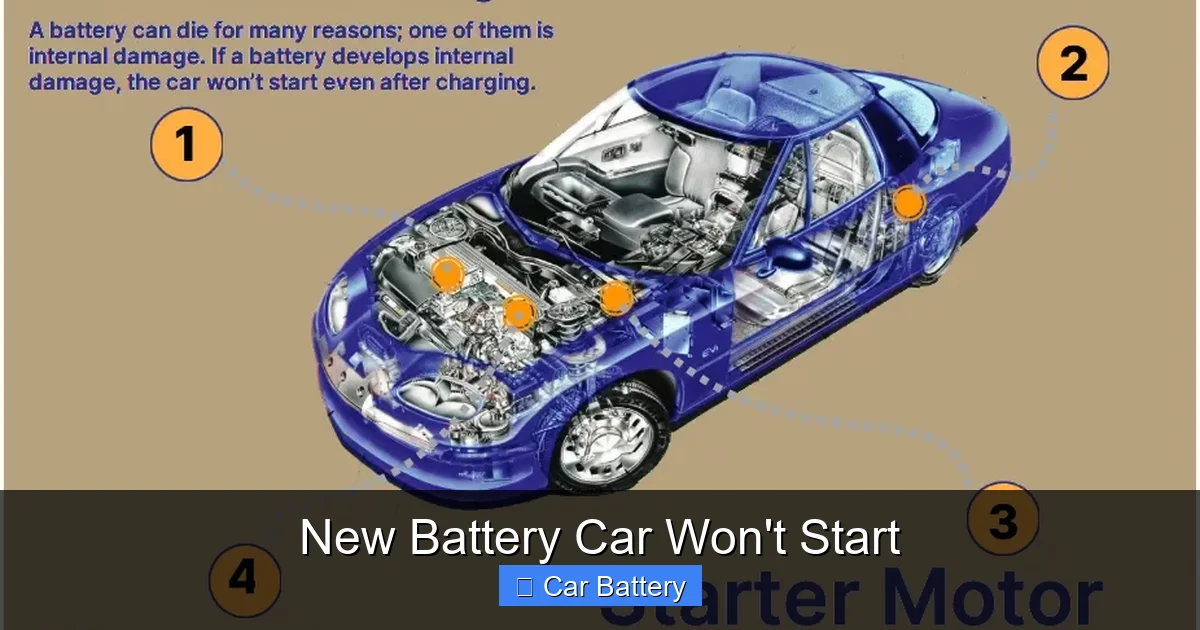
Visual guide about New Battery Car Won’t Start
Image source: autotechiq.com
When your new battery car won’t start, follow this systematic approach to identify and fix the issue.
Step 1: Check the Basics
– Is the gear in Park or Neutral (for automatic) or clutch fully depressed (for manual)?
– Are the headlights or interior lights on? If they’re dim or off, the battery may not be delivering power.
– Listen for sounds: clicking, grinding, or silence?
Step 2: Inspect Battery Connections
– Look for corrosion, loose cables, or damaged terminals.
– Clean and tighten connections as described earlier.
Step 3: Test Battery Voltage
– Use a multimeter to check voltage:
– 12.6V or higher = fully charged
– 12.0–12.4V = partially charged
– Below 12V = likely dead or defective
– If voltage is low, try jump-starting the car. If it starts and runs, the issue may be the alternator or parasitic drain.
Step 4: Listen for Starter Engagement
– Turn the key to “start.” Do you hear a click? A strong crank? Nothing?
– Click but no crank = likely starter or solenoid issue
– Slow crank = weak battery or cold weather
– No sound = check ignition switch, fuses, or wiring
Step 5: Check Fuses and Relays
– Locate the fuse box (usually under the hood or dashboard).
– Look for blown fuses related to the ignition, starter, or fuel system.
– Swap relays (like the starter relay) with identical ones to test.
Step 6: Scan for Error Codes
– Use an OBD2 scanner to check for diagnostic trouble codes (DTCs).
– Even if the check engine light isn’t on, stored codes can reveal underlying issues.
Step 7: Call a Professional
– If you’ve tried everything and the car still won’t start, it’s time to consult a mechanic.
– They can perform advanced diagnostics, test the alternator under load, or check for wiring faults.
Prevention Tips to Avoid Future Issues
Once you’ve solved the problem, take steps to prevent it from happening again.
Regular Maintenance
– Clean battery terminals every 6 months.
– Check battery voltage periodically, especially before winter.
– Inspect cables for wear or fraying.
Use a Battery Maintainer
– If you don’t drive often, use a trickle charger or smart maintainer to keep the battery topped up.
Avoid Aftermarket Electronics
– Limit the use of non-OEM accessories that draw power when the car is off.
– If you must install them, use a relay or fuse tap to minimize drain.
Monitor Warning Lights
– Pay attention to the battery or alternator warning light on the dashboard.
– Address electrical issues early before they leave you stranded.
Keep Spare Keys and Fobs Handy
– A dead key fob battery can prevent starting in keyless entry systems.
– Always have a backup key and replace fob batteries annually.
When to Replace More Than Just the Battery
Sometimes, a new battery car won’t start because other components are nearing the end of their life. Replacing the battery alone won’t fix the root cause.
Alternator Replacement
If testing confirms the alternator isn’t charging, replace it promptly. A failing alternator can damage the new battery and leave you stranded.
Starter Motor Replacement
If the starter is faulty, continuing to use it can strain the battery and electrical system. Replace it to ensure reliable starts.
Wiring and Ground Issues
Corroded or broken ground wires can disrupt the entire electrical system. Inspect the main ground strap from the battery to the chassis and clean or replace it if needed.
Upgrade to a Higher-Quality Battery
If you live in a cold climate or drive short distances frequently, consider upgrading to a battery with higher CCA or AGM (Absorbent Glass Mat) technology for better performance and longevity.
Conclusion
A new battery car won’t start can be frustrating, but it’s rarely a sign that the battery itself is defective. More often, the issue lies in connections, the alternator, the starter, or hidden electrical faults. By methodically checking each component—starting with the simplest fixes—you can often resolve the problem without a costly tow or repair.
Remember: modern cars rely on a delicate balance of mechanical and electronic systems. What seems like a battery issue might actually be a software glitch, a parasitic drain, or a failing module. Stay calm, follow the troubleshooting steps, and don’t hesitate to seek professional help when needed.
With the right knowledge and a little patience, you’ll get your car back on the road—and keep it running smoothly for miles to come.
Frequently Asked Questions
Can a brand-new battery be defective?
Yes, though it’s rare. Manufacturing defects or damage during shipping can cause a new battery to fail. If your new battery car won’t start and all connections are good, have it tested at an auto parts store—most offer free battery testing.
Why does my car click but not start with a new battery?
A clicking sound usually means the starter solenoid is receiving power but the starter motor isn’t engaging. This could be due to a faulty starter, poor ground connection, or low voltage—even with a new battery.
How long should a new car battery last?
Most car batteries last 3–5 years, depending on climate, driving habits, and maintenance. Extreme heat or cold can shorten lifespan. If your new battery dies within months, investigate parasitic drain or alternator issues.
Do I need to reset my car after replacing the battery?
Some modern vehicles require a reset or battery registration to sync with the car’s computer. Check your owner’s manual. Models from BMW, Mercedes, Audi, and hybrids often need this step to prevent starting or charging issues.
Can cold weather kill a new battery?
Yes. Cold temperatures reduce a battery’s cranking power. Even a new battery may struggle to start an engine in freezing weather, especially if the oil is thick or the engine is hard to turn over.
What’s the difference between a dead battery and a bad alternator?
A dead battery won’t hold a charge and needs recharging or replacement. A bad alternator fails to recharge the battery while driving, causing it to drain quickly—even if it was new. Test voltage with the engine running to diagnose.