How to Update Tesla Without Wifi

Contents
- 1 Key Takeaways
- 2 📑 Table of Contents
- 3 Why Tesla Updates Typically Need WiFi (And Why That’s a Problem)
- 4 Method 1: The USB Drive Update (The Gold Standard for Offline Updates)
- 5 Method 2: Using a Mobile Hotspot (The Quick Fix)
- 6 Method 3: Visiting a Tesla Service Center (The Professional Route)
- 7 Troubleshooting Common Update Problems Without WiFi
- 8 Best Practices for Smooth Tesla Updates (With or Without WiFi)
- 9 Conclusion: Stay Updated, No Matter Your Internet Situation
- 10 Frequently Asked Questions

Car Tire Inflator

Tire Shine Spray

Bluetooth FM Transmitter

Side Mirror Rain Guard
Updating your Tesla typically requires a WiFi connection, but you have reliable alternatives when that’s not available. You can manually install updates via a USB drive, use a mobile hotspot from your phone, or schedule a visit to a Tesla Service Center. These methods ensure you never miss out on critical safety features, performance enhancements, and new entertainment options for your vehicle.
So, you’re excited about the latest Tesla update—maybe it’s a new game, a security patch, or an improvement to your vehicle’s autopilot. You park, connect to your home WiFi, and… nothing. The update prompt doesn’t appear. If you’re in a rental, a hotel, or simply have unreliable home internet, this is a common frustration. The good news? Tesla, being a tech-forward company, has built in several ways to update Tesla without WiFi. This guide will walk you through every method, step-by-step, so you can keep your car’s software as cutting-edge as the day you bought it.
First, let’s clarify what we mean by “update.” Tesla pushes two main types: over-the-air (OTA) updates that download directly to the car via an internet connection, and manual USB updates for larger or critical releases. The OTA method is the standard, but it assumes a stable data connection. When that’s not an option, we get creative. We’ll cover using a USB drive, leveraging a mobile hotspot, and the official Service Center route. Each has its pros and cons, and we’ll detail exactly how to execute them without hiccups.
Why does this matter? Beyond the cool new features, Tesla updates often include vital safety improvements and battery optimization. Missing one could mean slower charging, reduced range, or unresolved bugs. So, let’s dive in and make sure you’re never left behind.
Key Takeaways
- USB Drive Method: The most reliable offline method, using a formatted USB drive to download and install the update file directly from Tesla’s website.
- Mobile Hotspot Workaround: Your smartphone’s personal hotspot can provide the temporary internet connection needed for an over-the-air (OTA) update.
- Tesla Service Center: For complex updates or persistent issues, a Service Center can install the software for you, often as part of a scheduled appointment.
- Update Frequency: Tesla releases updates periodically; staying current is crucial for safety, bug fixes, and new features like Full Self-Driving capabilities.
- Preparation is Key: Before starting any update, ensure your vehicle is parked, has sufficient battery (ideally 50%+), and you have a stable power source if using a hotspot.
- Troubleshooting: Common issues include incompatible USB drives, corrupted downloads, or interrupted connections—simple fixes like re-formatting or restarting the car often resolve them.
- No WiFi, No Problem: Lack of home WiFi should never prevent you from updating; these alternative methods are designed for exactly this scenario.
📑 Table of Contents
- Why Tesla Updates Typically Need WiFi (And Why That’s a Problem)
- Method 1: The USB Drive Update (The Gold Standard for Offline Updates)
- Method 2: Using a Mobile Hotspot (The Quick Fix)
- Method 3: Visiting a Tesla Service Center (The Professional Route)
- Troubleshooting Common Update Problems Without WiFi
- Best Practices for Smooth Tesla Updates (With or Without WiFi)
- Conclusion: Stay Updated, No Matter Your Internet Situation
Why Tesla Updates Typically Need WiFi (And Why That’s a Problem)
Tesla’s entire software philosophy revolves around seamless, wireless updates—much like your smartphone. The car constantly checks for updates in the background when connected to the internet. This “always-on” approach is brilliant for convenience but creates a dependency on a stable WiFi or cellular connection (if your Tesla has Premium Connectivity).
The problem arises for many owners. Not everyone has a strong, dedicated home WiFi network in their garage. Renters, people in apartments with poor signal, or those traveling frequently might find their car sitting for weeks without an update simply because it can’t connect to a network it trusts. Tesla’s system is designed to download updates only on “known” networks to avoid using cellular data (unless you have a subscription) and to prevent corrupted downloads on unstable connections. This security and quality measure can backfire when your primary WiFi is down.
Furthermore, some updates are staged releases. Tesla rolls them out to a small percentage of the fleet first. Even with perfect WiFi, your car might not see the update for days or weeks. While you can’t force a staged release early without hacking (which voids warranty), ensuring your car *can* connect when the update is finally available to your VIN is half the battle. That’s why having a backup plan for connectivity is essential.
The Role of Premium Connectivity
It’s worth noting that Tesla’s Premium Connectivity subscription ($9.99/month or $99/year) enables OTA updates over the car’s built-in cellular modem, independent of WiFi. If you have this, the “no WiFi” problem is largely solved—your car can update anywhere with a cellular signal. However, many owners opt out to save money, relying solely on WiFi. This guide is for those without Premium Connectivity or in areas with dead cellular zones.
Method 1: The USB Drive Update (The Gold Standard for Offline Updates)
This is Tesla’s official, recommended method for installing updates without any internet connection at the vehicle itself. It’s a two-part process: download the update file on another device with internet, then transfer it to the car via a USB drive. It’s 100% reliable if done correctly and works for any Tesla model (Model S, 3, X, Y, Cybertruck).
Visual guide about How to Update Tesla Without Wifi
Image source: carproblemsolved.com
Step-by-Step USB Update Guide
Step 1: Prepare Your USB Drive
You need a specific type of USB drive. Tesla is picky for good reason—they want to avoid corruption. Use a USB 3.0 drive (or higher) with at least 16GB of storage. It must be formatted as FAT32 (not exFAT or NTFS). Drives larger than 32GB often come pre-formatted as exFAT; you’ll need to re-format them, which erases all data. Back up anything on the drive first. Plug the USB into your computer, right-click the drive, select “Format,” choose FAT32, and quick format.
Step 2: Download the Update File
Go to Tesla’s official software download page (you can find this by searching “Tesla software download” or through your Tesla account). Log in with your Tesla account credentials. You’ll see a list of available updates for your specific vehicle (by VIN). Do not download updates from third-party websites—they can be malicious or corrupted. Select the latest version and download the .zip file to your computer. It will be large, often 2-5GB.
Step 3: Extract and Transfer to USB
Once downloaded, extract the .zip file. You should see a folder named something like “TB_Update” or with a .img file inside. Copy the entire extracted folder to the root directory of your USB drive. Do not nest it inside another folder. The USB drive’s root should look like: E:\TB_Update\ or similar. Safely eject the USB.
Step 4: Install in Your Tesla
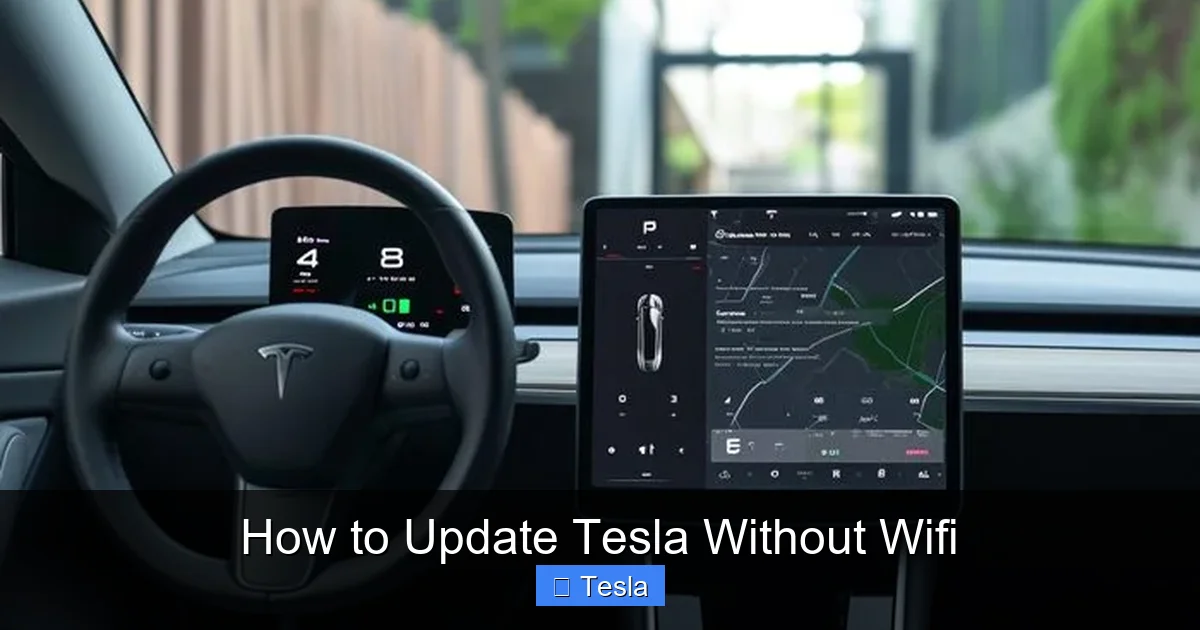
Park your Tesla, put it in Park, and ensure it’s awake (screen on). Insert the USB drive into one of the front USB ports (the ones in the center console, not the rear). The car will recognize it immediately. Go to Controls > Software > Check for Updates. Instead of “Checking…,” you should see an option to “Install from USB” or the update will appear automatically. Select it. The car will verify the file, then begin installation. This takes 20-45 minutes. The car will reboot multiple times. Do not remove the USB or drive the car during this process.
Pro Tip: If the update doesn’t appear, try a different USB port, reformat the drive, or redownload the file. Also, ensure your Tesla account shows the update as “available” for your VIN—sometimes the download page lists updates not yet staged for your car.
Why the USB Method is Superior for Offline Updates
The USB method bypasses Tesla’s network restrictions entirely. You’re providing the update package yourself, so the car doesn’t need to fetch anything from the internet. It’s also faster than OTA because you’re using a local USB 3.0 connection instead of a potentially slow or metered WiFi link. Plus, you can download the file on a fast home or office network and take it to the car later, even if the car is in a location with zero internet.
This method is also immune to staged rollout delays. If Tesla has released the update to its servers, you can download it immediately via the website, regardless of whether your car’s VIN is in the initial batch. Some owners use this to get updates weeks earlier than the OTA prompt would appear. However, note that Tesla sometimes requires a minimum software version to be installed before a newer one is offered on the website, so it’s not always possible to skip ahead multiple versions.
Method 2: Using a Mobile Hotspot (The Quick Fix)
If you have a smartphone with a decent data plan, your personal hotspot is a lifesaver. This method essentially tricks your Tesla into thinking it’s on a stable WiFi network by connecting it to your phone’s shared cellular data. It’s perfect for a one-time update when you’re away from home.

Visual guide about How to Update Tesla Without Wifi
Image source: koala.sh
How to Set Up a Mobile Hotspot for Tesla Updates
Step 1: Enable Hotspot on Your Phone
On iPhone: Settings > Personal Hotspot > Allow Others to Join (turn on). Note the WiFi password.
On Android: Settings > Network & Internet > Hotspot & Tethering > WiFi Hotspot (turn on). Set a network name and password.
Step 2: Connect Tesla to the Hotspot
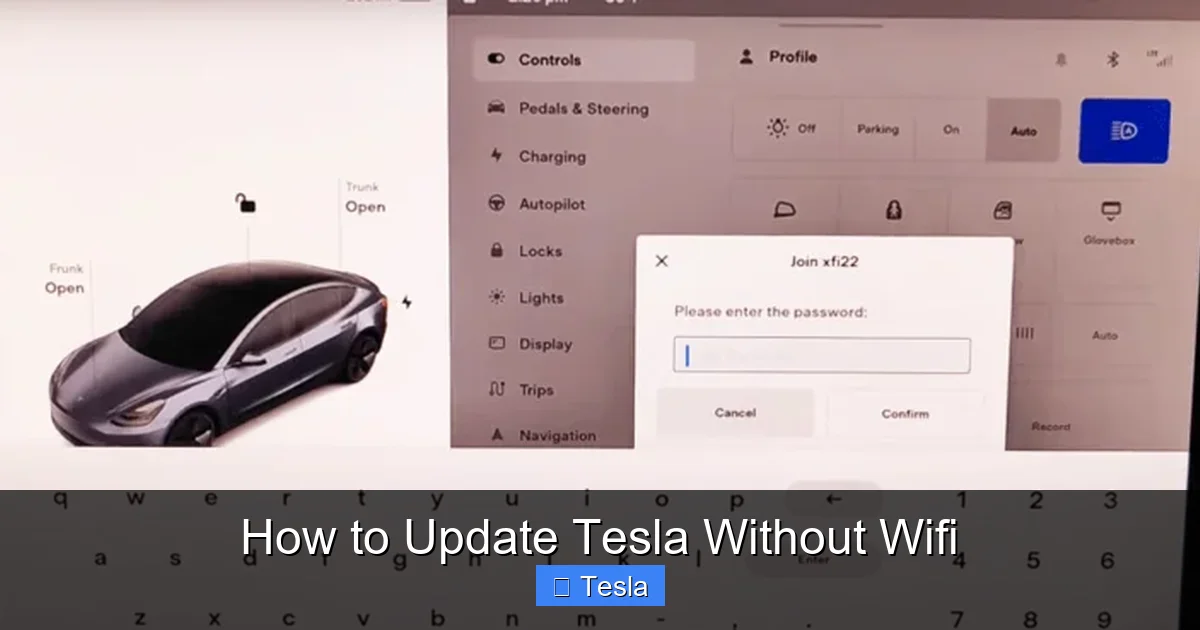
In your Tesla, go to Controls > WiFi. Turn WiFi on. Your phone’s hotspot network should appear in the list. Select it and enter the password. The Tesla will connect, showing a signal strength icon. Ensure the connection is stable before proceeding.
Step 3: Trigger the Update
Once connected, go to Controls > Software > Check for Updates. The car will now communicate with Tesla’s servers through your phone’s data connection. If an update is available for your VIN, it will download and install just like on a home network. Monitor your phone’s data usage—a full update can use 2-5GB.
Important Considerations for Mobile Hotspot Updates
Data Usage: This is the biggest concern. If you have a limited data plan, downloading a 4GB update could incur overage fees or throttle your speed. Check your plan beforehand. Some carriers offer unlimited data but may deprioritize hotspot usage after a certain threshold (e.g., 50GB), which could make the download painfully slow.
Battery Drain: Using a hotspot drains your phone’s battery quickly. Keep it plugged into a charger during the update, which can take over an hour. Also, ensure your phone stays close to the car; a weak cellular signal will cause the update to fail or stall.
Stability: Cellular connections are less stable than wired WiFi. If the update pauses or fails, you may need to restart the download. Tesla’s software is designed to resume, but it’s not perfect. A USB drive is more reliable for large updates.
Premium Connectivity Note: If your Tesla already has Premium Connectivity, it will use its own cellular modem for updates, making your hotspot unnecessary. But if you don’t have Premium, the hotspot is your cellular gateway.
Method 3: Visiting a Tesla Service Center (The Professional Route)
When all else fails—or if you’re uncomfortable with technical steps—a Tesla Service Center can install updates for you. This is also useful if an update fails repeatedly or your car’s WiFi module is malfunctioning.

Visual guide about How to Update Tesla Without Wifi
Image source: teslashooters.com
What to Expect at a Service Center
You don’t need a specific reason to schedule a service appointment for an update. Simply book an appointment via the Tesla app (Service > Schedule Service > Other > Software Update). Describe that you need a software update and cannot connect to WiFi. They’ll confirm a time.
During the appointment, a technician will connect your car to their high-speed, wired network and push the update. It’s the same process as OTA but with a guaranteed stable connection. The appointment usually takes 30-60 minutes, but you may need to leave the car longer if it’s a major update requiring multiple reboots. Often, you can wait in the lounge, or they’ll offer a loaner if it’s an extended period.
Cost: Software updates are always free at Tesla Service Centers, regardless of the reason. You’re not paying for the update itself, but if you’re there for other warranty or paid service work, that’s separate. Some owners worry about being charged for “diagnosis” if the issue is just a missing update—be clear in your appointment request that it’s for a software update installation only.
When to Choose Service Center Over DIY Methods
Opt for Service if:
- Your car’s WiFi hardware is broken (the car won’t connect to any network).
- You’ve tried USB and hotspot methods and the update fails repeatedly.
- The update is critical (e.g., a safety recall) and you want it done promptly by professionals.
- You’re already due for routine maintenance and can combine the visit.
Avoid Service if you just want to avoid a simple step—the USB method is easy and saves you a trip. But for persistent software glitches, a technician can also run diagnostics to see if a deeper issue exists.
Troubleshooting Common Update Problems Without WiFi
Even with the right method, things can go wrong. Here’s how to fix the most common issues:
USB Drive Not Recognized or “Invalid Update” Error
Cause: Incorrect formatting, wrong folder structure, or corrupted download.
Fix: Reformat the USB to FAT32. Redownload the update file from Tesla’s website (the download might have been incomplete). Ensure you copied the entire extracted folder to the USB root, not just the .img file. Try a different USB drive—some cheap drives have compatibility issues.
Update Download Stalls or Fails Over Hotspot
Cause: Weak cellular signal, data cap throttling, or hotspot timeout.
Fix: Move your car closer to a window or area with better signal. Restart your phone’s hotspot. If on a limited plan, consider using USB instead. Disable battery saver mode on your phone, which can interrupt the connection.
Car Won’t See the Update After USB Insertion
Cause: The update file isn’t for your specific VIN or model year.
Fix: Log into your Tesla account online and verify the update is listed as available for your vehicle. If not, it may not be staged for your VIN yet. You may need to wait for OTA rollout. Also, try a different USB port (front left vs. front right).
Update Installs but Features Don’t Appear
Cause: Some features are dependent on hardware or region.
Fix: Check Tesla’s release notes for the update—it will list which features are included and any requirements. If a feature is missing, it may not be enabled for your car’s configuration. A reboot (Controls > Safety > Power Off, wait 2 minutes, then restart) can sometimes finalize feature activation.
Update Fails Mid-Installation
Cause: Power interruption, USB removal, or system error.
Fix: The car should revert to the previous version automatically. Do not try to force the same update again immediately. Instead, ensure the car is plugged in (to maintain power) and connected to a stable network (via hotspot or USB method again). Sometimes waiting 24 hours and trying again resolves server-side issues.
Best Practices for Smooth Tesla Updates (With or Without WiFi)
Prevention is better than troubleshooting. Follow these tips to make any update process seamless:
- Keep Your Tesla Account Active: Ensure your Tesla account email and password are up-to-date. You need to log in to download USB update files.
- Maintain Minimum Battery: For any update, have at least 50% battery charge, ideally higher. Plug in if possible to avoid power loss during installation.
- Use High-Quality USB Drives: Invest in a reputable brand (SanDisk, Samsung). Avoid USB hubs or multi-card readers; plug directly into the car’s port.
- Download Updates on a Fast, Stable Connection: If using USB, download the file on a wired ethernet connection if available, to avoid corruption.
- Check Tesla Forums for Staged Rollout Info: Sites like Teslamotorsclub.com often report when an update starts hitting specific VIN ranges. If you’re eager, you can manually download via USB as soon as it’s on Tesla’s site, even before your car prompts it.
- Read Release Notes First: Before installing, read what’s included. Sometimes updates have known bugs; you might wait for a minor revision if it’s not critical.
- Ensure Sufficient Storage: The car needs internal storage space for the update package. If you have a full media drive (USB storage for Sentry Mode/recordings), delete old files to free space.
One often-overlooked tip: connect to a stable WiFi network periodically, even if you plan to use USB. Tesla uses WiFi to send diagnostic data and may require a “check-in” before offering certain updates. So, every few weeks, park within range of a known WiFi (like your home or a trusted friend’s) and let the car connect for a few minutes. This keeps your VIN in good standing for OTA rollouts.
Conclusion: Stay Updated, No Matter Your Internet Situation
Updating your Tesla without WiFi isn’t a hack—it’s a supported, straightforward process that Tesla anticipates owners might need. Whether you choose the bulletproof USB drive method, the convenient mobile hotspot, or the hands-off Service Center visit, you have options. Don’t let spotty internet keep you from critical software improvements.
For most, the USB method is the best blend of reliability and control. It’s a one-time purchase of a good USB drive and a few minutes of your time. The mobile hotspot is perfect for travelers or those in a pinch, just watch your data. And Service Center is there as a safety net for the truly stuck or for complex issues.
Remember, Tesla’s software is the heart of the experience—it adds range, improves autopilot, and brings new entertainment. Keeping it current is part of owning the car. So next time you see that update icon but have no WiFi, don’t sigh. Grab a USB drive, fire up your hotspot, or book a service appointment. Your Tesla will thank you with smoother rides and new features.
For more Tesla ownership tips, from installing a Tesla charger at home to understanding Tesla window replacement costs, we’ve got you covered. And if you’re curious how other brands handle updates, check out our guide to updating Subaru navigation systems for a fascinating contrast.
Frequently Asked Questions
Can I use any USB drive for a Tesla update?
No, it must be a USB 3.0 drive (or higher) with at least 16GB storage, formatted as FAT32. Some older or very large drives (over 32GB) may not work without reformatting.
Will using my phone as a hotspot use a lot of data for a Tesla update?
Yes, a full Tesla software update can be 2-5GB. If you have a limited data plan, this could use a significant portion of your monthly allowance or incur overage fees. Check your plan before proceeding.
How often does Tesla release software updates?
There’s no fixed schedule. Tesla pushes updates as needed—sometimes several in a month, sometimes gaps of several months. Major updates (like holiday releases) are annual, while minor bug fixes are frequent. Staying connected to WiFi regularly helps you get them as soon as they’re staged for your VIN.
What should I do if my Tesla update fails halfway through?
Don’t panic. The car should revert to the previous version automatically. Ensure the vehicle is plugged in and has sufficient battery. Try the update again after a few hours, or use the USB method for a more reliable download. If it fails repeatedly, schedule a Service Center appointment.
Is there a cost to have Tesla Service install an update for me?
No, software updates are free at Tesla Service Centers. You may be charged for other unrelated service work, but the update installation itself has no fee.
Can I pause an OTA update once it’s started?
No, once an OTA update begins downloading or installing, you cannot pause it. The process must complete or fail. If you need to stop it, you can put the car in “Sleep” mode, but this often causes the update to fail and restart from the beginning later.