How to Turn Off Low Tire Pressure Light on Toyota Rav4

Contents
- 1 Key Takeaways
- 2 📑 Table of Contents
- 3 Understanding Your RAV4’s Tire Pressure Monitoring System
- 4 Step 1: The Non-Negotiable First Move – Check & Inflate Tires
- 5 Step 2: Manual TPMS Reset Procedure for Your RAV4
- 6 Step 3: Using Technology – The Toyota App & Connected Services
- 7 When the Light Won’t Turn Off: Troubleshooting Persistent TPMS Warnings
- 8 Proactive Maintenance: Keeping Your TPMS Happy
- 9 Conclusion: A Simple Fix with Big Safety Implications
- 10 Frequently Asked Questions

Tire Shine Spray

Chain Lubricant Spray

Phone Mount for Bike

Car Interior LED Light
The low tire pressure light on your Toyota RAV4 is a critical safety warning from the Tire Pressure Monitoring System (TPMS). It illuminates when one or more tires are significantly underinflated. To turn it off, you must first correct the tire pressure to the manufacturer’s recommended PSI. The light will then typically reset automatically after a short drive, or you can manually reset it via the vehicle’s settings menu. If the light persists after proper inflation, it indicates a potential TPMS sensor fault that requires professional diagnosis.
Key Takeaways
- Safety First: The TPMS light is a safety feature. Never ignore it; always check and adjust tire pressure first.
- Correct PSI is Key: Use the recommended pressure found on the driver’s door jamb sticker, not the tire sidewall.
- Automatic vs. Manual: Most RAV4s reset automatically after driving, but a manual reset via the multi-information display is sometimes needed.
- Model Year Matters: The exact reset procedure can vary slightly between model generations (e.g., 2019-2021 vs. 2022+).
- Persistent Light = Problem: If the light stays on after inflation and reset, a faulty TPMS sensor or system issue is likely.
- Tech Can Help: The Toyota app can monitor tire pressure on compatible models, helping you stay proactive.
- Don’t Forget Spare: If your RAV4 has a full-size spare, it may have its own sensor and pressure requirement.
📑 Table of Contents
- Understanding Your RAV4’s Tire Pressure Monitoring System
- Step 1: The Non-Negotiable First Move – Check & Inflate Tires
- Step 2: Manual TPMS Reset Procedure for Your RAV4
- Step 3: Using Technology – The Toyota App & Connected Services
- When the Light Won’t Turn Off: Troubleshooting Persistent TPMS Warnings
- Proactive Maintenance: Keeping Your TPMS Happy
- Conclusion: A Simple Fix with Big Safety Implications
Understanding Your RAV4’s Tire Pressure Monitoring System
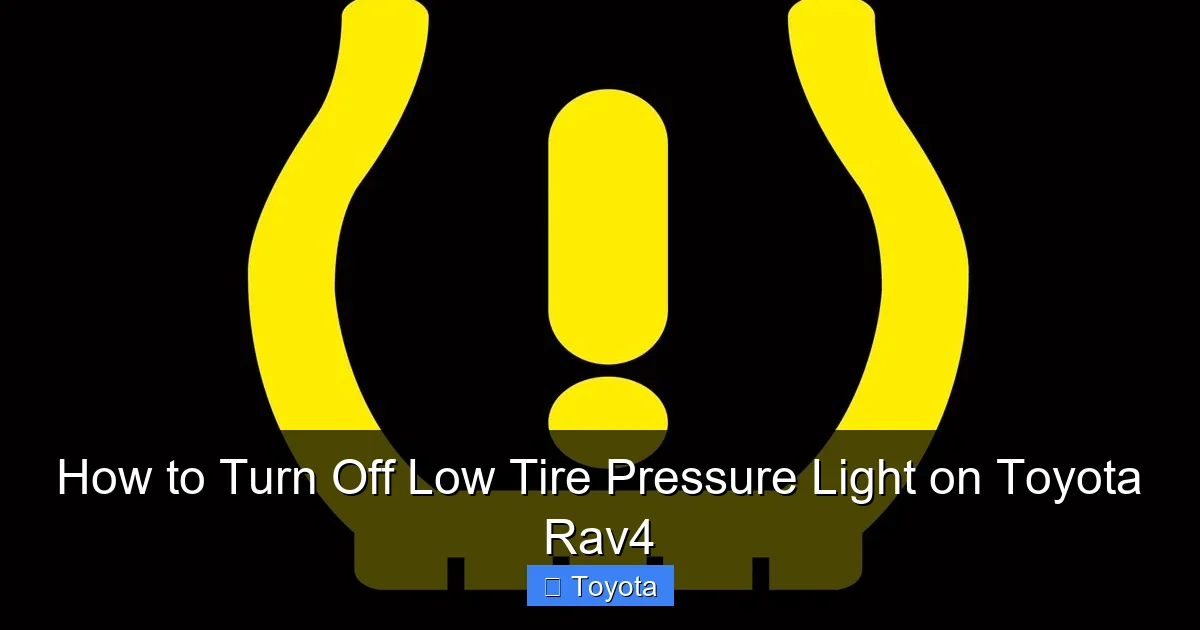
That little yellow exclamation point inside a tire cross-section on your dashboard isn’t just a nuisance—it’s your Toyota RAV4’s Tire Pressure Monitoring System (TPMS) talking to you. This safety system is mandated by law and designed to warn you when tire pressure drops 25% or more below the recommended level. For your RAV4, correct tire pressure is crucial for optimal handling, braking, fuel economy, and tire lifespan. Driving with underinflated tires is dangerous and wears them out prematurely. The TPMS light is your first clue something is amiss.
The system uses direct sensors mounted inside each wheel valve stem (on most modern RAV4s). These sensors transmit real-time pressure data to your vehicle’s computer. When a sensor reports low pressure, the warning light illuminates steadily. If the system detects a malfunction (like a dead sensor battery), it will typically flash for a minute or so before staying on steadily. Understanding this distinction helps with troubleshooting. For other dashboard warnings on your Toyota, you might also need to know how to turn off the maintenance light on a 2020 Toyota RAV4, which is a separate system.
Why the TPMS Light Comes On
Several factors can trigger the low tire pressure light:
- Temperature Changes: Cold weather causes air to contract, dropping pressure. A 10°F drop can reduce pressure by about 1 PSI. This is the most common seasonal cause.
- Puncture or Leak: A nail, screw, or damaged valve stem can cause a slow leak.
- Normal Permeation: Tires naturally lose about 1 PSI per month through the rubber.
- Recent Tire Service: If tires were rotated or repaired without resetting the TPMS, the light may come on.
- Faulty Sensor: Sensor batteries last 7-10 years. A dead or damaged sensor will trigger the light.
Step 1: The Non-Negotiable First Move – Check & Inflate Tires
You absolutely cannot turn off the light without first addressing the low pressure. Resetting the light while tires are still underinflated is pointless and dangerous. Here’s how to do it right:

Visual guide about How to Turn Off Low Tire Pressure Light on Toyota Rav4
Image source: spcdn.shortpixel.ai
- Locate the Recommended PSI: Find the manufacturer’s recommended tire pressure on the sticker placed on the driver’s side door jamb (when you open the door). It will list pressures for front, rear, and sometimes the spare. Do not use the maximum pressure listed on the tire sidewall.
- Get an Accurate Reading: Check tire pressure when tires are cold (driven less than 3 miles or parked for 3+ hours). Use a high-quality digital tire pressure gauge. Unscrew the valve cap, press the gauge on firmly, and read the PSI.
- Inflate to Spec: At a gas station air pump or with your own compressor, add air to each tire to reach the exact PSI listed on your door jamb sticker. Don’t guess. Over-inflation is also bad. If one tire is significantly lower than others, inspect it for a nail or puncture before inflating.
- Don’t Forget the Spare: If your RAV4 has a full-size spare tire mounted on the vehicle (not a temporary “donut”), it likely has a TPMS sensor and its own pressure specification on the door jamb sticker. Inflate it too.
After properly inflating all tires, drive the RAV4 normally for 10-20 minutes at speeds above 30 mph. The TPMS sensors will transmit the new, correct pressure to the computer. In many cases, the light will turn off on its own within this drive cycle. If it doesn’t, a manual reset is required. Proactively monitoring pressure can prevent this issue; you can even check tire pressure on the Toyota app if your vehicle is equipped with connected services.
Step 2: Manual TPMS Reset Procedure for Your RAV4
If the light remains on after correct inflation and a short drive, you’ll need to manually reset the system. The process varies slightly by model year and trim level, but the general method is the same for most 2019-2024 RAV4s. You’ll use the buttons on your steering wheel to navigate the Multi-Information Display (MID) in the gauge cluster.

Visual guide about How to Turn Off Low Tire Pressure Light on Toyota Rav4
Image source: rav4resource.com
Standard Reset Procedure (2019-2021 Models & Many 2022+)
- Start the Vehicle: Turn the ignition to the “ON” position (do not start the engine, or you can start it—both work). Ensure all doors are closed.
- Navigate to TPMS Mode: Use the arrow buttons on the left side of the steering wheel to scroll through the MID menus. Look for an icon that looks like a tire with an exclamation point or the letters “TPMS.” Press the “Enter” or “Set” button (usually the center button on the left stalk or a dedicated button).
- Initiate Reset: Once in the TPMS menu, you should see an option like “Tire Pressure Reset,” “TPMS Reset,” or “Set Pressure.” Select it.
- Confirmation: The display may ask you to confirm or show a message like “TPMS initialization completed” or “Set pressure completed.” The TPMS light on the dash may blink a few times to indicate it’s learning the new sensor positions/values.
- Drive: After the reset, drive the vehicle for 10-20 minutes. The system needs time to confirm all sensors are reporting the correct pressure. The light should go off.
Reset Procedure for 2023+ RAV4 with Digital Gauge Cluster
On newer RAV4s with a full digital driver’s display, the path might be:
“Vehicle Settings” > “TPMS” > “Initialize” or “Register ID”.
The principle is identical: go to the TPMS menu and select the reset/initialize option. Consult your owner’s manual for the exact path for your specific model year and trim.
Important Reset Tips & Warnings
- Tires Must Be Inflated First: Performing the reset with low pressure will store incorrect data and the light will return.
- All Sensors Must Be Active: If you have a dead sensor or a temporary spare without a sensor, the reset may fail or the light will stay on for that “missing” wheel.
- After Tire Rotation: Always perform a TPMS reset after rotating tires on a RAV4. The system needs to learn the new sensor locations.
- If Reset Fails: If the light comes back on immediately after a successful reset, a sensor is likely faulty.
Step 3: Using Technology – The Toyota App & Connected Services
For RAV4 owners with an active Toyota Connected Services subscription (or the Toyota app), you have a powerful tool at your fingertips. The app can show real-time tire pressure for each wheel, often before the dashboard light even comes on.
Visual guide about How to Turn Off Low Tire Pressure Light on Toyota Rav4
Image source: carspecmn.com
How to Use the App:
- Download and log into the Toyota app on your smartphone.
- Ensure your RAV4 is within range and the vehicle is in the “ACC” (Accessory) or “ON” position.
- Navigate to the “Vehicle” or “Status” section. Look for “Tire Pressure” or “TPMS.”
- The app will display the PSI for each wheel. You can use this to identify which tire is low without getting out in the cold.
- Some model years allow you to set the target pressure in the app and will guide you through inflation.
While the app helps with monitoring, the manual reset described in the previous section is still required after you physically adjust the air. The app is for information, not system reset. This tech connectivity is part of modern vehicle ownership, similar to how you might turn off the seatbelt alarm in a 2022 Toyota RAV4 through its own settings.
When the Light Won’t Turn Off: Troubleshooting Persistent TPMS Warnings
You’ve inflated the tires correctly. You’ve performed the manual reset. You’ve driven for 20 minutes. But that stubborn light is still on. Now what? This indicates a problem within the TPMS itself, not just low pressure.
Common Causes of a Persistent Light
- Faulty TPMS Sensor: The most common culprit. Sensors have internal batteries that last 7-10 years. If a sensor’s battery dies, it stops transmitting and the system flags a fault.
- Damaged Sensor: A sensor can be damaged during a tire change, by hitting a pothole, or from corrosion on the valve stem.
- Sensor Not Recognized: If a sensor was replaced but not properly programmed to the vehicle’s computer, the system won’t recognize it.
- Spare Tire Issue: A full-size spare with a dead sensor or incorrect pressure can keep the light on.
- System Malfunction: Rarely, the vehicle’s TPMS control module can fail.
Diagnostic Steps
- Double-Check All Pressures: Re-verify every tire, including the spare, is exactly to spec. Use your own gauge; gas station pumps are often inaccurate.
- Visual Inspection: Look at all valve stems. Are they straight? Any signs of damage, cracks, or corrosion?
- Try a Second Reset: Sometimes the first reset doesn’t take. Ensure the vehicle is off for 30 seconds, then repeat the reset procedure.
- Scan for Codes: A professional mechanic or tire shop will use a TPMS scan tool to read the system. It will tell them which wheel (sensor) is causing the fault or if there’s a general system error.
At this point, professional help is needed. Replacing a TPMS sensor involves removing the tire, breaking the bead, and installing a new sensor, which then must be programmed to the vehicle. This is not a typical DIY job without specialized tools. The cost per sensor (including labor and programming) typically ranges from $80 to $150.
Proactive Maintenance: Keeping Your TPMS Happy
An ounce of prevention is worth a pound of cure. Here’s how to minimize TPMS issues and ensure your system works reliably for years.
- Check Pressure Monthly & Before Trips: Don’t wait for the light. Use a good gauge. Temperature changes are the #1 trigger.
- Use the Correct Valve Caps: Always screw the plastic valve cap back on tightly. It keeps dirt and moisture out of the valve stem, protecting the sensor.
- Be Careful at Tire Shops: When getting tires serviced, remind technicians you have TPMS sensors. They should use proper tools to avoid damaging sensors during mounting/dismounting.
- Replace Sensor Batteries Proactively: You can’t replace the battery in most modern sensors; you replace the whole unit. If your RAV4 is 8+ years old and you start getting intermittent TPMS lights, it may be time to budget for sensor replacement.
- Winterize: In cold climates, check pressure more frequently in fall and winter. Adding 1-2 PSI in the fall can compensate for winter’s pressure drop and prevent the light from coming on.
Taking these steps helps avoid the frustration of a persistent light. Remember, other vehicle systems also require occasional attention. For instance, knowing how to reset the maintenance light on a 2021 Toyota RAV4 after an oil change is another key part of vehicle maintenance.
Conclusion: A Simple Fix with Big Safety Implications
Turning off the low tire pressure light on your Toyota RAV4 is a straightforward process: inflate to spec, then reset. The critical part is never skipping the inflation step. That light is your car’s way of saying, “Hey, my grip, braking, and fuel efficiency are compromised—fix me!” By understanding your TPMS, performing resets correctly, and practicing proactive tire maintenance, you ensure your RAV4 is safe, efficient, and ready for the road. If the light proves stubborn after your best efforts, don’t keep resetting it blindly. That persistent warning is a genuine system fault that needs a professional’s diagnostic tools. Address it promptly to maintain your vehicle’s safety systems and avoid a potential blowout or accident. Your tires are the only part of your car touching the road—treat them with the care they deserve.
Frequently Asked Questions
Why does my TPMS light keep coming back on after I’ve inflated the tires?
If the light returns shortly after inflation and reset, you likely have a faulty TPMS sensor, a slow leak in one of the tires, or a damaged valve stem. A professional scan is needed to identify the bad sensor or leak.
How long does it take for the tire pressure light to turn off after inflation?
After inflating tires to the correct PSI, drive your RAV4 for 10-20 minutes at speeds above 30 mph. The sensors need time to transmit the new data to the computer. The light should extinguish within this drive cycle.
Can I disable or remove the TPMS light?
No. The TPMS is a federally mandated safety system. Tampering with or disabling it is illegal in all 50 states and will cause your vehicle to fail inspection. The system must remain functional.
What if my RAV4 has a temporary spare (“donut”) on?
Temporary spares do not have a TPMS sensor. If you install a temporary spare, the TPMS light will illuminate because the system detects the missing sensor signal. This is normal. The light will go off once you reinstall a full wheel with a functioning sensor and reset the system.
Does rotating my tires affect the TPMS light?
Yes. After any tire rotation, you must perform a TPMS reset so the vehicle’s computer learns the new wheel/sensor positions. Failure to do so will cause the light to illuminate because the system thinks a sensor is missing.
My RAV4 is new. Why would a TPMS sensor fail?
While uncommon in new vehicles, sensors can be damaged during shipping or initial installation. They can also have manufacturing defects. A persistent light on a brand-new car should be addressed immediately under warranty at your dealership.