
How to Turn Off Dca on a Nissan Armada

Turning off DCA (Driver Assistance Alert) on your Nissan Armada gives you more control behind the wheel, especially during off-roading or heavy towing. This guide walks you through the process simply and safely, so you can disable the system when needed without affecting other vehicle functions.
If you’ve ever been driving your Nissan Armada—maybe hauling a trailer up a mountain pass or navigating a muddy trail—and suddenly heard a loud beep or saw a flashing warning light on the dash, you’ve likely encountered the DCA system. DCA, or Driver Assistance Alert, is designed to keep you safe by monitoring your speed, lane position, and proximity to other vehicles. While it’s a helpful feature in everyday city or highway driving, there are times when it can feel more like an annoyance than an aid. That’s why many Armada owners want to know: How do I turn off DCA?
The good news? It’s easier than you might think. You don’t need to visit a dealership or pull out any tools. With just a few taps on your steering wheel or screen, you can disable DCA and regain full control of your driving experience. But before we dive into the step-by-step process, let’s take a moment to understand what DCA actually does—and why you might want to turn it off in the first place.
DCA is part of Nissan’s broader suite of advanced driver assistance systems (ADAS). It works alongside features like Forward Collision Warning (FCW), Lane Departure Warning (LDW), and Intelligent Cruise Control. When the system detects that you’re drifting out of your lane without signaling, or approaching another vehicle too quickly, it triggers visual and audible alerts—usually a beep, a chime, or a message on the dashboard. In some cases, it may even apply gentle braking or steering correction if equipped with more advanced versions like Intelligent Emergency Braking.
While these alerts can prevent accidents, they’re not always welcome. For example, if you’re towing a heavy trailer, the added weight and altered handling can cause the system to misread your speed or distance, leading to false warnings. Similarly, off-roading through tight trails or rocky terrain might trigger lane departure alerts even when you’re intentionally driving off the pavement. In these situations, turning off DCA can reduce distractions and let you focus on the road—or trail—ahead.
Key Takeaways
- What DCA Is: DCA stands for Driver Assistance Alert, a safety feature that monitors driving behavior and alerts you to potential hazards like lane departure or forward collisions.
- Why You Might Want to Turn It Off: Off-roading, towing heavy loads, or driving in tight spaces can trigger false alerts, making it helpful to disable DCA temporarily.
- How to Turn It Off: Use the vehicle’s dashboard menu or steering wheel controls to access driver assistance settings and toggle DCA off.
- Temporary vs. Permanent Disable: Most models allow you to turn DCA off for the current drive cycle only—it resets when you restart the vehicle.
- Safety First: Always re-enable DCA after your task is complete to maintain optimal safety on public roads.
- Model Year Matters: The exact steps may vary slightly depending on your Armada’s year (2017–2024), so check your owner’s manual for specifics.
- No Tools Required: You don’t need special equipment—just your key fob and access to the infotainment or instrument cluster menu.
📑 Table of Contents
Understanding DCA in the Nissan Armada
To effectively manage DCA, it helps to know exactly what it monitors and how it interacts with your vehicle. The DCA system in the Nissan Armada uses a combination of cameras, radar sensors, and onboard computers to assess your driving environment. These sensors are typically located behind the windshield (near the rearview mirror) and in the front grille. They constantly scan the road ahead, checking for lane markings, other vehicles, and potential collision risks.
When the system determines that you’re at risk—say, you’re getting too close to the car in front without slowing down—it sends an alert. This might appear as a red icon on the instrument cluster, a beep from the speakers, or even a vibration in the steering wheel on higher trims. The goal is to get your attention so you can take corrective action before a situation escalates.
It’s important to note that DCA is not the same as automatic emergency braking (AEB). While AEB can physically slow or stop the vehicle, DCA is primarily an alert system. It doesn’t take control—it just warns you. That said, on some newer Armada models (especially 2021 and later), DCA may be integrated with other systems that can intervene if you don’t respond.
Another key point: DCA is designed to be active by default. Every time you start your Armada, the system turns back on unless you’ve manually disabled it during your last drive. This ensures that safety features are always ready when you need them. However, because it resets with each ignition cycle, you’ll need to turn it off again if you want to disable it for a specific trip.
How DCA Differs from Other Safety Features
Many drivers confuse DCA with other Nissan safety technologies, so let’s clear that up. Here’s a quick breakdown:
– Forward Collision Warning (FCW): Alerts you if you’re approaching another vehicle too quickly. Often works with DCA but can be controlled separately.
– Lane Departure Warning (LDW): Warns you if you drift out of your lane without signaling. Part of the same family as DCA but focuses only on lane position.
– Blind Spot Warning (BSW): Monitors your blind spots and alerts you when a vehicle is nearby. Not directly related to DCA.
– Intelligent Cruise Control (ICC): Maintains a set distance from the vehicle ahead. May use DCA data but operates independently.
DCA essentially acts as an umbrella alert system that can trigger based on multiple inputs. For example, if you’re speeding toward a stopped car (FCW) and also drifting out of your lane (LDW), DCA might combine both warnings into a single, more urgent alert.
When Should You Consider Turning Off DCA?
There are several legitimate reasons to disable DCA temporarily:
– Towing: When pulling a trailer, boat, or RV, the added length and weight can confuse sensors. The system might think you’re too close to the vehicle ahead or drifting out of your lane when you’re actually driving normally.
– Off-Roading: On dirt trails, forest roads, or rocky terrain, lane markings don’t exist. DCA will constantly alert you for “lane departure,” which can be distracting and unnecessary.
– Parking in Tight Spaces: Maneuvering into a narrow garage or crowded parking lot might trigger proximity alerts even when you’re in full control.
– Heavy Traffic with Frequent Stops: In stop-and-go traffic, especially in construction zones, DCA might beep repeatedly as you slow down and speed up, creating noise fatigue.
– Personal Preference: Some drivers simply prefer to rely on their own judgment rather than electronic alerts.
In all these cases, turning off DCA can make your drive smoother and less stressful. Just remember: safety systems exist for a reason. Only disable DCA when it’s truly necessary, and always re-enable it when you return to normal driving conditions.
Step-by-Step Guide to Turning Off DCA
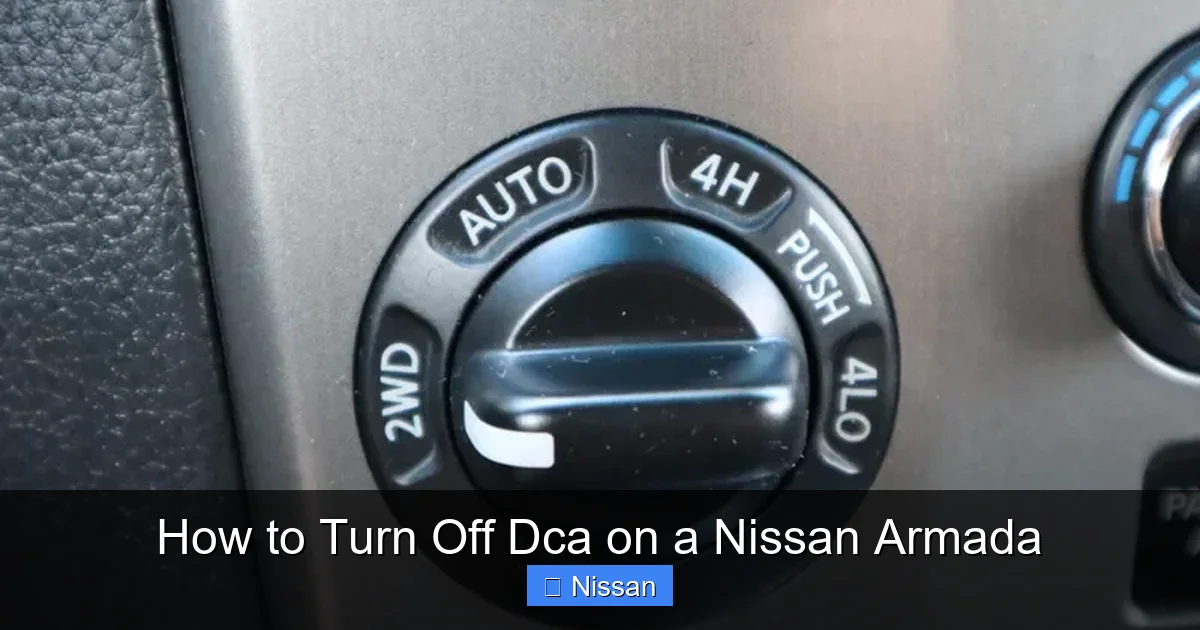
Visual guide about How to Turn Off Dca on a Nissan Armada
Image source: cdn.dealrimages.com
Now that you understand what DCA does and when it makes sense to disable it, let’s get into the practical steps. The process is straightforward and can be completed in under two minutes using your vehicle’s built-in controls. Below is a detailed, model-agnostic guide that works for most Nissan Armada trims from 2017 to 2024.
Method 1: Using the Steering Wheel Controls (Most Common)
This is the easiest and fastest way to turn off DCA. Here’s how:
1. Start your vehicle. Make sure the engine is running and the dashboard is fully powered on.
2. Locate the “INFO” or “MENU” button on your steering wheel. It’s usually on the left side, near the instrument cluster. Press it to open the main menu.
3. Navigate to “Settings” or “Vehicle Settings.” Use the arrow buttons (up/down/left/right) to scroll through the options.
4. Select “Driver Assistance” or “Safety & Security.” This section contains all your active safety features.
5. Find “DCA” or “Driver Assistance Alert.” It may also be labeled “Forward Collision Warning” or “Lane Departure Warning,” depending on your model year.
6. Toggle the switch to “Off.” You’ll see a confirmation message on the screen, such as “DCA Disabled” or “Driver Assistance Alert Off.”
7. Exit the menu. Press the “Back” or “Home” button to return to the main screen.
That’s it! DCA is now disabled for your current drive. When you turn off the vehicle and restart it, the system will automatically re-enable unless you repeat these steps.
Method 2: Using the Infotainment Touchscreen (2019 and Newer Models)
If your Armada has the larger 8-inch or 12.3-inch touchscreen (common on SL and Platinum trims), you can also disable DCA through the main display:
1. Tap the “Settings” icon on the home screen. It looks like a gear or wrench.
2. Select “Vehicle” or “Driving Assistance.” Scroll down if needed.
3. Choose “Driver Assistance Systems.” This will show a list of active features.
4. Find “DCA” or “Driver Assistance Alert” and toggle it off. A checkmark or slider will indicate the status.
5. Confirm your choice if prompted. Some models ask for a final confirmation to prevent accidental changes.
Note: On some 2022–2024 models, you may need to go into “Advanced Settings” or “Safety Preferences” to find DCA. If you can’t locate it, consult your owner’s manual or try Method 1.
Method 3: Using the Instrument Cluster Menu (Older Models)
For 2017–2018 Armadas with smaller displays, the process is slightly different:
1. Press and hold the “TRIP” button on the steering wheel. This opens the trip computer menu.
2. Scroll to “Settings” using the arrow keys. Look for a gear icon or text label.
3. Navigate to “Safety” or “Driver Aids.” DCA should be listed here.
4. Press “OK” or “Select” to toggle it off. The display will show “Off” next to the DCA option.
Again, this change is temporary. Restarting the vehicle will reset DCA to “On.”
Pro Tips for Success
– Check Your Trim Level: Higher trims (like Platinum) have more menu options and clearer labels. Base models (S or SV) may have fewer features or simpler menus.
– Use Voice Commands (If Available): On 2020+ models with NissanConnect, say “Turn off driver assistance” to see if the system responds. Not all units support this, but it’s worth a try.
– Keep the Manual Handy: If you’re stuck, your owner’s manual has a dedicated section on driver assistance systems. Look for “DCA,” “Safety Features,” or “Alerts.”
– Don’t Disable Everything: You can usually turn off DCA without affecting other systems like blind spot monitoring or rear cross-traffic alert. Only disable what you need.
Safety Considerations and Best Practices
While turning off DCA can be helpful in specific situations, it’s crucial to use this feature responsibly. Disabling safety systems increases your risk of accidents, especially in high-speed or complex driving environments. Here are some best practices to keep in mind:
Only Disable DCA When Necessary
Ask yourself: Do I really need to turn this off? If you’re driving on a highway during rush hour, it’s best to leave DCA active. The alerts can help prevent rear-end collisions or unintentional lane changes. But if you’re backing into a tight campsite or crawling over rocks on a trail, disabling it makes perfect sense.
Re-Enable It Promptly
Make it a habit to turn DCA back on as soon as you return to normal driving conditions. Set a reminder on your phone or leave a sticky note on your dashboard if needed. Some drivers even create a pre-drive checklist: “Check tire pressure, fuel level, and DCA status.”
Understand the Limitations
DCA is not a substitute for attentive driving. It can’t see everything—especially in poor weather, at night, or around sharp curves. Always keep your eyes on the road, use your mirrors, and signal your intentions clearly.
Test in a Safe Environment
If you’re new to disabling DCA, try it in a quiet parking lot first. See how the vehicle behaves without the alerts. This helps you build confidence and ensures you’re not caught off guard.
Consider Professional Help for Permanent Disables
Some drivers want to permanently disable DCA, but this is not recommended—and may not even be possible without specialized tools or dealership intervention. Nissan designs these systems to reset for safety reasons. Attempting to bypass them could void your warranty or affect insurance coverage.
Troubleshooting Common Issues
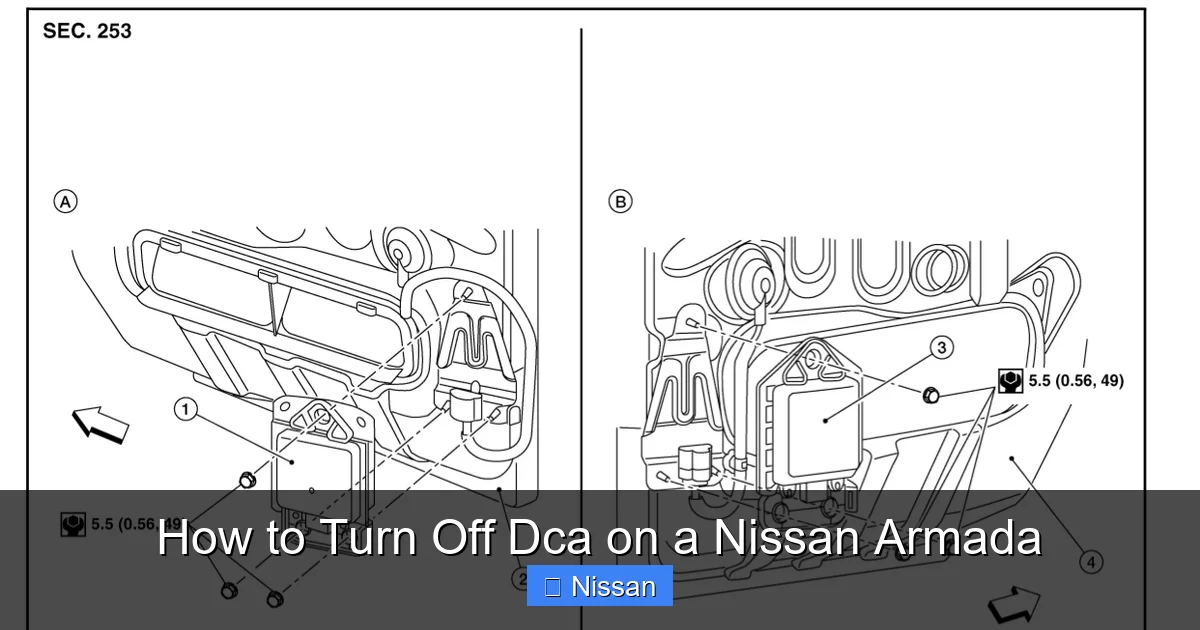
Visual guide about How to Turn Off Dca on a Nissan Armada
Image source: driversadvice.com
Even with clear instructions, you might run into a few hiccups. Here’s how to handle the most common problems:
“I Can’t Find the DCA Option”
– Double-check your model year and trim. Older or base models may not have DCA at all.
– Look under related menus like “Forward Safety,” “Collision Warning,” or “Lane Assist.”
– Update your infotainment system. Nissan occasionally releases software updates that reorganize menu layouts.
“The System Turns Back On Automatically”
This is normal. DCA is designed to reset with each ignition cycle. If you want it off for a long trip, just disable it again after starting the vehicle.
“The Alerts Are Still Triggering”
– Make sure you fully toggled the setting to “Off.” Sometimes the menu shows “On” even after you think you turned it off.
– Check if another system (like FCW or LDW) is still active. Disable those separately if needed.
– Clean your windshield and front grille. Dirt, snow, or ice can block sensors and cause false alerts.
“My Armada Doesn’t Have DCA”
Not all Armadas come with DCA standard. It’s typically included on SL and Platinum trims, and optional on SV. If you’re unsure, check your window sticker or contact your dealer with your VIN.
Final Thoughts: Balance Convenience and Safety
The Nissan Armada is a powerful, capable SUV built for adventure—whether that means hauling a trailer across the country or exploring backcountry trails. Features like DCA are meant to enhance your safety, but they’re not one-size-fits-all. Knowing how to turn off DCA gives you the flexibility to adapt your vehicle to your driving needs.
Just remember: technology is a tool, not a replacement for good judgment. Use DCA when it helps, disable it when it hinders, and always prioritize safety. With this guide, you’re now equipped to make informed decisions about your Armada’s driver assistance systems—so you can focus on what really matters: enjoying the ride.
Whether you’re a weekend warrior, a full-time RVer, or just someone who likes to take the scenic route, mastering your vehicle’s features puts you in the driver’s seat—literally and figuratively. So go ahead, turn off DCA when you need to, and drive with confidence.
Frequently Asked Questions
Can I permanently turn off DCA on my Nissan Armada?
No, DCA cannot be permanently disabled through standard user settings. It resets to “On” every time you restart the vehicle for safety reasons. For permanent changes, you’d need dealership-level tools, which are not recommended.
Will turning off DCA affect my warranty or insurance?
Temporarily disabling DCA using the menu system will not affect your warranty or insurance. However, attempting to physically modify or bypass the system could void coverage, so stick to factory-approved methods.
Does turning off DCA disable all safety features?
No. Disabling DCA only turns off the Driver Assistance Alert system. Other features like blind spot monitoring, rear cross-traffic alert, and automatic emergency braking (if equipped) remain active unless disabled separately.
Why does DCA keep beeping even after I turn it off?
This usually means another related system—like Forward Collision Warning or Lane Departure Warning—is still active. Check your driver assistance menu and disable those features individually if needed.
Can I turn off DCA while driving?
Yes, you can safely disable DCA while the vehicle is in motion. Just use the steering wheel or touchscreen controls as described. However, avoid distractions—make the change quickly and keep your eyes on the road.
Is DCA available on all Nissan Armada models?
DCA is standard on SL and Platinum trims and optional on SV. Base S models may not include it. Check your owner’s manual or window sticker to confirm if your Armada has this feature.
