
How to Troubleshoot Car Cover Problems: Step-by-Step Fixes
Quick Answer
To troubleshoot car cover problems, first remove the cover and inspect the vehicle, fabric, seams, and fastening points. Most problems involve poor fit, trapped moisture, loose straps, dirty fabric, or material deterioration. Always start with a clean, dry vehicle and follow the manufacturer’s car cover care guidance before repairing or reinstalling the cover.
Six Quick Troubleshooting Steps
- Check the fit: Look for loose panels, exposed bumpers, stretched seams, and misaligned mirror pockets.
- Inspect for moisture: Lift the cover and look for water droplets, damp fabric, or condensation.
- Examine paint contact: Check for trapped dust, grit, rough seams, or fabric rubbing against the finish.
- Test the fasteners: Inspect elastic hems, buckles, straps, and grommets for wear.
- Check weather protection: Look for torn fabric, worn coatings, leaking seams, and rain entering around the edges.
- Repair or replace: Fix minor damage using approved materials, but replace covers with widespread deterioration.
Safety tip: Never install a cover over hot exhaust components, and never run or drive the vehicle while it is covered.
A car cover should protect your vehicle, not create another maintenance problem. Yet even a good cover can start slipping, leaking, scratching paint, or holding moisture when its fit or condition changes.
My approach is to diagnose the symptom before trying a repair. This guide explains what to inspect, which fixes are reasonable at home, and when replacing the cover makes more sense.
In This Guide
How Do You Diagnose Car Cover Problems?
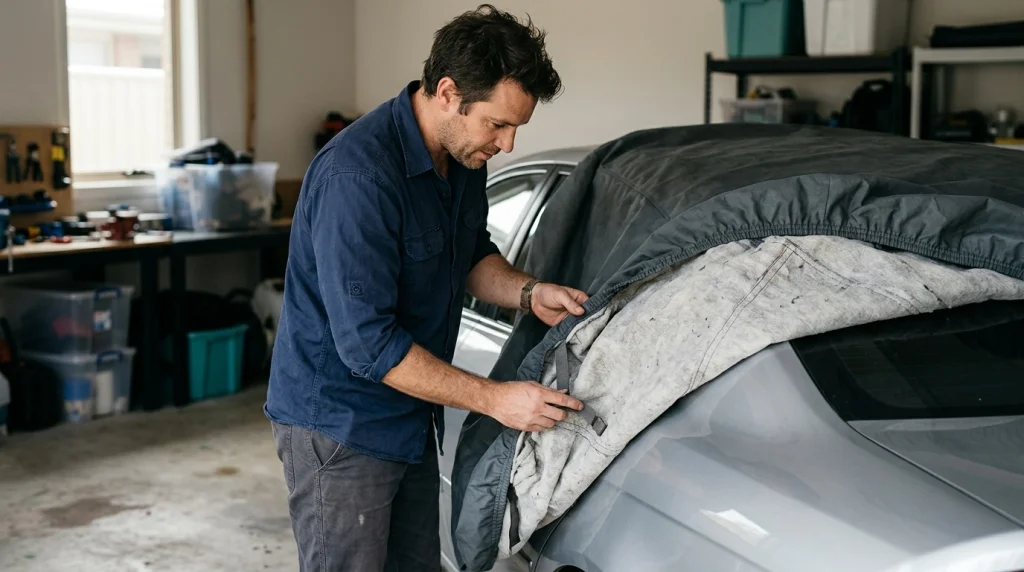
The easiest way to troubleshoot a car cover is to identify the visible symptom and inspect its most likely cause. Avoid replacing a cover before checking whether incorrect installation is responsible.
Car cover troubleshooting means systematically checking the cover’s fit, material, condition, installation, and storage environment to identify why protection is failing.
Start With a Five-Minute Inspection
- Remove the cover carefully. Lift the material away from painted panels rather than dragging it across them.
- Inspect the exterior. Look for moisture, dirt, paint haze, marks, or uncovered areas.
- Check the inner fabric. Feel for trapped grit, rough patches, hardened areas, and damaged stitching.
- Examine the attachment points. Look for loose buckles, broken straps, stretched elastic, and damaged grommets.
- Confirm compatibility. Verify that the cover suits your vehicle’s dimensions, body shape, accessories, and storage environment.
Carry out this inspection with the vehicle parked, engine switched off, and surfaces cool. If the cover feels abrasive or leaves visible marks, stop using it until you identify the cause.
Car Cover Problem Diagnosis Table
| Symptom | Likely Cause | First Fix |
|---|---|---|
| Cover blows off | Loose fit or unsecured straps | Reposition and secure the cover |
| Water underneath | Condensation or rain intrusion | Dry both surfaces and identify the source |
| Fine paint scratches | Trapped grit and fabric movement | Clean the vehicle and lining |
| Cover feels too tight | Wrong size, shrinkage, or accessories | Verify fitment and dimensions |
| Musty smell | Damp storage or contamination | Wash as directed and dry completely |
| Water passes through fabric | Worn water resistance or fabric | Check care instructions and material condition |
| Small tear | Snag, abrasion, or seam stress | Use a compatible repair method |
Is the Problem the Cover or the Parking Environment?
A cover may appear defective when the real problem comes from where the vehicle is parked. Wet ground, wind exposure, falling debris, and high humidity can change its performance.
- Outdoor parking: Prioritize wind security, water resistance, UV durability, and breathability.
- Indoor parking: Prioritize soft contact material, dust protection, and moisture control.
- Coastal environments: Inspect for persistent dampness and salt contamination.
- Tree-covered spaces: Watch for sap, bird droppings, branches, and accumulated debris.
- Long-term storage: Periodically check the cover, vehicle finish, and storage conditions.
Before buying a replacement, identify which environmental conditions your current cover cannot handle. That distinction prevents you from repeating the same mistake.
How Do You Fix Car Cover Fit and Wind Problems?
A loose cover can flap, slide, expose panels, and rub against paint. Fix it by checking the size, positioning the fabric correctly, and securing the intended attachment points.
Why Does My Car Cover Keep Blowing Off?
Wind can enter under an unsecured hem and lift loose fabric. The larger the unsupported area, the more easily the material can move.
Follow these steps to reduce movement:
- Verify the cover size. Compare the manufacturer’s fitment information with your vehicle’s exact body configuration.
- Identify the front. Locate installation labels or markings before spreading the cover.
- Center the fabric. Align the cover with the roof, windshield, and front and rear bumpers.
- Seat the elastic hems. Position them as specified by the cover manufacturer.
- Secure the straps. Use the intended buckles and attachment system without overtightening.
- Check movement. Inspect whether the cover remains correctly positioned in normal conditions.
Never attach straps to brake lines, suspension components, fuel lines, or other vulnerable parts. Keep fastening materials away from hot exhaust components and moving parts.
If strong winds continue lifting the fabric, move the vehicle into sheltered parking or temporarily remove the cover. A cover that repeatedly flaps against paint may cause more harm than protection.
What If the Cover Is Too Small?
An undersized cover may stretch over mirrors, pull against spoilers, or fail to reach the bumpers. Forcing it into place can damage stitching and accessories.
- Confirm the correct year, make, model, and body style.
- Check whether aftermarket spoilers or roof accessories change the required dimensions.
- Compare the manufacturer’s size chart with vehicle measurements.
- Inspect the cover for shrinkage or distortion after cleaning.
- Replace a clearly undersized cover rather than forcing the fit.
A tight fit is not automatically a good fit. The cover should follow the body shape without putting damaging pressure on trim or seams.
Can You Fix an Oversized Car Cover?
Minor looseness may improve after correcting the installation and adjusting approved straps. Large amounts of excess fabric usually indicate a sizing problem.
Avoid tying random knots against painted panels or modifying the cover with exposed metal fasteners. These shortcuts can create new abrasion points.
If the material remains loose despite correct installation, a properly sized replacement is the more dependable solution. Check sizing carefully before ordering.
Section Takeaway: Correct sizing and secure installation solve many wind-related problems. Persistent flapping is a reason to reconsider the cover, not just tighten its straps.
Why Is Water Getting Under Your Car Cover?
Water beneath a car cover may come from rain entering through gaps, moisture passing through the fabric, or condensation forming on a cool vehicle. Identifying the source is essential because each problem needs a different fix.
How Do You Tell Condensation From a Leak?
Condensation forms when moist air contacts a surface cool enough for water vapor to become liquid. A rain leak involves water entering from outside.
| Clue | Condensation | Rain Intrusion |
|---|---|---|
| When it appears | Cool nights or humid conditions | During or after rainfall |
| Water pattern | Often widespread droplets | May concentrate near openings or damaged areas |
| Likely issue | Moisture and limited drying | Water penetration or entry around edges |
| First action | Dry and improve airflow | Inspect fabric, seams, and hems |
These clues help narrow the diagnosis but are not definitive. Both condensation and rain intrusion can occur together.
How Do You Stop Moisture From Building Up?
- Remove the cover when conditions allow safe handling.
- Dry the vehicle, including mirrors, trim recesses, and water-holding areas.
- Spread or hang the cover until both surfaces dry completely.
- Check for damp pavement, standing water, garage leaks, or poor ventilation.
- Confirm that the fabric is breathable and appropriate for the storage conditions.
- Reinstall the cover only after the vehicle and cover are dry.
A breathable cover can help moisture vapor escape, but it cannot guarantee that condensation never forms. Humidity, temperature changes, and local ventilation still matter.
What If Rainwater Is Passing Through the Cover?
Outdoor covers vary in water resistance. Some are designed to resist rain while allowing water vapor to escape rather than forming a completely waterproof barrier.
Inspect the following areas before assuming the entire cover has failed:
- Seams: Look for separated stitching or damaged seam treatments.
- Fabric panels: Check for thinning, pinholes, tears, or visible deterioration.
- Lower edges: Determine whether wind-driven rain is entering beneath the hem.
- Contact areas: Check whether water collects or transfers around protruding accessories.
- Material care: Check whether the manufacturer permits treatment to restore water resistance.
Do not spray household waterproofing chemicals onto the cover without confirming compatibility. An unsuitable treatment may affect breathability, coatings, or fabric performance.
Why Does My Cover Smell Musty?
A musty odor often develops when material stays damp or is folded before drying. Dirt and organic debris can make the problem worse.
Clean the cover according to its care label, rinse thoroughly, and dry it completely. If mold remains embedded, the fabric deteriorates, or the smell returns quickly, replacement may be appropriate.
Section Takeaway: Diagnose the moisture source before changing products. Dry surfaces, appropriate fabric, and better storage conditions matter more than a waterproof label alone.
How Do You Stop a Car Cover From Scratching Paint?
Paint scratches associated with car covers commonly result from trapped dirt, rough contact points, and repeated fabric movement. Cleaning the vehicle and limiting unnecessary movement are the first preventive steps.
Why Can a Soft Cover Still Leave Scratches?
Soft fabric can carry dust or sand particles that rub against the clear coat. This is especially troublesome when wind repeatedly moves the cover.
A clean lining also cannot compensate for a dirty vehicle. Small abrasive particles may remain on the paint even when the surface looks reasonably clean.
How Do You Check for Abrasive Contact?
- Remove the cover slowly without dragging it along the body.
- Examine the hood, roof, trunk, and bumper edges under good lighting.
- Inspect the cover’s inner surface for dirt, hardened deposits, and rough stitching.
- Pay special attention to areas where the cover frequently moves.
- Clean both surfaces before another installation.
For routine exterior cleaning, follow suitable automotive paint-care instructions such as those available from Meguiar’s. Use products appropriate for the vehicle’s finish and follow their instructions.
What Should You Do If Scratches Already Appear?
First determine whether the marks are loose residue, shallow clear-coat defects, or deeper damage. Washing can remove surface contamination, but actual scratches require separate assessment.
- Surface residue: Wash using paint-safe products and inspect again.
- Light swirl marks: Consider professional detailing if suitable for the paint.
- Deeper scratches: Seek a paint specialist’s assessment rather than aggressively polishing.
- Repeated new marks: Stop using the cover until the source of abrasion is corrected.
Some modern vehicles have matte finishes, protective films, or special coatings requiring different maintenance. Always follow the vehicle or coating manufacturer’s instructions.
How Can You Prevent Future Paint Damage?
The best routine combines clean contact surfaces, controlled installation, correct fit, and periodic inspection. A soft lining is useful, but cleanliness remains essential.
- Remove loose dirt before applying the cover.
- Wash the vehicle when necessary rather than wiping dry grit across paint.
- Keep the inner lining clean and free of debris.
- Lift and fold the cover instead of pulling it across painted panels.
- Avoid installation during strong winds.
- Replace materials with hardened, abrasive, or damaged contact surfaces.
Section Takeaway: A car cover should not move gritty material across paint. Keeping contact surfaces clean and reducing fabric movement lowers the risk of scratches.
How Do You Fix Car Cover Tears, Elastic, and Fabric Damage?
Small defects may be repairable when the fabric remains structurally sound. Significant UV damage, widespread tearing, or failed attachment points usually call for replacement.
Can You Repair a Small Tear in a Car Cover?
Some manufacturers offer compatible repair patches or recommended repair methods. Check the fabric type and warranty before attempting any modification.
- Remove the cover from the vehicle.
- Clean the damaged area using the approved cleaning method.
- Let the material dry completely.
- Apply an approved patch or follow the manufacturer’s repair instructions.
- Inspect the repaired area for rough edges or exposed adhesive.
- Confirm that the repair will not rub against vehicle paint.
A patch that creates a hard surface against the finish may introduce a new problem. Avoid improvised repairs involving exposed staples, sharp clips, or unsuitable adhesives.
What If the Elastic Hem Is Stretched?
Elastic loses holding strength as it ages, especially after prolonged exposure to weather and tension. Once it no longer grips the intended area, the cover may shift.
Some designs allow professional elastic replacement or manufacturer-approved repair. If the hem is integrated into a deteriorating fabric panel, a replacement cover may be more practical.
How Do You Handle Broken Buckles or Straps?
A broken fastener reduces the cover’s ability to remain secure. Do not rely on a single remaining attachment if the design requires multiple straps.
- Check whether the manufacturer sells replacement components.
- Use compatible buckle sizes and strap materials.
- Inspect nearby stitching for stress or tearing.
- Make sure replacement hardware does not touch painted panels.
- Test the fastening system before the next period of outdoor storage.
For unusual attachment systems, follow the original manufacturer’s guidance rather than improvising hardware. A secure repair should not create rubbing, snagging, or underbody hazards.
What Does Sun Damage Look Like?
Long-term ultraviolet exposure can weaken some cover materials. Warning signs include brittleness, fabric powdering, cracking, thinning, or seams that tear with light tension.
Inspect areas receiving the most sunlight and around high-stress points. If the fabric is failing across multiple panels, patching isolated holes will not restore overall durability.
Can You Restore a Shrinking Car Cover?
Apparent shrinkage can result from material changes, incorrect cleaning, or fabric distortion. First confirm that the cover is positioned correctly and has not simply shifted.
Do not stretch a damaged cover forcefully over mirrors or spoilers. Check the care instructions and replace it if the dimensions no longer suit the vehicle.
Section Takeaway: Repair minor damage only with methods suitable for the material. Widespread fabric weakness or insecure attachment points make replacement the safer option.
How Do You Prevent Car Cover Problems and Know When to Replace It?
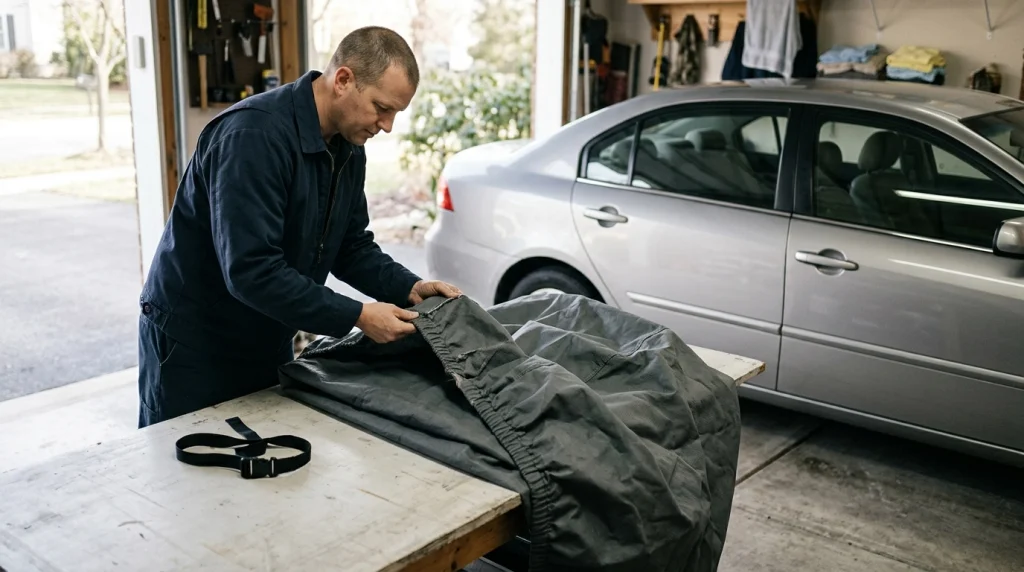
Most avoidable problems come from incorrect installation, dirty surfaces, damp storage, and neglected wear. A repeatable inspection routine can catch these issues early.
What Is the Right Car Cover Installation Routine?
- Park safely. Switch off the engine and allow hot components to cool.
- Clean the vehicle. Remove grit and contaminants that could rub against the finish.
- Dry the surfaces. Check paint, glass, mirrors, and other water-holding areas.
- Inspect the cover. Confirm that its inner lining is clean and undamaged.
- Position the material. Use the manufacturer’s orientation and installation instructions.
- Secure attachments. Fasten the approved straps, elastic hems, or buckles.
- Check clearance. Ensure no portion contacts hot components or vulnerable accessories.
Covercraft’s manufacturer instructions are a useful reminder that car cover installation and removal procedures vary by product. Never assume that one fastening method works for every design.
How Often Should You Clean and Inspect a Car Cover?
There is no universal cleaning interval because conditions vary widely. A cover exposed to road dust, tree debris, or regular outdoor weather may need attention sooner than one in a clean garage.
Use this condition-based checklist:
- Before installation: Check for grit, dampness, and damaged fasteners.
- After severe weather: Look for shifting, water intrusion, tears, or missing attachments.
- When visibly dirty: Clean the material using its specific care instructions.
- Before folding: Make sure the cover is completely dry.
- During long-term storage: Periodically inspect the vehicle and cover for moisture or contamination.
Machine washing is suitable only when the manufacturer’s care instructions permit it. Temperature, detergent, and drying restrictions depend on the cover material.
When Should You Replace a Car Cover?
Replacement becomes appropriate when the cover can no longer provide reliable protection or secure fit. Repairs should not conceal significant material deterioration.
| Condition | Recommended Action |
|---|---|
| Minor isolated tear | Consider approved repair |
| Broken replaceable buckle | Replace the component |
| Persistent incorrect fit | Choose correctly sized cover |
| Brittle or crumbling fabric | Replace cover |
| Multiple failing seams | Consider replacement |
| Repeated scratching despite proper cleaning and fit | Stop use and investigate; replace if fabric is responsible |
| Persistent water penetration with worn material | Replace with suitable outdoor cover |
Which Type of Cover Helps Prevent Repeat Problems?
Choose according to the location and exposure rather than advertising language alone. Compare fit, material construction, weather protection, and care requirements.
- Indoor covers: Suitable for dust protection in sheltered environments.
- Outdoor covers: Designed for exposure to weather, sunlight, and environmental debris.
- Custom-fit covers: Shaped for specific vehicle configurations to minimize excess material.
- Universal covers: May work when dimensions and attachment systems suit the vehicle.
- Breathable covers: Allow some moisture vapor to escape, although performance varies by material.
Independent automotive resources such as Car and Driver and Consumer Reports can provide broader guidance when evaluating automotive products and vehicle care.
For vehicle-specific safety information, the NHTSA recall lookup is available when a separate vehicle defect or recall concern arises. It is not a test of car cover quality.
Section Takeaway: Match the cover to the environment, keep both surfaces clean, and inspect the fabric regularly. Replace it when fit, material strength, or protection can no longer be restored reliably.
Frequently Asked Questions
Why does my car cover keep falling off?
A car cover may fall off because it is oversized, positioned incorrectly, or has loose elastic hems or damaged fasteners. Reinstall it according to the manufacturer’s instructions and secure its intended attachment points. If it still shifts significantly, verify the cover’s size and consider replacement.
Can a car cover damage paint?
Yes. Dirt trapped between the cover and paint can create abrasion when the fabric moves. Rough contact points, poor installation, and repeated wind movement can also contribute. Keep both surfaces clean, minimize dragging, and stop using a cover that repeatedly leaves visible damage.
Why is my car wet under a waterproof cover?
Moisture can form through condensation even when rain does not pass through the fabric. Covering a damp vehicle or limiting evaporation makes the problem worse. Remove the cover, dry both surfaces, and inspect the fabric and parking conditions before reinstalling it.
How do I fix a car cover that is too loose?
First center the material and correctly position its elastic hems and straps. Check the manufacturer’s size chart to confirm compatibility. If substantial excess fabric remains after correct installation, choose a better-fitting cover instead of improvising tight knots or risky attachment points.
Can a torn car cover be repaired?
Small tears may be repairable using manufacturer-approved patches or compatible materials. The repair must not leave rough edges against vehicle paint. Replace the cover when fabric deterioration is widespread or damaged seams and attachment points prevent reliable protection.
How do I stop mold and bad smells in a car cover?
Remove the damp cover, clean it according to the manufacturer’s instructions, and dry it thoroughly before reuse. Inspect the vehicle and storage area for trapped moisture. Recurring odors or visible mold may indicate that the material or storage conditions need more substantial attention.
Is it better to leave a car uncovered than use a damaged cover?
Sometimes. A loose, abrasive, or badly deteriorated cover may create additional paint or trim damage. If the cover cannot be secured or repaired safely, remove it and use sheltered parking when possible until a suitable replacement is available.
Final Takeaway: Fix the Cause, Not Just the Symptom
Learning how to troubleshoot car cover problems starts with a simple inspection. Check fit, moisture, cleanliness, material condition, and fastening points before deciding what to repair.
Minor installation mistakes are often easy to correct. But a cover that keeps scratching paint, trapping moisture, or failing in wind may no longer suit your vehicle or parking conditions.
Before the next installation: Make sure the vehicle is clean, the cover is dry, the material is undamaged, and every approved attachment is secure.
A properly chosen and maintained car cover can be a useful part of vehicle care. The goal is dependable protection without creating new problems.
