
How to Fix a Shrinking Car Cover Without Damaging It

Quick Answer
To fix a shrinking car cover, first check whether the fabric has actually shrunk or the elastic hem has become too tight. If the cover is undamaged and its manufacturer permits gentle reshaping, lightly dampen the fabric with cool water, carefully reposition it, and allow it to air-dry without heat. Permanently heat-damaged materials usually cannot regain their original dimensions. Always follow the manufacturer’s car cover care guidance before attempting repairs.
Steps to Check and Restore the Fit
- Check the label: Identify the fabric and approved cleaning methods.
- Inspect the cover: Look for tight elastic, damaged seams, or distorted material.
- Dampen carefully: Use cool water only if the care instructions permit it.
- Adjust gently: Smooth wrinkles and redistribute loose fabric without forcing the seams.
- Air-dry completely: Avoid heaters, hair dryers, and unapproved tumble drying.
- Check the fit: Replace the cover if it still exposes panels or pulls excessively.
Important Precaution
- Avoid fabric softener: It can interfere with protective fabric treatments and may violate manufacturer instructions.
- Never force the fit: Excessive stretching can tear seams and damage elastic components.
A car cover that suddenly feels too small can turn a simple parking routine into an annoying struggle. Whether you drive a sedan, SUV, or pickup, a shrinking cover may leave important exterior areas exposed.
I’ve found that the smartest approach to automotive fabric problems is diagnosis before repair. This guide explains what causes apparent shrinkage, which adjustments are worth trying, and when replacement makes more sense.
In This Guide
Why Does a Car Cover Shrink?
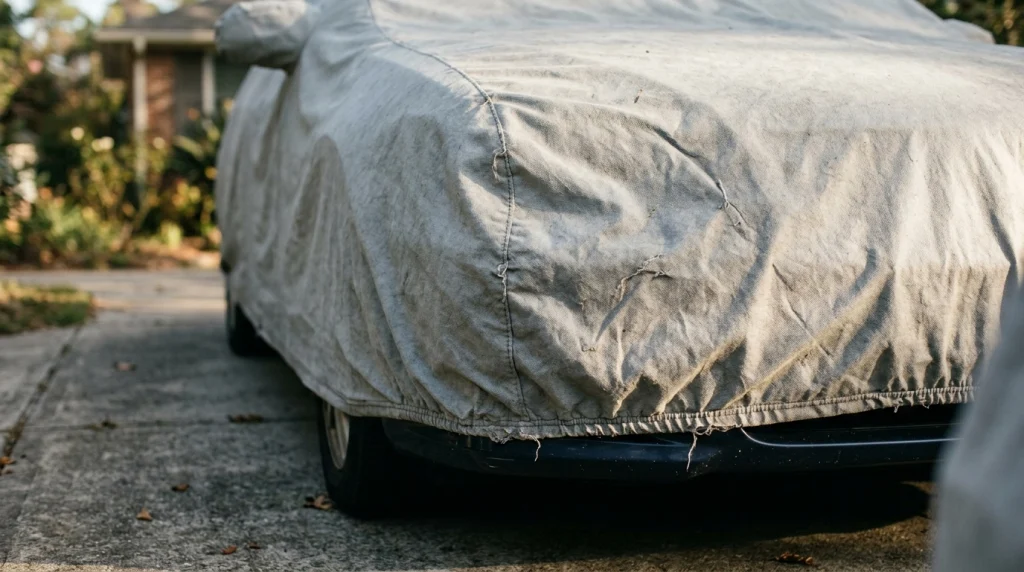
A car cover can become smaller because of heat, washing damage, fabric changes, or loss of elasticity. Sometimes, however, the material hasn’t shrunk at all.
Car cover shrinkage means a reduction in the cover’s original dimensions. This differs from poor alignment, tightened elastic hems, or an incorrectly sized cover.
High Heat From Washing or Drying
Excessive heat is a common cause of fit problems in textile car covers. Some fabrics contract, while synthetic coatings and laminated layers may distort.
Manufacturers specify different drying settings for different products. A drying method suitable for one cover may permanently damage another.
- Hot washing: May cause dimensional changes in heat-sensitive fabrics.
- High dryer temperatures: Can damage fibers, coatings, elastic, and seams.
- Repeated heat exposure: May accelerate wear in vulnerable materials.
- Improper washing cycles: Can twist fabric and place stress on fitted sections.
For example, some Covercraft materials permit controlled machine drying, while others require air drying. That difference makes checking the label essential.
Sun Exposure and Material Aging
Outdoor car covers face sunlight, rain, temperature changes, and wind. Over time, these conditions can weaken fibers and reduce flexibility.
UV exposure doesn’t always cause literal shrinkage. An older cover may instead become stiff, brittle, or distorted.
Those changes can make installation noticeably harder. They may also prevent the cover from lying smoothly against the vehicle.
Elastic Hem Contraction or Damage
The elastic hem is the flexible band around the bottom edge of many fitted covers. It helps secure the fabric beneath the bumpers.
If the elastic deteriorates or loses its normal movement, the cover may feel too small. The main fabric might still retain its original dimensions.
- The fabric covers the roof but won’t reach below the bumpers.
- The hem bunches into tight sections.
- The cover feels loose across panels but tight around its edges.
- One corner pulls harder than the others.
These symptoms suggest a possible hem problem rather than uniform fabric shrinkage.
Incorrect Size or Installation
A universal car cover won’t always match every vehicle within its advertised size category. Body length, roof height, mirror shape, and accessories affect the fit.
A cover installed backward may also appear unexpectedly short. Check its front tag and mirror pockets before attempting alterations.
Section Takeaway: Heat damage is one possible cause, but damaged elastic and installation errors can create similar symptoms.
How Can You Tell If Your Car Cover Has Actually Shrunk?
Compare its present fit with its previous fit, then inspect the fabric and hems. This helps distinguish recoverable fitting problems from permanent material damage.
Look for Changes in Coverage
Install the cover on a clean, cool vehicle. Align the front, rear, roof seams, and mirror pockets without pulling hard.
Check these areas:
- Front bumper: Does the hem still reach its normal position?
- Rear bumper: Is the fabric suddenly too short?
- Door panels: Are previously covered areas exposed?
- Mirror pockets: Do they align naturally?
- Roof seams: Do they sit where the manufacturer intended?
One tight area doesn’t necessarily mean the entire cover has shrunk. Uneven tension is often a clue to investigate further.
Inspect the Fabric for Permanent Damage
Remove the cover and place it on a clean surface. Look closely at the fabric where excessive tension occurs.
- Hard, shiny, or unusually stiff patches
- Cracked or peeling waterproof layers
- Warped stitching or puckered seams
- Brittle fabric around the edges
- Elastic that no longer stretches smoothly
Heat-distorted coatings and severely damaged fibers cannot reliably be restored with water or stretching.
Measure Before Making Changes
If you have the manufacturer’s dimensions, compare them with the cover’s current relaxed dimensions. Measure without stretching the fabric.
For a custom-fit model, ask the manufacturer how to measure its shaped panels. A flat measurement may not reflect the intended installed fit.
How to Fix a Shrinking Car Cover Step by Step
The safest method starts with correcting alignment and checking the material. Gentle reshaping may help a mildly distorted cover, but it cannot reverse every type of shrinkage.
Step 1: Identify the Material and Read the Label
Find the sewn care tag or original product instructions. Look for fabric composition, water-temperature guidance, and permitted drying methods.
You may encounter polyester, polypropylene, cotton blends, or multilayer synthetic construction.
If the label is missing, contact the manufacturer with your product number. Avoid experimenting with heat or chemicals on an unidentified fabric.
Step 2: Clean Off Dirt and Debris
Shake off loose dust and leaves before handling the cover. Grit trapped against the paint can cause scratches during fitting.
If cleaning is necessary, follow the approved washing instructions. Some covers allow a gentle machine wash, while others require hand washing.
- Use the recommended cleaning product.
- Avoid bleach unless explicitly permitted.
- Skip fabric softener unless the manufacturer approves it.
- Keep buckles and hardware from scraping painted surfaces.
The CarCovers.com care guide recommends air drying its covers and avoiding damaging wash methods.
Step 3: Try Gentle Damp Reshaping If Permitted
Some flexible fabrics can be repositioned more easily while slightly damp. However, moisture is not a proven way to reverse permanent heat shrinkage in synthetic covers.
Only attempt this method when the manufacturer’s care instructions allow wet handling and reshaping.
- Prepare clean water: Use cool water without added chemicals.
- Moisten lightly: Dampen the affected fabric section rather than soaking the entire cover unnecessarily.
- Lay it flat: Support the material on a smooth, clean surface.
- Adjust gently: Smooth wrinkles and ease the fabric toward its intended shape.
- Stop at resistance: Never pull hard enough to distort stitching.
- Air-dry: Allow the fabric to dry completely according to its care label.
Don’t add hair conditioner or laundry softener as a stretching treatment. Such products may leave residue or affect protective finishes.
Important: This method is a cautious fitting adjustment, not a guaranteed shrinkage repair. If the fabric resists movement, stop rather than applying greater force.
Step 4: Reinstall the Cover Correctly
After drying, place the cover over your clean, cool vehicle. Keep the fabric away from hot exhaust components.
- Identify the front of the cover.
- Center it over the roof.
- Align the mirror pockets if equipped.
- Position the front section over the bumper.
- Lower the rear section into place.
- Smooth any uneven tension without dragging the fabric.
Check whether the hem reaches its normal location. The cover should fit securely without excessive tension at seams or attachment points.
Step 5: Inspect and Repair the Elastic Hem
If the main fabric fits but the elastic edge does not, inspect the hem closely.
Loose or damaged elastic can sometimes be replaced by an upholstery repair professional. Confirm that altering the cover won’t compromise its protective design or warranty.
Do not cut tensioning straps or stretch elastic beyond its normal travel. Improvised changes may reduce wind security.
Step 6: Test the Fit Before Regular Use
Reinstall the cover and evaluate the entire vehicle. Check lower-panel coverage, mirror alignment, and the tension around body corners.
Remove it if it presses tightly against sharp edges or appears likely to rub in the wind.
- Acceptable: Smooth fit with normal elastic tension.
- Needs adjustment: Localized bunching or misaligned sections.
- Replace: Persistent exposed panels, strained seams, or damaged coatings.
Never compensate for a severely undersized cover by attaching improvised ropes or forcing it over the bumpers.
Section Takeaway: Correct installation and minor fabric adjustments may improve the fit, but permanently contracted or heat-damaged material generally needs replacement.
Which Car Cover Materials Can Be Restored?
Recovery depends on fabric construction and the cause of the fit problem. Material names alone cannot predict whether a cover will stretch back.
Use the following comparison to guide your inspection, not as a substitute for the product’s care label.
| Cover Material | Common Fit Problem | Suggested Response |
|---|---|---|
| Woven polyester | Heat-related distortion or seam tension | Check label; gentle realignment if undamaged |
| Polypropylene | Warping, brittleness, or aging | Replace if layers or fibers are damaged |
| Cotton or polycotton | Dimensional changes after washing | Use manufacturer-approved laundering and reshaping |
| Multilayer coated cover | Layer distortion or delamination | Avoid force; replace if protective layers fail |
| Fleece-lined cover | Lining distortion or uneven fit | Follow specialized care guidance |
Are Polyester Covers Easy to Stretch?
Polyester has limited stretch unless the fabric construction includes elastic elements. A tightly woven polyester cover generally won’t regain lost dimensions through soaking alone.
Gentle adjustment may correct folds and temporary distortion. It won’t reliably reverse damage caused by excessive heat.
Can You Fix a Multilayer Waterproof Cover?
Multilayer covers combine protective fabrics, membranes, or coatings. Excessive stretching may separate these layers or damage stitching.
Check the manufacturer’s cleaning chart before trying anything. The car cover care reference explains why washing and drying instructions vary by fabric.
If the waterproof layer has peeled, cracked, or separated, fitting adjustments won’t restore its original protection.
Should You Repair or Replace a Shrinking Car Cover?
Repair makes sense when the cover remains structurally sound and the fit problem is minor. Replacement is safer when material damage affects coverage or security.
When a Minor Repair Makes Sense
- The cover still reaches all major body panels.
- Only one section needs better alignment.
- The fabric remains flexible and intact.
- The elastic hem has a repairable stitching problem.
- The cover fits correctly after careful repositioning.
For these problems, simple adjustments or professional hem repair may extend the cover’s useful life.
When Replacement Is the Better Option
- The fabric is visibly melted or hardened.
- Several inches of normal coverage are missing.
- Seams become strained during installation.
- Waterproof layers have cracked or separated.
- The cover repeatedly slips off in normal conditions.
- Its dimensions no longer match the vehicle.
An undersized cover can pull tightly against the paint or shift unpredictably in windy weather. That may defeat the purpose of using protective fabric.
What Should You Look for in a Replacement?
Start with the vehicle’s exact make, model, year, and body configuration. A custom-fit cover generally offers a more precise shape than a broadly sized universal product.
Consider these purchasing factors:
- Correct dimensions: Include spoilers, roof accessories, and mirror shapes.
- Appropriate environment: Choose indoor or outdoor protection.
- Fabric construction: Check weather resistance and breathability.
- Cleaning requirements: Select a cover you can maintain properly.
- Secure fit: Look for suitable hems and approved fastening systems.
- Warranty: Read coverage terms for material defects and damage.
For an outdoor cover, examine the balance between water resistance and moisture management. A tight cover with trapped moisture is not a good replacement choice.
As of 2026, fit details and care rules still vary substantially between manufacturers and fabric lines. Check the exact product documentation before buying.
How Do You Prevent Car Cover Shrinkage?
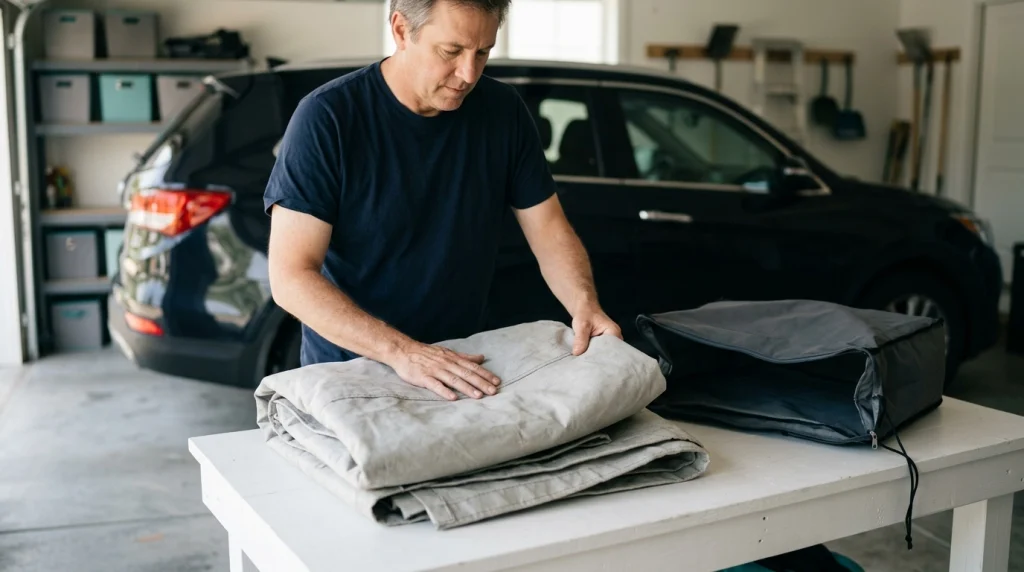
Follow fabric-specific washing instructions and avoid unapproved heat exposure. Correct maintenance also protects seams, coatings, and elastic parts.
Wash According to the Care Label
There is no single washing method suitable for every car cover. Some manufacturer-approved covers tolerate machine washing, while others need more careful handling.
- Remove loose debris before washing.
- Use approved water temperatures.
- Choose the recommended detergent.
- Avoid bleach and fabric softener unless specifically allowed.
- Use a sufficiently large washer if machine washing is permitted.
- Rinse thoroughly to remove detergent residue.
Never assume that a home washing machine is suitable for a large SUV or truck cover. Wet fabric can become bulky and difficult to handle.
Dry Without Excessive Heat
Air drying is a conservative choice when the label permits it. Support the cover so it doesn’t drag across abrasive surfaces.
If the manufacturer allows machine drying, use only its approved settings. Never substitute a high-heat cycle to save time.
- Keep fabric away from exhaust pipes and heaters.
- Don’t use a hair dryer to reshape tight areas.
- Avoid drying directly against hot metal surfaces.
- Ensure seams and hems are dry before storage.
Store the Cover Properly
A cover that sits damp in a storage bag can develop mildew and odors. Heat and prolonged poor storage conditions may also accelerate material deterioration.
- Clean the cover according to its instructions.
- Allow it to dry completely.
- Fold it loosely without trapping dirt.
- Place it inside a suitable storage bag.
- Keep the bag in a clean, dry storage area.
Avoid leaving damp material inside a hot vehicle trunk for extended periods.
Avoid Excessive Tension During Installation
Car covers should fit securely without being stretched beyond their intended shape. Forcing the fabric repeatedly can damage stitching and elastic.
Start from the manufacturer’s marked front section and center the cover before securing it.
Don’t drag the fabric across dirty paint. Check attachment points before leaving the vehicle covered outdoors.
Inspect the Cover Regularly
A quick inspection helps catch problems before they become expensive. Pay attention to areas that receive the most tension.
- Check elastic hems for uneven stretching.
- Inspect mirror pockets and corner seams.
- Look for peeling waterproof coatings.
- Watch for hard or brittle fabric patches.
- Confirm that lower body panels remain covered.
Routine car washing also matters. A clean surface reduces the chance of abrasive dirt becoming trapped beneath the fabric.
Section Takeaway: Proper washing, approved drying, and gentle installation provide the best protection against avoidable fit damage.
Frequently Asked Questions
Can you stretch a car cover that has shrunk?
Sometimes, but only if the apparent shrinkage involves minor distortion or positioning problems. Lightly dampening and gently reshaping approved fabrics may improve their fit. Permanently heat-shrunken fibers and damaged coatings usually cannot be restored to their original dimensions.
Can hot water make a car cover shrink?
Yes. Hot water may cause dimensional changes in heat-sensitive fabrics and can affect certain coatings or elastic components. The risk varies by material. Follow the manufacturer’s stated water temperature instead of assuming hot or warm water is suitable.
Will fabric softener help stretch a shrinking car cover?
Fabric softener is not a reliable treatment for restoring a shrunken car cover. It may leave residue or interfere with protective finishes. Many manufacturers explicitly advise against it. Use only the cleaning products approved for your particular cover.
Can I use a hair dryer to stretch a car cover?
No. Concentrated heat can distort synthetic fibers, damage coatings, or weaken elastic components. A hair dryer also heats fabric unevenly. Gentle repositioning without added heat is safer when permitted, while permanently damaged covers should be replaced.
Why does my car cover feel tighter after washing?
Possible reasons include fabric shrinkage, twisted seams, incorrectly positioned elastic, or improper drying. First inspect the cover and reinstall it correctly. If the fabric remains uniformly smaller or shows heat damage, contact the manufacturer about replacement options.
Can a car cover shrink from sunlight?
Long-term sunlight and heat exposure can age some car cover materials, changing their flexibility and shape. This may look like shrinkage even when the fabric hasn’t uniformly contracted. UV-resistant materials and proper maintenance can reduce premature deterioration.
Is it safe to use a car cover that is too tight?
A cover that requires excessive force to install is not a good fit. Strained seams, rubbing against body panels, and insufficient coverage can reduce protection. If proper installation and minor adjustments don’t resolve the problem, choose a correctly sized replacement.
Final Takeaway
Fixing a shrinking car cover starts with understanding why it no longer fits. Sometimes the problem is alignment or damaged elastic rather than actual fabric contraction.
Check the care label, inspect the material, and try only manufacturer-approved adjustments. Avoid excessive heat, chemical softeners, and forceful stretching.
If the cover remains too small or its protective layers are damaged, replacement is usually the practical choice. A properly fitted cover protects your vehicle better than one stretched beyond its intended size.
