
How to Stop Car Cover Theft: 10 Practical Ways to Secure Your Cover

Quick Answer
To stop car cover theft, secure your cover with a vinyl-coated steel cable and padlock through reinforced locking grommets. Choose a snug-fitting cover, park in a visible area, and add motion-activated lighting or a security camera when practical. A lock cannot make fabric theft-proof, but it makes quick removal harder. Follow NHTSA theft prevention advice to protect the vehicle underneath as well.
Best ways to prevent car cover theft
- Use a cable lock: Connect reinforced cover grommets with a coated steel security cable.
- Improve the fit: Secure the cover’s hem and straps to reduce loose, easy-to-grab fabric.
- Choose safer parking: Use a locked garage or a well-lit, visible parking space.
- Add an alarm: Consider a cover-compatible motion or tamper alarm for additional warning.
- Mark your cover: Add a discreet identifier and keep photos to help establish ownership.
- Check it regularly: Inspect locks, cables, straps, and grommets for damage.
My simple rule
- Make the cover harder to remove, keep the vehicle locked, and never depend on a cover alone for theft protection.
A car cover protects your paint from sun, dust, and weather. Unfortunately, an unsecured cover is also easy for someone to pull off and carry away.
If you’re wondering how to stop car cover theft, the answer isn’t one expensive accessory. I’ll walk through practical security methods, safe cable installation, common mistakes, and what to do if someone steals your cover.
In This Guide
Why Do People Steal Car Covers?
Car covers can attract opportunistic thieves because many are lightweight, portable, and removable without tools. Some covers also have resale value, particularly when they fit popular vehicle models.
That does not mean every missing cover was stolen. Strong wind, loose straps, and poor installation can also make a cover disappear.
What makes an unsecured car cover vulnerable?
A cover resting loosely over a parked vehicle offers little physical resistance. Someone can often lift the hem and remove it without unlocking anything.
Several conditions can increase that risk:
- No locking system: The cover can be removed without defeating a physical barrier.
- Loose fit: Extra fabric gives someone an easy place to grab.
- Isolated parking: Fewer people may notice suspicious activity.
- Predictable storage: Leaving the same uncovered security weak point every day can create an opportunity.
- Visible premium accessories: A distinctive or expensive-looking cover may attract attention.
Can a stolen cover expose your vehicle to other risks?
Yes. Losing the cover removes a layer of weather and dust protection, and someone may also be trying to access the vehicle beneath it.
A car cover is not a replacement for locked doors, a working vehicle alarm, or other theft deterrents. Treat cover security and vehicle security as separate responsibilities.
The National Highway Traffic Safety Administration recommends securing keys, locking doors and windows, removing visible valuables, and using well-lit parking areas.
These precautions remain useful even when your entire vehicle is concealed beneath a cover.
What Are the Best Ways to Stop Car Cover Theft?
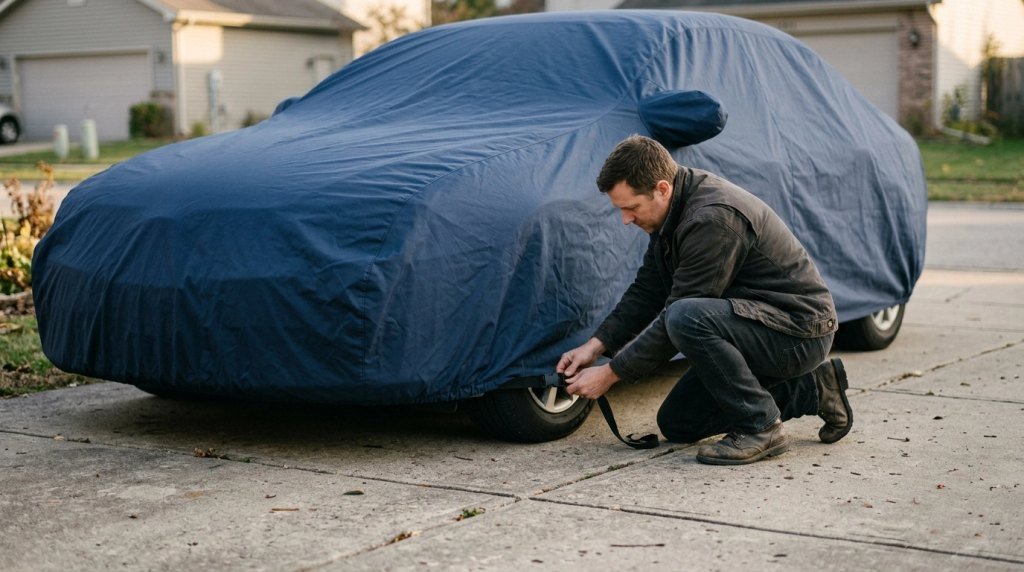
The most useful approach combines a physical lock with sensible parking and consistent security habits. You don’t need every accessory available, but each layer should address a real weakness.
1. Install a car cover security cable
A car cover security cable is a flexible locking cable designed to connect reinforced openings along the cover’s lower edge. Many kits use vinyl-coated steel to reduce contact damage.
Once properly installed, the cable makes it harder to remove the cover in one quick motion. Someone would need to defeat the lock, cable, or cover material.
Look for these features when choosing a cable:
- A durable steel cable with a protective coating.
- Enough length for your vehicle and cover design.
- A weather-resistant lock suited to outdoor use.
- Compatibility with your cover’s reinforced grommets.
- Hardware that stays away from painted surfaces.
The cable doesn’t need to be excessively tight. Its job is to secure the cover without pulling apart its seams or damaging the car.
2. Choose a cover with reinforced locking grommets
Locking grommets are reinforced openings that allow a cable to pass through a car cover. They spread some of the pulling force across the surrounding fabric.
Ordinary fabric holes can tear when placed under tension. Reinforced grommets provide a more suitable attachment point for a locking system.
Before buying a new cover, check whether its locking points are designed for your intended cable kit.
Do not cut holes into a cover simply to attach a lock. Use a manufacturer-approved reinforcement kit if modification is supported.
3. Use a properly fitted car cover
A snug-fitting cover sits closer to the vehicle and leaves less loose material around the edges. It also tends to be easier to secure with the supplied straps.
Choose a cover that matches your vehicle’s dimensions and major body features.
- Sedans: Check bumper length, mirror placement, and lower hem fit.
- SUVs: Allow for roof height, rear shape, and fitted accessories.
- Pickup trucks: Match the cab style and bed length.
- Sports cars: Check compatibility with spoilers and unusually low bodywork.
Secure the supplied straps according to the manufacturer’s instructions. Straps mainly manage fit and wind movement, so they should complement rather than replace a lock.
4. Park in a secure or visible location
Your parking location can matter as much as the cover hardware. A locked private garage offers a stronger physical barrier than an open street parking space.
If a garage isn’t available, look for a location with good lighting and normal pedestrian activity.
Useful choices include:
- A locked or access-controlled parking area.
- A driveway visible from your home.
- A parking space within existing camera coverage.
- A well-lit parking area where local rules allow covers.
Avoid blocking sidewalks or access routes with loose cables. Never attach a car cover to public property without permission.
5. Install motion-activated lighting
Motion-activated lighting can make activity around your parked vehicle more visible. It is especially useful on private driveways and in darker parking areas.
Position the light so it illuminates the vehicle without shining directly into neighboring windows or traffic.
Lighting doesn’t physically prevent removal. Instead, it supports visibility and can work alongside a camera or alarm.
6. Use a security camera
A camera may record suspicious activity and provide useful evidence after an incident. Choose one that offers a clear view of the parking space.
Consider these practical features:
- Motion-triggered recording.
- Low-light or night recording capability.
- Useful recording retention.
- Weather resistance for outdoor installation.
- Appropriate privacy settings and legal placement.
Check camera alerts and recording settings before relying on them. A camera without working storage may not help when you need footage.
7. Consider a motion or tamper alarm
A compatible motion alarm can sound when someone disturbs the cover. This provides a warning layer beyond a basic cable lock.
Choose an alarm that can be attached without cutting or weakening the fabric.
Outdoor wind and animals may cause false alerts, depending on the sensor. Adjustable sensitivity and proper placement are useful features.
8. Add a discreet ownership marking
Marking your cover can help distinguish it from an identical product. A small identifier on an inside label is usually less visible than writing across the exterior.
You might record the purchase date, model, color, and a unique identification mark.
Avoid placing paint, ink, or abrasive labels where they could transfer onto your vehicle’s finish. Test any marking material away from painted contact areas.
9. Keep photos and purchase information
Good records won’t physically stop theft, but they may help establish which cover belongs to you. This becomes useful when reporting a loss or submitting an insurance inquiry.
Keep the following information together:
- Purchase receipt or order confirmation.
- Manufacturer and model information.
- Photos of the installed cover.
- Pictures of unique markings or identifying damage.
- Any available serial or product identification number.
10. Inspect your security setup regularly
Even a good lock can become less useful if its cable corrodes or its attachment point tears. Outdoor hardware faces moisture, grit, and repeated movement.
Inspect the system during normal cover removal and cleaning.
- Look for cuts or worn areas in the cable coating.
- Check for bent or loose grommets.
- Confirm that buckles and straps still fasten securely.
- Test the padlock for smooth operation.
- Replace damaged parts rather than forcing them to work.
Section Takeaway: A reinforced cover and coated cable provide the main physical deterrent. Lighting, parking choices, alarms, and regular checks add useful protection around that foundation.
How Do You Lock a Car Cover Securely?
Most compatible cable-lock kits secure the cover by connecting reinforced grommets along its lower sides. The exact routing depends on the lock and cover manufacturer.
Always use the instructions supplied with your specific kit. The following steps describe a common under-vehicle cable arrangement.
Step 1: Park safely and let the vehicle cool
Park on level ground, switch off the engine, and apply the parking brake. Let the exhaust and other hot components cool before handling hardware beneath the vehicle.
Do not work beneath an unsupported vehicle or reach toward components you cannot identify safely.
Step 2: Position the car cover correctly
Spread the cover over the vehicle and align its front, rear, and mirror areas. Make sure the cover rests over clean surfaces to reduce the chance of trapped grit scratching paint.
Fasten any built-in straps before installing the cable.
Step 3: Locate the reinforced grommets
Find the matching locking openings on the cover’s lower sides. Check that the surrounding material has no tears or damaged stitching.
If the cover lacks locking points, don’t force a cable through ordinary fabric.
Step 4: Thread the cable through the first grommet
Follow your kit’s design to insert the coated cable through the first locking point. Some kits use a looped end, while others connect two ends with a padlock.
Keep the cable away from the painted door and rocker panels.
Step 5: Route the cable beneath the vehicle
Guide the cable from one side to the other using the route approved by the manufacturer. Avoid exhaust components, brake lines, electrical wiring, and moving suspension parts.
Never lie underneath the vehicle to install a cover lock. If you cannot route the cable safely while remaining outside the underbody area, choose another compatible setup.
Step 6: Connect and lock the opposite side
Pass the cable through the second grommet and secure the ends using the provided lock. Remove excess slack without stretching the cover tightly.
Confirm that the lock hangs away from painted surfaces and cannot swing into the bodywork.
Step 7: Test the installation
Gently lift the lower edge of the cover to check whether the locking system holds. Do not pull hard enough to tear the grommets.
Walk around the vehicle and check for loose cable loops or hardware resting against the paint.
For another installation reference, see the car cover cable-lock installation guide, which describes a typical reinforced-grommet system.
Mechanic Alert: Do not jack up your vehicle, remove underbody panels, or modify brake, fuel, or electrical components to fit a cover lock. Ask a qualified professional if the recommended cable route cannot be reached safely.
How tight should a car cover cable be?
A properly installed cable should restrain the cover without distorting the hem or pulling the locking grommets out of shape.
Excessive tension can strain seams and worsen wear. Follow the cable kit’s instructions instead of relying on a specific universal tension measurement.
Section Takeaway: Proper routing matters as much as lock strength. Keep the cable away from heat, moving components, and painted surfaces while securing both grommets.
Which Car Cover Security Method Works Best?
A coated cable lock is usually the most practical starting point for a compatible outdoor cover. Other measures solve different problems and work best when combined.
The table below compares common options by their primary role and limitations.
| Security method | Main benefit | Main limitation |
|---|---|---|
| Coated cable lock | Adds physical resistance to cover removal | Cable or fabric can still be cut |
| Wind straps | Reduces loose fabric and wind movement | Usually provides little theft resistance alone |
| Snug-fitting cover | Improves fit and reduces exposed edges | Does not physically lock the cover |
| Motion alarm | Can warn when the cover is disturbed | May produce false alerts |
| Security camera | May record evidence of suspicious activity | Does not physically prevent removal |
| Locked garage | Adds a separate access barrier | Not available for every parking situation |
Which setup should you choose for street parking?
Street parking leaves the vehicle more exposed to passing activity. A covered car may also attract attention if its fabric is unusual or loosely secured.
For street parking, prioritize:
- A correctly fitted, locally permitted outdoor cover.
- A coated cable lock compatible with reinforced grommets.
- Built-in straps to limit unwanted fabric movement.
- A visible, well-lit parking location.
- Normal vehicle security, including locked doors and secured keys.
Check local parking regulations before using a cover. Some locations require license plates, permits, or other vehicle markings to remain visible.
What about driveway parking?
Home driveways offer more control over security equipment. A cable lock can work alongside existing home lighting and camera coverage.
If you share a driveway, make sure straps and cables do not create a walking hazard.
Does indoor storage need the same protection?
A locked garage already creates an access barrier, so a cover lock may be less important there. A clean, breathable indoor cover may be more relevant for dust protection.
Still, consider security if the garage is shared or frequently accessible to others.
Section Takeaway: The best choice depends on where your car is stored. Start with physical cover security outdoors, then add measures that suit your parking conditions.
What Mistakes Make Car Covers Easier to Steal?
A security accessory only helps when it is installed and used correctly. Several common mistakes undermine otherwise sensible precautions.
Using straps instead of a real locking system
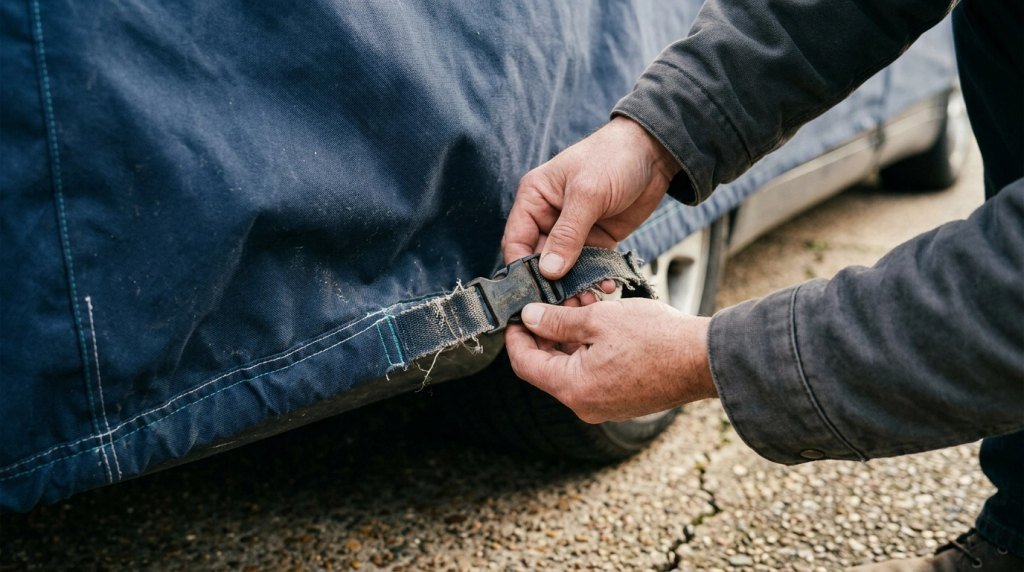
Straps help keep a cover fitted during normal use. However, a standard plastic buckle usually opens without a key.
Don’t assume that wind resistance and theft resistance are the same thing. The car cover cable and lock guide explains the role of compatible locking hardware.
Leaving the padlock against the paint
Metal hardware can move against the vehicle when the cover shifts. Repeated contact may damage paint or protective coatings.
Use protective cable coatings and keep the lock positioned away from body panels.
Using an ordinary rope as a theft lock
Rope can help hold fabric in place, but most ordinary ropes are not intended as theft-resistant barriers.
Use manufacturer-approved straps for fitting and compatible locking hardware for theft deterrence.
Ignoring damaged grommets
A strong cable cannot compensate for fabric that tears easily around its attachment points. Check the reinforced openings for fraying and loose stitching.
Replace or professionally repair damaged components before relying on them.
Making the cover excessively tight
Overtightening can stress the fabric and seams. It can also make installation and removal more difficult than necessary.
Keep the cover secure but properly fitted, following the manufacturer’s fastening guidance.
Using the lock inconsistently
A cable left in the trunk cannot deter someone from removing the cover. Build locking the cover into your normal parking routine.
Keep the spare key in a safe location away from the parked vehicle.
Forgetting the security of the car itself
Some drivers focus so much on protecting the cover that they neglect the vehicle underneath it. That creates a more serious risk.
The National Insurance Crime Bureau provides vehicle theft and fraud prevention resources worth reviewing alongside your cover security routine.
Section Takeaway: Avoid improvised attachment points, excessive cable tension, exposed metal hardware, and unlocked parking habits. A simple, correctly used system is better than a complicated one that gets ignored.
What Should You Do If Your Car Cover Is Stolen?
If your car cover disappears, first confirm that it was not displaced by weather or moved by an authorized person. Once theft seems likely, document the incident and check the vehicle for other damage.
Step 1: Inspect the parking area safely
Check nearby areas for the cover, torn straps, or damaged locking hardware. Avoid touching suspicious objects if the area appears unsafe.
Do not confront a suspected thief.
Step 2: Inspect the vehicle
Look for damage around doors, windows, mirrors, and other exposed areas. Check whether any visible items or accessories are missing.
If you notice signs of forced entry, consider contacting the police before disturbing potential evidence.
Step 3: Save any available footage
Review footage from your own security camera or contact the property manager if the parking area is monitored. Preserve relevant recordings before automated systems overwrite them.
Record the approximate time window and save photographs of the scene.
Step 4: Report the theft when appropriate
Contact local police through the appropriate non-emergency channel unless there is an immediate danger. Give them accurate information about the location, timing, and stolen property.
Useful details include:
- Cover brand and model.
- Color, size, and identifying markings.
- Estimated replacement cost and receipt.
- Photos of the cover.
- Camera footage or witness details.
- Damage to any lock or security cable.
Step 5: Check insurance coverage
Whether a stolen car cover qualifies for insurance reimbursement depends on your policy and circumstances. Some auto policies may exclude loose accessories or personal property.
Contact your insurer to ask whether coverage applies and whether filing a claim makes financial sense after any deductible.
Step 6: Improve your replacement setup
Before buying another cover, identify the weakness that may have contributed to the loss. A new cover with no additional security may face the same risk.
For a replacement, I would prioritize reinforced grommets, a coated locking cable, correct fit, and safer parking where possible.
Section Takeaway: Document the loss, inspect the vehicle, preserve useful evidence, and review insurance coverage. Then address the original security weakness before installing another cover.
Frequently Asked Questions
Can someone steal a car cover if it is locked?
Yes. A locked car cover can still be stolen if someone cuts the cable, breaks the lock, or tears the fabric. A lock provides resistance rather than absolute protection. Combining a cable lock with secure parking and other security measures makes casual removal less convenient.
What is the best lock for a car cover?
A weather-resistant padlock paired with a vinyl-coated steel cable is a practical choice for compatible covers. Choose hardware that works with the reinforced grommets and fits your vehicle. Avoid exposed metal against painted surfaces, and follow the manufacturer’s installation instructions.
How can I secure a car cover without grommets?
Start by checking whether the manufacturer offers a compatible security or reinforcement kit. Don’t cut unsupported holes into the fabric. A fitted cover with secure straps can help with movement, but straps alone may not prevent theft. Consider replacing the cover with a lock-compatible model.
Do car cover straps prevent theft?
Most ordinary straps are intended to manage fit and wind resistance, not theft. Plastic buckles may release without tools, so they provide limited physical security. For better theft deterrence, combine the straps with a compatible cable lock through reinforced grommets.
Can I lock my car cover to a wheel?
Only use a wheel-based attachment method if the cover or locking system manufacturer specifically approves it. An improvised cable can contact brake components, tires, or moving parts. A manufacturer-approved under-cover locking arrangement is generally the safer starting point.
Will a car alarm sound if someone removes the cover?
Not necessarily. Most vehicle alarms do not monitor loose fabric placed over the car. Unless removing the cover triggers a monitored sensor, the alarm may remain silent. A separate compatible tamper alarm may provide warning when the cover itself is disturbed.
Is car cover theft covered by insurance?
Coverage varies by insurer, policy, and whether the cover is treated as an accessory or personal property. Some policies exclude removable items, while others may provide limited coverage. Check your policy wording, deductible, and claim requirements before assuming a stolen cover will be reimbursed.
Final Takeaway: Make Your Car Cover Harder to Remove
Stopping car cover theft is mostly about removing easy opportunities. A properly fitted cover with reinforced grommets and a coated security cable is a practical first step.
Add sensible parking, working vehicle locks, and good security habits. If you park outdoors regularly, make checking and locking the cover part of your routine every time.
Start with one simple upgrade: Check whether your current cover supports a cable lock, then install the correct hardware safely. A small improvement in daily security is more useful than a complicated setup you rarely use.
