
How to Start a Buick Enclave with a Dead Key Fob

Don’t panic if your Buick Enclave’s key fob battery dies. Your 2026 Enclave is equipped with a clever backup system. You’ll use the physical emergency key hidden inside the fob to unlock the driver’s door, then follow a specific sequence with the key fob itself to start the engine. This process bypasses the dead battery and gets you moving. Always keep the emergency key accessible and know this procedure to avoid being stranded.
Key Takeaways
- Your Enclave has a hidden physical key: A metal emergency key is stored inside your key fob. You must extract it to unlock the door when the fob’s battery is completely dead.
- The “Backup Start” procedure is key: After unlocking the door with the emergency key, you place the *entire key fob* (even with a dead battery) into a specific spot on the steering column and press the START/STOP button to crank the engine.
- Location matters: The emergency key slot for the door is on the driver’s door handle. The backup start location is a small rectangular slot on the lower right side of the steering column, behind a cover.
- Dead fob, not dead car battery: This method only works if your vehicle’s main 12V battery has sufficient charge. A dead car battery requires a jump start, which is a different process.
- Replace the fob battery immediately: Once you’ve started the car, replace the CR2032 battery in your key fob as soon as possible to restore full remote functionality.
- Prevent future lockouts: Keep a spare key fob battery in your glove compartment and practice the emergency start procedure in your driveway so you’re familiar with it under pressure.
- This is a universal push-button start feature: The backup start system is a standard safety feature across most modern push-to-start vehicles, not just Buick. The exact slot location varies by model.
[FEATURED_IMAGE_PLACEHOLDER]
📑 Table of Contents
- Introduction: That Scary Moment When Your Fob Dies
- Understanding Your Buick Enclave’s Keyless Entry & Start System
- The Step-by-Step Emergency Start Procedure for a Dead Key Fob
- What to Do If the Backup Start Procedure Fails
- Replacing the Dead Key Fob Battery: A Simple Fix
- Preventive Measures & Best Practices
- Conclusion: You’re Now Prepared
Introduction: That Scary Moment When Your Fob Dies
You’re standing by your sleek 2026 Buick Enclave, groceries in hand, ready to head home. You press the unlock button on your key fob. Nothing. You press it again, maybe even mash it. Still nothing. A cold knot of frustration forms in your stomach. The key fob battery is dead. It’s a small, inexpensive battery, but in this moment, it feels like a monumental problem. Your beautiful, tech-laden three-row SUV is suddenly a very expensive paperweight.
Take a deep breath. Buick, like all smart automakers, anticipated this exact scenario. Your Enclave is not designed to leave you stranded because of a simple coin-cell battery failure. It has a built-in, failsafe mechanical and electronic backup system. This article is your comprehensive, step-by-step guide to starting a Buick Enclave with a dead key fob. We’ll walk you through everything, from finding the hidden emergency key to executing the precise backup start sequence. By the end, you’ll have the confidence and knowledge to turn that panic into a quick, five-minute solution. No tow truck required.
Understanding Your Buick Enclave’s Keyless Entry & Start System
Before we dive into the fix, it helps to understand what’s happening inside your Enclave’s systems. Your 2026 Enclave uses what’s called a “Passive Entry/Passive Start” system. The key fob constantly broadcasts a low-energy radio signal. When you approach the vehicle, antennas in the doors and trunk detect this signal and allow you to unlock the doors by touching the handle. To start the engine, you simply press the brake pedal and the engine start/stop button while the key fob is inside the vehicle.
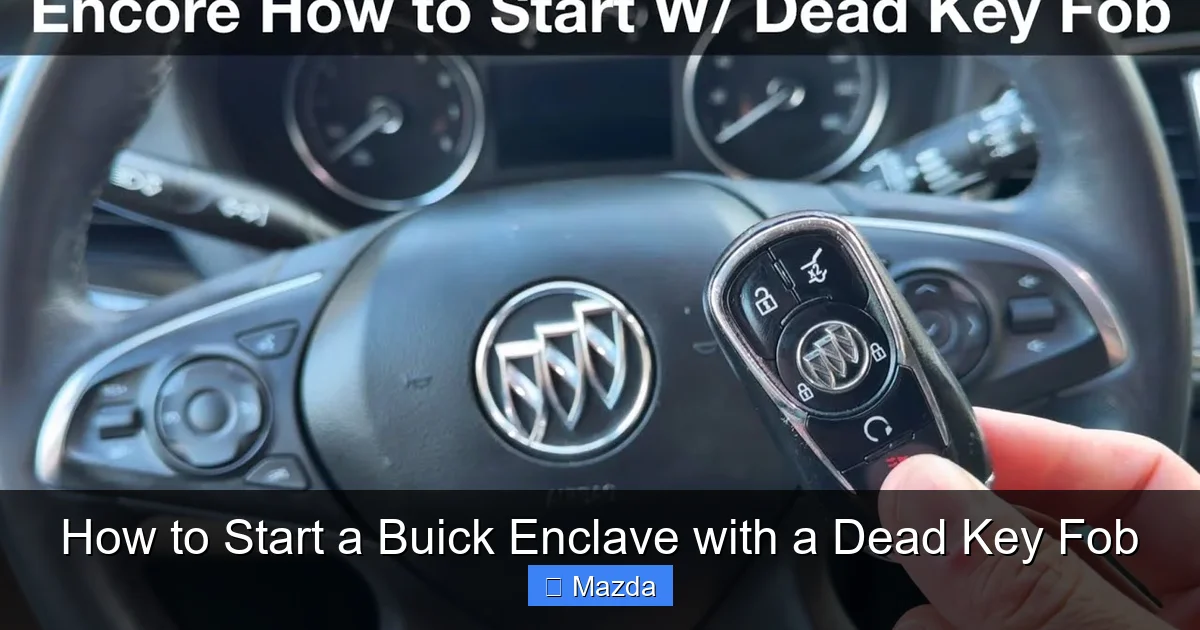
Visual guide about How to Start a Buick Enclave with a Dead Key Fob
Image source: i.ytimg.com
The Role of the Key Fob Battery
The small CR2032 battery inside your key fob powers the buttons (lock, unlock, trunk release) and the radio transmitter that talks to your car. When this battery gets low, the range of your remote decreases. You might have to stand right next to the car for it to work. When it’s completely dead, the remote buttons do nothing. However, the key fob still contains a passive transponder chip. This chip does not need a battery; it’s powered by the radio signal from the car itself when you’re in close proximity. This is the critical component that allows the backup start system to function.
Why Your Car Has a Backup Plan
Automakers know that key fob batteries die at the worst possible times—often when you’re away from home and spare batteries. A complete lockout would be a safety and convenience nightmare, leading to countless tow calls and angry customers. The backup system is a brilliant workaround. It uses the passive transponder chip (which still works with a dead battery) combined with a physical key for entry and a specific “key present” detection spot for starting. It’s a failsafe that bridges the gap between a dead remote and a running engine. This same principle applies to many vehicles; for instance, the procedure for a Dodge Charger with the emergency key is conceptually very similar, though the exact slot location differs.
The Step-by-Step Emergency Start Procedure for a Dead Key Fob
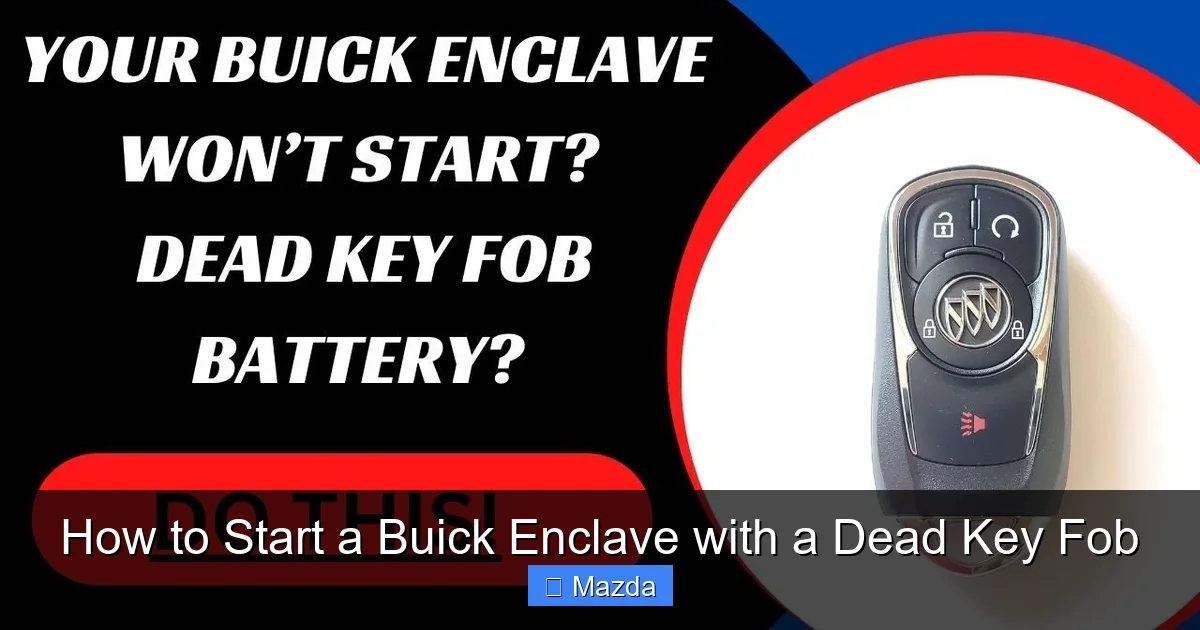
Now, let’s get your Enclave started. This is a two-part process: 1) Get inside the vehicle, and 2) Start the engine. You will need the physical emergency key from your fob for part one. The good news is that for part two, you use the *entire dead key fob*—you don’t need to remove its battery or disassemble it.
Visual guide about How to Start a Buick Enclave with a Dead Key Fob
Image source: i.ytimg.com
Step 1: Accessing and Using the Hidden Emergency Key
Your primary key fob (the one with the buttons and the flip-out key blade) contains a small, flat, metal emergency key. On most Buick Enclave key fobs from this era, you access it by pressing a small release button or latch on the side of the fob. This will pop out a thin key blade. Do not lose this key. It’s your only way to mechanically unlock the driver’s door when the fob is dead.
Once you have the metal key extended, locate the small, circular keyhole on the driver’s door handle. It’s often hidden under a small, rectangular plastic cap that you can pry off with the edge of the key itself. Insert the emergency key into this hole and turn it clockwise to unlock the door. This is a traditional mechanical lock cylinder. You are now physically inside your Enclave.
Step 2: The Backup Start Sequence – The Most Critical Part
This is where the magic happens. With the driver’s door now open (or closed, it doesn’t matter), you need to place the *entire key fob*—the plastic case with the dead battery still inside—into a specific location. Look at the lower right side of the steering column, just behind the steering wheel. You will see a small, rectangular, dark-colored plastic cover. This cover is designed to be easily removed. Use your fingernail or the emergency key to gently pry this cover off. Underneath is a shallow slot, often shaped like the outline of your key fob.
Carefully place the key fob into this slot, with the buttons facing you (or as indicated by any simple arrow/markings). The slot is designed to hold the fob in a precise position where the car’s antenna can read the passive transponder chip inside the fob. It does not need to be pushed in hard; just settled into the slot. Once the fob is seated correctly, you will see a green key icon illuminate on the instrument cluster, usually near the speedometer. This green icon is your confirmation that the car’s computer has detected the valid key fob.
Now, with your foot firmly on the brake pedal, press the engine START/STOP button (the one you normally use). The engine should crank and start normally. The green key icon will typically change to a red one or disappear once the engine is running. You can now drive your Enclave as usual. Important: You must keep the key fob in that slot for the entire drive. If you remove it, the engine will continue running, but when you shut it off and try to restart, you’ll have to repeat the slot placement process. When you reach your destination, simply remove the fob from the slot and replace the cover.
Practical Example & Common Pitfalls
Let’s say it’s raining. You fumble with the small release button on the fob, your fingers cold and wet. The emergency key pops out. You successfully unlock the door, but in your haste, you drop the key inside the car. No problem—you’re in! Now, for the start sequence. The cover on the steering column can be stubborn. Don’t use excessive force; use the thin edge of the emergency key as a lever. If the green key icon doesn’t appear, the fob isn’t seated correctly. Take it out, wipe it off (moisture can interfere slightly), and try again, ensuring it’s lying flat in the slot. A common mistake is trying to start the car without the brake pedal depressed—the system requires it as a safety interlock. Another mistake is placing the fob in the slot but not pressing the START button firmly enough. Press it like you normally would.
What to Do If the Backup Start Procedure Fails
In the vast majority of cases, the backup start method works flawlessly. However, what if you follow all the steps and the engine doesn’t turn over? First, don’t assume the worst. Systematically check these points before calling for a tow.
Double-Check the Fundamentals
Is your Enclave’s main 12V battery actually charged? The backup start system only bypasses the *key fob* issue. If your vehicle’s main battery is dead (e.g., lights were left on), you will hear a rapid clicking sound or nothing at all when pressing START. The solution is a jump start, not the key fob procedure. For guidance on a completely dead car battery, you can refer to general resources on how to start a car with a dead battery. Also, ensure your foot is firmly on the brake pedal and that the key fob is properly seated in the slot. The green key indicator on the dash is your non-negotiable confirmation that the car has recognized the key.
Is the Key Fob Damaged?
If the key fob has been physically damaged—cracked case, water intrusion, bent circuit board—the passive transponder chip inside might be compromised. In this rare case, the car may not detect it even in the backup slot. You would need to have a new key fob programmed by a Buick dealer or a certified locksmith. Also, if you have a aftermarket key fob, it may not have a properly coded transponder chip for the backup system.
The Last Resort: Roadside Assistance & Towing
If you’ve verified the main battery is strong, the brake is pressed, the fob is correctly placed, and the green key light comes on but the engine still won’t start, there may be a deeper electronic or mechanical issue. At this point, call your insurance provider’s roadside assistance or GM’s OnStar service (if subscribed). Explain that you have a dead key fob but are using the emergency start procedure, and it is not engaging. They can dispatch a tow truck to your location. For future prevention, consider keeping a spare, programmed key fob in your home or with a trusted neighbor.
Replacing the Dead Key Fob Battery: A Simple Fix
Once you’ve successfully started your Enclave using the backup method, your first mission is to fix the root cause: the dead coin-cell battery. This is a simple, inexpensive DIY task you can do in under two minutes.
Identifying the Correct Battery
Your 2026 Buick Enclave almost certainly uses a standard CR2032 3-volt lithium coin battery. This is the most common type for key fobs. You can buy them anywhere—drugstores, grocery stores, big-box retailers, or online. They cost just a few dollars for a multi-pack. Always have a spare in your glove compartment.
The Replacement Process: Step-by-Step
1. Separate the Key Blade: If your key blade is extended, flip it back into the fob. Find the small slot or seam where the two halves of the fob meet. There is usually a tiny flathead screwdriver slot or a release tab.
2. Open the Fob: Gently insert a small flathead screwdriver into the slot and twist. The plastic shell will pop apart. Be careful not to force it.
3. Remove the Old Battery: The CR2032 battery sits in a small circular holder. Note its orientation—the positive (+) side is usually facing up. Gently pry the old battery out with your screwdriver or a fingernail.
4. Insert the New Battery: Place the new CR2032 battery in the exact same orientation as the old one. Ensure it sits flat and is fully seated.
5. Reassemble the Fob: Snap the two halves of the fob back together until you hear a click. Test the lock/unlock buttons to confirm they work.
6. Re-test the System: Walk away from the car and test the remote range. Then, test the passive entry by touching the door handle. Finally, start the car normally (without using the backup slot) to confirm the system is fully restored.
If you have any doubt, many auto parts stores like AutoZone or O’Reilly will replace the battery for you for free. For a detailed visual guide specific to your fob’s design, searching online for “2026 Buick Enclave key fob battery replacement video” will yield excellent tutorials.
Preventive Measures & Best Practices
Being proactive is the best way to avoid the stress of a dead key fob. A few simple habits can save you from a major inconvenience.
Know the Warning Signs
A dying key fob battery gives you clues. The most obvious is reduced remote range—you have to stand right next to the car for the buttons to work. You might also notice the horn chirp for lock/unlock becoming weaker or inconsistent. Some vehicles will display a key fob battery warning message on the driver information center (DIC) screen. If you see a message like “Key Fob Battery Low” or a key icon with an exclamation point, replace the battery immediately. Don’t wait.
Keep Spares in Strategic Locations
Always keep at least one spare CR2032 battery in your Enclave’s glove compartment. Consider keeping a second spare in your desk at work or in your everyday bag. For ultimate security, have a spare, fully programmed key fob stored at your home. This is a more expensive solution but is the ultimate failsafe against total lockout. The process for programming a new fob typically requires a dealer or professional, but having the spare physically available means you can switch to it if your primary fob is lost, damaged, or has a dead battery you can’t immediately replace.
Practice the Procedure
When you first get your Enclave (or even now, with a working fob), locate the emergency key and the backup start slot. Practice extracting the emergency key and identifying the slot on the steering column. Then, with the fob battery *still good*, place the fob in the slot and start the car. This muscle memory will make the process second nature if you ever face a real dead battery situation under stress. It only takes 60 seconds to do once, and it provides immense peace of mind.
Protect Your Key Fob
Extreme temperatures and moisture can shorten key fob battery life. Avoid leaving the fob on the dashboard in hot summer sun or on the driveway in winter. Don’t store it in a wet gym bag. A simple key fob case can protect it from scratches and minor impacts. If you suspect water damage (e.g., you dropped it in a puddle), open it up, dry the circuit board thoroughly with a soft cloth, and replace the battery as moisture can cause corrosion and drain the battery.
Conclusion: You’re Now Prepared
That sinking feeling when your key fob dies is universal. But for a 2026 Buick Enclave owner, it’s a temporary problem with a clear, manufacturer-provided solution. You now understand that your vehicle is equipped with a hidden mechanical key and a sophisticated backup start system that relies on the fob’s passive transponder chip. You know the exact steps: use the emergency key to unlock, locate the slot on the steering column, place the dead fob inside, press the brake, and hit the start button. You know to check your main battery, replace the CR2032 promptly, and practice the procedure for confidence.
This knowledge transforms you from a potential victim of a dead battery into a prepared problem-solver. The next time your key fob clicks weakly or not at all, you won’t reach for your phone to call for a tow. You’ll reach into your fob, pull out the emergency key, and get on with your day in under five minutes. Share this information with family members who also drive the Enclave. Being prepared is the best defense against the minor, yet majorly annoying, inconvenience of a dead key fob battery. You’ve got this.
Frequently Asked Questions
Will any metal key work to unlock the door, or does it have to be the specific emergency key from my fob?
It must be the specific emergency key blade that was paired with your Enclave. The door lock cylinder is mechanical, so any similarly sized flat metal might *technically* turn it, but only your designated key has the correct cut to engage the lock pins properly. Using the wrong tool could damage the lock.
Can I drive my Enclave normally after starting it with the backup method, or do I need to keep the fob in the slot?
Once the engine is running, you can remove the key fob from the slot and place it anywhere in the cabin (cupholder, pocket, purse). The engine will continue to run normally. However, if you shut off the engine and want to restart it, you must place the fob back into the backup slot to initiate the start sequence again.
What type of battery does a 2026 Buick Enclave key fob use, and how often should I replace it?
It uses a standard CR2032 3-volt lithium coin battery. Under normal use, it should last 2-3 years. If you notice reduced remote range or a dashboard warning, replace it immediately. It’s good practice to proactively replace it every 2 years as preventative maintenance.
Where can I buy a replacement key fob battery for my Buick Enclave?
CR2032 batteries are available almost everywhere: pharmacies (CVS, Walgreens), grocery stores, big-box retailers (Walmart, Target), office supply stores, and online marketplaces like Amazon. For the best price, buy a multi-pack from a warehouse club or online.
My 2026 Enclave has a key fob with a push-button start. Does it have a traditional metal key I can use?
No, it does not have a separate traditional key that you carry. The only physical key is the small, thin emergency key blade hidden *inside* your primary key fob. This emergency key is solely for unlocking the driver’s door in an emergency. The ignition/start system is entirely keyless, relying on the fob’s presence.
If my key fob battery is dead, will the passive entry (touch door handle to unlock) still work?
No. The passive entry system requires the key fob’s radio transmitter to be active to communicate with the car’s door handle antennas. With a completely dead battery, the transmitter is off. You must use the hidden emergency key to unlock the door manually. The passive *start* feature (using the backup slot) will still work because it uses the non-powered transponder chip.
