
What Does the Wrench Light Mean on a Ford F-150?

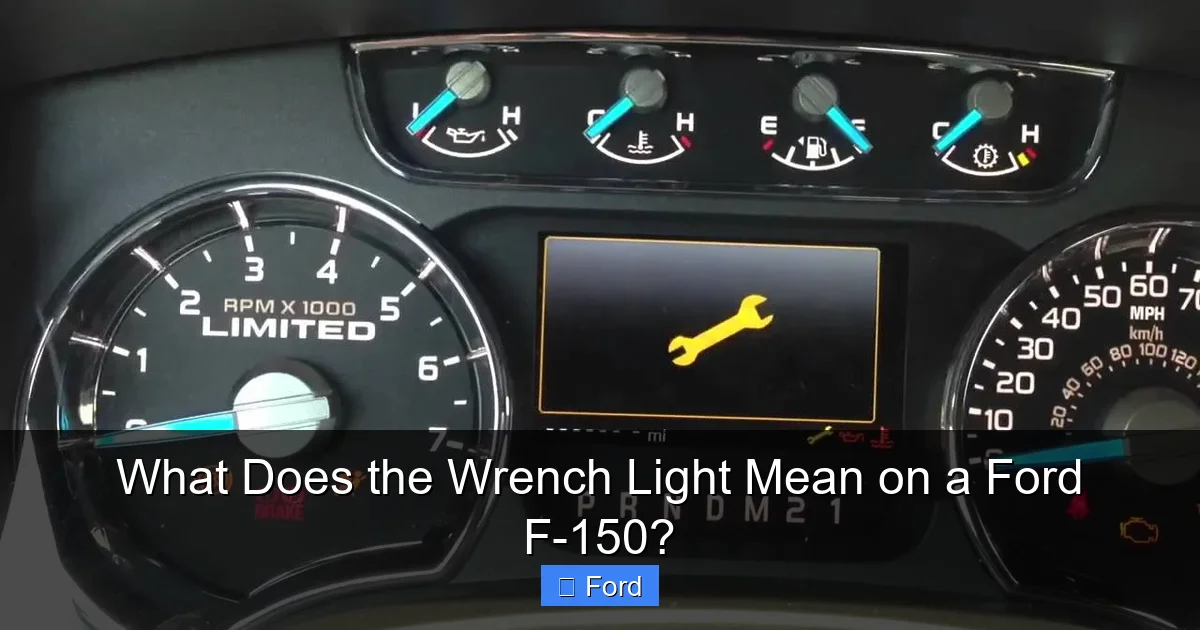
The wrench light on your Ford F-150 is a critical service reminder, not just a simple indicator. It signifies that the truck’s computer has detected a problem requiring attention, often related to scheduled maintenance like an oil change, but sometimes pointing to more serious issues with the throttle, transmission, or other systems. Ignoring it can lead to costly repairs. Always diagnose the specific cause using a scan tool and address the issue promptly, whether through a simple reset or professional service.
You’re cruising down the highway in your trusty Ford F-150, the road stretching out before you. Suddenly, a small yellow icon shaped like a wrench illuminates on your instrument cluster. Your heart might skip a beat. What does it mean? Is your truck about to break down? Should you pull over immediately? The wrench light on a Ford F-150 is one of the most common—and most misunderstood—dashboard warnings. Unlike the glaring, urgent check engine light, the wrench has a specific, often more nuanced purpose. This comprehensive guide will decode everything you need to know about that little wrench, from its true meaning to exactly what steps you should take next. We’ll talk about common causes, how to diagnose it yourself safely, when a simple reset is okay, and when you absolutely need to call a professional. By the end, you’ll be equipped with the knowledge to handle this warning with confidence, protecting your investment and ensuring your F-150 stays reliable for years to come.
Key Takeaways
- The wrench light is a service reminder, not a check engine light. It specifically alerts you to maintenance needs or non-emissions-related system faults that the truck’s computer has logged.
- The most common trigger is overdue maintenance, especially an oil change. The F-150’s Intelligent Oil Life Monitor system uses this light to signal when service is due based on engine operating conditions.
- Other serious causes include throttle body issues, transmission problems, or sensor failures. A faulty throttle position sensor or mass airflow sensor can illuminate the wrench light and affect drivability.
- You should not ignore the light, but immediate danger is rare. Unlike a red oil pressure light, the yellow wrench typically allows limited driving to a safe location or repair shop, but prompt diagnosis is essential.
- A professional scan tool is required to read the specific fault code. Generic OBD2 scanners may not access the proprietary Ford modules that store the wrench light’s cause; a Ford-specific or advanced scan tool is best.
- Simply resetting the light without fixing the underlying problem is ineffective and dangerous. The light will return if the issue persists, and you risk causing severe damage to your truck.
- For simple maintenance reminders, a DIY reset is possible after completing the service. For any other cause, diagnosis and repair by a qualified technician are necessary.
📑 Table of Contents
- Understanding the Wrench Light: It’s Not the Check Engine Light
- Immediate Steps When the Wrench Light Comes On
- Diagnosing the Problem Yourself: A Practical Guide
- Resetting the Wrench Light: When and How
- When to Seek Professional Help: Don’t Gamble with Your Truck
- The Cost of Procrastination: What Happens If You Ignore It?
- Conclusion: Your Wrench Light Decoded
Understanding the Wrench Light: It’s Not the Check Engine Light
First, let’s clear up the biggest point of confusion. The wrench light on your Ford F-150 is not the same as the check engine light (CEL). They are separate systems with different purposes. The check engine light is part of the OBD-II (On-Board Diagnostics) system mandated by the EPA. It illuminates for any fault that could cause your truck’s emissions to exceed federal limits by 150% or more. This includes everything from a loose gas cap to a failed catalytic converter. It’s a broad, emissions-focused warning.
The wrench light, officially termed the “Service Wrench” or “Service Required” indicator, is a manufacturer-specific maintenance reminder system. Its primary job is to tell you that your truck’s computer has determined a scheduled service is due, most frequently an oil and filter change based on the Intelligent Oil Life Monitor system. However, it’s also a catch-all for other non-emissions-related faults that the main computer (PCM) or other control modules (like the Transmission Control Module) have logged. Think of it as your truck’s way of saying, “Hey, I need some attention, and it’s probably something you planned for, but maybe not.” This distinction is crucial because it guides your initial response. A check engine light often requires immediate diagnostic scanning for emissions faults. A wrench light first asks: “Is it time for my oil change?”
The Intelligent Oil Life Monitor System: The #1 Culprit
Modern Ford trucks, including all F-150 models from the past decade, use a sophisticated algorithm instead of a simple mileage counter to determine oil change intervals. The Intelligent Oil Life Monitor (IOLM) continuously analyzes engine operating conditions—such as engine revolutions, temperature, drive time, and load—to calculate the actual degradation of your engine oil. Short trips in cold weather degrade oil faster than long highway cruises. The system “knows” this.
When the oil life percentage calculated by the system drops to a preset threshold (usually around 15-20% remaining), the wrench light will illuminate. Often, a message like “OIL CHANGE REQUIRED” or a percentage will also appear in the message center on the gauge cluster. This is the system functioning perfectly. It’s not a guess; it’s a data-driven reminder that the oil’s lubricating and protective properties are depleted and need to be refreshed. Ignoring this reminder means running your engine with degraded oil, which increases wear, reduces efficiency, and can lead to catastrophic engine failure over time. In this context, the wrench light is your best friend—a proactive tool to prevent expensive damage.
Beyond Oil: Other Common Causes of the Wrench Light
While an overdue oil change is the most frequent reason, the wrench light can be triggered by several other issues. These are often related to systems that affect drivability and performance but may not directly trigger a check engine light. Here are the other top suspects:
- Throttle Body Issues: The electronic throttle body (ETB) is a critical component. If the motor that controls the throttle plate fails, or if the position sensor gives erratic readings, the truck’s computer will log a fault and illuminate the wrench light. You might notice symptoms like a rough idle, hesitation when accelerating, or a sudden loss of power. These are serious drivability issues that need attention.
- Transmission Control Module (TCM) Faults: Problems with transmission range sensors, solenoid performance, or internal transmission issues can be flagged by the TCM. Since these often don’t meet the strict criteria for an emissions-related check engine light, they may trigger the wrench light instead. Symptoms include harsh shifts, slipping, or the transmission failing to shift into certain gears.
- Mass Airflow Sensor (MAF) or Manifold Absolute Pressure (MAP) Sensor: These sensors tell the computer how much air is entering the engine. If they fail or provide inaccurate data, engine performance and fuel economy suffer. A faulty MAF/MAP can set a wrench light, sometimes accompanied by a check engine light, but not always.
- Four-Wheel Drive / Transfer Case Issues: On F-150s with 4WD, problems with the transfer case shift motor, encoder, or front axle engagement can cause a wrench light. You might see a “SERVICE 4WD” message as well. This indicates a fault in the system that controls your truck’s off-road capability.
- Other Module Communication Errors: The various computers (modules) in your F-150 must constantly communicate. If a module like the Body Control Module (BCM) or Anti-lock Brake System (ABS) module goes offline or has a communication breakdown with the main PCM, it can trigger a generic service warning like the wrench light.
It’s important to note that a failing battery or charging system can sometimes cause voltage fluctuations that confuse the truck’s computers, potentially leading to spurious warnings. While the battery light is more direct, it’s worth considering if you have electrical gremlins. For more on dashboard electrical warnings, you can read about what the battery light on a car means.
Immediate Steps When the Wrench Light Comes On
Seeing that wrench icon appear can be unsettling, but panic is the wrong reaction. Here is a clear, step-by-step action plan to take the moment you notice the light.
Visual guide about What Does the Wrench Light Mean on a Ford F-150?
Image source: carglassadvisor.com
Step 1: Perform a Safety Check
Before you do anything else, assess your immediate driving situation. Is your truck running smoothly? Listen for abnormal noises—knocking, clattering, or grinding. Feel for vibrations, harsh shifts, or a loss of power. Check your gauges: is the oil pressure normal? Is the engine temperature in the normal range? If you experience any of the following, pull over safely and shut off the engine immediately: a red oil pressure light, overheating, complete loss of power, or severe, metallic engine noise. These indicate a critical failure, and the wrench light is a secondary concern. If the truck seems to be running normally aside from the wrench, you likely have a less urgent issue, but you should still plan for service soon.
Step 2: Check the Obvious: Oil Level and Last Service Date
This is the fastest diagnostic step you can take. Pop the hood, pull the dipstick, and check your engine oil level. Is it low? Low oil level alone can sometimes trigger the sensor. Top it up with the correct oil viscosity (check your owner’s manual door jamb sticker) to the proper mark. Next, be honest with yourself: when was your last oil change? Did you reset the oil life monitor after it? If you’re at or past the recommended interval (often 7,500-10,000 miles for modern synthetic oil, but the IOLM is more accurate), the wrench light is almost certainly your oil change reminder. If the oil level is fine and you’re sure you’re up-to-date on service, the problem lies elsewhere.
Step 3: Note Any Other Symptoms or Messages
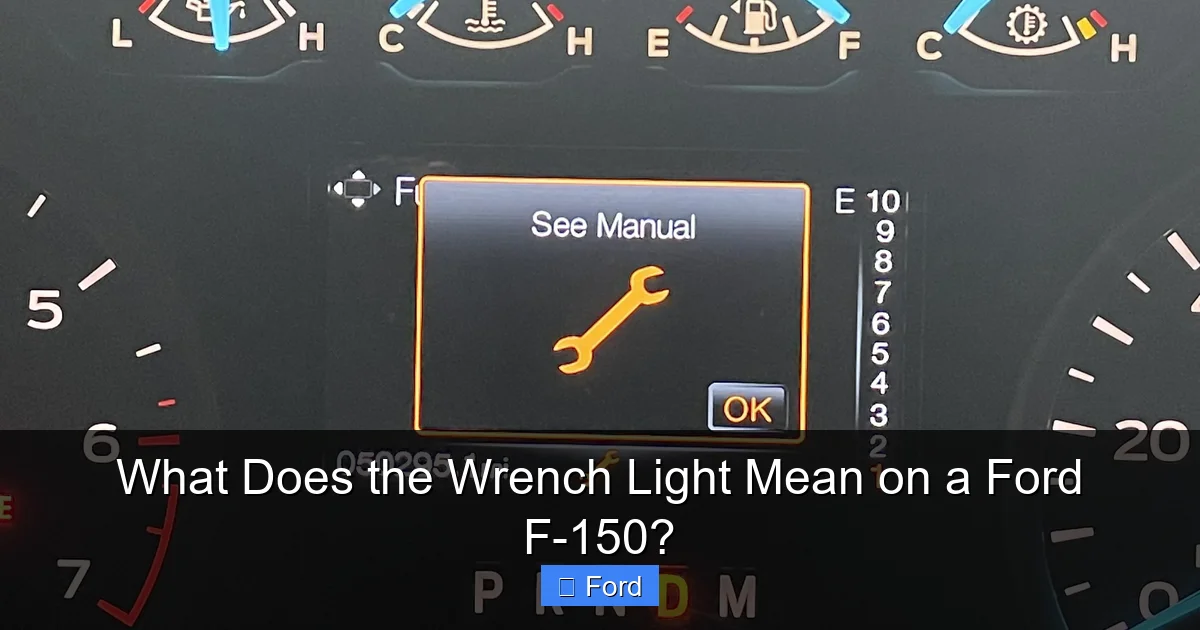
Did the wrench light appear alone, or did it accompany other warnings? Did a message appear in the message center between the gauges? Messages like “SERVICE 4WD,” “CHECK BRAKE SYSTEM,” or “TRANSMISSION FAULT” are huge clues that point directly to the source. Also, pay attention to how the truck is driving since the light came on. Does it idle rough? Is the throttle response sluggish? Are there any unusual shifts? Write down or mentally note these symptoms. This information is gold for a mechanic and can save hours of diagnostic time.
Step 4: Plan Your Next Move
Based on your findings, decide on a course of action. If it’s clearly an oil change reminder and your oil level is good, you can schedule an oil change at your convenience. If you have drivability symptoms (rough idle, poor acceleration) or other messages, you should plan to have it diagnosed as soon as possible. While you can likely drive a short distance (under 50 miles) to a trusted shop, avoid long trips, heavy towing, or high-speed driving until the issue is resolved, as some faults (like a throttle issue) could worsen or cause a breakdown.
Diagnosing the Problem Yourself: A Practical Guide
If you’re a hands-on vehicle owner, you might want to identify the exact cause before heading to a shop. While a full professional-grade diagnosis requires a scan tool, you can perform some basic checks.
Visual guide about What Does the Wrench Light Mean on a Ford F-150?
Image source: i.redd.it
The Essential Tool: A Quality OBD2 Scanner (But Not All Are Equal)
You’ll need an OBD2 scanner. However, here’s the critical caveat: many basic, inexpensive “code readers” will only pull generic powertrain codes (P0xxx, P2xxx) from the main engine computer (PCM). The wrench light on an F-150 is often set by a different module, like the TCM for transmission issues or the BCM for other faults, using manufacturer-specific codes (P1xxx, Bxxxx, Uxxxx). A basic reader may show “No Codes” even though the wrench is on.
To have a real shot, you need a mid-to-high-end scanner that supports Ford-specific systems. Brands like Autel, Launch, or Innova offer models that can access modules like the Transmission Control Module and Body Control Module. Even better, a professional-level tool like a Ford IDS or a high-quality aftermarket equivalent will give you the most complete picture. If you don’t own such a tool, your best DIY diagnostic is to pay a small fee (often $50-$100) at a shop like AutoZone or Advance Auto Parts for a “computer scan.” Tell them you have a wrench light and need all modules checked, not just the engine. They may not have the capability, but some larger stores do. Alternatively, a small independent Ford shop will often do a full scan for a diagnostic fee, which is money well spent.
What to Look For in the Codes
When you get a code, it will be in a format like “P0123” or “U0100.” The first letter tells you the system: P = Powertrain, C = Chassis, B = Body, U = Network. The first number indicates if it’s generic (0) or manufacturer-specific (1). For a wrench light, you’re often looking for P1xxx, Cxxxx, Bxxxx, or Uxxxx codes. Do not just clear the code. Look up the code’s meaning online (a site like Ford-Trucks.com forums is excellent for F-150 specific help). For example:
- P2101: Throttle Actuator Control System – This points directly to a throttle body issue.
- P0700: Transmission Control System Malfunction – This means the TCM has a fault, and you need to check for other TCM-specific codes (like P07xx series).
- B1234: Could be a Body Control Module fault related to a door ajar switch or lighting circuit.
The code description is your starting point for repair. It tells you which system is unhappy. For complex codes, further diagnosis is needed—like testing sensor voltages, checking wiring harnesses for damage or corrosion, or performing actuator tests with the scan tool.
When DIY Diagnosis Hits a Wall
If your basic scan shows no codes, or if the codes point to complex systems like the transmission or advanced throttle body, it’s time to call a pro. These systems often require specialized knowledge, technical service bulletins (TSBs—Ford’s official repair recommendations for known common problems), and advanced diagnostic procedures beyond the scope of most home mechanics. Guessing and replacing parts like a throttle body or transmission solenoid without confirmation can be very expensive mistakes.
Resetting the Wrench Light: When and How
This is a major point of interest. Can you just reset the light? The answer is a qualified yes, but only under very specific circumstances.
Visual guide about What Does the Wrench Light Mean on a Ford F-150?
Image source: obdforcar.com
The Only Safe Time to Reset: After Completing the Required Service
The only time it is appropriate to reset the wrench light is after you have physically performed the service that the light was indicating. For example, if you determined the light was on because your oil life was at 5%, you must first complete the oil and filter change. Only after the new oil is in, the filter is replaced, and the oil level is correct, should you proceed with the reset procedure. Resetting it without doing the work is pointless—the system will detect the same conditions and turn the light back on, often within a few drive cycles.
How to Reset the Oil Life Monitor (The Most Common Reset)
For an oil change reminder, the reset is a simple, built-in procedure. Here is the standard method for most 2009-2020 F-150s. Always consult your owner’s manual for the exact procedure for your specific year and trim.
- Ensure the ignition is in the “ON” position (engine off).
- Use the steering wheel controls or the instrument cluster buttons to navigate to the “Settings” or “Vehicle” menu.
- Find the “Oil Life” or “Maintenance” section.
- Select “Oil Life Reset” or “Set Oil Life to 100%”.
- Confirm the reset. You should see a message like “Oil Life Reset to 100%.”
- Turn the ignition off and back on to verify the wrench light and oil change message are gone.
Some older models (pre-2009) or specific trims may require a different sequence using the trip odometer button. If you can’t find the procedure, your owner’s manual is the ultimate source.
Resetting for Other Causes: A Bad Idea
If your wrench light was triggered by a throttle body fault code (P2101) or a transmission code, there is no consumer “reset” procedure for that fault. The only way to clear it is to use a scan tool to erase the code from the specific module. However, you should never do this unless you have fixed the underlying problem. The code is a record of a failure. If you simply erase it without repairing the faulty throttle body or sensor, the problem will recur within minutes or days of driving, and the light will return. More importantly, you are erasing the very evidence a mechanic needs to diagnose the issue correctly. For non-oil-life causes, the reset must be the final step after a successful repair, performed by the technician with their diagnostic tool.
When to Seek Professional Help: Don’t Gamble with Your Truck
Knowing when to DIY and when to call a pro is the mark of a savvy vehicle owner. Here are clear guidelines for seeking professional help for a wrench light on your F-150.
Scenario 1: You Have Drivability Symptoms
If the wrench light is accompanied by a rough idle, stalling, poor acceleration, harsh or slipping transmission shifts, or any change in normal operation, stop driving it unnecessarily and get it to a professional immediately. These are active problems that could worsen and cause more damage. A mechanic will use a high-end scan tool to pull all module codes, perform live data stream analysis to see what the sensors are reporting, and conduct targeted tests. For throttle body issues, they may need to perform a throttle body adaptation procedure after replacement. For transmission faults, they may need to road-test the vehicle to replicate the issue and check solenoid pack operation or internal pressure.
Scenario 2: The Light Comes Back Immediately After an Oil Reset
You changed the oil, reset the life monitor, and the light went out. But it comes back on after just 50 miles of driving. This means the system is detecting a new fault or the old one wasn’t resolved. The oil life system should not re-trigger so quickly. This indicates a sensor problem (like a faulty oil level sensor) or another issue entirely that needs diagnosis. Do not keep resetting it.
Scenario 3: You Can’t Get a Clear Code or Diagnosis
If your own scanning efforts yield no results or cryptic codes you can’t decipher, it’s time for expert intervention. Professional technicians have access to Ford’s official IDS (Integrated Diagnostic System) software, which provides unparalleled access to all vehicle modules, bidirectional controls (they can actuate components to test them), and most importantly, Technical Service Bulletins (TSBs). A TSB might state, for example, “2011-2014 F-150 3.5L EcoBoost may set wrench light with code P2101 due to throttle body wiring chafing—repair per bulletin.” This saves hours of troubleshooting. This level of resource is not available to consumers.
Choosing the Right Repair Shop
For complex wrench light issues, especially those involving the transmission or throttle body, your best bet is a Ford dealership or a highly reputable independent shop that specializes in Fords. General repair shops may lack the specific knowledge and tools for these proprietary systems. When you call for an appointment, explain: “My wrench light is on, and I have [symptoms, e.g., a rough idle]. I need a full system diagnostic that checks all modules, including the TCM and BCM.” This sets the expectation that this is not a simple oil change reminder and requires advanced diagnostics. Diagnostic fees are standard and worthwhile for an accurate diagnosis.
The Cost of Procrastination: What Happens If You Ignore It?
It’s tempting to tuck the wrench light away in the back of your mind and keep driving. After all, the truck seems fine. But ignoring this warning is a gamble with potentially very high stakes. The consequences depend entirely on the root cause.
For an Oil Change Reminder: Accelerated Engine Wear
If you ignore the light and keep driving with depleted oil, you are running your engine with lubricant that has lost its viscosity and protective additives. Metal-on-metal contact increases, sludge and varnish build up, and the engine’s internal components—bearings, camshafts, piston rings—wear prematurely. What starts as a $100 oil change can turn into a $5,000-$10,000 engine rebuild or replacement. The wrench light is the last line of defense before this happens.
For Throttle Body or Sensor Faults: Degraded Performance and Safety Risks
A failing throttle position sensor can cause unpredictable throttle response. You might be accelerating to merge onto a highway and experience a sudden, severe hesitation or unintended acceleration. This is a direct safety hazard. A faulty MAF sensor leads to a poor air-fuel ratio, causing reduced fuel economy, lack of power, and eventually, catalytic converter damage from running too rich or too lean. These problems will not fix themselves and will worsen over time.
For Transmission Faults: Catastrophic Failure
This is the most expensive scenario. A transmission fault indicated by a wrench light (often with a “SERVICE TRANSMISSION” message) is a prelude to bigger trouble. It could be a failing solenoid, a pressure issue, or early internal wear. Driving with this problem puts excessive stress on clutches, bands, and gears. A minor solenoid issue can escalate to a full transmission failure requiring a rebuild or replacement, costing $3,000-$6,000 or more. The wrench light is your earliest possible warning from the transmission’s own computer.
The Bottom Line
The wrench light is a preventative warning system. Its purpose is to alert you to a problem before it becomes a breakdown or a major repair. Treating it with the seriousness it deserves saves you money, prevents inconvenience, and keeps your F-150 safely on the road. Think of it as a helpful message from your truck’s own brain, not a nuisance to be silenced.
Conclusion: Your Wrench Light Decoded
The yellow wrench on your Ford F-150’s dash is a versatile messenger. Its most common and benign message is a friendly reminder from the Intelligent Oil Life Monitor that it’s time for fresh oil and filter—a simple, affordable maintenance item that is the lifeblood of your engine. However, its secondary role as a general service indicator means it can also be the first sign of more complex issues with the throttle, transmission, four-wheel-drive system, or other vehicle modules. The key takeaway is this: never, ever ignore the wrench light.
Your action plan is simple: 1) Perform a quick safety and oil level check. 2) Recall your last service date. 3) Note any driving symptoms or other messages. 4) If it’s clearly an oil change reminder and the truck runs perfectly, schedule that service and perform the proper reset procedure after the work is done. 5) If you have any drivability issues, other warnings, or if the light returns quickly after a reset, seek a professional diagnosis immediately with a Ford-capable scan tool. Remember, the cost of a diagnostic fee and timely repair is always, always less than the cost of the major component failure that is likely waiting in the wings if you procrastinate. Your Ford F-150 is built to be a workhorse, and treating its service warnings with respect is the best way to keep it that way for the long haul. Listen to what your truck is telling you.
Frequently Asked Questions
What does the wrench light mean on a Ford F-150?
It primarily means your oil change is due based on the Intelligent Oil Life Monitor system. It can also indicate other non-emissions service needs, like a throttle body fault, transmission issue, or 4WD problem.
Can I keep driving my F-150 with the wrench light on?
If the truck is running smoothly with no other warnings, you can drive a short distance (under 50 miles) to schedule service. However, if you have rough idling, poor acceleration, or transmission slipping, you should stop driving and have it towed to a shop immediately.
How do I reset the wrench light on my Ford F-150 after an oil change?
With the ignition ON (engine off), go to the Settings menu on your dashboard display. Navigate to “Oil Life” or “Maintenance” and select “Reset” or “Set to 100%.” Confirm the reset. The light should go out. Always complete the oil change first.
Is the wrench light the same as the check engine light?
No. The check engine light (MIL) is for emissions-related faults. The wrench light is a manufacturer-specific service reminder for maintenance and other drivability faults that may not trigger the check engine light.
Why did my wrench light come back on right after I reset it?
This means the underlying problem was not fixed. The computer detected the fault again during the next drive cycle. You need a professional diagnosis to find and repair the actual issue, whether it’s a sensor, throttle body, or transmission component.
How much does it cost to fix a wrench light problem?
The cost varies wildly. If it’s just an oil change reminder, the cost is the price of an oil service ($50-$100). For a throttle body replacement, it could be $400-$800. For a transmission solenoid pack, $300-$600. For major transmission work, $3,000+. Diagnosis is key to knowing the cost.
