
What Is an Iwe on a Ford F150

IWE on a Ford F150 stands for Intelligent 4×4 with Electronic Locking Differential, a sophisticated system that automatically sends power to wheels with the most traction. It’s a must-have for towing, off-roading, and driving in snow or mud, offering seamless transitions between 2WD and 4WD without driver input. Mastering IWE means getting the most out of your truck’s capability while maintaining safety and efficiency.
So, you’ve got a Ford F150, and you keep hearing about this ‘IWE’ thing. Maybe it’s on a sticker in the glove box, or your dealer mentioned it during the sale. But what exactly is IWE on a Ford F150? Is it just another confusing acronym in the world of trucks, or something that actually makes a real difference when you’re hauling a trailer up a slippery boat ramp or exploring a muddy backcountry trail? Let’s cut through the jargon right now. IWE isn’t a fancy accessory or a minor feature—it’s the heart of your truck’s ability to conquer tough terrain and tow with confidence. In simple terms, IWE stands for Intelligent 4×4 with Electronic Locking Differential. It’s Ford’s smart, computer-controlled system that automatically decides when to engage four-wheel drive and can lock the differential for maximum grip. No more guessing games with manual locking hubs or having to stop the truck to shift a lever. It’s all handled electronically, making your F150 more capable and easier to drive in challenging conditions. Whether you’re a weekend warrior who loves exploring trails, a contractor needing reliable traction on job sites, or someone who just wants peace of mind during a snowy winter, understanding IWE is absolutely key to unlocking your truck’s full potential. This guide will walk you through everything, from what it is and how it works to when to use it and how to keep it running strong for years.
Key Takeaways
- What IWE Stands For: Intelligent 4×4 with Electronic Locking Differential, not just a marketing term but a functional system that enhances traction.
- How It Works: Uses sensors and computer control to send power to wheels with traction, with a manual lock option for extreme situations.
- Benefits: Enhanced traction in snow, mud, sand; improved towing stability; better fuel efficiency when operating in 2WD mode.
- When to Use IWE: Activate for off-road, slippery surfaces, heavy loads; deactivate on dry pavement for efficiency and to prevent drivetrain wear.
- Common Issues: Faulty sensors or actuators can cause IWE malfunction, often indicated by warning lights like “IWE Fault” or “Service 4×4”.
- Maintenance Tips: Regular differential fluid changes, software updates, and sensor inspections are key to long-term reliability.
- Future Evolution: Ford continues to refine IWE with new models, integrating it with other driver aids like Trail Control for even smarter off-road performance.
📑 Table of Contents
What Exactly is IWE on a Ford F150?
Let’s start with the basics. IWE on a Ford F150 is the official name for Ford’s advanced four-wheel-drive system, specifically the version that includes an electronic locking differential. It’s most commonly found on F150 models equipped with the FX4 off-road package or higher trims like the King Ranch, Platinum, and Raptor. But it’s not just a marketing slogan you see on a window sticker. It’s a bona fide system that combines several components—a two-speed transfer case, electronic clutch packs in the rear differential, and a network of sensors—all managed by the truck’s Powertrain Control Module (PCM).
The “Intelligent” part means the system can automatically detect wheel slip and transfer torque to the wheel with the most grip, all without you touching a button. The “4×4” is self-explanatory—it’s four-wheel drive. The “Electronic Locking Differential” is the magic piece. In a traditional open differential, if one rear wheel loses traction, it spins freely while the other does all the work. An electronic lock, when activated, mechanically binds the two rear wheels together, forcing them to turn at the same speed. This is crucial when you’re stuck in mud, sand, or climbing a rocky hill where one wheel is in the air. The electronic part means it’s activated by an electromagnetic actuator, not a manual lever or air locker, making it seamless and quick.
It’s important to note that IWE is a system, not a single part. You won’t find a part labeled “IWE” on a parts diagram. Instead, it’s the combination of the transfer case, rear differential with clutch packs, wheel speed sensors, and the software that makes them talk to each other. This system is a major step up from the older, manual locking hubs found on classic Ford trucks, where you had to get out and turn knobs on the wheel hubs to engage 4×4. With IWE, it’s all at the push of a button or, in Auto mode, completely behind the scenes.
The History of Ford’s 4×4 Systems
To appreciate IWE, it helps to know where it came from. Ford’s 4×4 journey in the Fseries started with simple, rugged systems. Early F150 4x4s used manual front locking hubs. You’d manually lock the front wheels to the axle, then use a transfer case lever on the floor to shift into 4-high or 4-low. It was effective but required the driver to know when and how to engage it. Then came automatic locking hubs, which engaged the front axle when you shifted into 4WD, a big convenience upgrade.
The real leap to “Intelligent” came with the introduction of electronic shift transfer cases in the late 1990s and early 2000s. You could now engage 4WD with a dashboard switch. But the rear differential was still an open unit. The true IWE system, as we know it today, debuted with the 2009-2014 F150 (the 12th generation). It paired an electronic shift-on-the-fly transfer case with a new rear differential featuring electronically controlled clutch packs. This allowed for not just 4WD engagement, but also for variable torque biasing to the rear wheels—essentially a limited-slip function without mechanical gears. The 2015+ F150 (13th generation) refined this system further, integrating it more deeply with the truck’s stability control and trailer sway control systems. So, IWE represents the culmination of decades of evolution toward a more user-friendly, capable, and intelligent 4×4 system.
How the IWE System Works Technically
Now, let’s pop the hood and see what’s happening under all that metal. The IWE system is a ballet of sensors, computers, and electro-mechanical actuators. Its primary job is to monitor wheel slip and, when needed, redistribute engine torque to the wheels that have traction. Here’s a step-by-step breakdown of what happens when you drive your IWE-equipped F150.
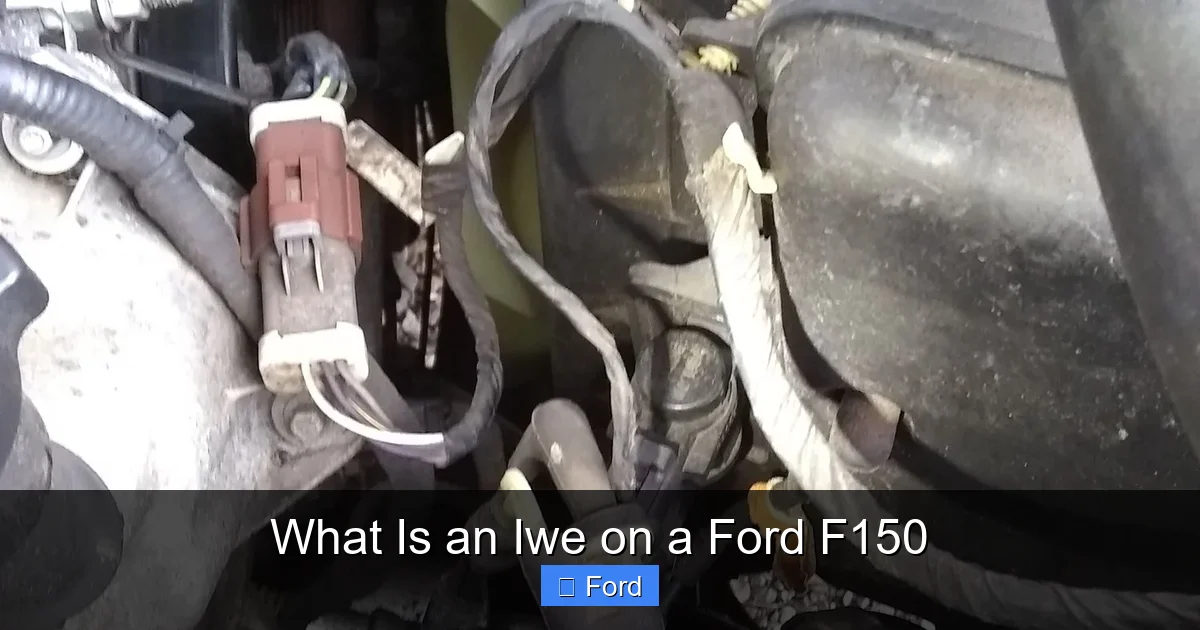
Visual guide about What Is an Iwe on a Ford F150
Image source: cimg1.ibsrv.net
First, a network of sensors is constantly feeding data to the Powertrain Control Module (PCM). The most critical are the four wheel speed sensors (one at each wheel), which are also used for the anti-lock brake system (ABS). The PCM also knows your throttle position, steering angle, and yaw rate (how much the truck is rotating). In Auto mode, the PCM is always watching. The moment it detects that one or more wheels are spinning faster than others—a sign of lost traction—it springs into action.
The PCM then commands an actuator. There are two key actuators in the IWE system. The first is the IWE actuator (sometimes called the 4×4 actuator), which is an electric motor mounted on the transfer case. When you select 4WD (or when the system decides to in Auto mode), this motor physically moves a shift fork inside the transfer case to engage the front axle and connect the front driveshaft. This is what sends power to the front wheels.
The second actuator is the electronic locking differential actuator (or rear axle clutch actuator). This is typically located on the rear differential housing. When you press the “Lock” button (or in some cases, when the system deems it necessary for extreme slip), this actuator energizes a set of electromagnetic clutch packs inside the rear differential. These clutch packs, when engaged, create a physical link between the two rear wheels, preventing one from spinning freely if the other loses traction. Think of it like a virtual locker. In normal driving, these clutches are disengaged, allowing the wheels to turn at different speeds for smooth cornering. When locked, they force both wheels to turn together.
In many F150s with IWE, the system also has a variable torque bias capability even without the manual lock engaged. The PCM can progressively apply pressure to these clutch packs to send more torque to the wheel with grip, acting like an intelligent limited-slip differential. This happens seamlessly and constantly in Auto mode. It’s a brilliant system because it provides the benefits of a limited-slip or locker when you need it, but behaves like an open differential for normal cornering when you don’t.
The Role of the Transfer Case
The transfer case is the central hub of the 4×4 system. In an IWE-equipped F150, it’s an electronic shift-on-the-fly unit, meaning you can engage 4WD while moving at moderate speeds (usually up to 55-60 mph). It has several positions: 2H (two-wheel drive, rear wheels only), 4H (four-wheel drive high range), and 4L (four-wheel drive low range). The 4L position uses a set of planetary gears to multiply torque for slow, controlled crawling over rocks or deep ruts. Engaging 4L typically requires the truck to be stopped or moving very slowly (under 3-5 mph). The electronic actuator motor on the transfer case does the physical work of moving the range selector inside the case when you press the switch. A healthy IWE actuator is crucial; a failed one means you might hear grinding or be unable to shift into 4WD at all.
Sensors and Computers: The Brains Behind IWE
As mentioned, the PCM is the brain. It’s processing data from multiple sources dozens of times per second. The wheel speed sensors tell it if a wheel is spinning faster than the vehicle’s actual speed. The steering angle sensor helps it understand if you’re turning (where a slight difference in wheel speed is normal). The throttle position sensor indicates if you’re accelerating hard, which might induce slip. The brake pressure sensor knows if you’re braking. All this data allows the PCM to make incredibly nuanced decisions. For example, when cornering on dry pavement in 2WD, the inside wheel spins slightly slower than the outside—that’s normal and the PCM ignores it. But if, during that same corner on ice, the inside wheel starts spinning wildly while the outside wheel has grip, the PCM will instantly command the IWE actuators to send power to the front and lock the rear to get you through the turn safely. This level of automation is what makes IWE so effective and user-friendly. You don’t need to be a 4×4 expert; the system is always working in the background to keep you moving.
Benefits of IWE for Daily Driving and Off-Roading
Now that we know what it is and how it works, let’s talk about why you should care. The benefits of having a properly functioning IWE system on your Ford F150 are huge and touch almost every aspect of driving, from your daily commute to extreme off-road adventures.
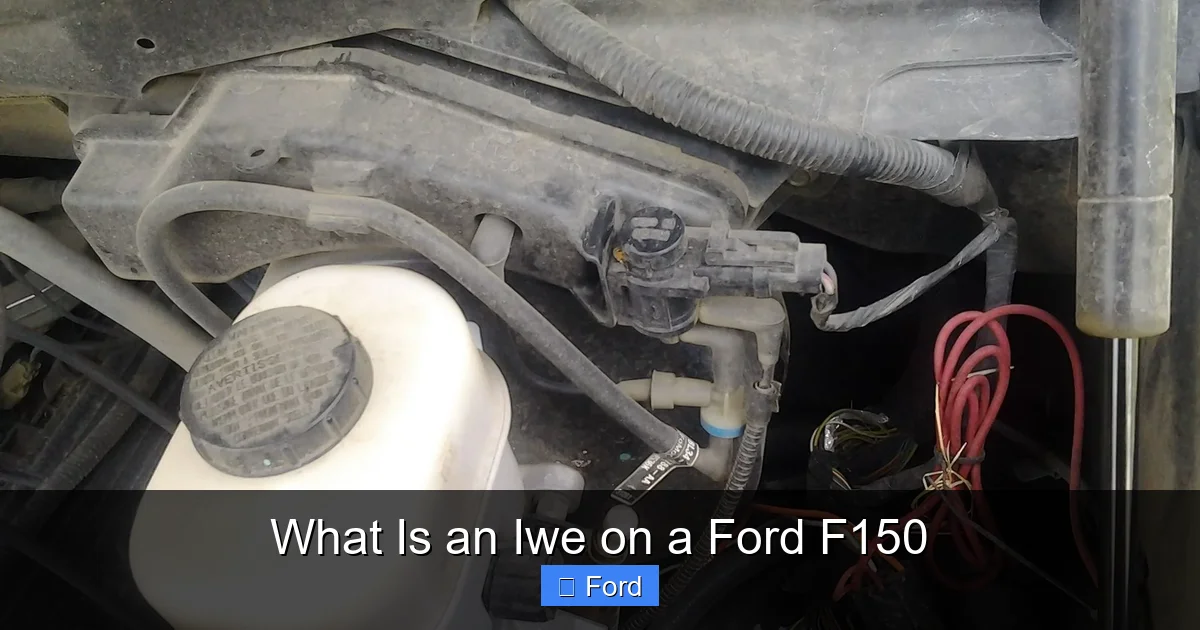
Visual guide about What Is an Iwe on a Ford F150
Image source: cimg0.ibsrv.net
1. Unmatched Traction in Low-Grip Conditions: This is the big one. Whether it’s rain-slicked highways, snow-covered roads, muddy job sites, or sandy trails, IWE gives you a massive advantage. In Auto mode, it’s like having a co-pilot that instantly detects when a tire loses bite and redirects power. You’ll feel the difference when pulling out of a snowy driveway or navigating a muddy forest road. The system works so quickly that often, you won’t even realize a wheel was slipping until it’s already corrected.
2. Enhanced Towing and Hauling Stability: If you use your F150 to tow a boat, camper, or heavy trailer, IWE is a game-changer. When you’re starting from a stop with a heavy load, or climbing a grade with a trailer, the rear wheels can easily break loose. IWE automatically engages to distribute torque between front and rear, and can lock the rear differential to prevent the drive wheels from spinning. This results in smoother, more confident acceleration and less trailer sway. You’ll feel more in control, and you’ll put less stress on your truck’s drivetrain.
3. Seamless, Driver-Friendly Operation: Gone are the days of fumbling with manual hubs or worrying about shifting a transfer case at a complete stop. With IWE, you simply select “Auto” on the dial and forget it. The system handles everything. For more control, you can manually select 4H for constant 4WD in deep snow or 4L for rock crawling. The electronic rear lock is activated with a separate button, usually marked with a locker icon. It’s all intuitive and requires no special training.
4. Improved Fuel Efficiency in 2WD: When you don’t need 4WD, the system defaults to 2WD (2H). This means the front axle and driveshaft are completely disconnected, reducing drag and parasitic loss. This is a significant fuel savings compared to full-time 4WD systems that always have the front end engaged. You get the efficiency of a rear-wheel-drive truck for 90% of your driving, with the capability of 4×4 at your fingertips.
5. Reduced Driver Error and Wear: Because the system is automated, it prevents common mistakes like leaving 4WD engaged on dry pavement (which causes “windup” and damage) or forgetting to lock hubs. It also engages and disengages much faster and more smoothly than a human can, reducing shock loads on the drivetrain components.
IWE vs. Traditional 4×4 Systems
To really understand IWE’s value, it’s helpful to compare it to older or simpler systems.
- vs. Part-Time 4WD with Manual Hubs: The classic system. You must manually lock the front hubs, then use a floor shifter to engage 4WD. It’s very robust but inconvenient. You have to stop the vehicle to engage/disengage 4WD (on older models) and get out to lock/unlock hubs. There’s no automatic traction aid; if a rear wheel spins, you’re stuck until you lock the front hubs. IWE is faster, more convenient, and provides rear-wheel traction aid via the electronic locker.
- vs. Full-Time 4WD: Systems like those in some SUVs that are always in 4WD. They use a center differential to allow different wheel speeds. They’re good for all-weather driving but suffer a permanent fuel economy penalty and can’t be used for severe off-roading without a low range. IWE gives you the choice: efficient 2WD or locked 4WD, plus the low range of 4L.
- vs. Basic Electronic Shift 4WD (without locker): Many trucks have a switchable 4WD system but an open rear differential. This is a big step up from 2WD but still has the “one wheel spin” limitation in the rear. If both rear wheels lose traction, you’re done. IWE’s electronic locker is the critical upgrade that makes it truly off-road capable.
In essence, IWE combines the best features: the fuel economy of part-time 2WD, the convenience of electronic shift, the traction of an automatic limited-slip, and the ultimate grip of a manual locker—all in one integrated system. It’s a testament to modern automotive engineering.
When and How to Use IWE on Your F150
Knowing when to use which part of the IWE system is crucial for both performance and longevity. Using the wrong mode at the wrong time can waste fuel, cause drivetrain wear, or even be dangerous. Let’s break down the typical selector positions and the lock button.
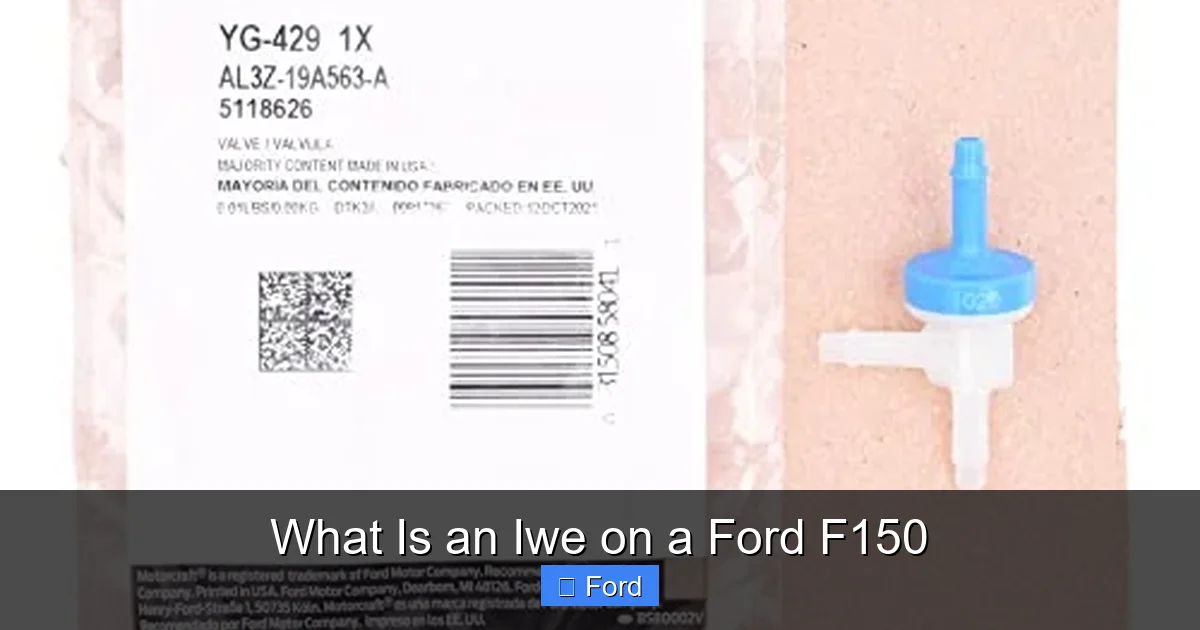
Visual guide about What Is an Iwe on a Ford F150
Image source: m.media-amazon.com
The 4×4 Selector (Dial or Switch):
- 2H (Two-Wheel Drive High): This is your default setting for normal, dry pavement driving. Only the rear wheels are powered. It’s the most fuel-efficient and normal-feeling mode. Use this 95% of the time if you’re not towing or in bad weather.
- 4H (Four-Wheel Drive High): This locks the transfer case into a 50/50 front/rear power split. The wheels are all connected. Use this for continuous low-traction situations where you need constant 4WD: deep snow, loose sand, mud, or when towing a heavy load on slippery surfaces. Important: Only use 4H on low-traction surfaces like snow, ice, mud, or sand. Do not use it on dry pavement. The tires can’t slip enough to accommodate the different turning radii of the front and rear wheels, causing “windup” or “binding” in the drivetrain, which leads to vibration, premature wear, and potential damage.
- 4L (Four-Wheel Drive Low): This engages the low-range gearing in the transfer case, multiplying torque (usually around 2.5:1). It’s for very slow, extreme off-roading: rock crawling, steep hills, deep mud where you need maximum control and torque at low speeds. Speed should be kept under 20-25 mph. You must come to a complete stop or near stop to shift into 4L (the truck will prompt you to shift to neutral first). Never use 4L on high-traction surfaces or at speed.
The Rear Axle Lock Button (IWE Lock):
This is a separate button, often with an icon of a differential with an “X” or a locker symbol. Pressing it manually locks the rear electronic differential. This is a tool for severe traction loss only. Use it when you’re stuck—for example, one rear wheel is spinning on ice while the other is on solid ground, or when climbing a rocky hill and one wheel is lifted. The lock forces both rear wheels to turn together. Critical Warnings:
- Only engage the rear lock on low-traction surfaces. On dry pavement, it will cause severe tire scrub, binding, and can damage the drivetrain.
- Only engage it at very low speeds (under 5-10 mph). It’s not meant for high-speed driving.
- Once you regain traction and are moving normally, you should disengage the lock. The system may auto-disengage at higher speeds as a safety feature, but it’s best practice to manually unlock it when you no longer need it.
Auto Mode: This is the magic. In Auto, the PCM acts as your 4×4 co-pilot. It starts in 2H. When it detects wheel slip (usually the rear), it will automatically engage the front axle via the IWE actuator, effectively switching to 4H. It can also apply the rear differential clutch packs to bias torque. If the slip is severe and persistent, it may even prompt you to manually engage the rear lock (some models have a chime or message). Auto mode is perfect for unpredictable conditions like a snowstorm where you go from clear roads to packed snow to ice. You don’t have to think about it. Just drive. The system will seamlessly add 4WD when needed and revert to 2WD when traction is restored, maximizing fuel economy.
Understanding IWE Modes: A Practical Guide
Let’s make it practical with real-world scenarios:
- Daily Commute on Dry Roads: 2H. No question. Save fuel, reduce wear.
- Heavy Rain or Wet Pavement: Start in 2H. If you feel the rear end getting light or wheels spinning on acceleration, switch to Auto. The system will add front drive as needed. You likely won’t need the rear lock.
- Snow-Covered Roads or Ice: Use Auto. It’s the safest, as it’s always ready. For a long, steady snowstorm where you know conditions will be poor the whole time, you could manually select 4H. But Auto is usually better because it will disengage on clear stretches.
- Towing a Heavy Trailer on Slippery Launch (e.g., boat ramp): Before you start the ascent, switch to Auto or 4H. If the rear wheels spin badly, come to a stop, engage the rear lock, and proceed slowly. Unlock the rear once you’re on solid, high-traction ground.
- Deep Mud or Sand: Auto or 4H. If you get stuck, stop, engage the rear lock, and try to rock free. Sometimes you need to also put the truck in 4L for the ultimate torque multiplication.
- Rock Crawling: 4L is essential for low-speed control. Use the rear lock for sections where a wheel is airborne. Use “crawl” ratios if your truck has them (often part of an off-road package).
The golden rule: High-traction (dry pavement) = 2H or Auto (which will stay in 2H). Low-traction (snow, mud, sand, ice) = 4H or 4L as conditions demand, and rear lock only when absolutely necessary for severe slip.
Common IWE Problems and Troubleshooting
Like any complex electronic system, IWE can develop issues. The good news is that many problems are predictable and often have clear warning signs. The most common indicator is a warning light on your dash. This could be a specific “IWE Fault” light, a “Service 4×4” message, or a wrench icon. When you see this, the system has detected a malfunction and has likely defaulted to 2WD for safety. You’ll lose your 4×4 capability until it’s fixed.
Common Symptoms and Their Likely Causes:
- IWE/4×4 Light Illuminated: This is the most common. The PCM has stored a diagnostic trouble code (DTC). Causes can range from a faulty IWE actuator on the transfer case, a bad rear axle clutch actuator, a failed wheel speed sensor, damaged wiring, or even a software glitch.
- Inability to Engage 4WD (No click, no movement): If you turn the dial to 4H or 4L and nothing happens (no sound, no change), the transfer case actuator motor may be dead, or there could be a mechanical failure inside the transfer case itself. A failed fuse or a broken wire to the actuator is also possible.
- Grinding or Clunking Noise When Shifting into 4WD: This often indicates the transfer case shift motor is trying to move the shift fork but it’s not aligning properly, or internal gears are worn. It can also happen if you try to engage 4WD at too high a speed. Sometimes it’s a sign the transfer case fluid is low or contaminated.
- Rear Differential Lock Not Engaging: You press the lock button, but the locker light doesn’t come on, or you don’t feel the engagement. This points to a faulty rear axle clutch actuator, a broken wire to it, or internal clutch pack wear/failure.
- Vibration or “Windup” Feeling on Dry Pavement in 4H: This isn’t a system failure; it’s you using 4H incorrectly on high-traction surfaces. The front and rear drivetrains are bound up. Simply shift back to 2H.
- Inconsistent or Erratic Behavior in Auto Mode: The system engages 4WD when it shouldn’t, or fails to engage when wheels are spinning. This is often due to a faulty wheel speed sensor giving bad data to the PCM. A scan tool can identify which sensor is misreading.
DIY Checks vs. Professional Diagnosis
Before you rush to a dealer, there are a few simple things you can check:
- Check Fuses: The IWE system has dedicated fuses. Consult your owner’s manual for fuse panel locations (usually under the dash and under the hood). Visually inspect the fuses related to 4×4, PCM, and transfer case. Replace any that are blown.
- Visual Inspection: Look for obvious damage to wiring harnesses near the transfer case and rear differential. Check for loose, corroded, or disconnected connectors.
- Scan for Codes: If you have an OBD-II scanner that can read manufacturer-specific codes (not just generic ones), plug it in and look for stored codes in the PCM and 4×4 modules. This will give you a huge head start. A code like “P1873” might indicate a transfer case actuator circuit problem, while a code related to a specific wheel speed sensor points you in that direction.
However, many IWE issues require professional diagnosis and repair. The actuators themselves are mechanical/electrical components that can fail internally. Testing them often requires a scan tool to actuate them while monitoring voltage and resistance. Replacing them is straightforward but requires mechanical skill and sometimes a special tool to set the clutch pack preload. Wiring issues can be intermittent and hard to find. If the basic checks don’t solve it, taking your F150 to a mechanic familiar with Ford 4×4 systems is the smart move. They’ll use advanced scan tools to communicate with the IWE actuators directly and run functional tests.
Maintaining Your IWE System for Longevity
IWE systems are generally very reliable, but like any critical component, they need proper maintenance to last the life of the truck. Neglect is the number one cause of premature failure. Here’s what you need to do.
Fluid Changes are Non-Negotiable:
- Transfer Case Fluid: This is the lifeblood of the transfer case, lubricating the gears and the shift motor mechanism. Ford’s recommendation varies by model year, but a safe interval is every 50,000 to 100,000 miles. For severe service (frequent 4WD use, towing, off-roading), change it every 50k. Use only the specified fluid (usually Mercon LV or a specific Ford transfer case fluid). A low or dirty fluid level can cause the shift motor to struggle, leading to premature failure and grinding noises.
- Rear Differential Fluid: This is even more critical for the IWE system because the electronic clutch packs inside the differential are bathed in this fluid. The fluid must have the correct friction properties for the clutches to work properly. If the fluid is old, contaminated, or the wrong type, the clutches can slip, chatter, or wear out quickly. Ford typically recommends changing the rear diff fluid every 50,000 miles for normal service, but if you use the rear locker frequently or do a lot of off-roading, change it every 30,000-40,000 miles. Again, use only the specified fluid (usually a 75W-140 synthetic gear oil with the correct API rating).
Software Updates: The IWE system is controlled by software in the PCM. Ford periodically releases Technical Service Bulletins (TSBs) and software updates to address drivability issues, improve shift quality, or fix bugs. Your dealer can check if any updates are pending for your VIN. It’s a good idea to ask about this during any service visit.
Regular Inspections: During routine oil changes or other service, have a technician give the IWE system a once-over. They should check for leaks around the transfer case and differential, inspect the wiring and connectors for damage or corrosion, and listen for any abnormal noises when shifting into 4WD. Catching a small leak or a frayed wire early can prevent a major failure later.
Extending IWE Life: Best Practices
Beyond scheduled maintenance, how you use the system greatly affects its lifespan. Follow these golden rules:
- Never use 4H or the rear lock on dry pavement. This is the single most important rule. It causes catastrophic windup and destroys clutch packs, gears, and u-joints. Use 2H on pavement. If you accidentally leave it in 4H on the highway, you’ll feel a binding sensation—shift back to 2H immediately.
- Use the rear lock sparingly and on low-traction surfaces only. The locker is for getting unstuck or climbing a very slippery hill. Don’t use it for normal driving in snow or mud; the automatic torque bias in Auto mode is usually sufficient and easier on the system. Engaging the lock creates a solid connection, meaning you can’t turn sharply without tire scrub.
- When towing, use 4H or Auto on slippery surfaces, but disengage on dry, high-speed roads. There’s no benefit to 4WD on a dry interstate, and it wastes fuel and adds wear. Switch to 2H for the highway portions of your trip.
- For off-roading, use the correct mode for the terrain. Don’t use 4L for high-speed desert running. Don’t try to rock a stuck truck in 4L with the rear lock—it can overload components. Use 4H and gentle throttle first.
- Address warning lights immediately. Ignoring an IWE fault can lead to a complete failure of the system and potentially more expensive damage if you continue to try using it. Get it diagnosed and repaired promptly.
By treating your IWE system with respect—using the right mode at the right time and staying on top of fluid changes—you can expect 200,000 miles or more of faithful service. It’s a robust system when maintained properly.
The Future of IWE and Ford’s 4×4 Technology
Ford isn’t standing still. The IWE system continues to evolve with each new F150 generation. The latest models feature even tighter integration with other vehicle systems. For example, when you activate Trail Control (an off-road cruise control system), it automatically manages throttle and brakes for you, and it works seamlessly with IWE, automatically engaging 4WD and the rear lock as needed for the terrain. The system’s processors are faster, allowing for even quicker torque transfers.
Future iterations will likely see IWE become even more “intelligent.” With the rise of vehicle-to-everything (V2X) communication and more detailed terrain mapping, your F150 could potentially “see” a slippery patch or rock ahead and pre-emptively adjust the IWE system before you even encounter it. We may also see the elimination of the separate rear lock button, with the system automatically applying the maximum lock only when absolutely necessary, based on GPS speed and terrain data.
Furthermore, as Ford pushes into electric vehicles with the F150 Lightning, the concept of IWE will transform. Electric trucks have instant torque and often have independent motors for each wheel. This could lead to a “torque vectoring” system that is even more precise than any mechanical clutch-based system, distributing power to individual wheels with millisecond accuracy. The principles of intelligent traction management remain the same, but the execution will become even more seamless and powerful. So, while the acronym IWE might stay the same, the technology behind it will keep advancing, ensuring the Ford F150 remains a leader in capability.
Conclusion
So, what is an IWE on a Ford F150? It’s not just a buzzword. It’s a comprehensive, intelligent four-wheel-drive system that combines automatic engagement, electronic locking, and sophisticated computer control to give your truck unparalleled traction and towing capability. It’s the reason an F150 can confidently pull a boat out of the water on a wet ramp, climb a rocky hill with one wheel in the air, and still get 20+ MPG on the highway when you don’t need it. Understanding how it works—the roles of the transfer case actuator, the rear differential clutch packs, and the PCM—helps you use it correctly and diagnose problems early. Remember the core principles: use 2H for dry pavement, rely on Auto for unpredictable conditions, and reserve 4H/4L and the rear lock for genuine low-traction scenarios. And above all, stay on top of fluid changes for the transfer case and rear differential. Treat your IWE system well, and it will be your most trusted companion on every journey, from the job site to the backcountry and back home again. It’s a key piece of what makes the Ford F150 the iconic, capable truck it is.
Frequently Asked Questions
What does IWE stand for on a Ford F150?
IWE stands for Intelligent 4×4 with Electronic Locking Differential. It’s Ford’s name for its advanced, computer-controlled four-wheel-drive system that includes an electronically operated rear differential locker.
How do I know if my IWE is working properly?
You can perform a basic check: with the truck in neutral, shift the 4×4 dial from 2H to 4H and 4L. You should hear distinct mechanical clicks from under the truck as the transfer case actuator moves. Also, on a low-traction surface like grass or gravel, accelerate gently in Auto mode; you should feel the system engage 4WD smoothly if the rear wheels start to spin. Any warning lights or unusual noises indicate a problem needing diagnosis.
Can I use IWE (4H or rear lock) on dry pavement?
No. You should never use 4H or the rear differential lock on dry, high-traction pavement. This causes drivetrain “windup” or binding, leading to vibration, premature wear, and potential damage to u-joints, gears, and the clutch packs. Use 2H on dry roads. Auto mode will automatically stay in 2H on pavement.
What does the IWE fault or service 4×4 warning light mean?
This light indicates the Powertrain Control Module (PCM) has detected a fault in the 4×4 system. Common causes include a failed IWE actuator on the transfer case, a faulty rear axle clutch actuator, a bad wheel speed sensor, wiring issues, or low fluid levels. The system will default to 2WD for safety. It requires immediate diagnostic scanning to identify the specific problem.
How often should I service the IWE system on my Ford F150?
Follow your owner’s manual, but as a general rule: change the transfer case fluid every 50,000-100,000 miles (more often with heavy 4WD use). Change the rear differential fluid every 50,000 miles (or every 30,000-40,000 miles if you frequently use the rear locker or off-road). Have the system inspected for leaks and wiring condition during regular service. Software updates from the dealer should also be applied when available.
Is IWE the same as 4WD? What’s the difference?
All IWE systems are 4WD, but not all 4WD is IWE. IWE specifically refers to Ford’s intelligent system with electronic controls and a lockable rear differential. A basic 4WD system might have a manual shift transfer case and an open rear differential with no locker. IWE adds automation (Auto mode) and the ability to electronically lock the rear axle, making it more capable and user-friendly.
