How to Reset the Check Engine Light Without Disconnecting the Battery on a Toyota Corolla

Contents
- 1 Key Takeaways
- 2 📑 Table of Contents
- 3 Understanding Your Toyota Corolla’s Check Engine Light
- 4 Why Avoid Disconnecting the Battery?
- 5 Method 1: The Standard OBD2 Scanner Tool (The Recommended Way)
- 6 Method 2: The “Fuse Pull” Method (For Select Older Models Only)
- 7 What Happens After the Reset? The Drive Cycle
- 8 A Crucial Word of Caution: Do Not Mask Problems
- 9 Model Year Considerations for Your Toyota Corolla
- 10 Conclusion: Empowerment Through Knowledge
- 11 Frequently Asked Questions
Car Neck Pillow

Windshield Cleaning Tool

Emergency First Aid Kit

Windshield Washer Fluid
Resetting your Toyota Corolla’s check engine light without disconnecting the battery is a safe, straightforward process that preserves your vehicle’s computer memory. You can typically do this using an OBD2 scanner tool or, for some models, a manual fuse box method. Crucially, this only clears the light—it does not fix the underlying problem that triggered it. Always diagnose the issue first to avoid potential damage.
Key Takeaways
- Reset ≠ Repair: Resetting only turns off the warning light; it does not solve the mechanical or electrical problem that caused it.
- Diagnosis First: Always read and address the stored trouble codes before clearing the light to prevent costly damage.
- OBD2 Scanner is Primary Tool: An OBD2 scanner is the standard, most reliable method for all modern Corollas (1996+).
- Fuse Method is Limited: The ECU fuse pull method only works on select older models and is not recommended for most vehicles.
- Drive Cycle May Be Needed: After a reset, the car may need a specific drive cycle for all monitors to reset and pass emissions.
- Light Will Return if Problem Persists: If the original issue isn’t fixed, the check engine light will illuminate again, often within a few drive cycles.
- Professional Help is Advisable: If you’re uncomfortable reading codes or the problem is complex, consult a mechanic.
📑 Table of Contents
- Understanding Your Toyota Corolla’s Check Engine Light
- Why Avoid Disconnecting the Battery?
- Method 1: The Standard OBD2 Scanner Tool (The Recommended Way)
- Method 2: The “Fuse Pull” Method (For Select Older Models Only)
- What Happens After the Reset? The Drive Cycle
- A Crucial Word of Caution: Do Not Mask Problems
- Model Year Considerations for Your Toyota Corolla
- Conclusion: Empowerment Through Knowledge
Understanding Your Toyota Corolla’s Check Engine Light
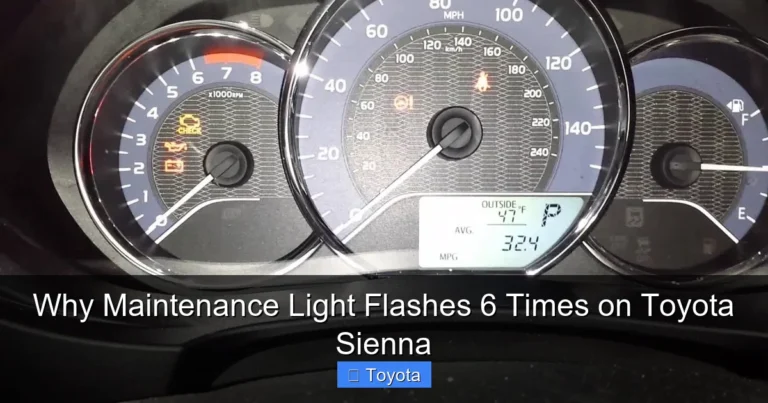
That little amber or yellow light on your dashboard, shaped like an engine, is one of the most important communication tools your Toyota Corolla has. Officially called the Malfunction Indicator Lamp (MIL), its primary job is to tell you that the car’s brain—the Engine Control Unit (ECU)—has detected something operating outside its normal parameters. It’s a general warning, not a specific diagnosis. When it glows steadily, it usually indicates a problem that needs attention soon but isn’t immediately catastrophic. A blinking light, however, signals a severe issue, like a misfire that could damage the catalytic converter, and you should stop driving and seek help immediately.
The system that governs this light is complex. Your Corolla’s ECU constantly monitors dozens of sensors and systems—from oxygen sensors and fuel injectors to the evaporative emissions (EVAP) system and ignition coils. When a sensor reading is out of range, or a circuit fails, the ECU stores a Diagnostic Trouble Code (DTC) in its memory and turns on the check engine light to get your attention. This is a critical emissions control function, mandated by law.
The Purpose of the Light vs. The Reset
It’s vital to understand the philosophy here. The check engine light is a messenger. Resetting it is like telling the messenger to go away without listening to their message. The underlying fault code and its associated problem will still exist in the car’s computer, even after the light goes out. The ECU will continue to monitor the faulty component, and once it detects the same issue again—which could be on the very next drive—it will relight the MIL. Therefore, the proper sequence is always: diagnose the code, repair the problem, then reset the light.
This guide focuses on the final step: the reset procedure itself, specifically without the brute-force method of disconnecting the battery. Disconnecting the battery does reset the ECU, but it also clears all learned data—like fuel trim adjustments, idle adaptation, and transmission shift points—which can lead to poor performance and drivability for several drive cycles as the car relearns. It also resets radio presets and clock settings. The methods we’ll discuss are more precise and preserve this valuable “learning” data.
Why Avoid Disconnecting the Battery?
For decades, the go-to advice for a check engine light was “unhook the battery for a few minutes.” While this often works to extinguish the light, it’s a sledgehammer approach with several significant downsides for your modern Toyota Corolla.

Visual guide about How to Reset the Check Engine Light Without Disconnecting the Battery on a Toyota Corolla
Image source: lightcheckup.com
Loss of Learned Data and Adaptive Memory
Your Corolla’s ECU isn’t just a simple on/off switch. It’s a sophisticated computer that adapts to your driving style, fuel quality, and component wear over time. It stores “long-term fuel trim” and “short-term fuel trim” values, which are adjustments it makes to keep the air/fuel mixture at the optimal 14.7:1 ratio. It also learns idle speed control and transmission shift timing. Disconnecting the battery wipes this slate clean. After a battery disconnect, your car might run rough, idle high or low, shift erratically, and have poor fuel economy until the ECU relearns all these parameters—a process that can take 50-100 miles of varied driving. The methods we’ll use later only clear the pending and stored diagnostic codes, leaving this adaptive memory intact.
Inconvenience and Additional Resets
Disconnecting the battery doesn’t just reset the engine computer. It also resets:
- Infotainment system: Radio presets, Bluetooth pairings, and navigation favorites are lost.
- Clock and date: You’ll need to manually reset these.
- Power window and sunroof initialization: On some models, the one-touch down/up feature for windows and sunroof may stop working until you re-initialize them by manually holding the switch in the full down/closed position.
- Steering Angle Sensor: This can trigger a steering wheel calibration light or ESP/ABS lights, requiring a specific steering wheel turn sequence to reset.
Using a scan tool to reset only the engine codes avoids this cascade of minor but annoying resets. If you are dealing with other warning lights, such as the battery light, you may need to follow specific procedures, which you can find in our guide on how to reset the battery light on a Toyota Corolla.
Method 1: The Standard OBD2 Scanner Tool (The Recommended Way)
This is the professional, correct, and most reliable method. Every Toyota Corolla from 1996 onward (and all cars sold in the US since 1996) has an OBD2 (On-Board Diagnostics, Second Generation) port. This 16-pin connector, usually located under the dashboard on the driver’s side, is the gateway to the car’s computer systems.

Visual guide about How to Reset the Check Engine Light Without Disconnecting the Battery on a Toyota Corolla
Image source: cardeeply.com
What You’ll Need
You have two main options for a scanner:
- Basic Code Reader (~$30-$70): A simple tool that plugs in, reads codes, and can clear them. Perfect for this job. Brands like Autel, Innova, or Launch are common. Ensure it says it supports “OBD2” and “All Makes/Modes” or specifically lists Toyota.
- Advanced Scan Tool ($100+): A more powerful tool (like those from Bosch, Snap-on, or high-end Autel models) that can access manufacturer-specific systems, view live data streams, and perform bi-directional tests. This is overkill for just a reset but invaluable for deeper diagnostics.
Step-by-Step Reset Procedure
Step 1: Locate the OBD2 Port. Get in the driver’s seat and look under the dash, just above the pedals. You’re looking for a trapezoidal-shaped 16-pin connector. It may have a plastic cover. If you can’t find it, consult your owner’s manual—it’s always listed there.
Step 2: Connect the Scanner. Turn the ignition to the “ON” position (the position right before “START” where the dash lights come on). Do not start the engine. Plug the scanner’s cable firmly into the OBD2 port. The scanner should power on.
Step 3: Read Codes (Mandatory First Step!). On the scanner, navigate to the “Read Codes” or “Diagnostics” menu. Select “Engine” or “Powertrain.” The tool will communicate with the ECU and display any stored codes. They will look like “P0171” or “P0300.” Write these down. This is your diagnostic clue. A quick internet search for “Toyota Corolla P0XXX” will tell you what the code means. For example, P0441 is a common EVAP system leak code. You must determine if this is a simple issue like a loose gas cap or a more serious component failure.
Step 4: Clear/Erase Codes. Once you have noted the codes (and ideally addressed the problem), navigate to the “Clear Codes,” “Erase Codes,” or “Reset MIL” function on your scanner. Confirm the action. The scanner will send the command to the ECU to wipe the stored codes and turn off the check engine light. The light on the dash should go out immediately.
Step 5: Verify and Test. Disconnect the scanner. Start the engine. The check engine light should remain off. Drive the car normally. Be aware that if the problem persists, the light will likely come back on within a few drive cycles (typically 3-5 trips where the fault is detected again).
Method 2: The “Fuse Pull” Method (For Select Older Models Only)
Warning: This method is not recommended by manufacturers and is largely obsolete for modern vehicles. It is a “hack” that was somewhat effective on very early OBD2 systems (late 1990s) but can cause issues on newer cars. It should only be attempted if you cannot get a scanner and understand the risks. For many 2000s and newer Corollas, pulling this fuse will do nothing or trigger other warning lights. If your Corolla is from 2005 or later, skip this method and use an OBD2 scanner.

Visual guide about How to Reset the Check Engine Light Without Disconnecting the Battery on a Toyota Corolla
Image source: lightcheckup.com
How It’s Supposed to Work
The theory is that by pulling the fuse that provides power to the ECU (also called the Engine ECU or EFI fuse) for a short period, you force a full computer reset, which clears learned data *and* codes. As discussed, clearing learned data is undesirable.
Procedure (If You Must Try)
Step 1: Identify the Correct Fuse. You need your owner’s manual or a fuse box diagram. The fuse box is typically located:
- Under the Dashboard: On the driver’s side, near the hood release. This is the interior fuse box.
- In the Engine Compartment: A larger black box near the battery.
Look for a fuse labeled “ECU,” “ECU-IG,” “EFI,” “ENG,” or “PCM.” On many Corollas, it’s a 10A or 15A fuse in the interior box. Do not guess. Pulling the wrong fuse (like for the fuel pump or radio) can cause other problems.
Step 2: Pull the Fuse. With the ignition OFF, use a fuse puller (often provided in the fuse box cover) or needle-nose pliers to carefully remove the identified fuse.
Step 3: Wait. Wait for 10-15 minutes. Some sources suggest waiting longer or even overnight. This allows the ECU’s capacitors to fully discharge.
Step 4: Reinstall the Fuse. Place the fuse back in its slot firmly.
Step 5: Start the Car. Turn the ignition to ON (do not start yet). You may see the check engine light illuminate briefly as a bulb check, then it should go out. Start the engine. The light may come on again if the fault is still present.
Step 6: Check for Other Issues. As mentioned, this may have reset other systems. Your clock will be wrong. You may need to reset window/sunroof limits. Be alert for any new warning lights related to steering angle or ABS.
Because this method is unreliable and has negative side effects, it is far better to invest in a $30 basic OBD2 reader. It’s a one-time purchase that will serve you for decades and across any OBD2-compliant vehicle you own.
What Happens After the Reset? The Drive Cycle
You’ve cleared the code and the light is off. Great! But your journey isn’t over if you plan to pass an emissions test (smog check) or want to be sure the repair was successful. Modern vehicles have multiple “monitors” or “readiness flags” that the ECU uses to verify all emissions systems are functioning correctly. For an emissions test, most regions require a certain number of these monitors to be “complete” or “ready.”
How Monitors Work
After a code clear (or battery disconnect), all monitors are reset to “not complete.” As you drive, the ECU runs self-tests on various systems (like the catalytic converter, oxygen sensors, EVAP system, and EGR system). When a test passes successfully, that monitor is set to “complete.” This process is called a drive cycle.
Typical Toyota Corolla Drive Cycle (General Guidelines)
While exact sequences vary by model year and engine, a generic drive cycle to set most monitors includes:
- Cold Start: Start the engine when it’s completely cold (overnight). Let it idle for 2-3 minutes.
- Low-Speed City Driving: Drive at speeds between 25-45 mph for 5-10 minutes. Include several stops and starts. This tests the oxygen sensor and catalytic converter monitors.
- Steady Cruising: Find a safe, level road and drive at a steady 55-60 mph for 5 minutes. This helps with catalyst and EVAP system monitoring.
- Deceleration: Slow down from 50 mph to 20 mph without using the brakes, just letting the car coast. This tests the EVAP and EGR systems.
- Stop and Idle: Come to a complete stop, idle for 1-2 minutes, then turn the engine off.
It often takes 50-100 miles of mixed driving for all monitors to set. You can use a more advanced scan tool to monitor the readiness status of each system. If a specific monitor refuses to set, it indicates a problem with that system that needs further diagnosis. Do not take your car for an official emissions test until all or the required number of monitors are ready. The test will fail if too many are “not complete.”
A Crucial Word of Caution: Do Not Mask Problems
Let’s be perfectly clear: The purpose of this guide is to show you how to extinguish the light after you have already identified and repaired the problem that caused it. Using these steps to simply “make the light go away” while ignoring the underlying issue is irresponsible, dangerous, and often illegal. It can lead to:
- Severe Engine Damage: A misfire code (P0300-P0304) left unchecked can destroy the catalytic converter, a $1,000+ repair. Low oil pressure or temperature warnings can lead to complete engine seizure.
- Failed Emissions Tests: You will fail state-mandated smog checks with a not-ready monitor or a stored code.
- Poor Fuel Economy: A faulty oxygen sensor or air intake leak can drop your MPG by 10-20%.
- Safety Risks: Some codes relate to braking systems, steering, or airbag systems. Ignoring these puts you and others at risk.
- Legal Issues: In many states, it is illegal to intentionally disconnect or reset an MIL to pass an emissions inspection.
How to Properly Diagnose First
So you see the light. What do you do?
- Get the Codes: Use an OBD2 scanner (as described in Method 1) or go to a local auto parts store (like AutoZone, Advance Auto Parts, or O’Reilly). They will usually read your codes for free as a customer service.
- Research the Code: Take the code (e.g., P0420) and search online. Look for reputable automotive forums (like Corolla-specific forums) or manufacturer technical service bulletins (TSBs). Understand what the code means and its common causes.
- Perform Basic Inspection: For some codes, the fix is simple. A P0455 (EVAP system large leak) is often a loose or missing gas cap. A P0171 (system too lean) could be a cracked vacuum hose. Check these obvious things first.
- Seek Professional Help: If the code points to a complex component (like a catalytic converter, internal engine issue, or advanced sensor), or if multiple codes are present, take it to a trusted mechanic. They have advanced diagnostic tools and expertise.
Only after the repair is made, and you’ve verified the problem is gone (the car runs normally), should you proceed to reset the light. If you’re unsure about the health of other systems like the battery, a weak battery can cause multiple erratic codes. In such a case, you might need to look into resetting the battery light on a Toyota Corolla after addressing the root cause.
Model Year Considerations for Your Toyota Corolla
While the OBD2 scanner method is universal for 1996 and newer models, there are subtle differences across the Corolla’s generations that are worth knowing.
Pre-1996 (OBD1) Vehicles
If you somehow own a pre-1996 Corolla, it uses OBD1. These systems are manufacturer-specific and do not have a standard 16-pin port. Resetting usually involves a specific sequence of turning the ignition on/off and bridging connector terminals in the engine bay. This is rare and requires a model-specific guide. For the vast majority of readers with a 1996+ Corolla, this does not apply.
1996-2002 (E110 Generation)
These are classic OBD2 vehicles. The OBD2 port is standard. The fuse box is typically under the dash on the driver’s side. The “fuse pull” method *might* work on some of these, but the scanner is still superior. Codes are generic OBD2 and some Toyota-specific enhanced codes.
2003-2007 (E120/E130 Generation)
This era saw more complex computer systems. The OBD2 port remains the only reliable way to reset codes. The interior fuse box is still the primary one. These models are very common on the road today and respond perfectly to a basic scan tool.
2008-2013 (E140 Generation)
Further integration of systems. The ECU fuse, if located, may control more than just the engine. Pulling it could reset the HVAC or infotainment system. The scanner is the unambiguous correct tool. The OBD2 port location is consistent under the dash.
2014-Present (E170/E210 Generation)
The latest Corollas are packed with advanced safety systems (Toyota Safety Sense). The ECU is even more integrated. The fuse pull method is almost guaranteed to fail or cause ancillary system warnings. A scanner is essential. Some very new models might have more secure or proprietary communication, but a standard OBD2 reader will still read and clear powertrain codes. For maintenance-related lights like the “Service Engine Soon” or maintenance required light, which are often based on mileage/time rather than faults, the reset procedure is different and may involve the odometer button. Our guide on how to reset the maintenance required light on a Toyota covers those specific procedures.
Regardless of your specific model year, the first step is always the same: get the codes. Do not guess. The code tells you where to start looking.
Conclusion: Empowerment Through Knowledge
Your Toyota Corolla’s check engine light doesn’t have to be a source of anxiety. It’s a tool—a communication from your car’s sophisticated computer system. By understanding that the light is a symptom, not the disease, you take the first step toward real automotive literacy. Resetting that light without disconnecting the battery is a simple, precise task that respects your vehicle’s complex systems. All you truly need is a basic OBD2 scanner, a few minutes, and the discipline to first diagnose the stored trouble codes.
Remember the hierarchy: Diagnose → Repair → Reset. Follow this path, and you’ll not only extinguish that glowing engine icon but also ensure your Corolla runs reliably, efficiently, and cleanly for years to come. You’ll save money on unnecessary repairs, avoid costly damage from ignored problems, and gain the confidence that comes from truly understanding your vehicle. The next time that light comes on, you’ll know exactly what to do. For other common Toyota maintenance reminders, like the oil light or service lights on models like the Highlander or RAV4, be sure to consult our specific guides, such as our article on how to reset the oil light on Toyota.
Frequently Asked Questions
Will resetting the check engine light fix the problem?
No. Resetting only turns off the warning light. The underlying mechanical or electrical issue that triggered the code remains. The light will return if the problem is not repaired.
How long does it take for the check engine light to come back on after a reset?
If the original problem persists, the light typically returns within 1-3 drive cycles (short trips where the fault is detected again). If the repair was successful, it will stay off.
Can I reset the check engine light by just driving the car?
No. The light will not turn off on its own. The ECU requires an external command (from a scan tool or, on very old models, a fuse pull) to clear the stored codes and extinguish the light.
My check engine light is blinking. Can I still drive to reset it?
Do not drive. A blinking check engine light indicates a severe misfire that can damage the catalytic converter. Stop driving immediately and have the vehicle towed for diagnosis.
Do I need a special scanner for a Toyota Corolla?
Any standard OBD2 scanner (sold at auto parts stores or online) will read and clear codes on a 1996 or newer Corolla. You do not need an expensive “Toyota-specific” tool just to reset the light.
After resetting, my car’s idle is rough. Is this normal?
It can be normal if you disconnected the battery, as the ECU lost its learned idle data. It should smooth out after 20-30 minutes of driving. If you used an OBD2 scanner to reset, your idle should remain unchanged. Rough idle after a reset suggests an underlying issue was not properly fixed.