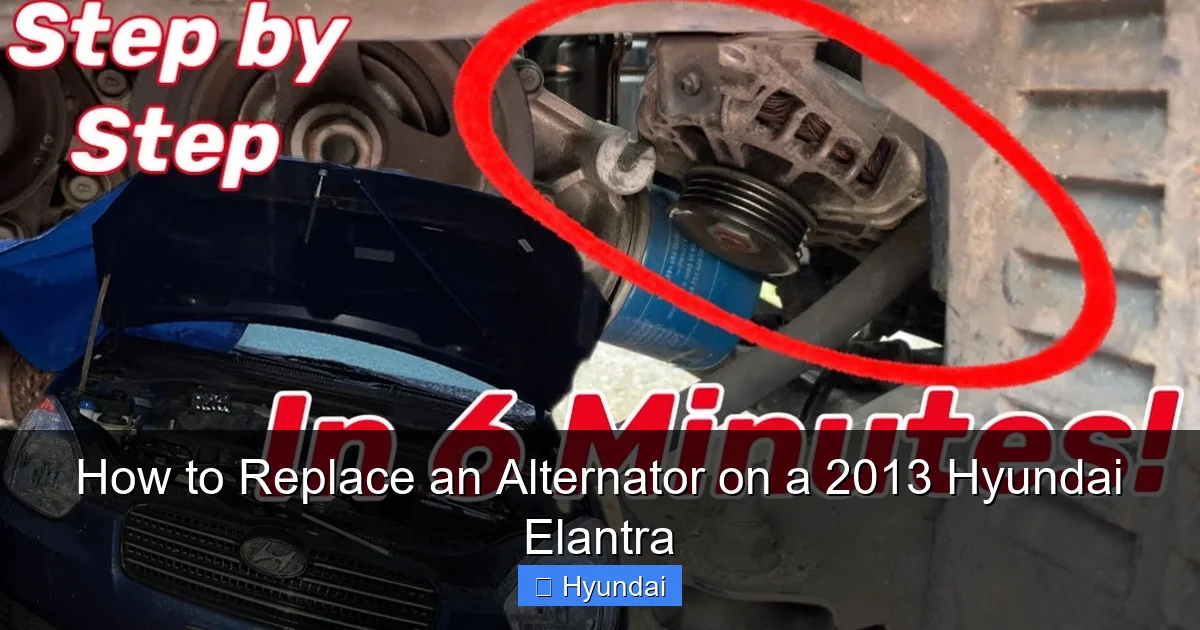
How to Replace an Alternator on a 2013 Hyundai Elantra

Contents
- 1 Key Takeaways
- 2 📑 Table of Contents
- 3 Understanding the Alternator and When to Replace It
- 4 Gathering Tools and Parts for the Job
- 5 Removing the Old Alternator: A Step-by-Step Guide
- 6 Installing the New Alternator Correctly
- 7 Testing Your Work and Final Checks
- 8 Conclusion and Additional Resources
- 9 Frequently Asked Questions




Replacing the alternator on your 2013 Hyundai Elantra is a manageable DIY task that can save you $500 or more in labor costs. With basic tools and this guide, you can complete the job in 2-3 hours. Follow our step-by-step instructions to get your car charging properly again.
Is your 2013 Hyundai Elantra giving you warning signs like a flickering dashboard light, dim headlights, or that dreaded “battery” warning symbol? Chances are, your alternator is on its last legs. The alternator is the heart of your car’s charging system, converting engine power into electricity to keep the battery charged and run all the electronics. When it fails, your car will eventually stall and leave you stranded. Replacing it yourself is a great way to save significant money—professional shops often charge $500 to $800 for this job, but the part itself usually costs $150 to $300. With some patience and the right guidance, you can tackle this project in your driveway. This comprehensive guide will walk you through every step of swapping out the alternator on your 2013 Elantra, from identifying the problem to testing your successful repair.
Key Takeaways
- Safety First: Always disconnect the battery before starting to avoid electrical shocks or shorts.
- Correct Tools: A basic socket set, torque wrench, and serpentine belt tool are essential for a smooth job.
- Torque Matters: Follow manufacturer torque specs for alternator bolts to prevent damage or vibration.
- Belt Tension is Critical: Ensure the serpentine belt is properly tensioned; too loose causes slipping, too tight strains bearings.
- Test Thoroughly: After installation, check voltage output (13.5-14.5V) and listen for noises before final reassembly.
- Inspect Related Parts: Replace a worn serpentine belt or tensioner while the alternator is out to save future labor.
- Know When to Seek Help: If you’re uncomfortable with electrical systems or lack tools, a professional is worth the cost.
📑 Table of Contents
Understanding the Alternator and When to Replace It
Before we grab tools, let’s understand what we’re dealing with. The alternator in your Hyundai Elantra is a belt-driven generator. As the engine runs, the serpentine belt spins the alternator’s pulley, creating an electromagnetic field that produces electricity. This power replenishes the battery after starting and supplies the car’s electrical demands—lights, radio, computers, and more. A failing alternator can’t keep up, leading to a slow battery drain and eventual dead battery.
Common Signs of a Bad Alternator
How do you know it’s the alternator and not just a weak battery? Watch for these telltale symptoms:
- Dashboard Warning Light: A battery-shaped or “ALT” light that illuminates while driving is the most common indicator.
- Dim or Flickering Lights: Headlights and interior lights may dim noticeably, especially at idle or when using multiple accessories.
- Slow or Failing Start: The engine cranks slowly, or the car won’t start after sitting overnight (a dead battery from lack of charging).
- Stalling: The car may stall while driving or idling because the ignition system loses power.
- Electrical Glitches: Power windows or seats might operate slowly, and the radio could cut out.
- Burning Smell or Noise: A worn alternator bearing can create a grinding or whining noise. Overheating might cause a burnt smell.
Why the 2013 Hyundai Elantra?
The 2013 Elantra uses a 2.0L or 1.8L gasoline engine, both with similar alternator setups. The alternator is located on the front of the engine, accessible from the top once the serpentine belt is removed. One common issue on these models is alternator bearing failure due to age and heat. The good news is that the replacement procedure is straightforward and well-suited for a DIYer. It’s a great first major electrical repair. While you’re working under the hood, it’s an excellent time to check other fluid levels. For instance, knowing how much oil your 2013 Hyundai Elantra takes ensures your engine is properly lubricated, preventing separate costly issues.
Gathering Tools and Parts for the Job
Proper preparation is half the battle. Having everything you need before you start will save time and frustration. Here’s your checklist.
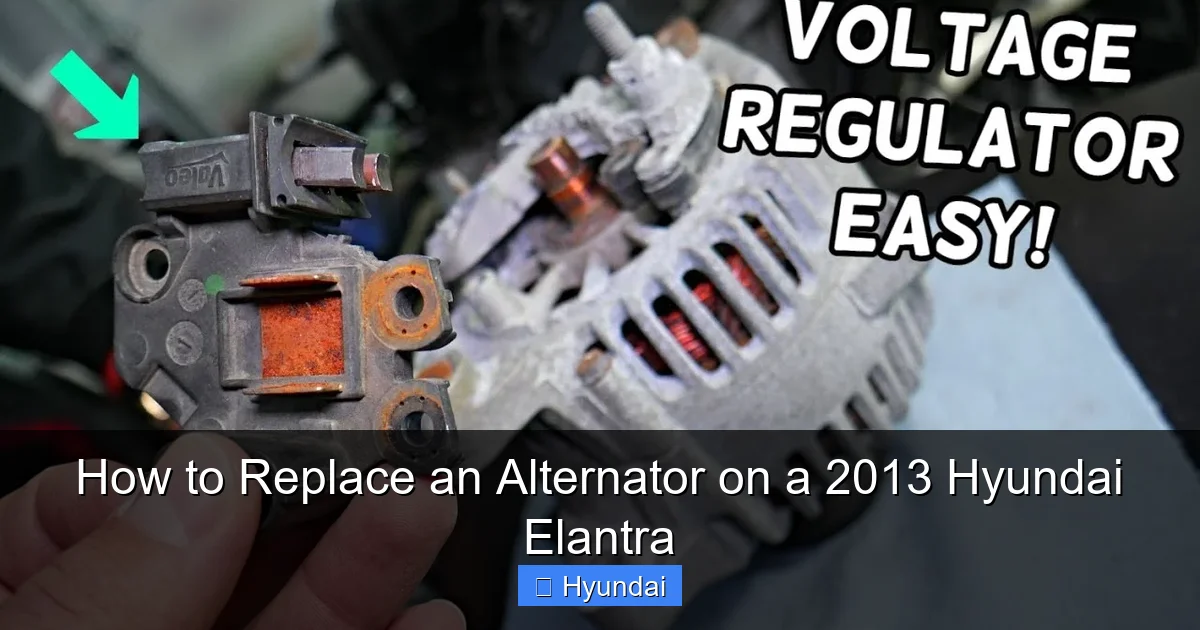
Visual guide about How to Replace an Alternator on a 2013 Hyundai Elantra
Image source: i.ytimg.com
Essential Tools
- Socket Set: Metric sockets, primarily 10mm, 12mm, and 14mm. A ratchet and extensions are crucial.
- Torque Wrench: Critical for tightening the alternator mounting bolts to specification.
- Serpentine Belt Tool (or breaker bar): To release the tension on the belt tensioner. A long-handled ratchet or a dedicated belt tensioner tool works best.
- Pliers: Needle-nose for removing electrical connector locks.
- Screwdrivers: Flathead and Phillips for prying connectors or covers.
- Flashlight or Work Light: Engine bays are dark places.
- Gloves and Safety Glasses: Protect your hands and eyes.
Required Parts
- New Alternator: Choose a quality unit—OEM, remanufactured, or aftermarket. For a 2013 Elantra, ensure it matches your engine size (2.0L vs 1.8L).
- Serpentine Belt (Optional but Recommended): If your belt has high mileage (over 60,000 miles), cracks, or glazing, replace it now. The labor is already done.
- Belt Tensioner (Optional): Inspect the tensioner pulley for smooth rotation and bearing play. If it’s noisy or stiff, replace it.
- Threadlocker: Blue Loctite for the alternator mounting bolts if specified by the service manual (often not required, but check).
- Electrical Connector Grease (Optional): For the plug terminals to prevent corrosion.
Pro Tip: Before buying, compare part numbers at auto stores or online. Many parts stores offer free battery and alternator testing to confirm your diagnosis. Take your old alternator with you to ensure a match. While gathering parts, consider if your vehicle is due for other routine maintenance. Learning how to do an oil change on a car is another fundamental DIY skill that saves money and keeps your engine healthy.
Removing the Old Alternator: A Step-by-Step Guide
Now, let’s get our hands dirty. The key to this job is methodical removal. Take your time, and don’t force anything. If a bolt is stuck, apply penetrating oil and let it sit.
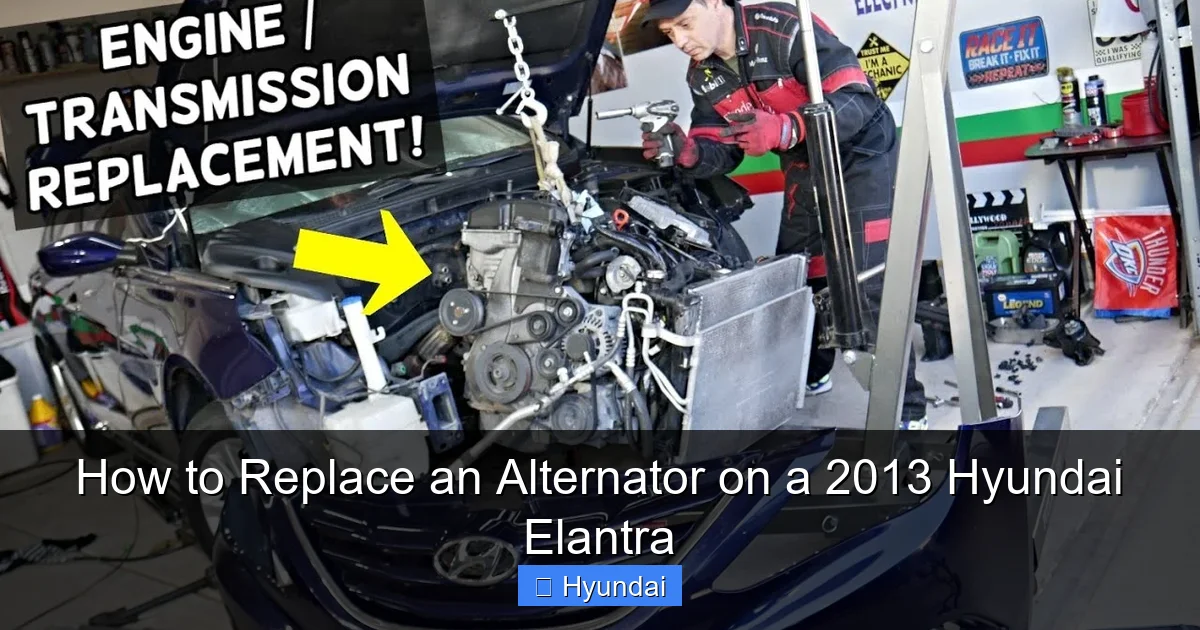
Visual guide about How to Replace an Alternator on a 2013 Hyundai Elantra
Image source: i.ytimg.com
Step 1: Safety First – Disconnect the Battery
This is non-negotiable. Locate the battery in the engine bay (usually on the driver’s side). Using a 10mm socket, loosen and remove the negative (black, “-“) battery cable first. Tuck it away so it can’t touch the terminal. Then remove the positive (red, “+”) cable. This prevents any accidental shorts that could damage the car’s electronics.
Step 2: Access and Remove the Serpentine Belt
The serpentine belt drives the alternator. You must remove it to free the alternator. First, locate the belt tensioner—a pulley with a built-in arm. On the 2013 Elantra, you’ll often access it from the top or side. Use your serpentine belt tool or a long-handled ratchet on the square hole of the tensioner arm. Rotate it clockwise (usually) to relieve tension. The belt will slacken. Carefully slide the belt off the alternator pulley first, then the other pulleys. Note the belt’s routing path! Take a photo with your phone if you’re unsure. This is vital for reinstallation. If the belt is being replaced, now is the time to remove it completely.
Step 3: Disconnect Electrical Connections
With the belt off, you can access the alternator’s electrical connections. There are typically two:
- Output Wire (Battery Terminal): A thick, usually red or black wire with a nut on a stud. Use a 10mm or 12mm socket to remove the nut. Pull the wire off and secure it away from metal.
- Plug-In Connector: A smaller plastic connector with a locking tab. Press the tab and pull the connector apart. Some may have a small retaining bolt; remove it if present.
Pro Tip: Use needle-nose pliers to gently release stubborn locking tabs. Don’t pull on the wires themselves—grab the connector.
Step 4: Unbolt the Alternator
Now, remove the mounting bolts. The 2013 Elantra typically has two bolts holding the alternator: one on the front (adjuster bolt) and one on the rear (pivot bolt). They are usually 12mm or 14mm. Support the alternator with one hand as you remove the last bolt, as it can fall. Carefully lower it out of the engine bay. Be mindful of any hoses or wires in the way.
Installing the New Alternator Correctly
Installation is essentially the reverse of removal, but attention to detail is crucial for a long-lasting repair.

Visual guide about How to Replace an Alternator on a 2013 Hyundai Elantra
Image source: i.ytimg.com
Step 1: Position and Bolt the New Alternator
Lift the new alternator into place. It’s often easier to loosely attach the rear pivot bolt first, then the front adjuster bolt. Hand-tighten both bolts. Do not fully tighten yet. The alternator needs to be able to pivot slightly for belt tensioning. Ensure it’s seated correctly and not binding on any brackets.
Step 2: Reconnect Electrical Connections
Before messing with the belt, connect the wiring. First, attach the output wire to the stud and tighten the nut firmly. Then, plug in the smaller connector until it clicks. Double-check that both are secure. A loose connection here will cause charging issues.
Step 3: Reinstall the Serpentine Belt
This is the trickiest part. Refer to your photo or the belt routing diagram (often under the hood). Place the belt on all pulleys except the tensioner. Use your serpentine belt tool to rotate the tensioner clockwise, creating slack. Slip the belt onto the alternator pulley, then slowly release the tensioner. The belt should seat fully in all pulley grooves. Ensure it’s not twisted or misaligned. The tensioner should maintain proper tension automatically. If your belt is new, it may need a few minutes to stretch and settle.
Step 4: Final Torquing and Inspection
Now, torque both alternator mounting bolts to the manufacturer’s specification. For the 2013 Elantra, this is typically around 20-30 ft-lbs (27-41 Nm). Consult a service manual if unsure. Over-tightening can crack the alternator housing; under-tightening leads to vibration and noise. Give the belt a firm push midway between pulleys—it should deflect about 1/2 inch. Too much deflection means it’s loose. Finally, visually inspect that the belt is properly aligned on all pulleys and that no tools or rags are left in the engine bay.
Testing Your Work and Final Checks
It’s showtime. But before you celebrate, you must verify the repair is successful.
Step 1: Reconnect the Battery and Start the Engine
Reattach the positive battery cable first, then the negative. Tighten the terminals securely. Start the engine. It should crank normally and start without hesitation. If it doesn’t start, re-check all electrical connections and belt installation.
Step 2: Check Voltage Output
This is the definitive test. Set your multimeter to DC volts (20V range). Connect the black probe to the negative battery terminal and the red probe to the positive terminal. With the engine off, you should see around 12.6V (battery voltage). Start the engine and rev it to about 2000 RPM. The voltage should rise to between 13.8V and 14.4V, indicating the alternator is charging. If it reads battery voltage or is below 13.5V, the alternator isn’t working—recheck connections. If it’s above 14.8V, the voltage regulator may be faulty.
Step 3: Listen and Observe
With the engine running, listen for any unusual noises—squealing (belt slip), grinding (bearing failure), or whining (electrical issue). Turn on headlights, AC, and radio to load the system. The voltage should remain in the safe range. The battery warning light on the dashboard should be off. If it comes back on, there’s a problem.
Step 4: Post-Test Clean-Up and Reset
If everything checks out, let the engine run for a few minutes. Then turn it off and re-torque the alternator bolts after the engine has cycled through heat and cool—they can settle. Some vehicles may require a battery light reset, but usually, clearing the code by disconnecting the battery is enough. If you notice any new issues like oil leaks after this work, it might be coincidental, but it’s worth investigating. You can research how much it costs to fix an oil leak on a car to plan for potential future maintenance.
Conclusion and Additional Resources
Congratulations! You’ve successfully replaced the alternator on your 2013 Hyundai Elantra. By doing it yourself, you’ve not only saved a substantial amount of money but also gained valuable knowledge about your vehicle. Remember to properly dispose of your old alternator at an auto parts store or recycling center—many offer core charges that you can recoup. Keep your new alternator healthy by ensuring the serpentine belt is in good condition and all connections remain tight. Regular maintenance, like checking fluid levels and belts, prevents many breakdowns. For example, understanding how much oil your 2013 Hyundai Elantra takes helps you maintain proper engine lubrication, which indirectly supports the entire drivetrain, including the alternator’s mounting points. If you found this guide helpful, you might be ready to tackle other DIY projects. Just be sure to always prioritize safety and don’t hesitate to consult a professional if a step feels beyond your comfort zone. Your Elantra will thank you with reliable service for miles to come.
Frequently Asked Questions
How do I know if my alternator is bad versus a bad battery?
A bad battery typically causes a slow or no crank when starting, but the car will run normally once jumped. A bad alternator allows the car to start (using residual battery power) but will cause the battery to drain while driving, leading to stalling or dimming lights that worsen over time. A professional load test at an auto parts store can confirm.
What tools are absolutely necessary for this job?
You need a basic metric socket set (10mm, 12mm, 14mm), a ratchet with extensions, a serpentine belt tensioner tool or long-handled ratchet, a torque wrench, pliers, and safety glasses. A multimeter for testing is highly recommended but not strictly required for the swap itself.
How long should it take a beginner to replace an alternator?
For someone with basic mechanical skills and the right tools, expect to spend 2 to 3 hours. The first time will be slower as you learn the layout and belt routing. With experience, it can be done in about an hour.
Can I replace the alternator without replacing the serpentine belt?
Yes, if your belt is in excellent condition with no cracks, glazing, or excessive wear. However, since you’re already removing it and doing labor, it’s highly recommended to replace a belt with over 50,000 miles. The cost of a new belt is low compared to the labor savings of doing it now.
Do I need to disconnect the battery before starting?
Absolutely. Disconnecting the negative battery terminal first is a critical safety step. It prevents the possibility of a tool touching metal and causing a short circuit, which can damage the alternator, battery, or car’s computer systems.
What is the torque specification for the alternator bolts?
For the 2013 Hyundai Elantra, the alternator mounting bolts typically require 20-30 ft-lbs (27-41 Nm). Always consult a factory service manual for the exact specification, as over-tightening can crack the alternator housing and under-tightening leads to damaging vibration.